Results by title
1832 books match the query 'Essays' and 38 start with g
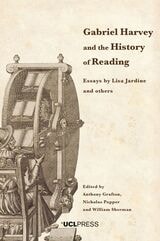
Gabriel Harvey and the History of Reading
Essays by Lisa Jardine and othersEdited by Anthony Grafton, Nicholas Popper, and William H. Sherman
University College London, 2024
Few articles in the humanities have had the impact of Lisa Jardine and Anthony Grafton’s seminal “Studied for Action,” a study of the reading practices of Elizabethan polymath and prolific annotator Gabriel Harvey. Their excavation of the setting, methods, and ambitions of Harvey’s encounters with his books ignited a new interdisciplinary field, the history of reading, which quickly became one of the most exciting corners of the scholarly cosmos. A generation inspired by the model of Harvey fanned out across the world’s libraries and archives, seeking to reveal the many creative, unexpected, and curious ways that individuals throughout history responded to texts, and how these interpretations, in turn, illuminate past worlds.
Three decades on, Harvey’s example and Jardine’s work remain central to cutting-edge scholarship in the history of reading. By uniting “Studied for Action” with new studies on Gabriel Harvey, some of which are published here for the first time, by Jardine, Grafton, and the scholars they have influenced, this collection provides a unique lens on the place of marginalia in textual, intellectual, and cultural history. The chapters capture subsequent work on Harvey and map the fields opened by Jardine and Grafton’s original article, collectively offering a posthumous tribute to Lisa Jardine and an authoritative overview of the History of Reading.
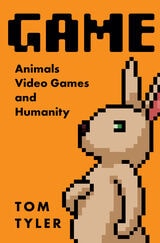
Game
Animals, Video Games, and HumanityTom Tyler
University of Minnesota Press, 2022
A playful reflection on animals and video games, and what each can teach us about the other
Video games conjure new worlds for those who play them, human or otherwise: they’ve been played by cats, orangutans, pigs, and penguins, and they let gamers experience life from the perspective of a pet dog, a predator or a prey animal, or even a pathogen. In Game, author Tom Tyler provides the first sustained consideration of video games and animals and demonstrates how thinking about animals and games together can prompt fresh thinking about both.
Game comprises thirteen short essays, each of which examines a particular video game, franchise, aspect of gameplay, or production in which animals are featured, allowing us to reflect on conventional understandings of humans, animals, and the relationships between them. Tyler contemplates the significance of animals who insert themselves into video games, as protagonists, opponents, and brute resources, but also as ciphers, subjects, and subversive guides to new ways of thinking. These animals encourage us to reconsider how we understand games, contesting established ideas about winning and losing, difficulty settings, accessibility, playing badly, virtuality, vitality and vulnerability, and much more.
Written in a playful style, Game draws from a dizzying array of sources, from children’s television, sitcoms, and regional newspapers to medieval fables, Shakespearean tragedy, and Edwardian comedy; from primatology, entomology, and hunting and fishing manuals to theological tracts and philosophical treatises. By examining video games through the lens of animals and animality, Tyler leads us to a greater humility regarding the nature and status of the human creature, and a greater sensitivity in dealings with other animals.
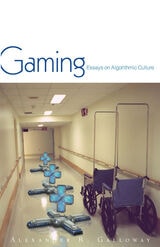
Gaming
Essays On Algorithmic CultureAlexander R. Galloway
University of Minnesota Press, 2006
In Gaming, Alexander Galloway instead considers the video game as a distinct cultural form that demands a new and unique interpretive framework. Drawing on a wide range of disciplines, particularly critical theory and media studies, he analyzes video games as something to be played rather than as texts to be read, and traces in five concise chapters how the “algorithmic culture” created by video games intersects with theories of visuality, realism, allegory, and the avant-garde. If photographs are images and films are moving images, then, Galloway asserts, video games are best defined as actions.
Using examples from more than fifty video games, Galloway constructs a classification system of action in video games, incorporating standard elements of gameplay as well as software crashes, network lags, and the use of cheats and game hacks. In subsequent chapters, he explores the overlap between the conventions of film and video games, the political and cultural implications of gaming practices, the visual environment of video games, and the status of games as an emerging cultural form.
Together, these essays offer a new conception of gaming and, more broadly, of electronic culture as a whole, one that celebrates and does not lament the qualities of the digital age.
Alexander R. Galloway is assistant professor of culture and communication at New York University and author of Protocol: How Control Exists after Decentralization.
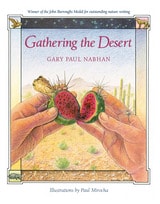
Gathering the Desert
Gary Paul Nabhan; Illustrations by Paul Mirocha
University of Arizona Press, 1985
To the untrained eye, a desert is a wasteland that defies civilization; yet the desert has been home to native cultures for centuries and offers sustenance in its surprisingly wide range of plant life. Gary Paul Nabhan has combed the desert in search of plants forgotten by all but a handful of American Indians and Mexican Americans. In Gathering the Desert readers will discover that the bounty of the desert is much more than meets the eye—whether found in the luscious fruit of the stately organpipe cactus or in the lowly tepary bean.
Nabhan has chosen a dozen of the more than 425 edible wild species found in the Sonoran Desert to demonstrate just how bountiful the land can be. From the red-hot chiltepines of Mexico to the palms of Palm Springs, each plant exemplifies a symbolic or ecological relationship which people of this region have had with plants through history. Each chapter focuses on a particular plant and is accompanied by an original drawing by artist Paul Mirocha. Word and picture together create a total impression of plants and people as the book traces the turn of seasons in the desert.
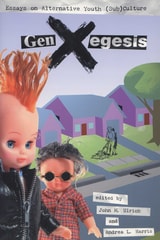
GenXegesis
Essays on Alternative Youth (Sub)CultureJohn M. Ulrich
University of Wisconsin Press, 2003
Resituating the term in its neglected (sub)cultural context, the contributors offer a critical assessment of the "Generation X" phenomenon and its relation to the fashioning of differing identities within and against the mainstream. The essays explore a variety of topics, including punk subculture, alternative music, reality television, postmodernism, and the Internet. Together, the contributors share a refreshingly self-conscious approach to Generation X’s precarious, often paradoxical position as an alternative to the mainstream. This collection will be enjoyed by scholars, graduate and undergraduate students, and anyone interested in popular culture, including Gen-Xers themselves.
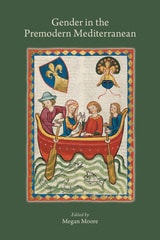
Gender in the Premodern Mediterranean
Megan Moore
Arizona Center for Medieval and Renaissance Studies, 2019
Whereas other volumes have examined gender in the premodern period or premodern Mediterranean Studies, to date no other volume has sought to explore the intersection of the two. The interdisciplinary nature of the essays will make them useful to both scholars and teachers, for they will combine theory and practice in a length that makes them easily accessible to advanced students as well as specialized researchers. The first chapter provides a critical overview of the scholarship on Mediterranean studies as a field of area studies as well as an overview of gender studies in the medieval period. As such, the volume will be useful for students, teachers, and researchers, and its interdisciplinary nature reflects the diaspora of the Mediterranean itself.
Genealogies of Joy
The Pleasure of Latinx LiteratureEdited by Leigh Johnson and Erin Murrah-Mandril; Foreword by Melina Vizcaíno-Alemán
University of Arizona Press, 2027
What does it mean to center joy in a world that insists on Latinx suffering? Genealogies of Joy: The Pleasure of Latinx Literature argues that joy is not a luxury or distraction but a radical, sustaining force woven through Latinx literature and culture. From humor and food to protest, friendship, sexuality, and aging, the essays gathered here reveal joy as an embodied, communal practice—one that refuses racialized shame and imagines liberatory futures.
Organized into three sections—Memory, Method, and Maps—the volume traces a genealogy of joy across time and space. Contributors explore how writers such as Gloria Anzaldúa, Julia de Burgos, Erika Sánchez, Javier Zamora, Myriam Gurba, Aidan Thomas, and Sandra Cisneros transform grief into resilience, invert dominant narratives, and reclaim pleasure as political praxis. Whether through irreverent laughter, queer desire, culinary memory, or vulnerable resistance, Latinx authors insist that pleasure and politics are bound together.
Engaging affect theory, Black joy scholarship, borderlands studies, and archival studies, this collection asserts that Latinx joy resists the quantification and commodification of late-stage capitalism. At once rigorous and celebratory, Genealogies of Joy invites readers to recognize joy as a human right and a vital source of connection, creativity, and collective flourishing.
Contributors
Soffía Blystra
Norma Cantú
Margaret Cantú-Sánchez
Karina Diaz
Stephanie Fetta
Elena Foulis
Eva Maria Geicht
Leigh Johnson
Mark J. Mascia
Regina Marie Mills
Erin Murrah-Mandril
Jeannine Ortega
Nancy Ríos
Rey M. Rodríguez
Rosarito Rodríguez-González
Alexandra Rodríguez Sabogal
Karen Roybal
Bianca S. Rubalcava
Suzanne Uzzilia
Natalia Villanueva-Nieves
Melina Vizcaíno-Alemán
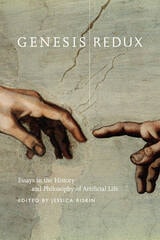
Genesis Redux
Essays in the History and Philosophy of Artificial LifeEdited by Jessica Riskin
University of Chicago Press, 2007
Since antiquity, philosophers and engineers have tried to take life’s measure by reproducing it. Aiming to reenact Creation, at least in part, these experimenters have hoped to understand the links between body and spirit, matter and mind, mechanism and consciousness. Genesis Redux examines moments from this centuries-long experimental tradition: efforts to simulate life in machinery, to synthesize life out of material parts, and to understand living beings by comparison with inanimate mechanisms.
Jessica Riskin collects seventeen essays from distinguished scholars in several fields. These studies offer an unexpected and far-reaching result: attempts to create artificial life have rarely been driven by an impulse to reduce life and mind to machinery. On the contrary, designers of synthetic creatures have generally assumed a role for something nonmechanical. The history of artificial life is thus also a history of theories of soul and intellect.
Taking a historical approach to a modern quandary, Genesis Redux is essential reading for historians and philosophers of science and technology, scientists and engineers working in artificial life and intelligence, and anyone engaged in evaluating these world-changing projects.

Genre Matters
Essays in Theory and CriticismEdited by Garin Dowd, Lesley Stevenson, and Jeremy Strong
Intellect Books, 2006

Geographers Abroad
Essays on the Problems and Prospects of Research in Foreign AreasEdited by Marvin W. Mikesell
University of Chicago Press, 1973
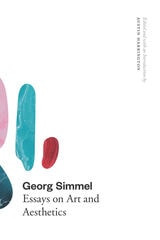
Georg Simmel
Essays on Art and AestheticsGeorg Simmel
University of Chicago Press, 2020
Fascinated by the relationship between culture, society, and economic life, Simmel took an interest in myriad phenomena of aesthetics and the arts. A friend of writers and artists such as Auguste Rodin, Rainer Maria Rilke, and Stefan George, he wrote dozens of pieces engaging with topics such as the work of Michelangelo, Rembrandt, and Rodin, Japanese art, naturalism and symbolism, Goethe, “art for art’s sake”, art exhibitions, and the aesthetics of the picture frame.
This is the first collection to bring together Simmel’s finest writing on art and aesthetics, and many of the items appear in English in this volume for the first time. The more than forty essays show the protean breadth of Simmel’s reflections, covering landscape painting, portraiture, sculpture, poetry, theater, form, style, and representation. An extensive introduction by Austin Harrington gives an overview of Simmel’s themes and elucidates the significance of his work for the many theorists who would be inspired by his ideas.
Something of an outsider to the formal academic world of his day, Simmel wrote creatively with the flair of an essayist. This expansive collection of translations preserves the narrative ease of Simmel’s prose and will be a vital source for readers with an interest in Simmel’s trailblazing ideas in modern European philosophy, sociology, and cultural theory.
Gesta Hungarorum
The Deeds of the HungariansSimon Kézai
Central European University Press, 1999
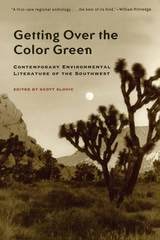
Getting Over the Color Green
Contemporary Environmental Literature of the SouthwestScott Slovic
University of Arizona Press, 2001
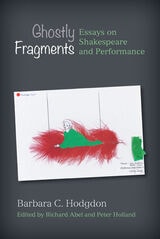
Ghostly Fragments
Essays on Shakespeare and PerformanceBarbara C. Hodgdon
University of Michigan Press, 2021
Ghostly Fragments gathers the essays of the late Barbara C. Hodgdon, a renowned scholar of Shakespeare and performance studies. Her influential publications over thirty years reflected a remarkable intelligence, wit, and originality, as did her lectures and conference papers. Richard Abel and Peter Holland have selected essays that represent the wide sweep of Hodgdon’s scholarship, including unpublished pieces and those from hard-to-access sources. The essays reveal a thinker and writer who grows more self-reflective over time, with a distinctive, engaging, often wryly humorous voice that is accessible even to nonspecialist readers.
Following a general introduction by Peter Holland, the book’s five subsections (Teaching Shakespeare, Analyzing Stage Performances, Editing Shakespeare Texts, Analyzing Shakespeare Films, and “Shopping” in the Archives) are introduced in turn by scholars Miriam Gilbert, W.B. Worthen, Margaret Jane Kidnie, Richard Abel, and Pascale Aebischer. Collectively, the pieces confirm the originality and élan of Hodgdon’s thinking and writing over time, and reveal her as a natural essayist and stylist, with a distinctive engaging voice. The collection is unique in not only bringing together so much of Hodgdon's work in one place (with an extensive bibliography of her published work) but also in demonstrating how groundbreaking and influential that work has been in the field.
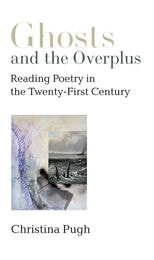
Ghosts and the Overplus
Reading Poetry in the Twenty-First CenturyChristina Pugh
University of Michigan Press, 2024
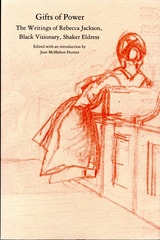
Gifts of Power
The Writings of Rebecca Jackson, Black Visionary, Shaker EldressJean M. Humez
University of Massachusetts Press, 1981
A free black woman in antebellum America, Rebecca Cox Jackson (1795–1871) was an independent itinerant preacher and religious visionary who founded a Shaker community in Philadelphia that survived her death by twenty-five years. Gifts of Power contains her complete extant writings, covering the period 1830 to 1864.
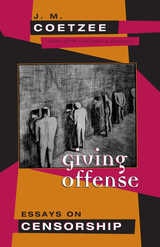
Giving Offense
Essays on CensorshipJ. M. Coetzee
University of Chicago Press, 1996
J. M. Coetzee presents a coherent, unorthodox analysis of censorship from the perspective of one who has lived and worked under its shadow. The essays collected here attempt to understand the passion that plays itself out in acts of silencing and censoring. He argues that a destructive dynamic of belligerence and escalation tends to overtake the rivals in any field ruled by censorship.
From Osip Mandelstam commanded to compose an ode in praise of Stalin, to Breyten Breytenbach writing poems under and for the eyes of his prison guards, to Aleksander Solzhenitsyn engaging in a trial of wits with the organs of the Soviet state, Giving Offense focuses on the ways authors have historically responded to censorship. It also analyzes the arguments of Catharine MacKinnon for the suppression of pornography and traces the operations of the old South African censorship system.
"The most impressive feature of Coetzee's essays, besides his ear for language, is his coolheadedness. He can dissect repugnant notions and analyze volatile emotions with enviable poise."—Kenneth Baker, San Francisco Chronicle Book Review
"Those looking for simple, ringing denunciations of censorship's evils will be disappointed. Coetzee explicitly rejects such noble tritenesses. Instead . . . he pursues censorship's deeper, more fickle meanings and unmeanings."—Kirkus Reviews
"These erudite essays form a powerful, bracing criticism of censorship in its many guises."—Publishers Weekly
"Giving Offense gets its incisive message across clearly, even when Coetzee is dealing with such murky theorists as Bakhtin, Lacan, Foucault, and René; Girard. Coetzee has a light, wry sense of humor."—Bill Marx, Hungry Mind Review
"An extraordinary collection of essays."—Martha Bayles, New York Times Book Review
"A disturbing and illuminating moral expedition."—Richard Eder, Los Angeles Times Book Review
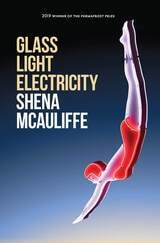
Glass, Light, and Electricity
EssaysShena McAuliffe
University of Alaska Press, 2020
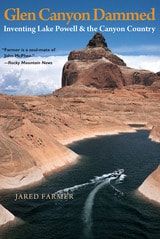
Glen Canyon Dammed
Inventing Lake Powell and the Canyon CountryJared Farmer
University of Arizona Press, 1999
Focusing on the saddening, maddening example of Glen Canyon, Jared Farmer traces the history of exploration and development in the Four Corners region, discusses the role of tourism in changing the face of the West, and shows how the "invention" of Lake Powell has served multiple needs. He also seeks to identify the point at which change becomes loss: How do people deal with losing places they love? How are we to remember or restore lost places? By presenting Glen Canyon as a historical case study in exploitation, Farmer offers a cautionary tale for the future of this spectacular region. In assessing the necessity and impact of tourism, he questions whether merely visiting such places is really good for people's relationships with each other and with the land, suggesting a new ethic whereby westerners learn to value what remains of their environment. Glen Canyon Dammed was written so that the canyon country's perennial visitors might better understand the history of the region, its legacy of change, and their complicity in both. A sobering book that recalls lost beauty, it also speaks eloquently for the beauty that may still be saved.
Goatfoot Milktongue Twinbird
Interviews, Essays, and Notes on Poetry, 1970-76Donald Hall
University of Michigan Press, 1978
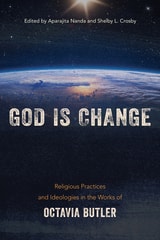
God is Change
Religious Practices and Ideologies in the Works of Octavia ButlerEdited by Aparajita Nanda and Shelby L. Crosby
Temple University Press, 2021
Throughout her work, Octavia E. Butler explored, critiqued, and created religious ideology. Her prescient thoughts on the synergy between politics and religion in America are evident in her 1993 dystopian novel, Parable of the Sower, and its 1998 sequel, Parable of the Talents. They explored, respectively, what happens during a divisive “cultural war” that unjustly impacts the disenfranchised, and the rise of a fascistic president, allied with white fundamentalist Christianity, who chants the slogan, “Make America Great Again.”
But religion, for Butler, need not be a restricting force. The editors of and contributors to God Is Change heighten our appreciation for the range and depth of Butler’s thinking about spirituality and religion, as well as how Butler’s work—especially the Parable and Xenogenesis series—offers resources for healing and community building. Essays consider the role of spirituality in Butler’s canon and the themes of confronting trauma as well as experiencing transformation and freedom. God Is Change meditates on alternate religious possibilities that open different political and cultural futures to illustrate humanity’s ability to endure change and thrive.
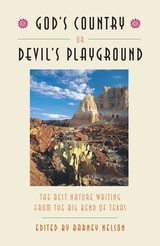
God's Country or Devil's Playground
The Best Nature Writing from the Big Bend of TexasEdited by Barney Nelson
University of Texas Press, 2002
The dramatic desert landscapes of the Big Bend country along the Texas-Mexico border reminded historian Walter Prescott Webb of "an earth-wreck in which a great section of country was shaken down, turned over, blown up, and set on fire." By contrast, naturalist Aldo Leopold considered the region a mountainous paradise in which even the wild Mexican parrots had no greater concern than "whether this new day which creeps slowly over the canyons is bluer or golder than its predecessors, or less so." Whether it impresses people as God's country or as the devil's playground, the Big Bend typically evokes strong responses from almost everyone who lives or visits there.
In this anthology of nature writing, Barney Nelson gathers nearly sixty literary perspectives on the landscape and life of the Big Bend region, broadly defined as Trans-Pecos Texas and northern Chihuahua, Mexico. In addition to Leopold and Webb, the collection includes such well-known writers as Edward Abbey, Mary Austin, Roy Bedichek, and Frederick Olmsted, as well as a wide range of voices that includes explorers, trappers, cowboys, ranch wives, curanderos, college presidents, scientists, locals, tourists, historians, avisadores, and waitresses. Following a personal introduction by Barney Nelson, the pieces are grouped thematically to highlight the distinctive ways in which writers have responded to the Big Bend.
Going Away to Think
Engagement, Retreat, and Ecocritical ResponsibilityScott Slovic
University of Nevada Press, 2008
Going It Alone
Ramblings and Reflections from the TrailTim Hauserman
University of Nevada Press, 2022
Hauserman hikes the John Muir Trail through rainstorms and challenging climbs, explores the Tahoe Rim Trail on a fourteen-day excursion, and travels to Minnesota to conquer the Superior Hiking Trail, where he is inundated with bugs, faces drought, and is eerily alone on the trail with not a single other hiker in sight for days. Going It Alone combines his self-deprecating humor, what he identifies as “Stupid Tim Tricks,” and delightful descriptions of the natural surroundings.
Some might describe the wilderness as the middle of nowhere or as nothingness, but for Hauserman, it is everything. While his love for nature remains undaunted through these experiences, he also discovers that he has overly high expectations for his capabilities and that he cannot just wish his loneliness away. He eventually discovers that his long walks in the woods are less about hiking and more about learning how he wants to live his life.
Going It Alone
Ramblings and Reflections from the TrailTim Hauserman
University of Nevada Press, 2022
Hauserman hikes the John Muir Trail through rainstorms and challenging climbs, explores the Tahoe Rim Trail on a fourteen-day excursion, and travels to Minnesota to conquer the Superior Hiking Trail, where he is inundated with bugs, faces drought, and is eerily alone on the trail with not a single other hiker in sight for days. Going It Alone combines his self-deprecating humor, what he identifies as “Stupid Tim Tricks,” and delightful descriptions of the natural surroundings.
Some might describe the wilderness as the middle of nowhere or as nothingness, but for Hauserman, it is everything. While his love for nature remains undaunted through these experiences, he also discovers that he has overly high expectations for his capabilities and that he cannot just wish his loneliness away. He eventually discovers that his long walks in the woods are less about hiking and more about learning how he wants to live his life.
Going to the Tigers
Essays and ExhortationsRobert Cohen
University of Michigan Press, 2022
In this funny and perceptive collection, novelist and essayist Robert Cohen shares his thoughts on the writing process and then puts these prescriptions into practice—from how to rant effectively as an essayist and novelist (“The Piano Has Been Drinking”), how to achieve your own style, naming characters (and creating them), how one manages one’s own identity with being “a writer” in time and space, to the use of reference and allusion in one’s work. Cohen is a deft weaver of allusion himself. In lieu of telling the reader how to master the elements of writing fiction, he shows them through the work of the writers who most influenced his own development, including Roth, Ellison, Kafka, and Robinson. Rooted in his own experiences, this collection of essays shows readers how to use their influences and experiences to create bold, personal, and individual work. While the first part of the book teaches writing, the essays in the second part show how these elements come together.
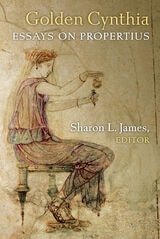
Golden Cynthia
Essays on PropertiusSharon L. James, Editor
University of Michigan Press, 2022
The elegiac poet Propertius responds in his verse to the complex changes that Rome underwent in his period, taking on numerous topics including poetic and sexual rivalry, visual art, violence, inability to control the elusive mistress, imperialism, colonialism, civil war, the radical new shape of the Roman state under the new monarch Augustus, and more. These essays, by well-known scholars of Roman elegy, offer new ways of reading Propertius’ topics, attitudes, and poetics.
This book begins with two distinguished essays by the late Barbara Flaschenriem, whose work on Propertius remains influential. The other contributions, offered in honor of her, are by Diane Rayor, Andrew Feldherr, Ellen Greene, Lowell Bowditch, Alison Keith, and volume editor Sharon L. James. These essays explore topics including Propertian didacticism, dream interpretation, visual art and formalism, sex and violence, Roman imperialism and its connection to the elegiac puella, and Propertius’ engagement, in Book 4, with Vergil’s poetry.
Good Roots
Writers Reflect on Growing Up in OhioLisa Watts
Ohio University Press, 2007
Winner of the Ohioana Library’s 2008 Ohio Legacy Citation
2014-2015 Choose to Read Ohio selection
“A good place to be from.” That’s how some people might characterize the Buckeye State. The writings in Good Roots: Writers Reflect on Growing Up in Ohio, are testimony to the truth of that statement. By prominent writers such as P. J. O’Rourke, Susan Orlean, and Alix Kates Shulman, these contributions are alternately nostalgic, irreverent, and sincere, and offer us a personal sense of place. Their childhoods are as varied as their work. Some were raised in urban Cleveland, Akron, and Cincinnati, others in the small Ohio towns that typify the Midwest, and still others in the countryside. Yet what they have to tell us about their roots resonates with a shared heritage, a sense of what is universal and enduring about growing up in the heartland.
Their collective résumé reads like a literary Who’s Who, including four Pulitzer Prizes, several National Book Awards, and many prestigious fellowships. Good Roots is also plain good reading from some of our country’s most accomplished contemporary writers.
Contributors include: Jill Bialosky, Dan Cryer, Michael Dirda, Elizabeth Dodd, Anthony Doerr, Rita Dove, Ian Frazier, Dale Keiger, Andrea Louie, Kathleen Dean Moore, Mary Oliver, Susan Orlean, P. J. O’Rourke, Julie Salamon, Scott Russell Sanders, Alix Kates Shulman, Jeffery Smith, James Toedtman, and Mark Winegardner.
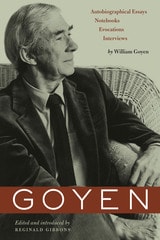
Goyen
Autobiographical Essays, Notebooks, Evocations, InterviewsBy William Goyen
University of Texas Press, 2007
William Goyen (1915-1983) was an American original, acclaimed nationally and internationally, and one of the most important writers ever to be associated with the regional culture and literary history of Texas. Called "one of the great American writers of short fiction" by the New York Times Book Review, Goyen also authored the novels The House of Breath, In a Farther Country, Come, the Restorer, and Arcadio, as well as plays, poetry, and nonfiction. His literary works manifest an intimate intensity of feeling and an inimitable tone of voice, reflecting Goyen's lifelong desire to create art that was at once a spiritual quest for universal truths and an evocation of the rhythms of speech and storytelling of his native East Texas.
This volume contains all of the uncollected autobiographical writings of William Goyen, including essays previously published in American periodicals and literary journals; interviews published in Paris Review, TriQuarterly, and the French magazine Masques; and previously unpublished materials drawn from Goyen's papers in the Harry Ransom Humanities Research Center at the University of Texas at Austin. The writings span Goyen's entire adult life, from youthful journals to autobiographical sketches to his long sketch for an autobiographical book, Six Women, which profiles women whom Goyen felt had influenced him deeply: Frieda Lawrence, Dorothy Brett, Mabel Dodge Luhan, Margo Jones, Millicent Rogers, and Katherine Anne Porter. The volume also contains late essays on growing up in Houston, writing from life, and illness and recovery.
While most of William Goyen's work was autobiographical, writing a traditional autobiography proved to be inimical to his artistic sensibility and style. Thus, the pieces collected in Goyen constitute the most complete autobiography that we will ever have from this highly regarded writer.
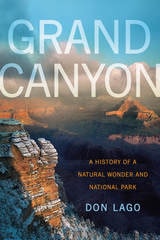
Grand Canyon
A History of a Natural Wonder and National ParkDon Lago
University of Nevada Press, 2015
The Grand Canyon became a microcosm of the history and evolving values of the
National Park Service, long conflicted between encouraging tourism and protecting nature. Many vivid characters shaped the canyon’s past. Its largest story is one of cultural history and changing American visions of the land.
Grand Canyon: A History of a Natural Wonder and National Park is a mixture of great storytelling, unlikely characters, and important ideas. The book will appeal to both general readers and scholars interested in seeking a broader understanding of the canyon.
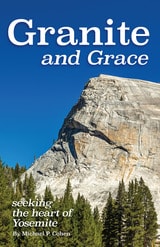
Granite and Grace
Seeking the Heart of YosemiteMichael P. Cohen
University of Nevada Press, 2019
Drawing together the humanistic and scientific significance of the wild landscapes he traverses, Michael uncovers relationships between people and places and meaning and substance, rendering this text part memoir—but also considerably more. On-the-rock encounters by hand and foot open up a dialogue between the heart of a philosopher and the mind of a geologist. Michael adds a literary softness to this hard landscape, blending excursions with exposition and literature with science. It is through his graceful representations that the geological becomes metaphorical, while the science turns mythological.
This high country, where in 1889 John Muir and Robert Underwood Johnson planned what would become Yosemite National Park, is significant for cultural as well as natural reasons. Discoursing on everything from Camus’s “Myths of Sisyphus” to the poems of Gary Snyder, Michael adds depth to an already splendorous landscape. Premier early geologists, such as François Matthes, shaped the language of Yosemite’s landscape. Even though Yosemite has changed over half a century, the rock has not. As Michael explores the beauty and grace of his familiar towering vistas, he demonstrates why, of the many aspects of the world to which one might get attached, the most secure is granite.
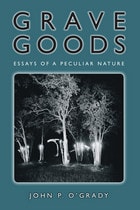
Grave Goods
John P. O'Grady
University of Utah Press, 2014
"Overheard in a coffee shop the other day, one young woman severely admonishing another about the dangers of amateur séances: 'Just one wrong move, and Poof! Suddenly every dead rock star and TV evangelist is knocking at your door and forcing you to bake ten thousand apple pies. You can’t trust these ghosts. They have a mind of their own.'"
—from the book
Just because this is a collection of essays about psychics, murderers, strange disappearances, and occult phenomena doesn’t mean it isn’t funny. With wit, wry curiosity, and redemptive irony John P. O’Grady peels back the surface of the seemingly normal to reveal the dubious, the inexplicable, the outlandish.
Consider Leo LaHappe, a.k.a. "The Bugman." During a 1970s-era dormitory bull session Leo reveals a strange obsession with Virginia Dare, the first child born of English parents in the New World. His obsession becomes the catalyst for a campus-wide witch hunt at the University of Maine.
Or, what about the beekeeper who knocks on O’Grady’s door. Dressed in his professional gear—boots, coveralls, and dark veil—the man seeks permission to search the author’s woods for his hive. Turns out he hadn’t told the bees about his mother’s death and, sensitive creatures that they are, the bees had run away. "I have to tell them I’m sorry," the beekeeper explains. "I just hope they forgive me and come home."
Grave Goods includes ghost stories, macabre modern legends, and metaphysical investigations, all informed by the natural sciences, history, philosophy, literature, and mythology. From laugh-out-loud funny to eerily thoughtful, these essays reveal the natural world as a place of unnatural surprises and strange beauty. A place where Rip Van Winkle, O’Grady’s college buddies, and ragtag psychics rub shoulders with Buddha, Socrates, and Stephen King—and it all makes perfect sense.
Gray is Beautiful
Confronting the Retreat of Democracy from the Radical CenterJeffrey Goldfarb
Central European University Press, 2026
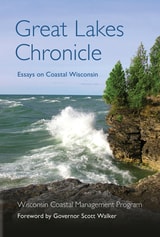
Great Lakes Chronicle
Essays on Coastal WisconsinWisconsin Coastal Management
Wisconsin Historical Society Press, 2018
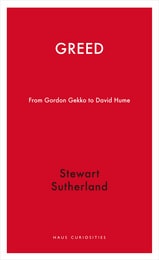
Greed
From Gordon Gekko to David HumeStewart Sutherland
Haus Publishing, 2014
In Greed, Stewart Sutherland examines these conflicting notions and discusses how we might approach the problem of greed today. He looks at the concept of incentives, which are essential for achieving results, and whether the desire for money is really as dangerous as it might seem. Powerful and timely, Greed is a much-needed look at an attitude that, for better or worse, is an unavoidable driving force in modern society.
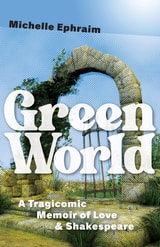
Green World
A Tragicomic Memoir of Love & ShakespeareMichelle Ephraim
University of Massachusetts Press, 2024
Shortlisted for the 2026William Saroyan International Prize for Writing • Shortlisted for the Story Circle Network Gilda Prize • Winner of the Wisconsin Library Association's Literary Award for Nonfiction • Shortlisted for the Rubery Book Award • A 2025 IPPY Awards Silver Medal Winner in Autobiography/Memoir • Winner of the 2025 Friends of American Writers Adult Literature Award • A 2024 Foreword INDIES Finalist • A 2025 Sophie Brody Medal Notable Book • A Jewish Women's Archive Summer Book Club Pick
At twenty-three, Michelle Ephraim was failing at everything. The only child of reclusive Holocaust-survivor parents who were dismayed by her literary studies, she found herself dumped by her boyfriend and bombing out of graduate school. Then, one night, she crashed a Shakespeare recitation party. Loopy from vodka and never having read a single line of Shakespeare, she was transfixed. Shakespeare, she decided, was the lifeline she needed.
Green World is the hilarious and heartbreaking story of Ephraim’s quest to become a Shakespeare scholar and to find community and home. As she studies Shakespeare, Ephraim’s world uncannily begins to mirror the story of the Jewish daughter in The Merchant of Venice, and she finds herself in a Green World, an idyllic place where Shakespeare’s heroines escape their family trauma. Green World reckons with global, historical, and personal tragedy and shows how literature—comic and tragic—can help us brave every kind of anguish.
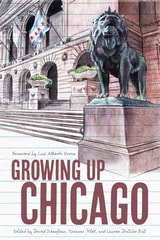
Growing Up Chicago
Edited by David Schaafsma, Roxanne Pilat, and Lauren DeJulio Bell, Foreword by Luis Alberto Urrea
Northwestern University Press, 2021
The stories evoke childhood trips to the Art Institute of Chicago, nighttime games of ringolevio, and the giant neon Magikist lips that once perched over the expressway, sharing perspectives that range from a young man who dreams of becoming an artist to a single mother revisiting her Mexican roots, from a woman’s experience with sexual assault to a child’s foray into white supremacy. This book memorably explores culture, social identity, and personal growth through the eyes of Chicagoans, affirming that we each hold the ability to shape the places in which we live and write and read as much as those places shape us.
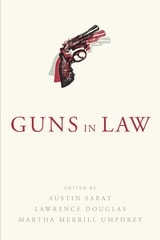
Guns in Law
Austin Sarat
University of Massachusetts Press, 2019
Weapons have been a source of political and legal debate for centuries. Aristotle considered the possession of arms a fundamental source of political power and wrote that tyrants “mistrust the people and deprive them of their arms.” Today ownership of weapons—whether handguns or military-grade assault weapons—poses more acute legal problems than ever before. In this volume, the editors' introduction traces the history of gun control in the United States, arguing that until the 1980s courts upheld reasonable gun control measures. The contributors confront urgent questions, among them the usefulness of history as a guide in ongoing struggles over gun regulation, the changing meaning of the Second Amendment, the perspective of law enforcement on guns and gun control law, and individual and relational perspectives on gun rights.
The contributors include the editors and Carl T. Bogus, Jennifer Carlson, Saul Cornell, Darrell A.H. Miller, Laura Beth Nielsen, and Katherine Shaw.