316 books match the query 'Ethnomusicology' and 7 start with g
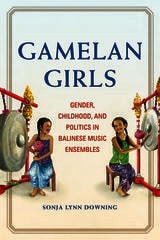
cover of Gamelan Girls: Gender, Childhood, and Politics in Balinese Music Ensembles

Gamelan Girls

Gender, Childhood, and Politics in Balinese Music Ensembles

Sonja Lynn Downing

University of Illinois Press, 2019

In recent years, girls' and mixed-gender ensembles have challenged the tradition of male-dominated gamelan performance. The change heralds a fundamental shift in how Balinese think about gender roles and the gender behavior taught in children's music education. It also makes visible a national reorganization of the arts taking place within debates over issues like women's rights and cultural preservation. Sonja Lynn Downing draws on over a decade of immersive ethnographic work to analyze the ways Balinese musical practices have influenced the processes behind these dramatic changes. As Downing shows, girls and young women assert their agency within the gamelan learning process to challenge entrenched notions of performance and gender. One dramatic result is the creation of new combinations of femininity, musicality, and Balinese identity that resist messages about gendered behavior from the Indonesian nation-state and beyond. Such experimentation expands the accepted gender aesthetics of gamelan performance but also sparks new understanding of the role children can and do play in ongoing debates about identity and power.
[more]
cover of Gamelan Gong Kebyar: The Art of Twentieth-Century Balinese Music

Gamelan Gong Kebyar

The Art of Twentieth-Century Balinese Music

Michael Tenzer

University of Chicago Press, 2000

The Balinese gamelan, with its shimmering tones, breathless pace, and compelling musical language, has long captivated musicians, composers, artists, and travelers. Here, Michael Tenzer offers a comprehensive and durable study of this sophisticated musical tradition, focusing on the preeminent twentieth-century genre, gamelan gong kebyar.

Combining the tools of the anthropologist, composer, music theorist, and performer, Tenzer moves fluidly between ethnography and technical discussions of musical composition and structure. In an approach as intricate as one might expect in studies of Western classical music, Tenzer's rigorous application of music theory and analysis to a non-Western orchestral genre is wholly original. Illustrated throughout, the book also includes nearly 100 pages of musical transcription (in Western notation) that correlate with 55 separate tracks compiled on two accompanying compact discs.

The most ambitious work on gamelan since Colin McPhee's classic Music in Bali, this book will interest musicians of all kinds and anyone interested in the art and culture of Southeast Asia, Indonesia, and Bali.
[more]
cover of Gentleman Troubadours and Andean Pop Stars: Huayno Music, Media Work, and Ethnic Imaginaries in Urban Peru

Gentleman Troubadours and Andean Pop Stars

Huayno Music, Media Work, and Ethnic Imaginaries in Urban Peru

Joshua Tucker

University of Chicago Press, 2013
Exploring Peru’s lively music industry and the studio producers, radio DJs, and program directors that drive it, Gentleman Troubadours and Andean Pop Stars is a fascinating account of the deliberate development of artistic taste. Focusing on popular huayno music and the ways it has been promoted to Peru’s emerging middle class, Joshua Tucker tells a complex story of identity making and the marketing forces entangled with it, providing crucial insights into the dynamics among art, class, and ethnicity that reach far beyond the Andes.
 
Tucker focuses on the music of Ayacucho, Peru, examining how media workers and intellectuals there transformed the city’s huayno music into the country’s most popular style. By marketing contemporary huayno against its traditional counterpart, these agents, Tucker argues, have paradoxically reinforced ethnic hierarchies at the same time that they have challenged them. Navigating between a burgeoning Andean bourgeoisie and a music industry eager to sell them symbols of newfound sophistication, Gentleman Troubadours and Andean Pop Stars is a deep account of the real people behind cultural change.
[more]
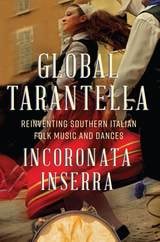
cover of Global Tarantella: Reinventing Southern Italian Folk Music and Dances

Global Tarantella

Reinventing Southern Italian Folk Music and Dances

Incoronata Inserra

University of Illinois Press, 2017
Tarantella, a genre of Southern Italian folk music and dance, is an international phenomenon--seen and heard in popular festivals, performed across the Italian diaspora, even adapted for New Age spiritual practices. The boom in popularity has diversified tarantella in practice while setting it within a host of new, unexpected contexts. Incoronata Inserra ventures into the history, global circulation, and recontextualization of this fascinating genre. Examining tarantella's changing image and role among Italians and Italian Americans, Inserra illuminates how factors like tourism, translation, and world music venues have shifted the ethics of place embedded in the tarantella cultural tradition. Once rural, religious, and rooted, tarantella now thrives in settings urban, secular, migrant, and ethnic. Inserra reveals how the genre's changing dynamics contribute to reimagining Southern Italian identity. At the same time, they translate tarantella into a different kind of performance that serves new social and cultural groups and purposes. Indeed, as Inserra shows, tarantella's global growth promotes a reassessment of gender relations in the Italian South and helps create space for Italian and Italian-American women to reclaim gendered aspects of the genre.
[more]
cover of Glossary of Hausa Music and Its Social Contexts

Glossary of Hausa Music and Its Social Contexts

David W. Ames and Anthony V. King

Northwestern University Press, 1971
The richness, variety, and complexity of the culture of the Hausa city-states are illustrated in microcosm in Glossary of Hausa Music and Its Social Contexts, in which several hundred Hausa terms for music are collected.  David W. Ames and Anthony V. King concentrate on the kingdoms of Zaria and Katsina, but include historically noteworthy terms from other areas. This compilation not only presents a technical glossary of musical instruments and sound production but also reveals the musical life of a people and the socio-cultural context of musical performance. Consideration is given to Hausa folklore pertaining to music – proverbs, riddles, and traditional occupational jokes.
[more]
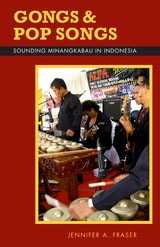
cover of Gongs and Pop Songs: Sounding Minangkabau in Indonesia

Gongs and Pop Songs

Sounding Minangkabau in Indonesia

Jennifer A. Fraser

Ohio University Press, 2015

Scholarship on the musical traditions of Indonesia has long focused on practices from Java and Bali, including famed gamelan traditions, at the expense of the wide diversity of other musical forms within the archipelago. Jennifer A. Fraser counters this tendency by exploring a little-known gong tradition from Sumatra called talempong, long associated with people who identify themselves as Minangkabau.

Grounded in rich ethnographic data and supplemented with online audiovisual materials, Gongs and Pop Songs is the first study to chronicle the history and variety of talempong styles. It reveals the continued vitality of older modes in rural communities in the twenty-first century, while tracing the emergence of newer ones with radically different aesthetic frames and values. Each talempong style discussed incorporates into its repertoire Minangkabau pop or indigenous songs, both of which have strong associations with the place and people. These contemporary developments in talempong have taken place against a shifting political, social, and economic backdrop: the institutionalization of indigenous arts, a failed regional rebellion, and the pressures of a free-market economy.

Fraser adopts a cognitive approach to ethnicity, asking how people understand themselves as Minangkabau through talempong and how different styles of the genre help create and articulate ethnic sentiments—that is, how they help people sound Minangkabau.
[more]
cover of Governing Sound: The Cultural Politics of Trinidad's Carnival Musics

Governing Sound

The Cultural Politics of Trinidad's Carnival Musics

Jocelyne Guilbault

University of Chicago Press, 2007

Calypso music is an integral part of Trinidad’s national identity. When, for instance, Franklin D. Roosevelt asked the great Trinidadian musician Roaring Lion where he was from, Lion famously replied “the land of calypso.” But in a nation as diverse as Trinidad, why is it that calypso has emerged as the emblematic music?

In Governing Sound, Jocelyne Guilbault examines the conditions that have enabled calypso to be valorized, contested, and targeted as a field of cultural politics in Trinidad. The prominence of calypso, Guilbault argues, is uniquely enmeshed in projects of governing and in competing imaginations of nation, race, and diaspora. During the colonial regime, the period of national independence, and recent decades of neoliberal transformation, calypso and its musical offshoots have enabled new cultural formations while simultaneously excluding specific social expressions, political articulations, and artistic traditions. Drawing on over a decade of ethnographic work, Guilbault maps the musical journeys of Trinidad’s most prominent musicians and arrangers and explains the distinct ways their musical sensibilities became audibly entangled with modes of governing, audience demands, and market incentives.

Generously illustrated and complete with an accompanying CD, Governing Sound constitutes the most comprehensive study to date of Trinidad’s carnival musics.

[more]