Results by title
421 books match the query 'Evolution' and 12 start with g
Gaian Systems
Lynn Margulis, Neocybernetics, and the End of the AnthropoceneBruce Clarke
University of Minnesota Press, 2020
A groundbreaking look at Gaia theory’s intersections with neocybernetic systems theory
Often seen as an outlier in science, Gaia has run a long and varied course since its formulation in the 1970s by atmospheric chemist James Lovelock and microbiologist Lynn Margulis. Gaian Systems is a pioneering exploration of the dynamic and complex evolution of Gaia’s many variants, with special attention to Margulis’s foundational role in these developments.
Bruce Clarke assesses the different dialects of systems theory brought to bear on Gaia discourse. Focusing in particular on Margulis’s work—including multiple pieces of her unpublished Gaia correspondence—he shows how her research and that of Lovelock was concurrent and conceptually parallel with the new discourse of self-referential systems that emerged within neocybernetic systems theory. The recent Gaia writings of Donna Haraway, Isabelle Stengers, and Bruno Latour contest its cybernetic status. Clarke engages Latour on the issue of Gaia’s systems description and extends his own systems-theoretical synthesis under what he terms “metabiotic Gaia.” This study illuminates current issues in neighboring theoretical conversations—from biopolitics and the immunitary paradigm to NASA astrobiology and the Anthropocene. Along the way, he points to science fiction as a vehicle of Gaian thought.
Delving into many issues not previously treated in accounts of Gaia, Gaian Systems describes the history of a theory that has the potential to help us survive an environmental crisis of our own making.
Genera Palmarum
The Evolution and Classification of PalmsJohn Dransfield, Natalie W. Uhl, Conny B. Asmussen, William J. Baker, Madeline Harley, and Carl Lewis
Royal Botanic Gardens, Kew, 2008
In this new edition, genus treatments now include complete descriptions, nomenclature, and etymology, as well as discussions of diversity, distribution, phylogeny, morphology, uses and ecology. All genera are fully illustrated with full-color photographs alongside analytic illustrations, distribution maps, and even electron micrographs of pollen. An updated introduction provides readers with essential background information via authoratative essays on the structure of palms, their chemistry, their history, and much more.
Fully revised for a new generation of researchers and gardening enthusiasts, Genera Palmarum continues to be the gold-standard reference work on palms.
Genes in Development
Re-reading the Molecular ParadigmEva M. Neumann-Held and Christoph Rehmann-Sutter, eds.
Duke University Press, 2006
Contributors discuss alternatives to the programmatic view of dna, including the developmental systems approach, methodical culturalism, the molecular process concept of the gene, the hermeneutic theory of description, and process structuralist biology. None of the approaches cast doubt on the notion that dna is tremendously important to biological life on earth; rather, contributors examine different ideas of how dna should be represented, evaluated, and explained. Just as ideas about genetic codes have reached far beyond the realm of science, the reconceptualizations of genetic theory in this volume have broad implications for ethics, philosophy, and the social sciences.
Contributors. Thomas Bürglin, Brian C. Goodwin, James Griesemer, Paul Griffiths, Jesper Hoffmeyer, Evelyn Fox Keller, Gerd B. Müller, Eva M. Neumann-Held, Stuart A. Newman, Susan Oyama, Christoph Rehmann-Sutter, Sahotra Sarkar, Jackie Leach Scully, Gerry Webster, Ulrich Wolf
Genomic Imprinting and Kinship
Haig, David
Rutgers University Press, 2001
George Eliot's Religious Imagination
A Theopoetics of EvolutionMarilyn Orr
Northwestern University Press, 2018
Orr’s wide-ranging and fascinating analysis situates George Eliot in the fertile intellectual landscape of the nineteenth century, among thinkers as diverse as Ludwig Feuerbach, David Strauss, and Søren Kierkegaard. She also argues for a connection between George Eliot and the twentieth-century evolutionary Christian thinker Pierre Teilhard de Chardin. Her analysis draws on the work of contemporary philosopher Richard Kearney as well as writers on mysticism, particularly Karl Rahner.
The book takes an original look at questions many believe settled, encouraging readers to revisit George Eliot’s work. Orr illuminates the creative tension that still exists between science and religion, a tension made fruitful through the exercise of the imagination. Through close readings of Eliot's writings, Orr demonstrates how deeply the novelist's religious imagination continued to operate in her fiction and poetry.
Georges Cuvier, Fossil Bones, and Geological Catastrophes
New Translations and Interpretations of the Primary TextsMartin J. S. Rudwick
University of Chicago Press, 1997
God and Evolution
Fundamental Questions of Christian EvolutionismJozef Zycinski
Catholic University of America Press, 2006
Gogol's Afterlife
The Evolution of a Classic in Imperial and Soviet RussiaCaryl Emerson
Northwestern University Press, 2002
Part I charts the historical and cultural currents that shaped Gogol's reputation, devoting particular attention to the models of authorship Gogol himself devised in response to his changing audience and developing authorial mission. Part II takes a panoramic view of the social milieu in which Gogol's status evolved. Finally, Part III examines the place of the classics in Soviet culture, with a focus on Gogol's role in the cultural revolution and his peculiar relationship with state power under Stalinism.
Grandmotherhood
The Evolutionary Significance of the Second Half of Female LifeVoland, Eckart
Rutgers University Press, 2014
By the year 2030, the average life expectancy of women in industrialized countries could reach ninety—exceeding that of men by about ten years. At the present time, postmenopausal women represent more than fifteen percent of the world’s population and this figure is likely to grow.
From an evolutionary perspective, these demographic numbers pose some intriguing questions. Darwinian theory holds that a successful life is measured in terms of reproduction. How is it, then, that a woman’s lifespan can greatly exceed her childbearing and childrearing years? Is this phenomenon simply a byproduct of improved standards of living, or do older women—grandmothers in particular—play a measurable role in increasing their family members’ biological success?
Until now, these questions have not been examined in a thorough and comprehensive manner. Bringing togethertheoretical and empirical work byinternationally recognized scholars in anthropology, psychology, ethnography, and the social sciences, Grandmotherhood explores the evolutionary purpose and possibilities of female post-generative life. Students and scholars of human evolution, anthropology, and even gerontology will look to this volume as a major contribution to the current literature in evolutionary studies.
Grant Park
The Evolution of Chicago's Front YardDennis H. Cremin
Southern Illinois University Press, 2013
2014 Illinois State Historical Society Book of the Year
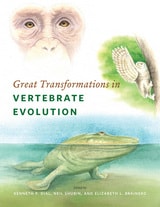
Great Transformations in Vertebrate Evolution
Edited by Kenneth P. Dial, Neil Shubin, and Elizabeth L. Brainerd
University of Chicago Press, 2015
This book gathers a diverse team of renowned scientists to capture the excitement of these new discoveries in a collection that is both accessible to students and an important contribution to the future of its field. Marshaling a range of disciplines—from paleobiology to phylogenetics, developmental biology, ecology, and evolutionary biology—the contributors attack particular transformations in the head and neck, trunk, appendages such as fins and limbs, and the whole body, as well as offer synthetic perspectives. Illustrated throughout, Great Transformations in Vertebrate Evolution not only reveals the true origins of whales with legs, fish with elbows, wrists, and necks, and feathered dinosaurs, but also the relevance to our lives today of these extraordinary narratives of change.
Greater Ethiopia
The Evolution of a Multiethnic SocietyDonald N. Levine
University of Chicago Press, 2000
Donald Levine's interdisciplinary study makes a substantial contribution both to Ethiopian interpretive history and to sociological analysis. In his new preface, Levine examines Ethiopia since the overthrow of the monarchy in the 1970s.
"Ethiopian scholarship is in Professor Levine's debt. . . . He has performed an important task with panache, urbanity, and learning."—Edward Ullendorff, Times Literary Supplement
"Upon rereading this book, it strikes the reader how broad in scope, how innovative in approach, and how stimulating in arguments this book was when it came out. . . . In the past twenty years it has inspired anthropological and historical research, stimulated theoretical debate about Ethiopia's cultural and historical development, and given the impetus to modern political thinking about the complexities and challenges of Ethiopia as a country. The text thus easily remains an absolute must for any Ethiopianist scholar to read and digest."-J. Abbink, Journal of Modern African Studies