Results by title
522 books match the query 'Gender' and 72 start with g

GENDER AND PETTY VIOLENCE IN LONDON, 1680-1720
JENNINE HURL-EAMON
The Ohio State University Press, 2005
Looking at a heretofore overlooked set of archival records of London in the late 17th and early 18th centuries, Hurl-Eamon reassesses the impact of gender on petty crime and its prosecution during the period. This book offers a new approach to the growing body of work on the history of violence in past societies. By focusing upon low-cost prosecutions in minor courts, Hurl-Eamon uncovers thousands of assaults on the streets of early modern London. Previous histories stressing the masculine nature of past violence are questioned here: women perpetrated one-third of all assaults. In looking at more mundane altercations rather than the homicidal attacks studied in previous histories, the book investigates violence as a physical language, with some forms that were subject to gender constraints, but many of which were available to both men and women. Quantitative analyses of various circumstances surrounding the assaults—including initial causes, weapons used, and injuries sustained—outline the patterns of violence as a language.
Hurl-Eamon also stresses the importance of focusing on the prosecutorial voice. In bringing the court’s attention to petty attacks, thousands of early modern men and women should be seen as agents rather than victims. This view is especially interesting in the context of domestic violence, where hundreds of wives and servants prosecuted patriarchs for assault, and in the Mohock Scare of 1712, where London’s populace rose up in opposition to aristocratic violence. The discussion is informed by a detailed knowledge of assault laws and the rules governing justices of the peace.
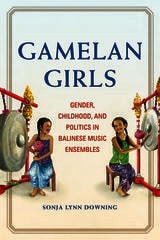
Gamelan Girls
Gender, Childhood, and Politics in Balinese Music EnsemblesSonja Lynn Downing
University of Illinois Press, 2019
Gather Your Ancestors
Gender, Language, and Belonging in Southeast AfricaRaevin Jimenez
University of Wisconsin Press, 2026
Historically, southeasternmost Africa has been home to a large variety of speech communities, including Nguni, East Bantu, Khoi, and San—the legacy of a long and complicated history of migration, interaction, assimilation, and disaggregation between many peoples. With detailed, careful analysis, Raevin Jimenez guides readers through a thousand years of human movement, cultural contact, and social development in this region. Taking a historical linguistics approach, she sheds new light on this history by focusing on Nguni speakers’ use of gendered practices—including initiation, marriage, and avoidant speech known as hlónipha—to blend multilingual and diverse communities.
Use of gendered institutions inaugurated variable social spaces that could either elide or accommodate difference and thus enabled a multiplicity of community types. Contrary to previous assumptions about the roles of men and women in precolonial southeasternmost Africa, Jimenez shows that gender impacted life and social interactions across a large variety of important domains and became a way of forming, negotiating, and maintaining community. These developments shaped and remain visible in southeastern African speech communities today, and understanding them is vital to understanding the region’s long history and current linguistic society.

Gender On Ice
American Ideologies of Polar ExpeditionsLisa Bloom
University of Minnesota Press, 1993
Bloom focuses on the conquest of the North Pole as she reveals how popular print and visual media defined and shaped American national ideologies from the early twentieth century to the present.
Gender and Agricultural Development
Surveying the FieldEdited by Helen K. Henderson
University of Arizona Press, 1995
This book is both a resource guide and a review of major issues in gender and agriculture which demonstrates that recognizing the contribution of women to agricultural production is a necessary step in development planning. It presents relevant information and research literature regarding women's roles in agriculture in a consolidated and accessible format, offering insights into how the inclusion or exclusion of appropriate information at the planning stage can have an impact during implementation. It also provides guidelines for locating information on gender-related agricultural issues and incorporating it into development planning, research, and training. The literature reviewed not only calls attention to the work women do in order to improve their access to technology and training but also challenges existing development paradigms. The issues discussed present women's experiences and local knowledge and allude to gender and class inequities that farming women face. Each chapter is intended to help the reader address major gender issues in a specific subject in order to access relevant information and thereby better design and implement appropriate agricultural planning and policies.
By synthesizing twenty years of international research, Gender and Agricultural Development provides an effective tool for development practitioners to use in training programs or surveys in order to ensure the appropriate collection of gender disaggregated data and for educators to integrate gender issues into courses dealing with social aspects of agricultural systems. Its findings are presented in such a way as to allow them to be easily incorporated into innovative planning for more sustainable and equitable agricultural policies.
Gender and American Jews
Patterns in Work, Education, and Family in Contemporary LifeHarriet Hartman and Moshe Hartman
Brandeis University Press, 2009

Gender and Animals in History
Yearbook of Women’s History 42 (2023)Sandra Swart
Amsterdam University Press, 2024
Gender and Difference in the Middle Ages
Sharon Farmer
University of Minnesota Press, 2002
Exposes complex intersections between genders and other identities in medieval cultures.
Nothing less than a rethinking of what we mean when we talk about "men" and "women" of the medieval period, this volume demonstrates how the idea of gender-in the Middle Ages no less than now-intersected in subtle and complex ways with other categories of difference. Responding to the insights of postcolonial and feminist theory, the authors show that medieval identities emerged through shifting paradigms-that fluidity, conflict, and contingency characterized not only gender, but also sexuality, social status, and religion. This view emerges through essays that delve into a wide variety of cultures and draw on a broad range of disciplinary and theoretical approaches. Scholars in the fields of history as well as literary and religious studies consider gendered hierarchies in western Christian, Jewish, Byzantine, and Islamic areas of the medieval world.
Contributors: Daniel Boyarin, U of California, Berkeley; Ruth Mazo Karras, U of Minnesota; Mathew Kuefler, San Diego State U; Martha Newman, U of Texas; Kathryn M. Ringrose, U of California, San Diego; Elizabeth Robertson, U of Colorado; Everett Rowson, U of Pennsylvania; Michael Uebel, U of Kentucky; Ulrike Wiethaus, Wake Forest U.
Gender and Education
Edited by Sari Knopp Biklen and Diane S. Pollard
University of Chicago Press, 1992

Gender and Empire, Volume 34
Clare A. Lees and Gillian R. Overing, eds.
Duke University Press, 0
Contributors. Beverly Bossler, Guy Halsall, Nicholas Howe, Clare A. Lees, Fred Orton, Gilian R. Overing, D. Fairchild Ruggles, David Townsend, and Ulrike Wiethaus.
Gender and Family Issues in the Workplace
Francine D. Blau
Russell Sage Foundation, 1997
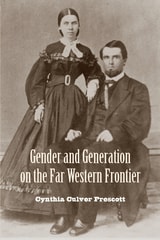
Gender and Generation on the Far Western Frontier
Cynthia Culver Prescott
University of Arizona Press, 2007
In Gender and Generation on the Far Western Frontier, Cynthia Culver Prescott expertly explores the shifting gender roles and ideologies that countless Anglo-American settlers struggled with in Oregon’s Willamette Valley between 1845 and 1900. Drawing on traditional social history sources as well as divorce records, married women’s property records, period photographs, and material culture, Prescott reveals that Oregon settlers pursued a moving target of middle-class identity in the second half of the nineteenth century.
Prescott traces long-term ideological changes, arguing that favorable farming conditions enabled Oregon families to progress from accepting flexible frontier roles to participating in a national consumer culture in only one generation. As settlers’ children came of age, participation in this new culture of consumption and refined leisure became the marker of the middle class. Middle-class culture shifted from the first generation’s emphasis on genteel behavior to a newer genteel consumption.
This absorbing volume reveals the shifting boundaries of traditional women’s spheres, the complicated relationships between fathers and sons, and the second generation’s struggle to balance their parents’ ideology with a changing national sense of class consciousness.

Gender and Heroism in Early Modern English Literature
Mary Beth Rose
University of Chicago Press, 2001
Interweaving discourses of gender, Rose explores ways in which this heroics of endurance became the dominant model. She examines the glamorous, failed destinies of heroes in plays by Shakespeare, Jonson, and Marlowe; Elizabeth I's creation of a heroic identity in her public speeches; the autobiographies of four ordinary women thrust into the public sphere by civil war; and the seduction of heroes into slavery in works by Milton, Aphra Behn, and Mary Astell. Ultimately, her study demonstrates the importance of the female in the creation of modern heroism, while offering a critique of both idealized action and suffering.

Gender and Historiography
Studies in the earlier middle ages in honour of Pauline StaffordJanet L. Nelson, Susan Reynolds, and Susan M. Johns
University of London Press, 2012
Gender and International Migration
KATHARINE M. DONATO is professor and chair of sociology at Vanderbilt University. DONNA GABACCIA is professor of history in the Department of Historical and Cultural Studies at the University of Toronto-Scarborough.
Russell Sage Foundation, 2015
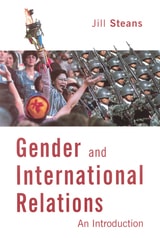
Gender and International Relations
An IntroductionSteans, Jill
Rutgers University Press, 1998
Until relatively recently, little had been written about gender issues in international relations despite the increased importance of the study of gender in other areas of the social sciences. Gender and International Relations fills that gap, providing a clear and accessible guide to the study of gender issues, feminist theories, and international relations. Steans illustrates how gender is central to nationalisms and political identity, the state, citizenship and conceptions of political community, security, and global political economy and development. Drawing on feminist scholarship from across the social sciences, she demonstrates the uses of feminism as critique. She also introduces readers to contemporary theoretical debates in international relations using concrete concerns and easily understandable issues to ground the discussion.
The book does not construct a single feminist theory of international relations nor does it advance a particular perspective of how gender can best be understood in an international or global context. Rather, the book argues that feminist theories have collectively produced insights crucial to the study of international relations and that these insights can be used to challenge conventional approaches to the discipline.

Gender and International Relations
An IntroductionSteans, Jill
Rutgers University Press, 1998
Until relatively recently, little had been written about gender issues in international relations despite the increased importance of the study of gender in other areas of the social sciences. Gender and International Relations fills that gap, providing a clear and accessible guide to the study of gender issues, feminist theories, and international relations. Steans illustrates how gender is central to nationalisms and political identity, the state, citizenship and conceptions of political community, security, and global political economy and development. Drawing on feminist scholarship from across the social sciences, she demonstrates the uses of feminism as critique. She also introduces readers to contemporary theoretical debates in international relations using concrete concerns and easily understandable issues to ground the discussion.
The book does not construct a single feminist theory of international relations nor does it advance a particular perspective of how gender can best be understood in an international or global context. Rather, the book argues that feminist theories have collectively produced insights crucial to the study of international relations and that these insights can be used to challenge conventional approaches to the discipline.
Gender and Justice in Family Law Disputes
Women, Mediation, and Religious ArbitrationEdited by Samia Bano
Brandeis University Press, 2017
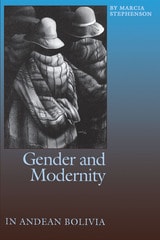
Gender and Modernity in Andean Bolivia
By Marcia Stephenson
University of Texas Press, 1999
In Andean Bolivia, racial and cultural differences are most visibly marked on women, who often still wear native dress and speak an indigenous language rather than Spanish. In this study of modernity in Bolivia, Marcia Stephenson explores how the state's desire for a racially and culturally homogenous society has been deployed through images of womanhood that promote the notion of an idealized, acculturated female body.
Stephenson engages a variety of texts—critical essays, novels, indigenous testimonials, education manuals, self-help pamphlets, and position papers of diverse women's organizations—to analyze how the interlocking tropes of fashion, motherhood, domestication, hygiene, and hunger are used as tools for the production of dominant, racialized ideologies of womanhood. At the same time, she also uncovers long-standing patterns of resistance to the modernizing impulse, especially in the large-scale mobilization of indigenous peoples who have made it clear that they will negotiate the terms of modernity, but always "as Indians."
Gender and Nation in the Spanish Modernist Novel
Roberta Johnson
Vanderbilt University Press, 2003
The book begins by tracing the history of public discourse on gender from the 1890s through the 1930s, a discourse that included the rise of feminism. Each chapter then analyzes works by female and male novelists that address key issues related to gender and nationalism: the concept of intrahistoria, or an essential Spanish soul; modernist uses of figures from the Spanish literary tradition, notably Don Quixote and Don Juan; biological theories of gender prevalent in the 1920s and 1930s; and the growth of an organized feminist movement that coincided with the burgeoning Republican movement.
This is the first book dealing with this period of Spanish literature to consider women novelists, such as Maria Martinez Sierra, Carmen de Burgos, and Concha Espina, alongside canonical male novelists, including Miguel de Unamuno, Ramon del Valle-Inclan, and Pio Baroja. With its contrasting conceptions of modernism, Johnson's work provides a compelling new model for bridging the gender divide in the study of Spanish fiction.
Gender and National Literature
Heian Texts in the Constructions of Japanese ModernityTomiko Yoda
Duke University Press, 2004
Moving back and forth between a critique of modern discourses on Heian literature and close analyses of the Heian texts themselves, Yoda sheds light on some of the most persistent interpretive models underwriting Japanese literary studies, particularly the modern paradigm of a masculine national subject. She proposes new directions for disciplinary critique and suggests that historicized understandings of premodern texts offer significant insights into contemporary feminist theories of subjectivity and agency.
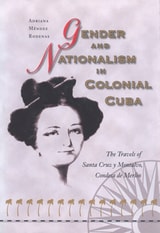
Gender and Nationalism in Colonial Cuba
The Travels of Santa Cruz y Montalvo, Condesa de MerlinAdriana Mendez Rodenas
Vanderbilt University Press, 1998
Born in colonial Havana to an aristocratic Creole family, the future countess of Merlin left Cuba for Spain at an early age. Later, her marriage to the French count Antoine Christophe Merlin and the invasion of French Napoleonic troops precipitated another move to France, where she became one of the belle dames of Paris and began her literary career. She returned only once to Cuba after the death of her husband in 1840, a journey that produced Viaje a la Habana. Upon her return to Paris, Merlin expanded this into La Havane, an ambitious three-volume account of the political, social, and economic organization of the island.
From the viewpoint of feminist and psychoanalytical theory, Gender and Nationalism in Colonial Cuba brilliantly explores the many ways in which issues of gender have contributed to Merlin's virtual absence from the canons of literature and from the discourses on Cuban national identity. Merlin's double identity as both Cuban and French is symbolic of the Cuban exiled condition, a fact taken up by contemporary exiled Cuban writers who see the countess as an alter-ego.
Mendez Rodenas seeks to restore Merlin as the first woman writer in Cuban literary history to articulate a sense of national identity, as well as being Cuba's first female historian. She focuses on Merlin's travel writings because they examine such issues as slavery, independence, nationhood, the role of women, education, and local literature. Together her writings construct an alternative, gendered history of nineteenth-century Cuba that must be acknowledged as both functional and authentic.
By situating Merlin at the intersection of the discourses of gender and nationalism, Mendez Rodenas reveals not only her pioneering role but also the need to expand current critical categories to account for the specificity of the Latin American literary tradition. In the process of restoring Merlin to her appropriate place in the canon of Latin American literature, she broadens our understanding of colonial Cuban history and expands our knowledge of the ways in which travel writing can influence a country's national literature .
Gender and Personality
Current Perspectives on Theory and ResearchAbigail J. Stewart and M. Brinton Lykes, eds.
Duke University Press, 1985
Gender and Planning
A ReaderServon, Lisa J
Rutgers University Press, 2005
Increasingly, experts recognize that gender has affected urban planning and the design of the spaces where we live and work. Too often, urban and suburban spaces support stereotypically male activities and planning methodologies reflect a male-dominated society.
To document and analyze the connection between gender and planning, the editors of this volume have assembled an interdisciplinary collection of influential essays by leading scholars. Contributors point to the ubiquitous single-family home, which prevents women from sharing tasks or pooling services. Similarly, they argue that public transportation routes are usually designed for the (male) worker's commute from home to the central city, and do not help the suburban dweller running errands. In addition to these practical considerations, many contributors offer theoretical perspectives on issues such as planning discourse and the construction of concepts of rationality.
While the essays call for an awareness of gender in matters of planning, they do not over-simplify the issue by moving toward a single feminist solution. Contributors realize that not all women gravitate toward communal opportunities, that many women now share the supposedly male commute, and that considerations of race and class need to influence planning as well. Among various recommendations, contributors urge urban planners to provide opportunities that facilitate women's needs, such as childcare on the way to work and jobs that are decentralized so that women can be close to their children.
Bringing together the most important writings of the last twenty-five years, this book is essential reading for students and scholars of planning theory as well as anyone concerned with gender and diversity.
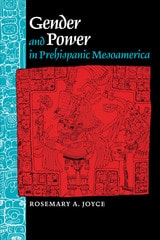
Gender and Power in Prehispanic Mesoamerica
By Rosemary A. Joyce
University of Texas Press, 2001
Gender was a fluid potential, not a fixed category, before the Spaniards came to Mesoamerica. Childhood training and ritual shaped, but did not set, adult gender, which could encompass third genders and alternative sexualities as well as "male" and "female." At the height of the Classic period, Maya rulers presented themselves as embodying the entire range of gender possibilities, from male through female, by wearing blended costumes and playing male and female roles in state ceremonies.
This landmark book offers the first comprehensive description and analysis of gender and power relations in prehispanic Mesoamerica from the Formative Period Olmec world (ca. 1500-500 BC) through the Postclassic Maya and Aztec societies of the sixteenth century AD. Using approaches from contemporary gender theory, Rosemary Joyce explores how Mesoamericans created human images to represent idealized notions of what it meant to be male and female and to depict proper gender roles. She then juxtaposes these images with archaeological evidence from burials, house sites, and body ornaments, which reveals that real gender roles were more fluid and variable than the stereotyped images suggest.

Gender and Rhetorical Space in American Life, 1866-1910
Nan Johnson
Southern Illinois University Press, 2002
Nan Johnson demonstrates that after the Civil War, nonacademic or “parlor” traditions of rhetorical performance helped to sustain the icon of the white middle class woman as queen of her domestic sphere by promoting a code of rhetorical behavior for women that required the performance of conventional femininity. Through a lucid examination of the boundaries of that gendered rhetorical space—and the debate about who should occupy that space—Johnson explores the codes governing and challenging the American woman’s proper rhetorical sphere in the postbellum years.
While men were learning to preach, practice law, and set political policies, women were reading elocution manuals, letter-writing handbooks, and other conduct literature. These texts reinforced the conservative message that women’s words mattered, but mattered mostly in the home. Postbellum pedagogical materials were designed to educate Americans in rhetorical skills, but they also persistently directed the American woman to the domestic sphere as her proper rhetorical space. Even though these materials appeared to urge the white middle class women to become effective speakers and writers, convention dictated that a woman’s place was at the hearthside where her rhetorical talents were to be used in counseling and instructing as a mother and wife.
Aided by twenty-one illustrations, Johnson has meticulously compiled materials from historical texts no longer readily available to the general public and, in so doing, has illuminated this intersection of rhetoric and feminism in the nineteenth century. The rhetorical pedagogies designed for a postbellum popular audience represent the cultural sites where a rethinking of women’s roles becomes open controversy about how to value their words. Johnson argues this era of uneasiness about shifting gender roles and the icon of the “quiet woman” must be considered as evidence of the need for a more complete revaluing of women’s space in historical discourse.
Gender and Scientific Authority
Edited by Barbara Laslett, Sally Gregory Kohlstedt, Helen Longino, and Evelynn Hammonds
University of Chicago Press, 1996
Gender and Secrecy, Volume 30
Ann Marie Rasmussen
Duke University Press, 0

Gender and Sexuality in Latin America, Volume 81
Gilbert M. Joseph, ed.
Duke University Press, 0
Sueann Caulfield, one of the most distinguished scholars of Latin American gender studies, leads off with an insightful historiographical analysis of the field. Building on the foundation laid by Caulfield, a forum of four younger scholars—Heidi Tinsman, Karin Rosemblatt, Elizabeth Hutchinson, and Thomas Klubock—examines the construction of gender and power in a variety of politically contested arenas, including agrarian reform, welfarism, and leftist activism. Focusing on twentieth-century Chile, the collection also includes essays by Pablo Piccato and Christina Rivera that analyze gender dynamics, class relations, and sexual violence in the context of the medical-legal state that emerged in early-twentieth-century Mexico. The issue concludes with Martin Nesvig’s essay, which negotiates the complex terrain of Latin American homosexuality and bisexuality.
This special issue will be a valuable resource for anyone teaching women’s history, gender history, the history of sexuality, or any course on Latin American history with a focus on gender and sexuality.
Contributors. Sueann Caulfield, Elizabeth Quay Hutchison, Gilbert M. Joseph, Thomas J. Klubock, Martin Nesvig, Pablo Piccato, Cristina Rivera Garza, Karin Rosemblatt, Heidi Tinsman

Gender and Sexuality in Modern Ireland
Anthony Bradley
University of Massachusetts Press, 1997
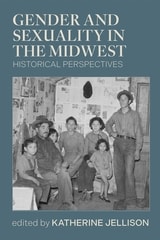
Gender and Sexuality in the Midwest
Historical PerspectivesKatherine Jellison
Ohio University Press, 2027
This book is a collection of eleven essays, an introduction, and a conclusion that discuss issues of gender and sexuality in the twelve states of the Midwest. The book covers 200 years of midwestern history—from the early nineteenth century to the early twenty-first century—and includes the experiences of midwesterners of diverse races, religions, and sexualities. The essays are arranged according to three topical categories. Essays in the first section of the book deal with some aspect of Memory and Methodology, those in the second section engage matters of Community and Belief, and the chapters in the final third of the manuscript address intersections of Biography and Politics. The authors of all eleven essays firmly ground their analyses within the categories of gender and/or sexuality. Essayists include discussion of men and masculinity as well as women and femininity. In addition, several of the essays address situations outside the realm of heterosexual monogamy: plural marriage, celibacy, LGBTQ+ relationships. In other words, the book engages with developments in subject matter and methodology that have changed the gender studies field over the past 15-30 years.
Authors have written their essays with an eye toward a broad audience. The book is appropriate reading for historians of women, gender, and sexuality; scholars of midwestern history and midwestern studies; undergraduate and graduate students in women’s and gender history courses; undergraduate and graduate students in women’s, gender, and sexuality studies courses; and non-academic readers with a particular interest in the Midwest or gender history.
Contributors
Kristin Mapel Bloomberg
Nikki Berg Burin
Stewart Davenport
Kara M. French
Barbara Handy-Marchello
Birgit Hans
Dean J. Kotlowski
David Mislin
Cynthia C. Prescott
Ashley Rattner
Jordan Zdinak
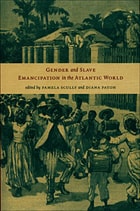
Gender and Slave Emancipation in the Atlantic World
Pamela Scully and Diana Paton, eds.
Duke University Press, 2005
Offering detailed analyses of slave emancipation in specific societies, the contributors discuss all of the diverse actors in emancipation: slaves, abolitionists, free people of color, state officials, and slave owners. Whether considering the construction of a postslavery masculine subjectivity in Jamaica, the work of two white U.S. abolitionist women with the Freedmen’s Bureau after the Civil War, freedwomen’s negotiations of labor rights in Puerto Rico, slave women’s contributions to the slow unraveling of slavery in French West Africa, or the ways that Brazilian abolitionists deployed representations of femininity as virtuous and moral, these essays demonstrate the gains that a gendered approach offers to understanding the complex processes of emancipation. Some chapters also explore theories and methodologies that enable a gendered reading of postslavery archives. The editors’ substantial introduction traces the reasons for and patterns of women’s and men’s different experiences of emancipation throughout the Atlantic world.
Contributors. Martha Abreu, Sheena Boa, Bridget Brereton, Carol Faulkner, Roger Kittleson, Martin Klein, Melanie Newton, Diana Paton, Sue Peabody, Richard Roberts, Ileana M. Rodriguez-Silva, Hannah Rosen, Pamela Scully, Mimi Sheller, Marek Steedman, Michael Zeuske

Gender and Society in Contemporary Brazilian Cinema
By David William Foster
University of Texas Press, 1999
"Gender is an absolute ground zero for most human societies," writes David William Foster, "an absolute horizon of social subjectivity." In this book, he examines gender issues in thirteen Brazilian films made (with one exception) after the 1985 return to constitutional democracy and elimination of censorship to show how these issues arise from and comment on the sociohistorical reality of contemporary Brazilian society.
Foster organizes his study around three broad themes: construction of masculinity, constructions of feminine and feminist identities, and same-sex positionings and social power. Within his discussions of individual films ranging from Jorge um brasileiro to A hora da estrela to Beijo no asfalto, he offers new ways of understanding national ideals and stereotypes, sexual dissidence (homoeroticism and transgenderism), heroic models, U.S./Brazilian relations, revolutionary struggle, and human rights violations. As the first study of Brazilian cinematic representations of gender ideology in English or Portuguese, this book will be important reading in film and cultural studies.
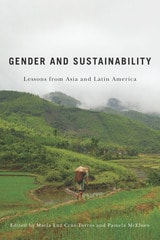
Gender and Sustainability
Lessons from Asia and Latin AmericaEdited by María Luz Cruz-Torres and Pamela McElwee
University of Arizona Press, 2012
Bringing together case studies from Asia and Latin America, this valuable collection adds new knowledge to our understanding of the interplay between local and global processes. Organized broadly by three major issues—forests, water, and fisheries—the scholarship ranges widely: the gender dimensions of the illegal trade in wildlife in Vietnam; women and development issues along the Ganges River; the role of gender in sustainable fishing in the Philippines; women’s inclusion in community forestry in India; gender-based confrontations and resistance in Mexican fisheries; environmentalism and gender in Ecuador; and women’s roles in managing water scarcity in Bolivia and addressing sustainability in shrimp farming in the Mekong Delta.
Together these chapters show why gender issues are important for understanding how communities and populations deal daily with the challenges of globalization and environmental change. Through their rich ethnographic research, the contributors demonstrate that gender analysis offers useful insights into how a more sustainable world can be negotiated—one household and one community at a time.
Contributors
Stephanie Buechler
María Luz Cruz-Torres
Linda D’Amico
Georgina Drew
James Eder
Lisa L. Gezon
Pamela McElwee
Neera Singh
Hong Anh Vu
Amber Wutich

Gender and Violence against Political Actors
Edited by Elin Bjarnegård and Pär Zetterberg
Temple University Press, 2023
Chapters focus on theoretical approaches demonstrating how different disciplinary starting points—e.g., politics, violence and gender—give rise to different lenses. Essays examine violence carried out during conflict and peacetime, and relate to the continuum of violence—physical, sexual, psychological, and online. In addition, six country case studies reveal how different types of political actors have been targets of violence.
Gender and Violence against Political Actors ends by providing various approaches to responding to the problem of gendered violence in politics while also evaluating policy responses.
Contributors: Kerryn Baker, Julie Ballington, Gabrielle Bardall, Gabriella Borovsky, Cheryl N. Collier, Sofia Collignon, Maria Eriksson Baaz, Eleonora Esposito, Nicole Haley, Rebekah Herrick, Sandra Håkansson, Roudabeh Kishi, Anne-Kathrin Kreft, Mona Lena Krook, Rebecca Kuperberg, Robert U. Nagel, Louise Olsson, Jennifer M. Piscopo, Tracey Raney, Juliana Restrepo Sanín, Paige Schneider, Maria Stern, Sue Thomas, and the editors

Gender and Violence in Haiti
Women’s Path from Victims to AgentsBenedetta Faedi Duramy
Rutgers University Press, 2014
Gender and Violence in Haiti is the product of more than a year of extensive firsthand observations and interviews with the women who have been caught up in the widespread violence plaguing Haiti. Drawing from the experiences of a diverse group of Haitian women, Faedi Duramy finds that both the victims and perpetrators of violence share a common sense of anger and desperation. Untangling the many factors that cause these women to commit violence, from self-defense to revenge, she identifies concrete measures that can lead them to feel vindicated and protected by their communities.
Faedi Duramy vividly conveys the horrifying conditions pervading Haiti, even before the 2010 earthquake. But Gender and Violence in Haiti also carries a message of hope—and shows what local authorities and international relief agencies can do to help the women of Haiti.
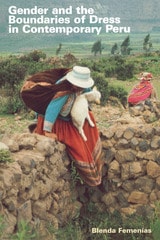
Gender and the Boundaries of Dress in Contemporary Peru
By Blenda Femenías
University of Texas Press, 2005
Set in Arequipa during Peru's recent years of crisis, this ethnography reveals how dress creates gendered bodies. It explores why people wear clothes, why people make art, and why those things matter in a war-torn land. Blenda Femenías argues that women's clothes are key symbols of gender identity and resistance to racism.
Moving between metropolitan Arequipa and rural Caylloma Province, the central characters are the Quechua- and Spanish-speaking maize farmers and alpaca herders of the Colca Valley. Their identification as Indians, whites, and mestizos emerges through locally produced garments called bordados. Because the artists who create these beautiful objects are also producers who carve an economic foothold, family workshops are vital in a nation where jobs are as scarce as peace. But ambiguity permeates all practices shaping bordados' significance. Femenías traces contemporary political and ritual applications, not only Caylloma's long-standing and violent ethnic conflicts, to the historical importance of cloth since Inca times.
This is the only book about expressive culture in an Andean nation that centers on gender. In this feminist contribution to ethnography, based on twenty years' experience with Peru, including two years of intensive fieldwork, Femenías reflects on the ways gender shapes relationships among subjects, research, and representation.
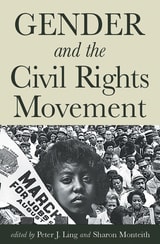
Gender and the Civil Rights Movement
Ling, Peter J
Rutgers University Press, 2004

Gender and the Gothic in the Fiction of Edith Wharton
Kathy A. Fedorko
University of Alabama Press, 1995
Revealing the Gothic foundations of Edith Wharton's vision of gender and identity.
Gender and the Gothic in the Fiction of Edith Wharton is an innovative study that provides fresh insights into Wharton’s male characters while at the same time showing how Wharton’s imagining of a fe/male self evolves throughout her career. Using feminist archetypal theory and theory of the female Gothic, Kathy A. Fedorko shows how Wharton, in sixteen short stories and six major novels written during four distinct periods of her life, adopts and adapts Gothic elements to explore the nature of feminine and masculine ways of knowing and being and to dramatize the tension between them.
Edith Wharton’s contradictory views of women and men—her attitudes toward the feminine and the masculine—reflect a complicated interweaving of family and social environment, historical time, and individual psychology. Studies of Wharton have exhibited this same kind of contradiction, with some seeing her as disparaging men and the masculine and others depicting her as disparaging women and the feminine. The use of Gothic elements in her fiction provided Wharton, who was often considered the consummate realist, with a way to dramatize the conflict between feminine and masculine selves as she experienced them and to evolve an alternative to the dualism.
Fedorko’s work is unique in its careful consideration of Wharton’s sixteen Gothic works, which are seldom discussed. Further, the revelation of how these Gothic stories are reflected in her major realistic novels. In the novels with Gothic texts, Wharton draws multiple parallels between male and female protagonists, indicating the commonalities between women and men and the potential for a female self. Eventually, in her last completed novel and her last short story, Wharton imagines human beings who are comfortable with both gender selves.

Gender and the Musical Canon
Marcia J. Citron
University of Illinois Press, 2000
A classic in gender studies in music
Marcia J. Citron's comprehensive, balanced work lays a broad foundation for the study of women composers and their music. Drawing on a diverse body of feminist and interdisciplinary theory, Citron shows how the western art canon is not intellectually pure but the result of a complex mixture of attitudes, practices, and interests that often go unacknowledged and unchallenged.
Winner of the Pauline Alderman Prize from the International Alliance of Women in Music, Gender and the Musical Canon explores important elements of canon formation, such as notions of creativity, professionalism, and reception. Citron surveys the institutions of power, from performing organizations and the academy to critics and the publishing and recording industries, that affect what goes into the canon and what is kept out. She also documents the nurturing role played by women, including mothers, in cultivating female composers. In a new introduction, she assesses the book's reception by composers and critics, especially the reactions to her controversial reading of Cécile Chaminade's sonata for piano.
A key volume in establishing how the concepts and assumptions that form the western art music canon affect female composers and their music, Gender and the Musical Canon also reveals how these dynamics underpin many of the major issues that affect musicology as a discipline.
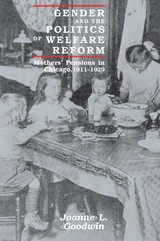
Gender and the Politics of Welfare Reform
Mothers' Pensions in Chicago, 1911-1929Joanne L. Goodwin
University of Chicago Press, 1997
This revealing study shows how assumptions about women's roles have historically shaped public policy and sheds new light on the ongoing controversy of welfare reform.
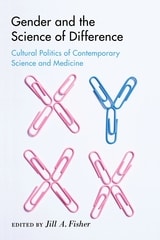
Gender and the Science of Difference
Cultural Politics of Contemporary Science and MedicineFisher, Jill A
Rutgers University Press, 2011
How does contemporary science contribute to our understanding about what it means to be women or men? What are the social implications of scientific claims about differences between "male" and "female" brains, hormones, and genes? How does culture influence scientific and medical research and its findings about human sexuality, especially so-called normal and deviant desires and behaviors? Gender and the Science of Difference examines how contemporary science shapes and is shaped by gender ideals and images.
Prior scholarship has illustrated how past cultures of science were infused with patriarchal norms and values that influenced the kinds of research that was conducted and the interpretation of findings about differences between men and women. This interdisciplinary volume presents empirical inquiries into today's science, including examples of gendered scientific inquiry and medical interventions and research. It analyzes how scientific and medical knowledge produces gender norms through an emphasis on sex differences, and includes both U.S. and non-U.S. cases and examples.
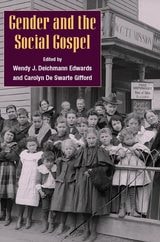
Gender and the Social Gospel
Edited by Wendy J. Deichmann Edwards and Carolyn De Swarte Gifford
University of Illinois Press, 2003
A practical theological response to the stark realities of poverty and injustice prevalent in turn-of-the-century America, the social gospel movement sought to apply the teachings of Jesus and the message of Christian salvation to society by striving to improve the lives of the impoverished and the disenfranchised. The contributors to this volume set out to broaden our understanding of this radical movement by examining the lives of some of its passionate and vibrant female participants and the ways in which their involvement expanded and enriched the scope of its activity.
In addition to examining the lives of individual women, the essays in Gender and the Social Gospel contain broader analyses of the gender and racial issues that have caused the histories of movements such as the social gospel to be viewed almost exclusively in terms of their male, European-American, intellectual participants at the expense of the women, African Americans, and Canadians whose contributions were just as worthy of attention.
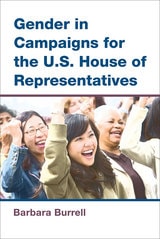
Gender in Campaigns for the U.S. House of Representatives
Barbara Burrell
University of Michigan Press, 2014
Gender in Latin America
Chant, Sylvia
Rutgers University Press, 2002
In Latin America, gender is a fundamental dimension of virtually every aspect of contemporary social, economic, and political life. Gender in Latin America is a comprehensive state-of-the-art review of gender in the region at the start of the twenty-first century. The authors draw on a wide range of research, including their own field-based expertise, to illuminate the importance of diversity in gender in this region. Debunking traditional stereotypes, the book charts changes and continuities in gender roles, relations and identities associated with the growing evidence produced by feminist scholarship and activism in the continent.
Chapters are arranged around themes such as gender and poverty, gender and population, gender and health, and gender and employment. Each chapter begins with an introduction to the core issues, and debates in the relevant field in order to set specific regional experiences within their global as well as regional contexts. The authors also refer to new bodies of literature on the subject, including those on men and masculinity, fatherhood, and sexuality.

Gender in Play on the Shakespearean Stage
Boy Heroines and Female PagesMichael Shapiro
University of Michigan Press, 1996
Shapiro's study centers on the five plays in which Shakespeare employed the figure of the "female page": The Two Gentlemen of Verona, The Merchant of Venice, As You Like It, Twelfth Night, and Cymbeline. Combining theater and social history, Shapiro locates Shakespeare's work in relation to controversies over gender roles and cross-dressing in Elizabethan England.
The popularity of the "female page" is examined as a playful literary and theatrical way of confronting, avoiding, or merely exploiting issues such as the place of women in a patriarchal culture and the representation of women on stage. Looking beyond and behind the stage for the cultural anxieties that found their way into Shakespearean drama, Shapiro considers such cases as cross-dressing women in London being punished as prostitutes and the alleged homoerotic practices of the apprentices who played female roles in adult companies. Shapiro also traces other Elizabethan dramatists' varied uses of the cross-dressing motif, especially as they were influenced by Shakespeare's innovations.
"Shapiro's engaging study is distinguished by the scope of interrelated topics it draws together and the balance of critical perspectives it brings to bear on them." --Choice
Michael Shapiro is Professor of English, University of Illinois, Urbana.

Gender in Play on the Shakespearean Stage
Boy Heroines and Female PagesMichael Shapiro
University of Michigan Press, 0
Gender in medieval places, spaces and thresholds
Edited by Victoria Blud, Diane Heath, and Einat Klafter
University of London Press, 2019
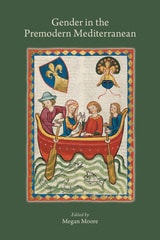
Gender in the Premodern Mediterranean
Megan Moore
Arizona Center for Medieval and Renaissance Studies, 2019
Whereas other volumes have examined gender in the premodern period or premodern Mediterranean Studies, to date no other volume has sought to explore the intersection of the two. The interdisciplinary nature of the essays will make them useful to both scholars and teachers, for they will combine theory and practice in a length that makes them easily accessible to advanced students as well as specialized researchers. The first chapter provides a critical overview of the scholarship on Mediterranean studies as a field of area studies as well as an overview of gender studies in the medieval period. As such, the volume will be useful for students, teachers, and researchers, and its interdisciplinary nature reflects the diaspora of the Mediterranean itself.
Gender on Campus
Issues for College WomenGmelch, Sharon B
Rutgers University Press, 1998
Gender on Campus is the first book to combine solid analyses of the broad range of gender issues for women in college with realistic approaches to heighten awareness and alleviate problems. Written for students, the book first clarifies the concept of feminism and then examines gender dynamics in a variety of settings and contexts-from the classroom to the sports field and from language to social life. Sharon Gmelch probes sexism, racism, and homophobia on campus and surveys the special issues facing diverse women students. The book also addresses issues relating to body image and sexuality. Its final chapters analyze the role gender continues to play after college-in the media, workplace, and politics.
After a thorough discussion of a topic, each chapter concludes with possibilities for action ("What You Can Do") as well as a selected bibliography of books, videos, and organizations that students can consult. Gender on Campus is an invaluable resource for students, parents, and administrators, as well as an excellent text for women's studies courses.