Results by title
66 books match the query 'Genealogy' and 3 start with g
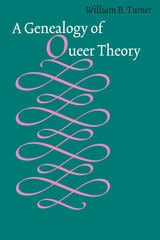
Genealogy Of Queer Theory
William Turner
Temple University Press, 2000
Turner shows how Michal Foucault's work contributed to feminists' investigations into the ways that power relates to identity. In the last decades of the twentieth century, feminists were the first to challenge the assumption that a claim to universal identity -- the white male citizen -- should serve as the foundation of political thought and action. Difference matters. Race, ethnicity, class, gender, and sexuality interact, producing a wide array of identities that resist rigid definition and are mutable. By understanding the notion of transhistorical categories -- woman, man, homosexual, and so forth -- feminist and gay male scholars launched queer theoretical work as a new way to think about the politics of gender and sexuality.
A Geneology of Queer Theory probes the fierce debates among scholars and activists, weighing the charges that queer readings of texts and identity politics do not constitute and might inhibit radical social change. Written by a historian, it considers the implications of queer theory for historical inquiry and the distinction between philosophy and history. As such, the book will interest readers of gay/lesbian/bisexual/transgender studies, intellectual history, political theory, and the history of gender/sexuality.

Genealogy and Literature
Lee Quinby, Editor
University of Minnesota Press, 1995
Genealogy and Literature was first published in 1995. Minnesota Archive Editions uses digital technology to make long-unavailable books once again accessible, and are published unaltered from the original University of Minnesota Press editions.
Traditionalists insist that literature transcends culture. Others counter that it is subversive by nature. By challenging both claims, Genealogy and Literature reveals the importance of literature for understanding dominant and often violent power/knowledge relations within a given society.
The authors explore the ways in which literature functions as a cultural practice, the links between death and literature as a field of discourse, and the possibilities of dismantling modes of bodily regulation. Through wide-ranging investigations of writing from England, France, Nigeria, Peru, Japan, and the United States, they reinvigorate the study of literature as a means of understanding the complexities of everyday experience.
Contributors: Claudette Kemper Columbus, Lennard J. Davis, Simon During, Michel Foucault, Ellen J. Goldner, Tom Hayes, Kate Mehuron, Donald Mengay, Imafedia Okhamafe, Lee Quinby, José David Saldivar, Malini Johar Schueller.
Lee Quinby is professor of English and American studies at Hobart and William Smith Colleges. She is the author of Anti-Apocalypse: Exercises in Genealogical Criticism (Minnesota, 1994).

Guide to Reference in Genealogy and Biography
Mary K. American Library Association
American Library Association, 2015