Results by title
98 books match the query 'Government' and 8 start with g
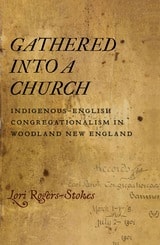
Gathered into a Church
Indigenous-English Congregationalism in Woodland New EnglandLori Rogers-Stokes
University of Massachusetts Press, 2025
Uncovering how and where Indigenous and settler communities found common ground using newly public church records
Puritans in the American colonies created Congregationalism, a Protestant denomination where power rested in each congregation rather than a larger central body. As has often been told, the official Puritan mission included outreach to Indigenous people. This may appear as nothing more than forced conversion under colonization, but church records from Massachusetts—digitized and made public for the first time—reveal the authenticity of this Indigenous religious experience, as evidenced by commonalities between the Congregational way and some aspects of local Native American cultures. The records also show how the decentralized churches stood in contrast to a growing civil government in the colonies.
Lori Rogers-Stokes focuses on the Massachusetts Bay Colony during the decades around the turn of the eighteenth century, a period bookended by King Philip’s War and the First Great Awakening. She uses as her primary source the many records kept by individual Congregational churches of the time. These records, accumulated over generations, have been missing from the historical record, allowing overly simplistic accounts of this religious community to circulate. With church records now available, Rogers-Stokes reveals a more realistic picture of diverse congregations and contrasts their internal workings—which show inherent flexibility and a focus on a shared creation of community—with a developing civil government focused on consolidating power around white landowners. The result is a story that can expand how scholars write about this period, this region, and these communities, both settler and Indigenous.
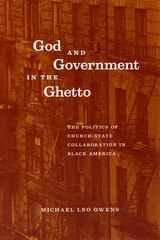
God and Government in the Ghetto
The Politics of Church-State Collaboration in Black AmericaMichael Leo Owens
University of Chicago Press, 2007
But as Michael Leo Owens demonstrates in God and Government in the Ghetto, this alliance also serves as a means for black clergy to reaffirm their political leadership and reposition moral authority in black civil society. Drawing on both survey data and fieldwork in New York City, Owens reveals that African American churches can use these newly forged connections with public agencies to influence policy and government responsiveness in a way that reaches beyond traditional electoral or protest politics. The churches and neighborhoods, Owens argues, can see a real benefit from that influence—but it may come at the expense of less involvement at the grassroots.
Anyone with a stake in the changing strategies employed by churches as they fight for social justice will find God and Government in the Ghetto compelling reading.

Government and Politics in Hungary
András Körösényi
Central European University Press, 1999
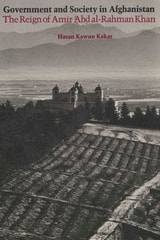
Government and Society in Afghanistan
The Reign of Amir ‘Abd al-Rahman KhanBy Hasan Kawun Kakar
University of Texas Press, 1979
This is an authoritative study of the administrative, social, and economic structure of Afghanistan during a decisive stage in its history. The period covered—the reign of the "Iron" Amir Rahman Khan—was in many ways the beginning of modern Afghanistan as a cohesive nation. Although Afghanistan had emerged as an entity in 1747, it was actually under the Amir that its borders were established, its internal unification completed, and the modern concept of nationhood implanted.
Kakar approaches this complex process by taking into consideration both the internal and the external forces that influenced its development. Thus, modernization, centralization, and nationalization are seen as both defensive reactions to European imperialism and necessary preconditions to capital formation and, consequently, industrialization.
The first part of the book covers the government of the Amir, from the personality of the ruler down to the operation of his new bureaucrats at the local level. Here Kakar presents a comprehensive treatment of the Afghan system of taxation and local government. The second part views these economic and social institutions from the perspective of the major segments of the populace—nomads, townsmen, tribes, women, slaves, landowners, mullahs, merchants, and so forth.
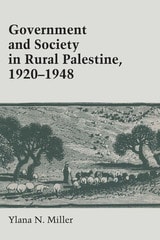
Government and Society in Rural Palestine, 1920-1948
By Ylana N. Miller
University of Texas Press, 1985
In 1947, Arabs made up two-thirds of the population of Palestine, and they owned most of its cultivable land. Why then, did they "lose" their homes and land to a relatively small Jewish community just emerging from the shocks of World War II? Did the Palestinians "lose" their homeland because they were backward, primitive, and reactionary? Or was Israel the product of persistent victimization of Palestinian Arabs by an imperialist power which supported Zionist colonization? Did the Palestinians sell each other out? Or were they helpless sufferers in the face of a sophisticated enemy with endless resources?
Too often discussions of Palestine are couched in such rhetorical language, based on the assumption that either Jews or Arabs are morally to blame for historical realities. This study seeks to go beyond attributions of responsibility to investigate the concrete conditions which determined and limited Palestinian Arab actions between 1920 and 1948. It was during that period, while Great Britain governed the area under a League of Nations mandate, that Palestine both emerged and disappeared as a modern political entity.
Many studies of Palestinian Arab nationalism have looked to Zionism as the primary agent of change in the region. Miller assumes the impact of Jewish settlement but goes beyond these earlier studies to explore the way in which policies of the Palestine government affected the daily lives of villagers—the majority of the population—and their understanding of the changes occurring around them. In this way, what emerges is a detailed analysis of the influence, for good or ill, that government policy had on village community life.
Based largely on archival sources never before used, this work allows the reader to gain a deeper appreciation of the internal life of the rural community, which had previously received relatively little attention. Understanding the experiences of Palestinians before 1948 helps us to comprehend immeasurably better the continuity of movements for Palestinian statehood as well as the continuing tensions and problems on the West Bank today.
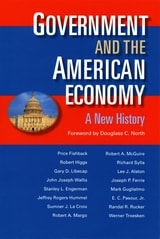
Government and the American Economy
A New HistoryPrice V. Fishback et al.
University of Chicago Press, 2007
The American economy has provided a level of well-being that has consistently ranked at or near the top of the international ladder. A key source of this success has been widespread participation in political and economic processes. In The Government and the American Economy, leading economic historians chronicle the significance of America’s open-access society and the roles played by government in its unrivaled success story.
America’s democratic experiment, the authors show, allowed individuals and interest groups to shape the structure and policies of government, which, in turn, have fostered economic success and innovation by emphasizing private property rights, the rule of law, and protections of individual freedom. In response to new demands for infrastructure, America’s federal structure hastened development by promoting the primacy of states, cities, and national governments. More recently, the economic reach of American government expanded dramatically as the populace accepted stronger limits on its economic freedoms in exchange for the increased security provided by regulation, an expanded welfare state, and a stronger national defense.

Government of Michigan
Robert W. Carr, Ph.D.
University of Michigan Press, 1990

Government of the Shadows
Parapolitics and Criminal SovereigntyEric Wilson
Pluto Press, 2009
Government of the Shadows analyses the concept of clandestine government. It explores how covert political activity and transnational organised crime are linked -- and how they ultimately work to the advantage of state and corporate power.
The book shows that legitimate government is now routinely accompanied by extra-governmental covert operations. Using a variety of case studies, from the mafia in Italy to programmes for food and reconstruction in Iraq, the contributors illustrate that para-political structures are not 'deviant', but central to the operation of global governments.
The creation of this truly parallel world-economy, the source of huge political and economic potential, entices states to undertake new forms of regulation, either through their own intelligence agencies, or through the more shadowy world of criminal cartels.