Results by title
1441 books match the query 'Great Britain' and 24 start with g
GENDER AND PETTY VIOLENCE IN LONDON, 1680-1720
JENNINE HURL-EAMON
The Ohio State University Press, 2005
Looking at a heretofore overlooked set of archival records of London in the late 17th and early 18th centuries, Hurl-Eamon reassesses the impact of gender on petty crime and its prosecution during the period. This book offers a new approach to the growing body of work on the history of violence in past societies. By focusing upon low-cost prosecutions in minor courts, Hurl-Eamon uncovers thousands of assaults on the streets of early modern London. Previous histories stressing the masculine nature of past violence are questioned here: women perpetrated one-third of all assaults. In looking at more mundane altercations rather than the homicidal attacks studied in previous histories, the book investigates violence as a physical language, with some forms that were subject to gender constraints, but many of which were available to both men and women. Quantitative analyses of various circumstances surrounding the assaults—including initial causes, weapons used, and injuries sustained—outline the patterns of violence as a language.
Hurl-Eamon also stresses the importance of focusing on the prosecutorial voice. In bringing the court’s attention to petty attacks, thousands of early modern men and women should be seen as agents rather than victims. This view is especially interesting in the context of domestic violence, where hundreds of wives and servants prosecuted patriarchs for assault, and in the Mohock Scare of 1712, where London’s populace rose up in opposition to aristocratic violence. The discussion is informed by a detailed knowledge of assault laws and the rules governing justices of the peace.
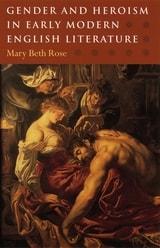
Gender and Heroism in Early Modern English Literature
Mary Beth Rose
University of Chicago Press, 2001
Interweaving discourses of gender, Rose explores ways in which this heroics of endurance became the dominant model. She examines the glamorous, failed destinies of heroes in plays by Shakespeare, Jonson, and Marlowe; Elizabeth I's creation of a heroic identity in her public speeches; the autobiographies of four ordinary women thrust into the public sphere by civil war; and the seduction of heroes into slavery in works by Milton, Aphra Behn, and Mary Astell. Ultimately, her study demonstrates the importance of the female in the creation of modern heroism, while offering a critique of both idealized action and suffering.

Gender in medieval places, spaces and thresholds
Edited by Victoria Blud, Diane Heath, and Einat Klafter
University of London Press, 2019
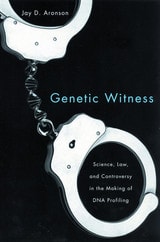
Genetic Witness
Science, Law, and Controversy in the Making of DNA ProfilingJay D. Aronson
Rutgers University Press, 2007
Yet, this promise took ten turbulent years to be fulfilled. In Genetic Witness, Jay D. Aronson uncovers the dramatic early history of DNA profiling that has been obscured by the technique’s recent success. He demonstrates that robust quality control and quality assurance measures were initially nonexistent, interpretation of test results was based more on assumption than empirical evidence, and the technique was susceptible to error at every stage. Most of these issues came to light only through defense challenges to what prosecutors claimed to be an infallible technology. Although this process was fraught with controversy, inefficiency, and personal antagonism, the quality of DNA evidence improved dramatically as a result. Aronson argues, however, that the dream of a perfect identification technology remains unrealized.
Genre of Autobiography in Victorian Literature
Clinton Machann
University of Michigan Press, 1995
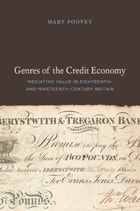
Genres of the Credit Economy
Mediating Value in Eighteenth- and Nineteenth-Century BritainMary Poovey
University of Chicago Press, 2008
Chronicling the process by which some of our most important conceptual categories were naturalized, Mary Poovey explores complex relationships among forms of writing that are not usually viewed together, from bills of exchange and bank checks, to realist novels and Romantic poems, to economic theory and financial journalism. Taking up all early forms of financial and monetarywriting, Poovey argues that these genres mediated for early modern Britons the operations of a market system organized around credit and debt. By arguing that genre is a critical tool for historical and theoretical analysis and an agent in the events that formed the modern world, Poovey offers a new way to appreciate the character of the credit economy and demonstrates the contribution historians and literary scholars can make to understanding its operations.
Much more than an exploration of writing on and around money, Genres of the Credit Economy offers startling insights about the evolution of disciplines and the separation of factual and fictional genres.
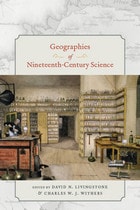
Geographies of Nineteenth-Century Science
Edited by David N. Livingstone and Charles W. J. Withers
University of Chicago Press, 2011
In Geographies of Nineteenth-Century Science, David N. Livingstone and Charles W. J. Withers gather essays that deftly navigate the spaces of science in this significant period and reveal how each is embedded in wider systems of meaning, authority, and identity. Chapters from a distinguished range of contributors explore the places of creation, the paths of knowledge transmission and reception, and the import of exchange networks at various scales. Studies range from the inspection of the places of London science, which show how different scientific sites operated different moral and epistemic economies, to the scrutiny of the ways in which the museum space of the Smithsonian Institution and the expansive space of the American West produced science and framed geographical understanding. This volume makes clear that the science of this era varied in its constitution and reputation in relation to place and personnel, in its nature by virtue of its different epistemic practices, in its audiences, and in the ways in which it was put to work.
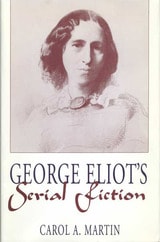
George Eliot’s Serial Fiction
Carol A. Martin
The Ohio State University Press, 1994
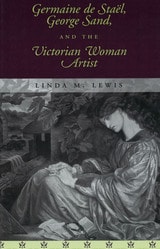
Germaine De Staël, George Sand, and the Victorian Woman Artist
Linda M. Lewis
University of Missouri Press, 2003

German Invasion Plans for the British Isles, 1940
Edited by the Bodleian Library
Bodleian Library Publishing, 2008
Operation Sealion was the codename for the Nazi invasion of Britain that Hitler ordered his generals to plan after France fell in June 1940. Although the plan ultimately never came to fruition, a few sets of the Germans’ detailed strategy documents are housed in the rare book rooms of libraries across Europe. But now the Bodleian Library has made documents from their set available for all to peruse in this unprecedented collection of the invasion planning materials.
The planned operation would have involved landing 160,000 German soldiers along a forty-mile stretch of coast in southeast England. Packets of reconnaissance materials were put together for the invading forces, and the most intriguing parts are now reproduced here. Each soldier was to be given maps and geographical descriptions of the British Isles that broke down the country by regions, aerial photographs pinpointing strategic targets, an extensive listing of British roads and rivers, strategic plans for launching attacks on each region, an English dictionary and phrase book, and even a brief description of Britain’s social composition.
Augmenting the fascinating documents is an informative introduction that sets the materials in their historical and political context. A must-have for every military history buff, German Invasion Plans for the British Isles, 1940 is a remarkable revelation of the inner workings of Hitler’s most famous unrealized military campaign.

Gerrard Winstanley
The Digger's Life and LegacyJohn Gurney
Pluto Press, 2012
John Gurney reveals the hidden history of Winstanley and his movement. As part of the radical ferment which swept England at the time of the civil war, Winstanley led the Diggers in taking over land and running it as 'a common treasury for all' – provoking violent opposition from landowners. Gurney also guides us through Winstanley's writings, which are among the most remarkable prose writings of his age.
Gerrard Winstanley: The Digger's Life and Legacy is a must read for students of English history and all those seeking to re-claim the commons today.
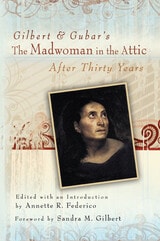
Gilbert and Gubar's The Madwoman in the Attic after Thirty Years
Edited by Annette R. Federico, Foreward by Sandra M. Gilbert
University of Missouri Press, 2011
When it was published in 1979, Sandra M. Gilbert and Susan Gubar's The Madwoman in the Attic: The Woman Writer and the Nineteenth-Century Literary Imaginationwas hailed as a pathbreaking work of criticism, changing the way future scholars would read Jane Austen, Mary Shelley, the Brontës, George Eliot, and Emily Dickinson. This thirtieth-anniversary collection adds both valuable reassessments and new readings and analyses inspired by Gilbert and Gubar’s approach. It includes work by established and up-and-coming scholars, as well as retrospective accounts of the ways in which The Madwoman in the Attic has influenced teaching, feminist activism, and the lives of women in academia.
These contributions represent both the diversity of today’s feminist criticism and the tremendous expansion of the nineteenth-century canon. The authors take as their subjects specific nineteenth- and twentieth-century women writers, the state of feminist theory and pedagogy, genre studies, film, race, and postcolonialism, with approaches ranging from ecofeminism to psychoanalysis. And although each essay opens Madwoman to a different page, all provocatively circle back—with admiration and respect, objections and challenges, questions and arguments—to Gilbert and Gubar's groundbreaking work.
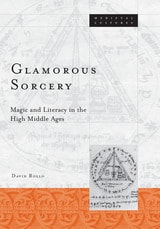
Glamorous Sorcery
Magic and Literacy in the High Middle AgesDavid Rollo
University of Minnesota Press, 2000

Globalisation and Industrial Relations
The Pharmaceutical Industry in Germany and the United KingdomLuitpold Rampeltshammer
Campus Verlag, 2008
Godliness and Governance in Tudor Colchester
Laquita M. Higgs
University of Michigan Press, 1999
In Godliness and Governance in Tudor Colchester Laquita M. Higgs traces the governance and the religion of that town. Though traditional piety held sway early in the Tudor era, there was a strong undercurrent of hereticism, even among town leaders. Such sympathy helps explain Colchester's embrace of Henry VIII's religious reforms. Town governors also found it advantageous to cooperate with the local nobleman, the earl of Oxford, and with their own Thomas Audley, who helped the King shape the reformation. Queen Mary's attempts to root out Protestantism strengthened Colchester's commitment to reform. Under Elizabeth, reformers gradually took over governance of the borough.
Colchester provides one of the earliest illustrations of the workings and tensions of Puritan town governance. Higgs examines the connections between governance and religion with special emphasis on the Elizabethan period. The town's development toward religious radicalism is shown by a comparison of the aldermen of 1530, 1560, and 1590. Higgs explores the camaraderie of the reformers, the attempt of town leaders to correct immoral behavior, and the resultant tensions that produced deep divisions between moderate reformers and radical Puritans. An analysis of extant wills shows the extent to which Puritan governors achieved some degree of success.
Godliness and Governance in Tudor Colchester will be of interest to historians of the Tudor period, Catholicism, Lollardy, and the English Protestant Reformation.
Laquita M. Higgs is Adjunct Lecturer in History, University of Michigan, Dearborn.
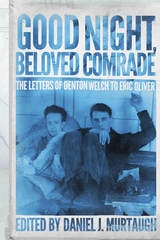
Good Night, Beloved Comrade
The Letters of Denton Welch to Eric OliverEdited and with an introduction by Daniel J. Murtaugh
University of Wisconsin Press, 2017
Though German bombs were ravaging Britain, Welch wrote in his published work about the idyllic landscapes and local people he observed in Kent. There, in 1943, he met and fell in love with Eric Oliver, a handsome, intelligent, but rather insecure "landboy"—an agricultural worker with the wartime Land Army. Oliver would become a companion, comrade, lover, and caretaker during the last six years of Welch's life. All fifty-one letters that Welch wrote to Oliver are collected and annotated here for the first time. They offer a historical record of life amidst the hardship, deprivation, and fear of World War II, and also are a timeless testament of one young man's tender and intimate emotions, his immense courage in adversity, and his continual struggle for love and creative existence.

Good-bye, Piccadilly
BRITISH WAR BRIDES IN AMERICAJenel Virden
University of Illinois Press, 1996
Though the women came to the U.S. from all parts of the British Isles, they were an unusually homogeneous group, averaging 23 years of age, from working- or lower-middle-class families and having completed mandatory schooling to the age of fourteen. For the most part they emigrated alone and didn't move into an existing immigrant population.
Jenel Virden draws on records in the National Archives in Washington, D.C., and the Public Record Office in London, as well as questionnaires and personal interviews, in relating the women's story. Virden finds that the marriages actually took place in spite of, rather than because of, the war.
And, while the women benefited from special nonrestrictive immigration legislation--and found public welcomes and a good deal of favorable publicity when they arrived--they also had much in common with other immigrant groups, including a strong sense of ethnic identity.
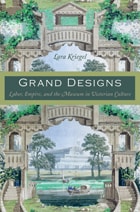
Grand Designs
Labor, Empire, and the Museum in Victorian CultureLara Kriegel
Duke University Press, 2007
Drawing on a wide range of sources, including museum guidebooks, design manuals, illustrated newspapers, pattern books, and government reports, Kriegel brings to life the many Victorians who claimed a stake in aesthetic reform during the middle years of the nineteenth century. The aspiring artists who attended the Government School of Design, the embattled provincial printers who sought a strengthened industrial copyright, the exhibition-going millions who visited the Crystal Palace, the lower-middle-class consumers who learned new principles of taste in metropolitan museums, and the working men of London who critiqued the city’s art and design collections—all are cast by Kriegel as leading cultural actors of their day. Grand Designs shows how these Victorians vied to upend aesthetic hierarchies in an imperial age and, in the process, to refashion London’s public culture.
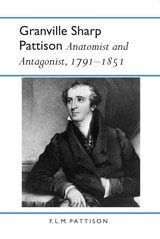
Granville Sharp Pattison
Anatomist and Antagonist, 1791-1851F. L. M. Pattison
University of Alabama Press, 1987
The stormy life of one of the most colorful and complex characters in early 19th-century medicine
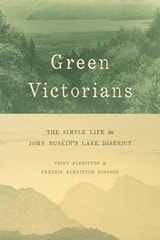
Green Victorians
The Simple Life in John Ruskin's Lake DistrictVicky Albritton and Fredrik Albritton Jonsson
University of Chicago Press, 2016
At the center of their social experiment was the charismatic art critic and political economist John Ruskin. Albritton and Albritton Jonsson show how Ruskin’s followers turned his theory into practice in a series of ambitious local projects ranging from hand spinning and woodworking to gardening, archaeology, and pedagogy. This is a lively yet unsettling story, for there was a dark side to Ruskin’s community as well—racist thinking, paternalism, and technophobia. Richly illustrated, Green Victorians breaks new ground, connecting the ideas and practices of Ruskin’s utopian community with the problems of ethical consumption then and now.
Guardians of Power
The Myth of the Liberal MediaDavid Edwards and David Cromwell, Foreword by John Pilger
Pluto Press, 2005
"Guardians of Power ought to be required reading in every media college. It is the most important book about journalism I can remember."
- John Pilger
"Regular critical analysis of the media, filling crucial gaps and correcting the distortions of ideological prisms, has never been more important. Media Lens has performed a major public service by carrying out this task with energy, insight, and care."
- Noam Chomsky
"Media Lens is doing an outstanding job of pressing the mainstream media to at least follow their own stated principles and meet their public service obligations. [This is] fun as well as enlightening."
- Edward S. Herman
Can a corporate media system be expected to tell the truth about a world dominated by corporations?
Can newspapers, including the 'liberal' Guardian and the Independent, tell the truth about catastrophic climate change -- about its roots in mass consumerism and corporate obstructionism -- when they are themselves profit-oriented businesses dependent on advertisers for 75% of their revenues?
Can the BBC tell the truth about UK government crimes in Iraq when its senior managers are appointed by the government? Has anything fundamentally changed since BBC founder Lord Reith wrote of the establishment: "They know they can trust us not to be really impartial"?
Why did the British and American mass media fail to challenge even the most obvious government lies on Iraqi weapons of mass destruction before the invasion in March 2003? Why did the media ignore the claims of UN weapons inspectors that Iraq had been 90-95% "fundamentally disarmed" as early as 1998?
This book answers these questions, and more.
Since July 2001, Media Lens has encouraged thousands of readers to email senior editors and journalists, challenging them to account for their distorted reporting on Iraq, Afghanistan, Kosovo, Haiti, East Timor, climate change, Western crimes in Central America, and much more. The responses -- often surprising, sometimes outrageous -- reveal the arrogance, unaccountability and servility to power of even our most respected media.

Guidance Note 3
Inspection & TestingThe Institution of Engineering and Technology
The Institution of Engineering and Technology, 2015
Guidance Note 4
Protection Against FireThe Institution of Engineering and Technology
The Institution of Engineering and Technology, 2015

Guide to Electrical Installations in Medical Locations
The Institution of Engineering and Technology Harris
The Institution of Engineering and Technology, 2017