883 books match the query 'Historical' and 27 start with g

cover of Ganado Mucho / Tótsohnii Hastiin: Navajo Peace Chief in Times of War and Change

Ganado Mucho / Tótsohnii Hastiin

Navajo Peace Chief in Times of War and Change

Todd M. Compton

University of Utah Press, 2027
[more]
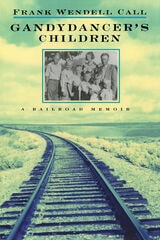
cover of Gandydancer's Children: A Railroad Memoir

Gandydancer's Children

A Railroad Memoir

Frank Wendell Call

University of Nevada Press, 2000

The late Frank Wendell Call is very much alive in these pages as he relates the fascinating tale of the rich, adventuresome existence he lived as a child in the Nevada desert along the Southern Pacific railroad line. In November 1928, Frank E. Call moved his young family from a comfortable home in Ogden, Utah to a tiny two-room shanty in an isolated railroad station in northeastern Nevada. He went to work as a gandydancer, a track laborer.

Meanwhile, Frank and Johanne Call's six lively children adapted to living alongside the tracks in primitive houses without electricity or indoor plumbing. The colorful narrative by the family's oldest child includes commentaries on railroading and the railroaders' language and describes social conditions and customs existing in tiny-town Nevada in the early twentieth century, from the viewpoint of the children themselves.
[more]
cover of Gaps: A Novel

Gaps

A Novel

Bohumil Hrabal

Northwestern University Press, 2011

Gaps begins with Hrabal receiving the long anticipated advance copy of his first short story collection, Perlicka na dne (Pearl of the Deep). Hrabal's career as a successful writer starts here, and the novel details his rise on the domestic front, his relationship with influential Czech artists and writers, as well as the international recognition he gains from novels such as Closely Watched Trains. 

Gaps is a more overtly political novel than either In-House Weddings or Vita Nuova. The 1968 Soviet invasion of Czechoslovakia and the subsequent repression of artistic freedom figure prominently. Hrabal is placed on the "liquidated writers" list, and copies of his novel Poupata (Buds) are disposed of at the paper salvage where he once worked. Hrabal's decision to tell his autobiography in his wife Eliska's voice highlights their very close relationship and lovingly details her deep influence on his work. Every movement, sound, fragrance, and color is detailed, creating a collage of Bohumil and Eliska's life together, an unforgettable picture that reveals the author's innermost attitudes to life, love, and the pursuit of his own art.

[more]
cover of Gaylord Nelson: Champion for Our Earth

Gaylord Nelson

Champion for Our Earth

Sheila Terman Cohen

Wisconsin Historical Society Press, 2010

Earth Day creator Gaylord Nelson comes to vivid life in this addition to the Badger Biographies series for young readers. Accessibly written and richly illustrated with historic images, Gaylord Nelson: Champion for Our Earth includes a glossary of terms, sidebars on World War II, DDT, and several facets of the environmental movement, plus activities and discussion questions.

Born in Clear Lake, Wisconsin, in 1916, Gaylord grew up as immersed in his parents' political work and community service as he was in playing practical jokes and exploring the natural world surrounding his home town. Along the way he encountered experiences that would shape him in fundamental ways: as a man who stood up for what he believed in the face of opposition and yet who also understood how to treat his opponents with respect. Both traits would serve him well as he rose from law student to state senator to Wisconsin governor and finally to three terms as a United States Senator.

Nelson fought to treat all races equally and to condemn McCarthy-era paranoia, but his greatest contribution was to sound the alarm about another battle: the fight to save the natural world and the earth itself. It was his idea to use teach-ins to let people know that the environment needed their help. Thanks to him, more natural resources were conserved and new laws demanded clean air and water. Now, every year on April 22, people all over the world plant trees and pick up litter to celebrate Earth Day. The Earth and its inhabitants aren't safe yet, but Gaylord Nelson demonstrated that even one person can help to save the world.
[more]
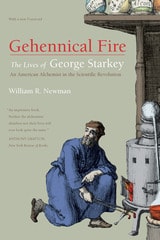
cover of Gehennical Fire: The Lives of George Starkey, an American Alchemist in the Scientific Revolution

Gehennical Fire

The Lives of George Starkey, an American Alchemist in the Scientific Revolution

William R. Newman

University of Chicago Press, 2002
Both the quest for natural knowledge and the aspiration to alchemical wisdom played crucial roles in the Scientific Revolution, as William R. Newman demonstrates in this fascinating book about George Starkey (1628-1665), America's first famous scientist. Beginning with Starkey's unusual education in colonial New England, Newman traces out his many interconnected careers—natural philosopher, alchemist, chemist, medical practitioner, economic projector, and creator of the fabulous adept, "Eirenaeus Philalethes." Newman reveals the profound impact Starkey had on the work of Isaac Newton, Robert Boyle, Samuel Hartlib, and other key thinkers in the realm of early modern science.
[more]
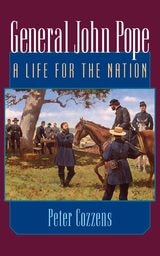
cover of General John Pope: A LIFE FOR THE NATION

General John Pope

A LIFE FOR THE NATION

Peter Cozzens

University of Illinois Press, 2000

Ambitious and outspoken, John Pope was one of the most controversial figures to hold high command during the Civil War, Reconstruction, and in the American West. General John Pope: A Life for the Nation is the first full biography of this much maligned figure who played crucial roles in both the Eastern and the Western Theaters of the Civil War.
 
Renowned Civil War scholar Peter Cozzens has mined Pope's own memoirs and a wealth of other primary sources to provide a complete picture of this gifted strategist. Uncovering new information about Pope's pre- and postwar career and his path to power, Cozzens delineates the political environment that surrounded Pope and provided the context for his actions.
 
Cozzens examines Pope's early career first as commander of the Army of the Mississippi and then as leader of a hastily formed Army of Virginia against Robert E. Lee. After his famous defeat at the Second Battle of Bull Run, Pope was sent to the frontier. There he held important commands on the western plains over the next twenty-four years, all the while struggling to clear his reputation of the events at Second Bull Run. A principal architect of the Red River War, which broke the resistance of the Southern Plains Indians, Pope espoused humanitarian treatment of subjugated tribes and was recognized as one of the army's leading authorities on Indian affairs.
 
In place of the simplistic caricature that has satisfied most historians, Cozzens has crafted an accurate, humane, balanced portrait of a complex man involved with the most complex issues of his day. A monumental work on a long-neglected figure, General John Pope offers a fresh look at a key nineteenth-century military leader as well as the most detailed analysis available of Federal leadership during the Second Bull Run campaign.
 
[more]
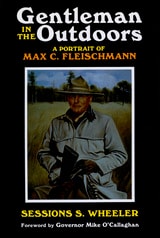
cover of Gentleman in the Outdoors

Gentleman in the Outdoors

Sessions S Wheeler

University of Nevada Press, 1985

The material which Wheeler collected for his book, Gentleman in the Outdoors : A Portrait of Max C. Fleischmann is particularly rich and complete; Mrs. Sarah H. Fleischmann gave Wheeler several boxes of her husband's files and photographs related to his outdoor activities such as fishing, hunting, sailing, and scientific expeditions. In addition, the Fleischmann materials included a thick binder, the contents of which Wheeler used extensively in his book. The binder included some material duplicated in the other Fleischmann files as well as correspondence between Wheeler and Fleischmann.
[more]
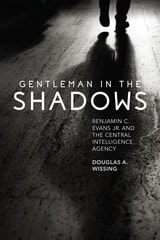
cover of Gentleman in the Shadows: Benjamin C. Evans Jr. and the Central Intelligence Agency

Gentleman in the Shadows

Benjamin C. Evans Jr. and the Central Intelligence Agency

Douglas A. Wissing

Indiana Historical Society Press, 2019
Gentleman in the Shadows is a biography of Benjamin C. Evans Jr., a Central Intelligence Agency executive who operated at the top levels of the U.S. intelligence community during the darkest days of the Cold War. After serving as a covert case officer in revolutionary Havana, Cuba, and then managing The Asia Foundation, a sprawling CIA front organization, Evans was promoted to the CIA headquarters’ seventh floor, where the executive directorate team managed world-changing intelligence missions. A socially adept administrator, Evans was the CIA Executive Secretary for seven Directors of Central Intelligence under four presidential administrations. Evans was part of the tumultuous period that included America’s crusade to democratize Occupied Japan, the Korean War, nuclear standoffs with the Soviet Union, the anti-Castro counterrevolutionary movement that climaxed in the Bay of Pigs invasion, the Vietnam War, Watergate, and the Family Jewels furor after the CIA’s dirty secrets were revealed. Through his marriage, Evans was a member of America’s elite, which figured so prominently in the U.S. intelligence services. Born and raised in a prosperous family in Crawfordsville, Indiana, Evans was imbued with conservative Hoosier values that celebrated servant-leadership. Following his graduation from the U.S. Military Academy at West Point, Evans’s social savvy and encultured mores stood him in good stead in Occupied Japan, where he served as aide-de-camp to General Eugene Harrison, a decorated World War II intelligence officer and Occupation administrator. It was in Occupied Japan that Evans and the general’s stepdaughter, Jan King, fell in love, and later married. When President Harry Truman recognized he needed a foreign intelligence service, General Harrison was on the commission that established what came to be the CIA. Not too many years later, Harrison and his cohorts insured that his son-in-law Evans, by then a respected military intelligence officer, was offered a position in the agency.CIA families not uncommonly led double lives of sequestered thoughts, unasked questions, and intimate deception. An empathetic family man, Evans paid a psychological price for his emotionally isolated life in the clandestine service.Gentleman in the Shadows is a biography of Benjamin C. Evans Jr., a Central Intelligence Agency executive who operated at the top levels of the U.S. intelligence community during the darkest days of the Cold War. After serving as a covert case officer in revolutionary Havana, Cuba, and then managing The Asia Foundation, a sprawling CIA front organization, Evans was promoted to the CIA headquarters’ seventh floor, where the executive directorate team managed world-changing intelligence missions. A socially adept administrator, Evans was the CIA Executive Secretary for seven Directors of Central Intelligence under four presidential administrations. Evans was part of the tumultuous period that included America’s crusade to democratize Occupied Japan, the Korean War, nuclear standoffs with the Soviet Union, the anti-Castro counterrevolutionary movement that climaxed in the Bay of Pigs invasion, the Vietnam War, Watergate, and the Family Jewels furor after the CIA’s dirty secrets were revealed. Through his marriage, Evans was a member of America’s elite, which figured so prominently in the U.S. intelligence services. Born and raised in a prosperous family in Crawfordsville, Indiana, Evans was imbued with conservative Hoosier values that celebrated servant-leadership. Following his graduation from the U.S. Military Academy at West Point, Evans’s social savvy and encultured mores stood him in good stead in Occupied Japan, where he served as aide-de-camp to General Eugene Harrison, a decorated World War II intelligence officer and Occupation administrator. It was in Occupied Japan that Evans and the general’s stepdaughter, Jan King, fell in love, and later married. When President Harry Truman recognized he needed a foreign intelligence service, General Harrison was on the commission that established what came to be the CIA. Not too many years later, Harrison and his cohorts insured that his son-in-law Evans, by then a respected military intelligence officer, was offered a position in the agency.CIA families not uncommonly led double lives of sequestered thoughts, unasked questions, and intimate deception. An empathetic family man, Evans paid a psychological price for his emotionally isolated life in the clandestine service.
[more]
cover of George Washington Carver: In His Own Words, Second Edition

George Washington Carver

In His Own Words, Second Edition

Gary R. Kremer

University of Missouri Press, 2017

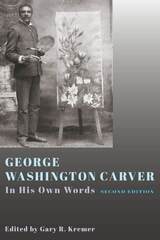
George Washington Carver (1864-1943) is best known for developing new uses for agricultural crops and teaching methods of soil improvement to southern farmers. This annotated selection of his letters and other writings from the collections at the Tuskegee Institute and the George Washington Carver National Monument in Diamond, Missouri, reveals the forces that shaped his creative genius—including the influence of persistent racism. His letters also show us Carver’s deep love for his fellow man, whether manifested in his efforts to treat polio victims in the 1930s or in his emotionally charged friendships that lasted a lifetime.
 
With a new chapter on the oral history interviews Dr. Kremer conducted (several years after publication of the first edition) with people who knew Carver personally, and the addition of newly uncovered documents and a bank of impressive photographs of Carver and some of his friends, this second edition of our classic title commemorates the 75th anniversary of Carver’s death on January 5, 2018.
 
[more]
cover of George Washington Williams: A Biography

George Washington Williams

A Biography

John Hope Franklin

Duke University Press, 1998

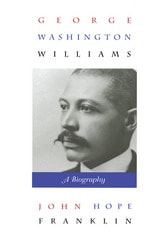
In George Washington Williams, John Hope Franklin reconstructs the life of the controversial, self-made black intellectual who wrote the first history of African Americans in the United States. Awarded the Clarence L. Holte Literary Prize, this book traces Franklin’s forty-year quest for Williams’s story, a story largely lost to history until this volume was first published in 1985. The result, part biography and part social history, is a unique consideration of a pioneering historian by his most distinguished successor.
Williams, who lived from 1849 to 1891, had a remarkable career as soldier, minister, journalist, lawyer, politician, freelance diplomat, and African traveler, as well as a historian. While Franklin reveals the accomplishments of this neglected figure and emphasizes the racism that curtailed Williams’s many talents, he also highlights the personal weaknesses that damaged Williams’s relationships and career. Williams led the way in presenting African American history accurately through the use of oral history and archival research, sought to legitimize it as a field of historical study, and spoke out in support of an American Negro Historical Society and as a critic of European imperialism in Africa. He also became erratic and faithless to his family and creditors and died at the age of forty-one, destitute and alienated from family and friends. George Washington Williams is nothing less than a classic biography of a brilliant though flawed individual whose History of the Negro Race in America remains a landmark in African American history and American intellectual history.

[more]
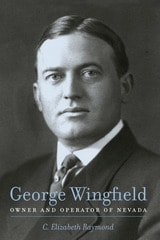
cover of George Wingfield: Owner And Operator Of Nevada

George Wingfield

Owner And Operator Of Nevada

C. Elizabeth Raymond

University of Nevada Press, 2013

Banker, hotel owner, and political powerhouse George Wingfield was a significant figure in Nevada history. He was influential in developing Reno's gambling-and-divorce-related tourism. Raymond's biography depicts the man and his times, from his birth in Arkansas in 1876 until his death in Reno in 1959. Wilbur S. Shepperson Series in History and Humanities.
[more]
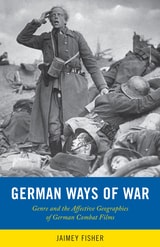
cover of German Ways of War: The Affective Geographies and Generic Transformations of German War Films

German Ways of War

The Affective Geographies and Generic Transformations of German War Films

Jaimey Fisher

Rutgers University Press, 2022
German Ways of War deploys theories of space, mobility, and affect to investigate how war films realize their political projects. Analyzing films across the decades, from the 1910s to 2000s, German Ways of War addresses an important lacuna in media studies: while scholars have tended to focus on the similarities between cinematic looking and weaponized targeting -- between shooting a camera and discharging a gun – this book argues that war films negotiate spaces throughout that frame their violence in ways more revealing than their battle scenes. Beyond that well-known intersection of visuality and violence, German Ways of War explores how the genre frames violence within spatio-affective operations. The production of novel spaces and evocation of new affects transform war films, including the genre’s manipulation of mobility, landscape, territory, scales, and topological networks. Such effects amount to what author Jaimey Fisher terms the films’ “affective geographies” that interweave narrative-generated affects, spatial depictions, and political processes.
 
[more]
cover of Giant Steps: Suffragettes and Soldiers

Giant Steps

Suffragettes and Soldiers

Mary Blair Immel

Indiana Historical Society Press, 2017
As Giant Steps opens, thirteen-year-old Bernie Epperson of Lafayette, Indiana, is wrestling with double standards placed on her compared with her brothers. Soon her cousin awakens her to all the unfair restrictions women face, and Bernie becomes a suffragette. Meanwhile, World War I begins. Her family is devastated when her brothers become soldiers, and Bernie must decide how to help the war effort and continue to fight for women’s rights. While this story is fictional, the details of the suffrage movement and the war efforts of ordinary Americans are true. Middle and high school students will relate to Bernie and her brothers’ dilemmas a century ago because they also face making decisions in a turbulent world while sifting through contradictory news and changing wisdom.
[more]
cover of Giant in the Shadows: The Life of Robert T. Lincoln

Giant in the Shadows

The Life of Robert T. Lincoln

Jason Emerson

Southern Illinois University Press, 2012

University Press Books for Public and Secondary Schools, 2013 edition

Book of the Year by the Illinois State historical Society, 2013

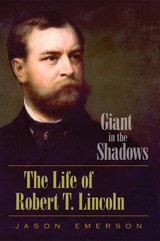
Although he was Abraham and Mary Lincoln’s oldest and last surviving son, the details of Robert T. Lincoln’s life are misunderstood by some and unknown to many others. Nearly half a century after the last biography about Abraham Lincoln’s son was published, historian and author Jason Emerson illuminates the life of this remarkable man and his achievements in Giant in the Shadows: The Life of Robert T. Lincoln. Emerson, after nearly ten years of research, draws upon previously unavailable materials to offer the first truly definitive biography of the famous lawyer, businessman, and statesman who, much more than merely the son of America’s most famous president, made his own indelible mark on one of the most progressive and dynamic eras in United States history.

Born in a boardinghouse but passing his last days at ease on a lavish country estate, Robert Lincoln played many roles during his lifetime. As a president’s son, a Union soldier, an ambassador to Great Britain, and a U.S. secretary of war, Lincoln was indisputably a titan of his age. Much like his father, he became one of the nation’s most respected and influential men, building a successful law practice in the city of Chicago, serving shrewdly as president of the Pullman Car Company, and at one time even being considered as a candidate for the U.S. presidency.

Along the way he bore witness to some of the most dramatic moments in America’s history, including Robert E. Lee’s surrender at Appomattox Courthouse; the advent of the railroad, telephone, electrical, and automobile industries; the circumstances surrounding the assassinations of three presidents of the United States; and the momentous presidential election of 1912. Giant in the Shadows also reveals Robert T. Lincoln’s complex relationships with his famous parents and includes previously unpublished insights into their personalities. Emerson reveals new details about Robert’s role as his father’s confidant during the brutal years of the Civil War and his reaction to his father’s murder; his prosecution of the thieves who attempted to steal his father’s body in 1876 and the extraordinary measures he took to ensure it would never happen again; as well as details about the painful decision to have his mother committed to a mental facility. In addition Emerson explores the relationship between Robert and his children, and exposes the actual story of his stewardship of the Lincoln legacy—including what he and his wife really destroyed and what was preserved. Emerson also delves into the true reason Robert is not buried in the Lincoln tomb in Springfield but instead was interred at Arlington National Cemetery.

Meticulously researched, full of never-before-seen photographs and new insight into historical events, Giant in the Shadows is the missing chapter of the Lincoln family story. Emerson’s riveting work is more than simply a biography; it is a tale of American achievement in the Gilded Age and the endurance of the Lincoln legacy.

 

[more]
cover of Glory: The Gospel of Judas, A Novel

Glory

The Gospel of Judas, A Novel

Giuseppe Berto

Rutgers University Press, 2024

Christ’s nemesis Judas Iscariot remains a shadowy figure in the four canonical gospels, which give contradictory reasons for why this rogue disciple betrays Christ. But how would Judas himself explain his motives? 
 
In Glory, Italian modernist Giuseppe Berto’s final novel, Judas finally tells his side of the story. From his perspective, Jesus is the betrayer, a would-be political activist and social reformer who fails to live up to his promises. And by fulfilling his predestined role in the drama of Christ’s death and resurrection, Judas himself is partly responsible for humanity’s salvation, enabling them to be redeemed by Christ’s sacrifice. As the novel probes into the psychological motivations behind his rejection of Jesus’ authority, Judas emerges as a compelling conflicted character, a man who seeks to have agency even when he knows his actions are being scripted by a higher power. Through Judas’s searing tortured monologues, this late masterpiece from one of Italy’s greatest writers investigates deep questions about the nature of faith, rebellion, fate, and free will. 


[more]
cover of Gone Missing in Harlem: A Novel

Gone Missing in Harlem

A Novel

Karla FC Holloway

Northwestern University Press, 2021

In her anticipated second novel, Karla Holloway evokes the resilience of a family whose journey traces the river of America’s early twentieth century. The Mosby family, like other thousands, migrate from the loblolly-scented Carolinas north to the Harlem of their aspirations—with its promise of freedom and opportunities, sunlit boulevards, and elegant societies.

The family arrives as Harlem staggers under the flu pandemic that follows the First World War. DeLilah Mosby and her daughter, Selma, meet difficulties with backbone and resolve to make a home for themselves in the city, and Selma has a baby, Chloe. As the Great Depression creeps across the world at the close of the twenties, however, the farsighted see hard times coming.

The panic of the early thirties is embodied in the kidnapping and murder of the infant son of the nation’s dashing young aviator, Charles Lindbergh. A transfixed public follows the manhunt in the press and on the radio. Then Chloe goes missing—but her disappearance does not draw the same attention. Wry and perceptive Weldon Haynie Thomas, the city’s first “colored” policeman, takes the case.

The urgent investigation tests Thomas’s abilities to draw out the secrets Harlem harbors, untangling the color-coded connections and relationships that keep company with greed, ghosts, and grief. With nuanced characters, lush historical detail, and a lyrical voice, Gone Missing in Harlem affirms the restoring powers of home and family.
[more]
cover of Good-bye to the Mermaids: A Childhood Lost in Hitler's Berlin

Good-bye to the Mermaids

A Childhood Lost in Hitler's Berlin

Karin Finell

University of Missouri Press, 2026
Good-bye to the Mermaids conveys the horrors of war as seen through the innocent eyes of a child. It is the story of World War II as it affected three generations of middle-class German women: Karin, six years old when the war began, who was taken in by Hitler’s lies; her mother, Astrid, a rebellious artist who occasionally spoke out against the Nazis; and her grandmother Oma, a generous and strong-willed woman who, having spent her own childhood in America, brought a different perspective to the events of the time. It tells of a convoluted world where children were torn between fear and hope, between total incomprehension of events and the need to simply deal with reality.
            In one of the relatively few recollections of the war from a German woman’s perspective, Finell relates what was for her a normal part of growing up: participating in activities of the Hitler Youth, observing Nazi customs at Christmas, and once being close enough to the Führer at a rally to make eye contact with him. She tells of how she first became aware of the yellow star that Jews were forced to wear, and of being asked to identify corpses from a bombed apartment house. She also depicts the lives of people tainted by Hitler’s influence: her half-Jewish relatives who gave in to the strain of trying to remain unnoticed; a favorite aunt who was gassed because she was old and had broken her hip; and a friend of the family who was involved in the abortive putsch against Hitler and hanged as a traitor.
            When American and British forces intensified air raids on Berlin in 1943, Finell observed the stoical valor of women during the bombings, firestorms, and mass evacuations. Not yet a teenager, she witnessed the battle for Berlin and the mass rapes perpetrated by conquering Russian and Mongolian troops. Order was restored after the American and British troops arrived. The Marshall Plan jump-started an economic recovery for West Germany, provoking the Russians to blockade Berlin. From 1948 to 1949 the Americans and British kept Berlin’s residents alive with the airlift. But even though food was flown in, the people of Berlin continued to go hungry. Deprivation forced Berliners to look inward and face their collective guilt as they withstood the threat of Soviet occupation during these postwar years.
            This eloquent and touching story tells how a decent people were perverted by Hitler and how a young girl ultimately came to recognize the father figure Hitler for the monster he was. From a time of innocence, Karin Finell takes readers along a nightmarish journey in which fantasies are clung to, set aside, and at last set free. Good-bye to the Mermaids presents us with the revelation that human beings can survive such times with their souls intact.
[more]
cover of Gordon MacQuarrie: The Story of an Old Duck Hunter

Gordon MacQuarrie

The Story of an Old Duck Hunter

Keith Crowley

Wisconsin Historical Society Press, 2003
Although his typewriter has been silent for nearly fifty years, Gordon MacQuarrie’s words continue to inspire generations of hunting and fishing enthusiasts. Through his “Stories of the Old Duck Hunters,” most of which are still in print, MacQuarrie captured the intangible, emotional qualities of the outdoor life in a way that made him unique among his peers. As a result, his audience and his legend continue to grow. Gordon MacQuarrie: The Story of an Old Duck Hunter is the first full-length biography of this literary legend. It explores the relationships he nurtured and treasured; records his coming of age during Theodore Roosevelt’s Conservation Movement; documents his rise to national prominence as the first full-time, professional outdoor writer in America; and follows his life as journalist, storyteller, husband, father, outdoorsman, and conservationist. Complete with rarely seen photographs and a comprehensive timeline of his writings, this book is a fitting companion to MacQuarrie’s own Stories of the Old Duck Hunters anthologies.
[more]
cover of Governor Henry Horner, Chicago Politics, and the Great Depression

Governor Henry Horner, Chicago Politics, and the Great Depression

Charles J. Masters

Southern Illinois University Press, 2007
Many have never heard of Governor Henry Horner of Illinois, yet his story is remarkable. Governor Henry Horner, Chicago Politics, and the Great Depression focuses on Horner’s career in law and politics from 1915 to 1940, while examining the economic and political dynamics of Illinois during the darkest period in American history. This principled governor managed to maintain his political integrity in a climate where honesty was a liability, says author Charles J. Masters, but the few historians who include Horner in their narratives offer contradictory and dismissive characterizations of him. Masters corrects the public record and reintroduces Horner to political lore as a man who brazenly fought both the Chicago Democratic machine that worked to plot his downfall and Roosevelt’s White House to steadfastly do right by the people of Illinois.
In this first book-length treatment of Horner in over thirty-five years, Masters traces the politician’s career, the history and politics of Chicago, and the effects of the Great Depression in Illinois. The volume details Horner’s life as a lawyer, probate judge, and two-term Democratic governor of Illinois. Horner’s relationships with President Franklin D. Roosevelt and such political players as Michael “Hinky Dink” Kenna, “Bathhouse” John Coughlin, and Chicago mayors Carter Harrison, Anton Cermak, and Ed Kelly are set against a backdrop of assassination, political sniping, court-packing schemes, Prohibition, and the New Deal.
Governor Henry Horner, Chicago Politics, and the Great Depression examines the governor’s management of the political and economic challenges of the state when millions of Americans were jobless, homeless, and hungry. The severely divergent economic and political positions of the state’s northern industrial and southern agrarian interests made the period even darker. Masters shows how Horner stemmed foreclosures, dealt with bank closings, placated unpaid teachers, soothed massive labor unrest, fed the hungry, and confronted the ever-present threat of revolution. While Hitler’s Germany was spreading Nazism throughout Europe, some Americans were questioning the fundamental order of their own political system, suggesting that socialism, communism, or Nazism could offer a better way. Masters addresses how Horner, Illinois’ first Jewish governor, dealt with these challenges to the U.S. political system.
A story long absent from the historical record, GovernorHenry Horner, Chicago Politics, and the Great Depression offers a portrait of the man, his style of governance, his successes, and his failures. The volume, with eight illustrations, effectively reevaluates Horner’s historical reputation and role in Illinois politics in the midst of the worst economic depression in our nation’s history.
[more]
cover of Grand River and Joy

Grand River and Joy

Susan Messer

University of Michigan Press, 2010

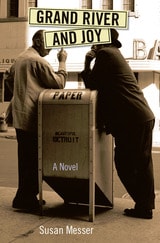
Halloween morning 1966, Harry Levine arrives at his wholesale shoe warehouse to find an ethnic slur soaped on the front window. As he scavenges around the sprawling warehouse basement, looking for the supplies he needs to clean the window, he makes more unsettling discoveries: a stash of Black Power literature; marijuana; a new phone line running off his own; and a makeshift living room, arranged by Alvin, the teenaged tenant who lives with his father, Curtis, above the warehouse. Accustomed to sloughing off fears about Detroit's troubled inner-city neighborhood, Harry dismisses the soaped window as a Halloween prank and gradually dismantles “Alvin's lounge” in a silent conversation with the teenaged tenant. Still, these events and discoveries draw him more deeply into the frustrations and fissures permeating his city in the months leading up to the Detroit riots.

Grand River and Joy, named after a landmark intersection in Detroit, follows Harry through the intersections of his life and the history of his city. It's a work of fiction set in a world that is anything but fictional, a novel about the intersections between races, classes and religions exploding in the long, hot summers of Detroit in the 1960s. Grand River and Joy is a powerful and moving exploration of one of the most difficult chapters of Michigan history.

Susan Messer's fiction and nonfiction have appeared in numerous publications, including Glimmer Train Stories, North American Review, and Colorado Review. She received an Illinois Arts Council Fellowship in prose, an Illinois Arts Council literary award for creative nonfiction, and a prize in the Jewish Cultural Writing Competition of the Dora Teitelboim Center for Yiddish Culture.

Cover photograph copyright © Bill Rauhauser and Rauhauser Photographic Trust
[more]
cover of Grandmothers: A Family Portrait

Grandmothers

A Family Portrait

With a New Introduction by Sargent Bush Jr.

University of Wisconsin Press, 1996

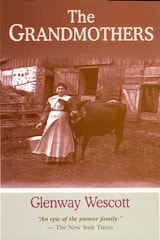
Glenway Wescott’s poignant story of nineteenth-century Wisconsin was first published in 1927 as the winner of the prestigious Harper Prize. Like F. Scott Fitzgerald and Ernest Hemingway, Wescott left the Midwest behind to live as a writer in 1920s Paris. In this novel, based on Wescott’s own life and family, the young Alwyn Tower leaves Wisconsin to travel in Europe, but finds himself haunted by a family of long-dead spirits—his grandparents and great-uncles and aunts, a generation whose young adulthood was shattered by the Civil War. Their images were preserved in fading family albums of daguerreotypes and in his own fragmented memories of stories told to him by his strong and enduring grandmothers. To disinter and finally lay to rest the family secrets that lingered insistently in his mind, Wescott writes, Alwyn was “obliged to live in imagination many lives already at an end.”
    The Grandmothers is the chronicle of Alwyn’s ancestors:  the bitter Henry Tower, who returned from Civil War battlefields to find his beautiful wife Serena lost in a fatal fever; Rose Hamilton, robust and eager, who yearned to leave the cabin of her bearded, squirrel-hunting brothers for the company of courteous Leander Tower; the boy-soldier Hilary Tower, whose worship of his brother made him desperate; fastidious Nancy Tower, whose love for her husband Jesse Davis could not overcome her disgust with the dirt under his fingernails; Ursula Duff, proud and silent, maligned among her neighbors by her venal husband; Alwyn’s parents, Ralph Tower and Marianne Duff, whose happiness is brought about only by the intervention of a determined spinster.
[more]
cover of Grant Castner: The Lost Archive

Grant Castner

The Lost Archive

Nicholas P. Ciotola

Rutgers University Press, 2026

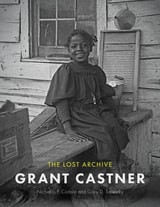
In July 2019, staff of the New Jersey State Museum visited a cramped and dusty storage locker in Hunterdon County. Inside was a treasure trove of more than one thousand glass plate negatives. Each negative preserved an image of New Jersey at the turn of the 20th century. They once belonged to a Trenton resident who had used the plates as tools for his chosen art form. His name was Grant Castner. His art was photography.
 
Castner’s glass plate negatives are a visual record of New Jersey’s social and cultural history. His many human subjects are rich and poor, young and old, Black and white. They are at work, at play, at home, and in the community. Castner also documented social change brought about by electricity, engineering, education, industry, and transportation. He captured the excitement of public amusements such as parades and fairs. He recorded the aftermath of floods, fires and other disasters. Castner also had a fondness for the outdoors. He used his camera to reflect on the beauty and tranquility that he found in the natural landscapes of New Jersey.
 
This book presents the collective work of Grant Castner, an amateur artist whose place in New Jersey history was, until now, completely unknown. His photographic negatives forever preserve pinpoint moments in the past. They are time machines to another era. Let this long lost archive transport you on a visual journey into a New Jersey of days gone by.
 
[more]
cover of Graziella: A Novel

Graziella

A Novel

Alphonse de Lamartine

University of Minnesota Press, 2018

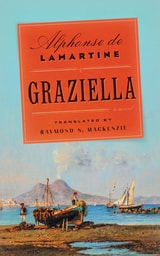
In its first modern translation, a novel-cum-memoir of a Frenchman’s erotic awakening in Italy by a preeminent writer of the Romantic period 


In 1812 Alphonse de Lamartine, a young man of means, traveled through southern Italy, where, during a sojourn in Naples, he fell in love with a young woman who worked in a cigar factory—and whose death after he returned to France would haunt him throughout his writing life. Graziella, Lamartine called this lost girl in his poetry and memoirs—and also in Graziella, a novel that closely follows the story of his own romance.

“When I was eighteen,” the narrator begins, as if penning his memoir, “my family entrusted me to the care of a relative whose business affairs called her to Tuscany.” The tale that unfolds, of the young man’s amorous experiences amid the natural grandeur and subtle splendors of the Italian countryside, is one of the finest works of fiction in the French Romantic tradition, a bildungsroman that is also a melancholy portrait of the artist as a young man discovering the muse who would both inspire and elude him.

Remarkable for its contemplative prose, its dreamy passions and seductive drawing of the Italian landscape, and its place in the Romantic canon, Graziella is a timeless portrait of love, chronicling the remorse and the misguided ideals of youth that find their expression, if not their amends, in art.
[more]
cover of Great American Desert: Stories

Great American Desert

Stories

Terese Svoboda

The Ohio State University Press, 2019

Water, its use and abuse, trickles through Great American Desert, a story collection by Terese Svoboda that spans the misadventures of the prehistoric Clovis people to the wanderings of a forlorn couple around a pink pyramid in a sci-fi prairie. In “Dutch Joe,” the eponymous hero sees the future from the bottom of a well in the Sandhills, while a woman tries to drag her sister back from insanity in “Dirty Thirties.” In “Bomb Jockey,” a local Romeo disposes of leaky bombs at South Dakota’s army depot, while a family quarrels in “Ogallala Aquifer” as a thousand trucks dump chemical waste from a munitions depot next to their land. Bugs and drugs are devoured in “Alfalfa,” a disc jockey talks her way out of a knifing in “Sally Rides,” and an updated Pied Piper begs parents to reconsider in “The Mountain.” The consequences of the land’s mistreatment is epitomized in the final story by a discovery inside a pink pyramid.
 
In her arresting and inimitable style, Svoboda’s delicate handling of the complex dynamics of family and self seeps into every sentence of these first-rate short stories about what we do to the world around us—and what it can do to us.
 
[more]
cover of Growing Up with Southern Illinois, 1820 to 1861: From the Memoirs of Daniel Harmon Brush

Growing Up with Southern Illinois, 1820 to 1861

From the Memoirs of Daniel Harmon Brush

Daniel Harmon Brush, with a Foreword by Michael C. Batinski

Southern Illinois University Press, 2017
Daniel Harmon Brush came to southern Illinois from Vermont with his parents in the 1820s and found a frontier region radically different from his native New England. In this memoir, Brush, the eventual founder of Carbondale, Illinois, describes his early life in the northeast, his pioneer family’s move west, and their settlement near the Illinois River in Greene County, Illinois. Beginning as a store clerk, Brush worked hard and became very successful, serving in a number of public offices before founding the town of Carbondale in the 1850s, commanding a regiment in the Civil War, and practicing law, among other pursuits. Brush never let go of his pious New England roots, which often put him at odds with most other citizens in the region, many of whose families emigrated from the southern states and thus had different cultural and religious values. The memoir ends in 1861, as the Civil War starts, and Brush describes the growing unrest of Southern sympathizers in southern Illinois. Brush’s story shows how an outsider achieved success through hard work and perseverance and provides a valuable look at life on the western frontier.
[more]
cover of Gunpowder Percy

Gunpowder Percy

Grace Tiffany

Arizona Center for Medieval and Renaissance Studies, 2000
[more]
cover of Gutenberg

Gutenberg

Stephan Füssel

Haus Publishing, 2019

Named “Man of the Millennium” in 1999, Johannes Gutenberg was the creator of one of the most influential and revolutionary inventions in Europe’s history: a printing press with mechanical movable type. This development sparked the printing revolution, which is regarded as the milestone of the second millennium and represents one of the central contributions in the turn to modernity. His printing press came to play a key role in the development of the Renaissance, the Reformation, and the Age of Enlightenment, providing the material foundation for the modern knowledge-based economy and the spread of learning to the masses. His invention revolutionized the way that information is shared and broadened the boundaries of who has access to written knowledge. Paving the way for bibliophiles of today, the Gutenberg Bible of 1454 remains one of the most famous books in history.

Gutenberg’s technical innovations remained unrivalled for almost 350 years, until industrialization of the printing industry and the digital revolution built on the advances that he began, increasing the rate at which information is spread. Despite his significance in forming the world as we know it, there has not yet been a rigorous and accessible biography of Gutenberg published in English. Written by the leading expert on Gutenberg, Füssel’s biography brings together high academic standards and thorough historical details in a highly readable text that conveys everything you need to know about the man who changed printing forever.
 
[more]