Results by title
752 books match the query 'Illinois' and 21 start with g
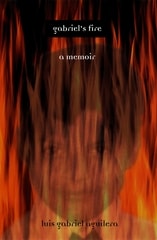
Gabriel's Fire
A MemoirLuis Gabriel Aguilera
University of Chicago Press, 2000
Aguilera's memoir is not just an account of race relations and street life in the inner city, nor of the plight of the immigrant and the dilemma of class identity for a "minority" family. Gabriel's Fire also movingly recounts the peculiarly daunting and inspiring moments of a particular age, riddled with confusion, desires, and duties and recorded by an exceptionally observant and articulate young man. Aguilera writes that he "grew into" the English language when he was eleven or twelve, and his recollections reflect his newfound delight with words—the conversations, arguments, taunts, song lyrics, and casual interchanges of his youth are rendered here with an immediacy and directness rare in contemporary memoirs.
Both a picture of American culture of the 1980s and 1990s and a coming-of-age story, Gabriel's Fire counters mainstream and mass-mediated images of the inner city, Hispanic culture, and troubled youth. In its honesty and energy, it is a poignant and compelling story of one man's formative years.
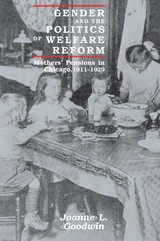
Gender and the Politics of Welfare Reform
Mothers' Pensions in Chicago, 1911-1929Joanne L. Goodwin
University of Chicago Press, 1997
This revealing study shows how assumptions about women's roles have historically shaped public policy and sheds new light on the ongoing controversy of welfare reform.
Germans in Illinois
Miranda E. Wilkerson and Heather Richmond
Southern Illinois University Press, 2019
The promise of cheap land and fertile soil in rural areas and emerging industries in cities attracted three major waves of German-speaking immigrants to Illinois in search of freedom and economic opportunities. Before long the state was dotted with German churches, schools, cultural institutions, and place names. German churches served not only as meeting places but also as a means of keeping language and culture alive. Names of Illinois cities and towns of German origin include New Baden, Darmstadt, Bismarck, and Hamburg. In Chicago, many streets, parks, and buildings bear German names, including Altgeld Street, Germania Place, Humboldt Park, and Goethe Elementary School. Some of the most lively and ubiquitous organizations, such as Sängerbunde, or singer societies, and the Turnverein, or Turner Society, also preserved a bit of the Fatherland.
Exploring the complex and ever-evolving German American identity in the growing diversity of Illinois’s linguistic and ethnic landscape, this book contextualizes their experiences and corrects widely held assumptions about assimilation and cultural identity. Federal census data, photographs, lively biographical sketches, and newly created maps bring the complex story of German immigration to life. The generously illustrated volume also features detailed notes, suggestions for further reading, and an annotated list of books, journal articles, and other sources of information.
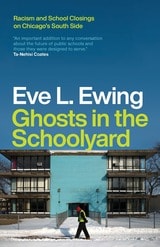
Ghosts in the Schoolyard
Racism and School Closings on Chicago's South SideEve L. Ewing
University of Chicago Press, 2018
That’s how Eve L. Ewing opens Ghosts in the Schoolyard: describing Chicago Public Schools from the outside. The way politicians and pundits and parents of kids who attend other schools talk about them, with a mix of pity and contempt.
But Ewing knows Chicago Public Schools from the inside: as a student, then a teacher, and now a scholar who studies them. And that perspective has shown her that public schools are not buildings full of failures—they’re an integral part of their neighborhoods, at the heart of their communities, storehouses of history and memory that bring people together.
Never was that role more apparent than in 2013 when Mayor Rahm Emanuel announced an unprecedented wave of school closings. Pitched simultaneously as a solution to a budget problem, a response to declining enrollments, and a chance to purge bad schools that were dragging down the whole system, the plan was met with a roar of protest from parents, students, and teachers. But if these schools were so bad, why did people care so much about keeping them open, to the point that some would even go on a hunger strike?
Ewing’s answer begins with a story of systemic racism, inequality, bad faith, and distrust that stretches deep into Chicago history. Rooting her exploration in the historic African American neighborhood of Bronzeville, Ewing reveals that this issue is about much more than just schools. Black communities see the closing of their schools—schools that are certainly less than perfect but that are theirs—as one more in a long line of racist policies. The fight to keep them open is yet another front in the ongoing struggle of black people in America to build successful lives and achieve true self-determination.
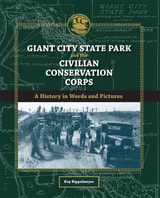
Giant City State Park and the Civilian Conservation Corps
A History in Words and PicturesKay Rippelmeyer
Southern Illinois University Press, 2010
Many recognize Giant City State Park as one of the premier recreation spots in southern Illinois, with its unspoiled forests, glorious rock formations, and famous sandstone lodge. But few know the park’s history or are aware of the remarkable men who struggled to build it. Giant City State Park and the Civilian Conservation Corps: A History in Words and Pictures provides the first in-depth portrait of the park’s creation, drawing on rarely seen photos, local and national archival research, and interviews to present an intriguing chapter in Illinois history.
Kay Rippelmeyer traces the geological history of the park, exploring the circumstances that led to the breathtaking scenery for which Giant City is so well known, and providing insightful background on and cultural history of the area surrounding the park. Rippelmeyer then outlines the effects of the Great Depression and the New Deal on southern Illinois, including relief efforts by the Civilian Conservation Corps, which began setting up camps at Giant City in 1933. The men of the CCC, most of them natives of southern and central Illinois, are brought to life through vividly detailed, descriptive prose and hundreds of black-and-white photographs that lavishly illustrate life in the two camps at the park. This fascinating book not only documents the men’s hard work—from the clearing of the first roads and building of stone bridges, park shelters, cabins, and hiking and bridle trails, to quarry work and the raising of the lodge’s famous columns—it also reveals the more personal side of life in the two camps at the park, covering topics ranging from education, sports, and recreation, to camp newspapers, and even misbehavior and discipline.
Supplementing the photographs and narrative are engaging conversations with alumni and family members of the CCC, which give readers a rich oral history of life at Giant City in the 1930s. The book is further enhanced by maps, rosters of enrollees and officers, and a list of CCC camps in southern Illinois. The culmination of three decades of research, Giant City State Park and the Civilian Conservation Corps provides the most intimate history ever of the park and its people, honoring one of Illinois’s most unforgettable places and the men who built it.
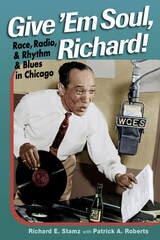
Give 'Em Soul, Richard!
Race, Radio, and Rhythm and Blues in ChicagoRichard E. Stamz with Patrick A. Roberts, Foreword by Robert Pruter
University of Illinois Press, 2010
As either observer or participant, radio deejay and political activist Richard E. Stamz witnessed every significant period in the history of blues and jazz in the last century. From performing first-hand as a minstrel in the 1920s to broadcasting Negro League baseball games in a converted 1934 Chrysler to breaking into Chicago radio and activist politics and hosting his own television variety show, the remarkable story of his life also is a window into milestones of African American history throughout the twentieth century.
Dominating the airwaves with his radio show "Open the Door, Richard" on WGES in Chicago, Stamz cultivated friendships with countless music legends, including Willie Dixon, Sonny Boy Williamson, Little Walter, Howlin' Wolf, Memphis Slim, and Leonard Chess. The pioneering Chicago broadcaster and activist known as "The Crown Prince of Soul" died in 2007 at the age of 101, but not before he related the details of his life and career to college professor Patrick A. Roberts. Give 'Em Soul, Richard! surrounds Stamz's memories of race records, juke joints, and political action in Chicago's Englewood neighborhood with insights on the larger historical trends that were unfolding around him in radio and American history.
Narrated by Stamz, this entertaining and insightful chronicle includes commentary by Roberts as well as reflections on the unlikely friendship and collaboration between a black radio legend and a white academic that resulted in one of the few existing first-hand accounts of Chicago's post-war radio scene.
Global Decisions, Local Collisions
Urban Life In The New World OrderDavid Ranney
Temple University Press, 2002
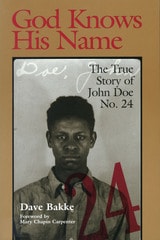
God Knows His Name
The True Story of John Doe No. 24David Bakke. Foreword by Mary Chapin Carpenter
Southern Illinois University Press, 2000
Police found John Doe No. 24 in the early morning hours of October 11, 1945, in Jacksonville, Illinois. Unable to communicate, the deaf and mute teenager was labeled “feeble minded” and sentenced by a judge to the nightmarish jumble of the Lincoln State School and Colony in Jacksonville. He remained in the Illinois mental health care system for over thirty years and died at the Sharon Oaks Nursing Home in Peoria on November 28, 1993.
Deaf, mute, and later blind, the young black man survived institutionalized hell: beatings, hunger, overcrowding, and the dehumanizing treatment that characterized state institutions through the 1950s. In spite of his environment, he made friends, took on responsibilities, and developed a sense of humor. People who knew him found him remarkable.
Award-winning journalist Dave Bakke reconstructs the life of John Doe No. 24 through research into a half-century of the state mental health system, personal interviews with people who knew him at various points during his life, and sixteen black-and-white illustrations. After reading a story about John Doe in the New York Times, acclaimed singer-songwriter Mary Chapin Carpenter wrote and recorded “John Doe No. 24” and purchased a headstone for his unmarked grave. She contributes a foreword to this book.
As death approached for the man known only as John Doe No. 24, his one-time nurse Donna Romine reflected sadly on his mystery. “Ah, well,” she said, “God knows his name.”
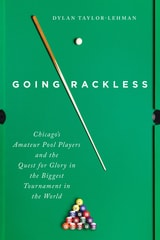
Going Rackless
Chicago’s Amateur Pool Players and the Quest for Glory in the Biggest Tournament in the WorldDylan Taylor-Lehman
University of Illinois Press, 2025
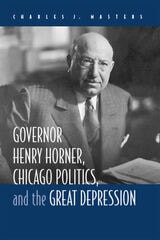
Governor Henry Horner, Chicago Politics, and the Great Depression
Charles J. Masters
Southern Illinois University Press, 2007
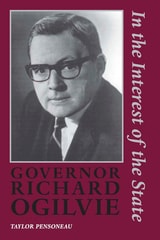
Governor Richard Ogilvie
In the Interest of the StateTaylor Pensoneau
Southern Illinois University Press, 2009
Although serious scandal erupted in Illinois Governor Richard Ogilvie’s administration— eight hundred thousand dollars mysteriously appearing in Secretary of State Paul Powell’s shoe boxes and other hiding places, the downfall of two Supreme Court justices for questionable stock dealings, corruption surrounding the Illinois State Fair— Ogilvie’s accomplishments, as Taylor Pensoneau demonstrates, rank him among the best governors in Illinois history.
Perhaps the most important of Ogilvie’s accomplishments during his single term in office (1969–1973) was the passage of the state’s first income tax in 1969. Supporting the income tax took political courage on the part of the new governor, but in doing so he saved the financially crippled state from economic disaster. He also looked far into the future; at a time when few politicians expressed concern with the environment, Ogilvie created an exemplary and hard-hitting antipollution program. He was in office during the Illinois Constitutional Convention in 1970 and was instrumental in the widespread restructuring of Illinois government.
Viewing Ogilvie as a pivotal figure in Illinois politics during a time of great social and political turmoil, Pensoneau provides a complete political biography. He sheds light on Ogilvie’s military heroics, his political career, and the Illinois elections of 1968, 1970, and 1972.
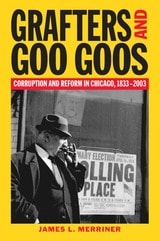
Grafters and Goo Goos
Corruption and Reform in ChicagoJames L. Merriner
Southern Illinois University Press, 2008
Chicago’s reputation for corruption is the basis of local and national folklore and humor. Grafters and Goo Goos: Corruption and Reform in Chicago, 1833–2003 unfolds the city’s notorious history of corruption and the countervailing reform struggles that largely failed to clean it up. More than a regional history of crime in politics, this wide-ranging account of governmental malfeasances traces ongoing public corruption and reform to its nineteenth-century democratic roots. Former Chicago journalist James L. Merriner reveals the battles between corrupt politicos and ardent reformers to be expressions of conflicting class, ethnic, and religious values.
From Chicago’s earliest years in the 1830s, the city welcomed dollar-chasing businessmen and politicians, swiftly followed by reformers who strived to clean up the attendant corruption. Reformers in Chicago were called “goo goos,” a derisive epithet short for “good-government types.” Grafters and Goo Goos contends a certain synergy defined the relationship between corruption and reform. Politicians and reformers often behaved similarly, their separate ambitions merging into a conjoined politics of interdependency wherein the line between heroes and villains grew increasingly faint. The real story, asserts Merriner, has less to do with right against wrong than it does with the ways the cultural backgrounds of politicians and reformers steered their own agendas, animating and defining each other by their opposition.
Drawing on original and archival research, Merriner identifies constants in the struggle between corruption and reform amid a welter of changing social circumstances and customs—decades of alternating war and peace, hardships and prosperity. Three areas of reform and resistance are identified: structural reform of the political system to promote honesty and efficiency, social reform to provide justice to the lower classes, and moral reform to combat vice. “In the matter of corruption and reform, the constants might be stronger than the variables,” writes Merriner in the Preface. “The players, rules, and scorekeepers change, but not the essential game.”
Complemented by eighteen illustrations, Grafters and Goo Goos is rife with shocking and amusing anecdotes and peppered with the personalities of famous muckrakers, bootleggers, mayors, and mobsters. While other studies have profiled infamous Chicago corruption cases and figures such as Al Capone and Richard J. Daley, this is the first to provide an overview appropriate for historians and general readers alike. In examining Chicago’s notorious saga of corruption and reform against a backdrop of social history, Merriner calls attention to our constant problems of both civic and national corruption and contributes to larger discussions about the American experiment of democratic self-government.
Grant Park
The Evolution of Chicago's Front YardDennis H. Cremin
Southern Illinois University Press, 2013
2014 Illinois State Historical Society Book of the Year
Grasses
Bromus to Paspalum, Second EditionRobert H. Mohlenbrock
Southern Illinois University Press, 2002
Since the publication of the first edition of Grasses: Bromus to Paspalumin 1972, twenty-two additional taxa of grasses have been discovered in Illinois that are properly placed in this volume. In addition, numerous nomenclatural changes have occurred for plants previously discovered, and many distributional records have been added. New keys have been prepared for each genus where additional species from Illinois are known. For new species, full-page illustrations are provided. This second edition updates the status of Illinois grasses. The book features 263 figures from the first edition plus 21 new figures for this edition by Paul W. Nelson.
Genera of grasses included in this work are Aegilops, Agropyron, Agrostis, Aira, Alopecurus, Anthoxanthum, Avena, Beckmannia, Briza, Bromus, Calamagrostis, Cinna, Dactylis, Deschampsia, Elyhordeum, Elymus, Elytrigia, Festuca, Hierochloe, Holcus, Hordeum, Koeleria, Lolium, Milium, Paspalum, Pennisetum, Phalaris, Phleum, Poa, Puccinellia, Sclerochloa, Secale, Sphenopholis, Torreyochloa, Triticum, and Vulpia.
Grasses
Panicum to Danthonia, Second EditionRobert H. Mohlenbrock
Southern Illinois University Press, 2001
Since the publication of the first edition of Grasses: Panicum to Danthonia in 1973, twenty additional taxa of grasses have been discovered in Illinois that are properly placed in this volume. In addition, numerous nomenclatural changes have occurred for plants already known from the state, and many distributional records have been added. This second edition updates the status of grasses in Illinois. Paul W. Nelson has provided illustrations for all of the additions.
Because the nature of grass structures is generally so different from that of other flowering plants, a special terminology is applied to them. In his introduction, Robert H. Mohlenbrock cites these terms, with descriptions that make the identification of unknown specimens possible. Mohlenbrock’s division of the grass family into subfamilies and tribes is a major departure from the sequence usually found in most floristic works in North America.
Synonyms that have been applied to species in the northeastern United States are given under each species. A description based primarily on Illinois material covers the more important features of the species. The common names—Paflic Grass, Billion Dollar Grass or Japanese Millett, Thread Love Grass, and Goose Grass—are the ones used locally in the state. The habitat designation and dot maps showing county distribution of each grass are provided only for grasses in Illinois, but the overall range for each species is also given.
Great American City
Chicago and the Enduring Neighborhood EffectRobert J. Sampson
University of Chicago Press, 2012
Great American City
Chicago and the Enduring Neighborhood EffectRobert J. Sampson
University of Chicago Press, 2024
Based on one of the most ambitious studies in the history of social science, Robert J. Sampson’s Great American City presents the fruits of over a decade’s research to support an argument that we all feel and experience every day: life is decisively shaped by your neighborhood.
Engaging with the streets and neighborhoods of Chicago, Sampson, in this new edition, reflects on local and national changes that have transpired since his book’s initial publication, including a surge in gun violence and novel forms of segregation despite an increase in diversity. New research, much of it a continuation of the influential discoveries in Great American City, has followed, and here, Sampson reflects on its meaning and future directions. Sampson invites readers to see the status of the research initiative that serves as the foundation of the first edition—the Project on Human Development in Chicago Neighborhoods (PHDCN)—and outlines the various ways other scholars have continued his work. Both accessible and incisively thorough, Great American City is a must-read for anyone interested in cutting-edge urban sociology and the study of crime.
Growing Up Chicago
Edited by David Schaafsma, Roxanne Pilat, and Lauren DeJulio Bell, Foreword by Luis Alberto Urrea
Northwestern University Press, 2021
The stories evoke childhood trips to the Art Institute of Chicago, nighttime games of ringolevio, and the giant neon Magikist lips that once perched over the expressway, sharing perspectives that range from a young man who dreams of becoming an artist to a single mother revisiting her Mexican roots, from a woman’s experience with sexual assault to a child’s foray into white supremacy. This book memorably explores culture, social identity, and personal growth through the eyes of Chicagoans, affirming that we each hold the ability to shape the places in which we live and write and read as much as those places shape us.
Growing Up in a Land Called Egypt
A Southern Illinois Family BiographyCleo Caraway
Southern Illinois University Press, 2010
In Growing Up in a Land Called Egypt: A Southern Illinois Family Biography,author Cleo Caraway fondly recalls how she and her siblings came of age on the family farm in the 1930s and 1940s. Like many others, the Caraways were affected by the economic hardships of the Great Depression, but Cleo’s parents strived to shelter her and her six siblings from the dire circumstances affecting the nation and their home and allowed them to bask in their idealistic existence. Her love for her family clearly shines from every page as she writes of a simpler time, before World War II divided the family.
Caraway revels in the life her family lived on a southern Illinois hilltop in Murphysboro township, marveling at the mix of commonplace and adventure she experienced in her childhood. She remembers her first day of school, walking three miles to the wondrous one-room building with her siblings; reminisces about strolling through the countryside with her mother, investigating the various plants and flowers, fruits and nuts; and recollects her fascination with the Indian relics she found buried near her home, a hobby she shared with her father. She also writes of seeing Gone with the Wind on the big screen at the Hippodrome in Murphysboro, of learning to sew dresses for her dolls, and of idyllic life on the farm—milking cows, hatching chicks, feeding pigs. Along with her personal memories Caraway includes interviews with neighbors and many fascinating photographs with detailed captions that make the images come alive.
A delightful follow-up to her father’s popular Foothold on a Hillside: Memories of a Southern Illinoisan,Caraway’s book is a pleasant change from the typical accounts of southern Illinois before, during, and after the Great Depression. Instead of hardscrabble grit, Growing Up in a Land Called Egypt offers a refreshingly different view of the period and is certain to be embraced by southern Illinois natives as well as anyone interested in the experiences of a rural family that thrived despite the difficult times. The author’s lighthearted prose, self-deprecating humor, and genuine affection for her family make reading this book a rich and memorable experience.
Growing Up with Southern Illinois, 1820 to 1861
From the Memoirs of Daniel Harmon BrushDaniel Harmon Brush, with a Foreword by Michael C. Batinski
Southern Illinois University Press, 2017
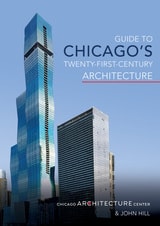
Guide to Chicago's Twenty-First-Century Architecture
Chicago Architecture Center and John Hill
University of Illinois Press, 2021
Chicago's wealth of architectural treasures makes it one of the world's majestic cityscapes. Published in collaboration with the Chicago Architecture Center, this easy-to-use guide invites you to discover the new era of twenty-first-century architecture in the Windy City via two hundred architecturally significant buildings and spaces in the city and suburbs. Features include:
- Entries organized by neighborhood
- Maps with easy-to-locate landmarks and mass transit options
- Background on each entry, including the design architect, name and address, description, and other essential information
- Sidebars on additional sites and projects
- A detailed supplemental section with a glossary, selected bibliography, and indexes by architect, building name, and building type
Up-to-date and illustrated with almost four hundred color photos, the Guide to Chicago's Twenty-First-Century Architecture takes travelers and locals on a journey into an ever-changing architectural mecca.