Results by title
30 books match the query 'Pentateuch'

A History of Pentateuchal Traditions
Martin Noth
SBL Press, 1981
Now Available from Duke University Press
Originally published in German in 1948, Noth’s application of a traditio-historical approach has made this book required reading for students and scholars
A Torah Commentary for Our Times
Volume 2: Exodus and LeviticusRabbi Harvey J. Fields
Central Conference of American Rabbis, 1991
A helpful approach to the weekly parashah, juxtaposing the insights of ancient, medieval, and modern commentators (including the author). Perfect for both beginning Torah students and scholars seeking new angles on the text. The volumes are available individually or as a three-volume set, ideal for a bar or bat mitzvah or confirmation gift.
A Torah Commentary for Our Times
Volume 3: Numbers and DeuteronomyRabbi Harvey J. Fields
Central Conference of American Rabbis, 1993
A helpful approach to the weekly parashah, juxtaposing the insights of ancient, medieval, and modern commentators (including the author). Perfect for both beginning Torah students and scholars seeking new angles on the text. The volumes are available individually or as a three-volume set, ideal for a bar or bat mitzvah or confirmation gift.
A Torah Commentary for Our Times
Volume I: GenesisRabbi Harvey J. Fields
Central Conference of American Rabbis, 1990
A helpful approach to the weekly parashah, juxtaposing the insights of ancient, medieval, and modern commentators (including the author). Perfect for both beginning Torah students and scholars seeking new angles on the text. The volumes are available individually or as a three-volume set, ideal for a bar or bat mitzvah or confirmation gift.
Aseneth of Egypt
The Composition of a Jewish NarrativePatricia D. Ahearne-Kroll
SBL Press, 2020
An exploration of Aseneth's beginnings
In Aseneth of Egypt: The Composition of a Jewish Narrative, Patricia D. Ahearne-Kroll challenges reliance on reconstructed texts in previous scholarship on the book of Joseph and Aseneth. After outlining the problems with previous prototypes of the Hellenistic narrative, she proposes a way to talk about the story in its initial setting without ignoring the manuscript evidence. Her thorough analysis of the evidence reveals how Joseph and Aseneth reflects the literary impulse of Greek-speaking Jewish writers to redescribe their identity in Egypt and Judean connections to the land of Egypt, while incorporating Ptolemaic strategies of legitimation of power. In the end, Ahearne-Kroll concludes that the base storyline preserved in all the copies of this story demonstrates that it was written for Jewish communities living in Hellenistic Egypt.
Features:
- A focus on Hellenistic stories of heroic ancestors
- A discussion of the possible lives of Jews in Hellenistic Egypt drawn from the narrative of Aseneth
- An examination of the complexities involved in dating the composition of literary texts
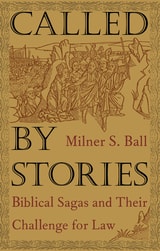
Called by Stories
Biblical Sagas and Their Challenge for LawMilner S. Ball
Duke University Press, 2000
He begins with the story of Moses, who is obliged both to speak for God to the Hebrews and to advocate for the Hebrews before God. What, asks Ball, does Moses’s predicament say to lawyers professionally bound to zealous representation of only one client? In the story of Rachel, Ball finds insights that comprehend the role of tears and emotion in the judicial process. He relates these insights to specific contemporary situations, such as a plant closing and the subsequent movement of jobs to Mexico and legal disputes over the sovereignty of native Hawaiians. In a discussion of “The Gospel According to John,” Ball points out that the writer of this gospel is free simultaneously to be critical of law and to rely extensively on it. Ball uses this narrative to explore the boundaries of free will and independence in lawyering. By venturing into the world of powerful events and biblical characters, Ball enables readers to contest their own expectations and fundamental assumptions.
Employing legal theory, theology, and literary criticism, Called by Stories distills a wisdom in biblical texts that speaks specifically to the working life of legal professionals. As such, it will enrich lovers of narrative and poetry, ethicists, literary and biblical scholars, theologians, lawyers, law students, judges, and others who seek to discern deeper meanings in the texts that have shaped their lives.
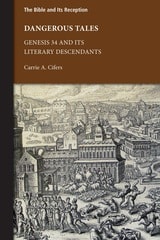
Dangerous Tales
Genesis 34 and Its Literary DescendantsCarrie A. Cifers
SBL Press, 2025
The biblical narrative of Israel’s only daughter Dinah is steeped in deception and violence, vengeance and destruction, and a silence that has posed interpretive problems for readers for more than two millennia. Carrie A. Cifers takes up the retellings of Genesis 34 in Josephus’s Jewish Antiquities, the book of Jubilees, and Joseph and Aseneth to explore how later authors tried to clarify the assumedly implicit ethical message of Dinah’s story. Through narrative ethics and socionarratology, Cifers demonstrates that biblical stories are a space of encounter where texts make claims on readers and where readers have an ethical responsibility as witnesses to the text. Dangerous Tales is a call for contemporary readers to engage biblical narratives in ways that mitigate interpretive violence and maximize each text’s ethical potential.
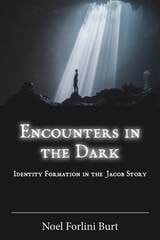
Encounters in the Dark
Identity Formation in the Jacob StoryNoel Forlini Burt
SBL Press, 2020
An interdisciplinary study of a familiar patriarchal narrative
Encounters in the Dark: Identity Formation in the Jacob Story traces the many moments of darkness in the life of Jacob. From the darkness of his mother's womb, to the darkness Jacob uses to deceive his father and his brother, to the night he sleeps on the ground with just a stone for a pillow at Bethel, and to the triumphant scene of wrestling God by the Jabbok River, the biblical story frequently situates Jacob in the darkness. Through an exploration of key moments in Jacob's story, Noel Forlini Burt follows Jacob's journey from home to exile and back home again. His story symbolizes the larger story of Israel's own wrestling with God in the darkness of exile and return.
Features
- An exploration of the poetics and rhetoric of the Jacob story
- An examination of characterization in its ancient and modern contexts
- An analysis of individual and collective identity
Farewell to the Priestly Writing? The Current State of the Debate
Friedhelm Hartenstein
SBL Press, 2020
Now available in English
In discussions of the origin of the Pentateuch, the Priestly source traditionally constitutes an undisputed reference point for different source-critical models, and it is the only literary layer with concise terminology and a theological conception that can be extracted from a non-Priestly context. This English translation of Abschied von der Priesterschrift? Zum Stand der Pentateuchdebatte revisits the scholarly debate surrounding the Documentary Hypothesis and the so-called Priestly material’s position either as an independent written source or as a redaction within the books of Genesis through Deuteronomy. Contributors include Christoph Berner, Erhard Blum, Jan Christian Gertz, Christoph Levin, Eckart Otto, Christophe Nihan, and Thomas Römer.
Glaphyra on the Pentateuch, Volume 1
Nicholas P. St. Cyril of Alexandria
Catholic University of America Press, 2019
Glaphyra on the Pentateuch, Volume 2
St. Cyril of Alexandria
Catholic University of America Press, 2019
Legal Writing, Legal Practice
The Biblical Bailment Law and Divine JusticeYael Landman
SBL Press, 2022
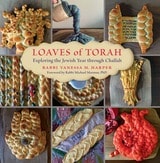
Loaves of Torah
Exploring the Jewish Year through ChallahRabbi Vanessa M. Harper
Central Conference of American Rabbis, 2023
Braided and spiral loaves of challah have long been a delicious centerpiece of the Jewish table, but with a few extra twists, the beloved Shabbat bread can become a work of art that teaches Torah. In Loaves of Torah, Rabbi Vanessa M. Harper— creator of the hit Instagram account @lechlechallah—shapes interpretive challot for each weekly Torah portion and Jewish holiday. A creative journey through the Jewish year, the book pairs gorgeous color photographs with insightful commentary, in-depth questions for reflection and discussion, as well as beautiful kavanot. Rabbi Harper also includes blessings, recipes, and tips for creating your own interpretive challot. A fresh, contemporary commentary on our holiest text, Loaves of Torah will inspire you to think outside the braid and take Torah into your own hands.
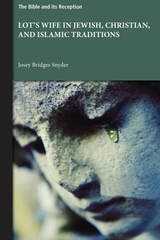
Lot’s Wife in Jewish, Christian, and Islamic Traditions
Josey Bridges Snyder Snyder
SBL Press, 2025
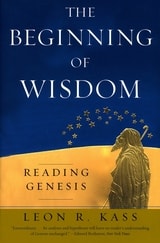
The Beginning of Wisdom
Reading GenesisLeon R. Kass
University of Chicago Press, 2006
“Extraordinary,” says the New York Times, “will leave no reader’s understanding of Genesis unchanged.”
Examining Genesis in a philosophical light, Leon Kass presents it not as a story of what happened long ago, but as the enduring story of humanity itself. He asserts that the first half of Genesis contains insights about human nature that “rival anything produced by the great philosophers.” Kass here reads these first stories—from Adam and Eve to the tower of Babel—as a mirror for self-discovery that reveals truths about human reason, speech, freedom, sexual desire, pride, shame, anger, and death. Taking a step further in the second half of his book, Kass explores the struggles in Genesis to launch a new way of life that addresses mankind’s morally ambiguous nature by promoting righteousness and holiness.
Even readers who don’t agree with Kass’s interpretations will find The Beginning of Wisdom a compelling book—a masterful philosophical take on one of the world’s seminal religious texts.
The Hermeneutics of Torah
Proverbs 2, Deuteronomy, and the Composition of Proverbs 1–9Bernd U. Schipper
SBL Press, 2021
This revised and expanded English edition of Bernd U. Schipper’s 2012 Hermeneutik der Tora incorporates the results of his continued research and writings on Proverbs. For nearly a century, many biblical scholars have argued that the main theological traditions, such as the divine law, God’s torah, do not appear in the book of Proverbs. In this volume, however, Schipper demonstrates that Proverbs interacts in a sophisticated way with the concept of the torah. A detailed analysis of Proverbs 2 and other passages from the first part of the book of Proverbs shows that Proverbs engages in a postexilic discourse around “wisdom and torah” concerning the abilities of humans to fulfill the will of YHWH exemplified in the divine torah.
The Mussar Torah Commentary
A Spiritual Path to Living a Meaningful and Ethical LifeRabbi Barry H. Block
Central Conference of American Rabbis, 2020
This Mussar-based commentary is a vital resource for Torah study, offering a thoughtful analysis of each of the 54 weekly parashot. Each essay in this anthology brings a parashah into juxtaposition with one of the Mussar middot (character traits as described within the Jewish school of ethics called Mussar), thereby providing an applied lens of Mussar teachings that helps us to delve deeper into our tradition with increased mindfulness and intention.
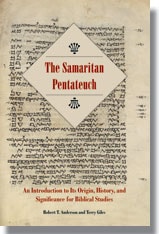
The Samaritan Pentateuch
An Introduction to Its Origin, History, and Significance for Biblical StudiRobert T. Anderson
SBL Press, 2012
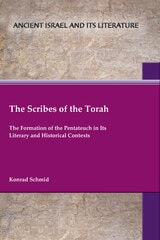
The Scribes of the Torah
The Formation of the Pentateuch in Its Literary and Historical ContextsKonrad Schmid
SBL Press, 2023
A revised view of the Pentateuch with consequences for the broader literary history of the Bible
This collection of thirty-one studies on the Pentateuch represents more than twenty years of Konrad Schmid’s research and publications advocating for a new view of the Pentateuch’s formation. Schmid’s essays present the case for a Persian period Priestly document that provided a basic narrative thread to the Torah, which included separate, pre-Priestly components of narratives in Genesis and the Moses story. Schmid’s open discussion includes evidence from various fields, such as literary history, comparative cultural history, historical linguistics, epigraphy, and archaeology. The essays are divided into eight sections usefully structured around the themes of the Pentateuch in the Enneateuch, the history of scholarship, the formation of the Torah, Genesis, the Moses story, the Priestly document, legal texts, and the Pentateuch in the history of ancient Israel’s religion.
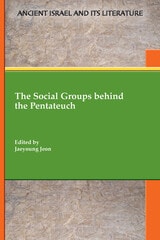
The Social Groups behind the Pentateuch
Jaeyoung Jeon
SBL Press, 2021
A reexamination of the Pentateuch in light of the complex social, religious, and political conflicts of the Persian period
During the last several decades, scholars in pentateuchal studies have suggested new compositional models to replace the Documentary Hypothesis, yet no consensus has emerged. The ten essays in this collection advance the discussion by shifting the focus of pentateuchal studies from the literary stratification of different layers of the texts to the social, economic, religious, and political agendas behind them. Rather than limiting the focus of their studies to scribal and community groups within Persian Yehud, contributors look beyond Yehud to other Judahite communities in the diaspora, including Elephantine and the Samaritan community, establishing a proper academic context for setting the diverse voices of the Pentateuch as we now understand them. Contributors include Olivier Artus, Thomas B. Dozeman, Innocent Himbaza, Jürg Hutzli, Jaeyoung Jeon, Itamar Kislev, Ndikho Mtshiselwa, Dany Noquet, Katharina Pyschny, Thomas Römer, and Konrad Schmid.
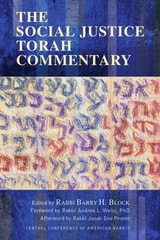
The Social Justice Torah Commentary
Rabbi Barry H. Block
Central Conference of American Rabbis, 2021
What does the Torah have to say about social justice? As the contributors to The Social Justice Torah Commentary demonstrate, a great deal. A diverse array of authors delve deeply into each week's parashah, drawing lessons to inspire tikkun olam. Chapters address key contemporary issues such as racism, climate change, mass incarceration, immigration, disability, women's rights, voting rights, and many more. The result is an indispensable resource for weekly Torah study and for anyone committed to repairing the world.
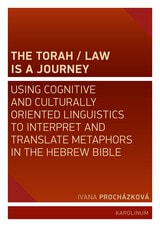
The Torah/Law Is a Journey
Using Cognitive and Culturally Oriented Linguistics to Interpret and Translate Metaphors in the Hebrew BibleIvana Procházková
Karolinum Press, 2022
The Old Testament is rich in metaphor. Metaphorical expressions appear not only in places where you might expect them, like the poetic verses, but also in the legal texts. They appear in the preambles to collections of laws, in their final summaries, in general considerations on compliance with and violation of the law, in texts concerning the meaning of the law, and those dealing with topics now reserved for legal theory and legal philosophy. These metaphorical expressions reveal how the authors of the relevant Torah/Law texts understood their function in society and what the society of the time preferred in the law.
Anchored in cognitive and cultural linguistics, The Torah/Law Is a Journey investigates Hebrew metaphorical expressions concerning the key Old Testament concept of Torah/Law. Ivana Procházková identifies Hebrew conceptual metaphors and explicates the metaphorical expressions. She also uses cognitive linguistic analysis to look at modern translations of selected metaphorical expressions into Czech and English. Procházková closes with an analysis of the metaphors used in the Council of Europe publication Compass: Manual for Human Rights Education with Young People to conceptualize human rights.
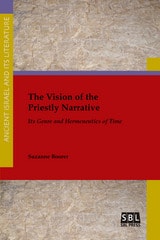
The Vision of the Priestly Narrative
Its Genre and Hermeneutics of TimeSuzanne Boorer
SBL Press, 2016
A fresh look at the Priestly narrative that places less weight on linguistic criteria alone in favor of narrative coherence
Boorer explores the theology of an originally independent Priestly narrative (Pg), extending through Genesis–Numbers, as a whole. In this book she describes the structure of the Priestly narrative, in particular its coherent sequential and parallel patterns. Boorer argues that at every point in the narrative’s sequential and parallel structure, it reshapes past traditions, synthesizing these with contemporary and unique elements into future visions, in a way that is akin to the timelessness of liturgical texts. The book sheds new light on what this material might have sought to accomplish as a whole, and how it might have functioned for, its original audience.
- Solid arguments based on genre and themes, with regard to a once separate Priestly narrative (Pg) that concludes in Numbers 27*
- Thorough discussion of the overall interpretation of the Priestly narrative (Pg), by bringing together consideration of its structure and genre
- Clear illustration of how understanding the genre of the material and its hermeneutics of time is vital for interpreting Pg as a whole
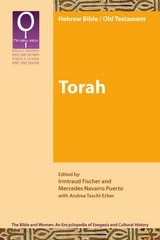
Torah
Irmtraud Fischer
SBL Press, 2011
This volume is the first in The Bible and Women series. It presents a history of the reception of the Bible as embedded in Western cultural history with a special focus on the history of women and issues of gender. It introduces the series, explaining the choice of the Hebrew canon in connection with the Christian tradition and preparing the way for a changed view of women throughout the series. The contributors explore the gendered significance of the canonical writings as well as the process of their canonization and the social-historical background of ancient Near Eastern women’s lives, both of which play key roles in the series. Turning to the Pentateuch, essays address a variety of texts and issues still relevant today, such as creation and male-female identity in the image of God, women’s roles in the genealogies of the Pentateuch and in salvation history, the rights and responsibilities of women according to the Hebrew Bible's legal and ritual texts, and how archaeology and iconography can illustrate the texts of the Torah. Contributors include Sophie Démare-Lafont, Dorothea Erbele-Küster, Karin Finsterbusch, Irmtraud Fischer, Mercedes García Bachmann, Thomas Hieke, Carol Meyers, Mercedes Navarro Puerto, Jorunn Økland, Ursula Rapp, Donatella Scaiola, Silvia Schroer, Jopie Siebert-Hommes, and Adriana Valerio.
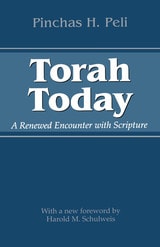
Torah Today
A Renewed Encounter with ScriptureBy Pinchas H. Peli
University of Texas Press, 2005
The central element of Jewish worship is the yearly cycle of reading the first five books of the Bible, the Five Books of Moses, called the Torah in Hebrew. Torah Today, a compilation of fifty-four essays that grew out of Pinchas Peli's Torah column in the Jerusalem Post, comments upon the weekly readings from the Torah. Written in a wonderfully clear style, each essay brings the reader closer to the rich spiritual world of Torah as it confronts the challenges of modern society. This reissue of Torah Today, with a new preface by Rabbi Harold M. Schulweis, makes this classic work available to a new generation of Bible students.
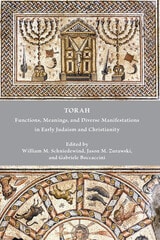
Torah
Functions, Meanings, and Diverse Manifestations in Early Judaism and ChristianityWilliam M. Schniedewind
SBL Press, 2022
The present volume explores the ever-evolving understandings and diverse manifestations of the Hebrew notion of torah in early Jewish and Christian literature and the different roles torah played within those communities, whether in Judea or in the Hellenistic and early Roman diaspora. This collection of essays is purposefully wide-ranging, with contributors exploring and rethinking some of the most basic scholarly assumptions and preconceptions about the nature of torah in light of new critical approaches and methodologies. Contributors include Gabriele Boccaccini, Francis Borchardt, Calum Carmichael, Federico Dal Bo, Lutz Doering, Oliver Dyma, Paula Fredriksen, Robert G. Hall, Magnar Kartveit, Anne Kreps, David Lambert, Michael Legaspi, Jason A. Myers, Juan Carlos Ossandón Widow, Anders Klostergaard Petersen, Patrick Pouchelle, Jeremy Punt, Michael L. Satlow, Joachim Schaper, William Schniedewind, Elisa Uusimäki, Jacqueline Vayntrub, Jonathan Vroom, James W. Watts, Benjamin G. Wright III, and Jason M. Zurawski.
Voices of Torah, Vol. 1
A Treasury of Rabbinic Gleanings on the Weekly Portions, Holidays and SpecialRabbi Hara E. Person
Central Conference of American Rabbis, 2011
A wonderful Torah study resource! Discover multiple perspectives on every parashah in this rich collection of commentary written by CCAR members. Includes holiday portions as well. Makes a great gift for students, teachers, and congregational leaders.
Available in a discounted bundle with Voices of Torah, Volume 2
Voices of Torah, Volume 2
A Treasury of Rabbinic Gleanings on the Weekly Portions, Holidays, and Special ShabbatotRabbi Sonja K. Pilz, PhD
Central Conference of American Rabbis, 2020
In this second volume of the classic CCAR publication, you'll find a compilation of multiple commentaries written by CCAR members on every parashah, including holiday portions. A great resource for d'var Torah preparation for lay leaders and clergy alike, this volume makes a great gift for students, teachers, and congregational leaders.
Available in a discounted bundle with Voices of Torah, Volume 1
Wisdom Discourse and Torah in Second Temple Judaism
Challenging the Integration ParadigmJiseong James Kwon
SBL Press, 2025
Did wisdom literature in the Hebrew Bible develop over time from secular to religious, as many early modern scholars believed? Did it develop in reaction to historical events or out of conflict with other traditions, including Torah? In Wisdom Discourse and Torah in Second Temple Judaism, JiSeong James Kwon moves beyond this impasse by applying a discourse-critical method to intertextual readings of Proverbs, Ben Sira, the Wisdom of Solomon, Baruch, the Dead Sea Scrolls, and Deuteronomy. Kwon’s study reveals that wisdom literature maintained an independent identity and theological orientation distinct from the legal traditions of the Torah. Rather than wisdom being subsumed into legal material, Jewish intellectual production remained pluralistic in form, genre, and theological orientation throughout the Persian and Hellenistic periods.
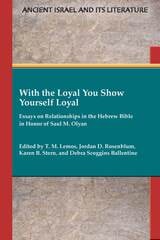
With the Loyal You Show Yourself Loyal
Essays on Relationships in the Hebrew Bible in Honor of Saul M. OlyanT. M. Lemos
SBL Press, 2021
Contributors to this volume come together to honor the lifetime of work of Saul M. Olyan, Samuel Ungerleider Jr. Professor of Judaic Studies and Professor of Religious Studies at Brown University. Essays by his students, colleagues, and friends focus on and engage with his work on relationships in the Hebrew Bible, from the marking of status in relationships of inequality, to human family, friend, and sexual relationships, to relationships between divine beings. Contributors include Susan Ackerman, Klaus-Peter Adam, Rainer Albertz, Andrea Allgood, Debra Scoggins Ballentine, Bob Becking, John J. Collins, Stephen L. Cook, Ronald Hendel, T. M. Lemos, Nathaniel B. Levtow, Carol Meyers, Susan Niditch, Brian Rainey, Thomas Römer, Jordan D. Rosenblum, Rüdiger Schmitt, Jennifer Elizabeth Singletary, Kerry M. Sonia, Karen B. Stern, Stanley Stowers, Andrew Tobolowsky, Karel van der Toorn, Emma Wasserman, and Steven Weitzman.