Results by title
123 books match the query 'Internet' and 4 start with g

Global Activism, Global Media
Edited by Wilma de Jong, Martin Shaw, and Neil Stammers
Pluto Press, 2005
This book brings together activists and academics in one volume, to explore the theory and practice of global activism's relation to all forms of media, mainstream and otherwise. The contributors examine how global activism is represented in the mainstream press and explain the strategies that activists adopt to spread their own ideas.
Investigating Indymedia and internet activism, they show how transformations in communications technology offer new possibilities, and explain how activists have successfully used and developed their own media. Case studies and topics include the world social forums, an example of a campaign from the NGO Action Aid, a campaign strategy from an internet activist, Greenpeace and the Brent Spar conflict, the World Development Movement and representations in the mainstream press, the Independent Media Centre, transgender activism on the net, Amnesty International, Oxfam and the internet.
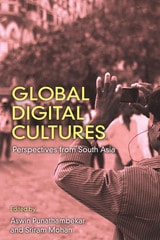
Global Digital Cultures
Perspectives from South AsiaAswin Punathambekar and Sriram Mohan, Editors
University of Michigan Press, 2019
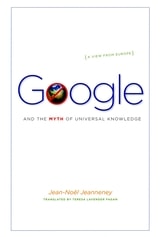
Google and the Myth of Universal Knowledge
A View from EuropeJean-Noël Jeanneney
University of Chicago Press, 2006
The recent announcement that Google will digitize the holdings of several major libraries sent shock waves through the book industry and academe. Google presented this digital repository as a first step towards a long-dreamed-of universal library, but skeptics were quick to raise a number of concerns about the potential for copyright infringement and unanticipated effects on the business of research and publishing.
Jean-Noël Jeanneney, president of France’s Bibliothèque Nationale, here takes aim at what he sees as a far more troubling aspect of Google’s Library Project: its potential to misrepresent—and even damage—the world’s cultural heritage. In this impassioned work, Jeanneney argues that Google’s unsystematic digitization of books from a few partner libraries and its reliance on works written mostly in English constitute acts of selection that can only extend the dominance of American culture abroad. This danger is made evident by a Google book search the author discusses here—one run on Hugo, Cervantes, Dante, and Goethe that resulted in just one non-English edition, and a German translation of Hugo at that. An archive that can so easily slight the masters of European literature—and whose development is driven by commercial interests—cannot provide the foundation for a universal library.
As a leading librarian, Jeanneney remains enthusiastic about the archival potential of the Web. But he argues that the short-term thinking characterized by Google’s digital repository must be countered by long-term planning on the part of cultural and governmental institutions worldwide—a serious effort to create a truly comprehensive library, one based on the politics of inclusion and multiculturalism.

Gurus, Hucksters, Entertainers
How Influencers Reshaped Social MediaAngèle Christin
University of Chicago Press, 2026
An illuminating investigation of the complex work of social media content creators—their lives, conflicts, and controversies.
In this eye-opening book, digital studies scholar Angèle Christin demystifies the content creator economy, explaining its long history and the pitfalls of its professionalization. Drawing on in-depth fieldwork with digital creators as varied as vegan YouTubers, dads of Instagram, and self-described drama commentators, Christin shows how individuals enter social media creation, how they make money, and how their online environments shape their content.
Aspiring creators often dream of a better life in social media careers. Yet these dreams soon turn into exhaustion as influencers try to meet the contradictory demands of platforms, brands, and audiences. Over time, Christin shows, creators cluster into three types: hucksters, who work on behalf of brands; entertainers, who chase virality and platform payments; and gurus, who monetize the loyalty of their fans. Platform dynamics push entertainers and gurus to create extreme and incendiary content to maintain audience engagement, while brands and marketers nudge hucksters toward repetitive, staid commercial performances. Concerns about algorithmic manipulation and conflicts between creators further lead to reputation-damaging, harassment-laden scandals. Christin reveals how platform labor repeatedly—and structurally—fosters precarity and inequality, destructive drama, and inflammatory content online.