Results by title
496 books match the query 'Jewish' and 21 start with g

Games of Inheritance
Kabbalah, Tradition, and Authorship in Jorge Luis BorgesYitzhak Lewis
Rutgers University Press, 2025
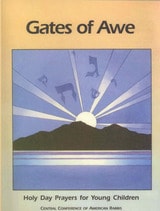
Gates of Awe
Holy Day Prayers for Young ChildrenRabbi Howard I. Bogot
Central Conference of American Rabbis, 1991

Gates of Forgiveness
Shaarei SelichaChaim Stern
Central Conference of American Rabbis, 1993

Gates of Prayer for Shabbat and Weekdays - English-opening, Gender-Inclusive
Chaim Stern
Central Conference of American Rabbis, 1994

Gates of Prayer for Shabbat and Weekdays-Hebrew-opening, Gender-Inclusive
Chaim Stern
Central Conference of American Rabbis, 1994
Gates of Prayer for Weekdays and at a House of Mourning
Chaim Stern
Central Conference of American Rabbis, 1992
Gates of Prayer, Large Print, Hebrew Opening
Chaim Stern
Central Conference of American Rabbis, 0

Gates of Prayer
Shaarei Tefila - Hebrew-opening: The New Union Prayerbook for Weekdays, Sabbaths and FestivalsChaim Stern
Central Conference of American Rabbis, 0
Gates of Repentance for Young People
Rabbi Judith Abrams
Central Conference of American Rabbis, 2002
Gates of Understanding Volume 1 - PDF Electronic Version
A Companion Volume to Gates of PrayerRabbi Chaim Stern
Central Conference of American Rabbis, 1977
This ebook is not sold by CCAR Press and must be ordered from the external ebook stores below.
This companion volume to Gates of Prayer includes essays on worship, liturgy, holiness, theology, music, and more, written by leading thinkers of their day. Also included are notes on Gates of Prayer written by Chaim Stern and A. Stanley Dreyfus. An invaluable resource for anyone interested in the history and development of liturgy and Reform Jewish practice.
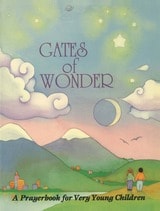
Gates of Wonder
A Prayerbook for Very Young ChildrenRabbi Howard Bogot
Central Conference of American Rabbis, 1989

German Idealism and the Jew
The Inner Anti-Semitism of Philosophy and German Jewish ResponsesMichael Mack
University of Chicago Press, 2003
Offering the first analytical account of the connection between anti-Semitism and philosophy, Mack begins his exploration by showing how the fundamental thinkers in the German idealist tradition—Kant, Hegel, and, through them, Feuerbach and Wagner—argued that the human world should perform and enact the promises held out by a conception of an otherworldly heaven. But their respective philosophies all ran aground on the belief that the worldly proved incapable of transforming itself into this otherworldly ideal. To reconcile this incommensurability, Mack argues, philosophers created a construction of Jews as symbolic of the "worldliness" that hindered the development of a body politic and that served as a foil to Kantian autonomy and rationality.
In the second part, Mack examines how Moses Mendelssohn, Heinrich Heine, Franz Rosenzweig, and Freud, among others, grappled with being both German and Jewish. Each thinker accepted the philosophies of Kant and Hegel, in varying degrees, while simultaneously critiquing anti-Semitism in order to develop the modern Jewish notion of what it meant to be enlightened—a concept that differed substantially from that of Kant, Hegel, Feuerbach, and Wagner. By speaking the unspoken in German philosophy, this book profoundly reshapes our understanding of it.
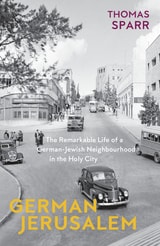
German Jerusalem
The Remarkable Life of a German-Jewish Neighborhood in the Holy CityThomas Sparr
Haus Publishing, 2024
In the 1920s, before the establishment of Israel, a group of German Jews settled in a garden city on the outskirts of Jerusalem. During World War II, their quiet community, nicknamed Grunewald on the Orient, emerged as both an immigrant safe haven and a lively expatriate hotspot, welcoming many famous residents including poet-playwright Else Lasker-Schüler, historian Gershom Scholem, and philosopher Martin Buber. It was an idyllic setting, if fraught with unique tensions on the fringes of the long-divided holy city. After the war, despite the weight of the Shoah, the neighborhood miraculously repaired shattered bonds between German and Israeli residents. In German Jerusalem, Thomas Sparr opens up the history of this remarkable community and the forgotten borderland they called home.
German Jews Beyond Judaism
George L. Mosse, With a critical introduction by David J. Sorkin
University of Wisconsin Press, 2025
German Jews Beyond Judaism was, in Mosse’s own estimation, his “most personal book, almost a confession of faith.” David J. Sorkin’s new critical introduction illustrates how Mosse’s life and values both shaped and exemplified his historical analysis and offers potential meanings of his intellectual legacy for the present day.

Ghetto Kingdom
Tales of the Lodz GhettoIsaiah Spiegel
Northwestern University Press, 1998
The stories examine the relationship between inmates and their families, their friends, their Christian former neighbors, the German soldiers, and, ultimately, the world of hopelessness and desperation that surrounded them. In using his creative powers to transform the suffering and death of his people into stories that preserve their memory, Spiegel succeeds in affirming the humanity and dignity the Germans were so intent on destroying.
Originally published as Malchut geto (Malkhes geto) in Yiddish.
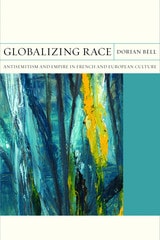
Globalizing Race
Antisemitism and Empire in French and European CultureDorian Bell
Northwestern University Press, 2018
Globalizing Race explores how intersections between French antisemitism and imperialism shaped the development of European racial thought. Ranging from the African misadventures of the antisemitic Marquis de Morès to the Parisian novels and newspapers of late nineteenth-century professional antisemites, Dorian Bell argues that France’s colonial expansion helped antisemitism take its modern, racializing form—and that, conversely, antisemitism influenced the elaboration of the imperial project itself.
Globalizing Race radiates from France to place authors like Guy de Maupassant and Émile Zola into sustained relation with thinkers from across the ideological spectrum, including Hannah Arendt, Friedrich Nietzsche, Frantz Fanon, Karl Marx, Max Horkheimer, and Theodor Adorno. Engaging with what has been called the “spatial turn” in social theory, the book offers new tools for thinking about how racisms interact across space and time. Among these is what Bell calls racial scalarity. Race, Bell argues, did not just become globalized when European racism and antisemitism accompanied imperial penetration into the farthest reaches of the world. Rather, race became most thoroughly global as a method for constructing and negotiating the different scales (national, global, etc.) necessary for the development of imperial capitalism.
As France, Europe, and the world confront a rising tide of Islamophobia, Globalizing Race also brings into fascinating focus how present-day French responses to Muslim antisemitism hark back to older, problematic modes of representing the European colonial periphery.

Good for the Jews
Debra Spark
University of Michigan Press, 2009
Good for the Jews is a smart, funny, sexy novel set in Madison, Wisconsin, during the Bush administration. Part mystery and part stranger-comes-to town story, Good for the Jews is loosely based on the biblical book of Esther. Like Esther, Debra Spark's characters deal with anti-Semitism and the way that powerful men—and the women who love them—negotiate bureaucracies.
At the core of the story of right and wrong are young, attractive Ellen Hirschorn and her older cousin Mose, a high school teacher who thinks he knows, in fact, what is "good for the Jews"—and for Ellen, too. Their stories intertwine with those of the school superintendent, his ex-wife and son, and a new principal. Workplace treachery, the bonds of family, coming of age, and romantic relationships all take center stage as the characters negotiate the fallout from a puzzling fire.
Spark's evocative writing style and sharp, understanding treatment of her diverse characters draw the reader into this surprising page-turner, a finalist for the 2009 Foreword Magazine Book of the Year Award.
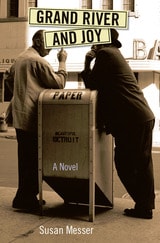
Grand River and Joy
Susan Messer
University of Michigan Press, 2010
Halloween morning 1966, Harry Levine arrives at his wholesale shoe warehouse to find an ethnic slur soaped on the front window. As he scavenges around the sprawling warehouse basement, looking for the supplies he needs to clean the window, he makes more unsettling discoveries: a stash of Black Power literature; marijuana; a new phone line running off his own; and a makeshift living room, arranged by Alvin, the teenaged tenant who lives with his father, Curtis, above the warehouse. Accustomed to sloughing off fears about Detroit's troubled inner-city neighborhood, Harry dismisses the soaped window as a Halloween prank and gradually dismantles “Alvin's lounge” in a silent conversation with the teenaged tenant. Still, these events and discoveries draw him more deeply into the frustrations and fissures permeating his city in the months leading up to the Detroit riots.
Grand River and Joy, named after a landmark intersection in Detroit, follows Harry through the intersections of his life and the history of his city. It's a work of fiction set in a world that is anything but fictional, a novel about the intersections between races, classes and religions exploding in the long, hot summers of Detroit in the 1960s. Grand River and Joy is a powerful and moving exploration of one of the most difficult chapters of Michigan history.
Susan Messer's fiction and nonfiction have appeared in numerous publications, including Glimmer Train Stories, North American Review, and Colorado Review. She received an Illinois Arts Council Fellowship in prose, an Illinois Arts Council literary award for creative nonfiction, and a prize in the Jewish Cultural Writing Competition of the Dora Teitelboim Center for Yiddish Culture.
Cover photograph copyright © Bill Rauhauser and Rauhauser Photographic Trust
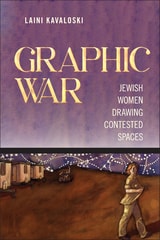
Graphic War
Jewish Women Drawing Contested SpacesLaini Kavaloski
Rutgers University Press, 2026
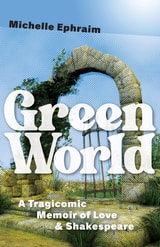
Green World
A Tragicomic Memoir of Love & ShakespeareMichelle Ephraim
University of Massachusetts Press, 2024
Shortlisted for the 2026William Saroyan International Prize for Writing • Shortlisted for the Story Circle Network Gilda Prize • Winner of the Wisconsin Library Association's Literary Award for Nonfiction • Shortlisted for the Rubery Book Award • A 2025 IPPY Awards Silver Medal Winner in Autobiography/Memoir • Winner of the 2025 Friends of American Writers Adult Literature Award • A 2024 Foreword INDIES Finalist • A 2025 Sophie Brody Medal Notable Book • A Jewish Women's Archive Summer Book Club Pick
At twenty-three, Michelle Ephraim was failing at everything. The only child of reclusive Holocaust-survivor parents who were dismayed by her literary studies, she found herself dumped by her boyfriend and bombing out of graduate school. Then, one night, she crashed a Shakespeare recitation party. Loopy from vodka and never having read a single line of Shakespeare, she was transfixed. Shakespeare, she decided, was the lifeline she needed.
Green World is the hilarious and heartbreaking story of Ephraim’s quest to become a Shakespeare scholar and to find community and home. As she studies Shakespeare, Ephraim’s world uncannily begins to mirror the story of the Jewish daughter in The Merchant of Venice, and she finds herself in a Green World, an idyllic place where Shakespeare’s heroines escape their family trauma. Green World reckons with global, historical, and personal tragedy and shows how literature—comic and tragic—can help us brave every kind of anguish.
Growing Up Ethnic
Nationalism and the Bildungsroman in African American and Jewish American FictionJaptok, Martin
University of Iowa Press, 2005