Results by title
301 books match the query 'Knowledge' and 11 start with g

Galileo's Idol
Gianfrancesco Sagredo and the Politics of KnowledgeNick Wilding
University of Chicago Press, 2014
Nick Wilding uses as wide a variety of sources as possible—paintings, ornamental woodcuts, epistolary hoaxes, intercepted letters, murder case files, and others—to challenge the picture of early modern science as pious, serious, and ecumenical. Through his analysis of the figure of Sagredo, Wilding offers a fresh perspective on Galileo as well as new questions and techniques for the study of science. The result is a book that turns our attention from actors as individuals to shifting collective subjects, often operating under false identities; from a world made of sturdy print to one of frail instruments and mistranscribed manuscripts; from a complacent Europe to an emerging system of complex geopolitics and globalizing information systems; and from an epistemology based on the stolid problem of eternal truths to one generated through and in the service of playful, politically engaged, and cunning schemes.
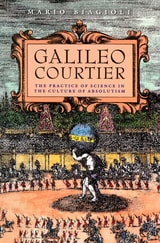
Galileo, Courtier
The Practice of Science in the Culture of AbsolutismMario Biagioli
University of Chicago Press, 1993
Galileo, Courtier is a fascinating cultural and social history of science highlighting the workings of power, patronage, and credibility in the development of science.

Games of Inheritance
Kabbalah, Tradition, and Authorship in Jorge Luis BorgesYitzhak Lewis
Rutgers University Press, 2025
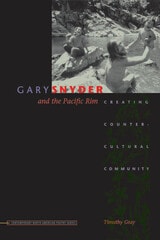
Gary Snyder and the Pacific Rim
Creating Countercultural CommunityTimothy Gray
University of Iowa Press, 2006
Gray’s introduction tracks the increased use of “Pacific Rim discourse” by politicians and business leaders following World War II. Ensuing chapters analyze Snyder’s countercultural invocation of this regional idea, concentrating on the poet’s migratory or “creaturely” sensibility, his gift for literary translation, his physical embodiment of trans-Pacific ideals, his role as tribal spokesperson for Haight-Ashbury hippies, and his burgeoning interest in environmental issues. Throughout, Gray’s citations of such writers as Allen Ginsberg, Philip Whalen, and Joanne Kyger shed light on Snyder’s communal role, providing an amazingly intimate portrait of the west coast counterculture. An interdisciplinary project that utilizes models of ecology, sociology, and comparative religion to supplement traditional methods of literary biography, Gary Snyder and the Pacific Rim offers a unique perspective on Snyder’s life and work.
This book will fascinate literary and Asian studies scholars as well as the general reader interested in the Beat movement and multicultural influences on poetry.

Gathering Medicines
Nation and Knowledge in China’s Mountain SouthJudith Farquhar and Lili Lai
University of Chicago Press, 2021
Over a period of six years, Judith Farquhar and Lili Lai worked with seven minority nationality groups in China’s southern mountains, observing how medicines were gathered and local healing systems codified. Gathering Medicines shares their intimate view of how people understand ethnicity, locality, the body, and nature. This ethnography of knowledge diversities in multiethnic China is a testament to the rural wisdom of mountain healers, one that theorizes, from the ground up, the dynamic encounters between formal statist knowledge and the popular authority of the wild.

George Eliot's Dialogue with John Milton
Anna K. Nardo
University of Missouri Press, 2003
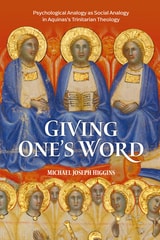
Giving One's Word
Interpersonal Love, Knowledge, and Self-Giving in Aquinas's Psychological Analogy for the TrinityMichael Joseph Higgins
Catholic University of America Press, 2025

Global Health for All
Knowledge, Politics, and PracticesJean-Paul Gaudillière
Rutgers University Press, 2022

God In The Street
New York Writing from The Penny Press to MelvilleHans Bergmann
Temple University Press, 1995
In the fast changing culture of antebellum New York, writers of every stripe celebrated "the City" as a stage for the daily urban encounter between the familiar and the inexplicable. Probing into these richly varied texts, Hans Bergmann uncovers the innovations in writing that accompanied the new market society— the penny newspapers' grandiose boastings, the poetic catalogues of Walt Whitman, the sentimental realism of charity workers, the sensationalism of slum visitors, and the complex urban encounters of Herman Melville's fiction.
The period in which New York, the city itself, became firmly established as a subject invented a literary form that attempts to capture the variety of the teeming city and the flaneur, the walking observer. But Bergmann does not simply lead a parade of images and themes; he explores the ways in which these observers understood what was happening around them and to them, always attentive to class struggle and race and gender issues.
God in the Street shows how the penny press and Whitman's New York poetry create a new mass culture hero who interprets and dignifies the city's confusions. New York writers, both serious and sensationalist, meditate upon street encounters with tricksters and confidence-men and explore the meanings of encounters. Melville's "Bartleby, the Scrinever" underlines the unrelenting isolation and inability to control the interpreter. Bergmann reinterprets Melville's The Confidence Man as an example of how a complex literary form arises directly from its own historical materials and is itself socially symbolic. Bergmann sees Melville as special because he recognizes his inability to make sense of the surface of chaotic images and encounters. In mid-century New York City, Melville believes God is in the street, unavailable and unrecognizable, rather than omnipresent and guiding.
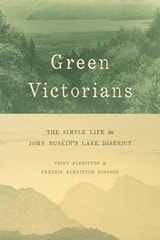
Green Victorians
The Simple Life in John Ruskin's Lake DistrictVicky Albritton and Fredrik Albritton Jonsson
University of Chicago Press, 2016
At the center of their social experiment was the charismatic art critic and political economist John Ruskin. Albritton and Albritton Jonsson show how Ruskin’s followers turned his theory into practice in a series of ambitious local projects ranging from hand spinning and woodworking to gardening, archaeology, and pedagogy. This is a lively yet unsettling story, for there was a dark side to Ruskin’s community as well—racist thinking, paternalism, and technophobia. Richly illustrated, Green Victorians breaks new ground, connecting the ideas and practices of Ruskin’s utopian community with the problems of ethical consumption then and now.
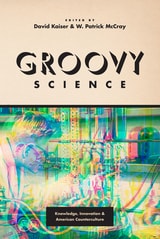
Groovy Science
Knowledge, Innovation, and American CountercultureEdited by David Kaiser and W. Patrick McCray
University of Chicago Press, 2016
Such a view is far too simple, ignoring the diverse ways in which the era’s countercultures expressed enthusiasm for and involved themselves in science—of a certain type. Rejecting hulking, militarized technical projects like Cold War missiles and mainframes, Boomers and hippies sought a science that was both small-scale and big-picture, as exemplified by the annual workshops on quantum physics at the Esalen Institute in Big Sur, or Timothy Leary’s championing of space exploration as the ultimate “high.” Groovy Science explores the experimentation and eclecticism that marked countercultural science and technology during one of the most colorful periods of American history.