Results by title
358 books match the query 'Labor & Industrial Relations' and 8 start with g
Gendered Places
The Landscape of Local Gender Norms across the United StatesWilliam J. Scarborough
Temple University Press, 2023
Every place has its quirky attributes, cultural reputation, and distinctive flair. But when we travel across America, do we also experience distinct gender norms and expectations? In his groundbreaking Gendered Places, William Scarborough examines metropolitan commuting zones to see how each region’s local culture reflects gender roles and gender equity. He uses surveys and social media data to measure multiple dimensions of gender norms, including expectations toward women in leadership, attitudes toward working mothers, as well as the division of household labor.
Gendered Places reveals that different locations, even within the same region of the country, such as Milwaukee and Madison Wisconsin, have distinct gender norms and highly influential cultural environments. Scarboroughshows how these local norms shape the attitudes and behaviors of residents with implications on patterns of inequality such as the gender wage gap. His findings offer valuable insight for community leaders and organizers making efforts to promote equality in their region.
Scarboroughrecognizes local culture as not value-neutral, but highly crucial to the gender structure that perpetuates, or challenges, gender inequality. Gendered Places questions how these gender norms are sustained and their social consequences.
Getting Paid While Taking Time
The Women's Movement and the Development of Paid Family Leave Policies in the United StatesMegan Sholar
Temple University Press, 2016
The United States remains the only industrialized nation in the world that does not provide paid family leave at the national level for either men or women. In the more than two decades since the passage of the Family and Medical Leave Act, there have been numerous unsuccessful attempts to expand family leave benefits nationally. However, in the United States, it is common for innovations in family policies to arise at the state level.
In her timely book, Getting Paid While Taking Time, Megan Sholar explains the development of family leave policies at both the national and state levels in the United States. She provides cogent studies of states that have passed and proposed family leave legislation, and she pays special attention to the ways in which women’s movement actors and other activists (e.g., labor unions) exert pressure on public officials to help influence the policymaking process. In her conclusion, Sholar considers the future of paid family leave policies in the United States and the chances for it ever equaling the benefits in other countries.
Gleanings of Freedom
Free and Slave Labor along the Mason-Dixon Line, 1790-1860Max Grivno
University of Illinois Press, 2014
Global Cinderellas
Migrant Domestics and Newly Rich Employers in TaiwanPei-Chia Lan
Duke University Press, 2006
Lan demonstrates how economic disparities, immigration policies, race, ethnicity, and gender intersect in the relationship between the migrant workers and their Taiwanese employers. The employers are eager to flex their recently acquired financial muscle; many are first-generation career women as well as first-generation employers. The domestics are recruited from abroad as contract and “guest” workers; restrictive immigration policies prohibit them from seeking permanent residence or transferring from one employer to another. They care for Taiwanese families’ children, often having left their own behind. Throughout Global Cinderellas, Lan pays particular attention to how the women she studied identify themselves in relation to “others”—whether they be of different classes, nationalities, ethnicities, or education levels. In so doing, she offers a framework for thinking about how migrant workers and their employers understand themselves in the midst of dynamic transnational labor flows.
Global Labor Migration
New DirectionsEdited by Eileen Boris, Heidi Gottfried, Julie Greene, and Joo-Cheong Tham
University of Illinois Press, 2023
Global Labor Migration presents new multidisciplinary, transregional perspectives on issues surrounding global labor migration. The essays go beyond disciplinary boundaries, with sociologists, ethnographers, legal scholars, and historians contributing research that extends comparison among and within world regions. Looking at migrant workers from the late nineteenth century to the present day, the contributors illustrate the need for broader perspectives that study labor migration over longer timeframes and from wider geographic areas. The result is a unique, much-needed collection that delves into one of the world’s most pressing issues, generates scholarly dialogue, and proposes cutting-edge research agendas and methods.
Contributors: Bridget Anderson, Rutvica Andrijasevic, Katie Bales, Jenny Chan, Penelope Ciancanelli, Felipe Barradas Correia Castro Bastos, Eileen Boris, Charlie Fanning, Judy Fudge, Jorge L. Giovannetti-Torres, Heidi Gottfried, Julie Greene, Justin Jackson, Radhika Natarajan, Pun Ngai, Bastiaan Nugteren, Nicola Piper, Jessica R. Pliley, Devi Sacchetto, Helen Sampson, Yael Schacher, Joo-Cheong Tham, and Matt Withers
Good Jobs, Bad Jobs
The Rise of Polarized and Precarious Employment Systems in the United States, 1970s-2000sArne L. Kalleberg
Russell Sage Foundation, 2011
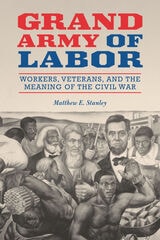
Grand Army of Labor
Workers, Veterans, and the Meaning of the Civil WarMatthew E. Stanley
University of Illinois Press, 2021
From the Gilded Age through the Progressive era, labor movements reinterpreted Abraham Lincoln as a liberator of working people while workers equated activism with their own service fighting for freedom during the war. Matthew E. Stanley explores the wide-ranging meanings and diverse imagery used by Civil War veterans within the sprawling radical politics of the time. As he shows, a rich world of rituals, songs, speeches, and newspapers emerged among the many strains of working class cultural politics within the labor movement. Yet tensions arose even among allies. Some people rooted Civil War commemoration in nationalism and reform, and in time, these conservative currents marginalized radical workers who tied their remembering to revolution, internationalism, and socialism.
An original consideration of meaning and memory, Grand Army of Labor reveals the complex ways workers drew on themes of emancipation and equality in the long battle for workers’ rights.
Guest Workers and Resistance to U.S. Corporate Despotism
Immanuel Ness
University of Illinois Press, 2011
Political scientist Immanuel Ness thoroughly investigates the use of guest workers in the United States, the largest recipient of migrant labor in the world. Ness argues that the use of migrant labor is increasing in importance and represents despotic practices calculated by key U.S. business leaders in the global economy to lower labor costs and expand profits under the guise of filling a shortage of labor for substandard or scarce skilled jobs.
Drawing on ethnographic field research, government data, and other sources, Ness shows how worker migration and guest worker programs weaken the power of labor in both sending and receiving countries. His in-depth case studies of the rapid expansion of technology and industrial workers from India and hospitality workers from Jamaica reveal how these programs expose guest workers to employers' abuses and class tensions in their home countries while decreasing jobs for American workers and undermining U.S. organized labor.
Where other studies of labor migration focus on undocumented immigrant labor and contend immigrants fill jobs that others do not want, this is the first to truly advance understanding of the role of migrant labor in the transformation of the working class in the early twenty-first century. Questioning why global capitalists must rely on migrant workers for economic sustenance, Ness rejects the notion that temporary workers enthusiastically go to the United States for low-paying jobs. Instead, he asserts the motivations for improving living standards in the United States are greatly exaggerated by the media and details the ways organized labor ought to be protecting the interests of American and guest workers in the United States.