118 books match the query 'Land tenure' and 3 start with g
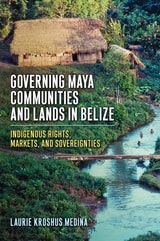
cover of Governing Maya Communities and Lands in Belize: Indigenous Rights, Markets, and Sovereignties

Governing Maya Communities and Lands in Belize

Indigenous Rights, Markets, and Sovereignties

Laurie Kroshus Medina

Rutgers University Press, 2024
Confronting a debt crisis, the Belizean government has strategized to maximize revenues from lands designated as state property, privatizing lands for cash crop production and granting concessions for timber and oil extraction. Meanwhile, conservation NGOs have lobbied to establish protected areas on these lands to address a global biodiversity crisis. They promoted ecotourism as a market-based mechanism to fund both conservation and debt repayment; ecotourism also became a mechanism for governing lands and people—even state actors themselves—through the market. Mopan and Q’eqchi’ Maya communities, dispossessed of lands and livelihoods through these efforts, pursued claims for Indigenous rights to their traditional lands through Inter-American and Belizean judicial systems. This book examines the interplay of conflicting forms of governance that emerged as these strategies intersected: state performances of sovereignty over lands and people, neoliberal rule through the market, and Indigenous rights-claiming, which challenged both market logics and practices of sovereignty.
[more]
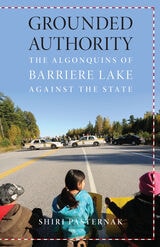
cover of Grounded Authority: The Algonquins of Barriere Lake against the State

Grounded Authority

The Algonquins of Barriere Lake against the State

Shiri Pasternak

University of Minnesota Press, 2017

Western Political Science Association's Clay Morgan Award for Best Book in Environmental Political Theory
Canadian Studies Network Prize for the Best Book in Canadian Studies
Nominated for Best First Book Award at NAISA
Honorable Mention: Association for Political and Legal Anthropology Book Prize


Since Justin Trudeau’s election in 2015, Canada has been hailed internationally as embarking on a truly progressive, post-postcolonial era—including an improved relationship between the state and its Indigenous peoples. Shiri Pasternak corrects this misconception, showing that colonialism is very much alive in Canada. From the perspective of Indigenous law and jurisdiction, she tells the story of the Algonquins of Barriere Lake, in western Quebec, and their tireless resistance to federal land claims policy. 

Grounded Authority chronicles the band’s ongoing attempts to restore full governance over its lands and natural resources through an agreement signed by settler governments almost three decades ago—an agreement the state refuses to fully implement. Pasternak argues that the state’s aversion to recognizing Algonquin jurisdiction stems from its goal of perfecting its sovereignty by replacing the inherent jurisdiction of Indigenous peoples with its own, delegated authority. From police brutality and fabricated sexual abuse cases to an intervention into and overthrow of a customary government, Pasternak provides a compelling, richly detailed account of rarely documented coercive mechanisms employed to force Indigenous communities into compliance with federal policy.

A rigorous account of the incredible struggle fought by the Algonquins to maintain responsibility over their territory, Grounded Authority provides a powerful alternative model to one nation’s land claims policy and a vital contribution to current debates in the study of colonialism and Indigenous peoples in North America and globally.
[more]
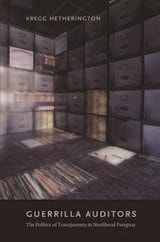
cover of Guerrilla Auditors: The Politics of Transparency in Neoliberal Paraguay

Guerrilla Auditors

The Politics of Transparency in Neoliberal Paraguay

Kregg Hetherington

Duke University Press, 2011

Guerrilla Auditors is an ethnographic account of the rise of information, transparency, and good governance in the post–Cold War era, and the effects of these concepts on Paraguay’s transition to democracy. Kregg Hetherington shows that the ideal of transparent information, meant to depoliticize bureaucratic procedures, has become a battleground for a new kind of politics centered on legal interpretation and the manipulation of official documents. In late-twentieth-century Paraguay, peasant land politics moved unexpectedly from the roads and fields into the documentary recesses of state bureaucracy. When peasants, bureaucrats, and development experts encountered one another in state archives, conflicts ensued about how bureaucracy ought to function, what documents are for, and who gets to narrate the past and the future of the nation. Hetherington argues that Paraguay’s neoliberal democracy is predicated, at least in part, on an exclusionary distinction between model citizens and peasants. Despite this, peasant activists have found ways to circumvent their exclusion and in so doing question the conceptual foundations of international development orthodoxy.
[more]