Results by title
479 books match the query 'Methodology' and 10 start with g
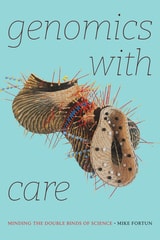
Genomics with Care
Minding the Double Binds of ScienceMike Fortun
Duke University Press, 2023
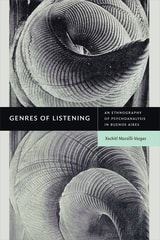
Genres of Listening
An Ethnography of Psychoanalysis in Buenos AiresXochitl Marsilli-Vargas
Duke University Press, 2022
Geography's Quantitative Revolutions
Edward A. Ackerman and the Cold War Origins of Big DataElvin Wyly
West Virginia University Press, 2019
Do you have a smartphone? Billions of people on the planet now navigate their daily lives with the kind of advanced Global Positioning System capabilities once reserved for the most secretive elements of America’s military-industrial complex. But when so many people have access to the most powerful technologies humanity has ever devised for the precise determination of geographical coordinates, do we still need a specialized field of knowledge called geography?
Just as big data and artificial intelligence promise to automate occupations ranging from customer service and truck driving to stock trading and financial analysis, our age of algorithmic efficiency seems to eliminate the need for humans who call themselves geographers—at the precise moment when engaging with information about the peoples, places, and environments of a diverse world is more popular than ever before. How did we get here? This book traces the recent history of geography, information, and technology through the biography of Edward A. Ackerman, an important but forgotten figure in geography’s “quantitative revolution.” It argues that Ackerman’s work helped encode the hidden logics of a distorted philosophical heritage—a dangerous, cybernetic form of thought known as militant neo-Kantianism—into the network architectures of today’s pervasive worlds of surveillance capitalism.
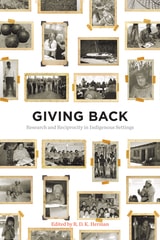
Giving Back
Research and Reciprocity in Indigenous SettingsR. D. K. Herman
Oregon State University Press, 2018
Over the past several decades—and especially since the evolution of feminist methodologies, participatory research, and the post-colonial turn in the 1990s—there have been calls for research to be less exploitative, but also for researchers and for the research itself to give something back. Giving Back: Research and Reciprocity in Indigenous Settings addresses the need for reciprocity in the research process, especially (though not exclusively) in regard to Indigenous Communities.
The twelve case studies in this volume demonstrate that giving back can happen through the research itself – through the careful framing of questions, co-production of knowledge, and dissemination of results – but also through the day-to-day actions and attitudes of researchers that inevitably occur in the field. It can range from everyday give and take, to the sharing of research materials, to larger and longer-term engagements.
As practitioners of community-based research gain greater awareness of these issues, scholars and institutions need guidance and strategies for ensuring reciprocity in the research process. This volume presents a variety of situations from a wide range of research contexts, discussing what has and hasn’t worked, and exploring what issues remain.
Gods and Demons, Priests and Scholars
Critical Explorations in the History of ReligionsBruce Lincoln
University of Chicago Press, 2012
Bruce Lincoln is one of the most prominent advocates within religious studies for an uncompromisingly critical approach to the phenomenon of religion—historians of religions, he believes, should resist the preferred narratives and self-understanding of religions themselves, especially when their stories are endowed with sacred origins and authority. In Gods and Demons, Priests and Scholars, Lincoln assembles a collection of essays that both illustrates and reveals the benefits of his methodology, making a case for a critical religious studies that starts with skepticism but is neither cynical nor crude.
Going Solo
Doing Videojournalism in the 21st CenturyG. Stuart Smith
University of Missouri Press, 2011
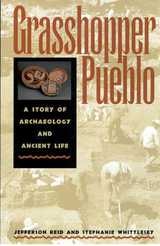
Grasshopper Pueblo
A Story of Archaeology and Ancient LifeJefferson Reid and Stephanie Whittlesey
University of Arizona Press, 1999
Written for general readers—and for the White Mountain Apache, on whose land Grasshopper Pueblo is located and who have participated in the excavations there—the book conveys the simple joys and typical problems of an ancient way of life as inferred from its material remains. Reid and Whittlesey's account reveals much about the human capacity for living under what must strike modern readers as adverse conditions. They describe the environment with which the people had to cope; hunting, gathering, and farming methods; uses of tools, pottery, baskets, and textiles; types of rooms and households; and the functioning of social groups. They also reconstruct the sacred world of Grasshopper as interpreted through mortuary ritual and sacred objects and discuss the relationship of Grasshopper residents with neighbors and with those who preceded and followed them.
Grasshopper Pueblo not only thoroughly reconstructs this past life at a mountain village, it also offers readers an appreciation of life at the field school and an understanding of how excavations have proceeded there through the years. For anyone enchanted by mysteries of the past, it reveals significant features of human culture and spirit and the ultimate value of archaeology to contemporary society.
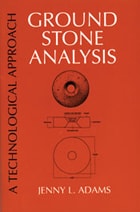
Ground Stone Analysis
A Technological ApproachJenny L Adams
University of Utah Press, 2002
Archaeologists refer to stone artifacts that are altered by or used to alter other items through abrasion, pecking, or polishing as "ground stone." This includes mortars, and pestles used to process vegetal materials, pigments, clays, and tempers; abraders, polishing stones, and hammerstones for manufacturing other artifacts; and artifacts shaped by abrasion or pecking, such as axes, pipes, figurines, ornaments, and architectural pieces. Because there is a fuzzy line between flaked and ground stone artifacts, some analysts state that ground stone includes any stone item not considered flaked.
This manual presents a flexible yet structured method for analyzing stone artifacts and classifying them in meaningful categories. The analysis techniques record important attributes based on design, manufacture, and use.
Part I contains discussions on determining function, classification, attributes of grinding technology, use-wear analysis, modeling tool use, utilization of ethnographic and experimental resources, and research suggestions. Part II contains definitions and descriptions of artifact types. Here the author also seeks to unravel the knot that has developed around conflicting application of terms.
A significant reference for any archaeological fieldworker or student who encounters such artifacts.
Ground Stone Analysis
A Technological ApproachJenny L. Adams
University of Utah Press, 2014
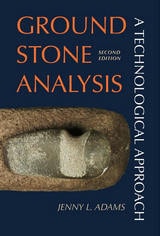
Archaeologists define stone artifacts that are altered by or used to alter other items through abrasion, pecking, or polishing as “ground stone.” This includes mortars and pestles, abraders, polishers stones, and hammerstones, and artifacts shaped by abrasion or pecking, such as axes, pipes, figurines, ornaments, and architectural pieces.
The first edition of Ground Stone Analysis sparked interest around the world. In the decade following its publication, there have been many advances in scientific technology and developments in ethnographic and experimental research. The second edition incorporates these advances, including examples of international research that have utilized a technological approach to ground stone analysis. This study presents a flexible yet structured method for analyzing and classifying stone artifacts. These techniques record important attributes based on design, manufacturing, and use and are applicable to any collection in the world.
The methods presented guide quantitative and qualitative assessments of artifacts and assemblages. Recording forms and instructions for completing them will be available on the University of Utah Press’s open access portal at www.UofUpress.com. Ground Stone Analysis is an important, useful reference for any archaeological field worker or student who encounters ground stone artifacts and is interested in learning more about the people who used them.
Click here to view Appendices A-F
Growing Explanations
Historical Perspectives on Recent ScienceM. Norton Wise, ed.
Duke University Press, 2004
Written by leading historians and philosophers of science, these essays examine the range of subjects, people, and goals involved in changing the character of scientific analysis over the last several decades. They highlight the alternatives that fields as diverse as string theory, fuzzy logic, artificial life, and immunology bring to the forms of explanation that have traditionally defined scientific modernity. A number of the essays deal with the mathematical and physical sciences, addressing concerns with hybridity and the materials of the everyday world. Other essays focus on the life sciences, where questions such as “What is life?” and “What is an organism?” are undergoing radical re-evaluation. Together these essays mark the contours of an ongoing revolution in scientific explanation.
Contributors. David Aubin, Amy Dahan Dalmedico, Richard Doyle, Claus Emmeche, Peter Galison, Stefan Helmreich, Ann Johnson, Evelyn Fox Keller, Ilana Löwy, Claude Rosental, Alfred Tauber