Results by title
179 books match the query 'Middle West' and 6 start with g
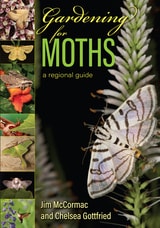
Gardening for Moths
A Regional GuideJim McCormac
Ohio University Press, 2023
This guide to moths, native plants, and their environmental roles is an indispensable resource for gardeners, conservationists, and nature enthusiasts across the midwestern United States.
Gardening for Moths is the first book to show midwestern gardeners and naturalists why they should attract specific moth species to their properties and how to do it. The book’s stunning color photographs and intriguing facts reveal the fascinating world of these insects, inspiring readers to incorporate moth-loving native plants into their landscapes. The authors emphasize the importance of moths and their caterpillars to ecological food webs, widening the book’s appeal to birders and bat lovers as well.
The book consists of three main sections, beginning with a thorough overview of moths, including their
- population decline and conservation,
- importance in ecosystems,
- relationship with native plants, and
- predators and defenses
In the next section the authors profile about 140 plant species, providing brief background, natural history, habitat, and growing notes for each along with lists of potential moths the plants may attract.
The third section highlights approximately 150 moth species, ordered taxonomically. These accounts include interesting facts about the life history of both the caterpillar and adult moth of each species. Each account also features a list of the species’ common host plants.
Throughout the volume, inset text boxes provide additional fascinating moth facts. Beautiful photographs (most by the authors) illustrate every included plant and moth species. Select references, online resources, and quick reference tables round out this valuable resource.

Gardening with Native Plants in the Upper Midwest
Bringing the Tallgrass Prairie HomeJudy Nauseef
University of Iowa Press, 2016
Nauseef emphasizes the need for careful planning and design to create comfortable, low-maintenance spaces that bring homeowners outside. Her designs solve problems such as a lack of privacy, shade, or sun; plan for water use; replace troublesome nonnative plants with native plants that attract pollinators; and enable homeowners to enjoy living sustainably on their land. Colorful photographs of projects around the Midwest show the wide range of possibilities, from newly created gardens using only native plants to traditional gardens that mix nonnative with native species. Whether you have a city yard, a suburban lot, or a rural acreage, there are ideas here for you, along with examples of well-designed landscapes in which native plants enhance paths, patios, pergolas, and steps.
Providing information on planting and maintaining native plants and prairies as well as seed and plant sources, organizations, and public arboretum and prairie sites, this book enables every gardener to master a new palette of plants and landforms. However small our personal landscapes, together they can slow the loss of many species of plants and wildlife and bring native flowers and grasses back where they belong. Ecologists, landscape architects and designers, master gardeners, landscape contractors, teachers, and home gardeners—everyone dedicated to conserving and improving our environment—will benefit from Nauseef’s approach.

Gay, Inc.
The Nonprofitization of Queer PoliticsMyrl Beam
University of Minnesota Press, 2018
A bold and provocative look at how the nonprofit sphere’s expansion has helped—and hindered—the LGBT cause
What if the very structure on which social movements rely, the nonprofit system, is reinforcing the inequalities activists seek to eliminate? That is the question at the heart of this bold reassessment of the system’s massive expansion since the mid-1960s. Focusing on the LGBT movement, Myrl Beam argues that the conservative turn in queer movement politics, as exemplified by the shift toward marriage and legal equality, is due mostly to the movement’s embrace of the nonprofit structure.
Based on oral histories as well as archival research, and drawing on the author’s own extensive activist work, Gay, Inc. presents four compelling case studies. Beam looks at how people at LGBT nonprofits in Minneapolis and Chicago grapple with the contradictions between radical queer social movements and their institutionalized iterations. Through interview subjects’ incisive, funny, and heartbreaking commentaries, Beam exposes a complex world of committed people doing the best they can to effect change, and the flawed structures in which they participate, rail against, ignore, and make do.
Providing a critical look at a social formation whose sanctified place in the national imagination has for too long gone unquestioned, Gay, Inc. marks a significant contribution to scholarship on sexuality, neoliberalism, and social movements.

German Americans on the Middle Border
From Antislavery to Reconciliation, 1830–1877Zachary Stuart Garrison
Southern Illinois University Press, 2020
Liberal German immigrants, having escaped the European aristocracy who undermined their revolution and the formation of a free nation, viewed slaveholders as a specter of European feudalism. During the antebellum years, many liberal German Americans feared slavery would inhibit westward progress, and so they embraced the Free Soil and Free Labor movements and the new Republican Party. Most joined the Union ranks during the Civil War.
After the war, in a region largely opposed to black citizenship and Radical Republican rule, German Americans were seen as dangerous outsiders. Facing a conservative resurgence, liberal German Republicans employed the same line of reasoning they had once used to justify emancipation: A united nation required the end of both federal occupation in the South and special protections for African Americans. Having played a role in securing the Union, Germans largely abandoned the freedmen and freedwomen. They adopted reconciliation in order to secure their place in the reunified nation. Garrison’s unique transnational perspective to the sectional crisis, the Civil War, and the postwar era complicates our understanding of German Americans on the middle border.

Global Heartland
Cultivating the American Century on the Midwestern FarmPeter Simons
University of Minnesota Press, 2025
Highlighting the critical role of midwestern farmers in the creation of the American Century
Though often left out of the story of the making of the American Century, the farmers of the Midwest were at its center, fueling the nation’s growing power in the midtwentieth century. In Global Heartland, Peter Simons explores how, after decades of slipping to the margins of an urbanizing economy, these farmers assumed renewed strategic and cultural importance as they produced essential sustenance for overseas troops and food rations for a domestic population.
During the mid-1900s, once-isolationist midwestern farmers came to see the continental interior not as an insulated space but as an environmentally rich landscape that mandated them to accept a larger stake in global affairs. Simons traces this transformation from an older agrarian internationalism rooted in religion and ties to family abroad to illuminate the increasing influence of the U.S. agricultural community during the Cold War. Examining regional political parties, Lend-Lease programs, wartime mass media, and farmer-led relief programs, and interspersing this history with vignettes revisiting the Mercy Wheat campaign of 1947, the postwar International Farm Youth Exchange, and the Flying Farmers organization, Simons offers an enlightening consideration of midwestern farmers’ involvement in America’s international ascent.
Unique in its focus on farmers and their work rather than the more common attention to food or agricultural commodities, Global Heartland complicates and expands ideas of the farm industry’s role in American history.
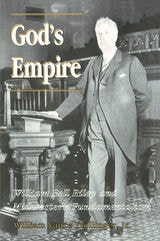
God's Empire
William Bell Riley and Midwestern FundamentalismWilliam V., Jr. Trollinger
University of Wisconsin Press, 1991
More than any other individual, William Bell Riley, pastor of the First Baptist Church of Minneapolis, inspired the resurgence of Protestant fundamentalism in 1930s America. Trollinger explores the development of Riley’s theology and social thought, examining in detail the rise of the Northwestern Bible and Missionary Training School and other similar institutions. He sheds light upon the nature, successes, and failures of fundamentalist crusades and makes it clear that, to understand fundamentalist religion in America, one must focus upon its regional and local roots.