Results by title
89 books match the query 'Mind & Body' and 2 start with g
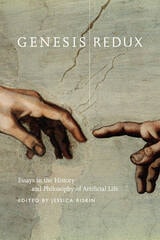
Genesis Redux
Essays in the History and Philosophy of Artificial LifeEdited by Jessica Riskin
University of Chicago Press, 2007
Since antiquity, philosophers and engineers have tried to take life’s measure by reproducing it. Aiming to reenact Creation, at least in part, these experimenters have hoped to understand the links between body and spirit, matter and mind, mechanism and consciousness. Genesis Redux examines moments from this centuries-long experimental tradition: efforts to simulate life in machinery, to synthesize life out of material parts, and to understand living beings by comparison with inanimate mechanisms.
Jessica Riskin collects seventeen essays from distinguished scholars in several fields. These studies offer an unexpected and far-reaching result: attempts to create artificial life have rarely been driven by an impulse to reduce life and mind to machinery. On the contrary, designers of synthetic creatures have generally assumed a role for something nonmechanical. The history of artificial life is thus also a history of theories of soul and intellect.
Taking a historical approach to a modern quandary, Genesis Redux is essential reading for historians and philosophers of science and technology, scientists and engineers working in artificial life and intelligence, and anyone engaged in evaluating these world-changing projects.
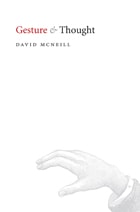
Gesture and Thought
David McNeill
University of Chicago Press, 2005
Gesture and Thought expands on McNeill’s acclaimed classic Hand and Mind. While that earlier work demonstrated what gestures reveal about thought, here gestures are shown to be active participants in both speaking and thinking. Expanding on an approach introduced by Lev Vygotsky in the 1930s, McNeill posits that gestures are key ingredients in an “imagery-language dialectic” that fuels both speech and thought. Gestures are both the “imagery” and components of “language.” The smallest element of this dialectic is the “growth point,” a snapshot of an utterance at its beginning psychological stage. Utilizing several innovative experiments he created and administered with subjects spanning several different age, gender, and language groups, McNeill shows how growth points organize themselves into utterances and extend to discourse at the moment of speaking.
An ambitious project in the ongoing study of the relationship of human communication and thought, Gesture and Thought is a work of such consequence that it will influence all subsequent theory on the subject.