Results by title
100 books match the query 'Monographs' and 8 start with g
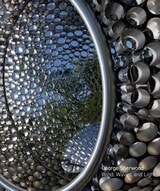
George Sherwood
Wind, Waves, and LightGeorge Sherwood
The Artist Book Foundation, 2024
Intricate and innovative, George Sherwood's kinetic sculptures invite us to observe, experience, contemplate and engage more fully in the natural world around us.
American sculptor George Sherwood, with degrees in both art and engineering, explores aesthetic systems of space and time, as well as the dynamic interplay of objects in motion. Sherwood’s kinetic sculptures invite us to observe, experience, contemplate and engage more fully in the natural world around us. His works are often made of stainless steel, a reflective material that serves to integrate the works into the unique and often transient light of their environments. The choreography of each piece is governed by a set of basic movements, facilitated by an arrangement of aerodynamic surfaces connected by rotational points.
The Artist Book Foundation is pleased to present George Sherwood: Wind, Waves, and Light, the first monograph on this award-winning artist’s lustrous, subtly transformative works. Featuring 100 sculptures from Sherwood’s early whimsical explorations to his monumental commissions that have graced private and public gardens, city sites, and exhibition spaces around the world, readers will witness how changing winds, shades of light, times of day, precipitation, and the seasons’ changing colors alter the sculptures, animate their surroundings, and ignite the imagination.

Gerard de Lairesse and his Painted Heavens
Iconography, Style and Technique in the Art of Ceiling PaintingMargriet van Eikema Hommes
Amsterdam University Press, 2026
In this book, Margriet van Eikema Hommes, in search of an explanation for this ceiling painting’s intriguing origins, investigates its meaning and purpose. The painter and his patron prove to have been jointly responsible for the iconography, which they repeatedly updated to reflect military and political events in the Disaster Year and the dramatic twists of fate in De Graeff’s own life.
This beautifully illustrated book not only situates the work within its cultural and historical context but also offers an in-depth examination of Lairesse’s painting technique and the way he meticulously designed his ceiling pieces in close dialogue with the architecture of the room.
Gerard de Lairesse and his Painted Heavens
Iconography, Style and Technique in the Art of Ceiling PaintingLynne Richards
Amsterdam University Press, 2027
In this book, Margriet van Eikema Hommes, in search of an explanation for this ceiling painting’s intriguing origins, investigates its meaning and purpose. The painter and his patron prove to have been jointly responsible for the iconography, which they repeatedly updated to reflect military and political events in the Disaster Year and the dramatic twists of fate in De Graeff’s own life.
This beautifully illustrated book not only situates the work within its cultural and historical context but also offers an in-depth examination of Lairesse’s painting technique and the way he meticulously designed his ceiling pieces in close dialogue with the architecture of the room.
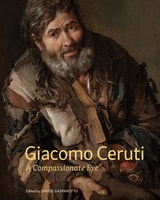
Giacomo Ceruti
A Compassionate EyeDavide Gasparotto
J. Paul Getty Trust, The, 2023
The northern Italian artist Giacomo Ceruti (1698–1767) was born in Milan and active in Brescia and Bergamo. For his distinctive, large-scale paintings of low-income tradespeople and individuals experiencing homelessness, whom he portrayed with dignity and sympathy, Ceruti came to be known as Il Pitocchetto (the little beggar).
Accompanying the first US exhibition to focus solely on Ceruti, this publication explores relationships between art, patronage, and economic inequality in early modern Europe, considering why these paintings were commissioned and by whom, where such works were exhibited, and what they signified to contemporary audiences. Essays and a generous plate section contextualize and closely examine Ceruti’s pictures of laborers and the unhoused, whom he presented as protagonists with distinct stories rather than as generic types. Topics include depictions of marginalized subjects in the history of early modern European art, the career of the artist and his significance in the history of European painting, and period discourses around poverty and social support. A detailed exhibition checklist, complete with provenance, exhibition history, and bibliography, provides information critical for the further understanding of Ceruti’s oeuvre.
This volume is published to accompany an exhibition on view at the J. Paul Getty Museum at the Getty Center from July 18 to October 29, 2023.
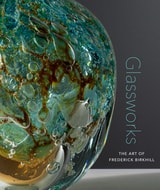
Glassworks
The Art of Frederick BirkhillFrederick Birkhill
The Artist Book Foundation, 2020
Glass as an art form has an ancient tradition; the archaeological record suggests that artisans in Egypt and Mesopotamia were fabricating glass vessels and ornaments during the fourth millennium BCE. Its durable nature, range of colors, malleability, and most of all, its optical transparency are qualities that have made glass a premiere art medium. Over a lifetime, Frederick Birkhill (1951–2023) has explored the unique qualities of glass and the numerous techniques and intricacies of working with it. The result of these decades of study is a body of work that is extraordinary in scope, technical expertise, and sheer virtuosity. The Artist Book Foundation is delighted to present a new monograph honoring this gifted artist: Glassworks: The Art of Frederick Birkhill.
From his time in England at Burleighfield House, the studio of stained-glass artist Patrick Reyntiens, to his unprecedented visit to Lauscha, the village in the former East Germany famous for both its art and scientific glass production, and his subsequent career as an explorer, teacher, and master of the glass arts, Birkhill has devoted himself to furthering the appreciation of the medium and sharing his vast experience with colleagues, collectors, and students.
Complementing the scholarly contributions by authors with significant backgrounds in the glass arts, the book features in its extensive plate section the lavish photography of Henry Leutwyler, which offers readers an opportunity to examine the complex details and artistic mastery of Birkhill's oeuvre. In addition, the monograph offers a glossary of glass-art terms, a detailed chronology of the artist's life, his extensive exhibition history, and a list of the numerous awards he has received. For those who are passionate about the glass arts, this monograph is a feast for the eyes.

Grant Castner
The Lost ArchiveNicholas P. Ciotola
Rutgers University Press, 2026
Castner’s glass plate negatives are a visual record of New Jersey’s social and cultural history. His many human subjects are rich and poor, young and old, Black and white. They are at work, at play, at home, and in the community. Castner also documented social change brought about by electricity, engineering, education, industry, and transportation. He captured the excitement of public amusements such as parades and fairs. He recorded the aftermath of floods, fires and other disasters. Castner also had a fondness for the outdoors. He used his camera to reflect on the beauty and tranquility that he found in the natural landscapes of New Jersey.
This book presents the collective work of Grant Castner, an amateur artist whose place in New Jersey history was, until now, completely unknown. His photographic negatives forever preserve pinpoint moments in the past. They are time machines to another era. Let this long lost archive transport you on a visual journey into a New Jersey of days gone by.

Grant Wood’s Secrets
Sue Taylor
University of Delaware Press, 2011
Published by University of Delaware Press. Distributed worldwide by Rutgers University Press.
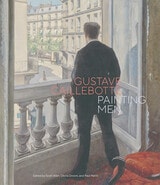
Gustave Caillebotte
Painting MenScott Allan
J. Paul Getty Trust, The, 2024
More than any other French Impressionist, painter Gustave Caillebotte (1848–1894) observed and depicted the many men in his life, including his brothers and friends, employees, and the workers and bourgeois in his Parisian neighborhood. Male subjects feature prominently in some of his best-known works, such as The Floor Scrapers, Man at His Bath, Young Man at His Window, Boating Party, and Paris Street, Rainy Day. The originality of his paintings of men is fully explored for the first time in this catalogue, published to accompany a major international exhibition co-organized by the J. Paul Getty Museum, Musée d’Orsay, and the Art Institute of Chicago.
Alongside paintings, drawings, and photographs, as well as an appendix featuring maps and new biographical research that sheds light on Caillebotte’s social network, this volume includes historically grounded thematic essays by curators and leading scholars. By exploring the complex and varied facets of Caillebotte’s identity—as son, brother, soldier, bachelor, amateur, sportsman, and so on—these essays pose questions of identity, leaving space for ambiguous and fluid expressions of gender and masculinity—for both Caillebotte and the larger late nineteenth-century French world.
This volume is published to accompany an exhibition on view at the Musée d’Orsay from October 8, 2024, to January 19, 2025, J. Paul Getty Museum at the Getty Center from March 25 to May 25, 2025, and The Art Institute of Chicago from June 29 to October 5, 2025.