Results by title
187 books match the query 'Place' and 5 start with g
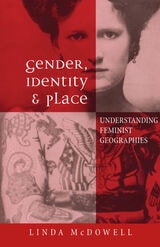
Gender, Identity, and Place
Understanding Feminist GeographiesLinda Mcdowell
University of Minnesota Press, 1999
Genre And The Invention Of The Writer
Reconsidering the Place of Invention in CompositionAnis Bawarshi
Utah State University Press, 2003
Instead of mastering notions of "good" writing, Bawarshi feels that students gain more from learning how to adapt socially and rhetorically as they move from one "genred" site of action to the next.
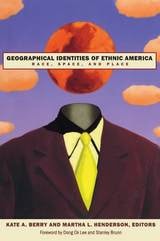
Geographical Identities Of Ethnic America
Race, Space, And PlaceKate A. Berry
University of Nevada Press, 2001
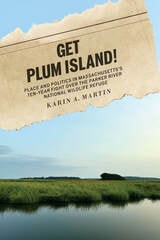
Get Plum Island!
Place and Politics in Massachusetts's Ten-Year Fight Over the Parker River National Wildlife RefugeKarin A. Martin
University of Massachusetts Press, 2026
An environmental history of resistance, negotiation, and conservation on the Massachusetts coast
An hour north of Boston, Parker River National Wildlife Refuge occupies the southern three-quarters of Plum Island, a barrier island off the Massachusetts coast. Parker River is a nationally renowned birding destination and the second most-visited wildlife refuge in the Northeast, drawing over 300,000 visitors annually. Today, environmentally minded Massachusetts barely remembers the decade-long fight that reduced the refuge to half its original size. Get Plum Island! tells the forgotten story of how six small towns in Essex County (Newbury, West Newbury, Rowley, Ipswich, Groveland, and Georgetown) fought the establishment of the refuge in the 1940s. Through political organizing across local, state, and federal levels, the opposition nearly abolished the refuge and ultimately succeeded in making it smaller.
The conflict was deeply shaped by class, geography, and competing visions of land use. On one side were elite conservationists—sportsmen, ornithologists, and preservation advocates from Boston, Cambridge, and Newton—who envisioned a federally protected habitat. On the other side of the conflict, a group of mostly middle- and working-class men, farmers, and local hunters organized a resistance to the establishment of a refuge. Through protests, public hearings, and even aggression toward visiting federal officials, local opposition made the case that their communities had clammed, farmed, and hunted the disputed lands before there even was a United States government. They recounted a version of their history as founders of the nation that made them, in their view, entitled to the land that was given to them by the English Crown. In telling this story, Get Plum Island! reveals how ordinary citizens can challenge—and reshape—federal authority, and offers a timely case study in the politics of land, class, and conservation.
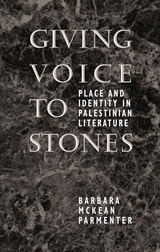
Giving Voice to Stones
Place and Identity in Palestinian LiteratureBy Barbara McKean Parmenter
University of Texas Press, 1994
"A struggle between two memories" is how Palestinian poet Mahmud Darwish describes the conflict between Palestinians and Israelis. Within this struggle, the meanings of land and home have been challenged and questioned, so that even heaps of stones become points of contention. Are they proof of ancient Hebrew settlement, or rubble from a bulldozed Palestinian village? The memory of these stones, and of the land itself, is nurtured and maintained in Palestinian writing and other modes of expression, which are used to confront and counter Israeli images and rhetoric. This struggle provides a rich vein of thought about the nature of human experience of place and the political uses to which these experiences are put.
In this book, Barbara McKean Parmenter explores the roots of Western and Zionist images of Palestine, then draws upon the work of Darwish, Ghassan Kanafani, and other writers to trace how Palestinians have represented their experience of home and exile since the First World War. This unique blending of cultural geography and literary analysis opens an unusual window on the struggle between these two peoples over a land that both divides them and brings them together.