Results by title
37 books match the query 'Crossroads'
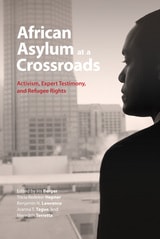
African Asylum at a Crossroads
Activism, Expert Testimony, and Refugee RightsIris Berger
Ohio University Press, 2015
African Asylum at a Crossroads: Activism, Expert Testimony, and Refugee Rights examines the emerging trend of requests for expert opinions in asylum hearings or refugee status determinations. This is the first book to explore the role of court-based expertise in relation to African asylum cases and the first to establish a rigorous analytical framework for interpreting the effects of this new reliance on expert testimony.
Over the past two decades, courts in Western countries and beyond have begun demanding expert reports tailored to the experience of the individual claimant. As courts increasingly draw upon such testimony in their deliberations, expertise in matters of asylum and refugee status is emerging as an academic area with its own standards, protocols, and guidelines. This deeply thoughtful book explores these developments and their effects on both asylum seekers and the experts whose influence may determine their fate.
Contributors: Iris Berger, Carol Bohmer, John Campbell, Katherine Luongo, E. Ann McDougall, Karen Musalo, Tricia Redeker Hepner, Amy Shuman, Joanna T. Tague, Meredith Terretta, and Charlotte Walker-Said.

Amazonia at the Crossroads
The Challenge of Sustainable DevelopmentEdited by Anthony Hall
University of London Press, 2000
The challenge at this critical juncture is how to integrate such policies and practices into mainstream development within Amazonia. Contributors: David Cleary, Rene Dreifuss, Philip Fearnside, Jessica Groenendijk, Anthony Hall, Judith Kimerling, Tom Lovejoy, Dennis Mahar, David McGrath, Emilio Moran, Darrel Posey, Nigel Smith, and Wouter Veening.
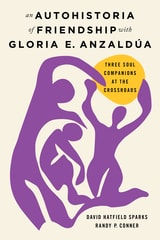
An Autohistoria of Friendship with Gloria E. Anzaldúa
Three Soul Companions at the CrossroadsDavid Hatfield Sparks and Randy P. Conner
University of Illinois Press, 2027
Beginning their story in a large Noe Valley flat, Sparks and Conner trace how a collective of artists and activists shaped a shared life across lines of race, gender, and sexuality while forging a community linked through prejudice, illness, and loss. The authors mix personal stories with history and cultural memory. They also discuss Anzaldúa’s idea of spiritual mestizaje, a practice for healing and growth that joins Indigenous, African, Latino, European, and Queer traditions. Their idea of El Mundo Zurdo imagines an inclusive world that values diversity and the power of difference to create connections among human beings.
Merging spirituality with activism, An Autohistoria of Friendship with Gloria E. Anzaldúa shares a vision of a more just and caring future.
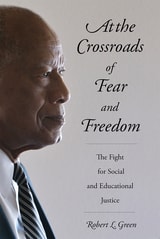
At the Crossroads of Fear and Freedom
The Fight for Social and Educational JusticeRobert L. Green
Michigan State University Press, 2016
This memoir relates previously untold stories about major Civil Rights campaigns that helped put an end to voting rights violations and Jim Crow education; explains how Green has helped urban school districts improve academic achievement levels; and explains why this history should inform our choices as we attempt to reform and improve American education. Green’s quest began when he helped the Kennedy Administration resolve a catastrophic education-related impasse and has continued through his service as one of the participants at an Obama administration summit on a current academic crisis.
It is commonly said that education is the new Civil Rights battlefield. Green’s memoir, At the Crossroads of Fear and Freedom: The Fight for Social and Educational Justice, helps us understand that educational equity has always been a central objective of the Civil Rights movement.

At the Crossroads of the Avant-Garde
Ivan Aksyonov and Russian ModernismLars Kleberg, Charles Rougle
Northwestern University Press, 2026
This kaleidoscopic biography offers readers a compelling microhistory of a revolutionary moment in art and politics through its portrait of an enigmatic but influential figure: Ivan Aksyonov authored the first book-length study about Pablo Picasso, translated Elizabethan drama, and was a literary adviser to Vsevolod Meyerhold, as well as a teacher of Sergei Eisenstein in Meyerhold’s institute and an important critic, before dying in 1935. Lars Kleberg traces Aksyonov’s influences, interlocutors, and creative output in multiple genres and media to bring a complicated and fascinating character back to life. Kleberg invites us to reconsider the avant-garde and to understand the political and artistic ferment of the revolutionary era and its aftermath in new, deeper ways.
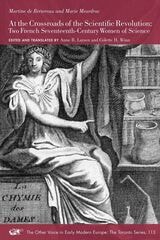
At the Crossroads of the Scientific Revolution
Two French Seventeenth-Century Women of ScienceMartine de Bertereau and Marie Meurdrac
Iter Press, 2026
The writings of mineralogist and hydrogeologist Martine de Bertereau (ca. 1584–ca. 1643) and alchemist and chemist Marie Meurdrac (ca. 1610–80) stand at the crossroads of the Scientific Revolution, a significant period between Copernicus and Newton that oversaw a new ferment in both the theoretical and empirical investigation of the natural world. Bertereau’s writings appear at the interface of a negotiation between an older form of knowledge, dating back to Aristotle, and a new scientific empiricism. She brilliantly addresses the relationship between knowledge and mining applications, as well as the roles of the king, the state, the market, and the public. Meurdrac published the first so-called chemistry book by a woman, which contributed to the various areas of scientific knowledge generally associated with alchemy in its development into chemistry, particularly medical cookery, botany, pharmacology, and cosmetology.
Bertereau’s and Meurdrac’s works illustrate this age of transition, a spectacular time of growth in ideas and discoveries for both men and women. This first-time translation of their works is an important step in restoring the voices of these early modern French women scientists.
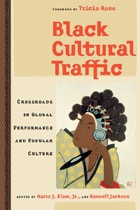
Black Cultural Traffic
Crossroads in Global Performance and Popular CultureEdited by Harry J. Elam, Jr. and Kennell Jackson
University of Michigan Press, 2005
"A shrewdly designed, generously expansive, timely contribution to our understanding of how 'black' expression continues to define and defy the contours of global (post)modernity. The essays argue persuasively for a transnational ethos binding disparate African and diasporic enactments, and together provide a robust conversation about the nature, history, future, and even possibility of 'blackness' as a distinctive mode of cultural practice."
--Kimberly Benston, author of Performing Blackness
"Black Cultural Traffic is nothing less than our generation's manifesto on black performance and popular culture. With a distinguished roster of contributors and topics ranging across academic disciplines and the arts (including commentary on film, music, literature, theater, television, and visual cultures), this volume is not only required reading for scholars serious about the various dimensions of black performance, it is also a timely and necessary teaching tool. It captures the excitement and intellectual innovation of a field that has come of age. Kudos!"
--Dwight A. McBride, author of Why I Hate Abercrombie & Fitch
"The explosion of interest in black popular culture studies in the past fifteen years has left a significant need for a reader that reflects this new scholarly energy. Black Cultural Traffic answers that need."
--Mark Anthony Neal, author of Songs in the Key of Black Life
"A revolutionary anthology that will be widely read and taught. It crisscrosses continents and cultures and examines confluences and influences of black popular culture -- music, dance, theatre, television, fashion and film. It also adds a new dimension to current discussions of racial, ethnic, and national identity."
--Horace Porter, author of The Making of a Black Scholar
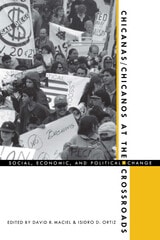
Chicanas/Chicanos at the Crossroads
Social, Economic, and Political ChangeEdited by David R. Maciel and Isidro D. Ortiz
University of Arizona Press, 1996
Chicanas/Chicanos at the Crossroads is a state-of-the-art assessment of the most significant developments in the conditions, fortunes, and experiences of Chicanas/os since the late seventies, with an emphasis on the years after 1980, which have thus far received little scholarly attention. Ten essays by leading Chicana and Chicano scholars on economic, social, educational, and political trends in Chicana/o life examine such issues as the rapid population growth of Chicanas/os and other Latinos; the ascendancy of Reaganomics and the turn to the right of American politics; the rise of anti-immigrant sentiment; the launching of new initiatives by the Mexican government toward the Chicano community; and the emergence of a new generation of political activists. The authors have been drawn from a broad array of disciplines, ranging from economics to women's studies, in order to offer a multidisciplinary perspective on Chicana/o developments in the contemporary era. The inclusion of authors from different regions of the United States and from divergent backgrounds enhances the broad perspective of the volume.
The editors offer this anthology with the intent of providing timely and useful insights and stimulating reflection and scholarship on a diverse and complex population. A testament to three decades of intense social struggle, Chicanas/Chicanos at the Crossroads is ample evidence that the legacy of the Movimiento is alive and well.
Contents
Part One: Demographic and Economic Trends Among Chicanas/os
1. Demographic Trends in the Chicano Population: Policy Implications for the Twenty First Century, Susan Gonzalez-Baker
2. Mexican Immigration in the 1980s and Beyond: Implications for Chicanos/as, Leo R. Chavez and Rebecca Martinez
3. Chicanas/os in the Economy: Issues and Challenges Since 1970, Refugio Rochin and Adela de la Torre
Part Two: Chicano Politics: Trajectories and Consequences
4. The Chicano Movement: Its Legacy for Politics and Policy, John A. Garcia
5. Chicano Organizational Politics and Strategies in the Era of Retrenchment, Isidro D. Ortiz
6. Return to Aztlan: Mexican Policy Design Toward Chicanos, María Rosa Garcia-Acevedo
Part Three: Chicana/o Educational Struggles: Dimensions, Accomplishments and Challenges
7. Actors Not Victims: Chicanos in the Struggle for Educational Equality, Guadalupe San Miguel
8. Juncture in the Road: Chincano Studies Since El Plan de Santa Barbara, Ignacio Garcia
Part Four: Gender Feminism and Chicanas/os: Developments and Perspectives
9. Gender and Its Discontinuities in Male/Female Domestic Relations: Mexicans in Cross Cultural Context, Adelaida R. Del Castillo
10. With Quill and Torch: A Chicana Perspective on the American Women's Movement and Feminist Theories, Beatríz Pesquera and Denise A. Segura
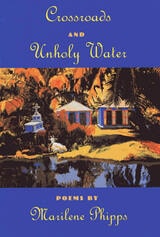
Crossroads and Unholy Water
Marilene Phipps
Southern Illinois University Press, 2000
Marilene Phipps’s poetry invites the reader to share sharp slices of Caribbean experience: Haiti is both stage and backdrop for people who move in various strata of the social scheme and through the three stages of life, in lieu of answers to the Sphinx’s riddle. Through voices, nostalgic and tender, denouncing and shrill, we journey to a mythologizing Caribbean land populated with people whose dramatic intensity and fights for life are turned into sometimes funny, sometimes disquieting, and always richly evocative, palpable poetry.
Crossroads of Culture
Anthropology Collections at the Denver Museum of Nature & ScienceChip Colwell
University Press of Colorado, 2010
The book presents 123 full-color images to highlight the museum's cultural treasures. Selected for their individual beauty, historic value, and cultural meaning, these objects connect different places, times, and people. From the mammoth hunters of the Plains to the first American pioneer settlers to the flourishing Hispanic and Asian diasporas in downtown Denver, the Rocky Mountain region has been home to a breathtaking array of cultures. Many objects tell this story of the Rocky Mountains' fascinating and complex past, whereas others serve to bring enigmatic corners of the globe to modern-day Denver.
Crossroads of Culture serves as a behind-the-scenes tour of the museum's anthropology collections. All the royalties from this publication will benefit the collections of the Denver Museum of Nature & Science's Department of Anthropology.
Crossroads of Freedom
Slaves and Freed People in Bahia, Brazil, 1870-1910Walter Fraga
Duke University Press, 2016

Crossroads of Imagination
Czech Fantastic Literature 1831–1945Edited by Carleton Bulkin
Karolinum Press, 2026
The first anthology of early Czech fantastic writing in translation.
Crossroads of Imagination is a rare English-language study of modern science fiction’s precursors beyond the U.S. and Britain. Many translated for the first time, these thirty texts reflect a rich Euro-Atlantic tradition from the Romantic age to World War II. Authors include Jakub Arbes, Karel Čapek, Jiří Karásek ze Lvovic, Ladislav Klíma, Jiří Mordechai Langer, Jan Neruda, Emilie Procházková, Jan Weiss, and Julius Zeyer. The anthology highlights women’s, Jewish, and queer voices.
Prefaces to each selection uncover how new ideas and technologies shaped the European fantastic—positivism, mistrust of elites, pacifism, spiritism, and xenophobia, alongside expansions in communications, transportation, electrification, and technical education. Comparative essays and annotations look beyond “major” literatures and emphasize those of East-Central Europe. Archival images enliven this collection. General and genre readers alike will discover new stories and authors, as well as a fantastic tradition shared across Europe and North America before the advent of modern science fiction.
Crossroads, Directions and A New Critical Race Theory
edited by Francisco Valdes, Jerome McCristal Culp and Angela P. Harris
Temple University Press, 2002
But what is Critical Race Theory? How did it develop? Where does it stand now? Where should it go in the future? In this volume, thirty-one CRT scholars present their views on the ideas and methods of CRT, its role in academia and in the culture at large, and its past, present, and future.
Critical race theorists assert that both the procedures and the substance of American law are structured to maintain white privilege. The neutrality and objectivity of the law are not just unattainable ideals; they are harmful actions that obscure the law's role in protecting white supremacy. This notion—so obvious to some, so unthinkable to others—has stimulated and divided legal thinking in this country and, increasingly, abroad.
The essays in Crossroads, Directions, and a New Critical Race Theory—all original—address this notion in a variety of helpful and exciting ways. They use analysis, personal experience, historical narrative, and many other techniques to explain the importance of looking critically at how race permeates our national consciousness.
Dancing At The Crossroads
Stories and Activities for At-Risk Youth ProgrammingLorna Czarnota
Parkhurst Brothers, Inc., 2014
Dancing at the Crossroads: Stories for Mentoring At-Risk Youth, Caregiver’s Guidebook and Practitioner’s Guidebook are packed with the lessons of fifteen years in the field working with at-risk populations in runaway shelters, group homes, residential treatment facilities and one-on one with youth and parents. Out of a real understanding of these young people and their needs, and a passion for helping guide them into the adult circle, Lorna MacDonald Czarnota has compiled a collection of time-tested stories with activities, advice and information for parents and families, and a series of programs that storytellers, mental health workers, counselors, therapists, and others can utilize with groups of their own.
Dancing at the Crossroads
A Guide for Caregivers in At-Risk Youth ProgramsLorna Czarnota
Parkhurst Brothers, Inc., 2014
The books Dancing at the Crossroads: Stories for Mentoring At-Risk Youth, Practitioner’s Guidebook and Caregiver’s Guidebook are packed with the lessons of fifteen years in the field working with at-risk populations in runaway shelters, group homes, residential treatment facilities and one-on one with youth and parents. Out of a real understanding of these young people and their needs, and a passion for helping guide them into the adult circle, Lorna MacDonald Czarnota has compiled a collection of time-tested stories with activities, advice and information for parents and families, and a series of programs that storytellers, mental health workers, counselors, therapists, and others can utilize with groups of their own.
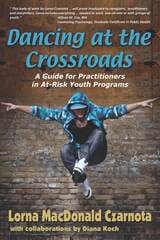
Dancing at the Crossroads
A Guide for Practitioners in At-Risk Youth ProgramsLorna Czarnota
Parkhurst Brothers, Inc., 2014
The books Dancing at the Crossroads: Stories for Mentoring At-Risk Youth, Practitioner’s Guidebook and Caregiver’s Guidebook are packed with the lessons of fifteen years in the field working with at-risk populations in runaway shelters, group homes, residential treatment facilities and one-on one with youth and parents. Out of a real understanding of these young people and their needs, and a passion for helping guide them into the adult circle, Lorna MacDonald Czarnota has compiled a collection of time-tested stories with activities, advice and information for parents and families, and a series of programs that storytellers, mental health workers, counselors, therapists, and others can utilize with groups of their own.
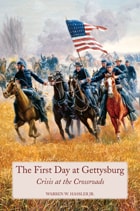
First Day at Gettysburg
Crisis at the CrossroadsWarren W. Hassler Jr
University of Alabama Press, 1970
“Hassler’s history will survive as our most detailed narrative of the first day’s battle, examining the day’s action so minutely that no succeeding historian of Gettysburg will be able to ignore it. Hassler’s book has solid virtues in addition to its thoroughness of detail: it offers a persuasive argument that the first day’s events largely determined the eventual outcome of the battle; Hassler displays uncommonly complete knowledge of the battlefield terrain [and] makes uniquely good use of the information that can be gleaned from the monuments and markers on the battlefield.” – American Historical Review

Generation at the Crossroads
Apathy and Action on the American CampusLoeb, Paul R
Rutgers University Press, 1994
Challenging prevailing media stereotypes, Generation at the Crossroads explores the beliefs and choices of the students who came of age in the 1980s and 1990s. For seven years, at over a hundred campuses in thirty states, Paul Loeb asked students about the values they held. He examines their concepts of responsibility, the links they draw between present and future, and how they view themselves in relation to the larger human community in which they live. He brings us a range of voices, from "I'm not that kind of person," to "I had to take a stand." Loeb looks at how the rest of us can serve young people as better role models, and give them courage and vision to help build a better world.
This insightful book explores the culture of withdrawal that dominated American campuses through most of the eighties. He locates its roots in historical ignorance, relentless individualism, mistrust of social movements, and a general isolation from urgent realities. He examines why a steadily increasing minority has begun to take on critical public issues, whether environmental activism, apartheid, hunger and homelessness, affordable education, or racial and sexual equity. Loeb looks at individuals who have overcome precisely the barriers he has described, and how their journeys can become models. The generational choices he explores will shape our common future.

Illinois
Crossroads of a ContinentLois A. Carrier
University of Illinois Press, 1993
Writing in a fast-paced, down-to-earth style, Lois Carrier introduces a host of innovations and innovators associated with Illinois: Jane Addams and Louis Armstrong, Frank Lloyd Wright and Walt Disney, Cracker Jack and the Ferris wheel. From the Cahokia Mounds to Chicago, Illinois: Crossroads of a Continent provides a panoramic history for students and general readers.
Industry at the Crossroads
Robert E. Cole, Editor
University of Michigan Press, 1982
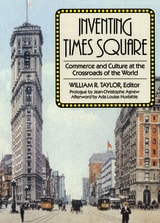
Inventing Times Square
Commerce and Culture at the Crossroads of the WorldWilliam R. Taylor
Russell Sage Foundation, 1991
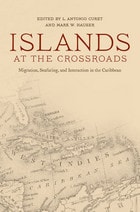
Islands at the Crossroads
Migration, Seafaring, and Interaction in the CaribbeanL. Antonio Curet
University of Alabama Press, 2011
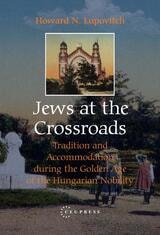
Jews at the Crossroads
Tradition and Accomodation during the Golden Age of the Hungarian NobilityHoward N. Lupovitch
Central European University Press, 2007
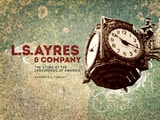
L. S. Ayres and Company
The Store at the Crossroads of AmericaKenneth L. Turchi
Indiana Historical Society Press, 2012
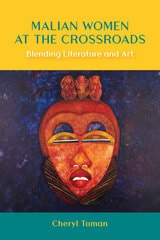
Malian Women at the Crossroads
Blending Literature and ArtCheryl Toman
Michigan State University Press, 2027
Mali’s history is defined by crossroads—geographic, cultural, and intellectual—linking to the Sahara and to long-standing trade routes. Francophone Malian women’s writing reflects this convergence, positioning literature as a site where diverse artistic and cultural traditions meet and evolve. In Malian Women at the Crossroads: Blending Literature and Art, writers such as Aoua Kéita, Aïcha Fofana, Adame Ba Konaré, Fatoumata Sidibé, Zakiyatou oualett Halatine, and Fadimata walett Oumar blur the boundaries between text and artistic practice, incorporating storytelling, visual arts, music, textile design, and other creative forms into their work. These interdisciplinary expressions both honor and reinterpret tradition, illuminating Mali’s cultural diversity while challenging divisions rooted in gender and ethnicity.
The voices of these writers denounce the conflict that has plagued Mali for over a decade and opt instead for showcasing creativity that preserves the memory of more promising times.

Media, Markets and Public Spheres
European Media at the CrossroadsEdited by Jostein Gripsrud and Lennart Weibull
Intellect Books, 2010
Using a sample of European newspapers and their TV listings as a stepping stone, Media, Markets and Public Spheres presents an overview of changes in European public spheres over the last fifty years. With in-depth analyses of structural changes in press and broadcasting, changing relations between media, and changes in media policies, this book explores how and why the media decisively influence most aspects of society. Media, Markets and Public Spheres will be useful to students in media and communication studies and European studies, as well as for those studying sociology and political science.

Mediterranean Security at the Crossroads
A ReaderNikolaos A. Stavrou, ed.
Duke University Press, 1999
New essays in this expanded volume include a reflection by former President Jimmy Carter on the causes of war and their links to human suffering, a prophetic analysis of the post-Cold War environment in the Mediterranean by former U.N. Secretary General Boutros-Boutros Ghali, an essay on the strategic significance of Turkey in the eastern Mediterranean by the former Turkish ambassador to the United States, and, in light of recent events in Kosovo and elsewhere in the former Yugoslavia, a piece on the issue of Balkan security by the editor. Introducing the volume is a foreword by former U.S. Secretary of State George P. Schultz and an essay focusing on NATO in the Mediterranean by Javier Solana, the Secretary General of NATO. Central to the Mediterranean debate is the question of NATO’s role in its future. Some contributors suggest that the southward expansion of NATO could be an important first step toward stability, while others argue that the Mediterranean should be treated as an integrated geostrategic region, with a central place in Western security considerations. Other essays discuss the comparative experience of UNPROFOR and IFOR in the former Yugoslavia; the role of Italy in the future of the Mediterranean; the economic challenges facing the Middle East; and the role of Israel and its relationship to its neighbors.
Mediterranean Security at the Crossroads is one of the first in-depth looks at this region from a strictly post-Cold War perspective.
Contributors. Hanan Bar-On, Ted Galen Carpenter, Jimmy Carter, Charles G. Cogan, Gregorios Demestichas, Boutros-Boutros Ghali, Carlo Jean, Nuzhet Kandemir, Nicolai A. Kovalsky, William H. Lewis, Peter H. Liotta, John A. MacInnis, Phebe Marr, Matthew Nimetz, George P. Schultz, Javier Solana, Richard F. Staar, Nikolaos A. Stavrou, George Vella, W. Bruce Weinrod
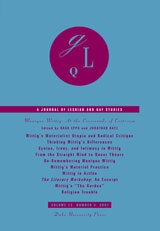
Monique Wittig
At the Crossroads of Criticism, Volume 13Brad Epps and Jonathan D. Katz, eds.
Duke University Press, 0
Contributors provide critical and disparate snapshots—some more theoretical and abstract, some more experiential and concrete—of debates on, and investments in, Wittig’s theoretical legacy. Judith Butler analyzes Wittig’s “particular” universalism and offers a careful exposition of her worldview. Diane Griffin Crowder studies Wittig within a context of materialist inquiry that has often been ignored or misunderstood. Robyn Wiegman examines the complex nature of memorialization and inquires into Wittig’s place in contemporary queer theory. Seth Clark Silberman, calling attention to Wittig’s fiction, reverses the usual ascendancy of critique over narrative fiction and produces a formally innovative, if willfully “parasitic,” account of Wittig’s claim on the contributor’s imagination as he watches his mother slowly die of cancer. Alice Jardine, who situates Wittig as a disruptive and disorienting force in a mother-centered feminism, provides an autobiographically charged review of the recent history of feminism, queer studies, and the still uneasy relations between them. The issue also includes a detailed introduction by Brad Epps and Jonathan Katz; a brief personal reflection by Sandra K. Soto, a close friend and colleague of Wittig’s; and two texts by Wittig, one critical (with a foreword by Sande Zeig) and the other creative, both previously unavailable in English.
Contributors. Judith Butler, Diane Griffin Crowder, Brad Epps, Alice Jardine, Jonathan Katz, Seth Clark Silberman, Sandra K. Soto, Robyn Wiegman, Monique Wittig, Sande Zeig
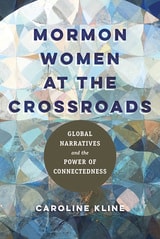
Mormon Women at the Crossroads
Global Narratives and the Power of ConnectednessCaroline Kline
University of Illinois Press, 2022
Winner of the Mormon History Association Best International Book Award
The Church of Jesus Christ of Latter-day Saints continues to contend with longstanding tensions surrounding gender and race. Yet women of color in the United States and across the Global South adopt and adapt the faith to their contexts, many sharing the high level of satisfaction expressed by Latter-day Saints in general. Caroline Kline explores the ways Latter-day Saint women of color in Mexico, Botswana, and the United States navigate gender norms, but also how their moral priorities and actions challenge Western feminist assumptions. Kline analyzes these traditional religious women through non-oppressive connectedness, a worldview that blends elements of female empowerment and liberation with a broader focus on fostering positive and productive relationships in different realms. Even as members of a patriarchal institution, the women feel a sense of liberation that empowers them to work against oppression and against alienation from both God and other human beings.
Vivid and groundbreaking, Mormon Women at the Crossroads merges interviews with theory to offer a rare discussion of Latter-day Saint women from a global perspective.

Physicians and Hospitals
The Great Partnership at the CrossroadsDuncan Yaggy and Patricia Hodgson, eds.
Duke University Press, 1985
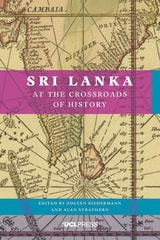
Sri Lanka at the Crossroads of History
Edited by Zoltán Biedermann and Alan Strathern
University College London, 2017
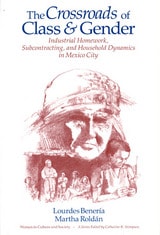
The Crossroads of Class and Gender
Industrial Homework, Subcontracting, and Household Dynamics in Mexico CityLourdes Benería and Martha Roldán
University of Chicago Press, 1987
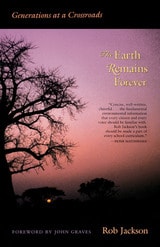
The Earth Remains Forever
Generations at a CrossroadsBy Rob Jackson
University of Texas Press, 2002
Writing especially for people who've tuned out the environmental debate, Rob Jackson persuasively argues that we're at a crucial turning point in environmental history, where choices we make now will determine the quality of life into the unforeseeable future. Laying out the scientific facts in plain language and with flashes of humor, he shows how the escalation of population growth and resource consumption in the twentieth century caused problems from ozone depletion to global warming, habitat destruction, and biodiversity loss. At the same time, however, he highlights ongoing solutions to these problems and ways in which we can create a sustainable future for subsequent generations and all life on earth. His urgent message is not that we've already failed, but that we can succeed.
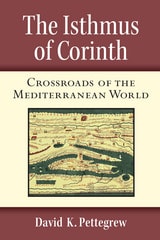
The Isthmus of Corinth
Crossroads of the Mediterranean WorldDavid K. Pettegrew
University of Michigan Press, 2016
David Pettegrew’s book offers a new history of the Isthmus of Corinth from the Romans’ initial presence in Greece during the Hellenistic era to the epic transformations of the Empire in late antiquity. A new interpretation of the extensive literary evidence outlines how the Isthmus became the most famous land bridge of the ancient world, central to maritime interests of Corinth, and a medium for Rome’s conquest, annexation, and administration in the Greek east. A fresh synthesis of archaeological evidence and the results of a recent intensive survey on the Isthmus describe the physical development of fortifications, settlements, harbors, roads, and sanctuaries in the region. The author includes chapters on the classical background of the concept isthmos, the sacking of Corinth and the defeat of the Achaean League, colonization in the Late Roman Republic, the Emperor Nero’s canal project and its failure, the growth of Roman settlement in the territory, and the end of athletic contests at Isthmia. The Isthmus of Corinth offers a powerful case study in the ways that shifting Mediterranean worlds transformed a culturally significant landscape over the course of a millennium.
The Road Half Traveled
University Engagement at a CrossroadsRita Axelroth Hodges
Michigan State University Press, 2012
A growing number of universities are dedicating resources to support their surrounding communities, but much potential for advancement remains. A university’s mission as an “anchor institution,” as defined by the authors, is to consciously and strategically apply the institution’s long-term, place-based economic power, in combination with its human and intellectual resources, to better the welfare of the community in which it resides. Drawing on ten diverse universities as case studies, this eye-opening book explores practices and strategies that can be employed to improve conditions in low-income communities and emphasizes the critical roles of university leaders, philanthropy, and policy in this process. To date the most comprehensive account of the range of roles played by universities as anchors in their communities, The Road Half Traveled provides a forward-thinking perspective on new horizons in university and community partnership.
Waiting for Buddy Guy
Chicago Blues at the CrossroadsAlan Harper
University of Illinois Press, 2016

Whose Liberty is it Anyway?
Europe at the CrossroadsStefan Auer
Seagull Books, 2012
Europe's turn of fortune is humbling, humiliating and, perhaps, irreversible. What went wrong, and when? Europe's most audacious moment occurred sometime between 1989 and 1991, a brief period that encapsulated both the demise of communism in Central and Eastern Europe and the bold steps forward on the path towards an 'ever-closer union' in Western Europe. Twenty years later, the dramatic failures of economic and political integration have forced Europeans to re-consider the underpinnings of their project. The economic crisis of 2010-11 also manifested itself as a crisis of European democracy. Old questions acquired new meaning: Is it possible to maintain conditions for self-government while undermining the nation-state? What are the limits of solidarity? Can Europe be truly united through its common history, or its common currency? Is further unity in Europe even desirable?
In Whose Liberty Is It Anyway? Stefan Auer exposes the limits of the current European project by interrogating some of its many incongruities, particularly when it comes to its commitment to freedom. The author argues that the calls for more European solidarity are not convincing when Europe's poor are asked to pay for the mistakes of those who are more fortunate. Europe's unity, Auer asserts, can only be maintained by accepting its limitations and by beginning to fulfill some of its many promises.