Results by title
355 books match the query 'Political and social views' and 5 start with g
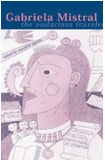
Gabriela Mistral
The Audacious TravelerMarjorie Agosín
Ohio University Press, 2003
Gabriela Mistral is the only Latin American woman writer to be awarded the Nobel Prize in Literature. Even so, her extraordinary achievements in poetry, narrative, and political essays remain largely untold. Gabriela Mistral: The Audacious Traveler explores boldly and thoughtfully the complex legacy of Mistral and the way in which her work continues to define Latin America.
Edited by Professor Marjorie Agosín, Gabriela Mistral: The Audacious Traveler addresses for the first time the vision that Mistral conveyed as a representative of Chile during the drafting of the United Nations Human Rights Declaration. It depicts Mistral as a courageous social activist whose art and writings against fascism reveal a passionate voice for freedom and justice.
The book also explores Mistral’s Pan-American vision and her desire to be part of a unified American hemisphere as well as her concern for the Caribbean and Brazil. Readers will learn of her sojourn in Brazil, her turbulent years as consul in Madrid, and, finally, her last days on Long Island.
Students of her poetry, as well as general readers, will find Gabriela Mistral: The Audacious Traveler an insightful collection dedicated to the life and work of an inspiring and original artist.
The contributors are Jonathan Cohen, Joseph R. Slaughter, Verónica Darer, Patricia Varas, Eugenia Muñoz, Darrell B. Lockhart, Ivonne Gordon Vailakis, Santiago Daydí-Tolson, Diana Anhalt, Ana Pizarro, Randall Couch, Patricia Rubio, Elizabeth Horan, Emma Sepúlveda, Luis Vargas Saavedra, and Marie-Lise Gazarian-Gautier.
Genuine Individuals and Genuine Communities
A Roycean Public PhilosophyJacqueline Ann K. Kegley
Vanderbilt University Press, 1997
The continuing vitality of American thought stems, to a large extent, from the application of its historical roots embedded in contemporary problems and issues. Yet for some time the signal contributions of Josiah Royce (1855-1916) have been overlooked in the formulation and shaping of critical areas of public policy. In this brilliantly articulated new book, ethicist Jacquelyn Kegley carefully explicates and enlarges the scope of Roycean thought and shows that Royce's views on public philosophy have direct and valuable application to current social problems.
Working from the assumption that issues of family, education, and health care are not merely exigent political tempests but areas of genuine, long-lasting concern, Kegley opens fresh perspectives on Royce's philosophy by introducing and applying his ideas to discussions of how we care for ourselves and our society today. She analyzes Roycean criteria that can be successfully used to nourish developmental stages within families, promote intellectual and social growth in schooling and scholarship, and sustain physical and mental well-being throughout the life cycle.
Genuine Individuals and Genuine Communities should be a springboard for the reassessment of contemporary public policy and the reapplication of the American philosophical legacy to current issues and decisions. Kegley's work serves as a solid contribution both to public philosophy and to the continued vitality of American thought, and it extends the range of both.
Glissant and the Middle Passage
Philosophy, Beginning, AbyssJohn E. Drabinski
University of Minnesota Press, 2019
A reevaluation of Édouard Glissant that centers on the catastrophe of the Middle Passage and creates deep, original theories of trauma and Caribbeanness
While philosophy has undertaken the work of accounting for Europe’s traumatic history, the field has not shown the same attention to the catastrophe known as the Middle Passage. It is a history that requires its own ideas that emerge organically from the societies that experienced the Middle Passage and its consequences firsthand. Glissant and the Middle Passage offers a new, important approach to this neglected calamity by examining the thought of Édouard Glissant, particularly his development of Caribbeanness as a critical concept rooted in the experience of the slave trade and its aftermath in colonialism.
In dialogue with key theorists of catastrophe and trauma—including Aimé Césaire, Frantz Fanon, George Lamming, Gilles Deleuze, Félix Guattari, Derek Walcott, as well as key figures in Holocaust studies—Glissant and the Middle Passage hones a sharp sense of the specifically Caribbean varieties of loss, developing them into a transformative philosophical idea. Using the Plantation as a critical concept, John E. Drabinski creolizes notions of rhizome and nomad, examining what kinds of aesthetics grow from these roots and offering reconsiderations of what constitutes intellectual work and cultural production.
Glissant and the Middle Passage establishes Glissant’s proper place as a key theorist of ruin, catastrophe, abyss, and memory. Identifying his insistence on memories and histories tied to place as the crucial geography at the heart of his work, this book imparts an innovative new response to the specific historical experiences of the Middle Passage.
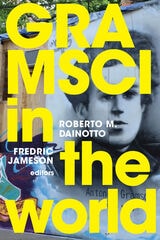
Gramsci in the World
Roberto M. Dainotto and Fredric Jameson, editors
Duke University Press, 2020
Contributors. Alberto Burgio, Cesare Casarino, Maria Elisa Cevasco, Kate Crehan, Roberto M. Dainotto, Michael Denning, Harry Harootunian, Fredric Jameson, R. A. Judy, Patrizia Manduchi, Andrea Scapolo, Peter D. Thomas, Catherine Walsh, Pu Wang, Cosimo Zene
Gramsci's Common Sense
Inequality and Its NarrativesKate Crehan
Duke University Press, 2016