Results by title
37 books match the query 'Issues'
Alaska Native Cultures and Issues
Responses to Frequently Asked QuestionsEdited by Libby Roderick
University of Alaska Press, 2010

Biomedicine and Alternative Healing Systems in America
Issues of Class, Race, and GenderHans A. Baer
University of Wisconsin Press, 2001
Examining medical pluralism in the United States from the Revolutionary War period through the end of the twentieth century, Hans Baer brings together in one convenient reference a vast array of information on healing systems as diverse as Christian Science, osteopathy, acupuncture, Santeria, southern Appalachian herbalism, evangelical faith healing, and Navajo healing.
In a country where the dominant paradigm of biomedicine (medical schools, research hospitals, clinics staffed by M.D.s and R.N.s) has been long established and supported by laws and regulations, the continuing appeal of other medical systems and subsystems bears careful consideration. Distinctions of class, Baer emphasizes, as well as differences in race, ethnicity, and gender, are fundamental to the diversity of beliefs, techniques, and social organizations represented in the phenomenon of medical pluralism.
Baer traces the simultaneous emergence in the nineteenth century of formalized biomedicine and of homeopathy, botanic medicine, hydropathy, Christian Science, osteopathy, and chiropractic. He examines present-day osteopathic medicine as a system parallel to biomedicine with an emphasis on primary care; chiropractic, naturopathy, and acupuncture as professionalized heterodox medical systems; homeopathy, herbalism, bodywork, and lay midwifery in the context of the holistic health movement; Anglo-American religious healing; and folk medical systems, particularly among racial and ethnic minorities. In closing he focuses on the persistence of folk medical systems among working-class Americans and considers the growing interest of biomedical physicians, pharmaceutical and healthcare corporations, and government in the holistic health movement

China Enters the Twentieth Century
Chang Chih-tung and the Issues of a New Age, 1895-1909Daniel H. Bays
University of Michigan Press, 1978
Employment, Disability, and the Americans with Disabilities Act
Issues in Law, Public Policy, and ResearchPeter David Blanck
Northwestern University Press, 2000

Ethnicity in Michigan
Issues and PeopleJack Glazier
Michigan State University Press, 2001
As the introductory volume in the series Discovering the Peoples of Michigan, Ethnicity in Michigan outlines the processes of migration, as well as the rich relationship between ethnic groups and the trajectories of historical and social change in Michigan. On both state and local levels, issues of identity, race, politics, and shared history inform community development. Jack Glazier and Arthur Helweg provide a substantive general and theoretical overview of the various ethnic groups in Michigan, and of the ways in which immigrants both respond to and shape Michigan's particular regional character.
International Economic Transactions
Issues in Measurement and Empirical ResearchEdited by Peter Hooper and J. David Richardson
University of Chicago Press, 1991
Questioning the quality of current data and analytical procedures, this ambitious volume proposes innovative research designs and methods for data enhancement, and offers new data on trade prices and service transactions for future studies. Leading researchers address the measurement of international trade flows and prices, including the debate over measurement of computer prices and national productivity; compare international levels of manufacturing output; and assess the extent to which the United States has fallen into debt to the rest of the world.

Intersections
Issues in Contemporary Art, Volume 12Joan Kee , ed.
Duke University Press, 0
Contributors. Thomas J. Berghuis, Lee Weng Choy, Patrick Flores, Joan Kee, Alice Ming Wai Jim, Sheldon Lu, Gao Minglu, Reiko Tomii

Is Social Security Broke?
A Cartoon Guide to the IssuesBarbara R. Bergmann and Jim Bush
University of Michigan Press, 2000
Issues and Options for U.S.-Japan Trade Policies
Robert M. Stern, Editor
University of Michigan Press, 2002
The chapters represent a spectrum of approaches, including theoretical analysis, quantitative measurement, and evaluations of policies and institutions from economic and legal perspectives. The multi-lateral issues cover the analysis of the economic effects of a new WTO negotiating round and the range of issues that are to be addressed there, including reform of Japan's agricultural policies, services liberalization, antidumping, intellectual property rights, and trade and the environment. The regional issues include theoretical and simulation analysis of the benefits of preferential trading arrangements and the policy of open regionalism that is being sought by APEC members. U.S.-Japan bilateral relations are studied by analyzing the major actions and positions taken by the two nations in the context of their national trade laws and policies, how trade policies are implemented, the effects of bilateral trade agreements on the United States and Japan, and the interplay of legal decisions reached in WTO actions with bilateral and unilateral measures undertaken by the two nations.
The book is designed for a broad audience consisting of academic economists, lawyers, policymakers, and students interested in U.S.-Japan international economic relations.
Robert M. Stern is Professor Emeritus of Economics and Public Policy, University of Michigan.

Issues in Curating Contemporary Art and Performance
Edited by Judith Rugg and Michèle Sedgwick
Intellect Books, 2007
To stay relevant, art curators must keep up with the rapid pace of technological innovation as well as the aesthetic tastes of fickle critics and an ever-expanding circle of cultural arbiters. Issues in Curating Contemporary Art and Performance argues that, despite these daily pressures, good curating work also requires more theoretical attention.
In four thematic sections, a distinguished group of contributors consider curation in light of interdisciplinary and emerging practices, examine conceptions of curation as intervention and contestation, and explore curation’s potential to act as a reconsideration of conventional museum spaces. Against the backdrop of cutting-edge developments in electronic art, art/science collaboration, nongallery spaces, and virtual fields, contributors propose new approaches to curating and new ways of fostering critical inquiry. Now in paperback, this volume is an essential read for scholars, curators, and art enthusiasts alike.

Issues in Curriculum
Selected Essays from Past NSSE YearbooksEdited by Margaret Early and Kenneth J. Rehage
University of Chicago Press, 1999
Issues in Law and Economics
Harold Winter
University of Chicago Press, 2017

Issues in Librarianship
Presented Papers at the ALA 2008 Annual ConferenceAmerican Library Association, 2008
Issues in Pension Economics
Edited by Zvi Bodie, John B. Shoven, and David A. Wise
University of Chicago Press, 1987
The papers in this volume cover such issues as the interaction of pension-funding decisions and corporate finances; the role of pensions in providing adequate and secure retirement income, including the integration of pension plans with social security and significant drops in the U.S. saving rate; and the incentive effects of pension plans on labor market behavior and the implications of plans on labor market behavior and the implications of plans for different demographic groups.
Issues in Pension Economics offers important empirical studies and makes valuable theoretical contributions to current thinking in an area that will most likely continue to be a source of controversy and debate for some time to come. The volume should prove useful to academics and policymakers, as well as to members of the business and labor communities.
Issues in US-EC Trade Relations
Edited by Robert E. Baldwin, Carl B. Hamilton, and André Sapir
University of Chicago Press, 1988
Issues in US-EC Trade Relations presents the results of a conference organized by the NBER and the Centre for European Policy Studies. In it, North American and European trade specialists offer theoretical, empirical, and historical analyses of some of the major issues on which American and Community officials disagree and also formulate realistic policies for settling present disputes. Contributors consider such topics as the legal aspects of trade between the two regions, agricultural policy, different ways the United States and members of the European Community use embargoes to attempt to induce foreign countries to change particular political actions, the growing trend toward protectionism and responses to this policy, international trade in services, and trade policy in oligopolistic environments. In most cases, each general subject is approached from both an American and a European perspective.
Issues in the Economics of Aging
Edited by David A. Wise
University of Chicago Press, 1990
Issues in the Economics of Immigration
Edited by George J. Borjas
University of Chicago Press, 2000
This collection offers new insights into the kinds of economic opportunities and outcomes that immigrant populations might expect for themselves and future generations.
Manitoba Politics and Government
Issues, Institutions, TraditionsPaul Thomas
University of Manitoba Press, 2010
Masculinity Besieged?
Issues of Modernity and Male Subjectivity in Chinese Literature of the Late Twentieth CenturyXueping Zhong
Duke University Press, 2000
Before the 1990s onslaught of popular culture decentered the role of intellectuals within the nation, they had come to embody Chinese masculinity during the previous decade. The focus on masculinity in literature had become unprecedented in scale and the desire for “real men” began to permeate Chinese popular culture, making icons out of Rambo and Takakura Ken. Stories by Zhang Xianliang and Liu Heng portraying male anxiety about masculine sexuality are employed by Zhong to show how “marginal” males negotiate their sexual identities in relation to both women and the state. Looking at writers popular among not only the well-educated but also the working and middle classes, she discusses works by Han Shaogong, Yu Hua, and Wang Shuo and examines instances of self-loathing male voices, particularly as they are articulated in Mo Yan’s well-known work Red Sorghum. In her last chapter Zhong examines “roots literature,” which speaks of the desire to create strong men as a part of the effort to create a geopolitically strong Chinese nation. In an afterword, Zhong situates her study in the context of the 1990s.
This book will be welcomed by scholars of Chinese cultural studies, as well as in literary and gender studies.
Medicare Reform
Issues and AnswersEdited by Andrew J. Rettenmaier and Thomas R. Saving
University of Chicago Press, 1999
Medicare Reform—the first volume in a new series sponsored by the George Bush School of Government and Public Policy at Texas A&M University—tackles the current Medicare predicament head-on, delving into the fundamental issues surrounding the reorganization of the system: whether to allocate Medicare's growing financial load to current workers in the form of higher taxes, shift the onus to future generations, or shortchange both the expectations and care of present recipients by substantially cutting benefits. This volume assembles a group of the most highly respected analysts of health issues to consider the economic forces impacting the surging health care market.
Written for the general reader and offering innovative ideas for policy revision along with critical new data on health care economics, this comprehensive volume provides a timely and thoughtful deliberation on the precarious future of Medicare.
"Because, as Richard Weaver once said, 'ideas have consequences,' this book is important. It will not end the debate on Medicare, but it will begin it."—Phil Gramm, from the foreword

Modern Jewish Ethics since 1970
Writings on Methods, Sources, and IssuesEdited by Jonathan K. Crane, Emily A. Filler, and Mira Beth Wasserman
Brandeis University Press, 2025
These deliberate juxtapositions are to encourage scholars and students to develop similar meta-ethical analyses on Jewish ethics, broadly construed. Jewish ethics is not just a set of propositions or principles; nor can it be reduced to a single trajectory of thought or abstracted as an elaborate system of ideas. Jewish ethics is the field of study that engages Jewish texts, ideas, history, and experience in conversations about values and virtues, justice and good judgment, human relations and responsibilities. This volume presents some of those conversations to spark many more.

Murder, Courts, and the Press
Issues in Free Press/Fair TrialPeter E. Kane. Foreword by Franklyn S. Haiman
Southern Illinois University Press, 1992
When murder is the crime, the clash in the courts is likely to be between two constitutionally enshrined rights—freedom of speech and the right to a fair trial.
Peter E. Kane shows what happened in seven famous court cases when First Amendment rights (concerning freedom of speech) conflicted with Sixth Amendment rights (concerning fair trial). He reports the circumstances of each crime, the court proceedings, and the conduct of the press in the trials of Sam Sheppard, Charles Manson and his followers, John Paul Stevenson, Claus von Bülow, and Arthur Shawcross and the cases involving the Kellie family and the Wayne Clapp murders. Kane’s narrative and analytical approach illuminates legal principles and shows the roles of actual human beings underlying the abstractions of court opinions.
In this revised and expanded edition, Kane considers two new topics stemming from recent court cases: cameras in the courtroom and a code of ethics for crime reporting. Kane explores the issue of cameras through the famous Claus von Bülow retrial, which featured live television broadcasts; regarding a journalistic code, Kane examines the massive pretrial reporting of the serial murders of Arthur Shawcross. Kane notes that sensational crime stories serve the interests of many people: the public wants to read them; journalists want to write them because they can make a reporter’s fortune and reputation; and editors and publishers want to sell papers. The sensational crime story serves everyone’s purpose except that of the accused.
In addition to exploring journalistic ethics and the proper procedures for trial judges in guaranteeing a fair trial, these cases also provide an introduction to the operation of the courts in criminal justice. "The trial court is the arena in which the conflicts between a free press and a fair trial are played out," Kane writes. "This play is described here as are the subsequent evaluations of that play by the appellate courts. Thus the legal process is considered from its beginning with the original crime to the final resolution of the case in the United States Supreme Court."

Museum Archives
Practice, Issues, and AdvocacySusan Hernandez
Society of American Archivists, 2022
Partners in Education
Issues and Trends from the 21st International Congress on the Education of the DeafDonald F. Moores
Gallaudet University Press, 2011
The 21st International Congress on the Education of the Deaf (ICED) witnessed revolutionary exchanges on the vital themes in education. Presenters addressed topics encompassing seven major strands: Educational Environments, Language and Literacy, Early Intervention, Unique Challenges in Developing Countries, Educating Learners with Diverse Needs, Technology in Education, and Sign Language and Deaf Culture. These presentations and ensuing dialogues raised many complex questions. Partners in Education: Issues and Trends from the 21st International Congress on the Education of the Deaf features all of the keynote addresses by renowned luminaries in deaf education: Breda Carty, Karen Ewing, Nassozi Kiyaga, John Luckner, Connie Mayer and Beverly Trezek, volume editor Donald F. Moores, Peter V. Paul, Antti Raike, Claudine Storbeck, James Tucker, and Alys Young.
Most critically, the contributors to this collection explore the many multifaceted challenges facing the world’s deaf students. Deaf children are being diagnosed with overlays of disabilities; more deaf children are growing up in poverty; and many deaf children represent minority racial/ethnic groups or are immigrants to their country of residence. The situation for deaf individuals in the most impoverished countries of the world is desperate and of crisis proportions. This volume brings these themes to light through its exceptional synthesis of the outstanding discourse that took place at ICED 2010, including abstracts from 30 celebrated conference presentations.

Perception and cognition
issues in the foundations of psychologyC. Wade. Savage
University of Minnesota Press, 1978

Physical and Biophysical Foundations of Pharmacy Practice
Issues in Drug DeliveryGordon L. Flynn, Michael S. Roberts
Michigan Publishing Services, 2015
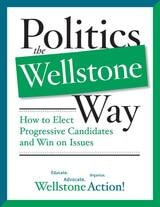
Politics the Wellstone Way
How to Elect Progressive Candidates and Win on IssuesWellstone Action Wellstone Action Wellstone Action
University of Minnesota Press, 2005
Wellstone Action is a nonprofit organization dedicated to continuing Paul and Sheila Wellstone’s fight for progressive change and economic justice by teaching effective political action skills to people across the country. Politics the Wellstone Way is a workshop in book form, providing the detailed framework needed to jump-start a new generation of activists plus plenty of helpful tools for old pros, including articulating a strong message, base building, field organizing, budgeting, fundraising, scheduling, getting out the vote, and grassroots advocacy and lobbying, illustrated by practical and inspirational examples.
From the school board all the way to the White House, Politics the Wellstone Way instructs people on becoming better organizers, candidates, campaign workers, and citizen activists, empowering them to make their voices heard.
Wellstone Action was established by the Wellstones’ two surviving sons, David and Mark. The main vehicle for this ongoing work is Camp Wellstone, a weekend training program that Wellstone Action leads regularly in locations across the country. Jeff Blodgett, Paul Wellstone’s longtime campaign manager, is the executive director of Wellstone Action. For more information visit www.wellstoneaction.org.
Preservation
Issues and PlanningPaul Banks
American Library Association, 2000
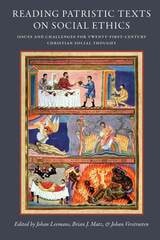
Reading Patristic Texts on Social Ethics
Issues and Challenges for the Twenty-First CenturyJohan Leemans
Catholic University of America Press, 2011
Reengineering the Library
Issues in Electronic Resources ManagementGeorge Stachokas
American Library Association, 2022
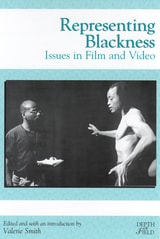
Representing Blackness
Issues in Film and VideoSmith, Valerie
Rutgers University Press, 1997
The essays in this collection provide a variety of perspectives on black representation and questions of racial authenticity in mainstream as well as African American independent cinema. This volume includes seminal essays on racial stereotypes, trenchant critiques of that discourse, original essays on important directors such as Haile Gerima and Charles Burnett, and an insightful discussion of black gay and lesbian film and video.
The contributors include Donald Bogle, Thomas Cripps, Jane Gaines, Nathan Grant, Stuart Hall, Tommy L. Lott, Wahneema Lubiano, Mike Murashige, Valerie Smith, James Snead, and David Van Leer. This volume is an important contribution to the Depth of Field series and should be indispensible for courses and individual scholars in film and multicultural studies. The book contains a mix of original and previously published pieces.

Retrofitting Blade Runner
Issues in Ridley Scott's Blade Runner and Phillip K. Dick's Do Androids Dream of Electric Sheep?Judith B. Kerman
University of Wisconsin Press, 1997
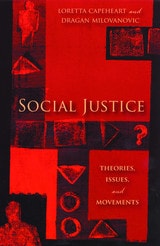
Social Justice
Theories, Issues, and MovementsCapeheart, Loretta
Rutgers University Press, 2007
In Social Justice: Theories, Issues, and Movements, Loretta Capeheart and Dragan Milovanovic respond to the need for a comprehensive introduction to this topic. The authors argue that common conceptions of criminal justice--which accept, for the most part, a politically established definition of crime--are too limited. Instead, they show the relevancy of history, political economy, culture, critique, and cross-cultural engagement to the advancement of justice.
Drawing on contemporary issues ranging from globalization to the environment, this essential textbook--ideal for course use--encourages practitioners, reformists, activists, and scholars to question the limits of the law in its present state in order to develop a fairer system at the local, national, and global levels.
Social Justice
Theories, Issues, and Movements (Revised and Expanded Edition)Loretta Capeheart
Rutgers University Press, 2020
Theories of social justice are presented in an accessible fashion to encourage engagement of students, activists, and scholars with these important lines of inquiry. Issues are analyzed utilizing various theories for furthering engagement in possibilities. Struggles for justice -- from legal cases to on the ground movements -- are presented for historical context and to inform the way forward.

Successful Fisheries Management
Issues, Case Studies, PerspectivesEdited by Stephen Cunningham and Tim Bostock
Eburon Academic Publishers, 2005
Themes and Issues in Asian Cartooning
John A. Lent
University of Wisconsin Press, 1999
Themes and Issues in Asian Cartooning uses overviews and case studies by scholars to discuss Asian animation, humor magazines, gag cartoons, comic strips, and comic books. The first half of the book looks at contents and audiences of Malay humor magazines, cultural labor in Korean animation, the reception of Aladdin in Islamic Southeast Asia, and a Singaporean comic book as a reflection of that society’s personality. Four other chapters treat gender and Asian comics, concentrating on Japanese anime and manga and Indian comic books.

Upstream/Downstream
Issues in Environmental EthicsDonald Scherer
Temple University Press, 1993