Results by title
1325 books match the query 'Psychology' and 32 start with g
Gambling on Authenticity
Gaming, the Noble Savage, and the Not-So-New IndianBecca Gercken
Michigan State University Press, 2017

Gangs on Trial
Challenging Stereotypes and Demonization in the CourtsJohn M. Hagedorn
Temple University Press, 2022
John Hagedorn, who has long been an expert witness in gang-related court cases, claims that what transpires in the trials of gang members is a far cry from what we would consider justice. In Gangs on Trial, he recounts his decades of experience to show how stereotypes are used against gang members on trial and why that is harmful. Hagedorn uses real-life stories to explain how implicit bias often replaces evidence and how the demonization of gang members undermines fairness. Moreover, a “them and us” mentality leads to snap judgments that ignore the complexity of gang life in America.
Gangs on Trial dispels myths about gangs and recommends tactics for lawyers, mitigation specialists, and expert witnesses as well as offering insights for jurors. Hagedorn describes how minds are subconsciously “primed” when a defendant is identified as a gang member, and discusses the “backfire effect,” which occurs when jurors hear arguments that run counter to their beliefs. He also reveals how attributional errors, prejudice, and racism impact sentences of nonwhite defendants.
Hagedorn argues that dehumanization is the psychological foundation of mass incarceration. Gangs on Trial advocates for practical sentencing reforms and humanizing justice.
Gay Men's Friendships
Invincible CommunitiesPeter M. Nardi
University of Chicago Press, 1999
Nardi explores the meaning of friends to some gay men, how friends often become a surrogate family, how sexual behavior and attraction affects these friendships, and how, for many, friends mean more and last longer than romantic relationships. While looking at the psychological joys and sorrows of friendship, he also considers the cultural constraints limiting gay men in contemporary urban America—especially those that deal with dominant images of masculinity and heterosexuality—and how they relate to friendship.
By listening to gay men talk about their interactions, Nardi offers a rare glimpse into the mechanisms of gay life. We learn how gay men meet their friends, what they typically do and talk about, and how these strong relationships contain the roots of larger cultural forces such as social movements and gay identities and neighborhoods. Nardi also points out the political and social consequences when friendships fail to provide support against oppression.
An intimate and informative look at gay life in urban America, Gay Men's Friendships ultimately shows how these relationships challenge the gender order of our society by questioning how masculinity is constructed and by offering a model for a more creative blending of gay and heterosexual masculinity.

Gaze and Voice as Love Objects
SIC 1Renata Salecl and Slavoj Žižek, eds.
Duke University Press, 1996
The first detailed Lacanian elaboration of this topic, Gaze and Voice as Love Objects examines the status of gaze, voice, and love in philosophy from Plato to Kant, in ideology from early Christianity to contemporary cynicism, in music from Hildegard of Bingen to Richard Wagner, in literature from Edith Wharton's Age of Innocence to Kazuo Ishiguro's The Remains of the Day, and in cinema from Michael Powell's Peeping Tom to Kieslowski's A Short Film on Love. Throughout, the contributors seek to show that the conflict between the sexes is the site of a larger battle over the destiny of modernity. With insights into the underlying target of racist and sexist violence, this book offers surprising revelations into the nature of an ancient enigma—love.
Contributors. Elisabeth Bronfen, Mladen Dolar, Fredric Jameson, Renata Salecl, Slavoj Žižek, Alenka Zupancic

Gender and Personality
Current Perspectives on Theory and ResearchAbigail J. Stewart and M. Brinton Lykes, eds.
Duke University Press, 1985

Gender and Sexuality in Latin America, Volume 81
Gilbert M. Joseph, ed.
Duke University Press, 0
Sueann Caulfield, one of the most distinguished scholars of Latin American gender studies, leads off with an insightful historiographical analysis of the field. Building on the foundation laid by Caulfield, a forum of four younger scholars—Heidi Tinsman, Karin Rosemblatt, Elizabeth Hutchinson, and Thomas Klubock—examines the construction of gender and power in a variety of politically contested arenas, including agrarian reform, welfarism, and leftist activism. Focusing on twentieth-century Chile, the collection also includes essays by Pablo Piccato and Christina Rivera that analyze gender dynamics, class relations, and sexual violence in the context of the medical-legal state that emerged in early-twentieth-century Mexico. The issue concludes with Martin Nesvig’s essay, which negotiates the complex terrain of Latin American homosexuality and bisexuality.
This special issue will be a valuable resource for anyone teaching women’s history, gender history, the history of sexuality, or any course on Latin American history with a focus on gender and sexuality.
Contributors. Sueann Caulfield, Elizabeth Quay Hutchison, Gilbert M. Joseph, Thomas J. Klubock, Martin Nesvig, Pablo Piccato, Cristina Rivera Garza, Karin Rosemblatt, Heidi Tinsman

Gender and Sexuality in the Midwest
Historical PerspectivesKatherine Jellison
Ohio University Press, 2027
This book is a collection of eleven essays, an introduction, and a conclusion that discuss issues of gender and sexuality in the twelve states of the Midwest. The book covers 200 years of midwestern history—from the early nineteenth century to the early twenty-first century—and includes the experiences of midwesterners of diverse races, religions, and sexualities. The essays are arranged according to three topical categories. Essays in the first section of the book deal with some aspect of Memory and Methodology, those in the second section engage matters of Community and Belief, and the chapters in the final third of the manuscript address intersections of Biography and Politics. The authors of all eleven essays firmly ground their analyses within the categories of gender and/or sexuality. Essayists include discussion of men and masculinity as well as women and femininity. In addition, several of the essays address situations outside the realm of heterosexual monogamy: plural marriage, celibacy, LGBTQ+ relationships. In other words, the book engages with developments in subject matter and methodology that have changed the gender studies field over the past 15-30 years.
Authors have written their essays with an eye toward a broad audience. The book is appropriate reading for historians of women, gender, and sexuality; scholars of midwestern history and midwestern studies; undergraduate and graduate students in women’s and gender history courses; undergraduate and graduate students in women’s, gender, and sexuality studies courses; and non-academic readers with a particular interest in the Midwest or gender history.
Contributors
Kristin Mapel Bloomberg
Nikki Berg Burin
Stewart Davenport
Kara M. French
Barbara Handy-Marchello
Birgit Hans
Dean J. Kotlowski
David Mislin
Cynthia C. Prescott
Ashley Rattner
Jordan Zdinak

Generation WTF
From What the #$%&! to a Wise, Tenacious, and Fearless You: Advice on How to Get There from Experts and WTFers Just Like YouChristine B. Whelan
Templeton Press, 2011
We all know what “WTF” usually means: it’s an exclamation of frustration, anger, and an understandable reaction to the brutal new economic realities that have hit young adults harder than any other group. WTF happened to promises of a bright future? What happened to the jobs? And what do we do now that the rules have changed?
Recent college grads were raised in a time of affluence and entitlement, lulled into thinking that a golden future would happen. Young adults with few role models to teach values like thrift, perseverance, and self-control are ill-equipped to cope with sacrifice and failure. Their dismal employment prospects are merely the most visible symptom of more significant challenges. Fortunately, it’s not too late to change course. This optimistic, reflective, and technologically savvy generation already possesses the tools to thrive—if only they learn to harness the necessary skills for success.
In Generation WTF, Christine Whelan does just that. Dr. Whelan, one of the foremost authorities on the history of the self-help genre, worked with more than one hundred young people to test and tweak the best old-school advice and personalize it for the modern twenty-something. After a decade of researching the industry—and years advising “WTFers” as they struggle to make their way in the “real world”—Dr. Whelan knows firsthand what advice works and what Generation WTF has to offer.
Rather than focusing on the frustration that “WTF” usually stands for, Dr. Whelan leads the charge to reclaim the acronym as a battle cry for a positive future: Generation WTF will be a wise, tenacious, and fearless generation, strengthened by purpose and hope. This practical new guide will show these WTFers the way to success and instill lasting habits that will serve them well in both good times and bad.
Genres of Listening
An Ethnography of Psychoanalysis in Buenos AiresXochitl Marsilli-Vargas
Duke University Press, 2022

Gentlemen's Disagreement
Alfred Kinsey, Lewis Terman, and the Sexual Politics of Smart MenPeter Hegarty
University of Chicago Press, 2013

Geometry of Grief
Reflections on Mathematics, Loss, and LifeMichael Frame
University of Chicago Press, 2021
We all know the euphoria of intellectual epiphany—the thrill of sudden understanding. But coupled with that excitement is a sense of loss: a moment of epiphany can never be repeated. In Geometry of Grief, mathematician Michael Frame draws on a career’s worth of insight—including his work with a pioneer of fractal geometry Benoit Mandelbrot—and a gift for rendering the complex accessible as he delves into this twinning of understanding and loss. Grief, Frame reveals, can be a moment of possibility.
Frame investigates grief as a response to an irrevocable change in circumstance. This reframing allows us to see parallels between the loss of a loved one or a career and the loss of the elation of first understanding a tricky concept. From this foundation, Frame builds a geometric model of mental states. An object that is fractal, for example, has symmetry of magnification: magnify a picture of a mountain or a fern leaf—both fractal—and we see echoes of the original shape. Similarly, nested inside great loss are smaller losses. By manipulating this geometry, Frame shows us, we may be able to redirect our thinking in ways that help reduce our pain. Small‐scale losses, in essence, provide laboratories to learn how to meet large-scale losses.
Interweaving original illustrations, clear introductions to advanced topics in geometry, and wisdom gleaned from his own experience with illness and others’ remarkable responses to devastating loss, Frame’s poetic book is a journey through the beautiful complexities of mathematics and life. With both human sympathy and geometrical elegance, it helps us to see how a geometry of grief can open a pathway for bold action.
George Herbert Mead on Social Psychology
George Herbert Mead
University of Chicago Press, 1964
This volume is a revised and enlarged edition of the book formerly published under the title The Social Psychology of George Herbert Mead. It contains selections from Mead's posthumous books: Mind, Self, and Society; Movements of Thought in the Nineteenth Century; The Philosophy of the Act; and The Philosophy of the Present, together with an incisive, newly revised, introductory essay by Anselm Strauss on the importance of Mead for contemporary social psychology.
"Required reading for the social scientist."—Milton L. Barron, Nation
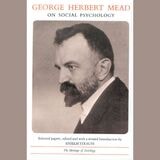
George Herbert Mead on Social Psychology
George Herbert Mead
University of Chicago Press, 1964
One of the most brilliantly original of American pragmatists, George Herbert Mead published surprisingly few major papers and not a single book during his lifetime. Yet his influence on American sociology and social psychology since World War II has been exceedingly strong.
This volume is a revised and enlarged edition of the book formerly published under the title The Social Psychology of George Herbert Mead. It contains selections from Mead's posthumous books: Mind, Self, and Society; Movements of Thought in the Nineteenth Century; The Philosophy of the Act; and The Philosophy of the Present, together with an incisive, newly revised, introductory essay by Anselm Strauss on the importance of Mead for contemporary social psychology.
"Required reading for the social scientist."—Milton L. Barron, Nation

Gerda Walther
A Life in PhenomenologyAntonio Calcagno
Northwestern University Press, 2027
Exploring the rich phenomenological and psychological insights of Gerda Walther
This is the first major study of Gerda Walther (1897–1977), an important but underappreciated figure in the early phenomenological movement and one of the founding members of the coeducational Freiburg Phenomenological Society. Walther saw herself, along with Hedwig Conrad Martius and Edith Stein, as a student of the phenomenological movement charged with the preservation of its philosophical legacy and the extension of its practice. As Antonio Calcagno elucidates in this learned but accessible biographical account, she served as an important bridge between the Freiburg school of phenomenology, marked by Edmund Husserl’s idealism, and the realist branch that emerged in Munich, where she completed her studies with Alexander Pfänder. Her work has remained little known, however, especially to English-language readers.
Calcagno provides a comprehensive picture of Walther’s philosophical corpus and ideas, from her early investigations to her later writings, while highlighting the originality of her own phenomenological work. He shows how she challenged certain key claims of phenomenology and provided unique solutions to the problems she encountered. The phenomenology that Walther leaves us with is deeply marked by her emphasis on the importance of psyche, spirit, and personhood for achieving a phenomenological methodology and understanding. We find in her work a rich phenomenological psychology that explores not only the limit phenomena of the discipline but also the deep structure of inner psychic life framed in personalist terms.
Gesture and Thought
David McNeill
University of Chicago Press, 2005
Gesture and Thought expands on McNeill’s acclaimed classic Hand and Mind. While that earlier work demonstrated what gestures reveal about thought, here gestures are shown to be active participants in both speaking and thinking. Expanding on an approach introduced by Lev Vygotsky in the 1930s, McNeill posits that gestures are key ingredients in an “imagery-language dialectic” that fuels both speech and thought. Gestures are both the “imagery” and components of “language.” The smallest element of this dialectic is the “growth point,” a snapshot of an utterance at its beginning psychological stage. Utilizing several innovative experiments he created and administered with subjects spanning several different age, gender, and language groups, McNeill shows how growth points organize themselves into utterances and extend to discourse at the moment of speaking.
An ambitious project in the ongoing study of the relationship of human communication and thought, Gesture and Thought is a work of such consequence that it will influence all subsequent theory on the subject.
Getting It, Having It, Keeping It Up
Straight Men’s Sexuality in Public and PrivateBeth Montemurro
Rutgers University Press, 2022
Getting Medieval
Sexualities and Communities, Pre- and PostmodernCarolyn Dinshaw
Duke University Press, 1999
In her pursuit of historical analyses that embrace the heterogeneity and indeterminacy of sex and sexuality, Dinshaw examines canonical Middle English texts such as the Canterbury Tales and TheBook of Margery Kempe. She examines polemics around the religious dissidents known as the Lollards as well as accounts of prostitutes in London to address questions of how particular sexual practices and identifications were normalized while others were proscribed. By exploring contemporary (mis)appropriations of medieval tropes in texts ranging from Quentin Tarantino’s Pulp Fiction to recent Congressional debates on U.S. cultural production, Dinshaw demonstrates how such modern media can serve to reinforce constrictive heteronormative values and deny the multifarious nature of history. Finally, she works with and against the theories of Michel Foucault, Homi K. Bhabha, Roland Barthes, and John Boswell to show how deconstructionist impulses as well as historical perspectives can further an understanding of community in both pre- and postmodern societies.
This long-anticipated volume will be indispensable to medieval and queer scholars and will be welcomed by a larger cultural studies audience.
Getting Your Way
Strategic Dilemmas in the Real WorldJames M. Jasper
University of Chicago Press, 2006
Getting other people to do what we want is a useful skill for anyone. Whether you’re seeking a job, negotiating a deal, or angling for that big promotion, you’re engaged in strategic thought and action. In such moments, you imagine what might be going on in another person’s head and how they’ll react to what you do or say. At the same time, you also try to pick the best way to realize your goals, both with and without the other person’s cooperation. Getting Your Way teaches us how to win that game by offering a fuller understanding of how strategy works in the real world.
As we all know, rules of strategy are regularly discovered and discussed in popular books for business executives, military leaders, and politicians. Those works with their trendy lists of pithy maxims and highly effective habits can help people avoid mistakes or even think anew about how to tackle their problems. But they are merely suggestive, as each situation we encounter in the real world is always more complex than anticipated, more challenging than we had hoped. James M. Jasper here shows us how to anticipate those problems before they actually occur—by recognizing the dilemmas all strategic players must negotiate, with each option accompanied by a long list of costs and risks. Considering everyday dilemmas in a broad range of familiar settings, from business and politics to love and war, Jasper explains how to envision your goals, how to make the first move, how to deal with threats, and how to employ strategies with greater confidence.
Alexander the Great, Genghis Khan, Rosa Parks, Hugo Chávez, and David Koresh all come into play in this smart and engaging book, one that helps us recognize and prepare for the many dilemmas inherent in any strategic action.

Ghostbodies
Towards a New Theory of InvalidismMaia Dolphin-Krute
Intellect Books, 2017

Giving Life, Giving Death
Psychoanalysis, Anthropology, PhilosophyLucien Scubla
Michigan State University Press, 2016

Global Mental Health
Latin America and Spanish-Speaking PopulationsJavier I Escobar
Rutgers University Press, 2020

Global Sex
Dennis Altman
University of Chicago Press, 2001

Golk
Richard Stern
University of Chicago Press, 1987
"Golk is a rich and marvelously detailed novel by a man with a cultivated intelligence; it is also the first really good book I have read about television."—Norman Mailer
"An original: sharp, funny, intelligent, rare. . . . Working in a clean, oblique style reminiscent of Nathanael West, Mr. Stern has written in Golk a first-rate comic novel, a piece of fiction that is at once about and loaded with that kind of recognition that junkies call the flash."—Joan Didion, National Review
"Golk is fantastic, funny, bitter, intelligent without weariness. Best of all Golk is pure—that is to say necessary. Without hokum."—Saul Bellow
"Golk (like Golk himself) is a wonderous conception. Its world responds to personification, not analysis, and personify it Mr. Stern has done. A book in a thousand."—Hugh Kenner
"What I like about Mr. Stern's fantasy is that it has been conceived and written with so much gaiety. Far from a political melodrama, it reminds me of a René Clair movie, and even the surrealist touches needed to bring out the power and pretense of the television industry are funny rather than symbolically grim."—Alfred Kazin, Reporter
"A mighty good book, altogether alive, full of beans and none of them spilled."—Flannery O'Connor

Grace in the Cabin
Based on a True Ghost StoryAntoinette "Tiyi" Schippers
Parkhurst Brothers, Inc., 2025
Through her mediumship, the spirits reveal to the author the events that sparked the haunting, ultimately leading to resolution and freedom for both the living and the dead.

Grandmotherhood
The Evolutionary Significance of the Second Half of Female LifeVoland, Eckart
Rutgers University Press, 2014
By the year 2030, the average life expectancy of women in industrialized countries could reach ninety—exceeding that of men by about ten years. At the present time, postmenopausal women represent more than fifteen percent of the world’s population and this figure is likely to grow.
From an evolutionary perspective, these demographic numbers pose some intriguing questions. Darwinian theory holds that a successful life is measured in terms of reproduction. How is it, then, that a woman’s lifespan can greatly exceed her childbearing and childrearing years? Is this phenomenon simply a byproduct of improved standards of living, or do older women—grandmothers in particular—play a measurable role in increasing their family members’ biological success?
Until now, these questions have not been examined in a thorough and comprehensive manner. Bringing togethertheoretical and empirical work byinternationally recognized scholars in anthropology, psychology, ethnography, and the social sciences, Grandmotherhood explores the evolutionary purpose and possibilities of female post-generative life. Students and scholars of human evolution, anthropology, and even gerontology will look to this volume as a major contribution to the current literature in evolutionary studies.

Grant Wood’s Secrets
Sue Taylor
University of Delaware Press, 2011
Published by University of Delaware Press. Distributed worldwide by Rutgers University Press.
Gratitude
Affirming One Another Through StoriesLen Froyen
Parkhurst Brothers, Inc., 2013

Group Treatment in Psychotherapy
A Report of ExperienceRobert G. Hinckley and Lydia Hermann
University of Minnesota Press, 1951
Group Treatment in Psychotherapy was first published in 1951. Minnesota Archive Editions uses digital technology to make long-unavailable books once again accessible, and are published unaltered from the original University of Minnesota Press editions.
The rapid development of group therapy in general in the past decade has pointed up the need for a clear definition of the aims of such therapy and the processes by which these aims may be achieved. This book answers that need by presenting an analysis of the group therapeutic process in simple, understandable style with a generous use of concrete examples for a vivid demonstration of the principles involved.
Dr. Hinckley and Miss Hermann base this analysis on their experience with group therapy for the past ten years in the Students' Mental Hygiene Clinic at the University of Minnesota. Although certain theoretical assumptions underlie the analysis, the report does not aim to discuss or evaluate theories. The purpose is, rather, to help all who are concerned with human relations to understand the potentialities and limitations of group therapy for their own particular needs.
Psychological counselors and guidance workers, social workers and especially those engaged in social group work, educators, medical personnel, and others whose work is associated with psychotherapy will find here an informative and practical guide.
The authors have quoted liberally from verbatim records of actual group sessions to show how a group operates therapeutically and what a therapist should do and not do. A final chapter follows a group through a year of weekly meetings to show the step-by-step progress of therapy. Statistics presented in the appendix show the increased amount of therapy resulting from group treatment.
Forewords are contributed by C. Gilbert Wrenn, president of the Division of Counseling and Guidance, American Psychological Association, and John C. Kidneigh, director of the School of Social Work, University of Minnesota.

Grow Up, Will You?
Maturity, Development, and Behavior through LifeMichael Rocque
Temple University Press, 2027
Maturation is a way we evaluate others and ourselves. It serves as a guidepost for our own behavior, often starting in adolescence. In Grow Up, Will You? Michael Rocque considers maturation across the life-course, providing a cultural and scholarly history of maturation before demonstrating how components of maturation develop, how they can be influenced, and their consequences for behavior and other life outcomes. He shows how biology and psychology propel us towards adulthood, but also how milestones, like graduating or getting married, produce a point of maturation.
Looking at examples from pop cultural movies, such as Juno, where a pregnant teenager faces numerous challenges and is forced to grow up quickly, Rocque explains how maturity has been defined and how it evolves. Such examples address key issues related to maturation, including timing and social expectations. He also introduces scientific conceptualizations and breaks down ways of measuring.
Ultimately, Grow Up, Will You? offers practical knowledge, programs, and approaches that can positively influence human development while also protecting a sense of childhood. Now grow up, will you?
Growing Each Other Up
When Our Children Become Our TeachersSara Lawrence-Lightfoot
University of Chicago Press, 2016
With Growing Each Other Up, Macarthur Prize–winning sociologist and educator Sara Lawrence-Lightfoot offers an intimately detailed, emotionally powerful account of that experience. Building her book on a series of in-depth interviews with parents around the country, she offers a counterpoint to the usual parental development literature that mostly concerns the adjustment of parents to their babies’ rhythms and the ways parents weather the storms of their teenage progeny. The focus here is on the lessons emerging adult children, ages 15 to 35, teach their parents. How are our perspectives as parents shaped by our children? What lessons do we take from them and incorporate into our worldviews? Just how much do we learn—often despite our own emotionally fraught resistance—from what they have seen of life that we, perhaps, never experienced? From these parent portraits emerges the shape of an education composed by young adult children—an education built on witness, growing, intimacy, and acceptance.
Growing Each Other Up is rich in the voices of actual parents telling their own stories of raising children and their children raising them; watching that fundamental connection shift over time. Parents and children of all ages will recognize themselves in these evocative and moving accounts and look at their own growing up in a revelatory new light.

Guardians of the Flutes, Volume 1
Idioms of MasculinityGilbert Herdt
University of Chicago Press, 1994

Guide for Mental Health Workers
Armando R. Favazza, M.D., Barbara Starks Favazza, M.D., and Philip M. Margolis, M.D.
University of Michigan Press, 1970