Results by title
386 books match the query 'Russia' and 6 start with g
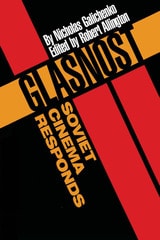
Glasnost—Soviet Cinema Responds
By Nicholas Galichenko
University of Texas Press, 1991
With the coming of glasnost to the Soviet Union, filmmakers began to explore previously forbidden themes, and distributors released films that were suppressed by pre-glasnost-era censors. Soviet cinema underwent a revolution, one that mirrors and helps interpret the social revolution that took place throughout the USSR. Glasnost—Soviet Cinema Responds is the first overall survey of the effects of this revolution on the work of Soviet filmmakers and their films.
The book is structured as a series of three essays and a filmography of the directors of glasnost cinema. The first essay, "The Age of Perestroika," describes the changes that occurred in Soviet cinema as it freed itself from the legacy of Stalinism and socialist realism. It also considers the influence of film educator and director Mikhail Romm. "Youth in Turmoil" takes a sociological look at films about youth, the most dynamic and socially revealing of glasnost-era productions. "Odysseys in Inner Space" charts a new direction in Soviet cinema as it focuses on the inner world of individuals.
The filmography includes thirty-three of the most significant glasnost-era directors, including Tengiz Abuladze, Karen Shakhnazarov, and Sergei Soloviev, with a comprehensive list of their films. Discussions of many individual films, such as Repentance, The Messenger Boy, and The Wild Pigeon, and interviews with the directors reveal the effects that glasnost and perestroika have had on the directors' lives and art.
Global Narratives of Russian Disinformation
Edited by Muriel Fischer, Sandra Frimmel, Nanina Graf, Iryna Herasimovich, Sylvia Sasse
Diaphanes, 2026
Disinformation, conspiracy narratives, and propaganda are not only manipulative forms of communication with the intention to deceive, but also a field of global collective narratives. Russia is an important player in this field. From the Cold War to the present day, we can observe how (pro-)Russian narratives are regionally tailored, internationally disseminated, and appropriated by various political, economic, or cultural actors for their own purposes.
While some narratives might originate from literary fantasy, science fiction, or national myths, others draw on historical narratives and reproduce them. Russia often claims an anti-imperialist, anti-fascist, or postcolonial intention in order to conceal its own imperialism and fascism.
The contributions in this book document these narratives in their respective geographical and historical contexts. They examine narrative practices and their history, the interplay of global address, and local appropriation as well as affects and effects within political discourse.
Global Russian Cultures
Edited by Kevin M. F. Platt
University of Wisconsin Press, 2020
The volume's internationally renowned contributors treat the many different global Russian cultures not as "displaced" elements of Russian cultural life but rather as independent entities in their own right. They describe diverse forms of literature, music, film, and everyday life that transcend and defy political, geographic, and even linguistic borders. Arguing that Russian cultures today are many, this volume contends that no state or society can lay claim to be the single or authentic representative of Russianness. In so doing, it contests the conceptions of culture and identity at the root of nation-building projects in and around Russia.
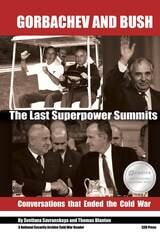
Gorbachev and Bush
The Last Superpower Summits. Conversations that Ended the Cold WarThe National Security Archive Savranskaya
Central European University Press, 2020
Gorbachev and Reagan
The Last Superpower Summits. Conversations that Ended the Cold WarThe National Security Archive Savranskaya
Central European University Press, 2020
Great Negotiations
Agreements that Changed the Modern WorldFredrik Stanton
Westholme Publishing, 2010
Lessons in Diplomacy from Colonial America to the Cold War
"In a time when negotiations, both great and small, continue to shape our world, this book provides an excellent opportunity to learn from the past and understand the present.”—Kofi Annan, Nobel Peace Prize Winner and former Secretary General of the United Nations
“A thought-provoking, informative book, highly recommended for all readers interested in international affairs.”—Library Journal
“For anyone with an interest in diplomacy and political history, Stanton's book is both entertaining and informative.” —Foreign Policy Watch
“Every professional concerned with dispute resolution and every student of negotiation has much to learn from Fredrik Stanton's lively stories of eight history-shaping negotiations.”—Robert H. Mnookin, Chair Program on Negotiation, Harvard Law School
“An excellent introduction into some of the great triumphs and failures of modern diplomacy.”—Seattle Post-Intelligencer
“An interesting, informative study well worth reading and pondering.” —American Diplomacy
“Stanton deftly illustrates that the power of haggling can easily rival that of any army or warhead.”—Roll Call
“Exhaustive research and careful thought have enabled Stanton to employ an extraordinary writing talent to produce a contribution to history and a source of enjoyable reading.”—New York Law Journal
“Stanton brings back to life both famous and some long forgotten personalities in the history of major American, European, and Asian negotiations. He persuasively makes his case for the importance of negotiators and negotiations both when wars can be kept from beginning and when wars end. He weaves in deft descriptions of the personal strengths and foibles of negotiators and homes in on the ability of the best to improvise when maneuvering on unfamiliar terrain.” —Ambassador Richard W. Murphy, Council on Foreign Relations
Words as much as weapons have shaped the course of history. Whether to avert, resolve, assist, or secure the outcome of a conflict, diplomacy in the modern age has had great triumphs and bitter failures, from the Cuban Missile Crisis in 1962, which narrowly spared humanity from a nuclear Armageddon, to the Treaty of Versailles after World War I, which created problems that still confront us today. Drawing on primary sources, transcripts, and interviews, Great Negotiations: Agreements that Changed the Modern World tells the stories of eight key episodes in modern diplomacy. From Benjamin Franklin securing crucial French support for the American revolution to Reagan and Gorbachev laying the groundwork to eliminate an entire class of nuclear weapons, Fredrik Stanton explains what each party brought to the negotiating table, the stakes, the obstacles to success, and how they were overcome.