Results by title
857 books match the query 'Schools' and 18 start with g
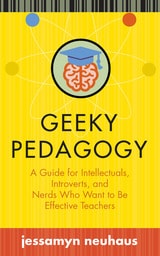
Geeky Pedagogy
A Guide for Intellectuals, Introverts, and Nerds Who Want to Be Effective TeachersJessamyn Neuhaus
West Virginia University Press, 2019
Geeky Pedagogy is a funny, evidence-based, multidisciplinary, pragmatic, highly readable guide to the process of learning and relearning how to be an effective college teacher. It is the first college teaching guide that encourages faculty to embrace their inner nerd, inviting readers to view themselves and their teaching work in light of contemporary discourse that celebrates increasingly diverse geek culture and explores stereotypes about super-smart introverts.
Geeky Pedagogy avoids the excessive jargon, humorlessness, and endless proscriptions that plague much published advice about teaching. Neuhaus is aware of how embodied identity and employment status shape one’s teaching context, and she eschews formulaic depictions of idealized exemplar teaching, instead inviting readers to join her in an engaging, critically reflective conversation about the vicissitudes of teaching and learning in higher education as a geek, introvert, or nerd. Written for the wonks and eggheads who want to translate their vast scholarly expertise into authentic student learning, Geeky Pedagogy is packed with practical advice and encouragement for increasing readers’ pedagogical knowledge.
Gender Play
Girls and Boys in SchoolThorne, Barrie
Rutgers University Press, 1993
Thorne observes children in schools in working-class communities, emphasizing the experiences of fourth and fifth graders. Most of the children she observed were white, but a sizable minority were Latino, Chicano, or African American. Thorne argues that the organization and meaning of gender are influenced by age, ethnicity, race, sexuality, and social class, and that they shift with social context. She sees gender identity not through the lens of individual socialization or difference, but rather as a social process involving groups of children. Thorne takes us on a fascinating journey of discovery, provides new insights about children, and offers teachers practical suggestions for increasing cooperative mixed-gender interaction.
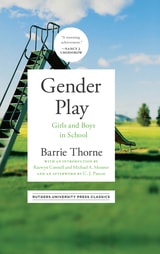
Gender Play
Girls and Boys in SchoolBarrie Thorne
Rutgers University Press, 2024
A detailed and perceptive ethnography told with compassion and humor, Gender Play immerses readers in the everyday lives of a group of working-class children to examine the social interactions that shape their gender identities. This new Rutgers Classic edition of Gender Play contains an introduction from leading sociologists of gender Michael A. Messner and Raewyn Connell that places Thorne’s innovative research in historical context. It also includes a new afterword by one of Thorne’s own students, acclaimed sociologist C.J. Pascoe, reflecting on both the lasting influence of Thorne’s work and the ways that American children’s understandings of gender have shifted in the past thirty years.
Gendered Paradoxes
Educating Jordanian Women in Nation, Faith, and ProgressFida Adely
University of Chicago Press, 2012
Getting It Published, Fourth Edition
A Guide for Scholars and Anyone Else Serious About Serious BooksWilliam Germano
University of Chicago Press, 2026
For more than two decades, writers have turned to William Germano’s Getting It Published as a guide to the world of serious book publishing, including university presses. A professor, author, and thirty-year veteran of the book industry, Germano knows what editors want and what writers need to do to get their work published.
This fourth, thoroughly updated edition of Getting It Published accounts for new challenges facing authors and changed conditions in the publishing industry. From open access to peer review, from approaching a press to considering an agent, publishing can be confusing for authors trying to understand their options. This new edition continues to offer the clear, practicable guidance on choosing the best path to publication that has made the book such a trusted resource. Its latest revisions include an expanded chapter on proposals (and their covering emails) as well as current information on the shifting landscape of ebook publishing. But this book is more than a nuts-and-bolts guide. It takes up a writer’s biggest challenges: how to frame a book-length project, shape its argument, conceive its audience, and pitch it convincingly to an editor.
Getting It Published reflects the latest changes and technologies in the publishing industry but keeps its eye on what remains constant: Whether working on their first book or their fifth, writers can make their work stronger by knowing what publishers do and why they do it.
Getting It Published, Third Edition
A Guide for Scholars and Anyone Else Serious about Serious BooksWilliam Germano
University of Chicago Press, 2016
Today there are more ways to publish than ever, and more challenges to traditional publishing. This ever-evolving landscape brings more confusion for authors trying to understand their options. The third edition of Getting It Published offers the clear, practicable guidance on choosing the best path to publication that has made it a trusted resource, now updated to include discussions of current best practices for submitting a proposal, of the advantages and drawbacks of digital publishing, and tips for authors publishing textbooks and in open-access environments.
Germano argues that it’s not enough for authors to write well—they also need to write with an audience in mind. He provides valuable guidance on developing a compelling book proposal, finding the right publisher, evaluating a contract, negotiating the production process, and, finally, emerging as a published author.
“This endlessly useful and expansive guide is every academic’s pocket Wikipedia: a timely, relevant, and ready resource on scholarly publishing, from the traditional monograph to the digital e-book. I regularly share it, teach it, and consult it myself, whenever I have a question on titling a chapter, securing a permission, or negotiating a contract. Professional advice simply does not get any savvier than this pitch-perfect manual on how to think like a publisher.”—Diana Fuss, Princeton University
Getting Published in Academic Journals
Navigating the Publication ProcessBrian Paltridge and Sue Starfield
University of Michigan Press, 2016
Getting Published in Academic Journals draws on the experiences of the authors as editors of peer-reviewed journals, as teachers of writing-for-publication courses and workshops, as researchers of the scholarly publication process, as reviewers of hundreds of articles, and as published authors.
The book is written to be used in courses and workshops on publishing, as a supplement to the books in the revised and updated English in Today’s Research World (Swales & Feak) series, and as a stand-alone guide for academic writers working independently.
Giants Among Us
First-Generation College Graduates Who Lead Activist LivesSandria Rodriguez
Vanderbilt University Press, 2001
The daughter of parents who didn't finish elementary school, Rodriguez uses many examples from her own life in the course of examining the participants' experiences before, during, and after college that directed them toward social or educational activism. Together, the seventeen represent a wide range of diversity in terms of race, ethnicity, age, geographical area of childhood, and profession. Twelve of the seventeen hold advanced degrees, all are working professionals, and all come from families who were poor. Jerry, the son of German immigrants, owns an engineering company in Chicago; Chang, a native of China, is the first from his village to go to college; Grant, a sharecropper's son, is a lawyer with a nationally prominent law firm in Washington, D.C., and patron of fine arts; Arlene, a Mohawk Indian, is a storyteller and social activist; Alex, from Spanish Harlem, is an elementary school principal.
The book is divided into four parts. In the first two chapters, we meet the participants. In the three chapters that follow, Rodriguez examines how the participants as children perceived themselves within their families, schools, and communities. Chapters four and five focus on the campus life and the participants' activist experiences. Finally, chapter six offers recommendations for mentoring disadvantaged children, so that they can successfully "switch the track" and aim for something better.
Giants Among Us is an essential resource for college administrators, faculty, counselors, and student support-services staff--as well as K-12 educators--concerned with preparing, retaining and mentoring first-generation students.

Giving It All Away
The Story of William W. Cook and His Michigan Law QuadrangleMargaret A. Leary
University of Michigan Press, 2011
“Margaret Leary's carefully researched book illuminates a complex man who marked his university in a truly enduring way."
---Francis X. Blouin Jr., Director, Bentley Historical Library, and Professor, School of Information and Department of History, University of Michigan
“Generations of Michigan Law grads have passed on myths about their generous but eccentric benefactor. . . . Now Margaret Leary has given us the real story, and it reads like a gripping whodunit."
---Theodore J. St. Antoine, James E. and Sarah A. Degan Professor Emeritus of Law and Past Dean, University of Michigan Law School
“In an absorbing book, Margaret Leary unstintingly investigates unpublished, archival material to unravel enigmas surrounding William Wilson Cook. She brings to life Cook's brilliant interactions with powerful moguls of the early twentieth century as she traces his lofty, philanthropic mission to elevate the legal profession."
---Ilene H. Forsyth, Arthur F. Thurnau Professor of the History of Art, emerita, University of Michigan
William W. Cook, born in 1858 and a graduate of the University of Michigan and of its law school, made his fortune by investing in the burgeoning telegraph and communications industry, as well as in representing the Mackay Company in their frequent tumultuous battles with Western Union and the U.S. government. Though Cook entered New York society and never returned to Michigan after receiving his law degree, he decided not just to give his alma mater the finest physical facility of any existing law school, but to donate permanent resources that would permit the law school to engage in groundbreaking legal research. However, his generosity proved controversial and eventually very litigious. Margaret A. Leary places Cook's story in the rich social and cultural context of his time and paints a fascinating portrait of a complex figure whose legacy continues to shape the University of Michigan.
Cover photographs: (left) Gregory Fox Photography; (right) Ann B. Cook collection, photo by Russell R. Serbay
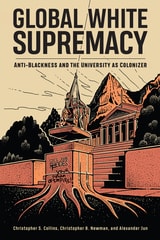
Global White Supremacy
Anti-Blackness and the University as ColonizerChristopher S. Collins
Rutgers University Press, 2023

God of Beer
Garret Keizer
University Press of New England, 2016
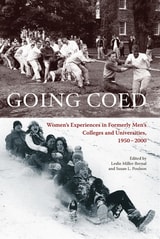
Going Coed
Women's Experiences in Formerly Men's Colleges and Universities, 1950-2000Leslie Miller-Bernal
Vanderbilt University Press, 2004
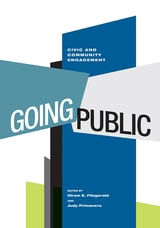
Going Public
Civic and Community EngagementHiram E. Fitzgerald
Michigan State University Press, 2013
The terms “civic engagement” and “community engagement” have various definitions, but they are united by the sense that individuals who are civically engaged not only are concerned about the quality of life in their communities but also take action to improve conditions for the common good. In the United States, to be civically engaged means to actively participate in a civil democratic society. Going Public examines programs related to civic engagement and the ways in which faculty and students participate in communities in order to improve them. Engagement scholarship is a scholarship of action, a scholarship of practice that takes place both in and with the community. Within the framework of this new scholarship, the mission of the academy does not begin and end with intellectual discovery and fact-finding. Rather, the academy joins forces with the community, and together they use their knowledge and resources to address pressing social, civic, economic, and moral problems. Each chapter in this book tells a unique story of community engagement and the scholarship of practice in a diverse range of settings, documenting successes and failures, the unintended consequences, and the questions yet to be answered.
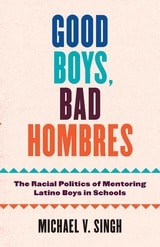
Good Boys, Bad Hombres
The Racial Politics of Mentoring Latino Boys in SchoolsMichael V Singh
University of Minnesota Press, 2024
The unintended consequences of youth empowerment programs for Latino boys
Educational research has long documented the politics of punishment for boys and young men of color in schools—but what about the politics of empowerment and inclusion? In Good Boys, Bad Hombres, Michael V. Singh focuses on this aspect of youth control in schools, asking on whose terms a positive Latino manhood gets to be envisioned.
Based on two years of ethnographic research in an urban school district in California, Good Boys, Bad Hombres examines Latino Male Success, a school-based mentorship program for Latino boys. Instead of attempting to shape these boys’ lives through the threat of punishment, the program aims to provide an “invitation to a respectable and productive masculinity” framed as being rooted in traditional Latinx signifiers of manhood. Singh argues, however, that the promotion of this aspirational form of Latino masculinity is rooted in neoliberal multiculturalism, heteropatriarchy, and anti-Blackness, and that even such empowerment programs can unintentionally reproduce attitudes that paint Latino boys as problematic and in need of control and containment.
An insightful gender analysis, Good Boys, Bad Hombres sheds light on how mentorship is a reaction to the alleged crisis of Latino boys and is governed by the perceived remedies of the neoliberal state. Documenting the ways Latino men and boys resist the politics of neoliberal empowerment for new visions of justice, Singh works to deconstruct male empowerment, arguing that new narratives and practices—beyond patriarchal redemption—are necessary for a reimagining of Latino manhood in schools and beyond.
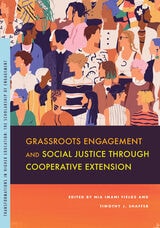
Grassroots Engagement and Social Justice through Cooperative Extension
Nia Imani Fields
Michigan State University Press, 2022
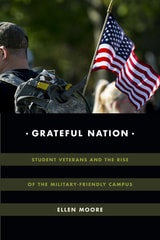
Grateful Nation
Student Veterans and the Rise of the Military-Friendly CampusEllen Moore
Duke University Press, 2017
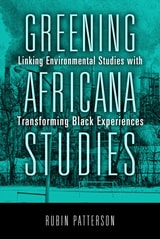
Greening Africana Studies
Linking Environmental Studies with Transforming Black ExperiencesRubin Patterson
Temple University Press, 2014
In his original work, Patterson demonstrates the ways in which black communities are harmed by local environmental degradation and global climate change. He shows that many local unwanted land use sites (LULUs), such as brownfields and toxic release inventory facilities, are disproportionately located in close proximity to neighborhoods of color, but also to colleges and universities with Africana studies programs. Arguing that such communities are not aggressively engaging in environmental issues, Greening Africana Studies also provides examples of how Africana studies students as well as members of black communities can prepare for green careers.
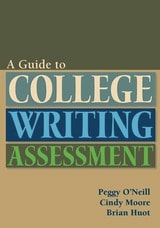
Guide to College Writing Assessment
Peggy O'Neill, Cindy Moore, and Brian Huot
Utah State University Press, 2009
A Guide to College Writing Assessment is designed as an introduction and source book for WPAs, department chairs, teachers, and administrators. Always cognizant of the critical components of particular teaching contexts, O’Neill, Moore, and Huot have written sophisticated but accessible chapters on the history, theory, application and background of writing assessment, and they offer a dozen appendices of practical samples and models for a range of common assessment needs.
Because there are numerous resources available to assist faculty in assessing the writing of individual students in particular classrooms, A Guide to College Writing Assessment focuses on approaches to the kinds of assessment that typically happen outside of individual classrooms: placement evaluation, exit examination, programmatic assessment, and faculty evaluation. Most of all, the argument of this book is that creating the conditions for meaningful college writing assessment hinges not only on understanding the history and theories informing assessment practice, but also on composition programs availing themselves of the full range of available assessment practices.