Results by title
322 books match the query 'Social change' and 16 start with g
Gen Z, Explained
The Art of Living in a Digital AgeRoberta Katz, Sarah Ogilvie, Jane Shaw, and Linda Woodhead
University of Chicago Press, 2021
Born since the mid-1990s, members of Generation Z comprise the first generation never to know the world without the internet, and the most diverse generation yet. As Gen Z starts to emerge into adulthood and enter the workforce, what do we really know about them? And what can we learn from them? Gen Z, Explained is the authoritative portrait of this significant generation. It draws on extensive interviews that display this generation’s candor, surveys that explore their views and attitudes, and a vast database of their astonishingly inventive lexicon to build a comprehensive picture of their values, daily lives, and outlook. Gen Z emerges here as an extraordinarily thoughtful, promising, and perceptive generation that is sounding a warning to their elders about the world around them—a warning of a complexity and depth the “OK Boomer” phenomenon can only suggest.
Much of the existing literature about Gen Z has been highly judgmental. In contrast, this book provides a deep and nuanced understanding of a generation facing a future of enormous challenges, from climate change to civil unrest. What’s more, they are facing this future head-on, relying on themselves and their peers to work collaboratively to solve these problems. As Gen Z, Explained shows, this group of young people is as compassionate and imaginative as any that has come before, and understanding the way they tackle problems may enable us to envision new kinds of solutions. This portrait of Gen Z is ultimately an optimistic one, suggesting they have something to teach all of us about how to live and thrive in this digital world.
Gendered Scenarios of Revolution
Making New Men and New Women in Nicaragua, 1975–2000Rosario Montoya
University of Arizona Press, 2012
In 1979, toward the end of the Cold War era, Nicaragua's Sandinista movement emerged on the world stage claiming to represent a new form of socialism. Gendered Scenarios of Revolution is a historical ethnography of Sandinista state formation from the perspective of El Tule-a peasant village that was itself thrust onto a national and international stage as a "model" Sandinista community. This book follows the villagers´ story as they joined the Sandinista movement, performed revolution before a world audience, and grappled with the lessons of this experience in the neoliberal aftermath.
Employing an approach that combines political economy and cultural analysis, Montoya argues that the Sandinistas collapsed gender contradictions into class ones, and that as the Contra War exacerbated political and economic crises in the country, the Sandinistas increasingly ruled by mandate as vanguard party instead of creating the participatory democracy that they professed to work toward. In El Tule this meant that even though the Sandinistas created new roles and possibilities for women and men, over time they upheld pre-revolutionary patriarchal social structures. Yet in showing how the revolution created opportunities for Tuleños to assert their agency and advance their interests, even against the Sandinistas´ own interests, this book offers a reinterpretation of the revolution´s supposed failure.
Examining this community’s experience in the Sandinista and post-Sandinista periods offers perspective on both processes of revolutionary transformation and their legacies in the neoliberal era. Gendered Scenarios of Revolution will engage graduate and undergraduate students and scholars in anthropology, sociology, history, and women’s and gender studies, and appeal to anyone interested in modern revolution and its aftermath.
Generations Past
Youth in East African HistoryAndrew Burton
Ohio University Press, 2010
Contemporary Africa is demographically characterized above all else by its youthfulness. In East Africa the median age of the population is now a striking 17.5 years, and more than 65 percent of the population is age 24 or under. This situation has attracted growing scholarly attention, resulting in an important and rapidly expanding literature on the position of youth in African societies.
While the scholarship examining the contemporary role of youth in African societies is rich and growing, the historical dimension has been largely neglected in the literature thus far. Generations Past seeks to address this gap through a wide-ranging selection of essays that covers an array of youth-related themes in historical perspective. Thirteen chapters explore the historical dimensions of youth in nineteenth-, twentieth-, and twenty-first–century Ugandan, Tanzanian, and Kenyan societies. Key themes running through the book include the analytical utility of youth as a social category; intergenerational relations and the passage of time; youth as a social and political problem; sex and gender roles among East African youth; and youth as historical agents of change. The strong list of contributors includes prominent scholars of the region, and the collection encompasses a good geographical spread of all three East African countries.
Geography And Social Movement
Comparing Antinuclear Activism in the Boston AreaByron A. Miller
University of Minnesota Press, 2000
A comparative analysis of the implications of space, place, and scale in political mobilization.
A comparative analysis of the implications of space, place, and scale in political mobilization.
Context matters, as students of social movements increasingly agree, and yet very little attention has been paid to the role geography plays in activism. Geography and Social Movements corrects this oversight, bringing a geographical perspective to the study of social movements. Byron A. Miller directly addresses the implications of space, place, and scale in social movement mobilization, and then demonstrates their significance in a detailed comparative analysis of peace movements in three municipalities around Boston. In focusing on the Boston area-an old northeastern region, heavily industrialized with many companies working on military contracts, and also a center of education-Miller is able to explore how campaigns aimed at curbing nuclear arms operate within the cultural, political, social, and economic confines of particular places and spaces. He shows how the decisions and actions of local peace movement organizations played a central role in the movement’s successes and failures, and how local organizations had to respond to the differing class, race, and gender characteristics of different locales. Miller’s empirical analysis clearly demonstrates that geographic strategies for social movement organizations have direct consequences for the successes and failures of specific campaigns.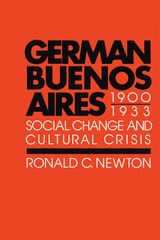
German Buenos Aires, 1900–1933
Social Change and Cultural CrisisBy Ronald C. Newton
University of Texas Press, 1977
This study of the German community of early twentieth-century Buenos Aires is a major contribution to the literature on Argentine history and on the New World immigrant experience. Beginning with the first wave of immigration in the late nineteenth century and continuing to the outbreak of World War II, Ronald C. Newton reconstructs the growth, development, and influence of a powerful foreign population in what was then the largest city in South America.
In the three decades before World War I, Argentina became a major food-producing and exporting country. Through the port of Buenos Aires was funneled the bulk of the Pampas’ foodstuff and fiber in one direction and Europe’s capital, technology, and surplus labor in the other. The German speakers made up one of the smaller Western European communities within the Argentine metropolis, but their cultural and economic influence was far out of proportion to their numbers. Based in a large and occupationally diverse middle class, the German community was represented at all social levels. Newton analyzes the experience of this well-demarcated group during a period of rapid demographic growth and increasing pressure to assimilate. He constructs working hypotheses that may be applied and refined in further investigations.
The book draws substantially on materials from within the Buenos Aires German community—newspapers, memoirs, the records of associations and welfare agencies—to reconstruct its intense daily life. The author highlights, for instance, the sharp economic reversals German-speaking residents suffered during World War I and shows how their fortunes declined further after continued Germanic immigration in the 1920s. Especially significant is his finding that the German community, which until 1914 had seemed impervious to the currents of Argentine nationalism, became susceptible to assimilation into Argentine society. In concluding chapters Newton demonstrates the way the German economic elite came to terms with the Nazis for opportunistic reasons; thus, the volume also serves as an introduction to the question of Nazism’s diffusion in Argentina.

Germania, USA
Social Change in New Ulm, MinnesotaNoel Iverson
University of Minnesota Press, 1967
Germania, USA was first published in 1967. Minnesota Archive Editions uses digital technology to make long-unavailable books once again accessible, and are published unaltered from the original University of Minnesota Press editions.
An unusual community in southern Minnesota, New Ulm, a town of about 12,000 inhabitants, is the subject of this sociological study. New Ulm was founded in 1856 by a group of German immigrants who came to the United States as refugees from the revolution of 1848 in Germany. They were members of the Turnverein, a society of liberal thinkers who were a political minority in Germany. In founding New Ulm they established a "utopian" ethnic community, became the town's status elite, and for a long time monopolized its economic, political, and cultural life.
Professor Iverson analyzes four aspects of sociological change in the community—class, status, power, and assimilation. Each aspect is viewed according to the differences found between two generations of the upper status group, the Turners, and two corresponding generations of non-Turners.
In addition to its substantive contribution to our knowledge of ethnic settlements, the study demonstrates a gain in methodological precision over many earlier studies of ethnic communities. Its chief methodological innovation is in the use of scales to verify and measure the changing structure of class, status, and power, and to gauge the extent of assimilation.
The book is of interest not only to sociologists, especially those concerned with the study of community change, but also to political scientists interested in the study of community power structures. Also, the methodology will be instructive to those interested in the design of community studies.

Gestures of Concern
Chris Ingraham
Duke University Press, 2020

Global Perspectives on the United States
Pro-Americanism, Anti-Americanism, and the Discourses BetweenEdited by Virginia R. Dominguez and Jane C. Desmond
University of Illinois Press, 2017
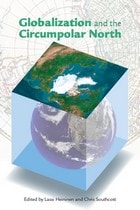
Globalization and the Circumpolar North
Edited by Lassi Heininen and Chris Southcott
University of Alaska Press, 2010
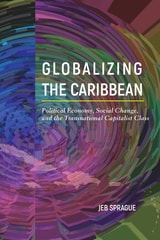
Globalizing the Caribbean
Political Economy, Social Change, and the Transnational Capitalist ClassJeb Sprague
Temple University Press, 2019
The beautiful Caribbean basin is fertile ground for a study of capitalism past and present. Transnational corporations move money and labor around the region, as national regulations are reworked to promote conditions benefiting private capital. Globalizing the Caribbean offers a probing account of the region’s experience of economic globalization while considering gendered and racialized social relations and the frequent exploitation of workers.
Jeb Sprague focuses on the social and material nature of this new era in the history of world capitalism. He combines an historical overview of capitalism in the region with theoretical analysis backed by case studies. Sprague elaborates upon the role of class formation and the restructuring of local states. He considers both U.S. hegemony, and how various upsurges from below and crises occur. He examines the globalization of the cruise ship and mining businesses, looks at the growth of migrant labor and reverse flow of remittances, and describes the evolving role of export processing and supranational associations. In doing so, Sprague shows how transnationally oriented elites have come to rule the Caribbean, and how capitalist globalization in the region occurs alongside shifting political, institutional, and organizational dynamics.

Gods and Vampires
Return to ChipayaNathan Wachtel
University of Chicago Press, 1994
Wachtel discovered that a series of recent deaths and misfortunes in Chipaya had been attributed to the evil powers of the Urus, a group usually regarded with suspicion by the other ethnic groups. Those incarcerated were believed to be the chief sorcerers and vampires whose paganistic practices had brought death to Chipaya by upsetting the social order. Wachtel's investigation, told in Gods and Vampires: Back to Chipaya, reveals much about relations between the Urus and the region's dominant ethnic groups and confronts some of the most trenchant issues in contemporary anthropology. His analysis shows that the Urus had become victims of the same set of ideals the Spanish had used, centuries before, to establish their hegemony in the region.
Presented as a personal detective story, Gods and Vampires is Wachtel's latest work in a series studying the ongoing impact of the Spanish conquest on the Andean consciousness and social system. Its insight into Bolivian society and the legacy of hegemony confronts some of the most trenchant issues in contemporary anthropologyand will be of great interest to scholars of anthropology, Latin American studies, and Native American studies.

Going to Boston
Harriet Robinson's Journey to New WomanhoodClaudia L. Bushman
University Press of New England, 2017

Governing Pleasures
Pornography and Social Change in England, 1815-1914Sigel, Lisa Z.
Rutgers University Press, 2002
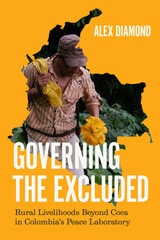
Governing the Excluded
Rural Livelihoods Beyond Coca in Colombia's Peace LaboratoryAlex Diamond
University of Chicago Press, 2026
The Colombian village of Briceño might, at first glimpse, look like many communities in the rural Global South. Many of the people living there rely on small-scale farming, even as a newly constructed hydroelectric dam threatens traditional livelihoods. Yet after decades where Briceño suffered from a bloody conflict, the village has more recently become central to the nation’s hopes for peace. In Governing the Excluded, sociologist Alex Diamond shares a closer look at Briceño and offers unique insight not only into the contemporary Colombian state but to how people across the Global South are struggling to maintain rural livelihoods amid economic dispossession.
Governing the Excluded describes a landmark peace process between the Colombian government and the radical FARC guerrillas from the perspective of Colombian farmers, drawing links between economic transformation, drug economies, and armed conflict. Exclusion from global markets for traditional crops like coffee first pushed farmers to grow coca, the raw material for cocaine. This ushered in an era of violent conflict for control of the illicit economy, while farmers continued to be priced out of legal markets. In exchange for peace and state protection, farmers ultimately agreed to sacrifice profitable coca. But with its disappearance, they now find themselves dependent on the state: for machinery to maintain the roads they need to get legal harvests to market, municipal jobs that are the only decent work available, and for public resources to subsidize food crops with razor-thin profit margins. Ongoing economic struggles in the legal sector make the state’s newfound authority tenuous, as some villagers replant coca, abandon the village for uncertain urban futures, or join a rearmed guerrilla group.
Informed by deep ethnographic research and firsthand stories from Briceño residents, Governing the Excluded shows that when it comes to the forces driving dispossession—be they international corporate megaprojects, global food prices, or national initiatives to replace coca cultivation—state authority goes only so far as its ability to sustain local livelihoods.

Grant Park
The Evolution of Chicago's Front YardDennis H. Cremin
Southern Illinois University Press, 2013
2014 Illinois State Historical Society Book of the Year
Growing Old in a New China
Transitions in Elder CareRose K. Keimig
Rutgers University Press, 2021