Results by title
308 books match the query 'Story' and 8 start with g

GORILLAS IN OUR MIDST
THE STORY OF THE COLUMBUS ZOO GORILLASJeff Lyttle
The Ohio State University Press, 1997
Gateways to the Southwest
The Story of Arizona State ParksJay M. Price
University of Arizona Press, 2004
German City, Jewish Memory
The Story of WormsNils Roemer
Brandeis University Press, 2010
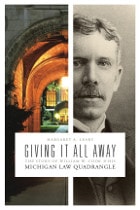
Giving It All Away
The Story of William W. Cook and His Michigan Law QuadrangleMargaret A. Leary
University of Michigan Press, 2011
“Margaret Leary's carefully researched book illuminates a complex man who marked his university in a truly enduring way."
---Francis X. Blouin Jr., Director, Bentley Historical Library, and Professor, School of Information and Department of History, University of Michigan
“Generations of Michigan Law grads have passed on myths about their generous but eccentric benefactor. . . . Now Margaret Leary has given us the real story, and it reads like a gripping whodunit."
---Theodore J. St. Antoine, James E. and Sarah A. Degan Professor Emeritus of Law and Past Dean, University of Michigan Law School
“In an absorbing book, Margaret Leary unstintingly investigates unpublished, archival material to unravel enigmas surrounding William Wilson Cook. She brings to life Cook's brilliant interactions with powerful moguls of the early twentieth century as she traces his lofty, philanthropic mission to elevate the legal profession."
---Ilene H. Forsyth, Arthur F. Thurnau Professor of the History of Art, emerita, University of Michigan
William W. Cook, born in 1858 and a graduate of the University of Michigan and of its law school, made his fortune by investing in the burgeoning telegraph and communications industry, as well as in representing the Mackay Company in their frequent tumultuous battles with Western Union and the U.S. government. Though Cook entered New York society and never returned to Michigan after receiving his law degree, he decided not just to give his alma mater the finest physical facility of any existing law school, but to donate permanent resources that would permit the law school to engage in groundbreaking legal research. However, his generosity proved controversial and eventually very litigious. Margaret A. Leary places Cook's story in the rich social and cultural context of his time and paints a fascinating portrait of a complex figure whose legacy continues to shape the University of Michigan.
Cover photographs: (left) Gregory Fox Photography; (right) Ann B. Cook collection, photo by Russell R. Serbay
Gordon MacQuarrie
The Story of an Old Duck HunterKeith Crowley
Wisconsin Historical Society Press, 2003
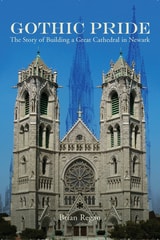
Gothic Pride
The Story of Building a Great Cathedral in NewarkRegan, Brian
Rutgers University Press, 2012
Calling upon a wealth of primary sources, Brian Regan describes in a compelling narrative the cathedral’s almost century-long history. He traces the project to its origins in the late 1850s and the great expectations held by the project’s prime movers—all passionate about Gothic architecture and immensely proud of Newark—that never wavered despite numerous setbacks and challenges. Construction did not begin until 1898 and, when completed in 1954, the cathedral became New Jersey’s largest church—and the most expensive Catholic church ever built in America. During Pope John Paul II’s visit to the United States in 1995, he celebrated evening prayer at the Cathedral. On that occasion, the Cathedral of the Sacred Heart was elevated to a basilica to become the Cathedral Basilica of the Sacred Heart.
Meticulously researched, Gothic Pride brings to life the people who built, contributed to, and worshipped in Sacred Heart, recalling such remarkable personalities as George Hobart Doane, Jeremiah O’Rourke, Gonippo Raggi, and Archbishop Thomas Walsh. In many ways, the cathedral’s story is a lens that lets us look at the history of Newark itself—its rise as an industrial city and its urban culture in the nineteenth century; its transformation in the twentieth century; its immigrants and the profound effects of their cultures, especially their religion, on American life; and the power of architecture to serve as a symbol of community values and pride..
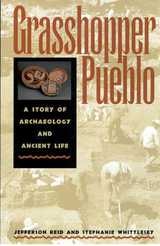
Grasshopper Pueblo
A Story of Archaeology and Ancient LifeJefferson Reid and Stephanie Whittlesey
University of Arizona Press, 1999
Written for general readers—and for the White Mountain Apache, on whose land Grasshopper Pueblo is located and who have participated in the excavations there—the book conveys the simple joys and typical problems of an ancient way of life as inferred from its material remains. Reid and Whittlesey's account reveals much about the human capacity for living under what must strike modern readers as adverse conditions. They describe the environment with which the people had to cope; hunting, gathering, and farming methods; uses of tools, pottery, baskets, and textiles; types of rooms and households; and the functioning of social groups. They also reconstruct the sacred world of Grasshopper as interpreted through mortuary ritual and sacred objects and discuss the relationship of Grasshopper residents with neighbors and with those who preceded and followed them.
Grasshopper Pueblo not only thoroughly reconstructs this past life at a mountain village, it also offers readers an appreciation of life at the field school and an understanding of how excavations have proceeded there through the years. For anyone enchanted by mysteries of the past, it reveals significant features of human culture and spirit and the ultimate value of archaeology to contemporary society.
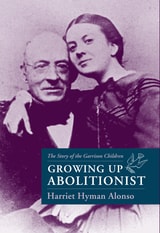
Growing Up Abolitionist
The Story of the Garrison ChildrenHarriet Hyman Alonso
University of Massachusetts Press, 2002
Much has been written about the life of abolitionist William Lloyd Garrison (1805–1879), but relatively little attention has been paid to his wife, Helen Benson Garrison, and their seven children. In Growing Up Abolitionist, Garrison's public image recedes into the background and the family's private world takes center stage.
The lives of the Garrison children were shaped within the context of the great nineteenth-century campaigns against slavery, racism, violence, war, imperialism, and the repression of women. As children, they became apprentices of these movements and grew up adoring their dissident parents. Collectively and individually, they carried on their parents' values in distinctive ways.
Their path was not always easy. When the Civil War erupted, the entire family had to come to grips with a basic contradiction in their lives. While each member passionately yearned for the end of slavery, all but the eldest son, George, who served as an officer with the 55th Massachusetts Colored Regiment, opposed military participation.
The Civil War years also brought four marriage partners into the Garrisons' lives-Ellen Wright, Lucy McKim, and Annie Anthony (all abolitionist daughters) and Henry Villard, a German-born journalist who later became a railroad magnate and publisher of the New York Evening Post and the Nation.
Raised by loving parents to be political activists, the Garrison children, as adults, assumed positions as leaders or participants in those radical causes of their day that most closely reflected their upbringing: racial justice, women's rights, anti-imperialism, and peace.