Results by title

13 books match the query 'Pirates'
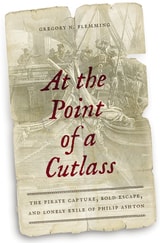
cover of At the Point of a Cutlass: The Pirate Capture, Bold Escape, and Lonely Exile of Philip Ashton

At the Point of a Cutlass

The Pirate Capture, Bold Escape, and Lonely Exile of Philip Ashton

Gregory N. Flemming

University Press of New England, 2015

A handful of sea stories define the American maritime narrative. Stories of whaling, fishing, exploration, naval adventure, and piracy have always captured our imaginations, and the most colorful of these are the tales of piracy. Called America’s real-life Robinson Crusoe, the true story of Philip Ashton—a nineteen-year-old fisherman captured by pirates, impressed as a crewman, subjected to torture and hardship, who eventually escaped and lived as a castaway and scavenger on a deserted island in the Caribbean—was at one time as well known as the tales of Cooper, Hawthorne, and Defoe. Based on a rare copy of Ashton’s 1725 account, Gregory N. Flemming’s vivid portrait recounts this maritime world during the golden age of piracy. Fishing vessels and merchantmen plied the coastal waters and crisscrossed the Atlantic and Caribbean. It was a hard, dangerous life, made more so by both the depredations and temptations of piracy. Chased by the British Royal Navy, blown out of the water or summarily hung when caught, pirate captains such as Edward Low kidnapped, cajoled, beat, and bribed men like Ashton into the rich—but also vile, brutal, and often short—life of the pirate. In the tradition of Nathaniel Philbrick, At the Point of a Cutlass expands on a lost classic narrative of America and the sea, and brings to life a forgotten world of ships and men on both sides of maritime law.
[more]
cover of Blood and Ink: The Barbary Archive in Early American Literary History

Blood and Ink

The Barbary Archive in Early American Literary History

Jacob Crane

University of Massachusetts Press, 2023

In the late eighteenth and early nineteenth centuries, Algerian piracy in the Mediterranean loomed large in the American imagination. An estimated seven hundred American citizens, sailors, and naval officers were taken captive over the course of the Barbary Crises (1784–1815), and this overseas danger threatened to grow and irreparably harm the young republic.

Blood and Ink reconstructs the largely forgotten influence of these early American conflicts with North Africa on notions of publicity, print culture, and racial and national identity from independence to the Civil War. Exploring the extensive archive of texts inspired by the conflicts—from captivity narratives, novels, plays, and poems to broadsides, travel narratives, children’s literature, newspaper articles, and visual ephemera—Jacob Crane connects anxieties surrounding North African piracy and white slavery to both the development of American abolitionism and representations of transatlantic African and Jewish identities in the early national and antebellum periods.

[more]
cover of Freebooters and Smugglers: The Foreign Slave Trade in the United States after 1808

Freebooters and Smugglers

The Foreign Slave Trade in the United States after 1808

Ernest Obadele-Starks

University of Arkansas Press, 2007

In 1891 a young W. E. B. DuBois addressed the annual American Historical Association on the enforcement of slave trade laws: “Northern greed joined to Southern credulity was a combination calculated to circumvent any law, human or divine.” One law in particular he was referring to was the Abolition Act of 1808. It was specifically passed to end the foreign slave trade. However, as Ernest Obadele-Starks shows, thanks to profiteering smugglers like the Lafitte brothers and the Bowie brothers, the slave trade persisted throughout the south for a number of years after the law was passed. Freebooters and Smugglers examines the tactics and strategies that the adherents of the foreign slave trade used to challenge the law. It reassesses the role that Americans played in the continuation of foreign slave transshipments into the country right up to the Civil War, shedding light on an important topic that has been largely overlooked in the historiography of the slave trade.
[more]
cover of Lords of the Sea: Pirates, Violence, and Commerce in Late Medieval Japan

Lords of the Sea

Pirates, Violence, and Commerce in Late Medieval Japan

Peter D. Shapinsky

University of Michigan Press, 2014
Lords of the Sea revises our understanding of the epic political, economic, and cultural transformations of Japan’s late medieval period (ca. 1300–1600) by shifting the conventional land-based analytical framework to one centered on the perspectives of seafarers who, though usually dismissed as "pirates," thought of themselves as sea lords.
Over the course of these centuries, Japan’s sea lords became maritime magnates who wielded increasing amounts of political and economic authority by developing autonomous maritime domains that operated outside the auspices of state authority. They played key roles in the operation of networks linking Japan to the rest of the world, and their protection businesses, shipping organizations, and sea tenure practices spread their influence across the waves to the continent, shaping commercial and diplomatic relations with Korea and China. Japan's land-based authorities during this time not only came to accept the autonomy of "pirates" but also competed to sponsor sea-lord bands who could administer littoral estates, fight sea battles, protect shipping, and carry trade. In turn, prominent sea-lord families expanded their dominion by shifting their locus of service among several patrons and by appropriating land-based rhetorics of lordship, which forced authorities to recognize them as legitimate lords over sea-based domains.
By the end of the late medieval period, the ambitions, tactics, and technologies of sea-lord mercenary bands proved integral to the naval dimensions of Japan’s sixteenth-century military revolution. Sea lords translated their late medieval autonomy into positions of influence in early modern Japan and helped make control of the seas part of the ideological foundations of the state.
[more]
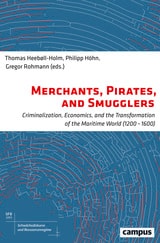
cover of Merchants, Pirates, and Smugglers: Criminalization, Economics, and the Transformation of the Maritime World (1200–1600)

Merchants, Pirates, and Smugglers

Criminalization, Economics, and the Transformation of the Maritime World (1200–1600)

Edited by Thomas Heebøll-Holm, Philipp Höhn, and Gregor Rohmann

Campus Verlag, 2019

Maritime history tends to draw stark lines between legal and illegal trading practices, with the naval and commercial vessels of sovereign states on one side and rogue pirates and smugglers on the other. This book reveals how, in the centuries before the emergence of the nation-state, maritime societies were shaped equally by both sanctioned and illicit trade—and that the line between the two was much less defined than it is now. The kind of high-seas activity now called piracy was often viewed in the early modern period as, at worst, a disruption of established distribution channels, but just often, it was viewed as simply another legitimate economic stream. Depending on one’s perspective, the same person could be seen as a bandit or an entrepreneur. Merchants, Pirates, and Smugglers tells the story of how these individuals came to be labelled as criminals as a way to enforce the codified economic and political positions that arose from sustained European state-building between the thirteenth and seventeenth centuries.
 
[more]
cover of No Limits to Their Sway: Cartagena's Privateers and the Masterless Caribbean in the Age of Revolutions

No Limits to Their Sway

Cartagena's Privateers and the Masterless Caribbean in the Age of Revolutions

Edgardo Pérez Morales

Vanderbilt University Press, 2018

Following the 1808 French invasion of the Iberian Peninsula, an unprecedented political crisis threw the Spanish Monarchy into turmoil. On the Caribbean coast of modern-day Colombia, the important port town of Cartagena rejected Spanish authority, finally declaring independence in 1811. With new leadership that included free people of color, Cartagena welcomed merchants, revolutionaries, and adventurers from Venezuela, the Antilles, the United States, and Europe. Most importantly, independent Cartagena opened its doors to privateers of color from the French Caribbean. Hired mercenaries of the sea, privateers defended Cartagena's claim to sovereignty, attacking Spanish ships and seizing Spanish property, especially near Cuba, and establishing vibrant maritime connections with Haiti.

Most of Cartagena's privateers were people of color and descendants of slaves who benefited from the relative freedom and flexibility of life at sea, but also faced kidnapping, enslavement, and brutality. Many came from Haiti and Guadeloupe; some had been directly involved in the Haitian Revolution. While their manpower proved crucial in the early Anti-Spanish struggles, Afro-Caribbean privateers were also perceived as a threat, suspected of holding questionable loyalties, disorderly tendencies, and too strong a commitment to political and social privileges for people of color. Based on handwritten and printed sources in Spanish, English, and French, this book tells the story of Cartagena's multinational and multicultural seafarers, revealing the Trans-Atlantic and maritime dimensions of South American independence.
[more]
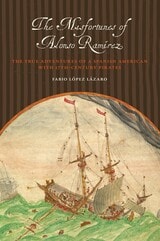
cover of The Misfortunes of Alonso Ramírez: The True Adventures of a Spanish American with 17th-Century Pirates

The Misfortunes of Alonso Ramírez

The True Adventures of a Spanish American with 17th-Century Pirates

By Fabio López Lázaro

University of Texas Press, 2011

In 1690, a dramatic account of piracy was published in Mexico City. The Misfortunes of Alonso Ramírez described the incredible adventures of a poor Spanish American carpenter who was taken captive by British pirates near the Philippines and forced to work for them for two years. After circumnavigating the world, he was freed and managed to return to Mexico, where the Spanish viceroy commissioned the well-known Mexican scholar Carlos de Sigüenza y Góngora to write down Ramírez's account as part of an imperial propaganda campaign against pirates.

The Misfortunes of Alonso Ramírez has long been regarded as a work of fiction—in fact, as Latin America's first novel—but Fabio López Lázaro makes a convincing case that the book is a historical account of real events, albeit full of distortions and lies. Using contemporary published accounts, as well as newly discovered documents from Spanish, English, French, Portuguese, and Dutch archives, he proves that Ramírez voyaged with one of the most famous pirates of all time, William Dampier. López Lázaro's critical translation of The Misfortunes provides the only extensive Spanish eyewitness account of pirates during the period in world history (1650–1750) when they became key agents of the European powers jockeying for international political and economic dominance. An extensive introduction places The Misfortunes within the worldwide struggle that Spain, England, and Holland waged against the ambitious Louis XIV of France, which some historians consider to be the first world war.

[more]
cover of The Politics of Piracy: Crime and Civil Disobedience in Colonial America

The Politics of Piracy

Crime and Civil Disobedience in Colonial America

Douglas R. Burgess

University Press of New England, 2014

The seventeenth-century war on piracy is remembered as a triumph for the English state and her Atlantic colonies. Yet it was piracy and illicit trade that drove a wedge between them, imperiling the American enterprise and bringing the colonies to the verge of rebellion. In The Politics of Piracy, competing criminalities become a lens to examine England’s legal relationship with America. In contrast to the rough, unlettered stereotypes associated with them, pirates and illicit traders moved easily in colonial society, attaining respectability and even political office. The goods they provided became a cornerstone of colonial trade, transforming port cities from barren outposts into rich and extravagant capitals. This transformation reached the political sphere as well, as colonial governors furnished local mariners with privateering commissions, presided over prize courts that validated stolen wares, and fiercely defended their prerogatives as vice-admirals. By the end of the century, the social and political structures erected in the colonies to protect illicit trade came to represent a new and potent force: nothing less than an independent American legal system. Tensions between Crown and colonies presage, and may predestine, the ultimate dissolution of their relationship in 1776. Exhaustively researched and rich with anecdotes about the pirates and their pursuers, The Politics of Piracy will be a fascinating read for scholars, enthusiasts, and anyone with an interest in the wild and tumultuous world of the Atlantic buccaneers.
[more]
cover of The Punishment of Pirates: Interpretation and Institutional Order in the Early Modern British Empire

The Punishment of Pirates

Interpretation and Institutional Order in the Early Modern British Empire

Matthew Norton

University of Chicago Press, 2023

A sociological investigation into maritime state power told through an exploration of how the British Empire policed piracy.
 
Early in the seventeenth-century boom of seafaring, piracy allowed many enterprising and lawless men to make fortunes on the high seas, due in no small part to the lack of policing by the British crown. But as the British empire grew from being a collection of far-flung territories into a consolidated economic and political enterprise dependent on long-distance trade, pirates increasingly became a destabilizing threat. This development is traced by sociologist Matthew Norton in The Punishment of Pirates, taking the reader on an exciting journey through the shifting legal status of pirates in the seventeenth and eighteenth centuries.
 
Norton shows us that eliminating this threat required an institutional shift: first identifying and defining piracy, and then brutally policing it. The Punishment of Pirates develops a new framework for understanding the cultural mechanisms involved in dividing, classifying, and constructing institutional order by tracing the transformation of piracy from a situation of cultivated ambiguity to a criminal category with violently patrolled boundaries—ending with its eradication as a systemic threat to trade in the English Empire. Replete with gun battles, executions, jailbreaks, and courtroom dramas, Norton’s book offers insights for social theorists, political scientists, and historians alike.
 
[more]
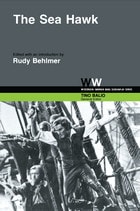
cover of The Sea Hawk

The Sea Hawk

Edited by Rudy Behlmer; Tino T. Balio, Series Editor

University of Wisconsin Press, 1982

 This 1940 swashbuckler is one of the best examples of the old Hollywood studio system at work. Scholars and film buffs will learn much about collaborative filmmaking on an exceptionally large scale as Rudy Behlmer traces step-by-step the evolution of The Sea Hawk. The very anti-thesis of an auteur film, The Sea Hawk illustrates the ways in which creative input from just about everyone on the Warner Brothers lot—producers, writers, art directors, director, cameraman, special effects team, editor and composer-conductor—resulted in a film in the familiar Warners house style.

This book includes the complete screenplay.

[more]
cover of The Travels of Reverend Olafur Egilsson

The Travels of Reverend Olafur Egilsson

Karl Smari Hreinsson

Catholic University of America Press, 2016
The combination of Reverend Olafur's narrative, the letters, and the material in the Appendices provides a first-hand, in-depth view of early seventeenth-century Europe and the Maghreb equaled by few other works dealing with the period. We are pleased to offer it to the wider audience that an English edition allows.
[more]
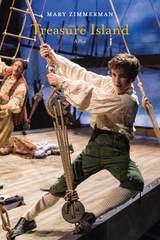
cover of Treasure Island: A Play

Treasure Island

A Play

Mary Zimmerman

Northwestern University Press, 2019

“Zimmerman has powerfully captured the joy, danger, and fantasy of Stevenson’s novel. . . Pure fun, a potent coming-of-age story, and a rollicking swashbuckler.”—San Francisco Chronicle

In Treasure Island, Tony Award winner and inventive adapter-director Mary Zimmerman has penned a spirited, energetic adaptation of Robert Louis Stevenson’s most beloved novel, proving again that “a strong story full of larger-than-life characters and the quest for filthy lucre has no age barrier” (Chicago Sun-Times).

Enlivened by rum, mutiny, and buried treasure, Treasure Island is the classic pirates’ tale, widely regarded as the forerunner of this genre. After discovering a treasure map, young Jim Hawkins sets off to sea as cabin boy aboard the Hispaniola, where he encounters one of the most unforgettable characters in literary history—peg-legged buccaneer Long John Silver, a malicious mutineer and charismatic father figure.

[more]
cover of White Slaves, African Masters: An Anthology of American Barbary Captivity Narratives

White Slaves, African Masters

An Anthology of American Barbary Captivity Narratives

Edited by Paul Baepler

University of Chicago Press, 1999

A remarkable collection of hard-to-find primary source accounts of nineteenth-century American captivity narratives
 
Some of the most popular stories in nineteenth-century America were sensational tales of whites captured and enslaved in North Africa. White Slaves, African Masters for the first time gathers together a selection of these Barbary captivity narratives, which significantly influenced early American attitudes toward race, slavery, and nationalism.

Though Barbary privateers began to seize North American colonists as early as 1625, Barbary captivity narratives did not begin to flourish until after the American Revolution. During these years, stories of Barbary captivity forced the U.S. government to pay humiliating tributes to African rulers, stimulated the drive to create the U.S. Navy, and brought on America's first post-revolutionary war. These tales also were used both to justify and to vilify slavery.

The accounts collected here range from the 1798 tale of John Foss, who was ransomed by Thomas Jefferson's administration for tribute totaling a sixth of the annual federal budget, to the story of Ion Perdicaris, whose (probably staged) abduction in Tangier in 1904 prompted Theodore Roosevelt to send warships to Morocco and inspired the 1975 film The Wind and the Lion. Also included is the unusual story of Robert Adams, a light-skinned African American who was abducted by Arabs and used by them to hunt negro slaves; captured by black villagers who presumed he was white; then was sold back to a group of Arabs, from whom he was ransomed by a British diplomat.

Long out of print and never before anthologized, these fascinating tales open an entirely new chapter of early American literary history, and shed new light on the more familiar genres of Indian captivity narrative and American slave narrative.
[more]