246 books match the query 'Violence in Society' and 11 start with g
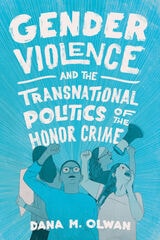
cover of Gender Violence and the Transnational Politics of the Honor Crime

Gender Violence and the Transnational Politics of the Honor Crime

Dana M. Olwan

The Ohio State University Press, 2021

In Gender Violence and the Transnational Politics of the Honor Crime, Dana M. Olwan examines how certain forms of violence become known, recognized, and contested across multiple geopolitical contexts—looking specifically at a particular form of gender-based violence known as the “honor crime” and tracing how a range of legal, political, and literary texts inform normative and critical understandings of this term. Although a number of studies now acknowledge the complicated mobilizations of honor crime discourses, the ways in which these discourses move across and in between different geographies and contexts remain relatively unexplored. This book fills that void by providing a transnational feminist examination of the disparate—yet interconnected—sites of the US, Canada, Jordan, and Palestine, showing how the concept travels across nations and is deployed to promote hegemonic agendas—becoming intertwined in notions of modernity, citizenship, and belonging.
More specifically, Olwan traces the term’s appearance in public and popular works that allow for its continued mass acceptance and circulation—from media depictions in Canada and beyond, to how it is taken up in national registers about migration and belonging in the US, to activism in Palestine that reveal the fault lines between activist and academic critiques of the honor crime, and finally to feminist efforts in Jordan and the wider Middle East to confront legal codes used to sanction gender-related violence. Through these cases, Olwan demonstrates how the honor crime functions as a signifier that governs and manages populations and how its meanings travel and circulate across and between separate and interconnected circuits of power and knowledge.
 
[more]
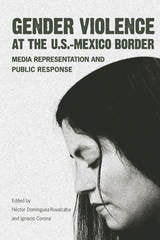
cover of Gender Violence at the U.S.–Mexico Border: Media Representation and Public Response

Gender Violence at the U.S.–Mexico Border

Media Representation and Public Response

Edited by Héctor Domínguez-Ruvalcaba and Ignacio Corona

University of Arizona Press, 2012
The U.S.-Mexico border is frequently presented by contemporary media as a violent and dangerous place. But that is not a new perception. For decades the border has been constructed as a topographic metaphor for all forms of illegality, in which an ineffable link between space and violence is somehow assumed. The sociological and cultural implications of violence have recently emerged at the forefront of academic discussions about the border. And yet few studies have been devoted to one of its most disturbing manifestations: gender violence. This book analyzes this pervasive phenomenon, including the femicides in Ciudad Juárez that have come to exemplify, at least for the media, its most extreme manifestation.
 
Contributors to this volume propose that the study of gender-motivated violence requires interpretive and analytical strategies that draw on methods reaching across the divide between the social sciences and the humanities. Through such an interdisciplinary conversation, the book examines how such violence is (re)presented in oral narratives, newspaper reports, films and documentaries, novels, TV series, and legal discourse. It also examines the role that the media have played in this process, as well as the legal initiatives that might address this pressing social problem.
 
Together these essays offer a new perspective on the implications of, and connections between, gendered forms of violence and topics such as mechanisms of social violence, the micro-social effects of economic models, the asymmetries of power in local, national, and transnational configurations, and the particular rhetoric, aesthetics, and ethics of discourses that represent violence.
[more]
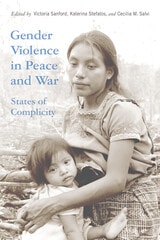
cover of Gender Violence in Peace and War: States of Complicity

Gender Violence in Peace and War

States of Complicity

Sanford, Victoria

Rutgers University Press, 2016
Reports from war zones often note the obscene victimization of women, who are frequently raped, tortured, beaten, and pressed into sexual servitude. Yet this reign of terror against women not only occurs during exceptional moments of social collapse, but during peacetime too. As this powerful book argues, violence against women should be understood as a systemic problem—one for which the state must be held accountable. 
 
The twelve essays in Gender Violence in Peace and War present a continuum of cases where the state enables violence against women—from state-sponsored torture to lax prosecution of sexual assault. Some contributors uncover buried histories of state violence against women throughout the twentieth century, in locations as diverse as Ireland, Indonesia, and Guatemala. Others spotlight ongoing struggles to define the state’s role in preventing gendered violence, from domestic abuse policies in the Russian Federation to anti-trafficking laws in the United States. 
 
Bringing together cutting-edge research from political science, history, gender studies, anthropology, and legal studies, this collection offers a comparative analysis of how the state facilitates, legitimates, and perpetuates gender violence worldwide. The contributors also offer vital insights into how states might adequately protect women’s rights in peacetime, as well as how to intervene when a state declares war on its female citizens.  
 
[more]
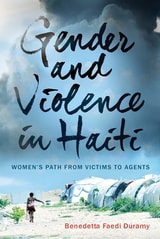
cover of Gender and Violence in Haiti: Women’s Path from Victims to Agents

Gender and Violence in Haiti

Women’s Path from Victims to Agents

Benedetta Faedi Duramy

Rutgers University Press, 2014

Women in Haiti are frequent victims of sexual violence and armed assault. Yet an astonishing proportion of these victims also act as perpetrators of violent crime, often as part of armed groups. Award-winning legal scholar Benedetta Faedi Duramy visited Haiti to discover what causes these women to act in such destructive ways and what might be done to stop this tragic cycle of violence.

Gender and Violence in Haiti is the product of more than a year of extensive firsthand observations and interviews with the women who have been caught up in the widespread violence plaguing Haiti. Drawing from the experiences of a diverse group of Haitian women, Faedi Duramy finds that both the victims and perpetrators of violence share a common sense of anger and desperation. Untangling the many factors that cause these women to commit violence, from self-defense to revenge, she identifies concrete measures that can lead them to feel vindicated and protected by their communities.

Faedi Duramy vividly conveys the horrifying conditions pervading Haiti, even before the 2010 earthquake. But Gender and Violence in Haiti also carries a message of hope—and shows what local authorities and international relief agencies can do to help the women of Haiti.
[more]
cover of Genocide: Truth, Memory, and Representation

Genocide

Truth, Memory, and Representation

Alexander Laban Hinton and Kevin Lewis O Neill, eds.

Duke University Press, 2009

What happens to people and the societies in which they live after genocide? How are the devastating events remembered on the individual and collective levels, and how do these memories intersect and diverge as the rulers of postgenocidal states attempt to produce a monolithic “truth” about the past? In this important volume, leading anthropologists consider such questions about the relationship of genocide, truth, memory, and representation in the Balkans, East Timor, Germany, Guatemala, Indonesia, Nigeria, Rwanda, Sudan, and other locales.

Specialists on the societies about which they write, these anthropologists draw on ethnographic research to provide on-the-ground analyses of communities in the wake of mass brutality. They investigate how mass violence is described or remembered, and how those representations are altered by the attempts of others, from NGOs to governments, to assert “the truth” about outbreaks of violence. One contributor questions the neutrality of an international group monitoring violence in Sudan and the assumption that such groups are, at worst, benign. Another examines the consequences of how events, victims, and perpetrators are portrayed by the Rwandan government during the annual commemoration of that country’s genocide in 1994. Still another explores the silence around the deaths of between eighty and one hundred thousand people on Bali during Indonesia’s state-sponsored anticommunist violence of 1965–1966, a genocidal period that until recently was rarely referenced in tourist guidebooks, anthropological studies on Bali, or even among the Balinese themselves. Other contributors consider issues of political identity and legitimacy, coping, the media, and “ethnic cleansing.” Genocide: Truth, Memory, and Representation reveals the major contribution that cultural anthropologists can make to the study of genocide.

Contributors. Pamela Ballinger, Jennie E. Burnet, Conerly Casey, Elizabeth Drexler, Leslie Dwyer, Alexander Laban Hinton, Sharon E. Hutchinson, Uli Linke, Kevin Lewis O’Neill, Antonius C. G. M. Robben, Debra Rodman, Victoria Sanford
[more]
cover of Global Child: Children and Families Affected by War, Displacement, and Migration

Global Child

Children and Families Affected by War, Displacement, and Migration

Myriam Denov

Rutgers University Press, 2023
Armed conflicts continue to wreak havoc on children and families around the world with profound effects. In 2017, 420 million children—nearly one in five—were living in conflict-affected areas, an increase in 30 million from the previous year. The recent surge in war-induced migration, referred to as a “global refugee crisis” has made migration a highly politicized issue, with refugee populations and host countries facing unique challenges. We know from research related to asylum seeking families that it is vital to think about children and families in relation to what it means to stay together, what it means for parents to be separated from their children, and the kinds of everyday tensions that emerge in living in dangerous, insecure, and precarious circumstances. In Global Child, the authors draw on what they have learned through their collaborative undertakings, and highlight the unique features of participatory, arts-based, and socio-ecological approaches to studying war-affected children and families, demonstrating the collective strength as well as the limitations and ethical implications of such research. Building on work across the Global South and the Global North, this book aims to deepen an understanding of their tri-pillared approach, and the potential of this methodology for contributing to improved practices in working with war-affected children and their families.
[more]
cover of Global Lynching and Collective Violence: Volume 1: Asia, Africa, and the Middle East

Global Lynching and Collective Violence

Volume 1: Asia, Africa, and the Middle East

Edited by Michael J. Pfeifer

University of Illinois Press, 2017
Often considered peculiarly American, lynching in fact takes place around the world. In the first book of a two-volume study, Michael J. Pfeifer collects essays that look at lynching and related forms of collective violence in Africa, Asia, and the Middle East. Understanding lynching as a transnational phenomenon rooted in political and cultural flux, the writers probe important issues from Indonesia--where a long history of public violence now twines with the Internet--to South Africa, with its notorious history of necklacing. Other scholars examine lynching in medieval Nepal, the epidemic of summary executions in late Qing-era China, the merging of state-sponsored and local collective violence during the Nanking Massacre, and the ways public anger and lynching in India relate to identity, autonomy, and territory. Contributors: Laurens Bakker, Shaiel Ben-Ephraim, Nandana Dutta, Weiting Guo, Or Honig, Frank Jacob, Michael J. Pfeifer, Yogesh Raj, and Nicholas Rush Smith.
[more]
cover of Global Lynching and Collective Violence: Volume 2: The Americas and Europe

Global Lynching and Collective Violence

Volume 2: The Americas and Europe

Michael Pfeifer

University of Illinois Press, 2017

In this second volume of the groundbreaking survey, Michael J. Pfeifer edits a collection of essays that illuminates lynching and other extrajudicial "rough justice" as a transnational phenomenon responding to cultural and legal issues.

The volume's European-themed topics explore why three communities of medieval people turned to mob violence, and the ways exclusion from formal institutions fueled peasant rough justice in Russia. Essays on Latin America examine how lynching in the United States influenced Brazilian debates on race and informal justice, and how shifts in religious and political power drove lynching in twentieth-century Mexico. Finally, scholars delve into English Canadians' use of racist and mob violence to craft identity; the Communist Party's Depression-era campaign against lynching in the United States; and the transnational links that helped form--and later emanated from--Wisconsin's notoriously violent skinhead movement in the late twentieth century.

Contributors: Brent M. S. Campney, Amy Chazkel, Stephen P. Frank, Dean J. Kotlowski, Michael J. Pfeifer, Gema Santamaría, Ryan Shaffer, and Hannah Skoda.

[more]
cover of God's Businessmen: Entrepreneurial Evangelicals in Depression and War

God's Businessmen

Entrepreneurial Evangelicals in Depression and War

Sarah Ruth Hammond

University of Chicago Press, 2017

How evangelical businessmen in the 1930s and 1940s joined their religious and business lives.

The evangelical embrace of conservatism is a familiar feature of the contemporary political landscape. What’s less well-known, however, is that the connection predates the Reagan revolution, going all the way back to the Depression and World War II. Evangelical businessmen at the time were quite active in opposing the New Deal—on both theological and economic grounds—and in doing so claimed a place alongside other conservatives in the public sphere. Like previous generations of devout laymen, they self-consciously merged their religious and business lives, financing and organizing evangelical causes with the kind of visionary pragmatism that they practiced in the boardroom.

In God’s Businessmen, Sarah Ruth Hammond explores not only these men’s personal trajectories but also those of the service clubs and other institutions that, like them, believed that businessmen were God’s instrument for the Christianization of the world. Hammond presents a capacious portrait of the relationship between the evangelical business community and the New Deal—and in doing so makes important contributions to American religious history, business history, and the history of the American state.

[more]
cover of Guerrillas and Terrorists

Guerrillas and Terrorists

Richard L. Clutterbuck

Ohio University Press, 1980

Terrorism and guerrilla warfare, whether justified as resistance to oppression or condemned as disrupting the rule of law, are as old as civilization itself. The power of the terrorist, however, has been magnified by modern weapons, including television, which he has learned to exploit.

To protect itself, society must understand the terrorist and what he is trying to do; thus Dr. Clutterbuck’s purpose in writing this book: “to contribute to the understanding and cooperation between the police, the public and the media.”
[more]
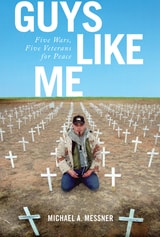
cover of Guys Like Me: Five Wars, Five Veterans for Peace

Guys Like Me

Five Wars, Five Veterans for Peace

Messner, Michael A

Rutgers University Press, 2019

Over the last few decades, as the United States has become embroiled in foreign war after foreign war, some of the most vocal activists for peace have been veterans. These veterans for peace come from all different races, classes, regions, and generations. What common motivations unite them and fuel their activism?
 
Guys Like Me introduces us to five ordinary men who have done extraordinary work as peace activists: World War II veteran Ernie Sanchez, Korean War veteran Woody Powell, Vietnam veteran Gregory Ross, Gulf War veteran Daniel Craig, and Operation Iraqi Freedom veteran Jonathan Hutto. Acclaimed sociologist Michael Messner offers rich profiles of each man, recounting what led him to join the armed forces, what he experienced when fighting overseas, and the guilt and trauma he experienced upon returning home. He reveals how the pain and horror of the battlefront motivated these onetime warriors to reconcile with former enemies, get involved as political activists, and help younger generations of soldiers.
 
Guys Like Me is an inspiring multigenerational saga of men who were physically or psychically wounded by war, but are committed to healing themselves and others, forging a path to justice, and replacing endless war with lasting peace
[more]