Results by title
12 books match the query 'Nazis'
An Uncompromising Generation
The Nazi Leadership of the Reich Security Main OfficeMichael Wildt
University of Wisconsin Press, 2009
Wildt’s study traces the intellectual evolution of key members of the Reich Security Main Office (RSHA) from their days as students until the end of World War II. Established in 1939, this office fused together the Gestapo, the Criminal Police, and the Sicherheitsdienst (Security Service) of the SS. Far from being small cogs in a big bureaucratic machine, Wildt finds that the people who made up the RSHA constructed the concepts and operated the apparatus that carried out the Holocaust.
At the center of both theory and practice of persecution and genocide in Nazi-occupied Europe, these young men of the RSHA—none of whom envisioned the systematic annihilation of the European Jews—became radicalized. How this occurred is the central question of Wildt’s book. Wildt also discusses the postwar careers of the members of the RSHA. Strikingly, he shows how the leaders of the RSHA evaded the consequences of their actions under the Nazi regime and went on to have important careers in the rebuilt West Germany.
An alternate selection of the History Book Club and Military Book Club

Democracy, Dialogue, and Community Action
Truth and Reconciliation in GreensboroSpoma Jovanovic
University of Arkansas Press, 2012

Folklore Fights the Nazis
Humor in Occupied Norway, 1940–1945Kathleen Stokker
University of Wisconsin Press, 1997
In relating this dramatic story, Kathleen Stokker draws upon her many interviews with survivors of the Occupation and upon the archives of the Norwegian Resistance Museum and the University of Oslo. Central to the book are four “joke notebooks” kept by women ranging in age from eleven to thirty, who found sufficient meaning in this humor to risk recording and preserving it. Stokker also cites details from wartime diaries of three other women from East, West, and North Norway. Placing the joking in historical, cultural, and psychological context, Stokker demonstrates how this seemingly frivolous humor in fact contributed to the development of a resistance mentality among an initially confused, paralyzed, and dispirited population, stunned by the German invasion of their neutral country.
For this paperback edition, Stokker has added a new preface offering a comparative view of resistance through humor in neighboring Denmark.

Genocide as Social Practice
Reorganizing Society under the Nazis and Argentina's Military Juntasby Daniel Feierstein, Translated by Douglas Andrew Town
Rutgers University Press, 2014
The Nazis resorted to ruthless methods in part to stifle dissent but even more importantly to reorganize German society into a Volksgemeinschaft, or people’s community, in which racial solidarity would supposedly replace class struggle. The situation in Argentina echoes this. After seizing power in 1976, the Argentine military described its own program of forced disappearances, torture, and murder as a “process of national reorganization” aimed at remodeling society on “Western and Christian” lines.
For Feierstein, genocide can be considered a technology of power—a form of social engineering—that creates, destroys, or reorganizes relationships within a given society. It influences the ways in which different social groups construct their identity and the identity of others, thus shaping the way that groups interrelate. Feierstein establishes continuity between the “reorganizing genocide” first practiced by the Nazis in concentration camps and the more complex version—complex in terms of the symbolic and material closure of social relationships —later applied in Argentina. In conclusion, he speculates on how to construct a political culture capable of confronting and resisting these trends.
First published in Argentina, in Spanish, Genocide as Social Practice has since been translated into many languages, now including this English edition. The book provides a distinctive and valuable look at genocide through the lens of Latin America as well as Europe.
Download open access ebook here.
How Green Were the Nazis?
Nature, Environment, and Nation in the Third ReichFranz-Josef Brüggemeier
Ohio University Press, 2005

J. D. Salinger and the Nazis
Eberhard Alsen
University of Wisconsin Press, 2018
Alsen, a longtime Salinger scholar who witnessed the Nazi regime firsthand as a child in Germany, tracks Salinger's prewar experiences in the army, his work for the CIC during significant military campaigns, and his reactions to three military disasters that killed more than a thousand fellow soldiers in his Fourth Infantry Division. Alsen also identifies the Nazi death camp where Salinger saw mounds of recently burned bodies. Revealing details shed light on Salinger's outspoken disgust for American military leaders, the personality changes that others saw in him after the war, and his avoidance of topics related to the Holocaust.
Jewish Resistance Against the Nazis
Patrick Henry
Catholic University of America Press, 2014
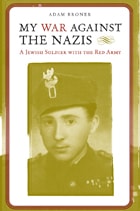
My War against the Nazis
A Jewish Soldier with the Red ArmyAdam Broner, with a foreword by Antony Polonsky
University of Alabama Press, 2007
A poignant account of the perils and fortunes of an indomitable survivor of violence in Eastern Europe during World War II.
In 1939, to escape Nazi occupation, 14-year-old Adam Broner and his older brother Sam left their home and family in Lodz, Poland, and made their way to the Soviet Union. Adam enlisted in the Red Army to join the fight against the Nazis but was sent to work in a Siberian coal mine instead when his nationality was discovered. After a bold and daring escape from Siberia, Broner reached the Soviet Polish Kosciuszko Army, joined the struggle against the Nazis, participated in the liberation of Poland, and rode victorious into Berlin in 1945. He later learned that his parents, siblings (except Sam), and all other close relatives had perished during the war.
Broner rebuilt his life, established a family, returned to Moscow for a degree in economics, and then went back to Poland, where he accepted a job in the Polish central planning agency. Eventually fed up with the growing anti-Semitism of the Communist government there, the author emigrated to the United States in 1969. He earned a doctorate from Princeton University and served as an economic adviser to New Jersey governors and the state legislature. In retirement, Broner learned portrait painting and reproduced the likenesses of his parents and siblings from memory, which are presented along with their biographies in this book.
In recounting his struggle for survival during some of the most dramatic upheavals of the 20th century— the Great Depression, Nazism, World War II, and the spread of Communism in Central Europe— Broner reveals a life dedicated to the ultimate goal of freedom, which he achieved through a combination of arduous effort and fortunate circumstance.

Quakers and Nazis
Inner Light in Outer DarknessHans A. Schmitt
University of Missouri Press, 1997
Why the title Quakers and Nazis, not Quakers against Nazis? Was not hostility part of the interaction between the two groups? On the contrary, Hans A. Schmitt's compelling story describes American, British, and German Quakers' attempts to mitigate the suffering among not only victims of Nazism but Nazi sympathizers in Austria and Lithuania as well.
With numerous poignant illustrations of the pressure and social cost involved in being a Quaker from 1933 to 1945, Quakers and Nazis: Inner Light in Outer Darkness reveals a facet of Nazi Germany that is entirely unknown to most people. The book focuses on the heroic acts foreign and German Quakers performed under the Nazi regime, offering fully documented and original information regarding the Quakers' commitment to nonviolence and the relief of the victims.
Schmitt's narrative reveals the stress and tension of the situation. How should a Quaker behave in a meeting for worship with a policeman present? Spies did not stop Friends in worship services from openly criticizing Hitler and Göring, but Nazis did inflict torment on Friends. Yet Friends did not, could not, respond in like manner. Olga Halle was one Friend who worked to get people, mostly Jews, out of Germany until America entered the war. When emigration was outlawed, twenty-eight were stranded. Years later her distress was still so deep that even on her deathbed she recited their names.
Schmitt reminds us that virtually all the Berlin Quakers secreted Jews throughout the war. He shows how these brave Quakers opposed the Nazis even after they lost their jobs and had been harassed by the Gestapo. Risking their lives, the Friends persisted in their efforts to alleviate suffering.
At a time when the scholarly world is divided as to whether all Germans knew and approved of the Final Solution, this book makes a valuable contribution to the discussion. Quakers—despite their small numbers—played, and continue to play, an important role in twentieth-century humanitarian relief. Quakers and Nazis: Inner Light in Outer Darkness, a study of how Friends performed under the extreme pressure of a totalitarian regime, will add significantly to our general understanding of Quaker and German history.

Requiem for a German Past
A Boyhood among the NazisJurgen Herbst
University of Wisconsin Press, 2002
Jurgen Herbst’s account of growing up in Nazi Germany from 1928 to 1948 is a boy’s experience of anti-Semitism and militarism from the inside. Herbst was a middle-class boy in a Lutheran family that saw value in Prussian military ideals and a mythic German past. His memoir is a compelling, understated tale of moral awakening.

Serbia under the Swastika
A World War II OccupationAlexander Prusin
University of Illinois Press, 2017
Deftly merging political and social history, Serbia under the Swastika looks at the interactions between Germany’s occupation policies, the various forces of resistance and collaboration, and the civilian population. Alexander Prusin reveals a German occupying force at war with itself. Pragmatists intent on maintaining a sedate Serbia increasingly gave way to Nazified agencies obsessed with implementing the expansionist racial vision of the Third Reich. As Prusin shows, the increasing reliance on terror catalyzed conflict between the nationalist Chetniks, communist Partisans, and the collaborationist government. Prusin unwraps the winding system of expediency that at times led the factions to support one-another against the Germans--even as they fought a ferocious internecine civil war to determine the future of Yugoslavia.
Comprehensive and judicious, Serbia under the Swastika is a rare English-language foray into the still-fraught history of Serbia in World War II.

The Book Smugglers
Partisans, Poets, and the Race to Save Jewish Treasures from the NazisDavid E. Fishman
University Press of New England, 2018