Results by title
379 books match the query 'Botany' and 36 start with a
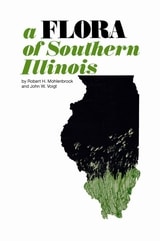
A Flora of Southern Illinois
Robert H. Mohlenbrock
Southern Illinois University Press, 1974
This book will be of particular interest to those interested in applied fields of biology, such as conservation, forestry, and wild life. The southern twelve counties of Illinois, a total of 4,355square miles, comprise the area covered in this book. It is an area in which both northern and southern flora specimens abound. A wide variety of plant species grow in this area, and nearly 200 new plants not formerly identified with this area have been included in the listings.
Especially valuable to amateur botanists, the book is an important manual in identifying the plants that make up the native scenery of this region. Seventy-seven illustrations aid in identifying and understanding the plant communities.
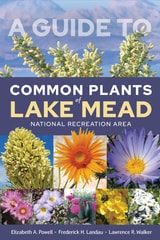
A Guide to Common Plants of Lake Mead National Recreation Area
Elizabeth A. Powell
University of Nevada Press, 2023
A Guide to Common Plants of Lake Mead National Recreation Area is the definitive book for weekend explorers and botanists alike who venture into LMNRA ready to discover the many wonders of the local flora. The authors highlight 183 plants that hikers are most likely to encounter along popular trails, washes, and surrounding hot springs, helping the area’s millions of annual visitors identify and enjoy these common plants. This guide includes photos and descriptions of each plant, along with a map of LMNRA.
The authors also provide a primer on plant ecology, including a guide to plant structures, desert adaptations and life forms, plant-to-plant interactions, and plant-animal interactions. Plants are grouped by life forms, such as tree, shrub, cactus, or grass, and by flower color within the wildflower section. The guide will encourage readers to pause and look carefully at each plant they encounter, giving them an enriched experience during their exploration.

A Guide to the Spring Flowers of Minnesota
Carl Rosendahl
University of Minnesota Press, 1937
A Key to Pacific Grasses
W. D. Clayton and Neil Snow
Royal Botanic Gardens, Kew, 2010
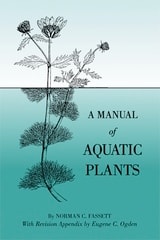
A Manual of Aquatic Plants
Norman C. Fassett; Revised Appendix by Eugene C. Ogden
University of Wisconsin Press, 2006
A Manual of Aquatic Plants can be said to be a classic; it made the identification of aquatic plants in sterile as well as in flowering or fruiting condition as simple as possible, and covers a region from Minnesota to Missouri and eastward to the Gulf of St. Lawrence and Virgina.
A Monograph on the Genus Heuchera
Carl Rosendahl
University of Minnesota Press, 1936
A Natural History of the New World
The Ecology and Evolution of Plants in the AmericasAlan Graham
University of Chicago Press, 2010
The paleoecological history of the Americas is as complex as the region is broad: stretching from the Arctic Circle to Tierra del Fuego, the New World features some of the most extraordinary vegetation on the planet. But until now it has lacked a complete natural history. Alan Graham remedies that with A Natural History of the New World. With plants as his scientific muse, Graham traces the evolution of ecosystems, beginning in the Late Cretaceous period (about 100 million years ago) and ending in the present, charting their responses to changes in geology and climate.
By highlighting plant communities’ roles in the environmental history of the Americas, Graham offers an overdue balance to natural histories that focus exclusively on animals. Plants are important in evolution’s splendid drama. Not only are they conspicuous and conveniently stationary components of the Earth’s ecosystems, but their extensive fossil record allows for a thorough reconstruction of the planet’s paleoenvironments. What’s more, plants provide oxygen, function as food and fuel, and provide habitat and shelter; in short, theirs is a history that can speak to many other areas of evolution.
A Natural History of the New World is an ambitious and unprecedented synthesis written by one of the world’s leading scholars of botany and geology.
A Portable Latin for Gardeners
More than 1,500 Essential Plant Names and the Secrets They ContainJames Armitage
University of Chicago Press, 2017
A Portable Latin for Gardeners is the perfect quick reference for working in the garden, shopping for plants, or doing botanical research—and no prior knowledge of Latin is required. The 1,500 terms are grouped by categories, making it easy to describe color, size, form, habitat, scent, taste, and time. Gardeners will make new connections and discoveries in a way standard alphabetical lists simply don’t allow. Alternately, gardeners who want to look up a particular term can jump right into the alphabetical index. Each entry includes the different forms of the term, a basic pronunciation guide, the definition, and an example plant species.
Rich botanical illustrations make this guide as beautiful as it is useful, while a durable flexi-bound cover means the book can withstand both days in the garden and evenings on the nightstand.
Acanthaceae to Myricaceae
Water Willows to Wax MyrtlesRobert H. Mohlenbrock
Southern Illinois University Press, 2008
Veteran botanist, scientific author, and professor Robert H. Mohlenbrock brings the full depth of his expertise and scholarship to his latest book, Acanthaceae to Myricaceae: Water Willows to Wax Myrtles, the third of four volumes in the Aquatic and Standing Water Plants of the Central Midwest series. This easy-to-use illustrated reference guide covers aquatic and standing water plants for the states of Iowa, Illinois, Indiana, Ohio, Kansas, Missouri, Nebraska, and Kentucky (excluding the biologically distinct Cumberland Mountain region of eastern Kentucky), from spearmint to wintergreen, from aster to waterwort.
The volume identifies, describes, and organizes species in three groups, including truly aquatic plants, which spend their entire life with their vegetative parts either completely submerged or floating on the water’s surface; emergents, which are usually rooted under water with their vegetative parts standing above the water’s surface; and wetland plants, which live most or all of their lives out of water, but which can live at least three months in water.
Mohlenbrock lists the taxa alphabetically, and within each taxon, he describes the species with the scientific names he deems most appropriate (indicating if his opinion differs from that of the U.S. Fish and Wildlife Service), common names, identification criteria, line drawings, geographical distribution, habitat description, and official U.S. Fish and Wildlife Service wetlands designation as described by the National Wetland Inventory Section in 1988.
Acanthaceae to Myricaceae is an essential reference for state and federal employees who deal with environmental conservation and mitigation issues in aquatic and wetland plants. It is also a useful guide for students and instructors in college and university courses focusing on the identification of aquatic and wetland plants.
Advances in Legume Science
R. J. Summerfield and A. H. Bunting
Royal Botanic Gardens, Kew, 2001
Advances in Legume Systematics Part 8
Legumes of Economic ImportanceB. Pickersgill and J. M. Lock
Royal Botanic Gardens, Kew, 1996

Advances in Legume Systematics Part 5. The Nitrogen Factor
J. L. Sprent and D. McKey
Royal Botanic Gardens, Kew, 1994

Advances in Legume Systematics Part 7. Phylogeny
M. D. Crisp and J. J. Doyal
Royal Botanic Gardens, Kew, 1995
African Plants
Biodiversity Taxonomy and UsesJ. Timberlake and S. Kativu
Royal Botanic Gardens, Kew, 1999
Agaves of Continental North America
Howard Scott Gentry
University of Arizona Press, 1982
Aloes
The Definitive GuideS. Carter, J. J. Lavranos, L. E. Newton, and C. C. Walker
Royal Botanic Gardens, Kew, 2011
Aloe vera is one of the most important cultivated medicinal plants and a key component of the floras of Africa, Arabia, and Madagascar. Here, for the first time since the 1960s, is a comprehensive account of all currently accepted aloe taxa in an easy-to-use and accessible format. Organized by habitat and size, entries for more than five hundred species each include descriptions, illustrations, and diagnostic features, accompanied by information on distribution, habitat, and relationship to other Aloe species. This volume is a must-have not only for succulent plant enthusiasts but for all who need a well-illustrated and comprehensive academic reference to the Aloe genus.
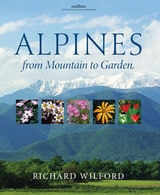
Alpines, from Mountain to Garden
Richard Wilford
Royal Botanic Gardens, Kew, 2010
Alpines, From mountain to garden is a refreshing new perspective on the many stunning plant species that make their home above the treeline. Where most guides to alpine plants have favored collecting and rare species, Richard Wilford offers a holistic approach that describes their discovery and introduction into cultivation and why these factors must be taken in to consideration when planting these mountain dwellers in your garden.
Organized geographically, Alpines, From mountain to garden covers the conditions—drainage, climate, light levels, temperature, and precipitation—and species native to each of nine regions, including the United States and Canada, South America, China, Europe, and Africa. In all, over three hundred plants are described and prolifically illustrated. Additional chapters cover cultivation, conservation, and the impact of indiscriminate collecting on the many species that are now on the verge of extinction. With its wealth of insight into where alpine plants come from and how this affects their cultivation, this new book from Kew’s Botanical Magazine Monograph series is sure to be a hit with gardeners, collectors, travelers, and photographers alike.

Amber Waves
The Extraordinary Biography of Wheat, from Wild Grass to World MegacropCatherine Zabinski
University of Chicago Press, 2020
At breakfast tables and bakeries, we take for granted a grain that has made human civilization possible, a cereal whose humble origins belie its world-shaping power: wheat. Amber Waves tells the story of a group of grass species that first grew in scattered stands in the foothills of the Middle East until our ancestors discovered their value as a source of food. Over thousands of years, we moved their seeds to all but the polar regions of Earth, slowly cultivating what we now know as wheat, and in the process creating a world of cuisines that uses wheat seeds as a staple food. Wheat spread across the globe, but as ecologist Catherine Zabinski shows us, a biography of wheat is not only the story of how plants ensure their own success: from the earliest bread to the most mouthwatering pasta, it is also a story of human ingenuity in producing enough food for ourselves and our communities.
Since the first harvest of the ancient grain, we have perfected our farming systems to grow massive quantities of food, producing one of our species’ global mega crops—but at a great cost to ecological systems. And despite our vast capacity to grow food, we face problems with undernourishment both close to home and around the world. Weaving together history, evolution, and ecology, Zabinski’s tale explores much more than the wild roots and rise of a now-ubiquitous grain: it illuminates our complex relationship with our crops, both how we have transformed the plant species we use as food, and how our society—our culture—has changed in response to the need to secure food sources. From the origins of agriculture to gluten sensitivities, from our first selection of the largest seeds from wheat’s wild progenitors to the sequencing of the wheat genome and genetic engineering, Amber Waves sheds new light on how we grow the food that sustains so much human life.

American Gardens in the Eighteenth Century
"For Use or for Delight"Ann Leighton
University of Massachusetts Press, 1976
American Gardens in the Eighteenth Century is the second of three authoritative volumes of garden history by Ann Leighton. This entertaining book focuses on eighteenth-century gardens and gardening. Leighton's material for the book was drawn from letters, journals, invoices, and books of men and women who were interested in the plants of the New and Old World. Throughout the book are illustrations and descriptive listings of native and new plants that were cultivated during the eighteenth century.
Companion volumes by Ann Leighton
Early American Gardens “For Meate or Medicine”
American Gardens of the Nineteenth Century “For Comfort and Affluence”
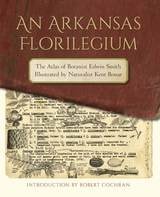
An Arkansas Florilegium
The Atlas of Botanist Edwin Smith Illustrated by Naturalist Kent BonarEdwin Smith
University of Arkansas Press, 2017
Thirty-five years later, with Smith retired and Bonar long gone from the park service but still drawing, Bonar’s weathered and battered copy of the atlas was seized by a diverse cadre of amateur admirers motivated by fears of its damage or loss. Their fears were certainly justified; after all, the pages were now jammed to the margins with some 3,500 drawings, and the volume had already survived one accidental dunking in an Ozark stream.
An Arkansas Florilegium brings Smith’s and Bonar’s knowledge and lifelong diligence to the world in this unique mix of art, science, and Arkansas saga.
An Illustrated Guide to Arizona Weeds
Kittie F. Parker
University of Arizona Press, 1972

An Illustrated Guide to Arizona Weeds
Kittie F. Parker
University of Arizona Press, 0
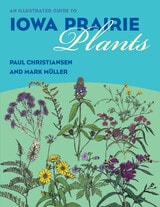
An Illustrated Guide to Iowa Prairie Plants
Paul Christiansen
University of Iowa Press, 1999
Iowa is the only state completely within the tallgrass prairie formation. Thanks to rich soil, adequate rainfall, and warm summer temperatures, hundreds of species combine to produce a diverse and colorful and ever-changing landscape. Using text and maps by Paul Christiansen and newly created drawings by Mark Müller, this first comprehensive guide to the prairie plants native to Iowa provides all the information necessary for identifying and distinguishing even the most similar species.
Species are described from the ground up: stem, leaf, bud, flower, fruit, and habitat. The time of flowering and fruiting is given for the central part of Iowa. Where several species are closely related, a common member of the group is fully described, and the other species are compared with the first. Each species is paired with a distribution map. The superbly detailed illustrations, all of which were drawn specifically for this handbook, capture the general shape of each plant as well as its characteristic features. A guide to family identification, information about extant and restored prairies in Iowa, and a glossary are also included.
Farmers who settled Iowa in the 1800s viewed the great green sea of grasses and wildflowers as a challenge to be replaced with cropfields and pastures. Today we realize that the prairie is an addictive, restorative, aesthetically satisfying place for study and recreation. An Illustrated Guide to Iowa Prairie Plants is designed to enable those who want to go beyond the most common plants to identify all native species and to learn more about their distribution, structure, and natural history.

An Introduction to Tree-Ring Dating
Marvin A. Stokes
University of Arizona Press, 1996
Authors Stokes and Smiley first explain the basic principles of tree-ring dating, then describe details of the process, step by step, from the time a sample is collected until it is incorporated into a master chronology.
The book focuses on coniferous evergreens of the Southwest, particularly piñons, because they have wide geographic distribution, constitute a large population, and show excellent growth response to certain controlling factors. The book is specifically concerned with the task of establishing a calendar date for a wood or charcoal specimen.
This concise but thorough explication of an important discipline will make dendrochonology more meaningful to students and professionals in archaeology, forestry, hydrology, and global change.
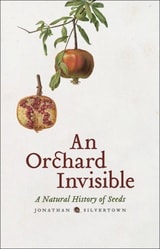
An Orchard Invisible
A Natural History of SeedsJonathan Silvertown
University of Chicago Press, 2009
The story of seeds, in a nutshell, is a tale of evolution. From the tiny sesame that we sprinkle on our bagels to the forty-five-pound double coconut borne by the coco de mer tree, seeds are a perpetual reminder of the complexity and diversity of life on earth. With An Orchard Invisible, Jonathan Silvertown presents the oft-ignored seed with the natural history it deserves, one nearly as varied and surprising as the earth’s flora itself.
Beginning with the evolution of the first seed plant from fernlike ancestors more than 360 million years ago, Silvertown carries his tale through epochs and around the globe. In a clear and engaging style, he delves into the science of seeds: How and why do some lie dormant for years on end? How did seeds evolve? The wide variety of uses that humans have developed for seeds of all sorts also receives a fascinating look, studded with examples, including foods, oils, perfumes, and pharmaceuticals. An able guide with an eye for the unusual, Silvertown is happy to take readers on unexpected—but always interesting—tangents, from Lyme disease to human color vision to the Salem witch trials. But he never lets us forget that the driving force behind the story of seeds—its theme, even—is evolution, with its irrepressible habit of stumbling upon new solutions to the challenges of life.
"I have great faith in a seed," Thoreau wrote. "Convince me that you have a seed there, and I am prepared to expect wonders." Written with a scientist’s knowledge and a gardener’s delight, An Orchard Invisible offers those wonders in a package that will be irresistible to science buffs and green thumbs alike.
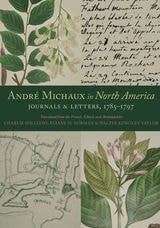
André Michaux in North America
Journals and Letters, 1785–1797Translated from the French, Edited, and Annotated by Charlie Williams, Eliane M. Norman, and Walter Kingsley Taylor
University of Alabama Press, 2020
Tracing the roots of American botany through the journals of an eighteenth-century explorer.
Known to today’s biologists primarily as the “Michx.” at the end of more than 700 plant names, André Michaux was an intrepid French naturalist. Under the directive of King Louis XVI, he was commissioned to search out and grow new, rare, and never-before-described plant species and ship them back to his homeland in order to improve French forestry, agriculture, and horticulture. He made major botanical discoveries and published them in his two landmark books, Histoire des chênes de l’Amérique (1801), a compendium of all oak species recognized from eastern North America, and Flora Boreali-Americana (1803), the first account of all plants known in eastern North America.
Straddling the fields of documentary editing, history of the early republic, history of science, botany, and American studies, André Michaux in North America: Journals and Letters, 1785–1797 is the first complete English edition of Michaux’s American journals. This copiously annotated translation includes important excerpts from his little-known correspondence as well as a substantial introduction situating Michaux and his work in the larger scientific context of the day.
To carry out his mission, Michaux traveled from the Bahamas to Hudson Bay and west to the Mississippi River on nine separate journeys, all indicated on a finely rendered, color-coded map in this volume. His writings detail the many hardships—debilitating disease, robberies, dangerous wild animals, even shipwreck—that Michaux endured on the North American frontier and on his return home. But they also convey the soaring joys of exploration in a new world where nature still reigned supreme, a paradise of plants never before known to Western science. The thrill of discovery drove Michaux ever onward, even ultimately to his untimely death in 1802 on the remote island of Madagascar.
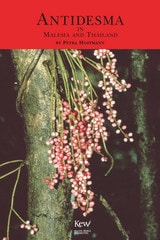
Antidesma in Malesia and Thailand
Petra Hoffmann
Royal Botanic Gardens, Kew, 2005
Aquatic and Wetland Plants of Northeastern North America
Garrett E. Crow and C. Barre Hellquist
University of Wisconsin Press, 2023
This is by far the best and most comprehensive manual and illustrated guide to native and naturalized vascular plants—ferns, conifers, and flowering plants—growing in aquatic and wetland habitats in northeastern North America, from Newfoundland west to Minnesota and south to Virginia and Missouri. Published in two volumes, this long-awaited work completely revises and greatly expands Norman Fassett’s 1940 classic A Manual of Aquatic Plants, yet retains the features that made Fassett’s book so useful.
Features include:
* coverage of 1139 plant species, 1186 taxa, 295 genera, 109 families
* more than 600 pages of illustrations, and illustrations for more than 90% of the taxa
* keys for each species include references to corresponding illustrations
* habitat information, geographical ranges, and synonomy
* a chapter on nuisance aquatic weeds
* glossaries of botanical and habitat terms
* a full index for each volume
Wetland ecologists, botanists, resource managers, public naturalists, and environmentalists concerned with the preservation of wetland areas, which are increasingly threatened, will welcome this clear, workable, and comprehensive guide.
Aquatic and Wetland Plants of Northeastern North America, Volume I
A Revised and Enlarged Edition of Norman C. Fassett's A Manual of Aquatic Plants, Volume I: Pteridphytes, Gymnosperms, and Angiosperms: DicotyledonsGarrett E. Crow and C. Barre Hellquist
University of Wisconsin Press, 2000
This is by far the best and most comprehensive manual and illustrated guide to native and naturalized vascular plants—ferns, conifers, and flowering plants—growing in aquatic and wetland habitats in northeastern North America, from Newfoundland west to Minnesota and south to Virginia and Missouri. Published in two volumes, this long-awaited work completely revises and greatly expands Norman Fassett’s 1940 classic A Manual of Aquatic Plants, yet retains the features that made Fassett’s book so useful.
Features include:
* coverage of 1139 plant species, 1186 taxa, 295 genera, 109 families
* more than 600 pages of illustrations, and illustrations for more than 90% of the taxa
* keys for each species include references to corresponding illustrations
* habitat information, geographical ranges, and synonomy
* a chapter on nuisance aquatic weeds
* glossaries of botanical and habitat terms
* a full index for each volume
Wetland ecologists, botanists, resource managers, public naturalists, and environmentalists concerned with the preservation of wetland areas, which are increasingly threatened, will welcome this clear, workable, and comprehensive guide.
Aquatic and Wetland Plants of Northeastern North America, Volume II
A Revised and Enlarged Edition of Norman C. Fassett's A Manual of Aquatic Plants, Volume II: Angiosperms: MonocotyledonsGarrett E. Crow and C. Barre Hellquist
University of Wisconsin Press, 2000
This is by far the best and most comprehensive manual and illustrated guide to native and naturalized vascular plants—ferns, conifers, and flowering plants—growing in aquatic and wetland habitats in northeastern North America, from Newfoundland west to Minnesota and south to Virginia and Missouri. Published in two volumes, this long-awaited work completely revises and greatly expands Norman Fassett’s 1940 classic A Manual of Aquatic Plants, yet retains the features that made Fassett’s book so useful.
Features include:
* coverage of 1139 plant species, 1186 taxa, 295 genera, 109 families
* more than 600 pages of illustrations, and illustrations for more than 90% of the taxa
* keys for each species include references to corresponding illustrations
* habitat information, geographical ranges, and synonomy
* a chapter on nuisance aquatic weeds
* glossaries of botanical and habitat terms
* a full index for each volume
Wetland ecologists, botanists, resource managers, public naturalists, and environmentalists concerned with the preservation of wetland areas, which are increasingly threatened, will welcome this clear, workable, and comprehensive guide.
Arikara Agriculture
Mother Corn’s Gift to the Sahnish PeopleArikara Agriculture Project; With collaborators Kelly Kindscher, Loren Yellow Bird, Michael Yellow Bird, Logan Sutton, Loren White, and Lisa Castle
University of Arizona Press, 2027
Drawing on a remarkable combination of early twentieth-century field notes, archaeological evidence, historical accounts, and the voices of Arikara collaborators, Arikara Agriculture: Mother Corn’s Gift to the Sahnish People offers a richly layered account of one of the Plains’ most accomplished agricultural societies.
Living along the Missouri River in present-day North and South Dakota, the Sahnish (Arikara) people cultivated expansive fields of corn, beans, squash, sunflowers, and other crops, sustaining vibrant communities and extensive trade networks. At the heart of this remarkable book are the invaluable records of ethnobotanist Melvin Gilmore, who documented the knowledge of Arikara elders between 1916 and 1924, capturing a lifeway on the cusp of profound change.
More than a historical study, this volume foregrounds the cultural, spiritual, and ecological significance of agriculture in Sahnish life. The contributors discuss how corn was the center of the Arikaras’ world and how it, and other agricultural crops, were important not just as food but also for the culture. The book illuminates traditional horticultural methods, food preparation techniques, and the enduring relevance of these practices today.
Both a vital contribution to ethnobiology and a community-centered preservation of knowledge, this work speaks to ongoing conversations about Indigenous foodways, resilience, and the revitalization of traditional ecological knowledge.
Aroids
Plants of the Arum Family, Third EditionDeni Bown
Royal Botanic Gardens, Kew, 2024
This third edition of the best-selling book by Deni Bown is fully updated and revised and includes new taxa and advances in research to ensure that Aroids: Plants of the Arum Family continues to be the go-to book for aroid enthusiasts.
Since the first edition of Aroids: Plants of the Arum Family was published in 1988, many new genera and over one thousand additional species have been discovered by botanists globally. This expansion of knowledge, made possible through the application of technological advances, has stimulated further interest in the plant family both within the scientific community and in the general public. One of the most famous aroids, the titan arum (Amorphophallus titanum), known for its gigantic size and stench of rotting flesh at the blooming stage, has become a botanical superstar!

As Áreas Importantes de Plantas de Moçambique
Edited by Iain Darbyshire, Sophie Richards, and Jo Osborne
Royal Botanic Gardens, Kew, 2024
The Important Plant Areas of Mozambique is based on the Mozambique TIPAs project run in collaboration between Royal Botanic Gardens, Kew, Mozambique’s Agricultural Research Institute (Instituto de Investigação Agrária de Moçambique – IIAM), and the University Eduardo Mondlane. Drawing on information from the TIPAs database, The Important Plant Areas of Mozambique includes color maps and photographs, site descriptions, and tables to present information on the botanical significance, habitat, and geology of the region. The book will also address conservation issues and ecosystem services to promote Mozambique’s critical plant sites and inform conservation leaders in government, NGOs, universities, and local communities about Mozambique’s threatened habitats.
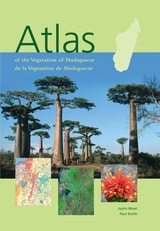
Atlas of the Vegetation of Madagascar
Justin Moat and Paul Smith
Royal Botanic Gardens, Kew, 2007
This first vegetation atlas for Madagascar, supported by the Critical Ecosystem Partnership Fund, has combined vegetation data from fieldwork and satellite images into a map-based information system. The result is a conservation tool which will help Madagascar’s government and people to plan a more sustainable future. This atlas is also of great use to anyone studying or visiting the island.
Presented in both French and English, the atlas gives a brief history of vegetation mapping in Madagascar; the methodology used in compiling these new maps; and detailed descriptions of each vegetation type, illustrated with photographs and diagrams. Trends in deforestation, extent of occurrence and levels of protection are assessed for each vegetation type. Additional information includes roads, trails, rivers, airports, reserves and a full place name index.
The atlas comprises 36 maps in A3 format, all in high resolution colour.
Authors of Plant Names
Edited by R. K. Brummitt and C. E. Powell
Royal Botanic Gardens, Kew, 1992
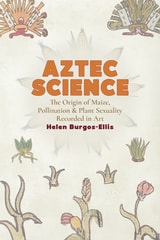
Aztec Science
The Genetic Origin of Maize, Pollination, and Plant Sexuality Recorded in ArtHelen Burgos-Ellis
University Press of Colorado, 2026
Supported with ample iconographic, ethnohistoric, etymological, and scientific evidence, Aztec Science is a groundbreaking endeavor introducing a new and radical approach to the study of Aztec art. It demonstrates that the Indigenous peoples of ancient Mesoamerica recorded scientific information about plants in their material culture. The detailed analysis of plant imagery in Aztec art, including in manuscripts such as the Codex Borgia, reveals that the cultural importance of maize and other plants was closely linked to scientific concepts that were well known in central Mexico centuries before they were subsequently “discovered” in Europe.
For the Nahua, Helen Burgos-Ellis argues, maize’s significance went far beyond economic value and religious importance. In Nahua art, references to maize, grass, and Quetzalcoatl reflect historic and scientifically relevant information. These images and glyphs, when studied against the ethnohistoric and scientific record of central Mexicans’ vast knowledge of plants, indicate that the Nahua understood key concepts about the maize plant, including its genetic origin from a common grass, pollination process, life cycle, and sexual reproduction. Consequently, the cultural significance of maize for the Nahuas was deeply intertwined with scientific understanding.
Aztec Science is a radical departure from bulk of the scholarship on the Codex Borgia, which has primarily been understood to contain calendrical and ritual information rather than botanical content, and is of significant interest to Pre-Columbianists and students and scholars of ethnohistory, Indigenous history and culture, traditional ecological knowledge, art history, and the history of science and botany.