Results by title
50 books match the query 'Standards' and 9 start with a
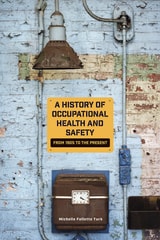
A History of Occupational Health and Safety
From 1905 to the PresentMichelle Follette Turk
University of Nevada Press, 2018
A History of Occupational Health and Safety examines the work, hazards, and health and safety programs from the early building of the railroad through the construction of the Hoover Dam, chemical manufacturing during World War II, nuclear testing, and dense megaresort construction on the Las Vegas Strip. In doing so, this comprehensive chronicle reveals the long and unfortunate history of exposing workers, residents, tourists, and the environment to dangerous work—all while exposing the present and future to crises in the region. Complex interactions and beliefs among the actors involved are emphasized, as well as how the medical community interpreted and responded to the risks posed.
Few places in the United States contain this mixture of industrial and postindustrial sites, the Las Vegas area offers unique opportunities to evaluate American occupational health during the twentieth century, and reminds us all about the relevancy of protecting our workers.

A New Generation Draws the Line
'Humanitarian' Intervention and the Standards of the WestNoam Chomsky
Pluto Press, 2012

Achieving National Board Certification for School Library Media Specialists
A Study GuideGail Dickinson
American Library Association, 2005
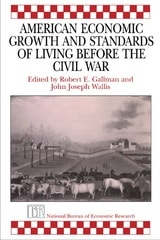
American Economic Growth and Standards of Living before the Civil War
Edited by Robert E. Gallman and John Joseph Wallis
University of Chicago Press, 1992
Despite the dramatic economic growth and rise in income levels, questions remain as to the general quality of life during this era. Was the improvement in income widely shared? How did economic growth affect the nature of work? Did higher levels of income lead to improved health and longevity? The authors address these questions by analyzing new estimates of labor force participation, real wages, and productivity, as well as of the distribution of income, height, and nutrition.
An Age of Accountability
How Standardized Testing Came to Dominate American Schools and Compromise EducationJohn L. Rury
Rutgers University Press, 2024
Archival Arrangement and Description
Christopher J. Prom
Society of American Archivists, 2013
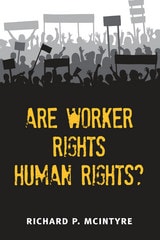
Are Worker Rights Human Rights?
Richard P. McIntyre
University of Michigan Press, 2008
"In a much-needed intervention, Ric McIntyre recasts the debate about globalization and labor rights and speeds us to the heart of the matter: the battle between transnational corporations who distance themselves from responsibility for the fate of workers, and labor activists who seek to reestablish bonds of accountability and moral obligation. The stakes in this struggle are enormous, and Dr. McIntyre provides crucial insight into the economic and political dynamics that define it."
---Scott Nova, Executive Director, Worker Rights Consortium, Washington, DC
"This book presents an insightful, powerful corrective to the contemporary debate over worker rights. McIntyre identifies the limitations of thinking of worker rights as individualized human rights and challenges us instead to examine how rights are defined through conventional thinking and class interest. The product is rich and compelling: McIntyre's investigation demands of us that we be far more attentive to the contradictory effects of ‘rights talk.' I recommend this book enthusiastically to all those who advocate for a just economic order the world over."
---George DeMartino, Associate Professor of Political Economy, the Josef Korbel School of International Studies, University of Denver
"An important contribution to the interdisciplinary study of labor. McIntyre's book will challenge the debate over labor rights on all fronts."
---Michael Hillard, Professor of Economics, University of Southern Maine
"A timely examination of our modern 'sweating system' . . . essential reading for all workers who hope for greater dignity in the workplace and greater fairness in society."
---Janet Knoedler, Associate Professor of Economics, Bucknell University
"Ric McIntyre convincingly shows how local actions, regulations changes, and international norms can combine to establish collective rights for workers."
---Gilles Raveaud, Assistant Professor in Economics, University of Saint-Denis, France, and cofounder of the "post-autistic economics movement"
"An important, timely, and needed contribution to our understanding of worker rights."
---Patrick McHugh, Associate Professor of Management, George Washington University
"Workers of the world, unite!" Karl Marx's famous call to action still promises an effective means of winning human rights in the modern global economy, according to economist Richard P. McIntyre. Currently, the human rights movement insists upon a person's right to life, freedom, and material necessities. In democratic, industrial nations such as the United States, the movement focuses more specifically on a person's civil rights and equal opportunity.
The movement's victories since WWII have come at a cost, however. The emphasis on individual rights erodes collective rights---the rights that disadvantaged peoples need to assert their most basic human rights. This is particularly true for workers, McIntyre argues. By reintroducing Marxian and Institutional analysis, he reveals the class relations and power structures that determine the position of workers in the global economy. The best hope for achieving workers' rights, he concludes, lies in grassroots labor organizations that claim the right of association and collective bargaining.
At last, an economist offers a vision for human rights that takes both moral questions and class relations seriously.
Richard P. McIntyre is Director of the University Honors Program and Professor of Economics at the University of Rhode Island.

Arranging and Describing Archives and Manuscripts
Dennis Meissner
Society of American Archivists, 2019
Arranging and Describing Archives and Manuscripts
Dennis Meissner
American Library Association, 2019