Results by title
1296 books match the query 'Women authors' and 26 start with g
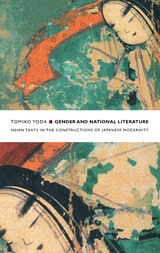
Gender and National Literature
Heian Texts in the Constructions of Japanese ModernityTomiko Yoda
Duke University Press, 2004
Moving back and forth between a critique of modern discourses on Heian literature and close analyses of the Heian texts themselves, Yoda sheds light on some of the most persistent interpretive models underwriting Japanese literary studies, particularly the modern paradigm of a masculine national subject. She proposes new directions for disciplinary critique and suggests that historicized understandings of premodern texts offer significant insights into contemporary feminist theories of subjectivity and agency.
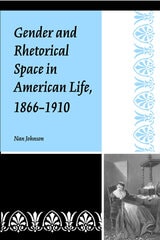
Gender and Rhetorical Space in American Life, 1866-1910
Nan Johnson
Southern Illinois University Press, 2002
Nan Johnson demonstrates that after the Civil War, nonacademic or “parlor” traditions of rhetorical performance helped to sustain the icon of the white middle class woman as queen of her domestic sphere by promoting a code of rhetorical behavior for women that required the performance of conventional femininity. Through a lucid examination of the boundaries of that gendered rhetorical space—and the debate about who should occupy that space—Johnson explores the codes governing and challenging the American woman’s proper rhetorical sphere in the postbellum years.
While men were learning to preach, practice law, and set political policies, women were reading elocution manuals, letter-writing handbooks, and other conduct literature. These texts reinforced the conservative message that women’s words mattered, but mattered mostly in the home. Postbellum pedagogical materials were designed to educate Americans in rhetorical skills, but they also persistently directed the American woman to the domestic sphere as her proper rhetorical space. Even though these materials appeared to urge the white middle class women to become effective speakers and writers, convention dictated that a woman’s place was at the hearthside where her rhetorical talents were to be used in counseling and instructing as a mother and wife.
Aided by twenty-one illustrations, Johnson has meticulously compiled materials from historical texts no longer readily available to the general public and, in so doing, has illuminated this intersection of rhetoric and feminism in the nineteenth century. The rhetorical pedagogies designed for a postbellum popular audience represent the cultural sites where a rethinking of women’s roles becomes open controversy about how to value their words. Johnson argues this era of uneasiness about shifting gender roles and the icon of the “quiet woman” must be considered as evidence of the need for a more complete revaluing of women’s space in historical discourse.
Gender and the Gothic in the Fiction of Edith Wharton
Kathy A. Fedorko
University of Alabama Press, 1995
Revealing the Gothic foundations of Edith Wharton's vision of gender and identity.
Gender and the Gothic in the Fiction of Edith Wharton is an innovative study that provides fresh insights into Wharton’s male characters while at the same time showing how Wharton’s imagining of a fe/male self evolves throughout her career. Using feminist archetypal theory and theory of the female Gothic, Kathy A. Fedorko shows how Wharton, in sixteen short stories and six major novels written during four distinct periods of her life, adopts and adapts Gothic elements to explore the nature of feminine and masculine ways of knowing and being and to dramatize the tension between them.
Edith Wharton’s contradictory views of women and men—her attitudes toward the feminine and the masculine—reflect a complicated interweaving of family and social environment, historical time, and individual psychology. Studies of Wharton have exhibited this same kind of contradiction, with some seeing her as disparaging men and the masculine and others depicting her as disparaging women and the feminine. The use of Gothic elements in her fiction provided Wharton, who was often considered the consummate realist, with a way to dramatize the conflict between feminine and masculine selves as she experienced them and to evolve an alternative to the dualism.
Fedorko’s work is unique in its careful consideration of Wharton’s sixteen Gothic works, which are seldom discussed. Further, the revelation of how these Gothic stories are reflected in her major realistic novels. In the novels with Gothic texts, Wharton draws multiple parallels between male and female protagonists, indicating the commonalities between women and men and the potential for a female self. Eventually, in her last completed novel and her last short story, Wharton imagines human beings who are comfortable with both gender selves.
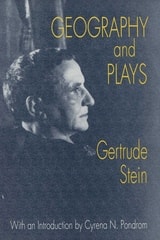
Geography and Plays
Gertrude Stein; Introduction by Cyrena N. Pondrom
University of Wisconsin Press, 1993
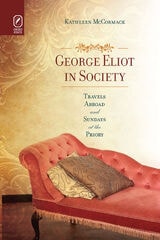
George Eliot in Society
Travels Abroad and Sundays at the PrioryKathleen McCormack
The Ohio State University Press, 2013
Georgette Heyer, History, and Historical Fiction
Edited by Samantha J. Rayner and Kim Wilkins
University College London, 2021
The historical works of Georgette Heyer inspire a fiercely loyal, international readership, including literary figures such as A. S. Byatt and Stephen Fry. This book brings together an eclectic range of scholars to explore the contexts of Heyer’s career. Drawing upon scholarship on Heyer and her contemporaries, the volume illustrates the ways in which her work sits in a chain of influence and why it remains pertinent to current conversations on books and publishing in the twenty-first century. From the gothic to data science, there is something for everyone in this volume, which celebrates Heyer’s esteemed status amongst historical novelists.
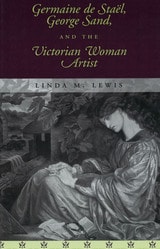
Germaine De Staël, George Sand, and the Victorian Woman Artist
Linda M. Lewis
University of Missouri Press, 2003
German Writing, American Reading
Women and the Import of Fiction, 1866–1917Lynne Tatlock
The Ohio State University Press, 2012
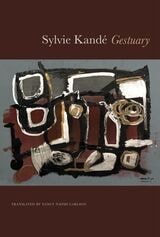
Gestuary
Sylvie Kandé
Seagull Books, 2026
Sylvie Kandé’s Gestuary offers a collection of gestures—of death and life, of tenderness and brutality—that fractures the flow of time. Senegalese riflemen from World War I are juxtaposed with migrants at borders who sew their lips shut in protest over immigration policies. In dream-like sequences, the dead refuse to stay underground and “push against the fence / that swings between our realm and theirs.” Inspired by unexpected sources, including jazz, sculpture, the legacy of the slave trade, proverbs, and elements of Diola culture, Kandé’s poems are rich in musicality and sophisticated syntax, rendered into a lyrical and luminous English by Nancy Naomi Carlson.

Ghost Of
Diana Khoi Nguyen
Omnidawn, 2018
Ghost Of was selected by Terrance Hayes to win Omnidawn’s Open Poetry Book Contest. It was also a finalist for the National Book Award and L.A. Times Book Prize.
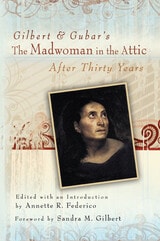
Gilbert and Gubar's The Madwoman in the Attic after Thirty Years
Edited by Annette R. Federico, Foreward by Sandra M. Gilbert
University of Missouri Press, 2011
When it was published in 1979, Sandra M. Gilbert and Susan Gubar's The Madwoman in the Attic: The Woman Writer and the Nineteenth-Century Literary Imaginationwas hailed as a pathbreaking work of criticism, changing the way future scholars would read Jane Austen, Mary Shelley, the Brontës, George Eliot, and Emily Dickinson. This thirtieth-anniversary collection adds both valuable reassessments and new readings and analyses inspired by Gilbert and Gubar’s approach. It includes work by established and up-and-coming scholars, as well as retrospective accounts of the ways in which The Madwoman in the Attic has influenced teaching, feminist activism, and the lives of women in academia.
These contributions represent both the diversity of today’s feminist criticism and the tremendous expansion of the nineteenth-century canon. The authors take as their subjects specific nineteenth- and twentieth-century women writers, the state of feminist theory and pedagogy, genre studies, film, race, and postcolonialism, with approaches ranging from ecofeminism to psychoanalysis. And although each essay opens Madwoman to a different page, all provocatively circle back—with admiration and respect, objections and challenges, questions and arguments—to Gilbert and Gubar's groundbreaking work.
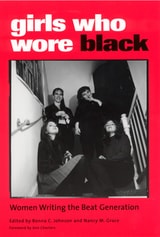
Girls Who Wore Black
Women Writing the Beat GenerationJohnson, Ronna C
Rutgers University Press, 2002
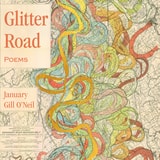
Glitter Road
January Gill O’Neil
CavanKerry Press, 2024
“My poems brought me to Oxford, Mississippi a.k.a. the velvet ditch: / a place you can fall into, get comfortable among confederate rebels,” writes January Gill O’Neil in her stunning new collection, Glitter Road. The poems in this book look back at the end of a marriage, a heartbreaking loss, and a new relationship against the backdrop of a Mississippi season. O’Neil reflects on the history and legacy of Emmett Till, how his story is intertwined with her own, and wades through the incredible grief she feels for herself, her children, and the Black children who won’t come home tonight. These poems reclaim the vulnerable, intimate parts of a life in transition and celebrate womanhood through awakenings, landscapes, meanders, and possibilities. She declares, with both self-love and conviction, “I am done telling the kinder story. I am a myth of my own making.”
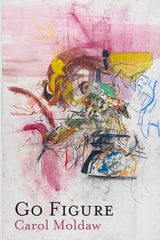
Go Figure
Carol Moldaw
Four Way Books, 2024
In Go Figure, Carol Moldaw demonstrates an incandescent mastery of figuration in its many forms. As the title suggests, these poems invite readers to draw their own conclusions. Observing, inquiring, and delving, Moldaw brings the intertwined strands of life and art to light at their most intimate. A wife-muse who interrogates the role, a mother hard-pressed by motherhood, a daughter whose own mother’s decline causes her to probe their connection, and an artist with an exacting eye and ear who contemplates the creative mysteries, Moldaw is driven to understand and articulate the self in all its manifestations. Like a skater cutting first lines in ice, Moldaw displays lyric immediacy and lyric expanse in her poems with an unswerving command. Complex and inviting, with deft wit, the poems engage public and private life and voice a necessary and resounding affirmation of the feminine and of language emerging through silence.
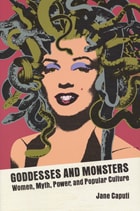
Goddesses and Monsters
Women, Myth, Power, and Popular CultureJane Caputi
University of Wisconsin Press, 2004
The essays in Goddesses and Monsters recognize popular culture as a primary repository of ancient mythic energies, images, narratives, personalities, icons, and archetypes. Together, they take on the patriarchal myth, where serial killers are heroes, where goddesses—in the form of great white sharks, femmes fatales, and aliens—are ritually slaughtered, and where pornography is the core story underlying militarism, environmental devastation, and racism. They also point to an alternative imagination of female power that still can be found behind the cult devotion given to Princess Diana and animating all the goddesses disguised as popular monsters, queen bitches, mammies, vamps, cyborgs, and sex bombs.
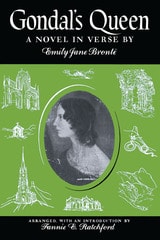
Gondal's Queen
A Novel in VerseBy Emily Jane Brontë
University of Texas Press, 1955
In Gondal’s Queen, Fannie Elizabeth Ratchford presents a cycle of eighty-four poems by Emily Jane Brontë, for the first time arranged in logical sequence, to re-create the “novel in verse” which Emily wrote about their beloved mystical kingdom of Gondal and its ruler, Augusta Geraldine Almeda, who brought tragedy to those who loved her.
Thanks to previous publications by Ratchford, the imaginative world of Gondal is well known not only to Brontë scholars but also to general readers. Only in the present book, however, with Emily’s lovely poems restored to the setting which gave them being, can the full impact of this extraordinary literary creation be realized.
The life story of Gondal’s Queen, from portentous birth to tragic death, is set in a world compounded of dark Gothic romance and Byronic extravagance; yet out of it emerges not only a real country of wild moor sheep and piercingly beautiful nights but also the portrait of a real woman, whose doom was wrought not by the stars but by the clashing complications of her own nature.
In A.G.A. (the appellation most usually applied to the Queen), Emily Brontë created a personality, not a puppet reciting lovely lines. And Ratchford, in reconstructing her story, has re-affirmed the dignity, beauty, and richness of Emily’s poetry.
Gondal’s Queen is the end of a long trail of research and literary detection which has led Ratchford to all known Brontë documentary sources. This quest was originally stimulated by curiosity over a tiny booklet signed, “C. Brontë, June 29th, 1837,” in the Wrenn Library at the University of Texas at Austin. Ratchford’s intense and astonishingly fruitful interest in the Brontës had its origin in her attempt to unravel the fascinating puzzle presented by this little book, which seemed to be merely a series of childish vignettes held together by “a shadow of a common character” and a “tendency toward a unified plot.”
Bit by bit, Ratchford assembled clues from manuscripts and obscure publications until the significance of the play world of the Brontë children began to emerge. In spite of the fact that the Brontës had been the subject of the liveliest literary speculation since their deaths, it remained for Ratchford to establish the importance of their juvenile writings to the later writings of Charlotte. In successive publications she presented the accumulating evidence. For a time her curiosity was centered on Charlotte and the group, but it finally became focused on Emily through a manuscript journal fragment which fortunately came to hand.
Unlike Charlotte, Emily left no prose works from her childhood. But it is apparent from journal entries and birthday notes written by Emily and Anne (whose shared creation Gondal was) not only that the two younger Brontës lived in and sustained daily an imaginary world which had evolved from the earlier play of the four children together, but also that they had written separately voluminous histories and “novels” about it. Of Emily’s vast Gondal literature, only a small body of verse has survived, poems originally intended for no eye but her own and possibly Anne’s. But it is clear that Gondal was not only Emily Brontë’s childhood dream world but also the major preoccupation of her adult creative life.

Good Bones
Maggie Smith
Tupelo Press, 2017
Good Bones is a collection of modern poetry that speaks to the world we live in. Maggie Smith contemplates the past and our future, life and death, childhood and motherhood. She writes out of the experience of motherhood, inspired by watching her own children read the world like a book they’ve just opened, knowing nothing of the characters or plot. Smith takes in the dark world around her with a critical eye, always searching for the hidden goodness: compassion, empathy, honesty. “There is a light,” she tells us, “and the light is good.” Smith skillfully reveals the layers of the world around us through lyric language and vivid imagery: “For every bird there is a stone thrown at a bird. / For every loved child, a child broken, bagged, / sunk in a lake.” These poems stare down darkness while cultivating and sustaining possibility and addressing a larger world. We come away from this collection hopeful about making the world a better place, a place to share with future generations. As Smith tells us in Good Bones, “This place could be beautiful, right? You could make this place beautiful.”
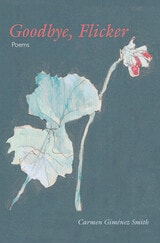
Goodbye, Flicker
PoemsCarmen Giménez Smith
University of Massachusetts Press, 2012
This distinctive collection introduces a new type of mythmaking, daring in its marriage of fairy tale tropes with American mundanities. Conspiratorial, Goodbye, Flicker describes the interior life of a girl whose prince is a deadbeat dad and whose escape into a fantasy world is also an escape into language, beauty, and the surreal.
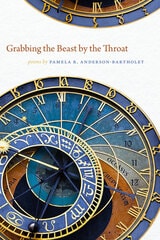
Grabbing the Beast by the Throat
Pamela R. Anderson-Bartholet
Michigan State University Press, 2027
Grabbing the Beast by the Throat is a gripping volume of historical fiction in poetry that follows the life of Pavel Svoboda, a Czechoslovakian man whose life turns upside down when Nazi Germany invades Czechoslovakia and brings Europe to the brink of World War II. Readers witness Pavel’s evolution from a carefree college student with a close-knit family into a resistance fighter who opposes Hitler’s brutal regime. When other college students are slaughtered for protesting the occupation and his Jewish girlfriend is taken to Terezín (Theresienstadt) Concentration Camp, Pavel joins the Czech resistance to protect the people he loves, undermine those in power, and help regain his country’s freedom.
In America and around the world, the clear rise of fascism makes it vitally important that we continue to learn from the past. Grounded in history, this book is a powerful—and unmistakably timely—reminder that there are times when we must fight for freedom.
Graham R.
Rosamund Marriot Watson, Woman of LettersLinda K. Hughes
Ohio University Press, 2005
Rosamund Marriott Watson was a gifted poet, an erudite literary and art critic, and a daring beauty whose life illuminates fin-de-siècle London and the way in which literary reputations are made—and lost. A participant in aestheticism and decadence, she wrote six volumes of poems noted for their subtle cadence, diction, and uncanny effects. Linda K. Hughes unfolds a complex life in Graham R.: Rosamund Marriott Watson, Woman of Letters, tracing the poet’s development from accomplished ballads and sonnets, to avant-garde urban impressionism and New Woman poetry, to her anticipation of literary modernism.
Despite an early first divorce, she won fame writing under a pseudonym, Graham R. Tomson. The influential Andrew Lang announced the arrival of a new poet he assumed to be a man. She was soon hosting a salon attended by Lang, Oscar Wilde, and other 1890s notables. Publishing to widespread praise as Graham R., she exemplified the complex cultural politics of her era. A woman with a man’s name and a scandalous past, she was also a graceful beauty who captivated Thomas Hardy and left an impression on his work. At the height of her success she fell in love with writer H. B. Marriott Watson and dared a second divorce.
Graham R. combines the stories of a gifted poet, of London literary networks in the 1890s, and of a bold woman whose achievements and scandals turned on her unusual history of marriage and divorce. Her literary history and her uncommon experience reveal the limits and opportunities faced by an unconventional, ambitious, and talented woman at the turn of the century.
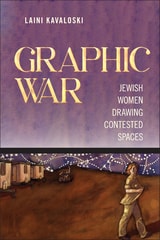
Graphic War
Jewish Women Drawing Contested SpacesLaini Kavaloski
Rutgers University Press, 2026

Green Cane and Juicy Flotsam
Short Stories by Caribbean WomenEsteves, Carmen C
Rutgers University Press, 1991
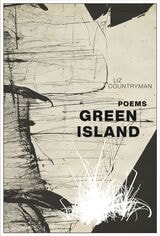
Green Island
Liz Countryman
Tupelo Press, 2024
The poems in Green Island delve into the relationship between place and imagination, examining the ways in which the physical places the speaker occupies, remembers, and imagines determine and enlarge her understanding of self.
While operating with startling self-awareness, Green Island does not simply offer poems that interrogate the circumstances of their own making. The work found in this slim volume questions the poetic tropes of beauty and romantic love and their relationships to the lyric. Ultimately working within the confines of a received tradition to expand what is possible within it, Liz Countryman shows us moments of quiet revelation in the quotidian, the comic, and in the vestiges of popular culture.
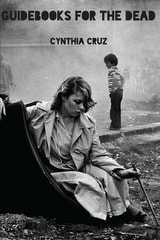
Guidebooks for the Dead
Cynthia Cruz
Four Way Books, 2020

Gulf
Pimone Triplett
University of Iowa Press, 2027
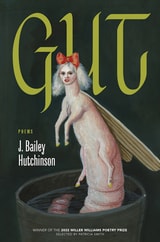
Gut
PoemsJ. Bailey Hutchinson
University of Arkansas Press, 2022
Winner, 2022 Miller Williams Poetry Prize
J. Bailey Hutchinson’s Gut is the dazzling debut of a born storyteller. In Hutchinson’s poems, which explore the substance of personal history, family attains the mysterious stature of folklore, while the vast worlds of nature and of the imagination abound with extraordinary creatures that likewise elude full understanding. For the voracious consciousness at work here, inheritance—what it means to be from a particular place and a particular people, no matter how one might strain against that—lies at the very heart of things.