Results by title
22279 books match the query 'Social Science' and 583 start with g
Governing American Cities
Inter-Ethnic Coalitions, Competition, and ConflictMichael Jones-Correa
Russell Sage Foundation, 2001
Governing Educational Desire
Culture, Politics, and Schooling in ChinaAndrew B. Kipnis
University of Chicago Press, 2011
Parents in China greatly value higher education for their children, but the intensity and effects of their desire to achieve this goal have largely gone unexamined—until now. Governing Educational Desire explores the cultural, political, and economic origins of Chinese desire for a college education as well as its vast consequences, which include household and national economic priorities, birthrates, ethnic relations, and patterns of governance.
Where does this desire come from? Andrew B. Kipnis approaches this question in four different ways. First, he investigates the role of local context by focusing on family and community dynamics in one Chinese county, Zouping. Then, he widens his scope to examine the provincial and national governmental policies that affect educational desire. Next, he explores how contemporary governing practices were shaped by the Confucian examination system, uncovering the historical forces at work in the present. Finally, he looks for the universal in the local, considering the ways aspects of educational desire in Zouping spread throughout China and beyond. In doing so, Kipnis provides not only an illuminating analysis of education in China but also a thought-provoking reflection on what educational desire can tell us about the relationship between culture and government.
Governing Gaza
Bureaucracy, Authority, and the Work of Rule, 1917–1967Ilana Feldman
Duke University Press, 2008
Drawing on archival research in Gaza, Cairo, Jerusalem, and London, as well as two years of ethnographic research with retired civil servants in Gaza, Feldman identifies two distinct, and in some ways contradictory, governing practices. She illuminates mechanisms of “reiterative authority” derived from the minutiae of daily bureaucratic practice, such as the repetitions of filing procedures, the accumulation of documents, and the habits of civil servants. Looking at the provision of services, she highlights the practice of “tactical government,” a deliberately restricted mode of rule that makes limited claims about governmental capacity, shifting in response to crisis and operating without long-term planning. This practice made it possible for government to proceed without claiming legitimacy: by holding the question of legitimacy in abeyance. Feldman shows that Gaza’s governments were able to manage under, though not to control, the difficult conditions in Gaza by deploying both the regularity of everyday bureaucracy and the exceptionality of tactical practice.
Governing Genealogies of International Film Education
Hadi Gharabaghi and Terri Ginsberg
Temple University Press, 2026
The editors of and contributors to Governing Genealogies of International Film Education offer a critical historiographic understanding of governmentalized film education during the Cold War. Chapters examine the production of hygiene and cultural films in Travancore, India during the postcolonial period, and Michigan State University’s documentary collaboration with Iran during the 1970s, among other topics, elucidating cinema’s deployment as a state apparatus and its implications for global cultures, subject positions, and social relations.
Governing Genealogies of International Film Education investigates this distinct modality of cultural production and policy to shed necessary light on the ideological overdetermination of institutionalized film education as well as on audiovisual education as an international academic discipline. The contributors show how governmentalized film education has taught American exceptionalism, hegemony, and colonialism. They also theorize about and provide methodological examples of how film archives and film studies have framed prevailing understandings of cinema’s role in American and world history.
Contributors: Kaveh Askari, Zoë Druick, Bindu Menon Mannil, Wissam Mouawad, and the editors
Governing How We Care
Contesting Community and Defining Difference in U.S. Public Health ProgramsSusan J. Shaw
Temple University Press, 2012
As local governments and organizations assume more responsibility for ensuring the public health, identity politics play an increasing yet largely unexamined role in public and policy attitudes toward local problems. In Governing How We Care, medical anthropologist Susan Shaw examines the relationship between government and citizens using case studies of needle exchange and Welfare-to-Work programs to illustrate the meanings of cultural difference, ethnicity, and inequality in health care.
Drawing on ethnographic research conducted over six years in a small New England city, Shaw presents critical perspectives on public health intervention efforts. She looks at online developments in health care and makes important correlations between poverty and health care in the urban United States. Shaw also highlights the new concepts of community and forms of identity that emerge in our efforts to provide effective health care. Governing How We Care shows how government-sponsored community health and health care programs operate in an age of neoliberalism.
Governing Indigenous Territories
Enacting Sovereignty in the Ecuadorian AmazonJuliet S. Erazo
Duke University Press, 2013
Governing Maya Communities and Lands in Belize
Indigenous Rights, Markets, and SovereigntiesLaurie Kroshus Medina
Rutgers University Press, 2024
Governing New York City
Politics in the MetropolisWallace Sayre
Russell Sage Foundation, 1960
Governing Pleasures
Pornography and Social Change in England, 1815-1914Sigel, Lisa Z.
Rutgers University Press, 2002
Governing Sound
The Cultural Politics of Trinidad's Carnival MusicsJocelyne Guilbault
University of Chicago Press, 2007
Calypso music is an integral part of Trinidad’s national identity. When, for instance, Franklin D. Roosevelt asked the great Trinidadian musician Roaring Lion where he was from, Lion famously replied “the land of calypso.” But in a nation as diverse as Trinidad, why is it that calypso has emerged as the emblematic music?
In Governing Sound, Jocelyne Guilbault examines the conditions that have enabled calypso to be valorized, contested, and targeted as a field of cultural politics in Trinidad. The prominence of calypso, Guilbault argues, is uniquely enmeshed in projects of governing and in competing imaginations of nation, race, and diaspora. During the colonial regime, the period of national independence, and recent decades of neoliberal transformation, calypso and its musical offshoots have enabled new cultural formations while simultaneously excluding specific social expressions, political articulations, and artistic traditions. Drawing on over a decade of ethnographic work, Guilbault maps the musical journeys of Trinidad’s most prominent musicians and arrangers and explains the distinct ways their musical sensibilities became audibly entangled with modes of governing, audience demands, and market incentives.
Generously illustrated and complete with an accompanying CD, Governing Sound constitutes the most comprehensive study to date of Trinidad’s carnival musics.
Governing With the News, Second Edition
The News Media as a Political InstitutionTimothy E. Cook
University of Chicago Press, 2005
"Provocative and often wise. . . . Cook, who has a complex understanding of the relationship between governing and the news, provides a fascinating account of the origins of this complicity."—James Bennet, Washington Monthly
"[Governing with the News] addresses central issues of media impact and power in fresh, illuminating ways. . . . Cook mines a wealth of historical and organizational literature to assert that the news media are a distinct political institution in our democratic system."—Robert Schmuhl, Commonweal
Governing the Excluded
Rural Livelihoods Beyond Coca in Colombia's Peace LaboratoryAlex Diamond
University of Chicago Press, 2026
The Colombian village of Briceño might, at first glimpse, look like many communities in the rural Global South. Many of the people living there rely on small-scale farming, even as a newly constructed hydroelectric dam threatens traditional livelihoods. Yet after decades where Briceño suffered from a bloody conflict, the village has more recently become central to the nation’s hopes for peace. In Governing the Excluded, sociologist Alex Diamond shares a closer look at Briceño and offers unique insight not only into the contemporary Colombian state but to how people across the Global South are struggling to maintain rural livelihoods amid economic dispossession.
Governing the Excluded describes a landmark peace process between the Colombian government and the radical FARC guerrillas from the perspective of Colombian farmers, drawing links between economic transformation, drug economies, and armed conflict. Exclusion from global markets for traditional crops like coffee first pushed farmers to grow coca, the raw material for cocaine. This ushered in an era of violent conflict for control of the illicit economy, while farmers continued to be priced out of legal markets. In exchange for peace and state protection, farmers ultimately agreed to sacrifice profitable coca. But with its disappearance, they now find themselves dependent on the state: for machinery to maintain the roads they need to get legal harvests to market, municipal jobs that are the only decent work available, and for public resources to subsidize food crops with razor-thin profit margins. Ongoing economic struggles in the legal sector make the state’s newfound authority tenuous, as some villagers replant coca, abandon the village for uncertain urban futures, or join a rearmed guerrilla group.
Informed by deep ethnographic research and firsthand stories from Briceño residents, Governing the Excluded shows that when it comes to the forces driving dispossession—be they international corporate megaprojects, global food prices, or national initiatives to replace coca cultivation—state authority goes only so far as its ability to sustain local livelihoods.

Governing the Global Clinic
HIV and the Legal Transformation of MedicineCarol A. Heimer
University of Chicago Press, 2025
A deep examination of how new, legalistic norms affected the trajectory of global HIV care and altered the practice of medicine.
HIV emerged in the world at a time when medicine and healthcare were undergoing two major transformations: globalization and a turn toward legally inflected, rule-based ways of doing things. It accelerated both trends. While pestilence and disease are generally considered the domain of biological sciences and medicine, social arrangements—and law in particular—are also crucial.
Drawing on years of research in HIV clinics in the United States, Thailand, South Africa, and Uganda, Governing the Global Clinic examines how growing norms of legalized accountability have altered the work of healthcare systems and how the effects of legalization vary across different national contexts. A key feature of legalism is universalistic language, but, in practice, rules are usually imported from richer countries (especially the United States) to poorer ones that have less adequate infrastructure and fewer resources with which to implement them. Challenging readers to reconsider the impulse to use law to organize and govern social life, Governing the Global Clinic poses difficult questions: When do rules solve problems, and when do they create new problems? When do rules become decoupled from ethics, and when do they lead to deeper moral commitments? When do rules reduce inequality? And when do they reflect, reproduce, and even amplify inequality?
Governor's Mansion, The
Robert Laxalt
University of Nevada Press, 1997
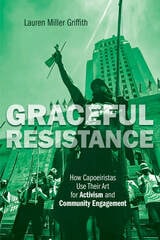
Graceful Resistance
How Capoeiristas Use Their Art for Activism and Community EngagementLauren Miller Griffith
University of Illinois Press, 2023
Capoeira began as a martial art developed by enslaved Afro-Brazilians. Today, the practice incorporates song, dance, acrobatics, and theatrical improvisation—and leads many participants into activism.
Lauren Miller Griffith’s extensive participant observation with multiple capoeira groups informs her ethnography of capoeiristas--both individuals and groups--in the United States. Griffith follows practitioners beyond their physical training into social justice activities that illuminate capoeira’s strong connection to resistance and subversion. As both individuals and communities of capoeiristas, participants march against racial discrimination, celebrate Martin Luther King Jr. Day and Juneteenth, organize professional clothing drives for job seekers, and pursue economic and environmental justice in their neighborhoods. For these people, capoeira becomes a type of serious leisure that contributes to personal growth, a sense of belonging, and an overall sense of self, while also imposing duties and obligations.
An innovative look at capoeira in America, Graceful Resistance reveals how the practicing of an art can catalyze action and transform communities.
Grammars of the Urban Ground
Ash Amin and Michele Lancione, editors
Duke University Press, 2022
Contributors. Ash Amin, Teresa Caldeira, Filip De Boeck, Suzanne Hall, Caroline Knowles, Michele Lancione, Colin McFarlane, Natalie Oswin, Edgar Pieterse, Ananya Roy, AbdouMaliq Simone, Tatiana Thieme, Nigel Thrift, Mariana Valverde
Gramsci's Common Sense
Inequality and Its NarrativesKate Crehan
Duke University Press, 2016

Gramsci, Culture and Anthropology
Kate Crehan
Pluto Press, 2003
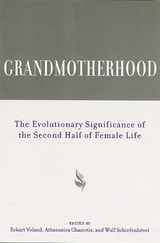
Grandmotherhood
The Evolutionary Significance of the Second Half of Female LifeVoland, Eckart
Rutgers University Press, 2014
By the year 2030, the average life expectancy of women in industrialized countries could reach ninety—exceeding that of men by about ten years. At the present time, postmenopausal women represent more than fifteen percent of the world’s population and this figure is likely to grow.
From an evolutionary perspective, these demographic numbers pose some intriguing questions. Darwinian theory holds that a successful life is measured in terms of reproduction. How is it, then, that a woman’s lifespan can greatly exceed her childbearing and childrearing years? Is this phenomenon simply a byproduct of improved standards of living, or do older women—grandmothers in particular—play a measurable role in increasing their family members’ biological success?
Until now, these questions have not been examined in a thorough and comprehensive manner. Bringing togethertheoretical and empirical work byinternationally recognized scholars in anthropology, psychology, ethnography, and the social sciences, Grandmotherhood explores the evolutionary purpose and possibilities of female post-generative life. Students and scholars of human evolution, anthropology, and even gerontology will look to this volume as a major contribution to the current literature in evolutionary studies.
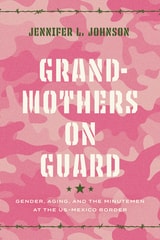
Grandmothers on Guard
Gender, Aging, and the Minutemen at the US-Mexico BorderBy Jennifer L. Johnson
University of Texas Press, 2021
For about a decade, one of the most influential forces in US anti-immigrant politics was the Minuteman Project. The armed volunteers made headlines patrolling the southern border. What drove their ethno-nationalist politics?
Jennifer L. Johnson spent hundreds of hours observing and interviewing Minutemen, hoping to answer that question. She reached surprising conclusions. While the public face of border politics is hypermasculine—men in uniforms, fatigues, and suits—older women were central to the Minutemen. Women mobilized support and took part in border missions. These women compel us to look beyond ideological commitments and material benefits in seeking to understand the appeal of right-wing politics. Johnson argues that the women of the Minutemen were motivated in part by the gendered experience of aging in America. In a society that makes old women irrelevant, aging white women found their place through anti-immigrant activism, which wedded native politics to their concern for the safety of their families. Grandmothers on Guard emphasizes another side of nationalism: the yearning for inclusion. The nation the Minutemen imagined was not only a space of exclusion but also one in which these women could belong.
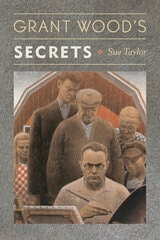
Grant Wood’s Secrets
Sue Taylor
University of Delaware Press, 2011
Published by University of Delaware Press. Distributed worldwide by Rutgers University Press.
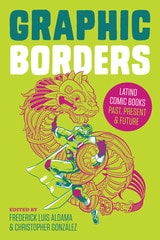
Graphic Borders
Latino Comic Books Past, Present, and FutureEdited by Frederick Luis Aldama and Christopher González
University of Texas Press, 2016
From the influential work of Los Bros Hernandez in Love & Rockets, to comic strips and political cartoons, to traditional superheroes made nontraditional by means of racial and sexual identity (e.g., Miles Morales/Spider-Man), comics have become a vibrant medium to express Latino identity and culture. Indeed, Latino fiction and nonfiction narratives are rapidly proliferating in graphic media as diverse and varied in form and content as is the whole of Latino culture today.
Graphic Borders presents the most thorough exploration of comics by and about Latinos currently available. Thirteen essays and one interview by eminent and rising scholars of comics bring to life this exciting graphic genre that conveys the distinctive and wide-ranging experiences of Latinos in the United States. The contributors’ exhilarating excavations delve into the following areas: comics created by Latinos that push the boundaries of generic conventions; Latino comic book author-artists who complicate issues of race and gender through their careful reconfigurations of the body; comic strips; Latino superheroes in mainstream comics; and the complex ways that Latino superheroes are created and consumed within larger popular cultural trends. Taken as a whole, the book unveils the resplendent riches of comics by and about Latinos and proves that there are no limits to the ways in which Latinos can be represented and imagined in the world of comics.
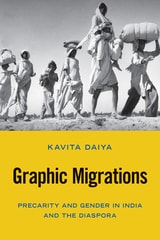
Graphic Migrations
Precarity and Gender in India and the DiasporaKavita Daiya
Temple University Press, 2020
In Graphic Migrations, Kavita Daiya provides a literary and cultural archive of refugee stories and experiences to respond to the question “What is created?” after decolonization and the 1947 Partition of India. She explores how stories of Partition migrations shape and influence the political and cultural imagination of secularism and contribute to gendered citizenship for South Asians in India and its diasporas.
Daiya analyzes modern literature, Bollywood films, Margaret Bourke-White’s photography, advertising, and print culture to show how they memorialize or erase refugee experiences. She also uses oral testimonies of Partition refugees from Hong Kong, South Asia, and North America to draw out the tensions of the nation-state, ethnic discrimination, and religious difference. Employing both Critical Refugee Studies and Feminist Postcolonial Studies frameworks, Daiya traces the cultural, affective, and political legacies of Partition migrations.
The precarity generated by modern migration and expressed through public culture prompts a rethinking of how dominant media represents gendered migrants and refugees. Graphic Migrations demands that we redraw the boundaries of how we tell the story of modern world history and the intricately interwoven, intimate production of statelessness and citizenship across the world’s communities.
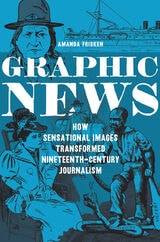
Graphic News
How Sensational Images Transformed Nineteenth-Century JournalismAmanda Frisken
University of Illinois Press, 2020

Graphic Opinions
Editorial Cartoonists and Their ArtJack Colldeweih
University of Wisconsin Press, 1998
calling.
The editors examine the current work and opinions of two dozen prominent cartoonists through profiles and essays about political and social issues. Four examples by each cartoonist illustrate this.
Graphic Pluralism, Volume 57
Frank L. Salomon
Duke University Press, 0
One contributor shows how the Spanish colonial powers and the traditional Maya nobility in the Yucatán struggled over alphabetic literacy and the continued use of hieroglyphics. Another contributor documents how the Natick speakers of Martha’s Vineyard adopted alphabetic literacy for their own purposes in the seventeenth and eighteenth centuries, incorporating writing as a tool of traditional governance. In another article, a Spanish translation is compared to the original Nahua text to show how the two versions provide very different views of the Spanish conquest of the city-state of Mexico-Tenochtitlán. Yet another contributor examines how competing language ideologies in the Andes were used to characterize khipus (Andean knotted strings) and alphabetic script.
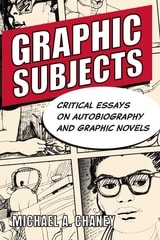
Graphic Subjects
Critical Essays on Autobiography and Graphic NovelsMichael A. Chaney
University of Wisconsin Press, 2011
Some of the most noteworthy graphic novels and comic books of recent years have been entirely autobiographical. In Graphic Subjects, Michael A. Chaney brings together a lively mix of scholars to examine the use of autobiography within graphic novels, including such critically acclaimed examples as Art Spiegelman’s Maus, David Beauchard’s Epileptic, Marjane Satrapi’s Persepolis, Alan Moore’s Watchmen, and Gene Yang’s American Born Chinese.
Grasshopper Pueblo
A Story of Archaeology and Ancient LifeJefferson Reid and Stephanie Whittlesey
University of Arizona Press, 1999
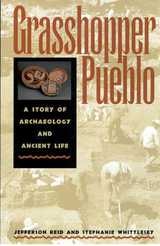
Written for general readers—and for the White Mountain Apache, on whose land Grasshopper Pueblo is located and who have participated in the excavations there—the book conveys the simple joys and typical problems of an ancient way of life as inferred from its material remains. Reid and Whittlesey's account reveals much about the human capacity for living under what must strike modern readers as adverse conditions. They describe the environment with which the people had to cope; hunting, gathering, and farming methods; uses of tools, pottery, baskets, and textiles; types of rooms and households; and the functioning of social groups. They also reconstruct the sacred world of Grasshopper as interpreted through mortuary ritual and sacred objects and discuss the relationship of Grasshopper residents with neighbors and with those who preceded and followed them.
Grasshopper Pueblo not only thoroughly reconstructs this past life at a mountain village, it also offers readers an appreciation of life at the field school and an understanding of how excavations have proceeded there through the years. For anyone enchanted by mysteries of the past, it reveals significant features of human culture and spirit and the ultimate value of archaeology to contemporary society.
Grassroots Activisms
Public Rhetorics in Localized ContextsEdited by Lisa L. Phillips, Sarah Warren-Riley, and Julie Collins Bates
The Ohio State University Press, 2024
What is the nature of grassroots activism? How and why do individuals get involved or attempt to make change for themselves, others, or their own communities? What motivates activists to maintain momentum when their efforts to redress injustices or paths toward change seem difficult or personally risky to navigate? These questions and more are addressed in Grassroots Activisms: Public Rhetorics in Localized Contexts. Featuring a diverse array of both local activist profiles and original scholarly essays, the collection amplifies and analyzes the tactics of grassroots activists working locally to intervene in a variety of social injustices—from copwatching and policy reform to Indigenous resistance against land colonization to #RageAgainstRape.
Attuned to the demanding—and often underappreciated—work of grassroots activism, this book interrogates how such efforts unfold within and against existing historical, cultural, social, and political realities of local communities; are informed by the potentials and constraints of coalition-building; and ultimately shape different facets of society at the local level. This collection acknowledges and celebrates the complexity of grassroots activist work, showing how these less-recognized efforts often effect change where institutions have failed.
Grassroots Economies
Living with Austerity in Southern EuropeSusana Narotzky
Pluto Press, 2020
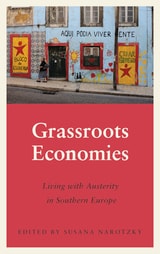
Grassroots Economies interrogates the effects of the economic crisis on the livelihood of working people, providing insight into their anxieties. Drawing on a rich seam of ethnographic material, it is a distinctive comparative analysis that explores the contradictions of their coping mechanisms and support structures.
With a focus on gender, the book explores values and ideologies, including dispossession and accumulation. Ultimately it demonstrates that everyday interactions on the local scale provide a significant sense of the global.
Grassroots Struggles for Sustainability in Central America
Lynn R. Horton
University Press of Colorado, 2007
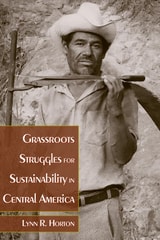
With a comparative, empirical approach, Horton also analyzes dominant practices linked to sustainable development - neoliberal reforms, project interventions, and environmental protection. She reveals how these practices support or undermine economic, cultural, and political opportunities for the rural and indigenous poor and impact these communities' advancement of their own visions of sustainability. Finally, the author explores processes of empowerment that enable communities to articulate and put into practice local visions of sustainability, which contribute toward broader social and structural transformations.
Grassroots Struggles for Sustainability in Central America will interest sociologists, anthropologists, and others who study the theory and practice of sustainable development.
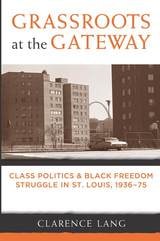
Grassroots at the Gateway
Class Politics and Black Freedom Struggle in St. Louis, 1936-75Clarence Lang
University of Michigan Press, 2010
"This is a theoretically sophisticated and thoroughly documented historical case study of the movements for African American liberation in St. Louis. Through detailed analysis of black working class mobilization from the depression years to the advent of Black Power, award-winning historian Clarence Lang describes how the advances made in earlier decades were undermined by a black middle class agenda that focused on the narrow aims of black capitalists and politicians. The book is a major contribution to our understanding of the black working class insurgency that underpinned the civil rights and Black Power campaigns of the twentieth century."
---V. P. Franklin, University of California, Riverside
"A major work of scholarship that will transform historical understanding of the pivotal role that class politics played in both civil rights and Black Power activism in the United States. Clarence Lang's insightful, engagingly written, and well-researched study will prove indispensable to scholars and students of postwar American history."
---Peniel Joseph, Brandeis University
Breaking new ground in the field of Black Freedom Studies, Grassroots at the Gateway reveals how urban black working-class communities, cultures, and institutions propelled the major African American social movements in the period between the Great Depression and the end of the Great Society. Using the city of St. Louis in the border state of Missouri as a case study, author Clarence Lang undermines the notion that a unified "black community" engaged in the push for equality, justice, and respect. Instead, black social movements of the working class were distinct from---and at times in conflict with---those of the middle class. This richly researched book delves into African American oral histories, records of activist individuals and organizations, archives of the black advocacy press, and even the records of the St. Louis' economic power brokers whom local black freedom fighters challenged. Grassroots at the Gateway charts the development of this race-class divide, offering an uncommon reading of not only the civil rights movement but also the emergence and consolidation of a black working class.
Clarence Lang is Assistant Professor in African American Studies and History at the University of Illinois at Urbana-Champaign.
Photo courtesy Western Historical Manuscript Collection, University of Missouri, St. Louis

Grateful Nation
Student Veterans and the Rise of the Military-Friendly CampusEllen Moore
Duke University Press, 2017
Gravity's Ghost and Big Dog
Scientific Discovery and Social Analysis in the Twenty-First CenturyHarry Collins
University of Chicago Press, 2013
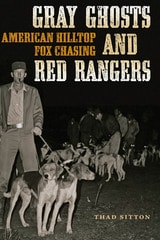
Gray Ghosts and Red Rangers
American Hilltop Fox ChasingBy Thad Sitton
University of Texas Press, 2010
Around a campfire in the woods through long hours of night, men used to gather to listen to the music of hounds' voices as they chased an elusive and seemingly preternatural fox. To the highly trained ears of these backwoods hunters, the hounds told the story of the pursuit like operatic voices chanting a great epic. Although the hunt almost always ended in the escape of the fox—as the hunters hoped it would—the thrill of the chase made the men feel "that they [were] close to something lost and never to be found, just as one can feel something in a great poem or a dream."
Gray Ghosts and Red Rangers offers a colorful account of this vanishing American folkway—back-country fox hunting known as "hilltopping," "moonlighting," "fox racing," or "one-gallus fox hunting." Practiced neither for blood sport nor to put food on the table, hilltopping was worlds removed from elite fox hunting where red- and black-coated horsemen thundered across green fields in daylight. Hilltopping was a nocturnal, even mystical pursuit, uniting men across social and racial lines as they gathered to listen to dogs chasing foxes over miles of ground until the sun rose. Engaged in by thousands of rural and small-town Americans from the 1860s to the 1980s, hilltopping encouraged a quasi-spiritual identification of man with animal that bound its devotees into a "brotherhood of blood and cause" and made them seem almost crazy to outsiders.

Gray Love
Stories About Dating and New Relationships After 60Rutgers University Press, 2023
Gray Matters
Finding Meaning in the Stories of Later LifeEllyn Lem
Rutgers University Press, 2020
Finalist for the 2021 American Book Fest Best Book Awards
Aging is one of the most compelling issues today, with record numbers of seniors over sixty-five worldwide. Gray Matters: Finding Meaning in the Stories of Later Life examines a diverse array of cultural works including films, literature, and even art that represent this time of life, often made by people who are seniors themselves. These works, focusing on important topics such as housing, memory loss, and intimacy, are analyzed in dialogue with recent research to explore how “stories” illuminate the dynamics of growing old by blending fact with imagination. Gray Matters also incorporates the life experiences of seniors gathered from over two hundred in-depth surveys with a range of questions on growing old, not often included in other age studies works. Combining cultural texts, gerontology research, and observations from older adults will give all readers a fuller picture of the struggles and pleasures of aging and avoids over-simplified representations of the process as all negative or positive.
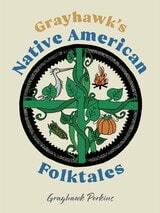
Grayhawk's Native American Folktales
Grayhawk Perkins
University of Alabama Press, 2025
Beloved Houma/Choctaw storyteller Grayhawk Perkins shares age-old wisdom in an unforgettable collection of folktales.
Grayhawk’s Native American Folktales is the eagerly awaited collection of stories by Grayhawk Perkins, a noted Houma storyteller from Louisiana. Drawing on traditional Indigenous tales, Grayhawk transforms these narratives into stories that captivate contemporary readers and audiences.
The collection features universal animal characters such as Deer, Rabbit, Bobcat, Turtle, and Snake that embody a variety of traits. Their adventures and challenges in the natural world reveal human behavior and lessons about how to treat others. Creation stories explain how the world and its inhabitants came to be, including the diligent Crawfish, the origin of skunk stripes, and why opossums are white. Although written for children ages 7 to 12 and their families, all will be charmed by Grayhawk’s contributions to Indigenous literature.
Great American City
Chicago and the Enduring Neighborhood EffectRobert J. Sampson
University of Chicago Press, 2012
Great American City
Chicago and the Enduring Neighborhood EffectRobert J. Sampson
University of Chicago Press, 2024
Based on one of the most ambitious studies in the history of social science, Robert J. Sampson’s Great American City presents the fruits of over a decade’s research to support an argument that we all feel and experience every day: life is decisively shaped by your neighborhood.
Engaging with the streets and neighborhoods of Chicago, Sampson, in this new edition, reflects on local and national changes that have transpired since his book’s initial publication, including a surge in gun violence and novel forms of segregation despite an increase in diversity. New research, much of it a continuation of the influential discoveries in Great American City, has followed, and here, Sampson reflects on its meaning and future directions. Sampson invites readers to see the status of the research initiative that serves as the foundation of the first edition—the Project on Human Development in Chicago Neighborhoods (PHDCN)—and outlines the various ways other scholars have continued his work. Both accessible and incisively thorough, Great American City is a must-read for anyone interested in cutting-edge urban sociology and the study of crime.

Great American Treasures
Women Preserving History Since 1891Carol Cadou
The Artist Book Foundation, 2025
Great American Treasures is a comprehensive survey of America's historic sites and buildings, their furnishings, and their gardens.
America’s historic sites, homes, and public buildings are a living record of the diverse ethnicities that, over four centuries, helped to build a growing nation. Since 1891, the National Society of the Colonial Dames of America (NSCDA) has actively promoted our national heritage through historic preservation, restoration, and the interpretation of historic sites across the United States. In conjunction with NSCDA, in 2025 The Artist Book Foundation (TABF) published Great American Treasures, a comprehensive survey of the architecture, furnishings, and gardens that epitomize the nation’s diverse material culture over more than 400 years.
The publication features the NSCDA’s collection of historic places, which span the sixteenth to the twentieth centuries, and highlights the residences of those who established themselves in America during this time. It features an array of buildings that speak to the diversity of traditions, people, and architecture in a growing nation—from English Georgian houses on the eastern seaboard to a French Colonial dwelling in Missouri and mission houses in Hawai’i. This survey illuminates the stories and material traditions of the wide range of individuals who contributed to the founding of the United States and to the development of America as a dynamic multicultural nation.
Many of the sites tell the stories of familiar historic figures like George and Martha Washington, John Adams, James and Dolley Madison, John Quincy Adams, Benjamin Franklin, and George Mason. Other sites offer the narratives of figures who contributed to America’s artistic heritage, such as John James Audubon and John Smibert, or those who helped to shape the country’s mercantile system, like Frederick Van Cortlandt and James Logan. Some places were designed by well-known architects such as Robert Mills or McKim, Mead & White, while most were the work of unknown or little-known architects, builders, joiners, and slave laborers. The classic architecture of these sites, their exquisite furnishings and lush gardens, and even the headstones in historic cemeteries all provide a window into the rich diversity of men, women, and children—free, indentured, and enslaved—who came together to build America.
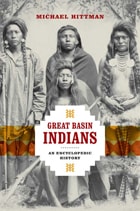
Great Basin Indians
An Encyclopedic HistoryMichael Hittman
University of Nevada Press, 2024
Great Basin Indians is an essential resource for any reader interested in the Native peoples of the American West and in western history in general.
Great Basin Rock Art
Archaeological PerspectivesAngus R. Quinlan
University of Nevada Press, 2007
Rock art is one of humankind’s most ancient forms of artistic expression, and one of its most enigmatic. For centuries, scholars and other observers have struggled to interpret the meaning of the mysterious figures incised or painted on natural rocks and to understand their role in the lives of their long-vanished creators. The Great Basin of the American West is especially rich in rock art, but until recently North American archaeologists have largely ignored these most visible monuments left by early Native Americans and have given little attention to the terrain surrounding them. In Great Basin Rock Art, twelve respected rock art researchers examine a number of significant sites from the dual perspectives of settlement archaeology and contemporary Native American interpretations of the role of rock art in their cultural past. The authors demonstrate how modern archaeological methodology and interpretations are providing a rich physical and cultural context for these ancient and hitherto puzzling artifacts. They offer exciting new insights into the lives of North America’s first inhabitants. This is essential reading for anyone interested in the petroglyphs of the American West and in the history of the Great Basin and its original peoples.
Great House Communities across the Chacoan Landscape
John Kantner
University of Arizona Press, 2000
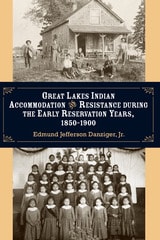
Great Lakes Indian Accommodation and Resistance during the Early Reservation Years, 1850-1900
Edmund Jefferson Danziger, Jr.
University of Michigan Press, 2009
During the four decades following the War of 1812, Great Lakes Indians were forced to surrender most of their ancestral homelands and begin refashioning their lives on reservations. The challenges Indians faced during this period could not have been greater. By century's end, settlers, frontier developers, and federal bureaucrats possessed not only economic and political power but also the bulk of the region's resources. It is little wonder that policymakers in Washington and Ottawa alike anticipated the disappearance of distinctive Indian communities within a single generation. However, these predictions have proved false as Great Lakes Indian communities, though assaulted on both sides of the international border to this day, have survived. Danziger's lively and insightful book documents the story of these Great Lakes Indians---a study not of victimization but of how Aboriginal communities and their leaders have determined their own destinies and preserved core values, lands, and identities against all odds and despite ongoing marginalization.
Utilizing eyewitness accounts from the 1800s and an innovative, cross-national approach, Danziger explores not only how Native Americans adapted to their new circumstances---including attempts at horse and plow agriculture, the impact of reservation allotment, and the response to Christian evangelists---but also the ways in which the astute and resourceful Great Lakes chiefs, councils, and clan mothers fought to protect their homeland and preserve the identity of their people. Through their efforts, dreams of economic self-sufficiency and self-determination as well as the historic right to unimpeded border crossings---from one end of the Great Lakes basin to the other---were kept alive.
Edmund Jefferson Danziger, Jr., is a Distinguished Teaching Professor in the Department of History at Bowling Green State University. Danziger is well known among historians and anthropologists for his interpretive histories of Great Lakes Native Americans.
Photo of girls at Lac du Flambeau School courtesy Wisconsin Historical Society, image 55938; photo of Ojibwa farm family at Garden River Reservation courtesy Archives of Ontario, image S 16361.
Great Maya Droughts in Cultural Context
Case Studies in Resilience and VulnerabilityGyles Iannone
University Press of Colorado, 2014
The Great Maya Droughts in Cultural Context offers new insights into the complicated series of events that impacted the decline of Maya civilization. This significant contribution to our increasingly comprehensive understanding of ancient Maya culture will be of interest to students and scholars of archaeology, anthropology, geography, and environmental studies.
Greater Chaco Landscape
Ancestors, Scholarship, and AdvocacyRuth M. Van Dyke
University Press of Colorado, 2020
Contributors analyze many different dimensions of the Chacoan landscape and present the most effective, innovative, and respectful means of studying them, focusing on the significance of thousand-year-old farming practices; connections between early great houses outside the canyon and the rise of power inside it; changes to Chaco’s roads over time as observed in aerial imagery; rock art throughout the greater Chaco area; respectful methods of examining shrines, crescents, herraduras, stone circles, cairns, and other landscape features in collaboration with Indigenous colleagues; sensory experiences of ancient Chacoans via study of the sightlines and soundscapes of several outlier communities; and current legal, technical, and administrative challenges and options concerning preservation of the landscape.
An unusually innovative and timely volume that will be available both in print and online, with the online edition incorporating video chapters presented by Acoma, Diné, Zuni, and Hopi cultural experts filmed on location in Chaco Canyon, The Greater Chaco Landscape is a creative collaboration with Native voices that will be a case study for archaeologists and others working on heritage management issues across the globe. It will be of interest to archaeologists specializing in Chaco and the Southwest, interested in remote sensing and geophysical landscape-level investigations, and working on landscape preservation and phenomenological investigations such as viewscapes and soundscapes.
Contributors: R. Kyle Bocinsky, G. B. Cornucopia, Timothy de Smet, Sean Field, Richard A. Friedman, Dennis Gilpin, Presley Haskie, Tristan Joe, Stephen H. Lekson, Thomas Lincoln, Michael P. Marshall, Terrance Outah, Georgiana Pongyesva, Curtis Quam, Paul F. Reed, Octavius Seowtewa, Anna Sofaer, Julian Thomas, William B. Tsosie Jr., Phillip Tuwaletstiwa, Ernest M. Vallo Jr., Carla R. Van West, Ronald Wadsworth, Robert S. Weiner, Thomas C. Windes, Denise Yazzie, Eurick Yazzie
Greater Ethiopia
The Evolution of a Multiethnic SocietyDonald N. Levine
University of Chicago Press, 2000
Donald Levine's interdisciplinary study makes a substantial contribution both to Ethiopian interpretive history and to sociological analysis. In his new preface, Levine examines Ethiopia since the overthrow of the monarchy in the 1970s.
"Ethiopian scholarship is in Professor Levine's debt. . . . He has performed an important task with panache, urbanity, and learning."—Edward Ullendorff, Times Literary Supplement
"Upon rereading this book, it strikes the reader how broad in scope, how innovative in approach, and how stimulating in arguments this book was when it came out. . . . In the past twenty years it has inspired anthropological and historical research, stimulated theoretical debate about Ethiopia's cultural and historical development, and given the impetus to modern political thinking about the complexities and challenges of Ethiopia as a country. The text thus easily remains an absolute must for any Ethiopianist scholar to read and digest."-J. Abbink, Journal of Modern African Studies
Greater Mesoamerica
The Archaeology of West and Northwest MexicoMichael S Foster
University of Utah Press, 2000
Edited by Michael S. Foster and Shirley Gorenstein
Archaeology
Mesoamerican studies, as they are still practiced today, are framed by the Spanish colonial intrusion into Mexico from the east, and subsequent involvement with the Aztec Empire. Greater Mesoamerica expands the definition of "Mesoamerica" beyond the more traditionally accepted central Mexican areas to both western and northwestern Mexico where sophisticated cultures were flourishing outside the realm of Spanish influence. It is the first comprehensive overview of both regions since the Handbook of Middle American Indians was published in the early 1970s.
Based on recent archaeological surveys and excavations, the chapters in this volume provide current, comprehensive, area-by-area summaries of the region's Precolumbian past, noting the discovery of new cultural configurations, new connections, and new complexities.
Greece in the Bronze Age
Emily Townsend Vermeule
University of Chicago Press, 1964