Results by title
3388 books match the query 'Fiction' and 82 start with g
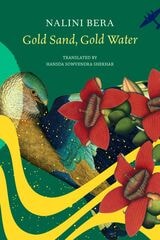
Gold Sand, Gold Water
Nalini Bera
Seagull Books, 2025
The Subarnarekha River shimmers with legend; once said to carry flecks of gold, it remains a source of both promise and hardship for those who live along its banks. In Gold Sand, Gold Water, Nalini Bera conjures a world where folklore and reality flow together, and forbidden love defies caste. Through the eyes of young Lolin, we witness the daily struggles of the Hatua people—part of the marginalized Adivasi and Dalit communities—as they navigate a world where ancient traditions are slowly being eroded by modern industry.
The novel paints an intimate, kaleidoscopic portrait of a vanishing way of life. Lyrical and haunting, Gold Sand, Gold Water is an essential addition to Bengali literature in translation—one that ensures these overlooked stories, like the river itself, continue to flow.
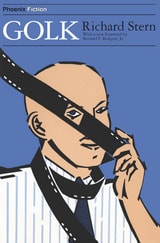
Golk
Richard Stern
University of Chicago Press, 1987
"Golk is a rich and marvelously detailed novel by a man with a cultivated intelligence; it is also the first really good book I have read about television."—Norman Mailer
"An original: sharp, funny, intelligent, rare. . . . Working in a clean, oblique style reminiscent of Nathanael West, Mr. Stern has written in Golk a first-rate comic novel, a piece of fiction that is at once about and loaded with that kind of recognition that junkies call the flash."—Joan Didion, National Review
"Golk is fantastic, funny, bitter, intelligent without weariness. Best of all Golk is pure—that is to say necessary. Without hokum."—Saul Bellow
"Golk (like Golk himself) is a wonderous conception. Its world responds to personification, not analysis, and personify it Mr. Stern has done. A book in a thousand."—Hugh Kenner
"What I like about Mr. Stern's fantasy is that it has been conceived and written with so much gaiety. Far from a political melodrama, it reminds me of a René Clair movie, and even the surrealist touches needed to bring out the power and pretense of the television industry are funny rather than symbolically grim."—Alfred Kazin, Reporter
"A mighty good book, altogether alive, full of beans and none of them spilled."—Flannery O'Connor
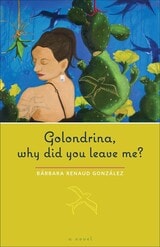
Golondrina, why did you leave me?
A NovelBy Bárbara Renaud González
University of Texas Press, 2009
Runner-up, Best Popular Fiction in English, Latino Book Awards Competition, 2010
The golondrina is a small and undistinguished swallow. But in Spanish, the word has evoked a thousand poems and songs dedicated to the migrant's departure and hoped-for return. As such, the migrant becomes like the swallow, a dream-seeker whose real home is nowhere, everywhere, and especially in the heart of the person left behind.
The swallow in this story is Amada García, a young Mexican woman in a brutal marriage, who makes a heart-wrenching decision—to leave her young daughter behind in Mexico as she escapes to el Norte searching for love, which she believes must reside in the country of freedom. However, she falls in love with the man who brings her to the Texas border, and the memories of those three passionate days forever sustain and define her journey in Texas. She meets and marries Lázaro Mistral, who is on his own journey—to reclaim the land his family lost after the U.S.-Mexican War. Their opposing narratives about love and war become the legacy of their first-born daughter, Lucero, who must reconcile their stories into her struggle to find "home," as her mother, Amada, finally discovers the country where love beats its infinite wings.
Bárbara Renaud González, a native-born Tejana and acclaimed journalist, has written a lyrical story of land, love, and loss, bringing us the first novel of a working-class Tejano family set in the cruelest beauty of the Texas panhandle. Her story exposes the brutality, tragedy, and hope of her homeland and helps to fill a dearth of scholarly and literary works on Mexican and Mexican American women in post–World War II Texas.
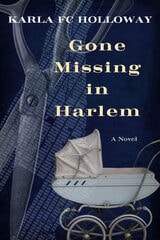
Gone Missing in Harlem
A NovelKarla FC Holloway
Northwestern University Press, 2021
The family arrives as Harlem staggers under the flu pandemic that follows the First World War. DeLilah Mosby and her daughter, Selma, meet difficulties with backbone and resolve to make a home for themselves in the city, and Selma has a baby, Chloe. As the Great Depression creeps across the world at the close of the twenties, however, the farsighted see hard times coming.
The panic of the early thirties is embodied in the kidnapping and murder of the infant son of the nation’s dashing young aviator, Charles Lindbergh. A transfixed public follows the manhunt in the press and on the radio. Then Chloe goes missing—but her disappearance does not draw the same attention. Wry and perceptive Weldon Haynie Thomas, the city’s first “colored” policeman, takes the case.
The urgent investigation tests Thomas’s abilities to draw out the secrets Harlem harbors, untangling the color-coded connections and relationships that keep company with greed, ghosts, and grief. With nuanced characters, lush historical detail, and a lyrical voice, Gone Missing in Harlem affirms the restoring powers of home and family.

Good Knights
Ralph McInerny
St. Augustine's Press, 2010
These stories represent an intermediate stage in the evolution of the Knight brothers in Ralph McInerny’s fiction. In The Noonday Devil, Phil, in his capacity as private detective, was fairly close to the action, but by no means the major character. Roger, his blimp-sized brother, entered obliquely into the story but ended by starring in the finale.
Readers liked them, in particular Roger. So McInerny brought them back in Easeful Death, where they are far more central and Roger occupies much space, physically and narratively. And so it might have remained. When McInerny was asked to do a Notre Dame series of mysteries, he decided to bring Roger to South Bend as the Huneker Professor of Catholic Studies, accompanied by the semi-retired Phil, who has the full menu of Notre Dame sports to keep him occupied. Prior to starting the series, McInerny wanted to reacquaint himself with the Knights and hit upon the idea of doing a series of Knight brothers stories in Crisis, a magazine he founded with Michael Novak. Before moving them to South Bend, he wanted to see them in action, working out of New York, always driving in the specially designed van, never flying, to the cities were their client lived.
Good Knights is the result of putting these eight Knights brothers’ stories together. Call them finger exercises in character. The response to them in the magazine was gratifying, and with them behind him, McInerny launched the Notre Dame series, with On This Rockne in 1996, thirteen years and thirteen novels ago. But the origins of that successful series is seen here.

Good Morning, Shakur!
A Shakur Series Board BookAndrea Sonnier
Gallaudet University Press, 2024
About the Shakur Series:
The Shakur Series features Black deaf characters who use American Sign Language, offering a unique and inclusive reading experience for children. The vibrant illustrations showcase a signing family and will captivate young minds, while the engaging text reinforces learning. These charming board books contain positive messages and practical lessons, support early childhood development, and encourage children to explore the world with Shakur. This series honors and celebrates Black deaf experiences through everyday adventures that will resonate with young children and their families.
Published in partnership with The Laurent Clerc National Deaf Education Center.

Good Night, Shakur!
A Shakur Series Board BookAndrea Sonnier
Gallaudet University Press, 2024
About the Shakur Series:
The Shakur Series features Black deaf characters who use American Sign Language, offering a unique and inclusive reading experience for children. The vibrant illustrations showcase a signing family and will captivate young minds, while the engaging text reinforces learning. These charming board books contain positive messages and practical lessons, support early childhood development, and encourage children to explore the world with Shakur. This series honors and celebrates Black deaf experiences through everyday adventures that will resonate with young children and their families.
Published in partnership with The Laurent Clerc National Deaf Education Center.

Good for the Jews
Debra Spark
University of Michigan Press, 2009
Good for the Jews is a smart, funny, sexy novel set in Madison, Wisconsin, during the Bush administration. Part mystery and part stranger-comes-to town story, Good for the Jews is loosely based on the biblical book of Esther. Like Esther, Debra Spark's characters deal with anti-Semitism and the way that powerful men—and the women who love them—negotiate bureaucracies.
At the core of the story of right and wrong are young, attractive Ellen Hirschorn and her older cousin Mose, a high school teacher who thinks he knows, in fact, what is "good for the Jews"—and for Ellen, too. Their stories intertwine with those of the school superintendent, his ex-wife and son, and a new principal. Workplace treachery, the bonds of family, coming of age, and romantic relationships all take center stage as the characters negotiate the fallout from a puzzling fire.
Spark's evocative writing style and sharp, understanding treatment of her diverse characters draw the reader into this surprising page-turner, a finalist for the 2009 Foreword Magazine Book of the Year Award.

Good-Bye Samizdat
Twenty Years of Czechoslovak Underground WritingMarketa Goetz-Stankiewicz
Northwestern University Press, 1992

Good-bye, Son and Other Stories
Janet Lewis
Ohio University Press, 1986
Good-bye, Son and Other Stories, Janet Lewis’s only collection of short fiction, was first published in 1946, but remains as quietly haunting today as it was then. Set in small communities of the upper Midwest and northern California in the ’30s and ’40s, these midcentury gems focus on the quiet cycles connecting youth and age, despair and hope, life and death. A mother’s encounters with her deceased son, an aging woman sitting with the new knowledge of her troubled older sister’s death, and a teenager disillusioned by her own mortality are among the characters, mostly women and girls, whom Lewis delivers. Her understated style and knack for unadorned observation embed us with them as they reckon with the disquieting forces—incomprehensible and destructive to some, enlightening to others—that move us from birth, through life, to death. In the process, Lewis has crafted a paean to the living.

Goodbye, Flicker
PoemsCarmen Giménez Smith
University of Massachusetts Press, 2012
This distinctive collection introduces a new type of mythmaking, daring in its marriage of fairy tale tropes with American mundanities. Conspiratorial, Goodbye, Flicker describes the interior life of a girl whose prince is a deadbeat dad and whose escape into a fantasy world is also an escape into language, beauty, and the surreal.
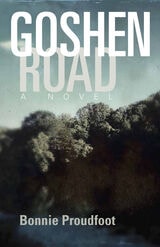
Goshen Road
A NovelBonnie Proudfoot
Ohio University Press, 2020
Goshen Road is an elegiac, unvarnished, and empathetic portrait of one working-class family over two decades in rural West Virginia, with sisters Dessie and Billie Price as its urgently beating heart. Bonnie Proudfoot captures them, their husbands, and their children as they balance on the divide between Appalachia old and new, struggling for survival and reconciling themselves with past hurts and future uncertainties as the economy and culture shift around them.
The story opens in 1967 with a logging accident and the teenaged Lux Cranfield’s headlong plunge into the courtship of Dessie—a leap he takes not only in the wake of his near-death experience but to exchange his bitter home life for a future with the Prices, a family that appears to have the stability and peace that his own lacks. Within the year Lux and Dessie marry. Meanwhile, Dessie’s rebellious younger sister, Billie, fights her way through adolescence with an eye toward an escape of her own, only to land with Lux’s friend Alan Ray Munn and settle into a life of hardship. Ultimately, the voices and passions of Dessie, Billie, Lux, Alan Ray, and the Cranfield children build on one another to create an unforgettable chorus about the promises and betrayals of love—and what it takes to preserve a family when everything else is uncertain.
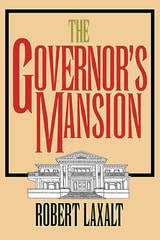
Governor's Mansion, The
Robert Laxalt
University of Nevada Press, 1997

Grace Above All
Jane St. Anthony
University of Minnesota Press, 2015
Thirteen-year-old Grace is not looking forward to her summer vacation. She’ll have to fend for herself and take care of her siblings while her mom smokes the day away in the back bedroom of the cabin. But when an unexpected companion shows up in the middle of a crisis, she gains hope that maybe the summer won’t be a disaster after all. In Grace Above All, readers will experience a young summer romance and join Grace in gaining a newfound appreciation of family.
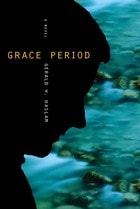
Grace Period
A NovelGerald W. Haslam
University of Nevada Press, 2006
A masterpiece by one of the West’s best-loved authorsJust when Sacramento journalist Marty Martinez thinks his life can’t get any worse, it does. His beloved son has died of AIDS, his wife has divorced him and joined a cult, and his daughter blames him for the disintegration of their family. Then a chance medical examination reveals that he has prostate cancer. Marty faces his new role as a cancer patient with awkward grit and desperation. He is a sympathetic, utterly convincing character seeking faith in a Catholic Church as troubled as he is. He brings increased intensity to his career as he investigates a far-reaching political scandal, reunites his family in unexpected ways, and finds love with a fellow cancer patient. Grace Period is a profound and sometimes hilarious novel about living with serious illness. Marty copes with fear and the painful, sometimes embarrassing, treatment of his disease, but instead of winding down his life he finds fresh purpose and a joyful new love. Haslam brilliantly depicts the complexities of everyday life and the intricate, sometimes tortured bonds of family and friendship. In Grace Period, Haslam shows us that existence at the precarious edge of life offers not only pain and loss but hope, a chance at redemption, love, and even happiness. Grace Period is his masterwork.
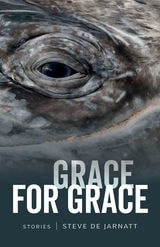
Grace for Grace
StoriesSteve De Jarnatt
Acre Books, 2020
“Rubiaux Rising” (a Best American Short Stories selection) is a tale of triumph amid calamity during Hurricane Katrina, while “Her Great Blue” a surreal interspecies love story. “Mulligan” reveals the private pain of parents traveling across the country to give away their children, and “Wraiths in a Swelter” is both a ghost story and a confessional memoir—following a deliriously exhausted EMT through a deadly Chicago heat wave.
Many of the stories in Grace for Grace are set against the backdrop of natural or manmade catastrophes. These disasters test the characters’ limits as they confront sudden changes and extremes, discovering through their unexpected resourcefulness and endurance something beyond suffering. . . something that approaches the sublime.
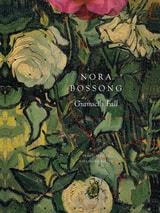
Gramsci’s Fall
Nora Bossong
Seagull Books, 2019
Forty-six-year-old Anton Stöver’s marriage is broken. His affairs are a thing of the past, and his career at the university has reached a dead end. One day he is offered the chance to go to Rome to conduct research on Antonio Gramsci, who was, at one time, the leading figure of Italian communism. Once there, he falls obsessively in love with a young woman. His attention now torn between past and present, he tries to stay focused on Gramsci’s story: frail, feverish, and recovering in a Soviet sanatorium. Though Gramsci is supposed to save Italy from Mussolini’s seizure of power, he falls in love with a Russian comrade instead. Moving backward and forward in time, the story is told from the alternating perspectives of Stover’s conversational first-person narrative and lyrical third-person prose that recreates Gramsci’s inner life. With a subtle sense of the absurd, Nora Bossong explores the conflicts between having intense feelings for another and fighting for great ideals.
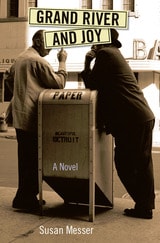
Grand River and Joy
Susan Messer
University of Michigan Press, 2010
Halloween morning 1966, Harry Levine arrives at his wholesale shoe warehouse to find an ethnic slur soaped on the front window. As he scavenges around the sprawling warehouse basement, looking for the supplies he needs to clean the window, he makes more unsettling discoveries: a stash of Black Power literature; marijuana; a new phone line running off his own; and a makeshift living room, arranged by Alvin, the teenaged tenant who lives with his father, Curtis, above the warehouse. Accustomed to sloughing off fears about Detroit's troubled inner-city neighborhood, Harry dismisses the soaped window as a Halloween prank and gradually dismantles “Alvin's lounge” in a silent conversation with the teenaged tenant. Still, these events and discoveries draw him more deeply into the frustrations and fissures permeating his city in the months leading up to the Detroit riots.
Grand River and Joy, named after a landmark intersection in Detroit, follows Harry through the intersections of his life and the history of his city. It's a work of fiction set in a world that is anything but fictional, a novel about the intersections between races, classes and religions exploding in the long, hot summers of Detroit in the 1960s. Grand River and Joy is a powerful and moving exploration of one of the most difficult chapters of Michigan history.
Susan Messer's fiction and nonfiction have appeared in numerous publications, including Glimmer Train Stories, North American Review, and Colorado Review. She received an Illinois Arts Council Fellowship in prose, an Illinois Arts Council literary award for creative nonfiction, and a prize in the Jewish Cultural Writing Competition of the Dora Teitelboim Center for Yiddish Culture.
Cover photograph copyright © Bill Rauhauser and Rauhauser Photographic Trust
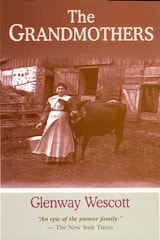
Grandmothers
A Family PortraitWith a New Introduction by Sargent Bush Jr.
University of Wisconsin Press, 1996
The Grandmothers is the chronicle of Alwyn’s ancestors: the bitter Henry Tower, who returned from Civil War battlefields to find his beautiful wife Serena lost in a fatal fever; Rose Hamilton, robust and eager, who yearned to leave the cabin of her bearded, squirrel-hunting brothers for the company of courteous Leander Tower; the boy-soldier Hilary Tower, whose worship of his brother made him desperate; fastidious Nancy Tower, whose love for her husband Jesse Davis could not overcome her disgust with the dirt under his fingernails; Ursula Duff, proud and silent, maligned among her neighbors by her venal husband; Alwyn’s parents, Ralph Tower and Marianne Duff, whose happiness is brought about only by the intervention of a determined spinster.
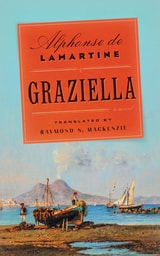
Graziella
A NovelAlphonse de Lamartine
University of Minnesota Press, 2018
In its first modern translation, a novel-cum-memoir of a Frenchman’s erotic awakening in Italy by a preeminent writer of the Romantic period
In 1812 Alphonse de Lamartine, a young man of means, traveled through southern Italy, where, during a sojourn in Naples, he fell in love with a young woman who worked in a cigar factory—and whose death after he returned to France would haunt him throughout his writing life. Graziella, Lamartine called this lost girl in his poetry and memoirs—and also in Graziella, a novel that closely follows the story of his own romance.
“When I was eighteen,” the narrator begins, as if penning his memoir, “my family entrusted me to the care of a relative whose business affairs called her to Tuscany.” The tale that unfolds, of the young man’s amorous experiences amid the natural grandeur and subtle splendors of the Italian countryside, is one of the finest works of fiction in the French Romantic tradition, a bildungsroman that is also a melancholy portrait of the artist as a young man discovering the muse who would both inspire and elude him.
Remarkable for its contemplative prose, its dreamy passions and seductive drawing of the Italian landscape, and its place in the Romantic canon, Graziella is a timeless portrait of love, chronicling the remorse and the misguided ideals of youth that find their expression, if not their amends, in art.
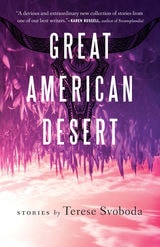
Great American Desert
StoriesTerese Svoboda
The Ohio State University Press, 2019
In her arresting and inimitable style, Svoboda’s delicate handling of the complex dynamics of family and self seeps into every sentence of these first-rate short stories about what we do to the world around us—and what it can do to us.

Green Cane and Juicy Flotsam
Short Stories by Caribbean WomenEsteves, Carmen C
Rutgers University Press, 1991
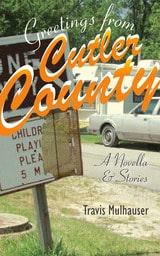
Greetings from Cutler County
A Novella and StoriesTravis Mulhauser
University of Michigan Press, 2005
In one northern Michigan community the lives of desperate small-town dreamers are examined through an ensemble cast as earnest as they are outrageous, and as compelling as they are heartbreaking. The lovers, crooks, failures, and survivors of Cutler County are so flawed and genuine you can't help rooting for them-no matter how foolish or hopeless their pursuits may seem.
The stories take place in Cutler County, Michigan. Most of the characters are young men who think of themselves as losers and outsiders. Short on cash, popularity, and the ambition needed for success, they nevertheless are able to examine their failings with the self-knowing humor and resignation of the perpetually thwarted ne'er-do-well.
The stories are inseparable from the stark shoreline of their Lake Michigan settings-the cavernous woods and vast inland lakes that shape life in northern Michigan-and create a landscape as rugged and dramatic as youth itself. Greetings from Cutler County explores the common triumphs and tragedies of coming of age, while providing a rationale and humor that is uniquely and unforgettably its own.

Griever
An American Monkey King in ChinaGerald Vizenor Vizenor
University of Minnesota Press, 1990
Griever de Hocus, accompanied by his rooster, Matteo Ricci, plays havoc with the monolithic institutions of the People’s Republic of China in Vizenor’s inspired retelling of the classic Chinese Journey to the West. Fiction.
Griever de Hocus, accomopanied by his rooster, Matteo Ricci, plays havoc with the monolithic institutions of the People's Republic of China in Vizenor's inspired retelling of the classic Chinese Journey to the West.
"Much of the American experience of the New Post-Cultural Revolution in China is related with devastating comic irony. The sights, sounds, and smells of the land are often unerringly captured by the author's lean, laconic prose." Los Angeles Times
Gringolandia
Lyn Miller-Lachmann
Northwestern University Press, 2009
After papá’s arrest in 1980, Daniel’s family fled to the United States. Now Daniel has a new life, playing guitar in a rock band and dating Courtney, a minister’s daughter. He hopes to become a US citizen as soon as he turns eighteen.
When Daniel’s father is released and rejoins his family, they see what five years of prison and torture have done to him. Marcelo is partially paralyzed, haunted by nightmares, and bitter about being exiled to “Gringolandia.” Daniel worries that Courtney’s scheme to start a bilingual human rights newspaper will rake up papá’s past and drive him further into alcohol abuse and self-destruction. Daniel dreams of a real father-son relationship, but he may have to give up everything simply to save his papá’s life.
This powerful coming-of-age story portrays an immigrant teen’s struggle to reach his tortured father and find his place in the world.
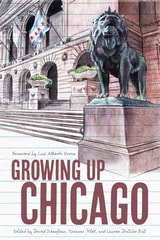
Growing Up Chicago
Edited by David Schaafsma, Roxanne Pilat, and Lauren DeJulio Bell, Foreword by Luis Alberto Urrea
Northwestern University Press, 2021
The stories evoke childhood trips to the Art Institute of Chicago, nighttime games of ringolevio, and the giant neon Magikist lips that once perched over the expressway, sharing perspectives that range from a young man who dreams of becoming an artist to a single mother revisiting her Mexican roots, from a woman’s experience with sexual assault to a child’s foray into white supremacy. This book memorably explores culture, social identity, and personal growth through the eyes of Chicagoans, affirming that we each hold the ability to shape the places in which we live and write and read as much as those places shape us.

Guidelines on Subject Access to Individual Works of Fiction, Drama, Etc.
American Library Association, 2000

Gunning For Ho, 25th Anniversary Edition
Vietnam StoriesH. Lee Barnes
University of Nevada Press, 2026
In this rich and varied collection of short stories (six stories & one novella), former Green Beret H. Lee Barnes deals with the war itself and with its aftermath, but his stories focus more on the human aspects of men in armed conflict and families at home than on the violent drama or political aspects of that war.
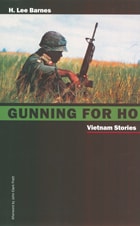
Gunning For Ho
Vietnam StoriesH. Lee Barnes
University of Nevada Press, 2000

Gunpowder Percy
Grace Tiffany
Arizona Center for Medieval and Renaissance Studies, 2000
Gut Feelings
A Writer'S Truths And Minute InventionsMerrill Joan Gerber
University of Wisconsin Press, 2003
Gerber writes of her apprenticeships with celebrated writing teachers Andrew Lytle and Wallace Stegner and recounts her ghostly (and ghastly) experiences during a month at Yaddo, the famous retreat for artists. Gerber includes three pieces in the book—originally published as stories—but which blur the line between fiction and memoir, demonstrating Gerber’s contention that the deepest secrets in life beget the most passionate fictions.

Guy Rivers
A Tale of GeorgiaWilliam G. Simms
University of Arkansas Press, 1993