Results by title
8113 books match the query 'Literary Criticism' and 159 start with g
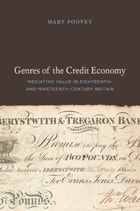
Genres of the Credit Economy
Mediating Value in Eighteenth- and Nineteenth-Century BritainMary Poovey
University of Chicago Press, 2008
Chronicling the process by which some of our most important conceptual categories were naturalized, Mary Poovey explores complex relationships among forms of writing that are not usually viewed together, from bills of exchange and bank checks, to realist novels and Romantic poems, to economic theory and financial journalism. Taking up all early forms of financial and monetarywriting, Poovey argues that these genres mediated for early modern Britons the operations of a market system organized around credit and debt. By arguing that genre is a critical tool for historical and theoretical analysis and an agent in the events that formed the modern world, Poovey offers a new way to appreciate the character of the credit economy and demonstrates the contribution historians and literary scholars can make to understanding its operations.
Much more than an exploration of writing on and around money, Genres of the Credit Economy offers startling insights about the evolution of disciplines and the separation of factual and fictional genres.
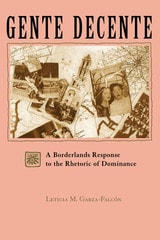
Gente Decente
A Borderlands Response to the Rhetoric of DominanceBy Leticia Magda Garza-Falcón
University of Texas Press, 1998
In his books The Great Plains, The Great Frontier, and The Texas Rangers, historian Walter Prescott Webb created an enduring image of fearless, white, Anglo male settlers and lawmen bringing civilization to an American Southwest plagued with "savage" Indians and Mexicans. So popular was Webb's vision that it influenced generations of historians and artists in all media and effectively silenced the counter-narratives that Mexican American writers and historians were concurrently producing to claim their standing as "gente decente," people of worth.
These counter-narratives form the subject of Leticia M. Garza-Falcón's study. She explores how prominent writers of Mexican descent-such as Jovita González, Américo Paredes, María Cristina Mena, Fermina Guerra, Beatriz de la Garza, and Helena María Viramontes -have used literature to respond to the dominative history of the United States, which offered retrospective justification for expansionist policies in the Southwest and South Texas. Garza-Falcón shows how these counter-narratives capture a body of knowledge and experience excluded from "official" histories, whose "facts" often emerged more from literary techniques than from objective analysis of historical data.
Gentle Flame
The Life and Verse of Dudley, Fourth Lord NorthDale B. J. Randall
Duke University Press, 1983
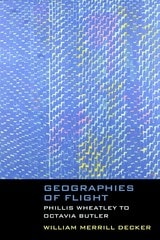
Geographies of Flight
Phillis Wheatley to Octavia ButlerWilliam Merrill Decker
Northwestern University Press, 2020
African American writing commonly represents New World topography as a set of entrapments, contesting the open horizons, westward expansion, and individual freedom characteristic of the white, Eurocentric literary tradition. Geographies of Flight: Phillis Wheatley to Octavia Butler provides the first comprehensive treatment of the ways in which African American authors across three centuries have confronted the predicament of inhabiting space under conditions of bondage and structural oppression. William Merrill Decker examines how, in testifying to those conditions, fourteen black authors have sought to transform a national cartography that, well into the twenty-first century, reflects white supremacist assumptions. These writers question the spatial dimensions of a mythic American liberty and develop countergeographies in which descendants of the African diaspora lay claim to the America they have materially and culturally created.
Tracking the testimonial voice in a range of literary genres, Geographies of Flight explores themes of placement and mobility in the work of Phillis Wheatley, Olaudah Equiano, David Walker, Frederick Douglass, Harriet Jacobs, Booker T. Washington, Ida B. Wells-Barnett, W. E. B. Du Bois, Richard Wright, Ralph Ellison, Malcolm X, James Baldwin, Toni Morrison, and Octavia Butler.
Geographies of Philological Knowledge
Postcoloniality and the Transatlantic National EpicNadia R. Altschul
University of Chicago Press, 2012
Geographies of Relation
Diasporas and Borderlands in the AmericasTheresa Delgadillo
University of Michigan Press, 2024
Not only does Delgadillo offer a rare extended analysis of Black Latinidades in Chicanx literature and theory, but she also considers over a century’s worth of literary, cinematic, and performative texts to support her argument about the significance of these cultural sites and overlaps. Chapters illuminate the significance of Toña La Negra in the Golden Age of Mexican cinema, reconsider feminist theorist Gloria Anzaldúa’s work in revising exclusionary Latin American ideologies of mestizaje, delve into the racial and gender frameworks Sandra Cisneros attempts to rewrite, unpack encounters between African Americans and Black Puerto Ricans in texts by James Baldwin and Marta Moreno Vega, explore the African diaspora in colonial and contemporary Peru through Daniel Alarcón’s literature and the documentary Soy Andina, and revisit the centrality of Black power in ending colonialism in Cuban narratives. Geographies of Relation demonstrates the long histories of networks and exchanges across the Americas as well as the interrelationships among Indigenous, Black, African American, mestizx, Chicanx, and Latinx peoples. It offers a compelling argument that geographies of relation are as significant as national frameworks in structuring cultural formation and change in this hemisphere.
Geography and Plays
Gertrude Stein; Introduction by Cyrena N. Pondrom
University of Wisconsin Press, 1993
George Eliot in Society
Travels Abroad and Sundays at the PrioryKathleen McCormack
The Ohio State University Press, 2013
George Eliot's Dialogue with John Milton
Anna K. Nardo
University of Missouri Press, 2003
George Eliot's Religious Imagination
A Theopoetics of EvolutionMarilyn Orr
Northwestern University Press, 2018
Orr’s wide-ranging and fascinating analysis situates George Eliot in the fertile intellectual landscape of the nineteenth century, among thinkers as diverse as Ludwig Feuerbach, David Strauss, and Søren Kierkegaard. She also argues for a connection between George Eliot and the twentieth-century evolutionary Christian thinker Pierre Teilhard de Chardin. Her analysis draws on the work of contemporary philosopher Richard Kearney as well as writers on mysticism, particularly Karl Rahner.
The book takes an original look at questions many believe settled, encouraging readers to revisit George Eliot’s work. Orr illuminates the creative tension that still exists between science and religion, a tension made fruitful through the exercise of the imagination. Through close readings of Eliot's writings, Orr demonstrates how deeply the novelist's religious imagination continued to operate in her fiction and poetry.
George Eliot’s Serial Fiction
Carol A. Martin
The Ohio State University Press, 1994

George Sand
Writing for Her LifeIsabelle Hoog Naginski
Rutgers University Press, 1991
Georges Perec's Geographies
Material, Performative and Textual SpacesEdited by Charles Forsdick, Andrew Leak, and Richard Phillips
University College London, 2019
Georges Perec’s Geographies explores Perec’s geographical interests. The book is divided into two parts: Part I, “Perec’s Geographies,” explores space and place within Perec’s films, radio plays, and literature, from descriptions of actual streets to the fictional places within his work. Part II, “Perecquian Geographies,” explores geography in works directly inspired by Perec, including writing, photographs and photo essays, soundscapes, theater, and dance. Extending Perecquian criticism beyond literary and French studies to disciplines including geography, urban studies, and architecture, Georges Perec’s Geographies offers a complete and systematic examination that will be of interest not only to Perec scholars but also to students and researchers across these subjects.

Georgette Heyer, History, and Historical Fiction
Edited by Samantha J. Rayner and Kim Wilkins
University College London, 2021
The historical works of Georgette Heyer inspire a fiercely loyal, international readership, including literary figures such as A. S. Byatt and Stephen Fry. This book brings together an eclectic range of scholars to explore the contexts of Heyer’s career. Drawing upon scholarship on Heyer and her contemporaries, the volume illustrates the ways in which her work sits in a chain of influence and why it remains pertinent to current conversations on books and publishing in the twenty-first century. From the gothic to data science, there is something for everyone in this volume, which celebrates Heyer’s esteemed status amongst historical novelists.
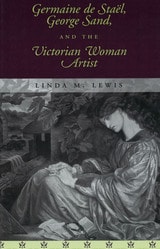
Germaine De Staël, George Sand, and the Victorian Woman Artist
Linda M. Lewis
University of Missouri Press, 2003
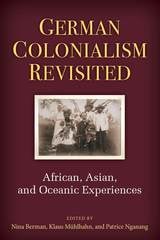
German Colonialism Revisited
African, Asian, and Oceanic ExperiencesNina Berman, Klaus Mühlhahn, and Patrice Nganang, editors
University of Michigan Press, 2018
German Colonialism Revisited brings together military historians, art historians, literary scholars, cultural theorists, and linguists to address a range of issues surrounding colonized African, Asian, and Oceanic people’s creative reactions to and interactions with German colonialism. This scholarship sheds new light on local power dynamics; agency; and economic, cultural, and social networks that preceded and, as some now argue, ultimately structured German colonial rule. Going beyond issues of resistance, these essays present colonialism as a shared event from which both the colonized and the colonizers emerged changed.

German Literature on the Middle East
Discourses and Practices, 1000-1989Nina Berman
University of Michigan Press, 2013
German Literature on the Middle East explores the dynamic between German-speaking and Middle Eastern states and empires from the time of the Crusades to the end of the Cold War. This insightful study illuminates the complex relationships among literary and other writings on the one hand, and economic, social, and political processes and material dimensions on the other. Focusing on German-language literary and nonfiction writings about the Middle East (including historical documents, religious literature, travel writing, essays, and scholarship), Nina Berman evaluates the multiple layers of meaning contained in these works by emphasizing the importance of culture contact; a wide web of political, economic, and social practices; and material dimensions as indispensible factors for the interpretive process.
This analysis of literary and related writing reveals that German views about the Middle East evolved over the centuries and that various forms of action toward the Middle East differed substantially as well. Ideas about religion, culture, race, humanism, nation, and modernity, which emerged successively but remain operative to this day, have fashioned Germany's changed attitudes toward the Middle East. Exploring the interplay between textual discourses and social, political, and economic practices and materiality, German Literature on the Middle East offers insights that challenge accepted approaches to the study of literature, particularly approaches that insist on the centrality of the linguistic construction of the world. In addition, Berman presents evidence that the German encounter with the Middle East is at once distinct and yet at the same time characterized by patterns shared with other European countries. By addressing the individual nature of the German encounter in the larger European context, this study fills a considerable gap in current scholarship.
The interdisciplinary approach of German Literature on the Middle East will be of interest to the humanities in general, and specifically to scholars of German studies, comparative literature, Middle Eastern studies, and history.
Nina Berman is Professor of Comparative Studies at The Ohio State University.
Jacket image: Map of Europe by Giovanni Magini, from his “Geography.” Venice, [1598]. From the University of Michigan Map Library.
Political Map of the World, April 2008. From the University of Texas Perry-Castañeda Library, Map Collection.

German Orientalisms
Todd Kontje
University of Michigan Press, 2004
-Russell Berman, Stanford University
"Intellectually rigorous and conceptually nuanced, Todd Kontje's German Orientalisms is a valuable contribution to the debate on identity politics in German cultural history. Through an erudite and insightful analysis of the German fictions of a broadly defined 'Orient' from the Middle Ages to the present, Kontje illustrates how German literature situated itself within a 'symbolic geography,' whose coordinates are defined by both its representations of the Orient and its affiliation with the Occident. German Orientalisms offers not only an admirable synthesis of the scholarship on German linguistic and cultural nationalism but also sophisticated interpretive strategies for a better understanding of our perceptions and misconceptions of alterity."
-Azade Seyhan, Bryn Mawr College
"This is a fascinating topic, and the book opens new scholarly vistas. In an age of increased specialization, Kontje takes a macro view, looking at German literature almost
from its beginnings to the present, from Wolfram to Özdamar. He also has the courage to link his well-researched work to topics like globalization, the culture wars, and canon formation. He doesn't merely proclaim literature's importance, he shows by example how the literary imagination-creative as it is, dodging dogmatism, and able to confound ideologies-can thrive in an era of cultural studies."
-Sara Friedrichsmeyer, University of Cincinnati
Todd Kontje's German Orientalisms offers a fresh examination of the role of the East in German literary imagination, ranging from the Middle Ages to the present. In its wide historical sweep, this book offers important new insights into many of the most famous writers in the German language, from Goethe to Thomas Mann to Günter Grass.
Building on Edward Said's Orientalism-which defined Orientalism as a form of Western knowledge directly linked to imperial power-Kontje offers a more nuanced version as seen through the lens of German literature of the last thousand years.
Said's focus was on British and French Orientalists-two nations with colonial interests in the East. Germany was different in that it had no stake in the Orient. Far from diminishing an Orientalist perspective, however, the absence of a German empire in the East produced a peculiarly German brand of Orientalism, one in which German writers alternated between identification with the rest of Europe and allying themselves with parts of the East against the West.
Above all, Kontje asks how German writers conceived of their place in "the land of the center" (das Land der Mitte) and how their literary works help to create the imagined community of the German nation.
German Pop Culture
How "American" Is It?Agnes C Mueller, Editor
University of Michigan Press, 2004
Surrounding this indisputable phenomena, questions of the role and place of a "popular" German culture continue to trigger heated debate. Embraced by some as a welcome means to break out of the German monocultural mind-set, American-shaped "pop" culture is rejected by others as "polluting" established values, leveling necessary differentiation, and ultimately being driven by a capitalist consumer society rather than by moral or aesthetic standards.
This collaborative volume addresses a number of intriguing questions: What do Germans envisage when they speak of the "Americanization" of their literature and music? How do artists respond to today's media culture? What does this mean for the current political dimension of German-American relations? Can one speak meaningfully of an "Americanized" German culture? In addressing these and other questions, this work fills a gap in existing scholarship by investigating German popular culture from a multidisciplinary, international perspective.
Contributors to this volume:
Winfried Fluck, Gerd Gemünden, Lutz Koepnick, Barbara Kosta, Sara Lennox, Thomas Meinecke, Uta Poiger, Matthias Politycki, Thomas Saunders, Eckhard Schumacher, Marc Silberman, Frank Trommler, Sabine von Dirke
German Writing, American Reading
Women and the Import of Fiction, 1866–1917Lynne Tatlock
The Ohio State University Press, 2012

Gerry Studds
America's First Openly Gay CongressmanMark Robert Schneider
University of Massachusetts Press, 2017
The defining moment of his career, however, came in 1983, when he was censured by the House for having had an affair with a page ten years previously. On the floor of Congress, Studds confessed to having behaved inappropriately and then courageously declared that he was a gay man—becoming the country's first openly gay member of Congress. Defying all expectations, Studds won reelection in a bruising campaign. For the rest of his career, he remained loyal to his constituents' concerns while also championing AIDS research and care, leading the effort in Congress to allow gays and lesbians to serve in the military, and opposing the Defense of Marriage Act. Once a deeply conflicted man, he ultimately found a balance between his public service and his private life, which included a happy, legally recognized marriage.
Gertrude Stein and the Essence of What Happens
Dana Cairns Watson
Vanderbilt University Press, 2005
Seeking to sustain Stein's lively, pleasant, populist spirit, Watson shows how the writer's playful entanglement of sight and sound--of silent reading and social speaking--reveals the crucial ambiguity by which reading and conversation build communities of meaning, and thus form not only personal relationships but also our very selves and the larger political structures we inhabit. Stein reminds us that the residual properties of words and the implications behind the give-and-take of ordinary conversation offer alternatives to linear structures of social order, alternatives especially precious in times of political oppression. For example, her novels Mrs. Reynolds and Brewsie and Willie, both written in embattled Vichy France, contemplate the speech patterns of totalitarian leaders and the ways in which everyday discourse might capitulate to--or resist--such verbal tyranny.
Like recent theorists, Stein recognized the repressiveness of conventional order--carried in language and thus in thought and social organization--but as Watson persuasively shows, she also insisted that the free will of individuals can persist in language and enable change. In the play of literary aesthetics, Stein saw a liberating force.
Gertrude Stein and the Reinvention of Rhetoric
Sharon J. Kirsch
University of Alabama Press, 2014
For humanities scholars as well as popular audiences, the relationship between rhetoric and literature remains vexed, in part due to rhetoric’s contemporary affiliation with composition, which makes it separate from, if not subordinate to, the study of literature. Gertrude Stein recognized no such separation, and this disciplinary policing of the study of English has diminished our understanding of her work, Kirsch argues. Stein’s career unfolded at the crossroads of literary composition and rhetorical theory, a site where she alternately challenged, satirized, and reinvented the five classical canons of rhetoric—invention, arrangement, style, memory, and delivery—even as she invented new trajectories of literary experimentation.
Kirsch follows Stein from her days studying composition and philosophy at Harvard through her expatriate years in France, fame in the 1930s, and experience of the Second World War. She frames Stein’s explorations of language as an inventive poetics that reconceived practices and theories of rhetorical invention during a period that saw the rise of literary studies and the decline of rhetorical studies. Through careful readings of canonical and lesser-known works, Kirsch offers a convincing critical portrait of Stein as a Sophistic provocateur who reinvented the canons by making a productive mess of canonical rhetoric and modernist categories of thought.
Readers will find much of interest in Gertrude Stein and the Reinvention of Rhetoric. Kirsch offers myriad insights to scholars of Stein, to those interested in the interdisciplinary intersections of literature, rhetoric, and philosophy, as well as to scholars and students in the field of rhetoric and communication studies. Positioning Stein as a major twentieth-century rhetorical theorist is particularly timely given increasing interest in historical and theoretical resonances between rhetoric and poetics and given the continued lack of recognition for women theorists in rhetorical studies.
Gertrude Stein's Surrealist Years
Ery Shin
University of Alabama Press, 2020
Gertrude Stein’s Surrealist Years brings to life Stein’s surrealist sensibilities and personal values borne from her WWII anxieties, not least of which originated in a dread of anti-Semitism. Stein’s earlier works such as Tender Buttons and Lucy Church Amiably tend to prioritize formal innovations over narrative-building and overt political motifs. However, Ery Shin argues that Stein’s later works engage more with storytelling and life-writing in startling ways—most emphatically and poignantly through the surrealist lens.
Beginning with The Autobiography of Alice B. Toklas and continuing in later works, Stein renders legible her war-torn era’s jarring dystopian energies through narratives filled with hallucinatory visions, teleportation, extreme coincidences, action reversals, doppelgangers, dream sequences spanning both sleeping and waking states, and great whiffs of the occult. Such surrealist gestures are predicated on Stein’s return to the independent clause and, by extension, to plot, characterization, and anecdotes. By summoning the marvelous in a historically situated world, Stein joins her surrealist contemporaries in their own ambivalent crusade on behalf of historiography.
Besides illuminating Stein’s art and life, the surrealist framework developed here brings readers deeper into those philosophical ideas invoked by war. Topics of discussion emphasize how varied Jewish experiences were in Hitler’s Europe, how outliers like Stein can be included in the surrealist project, surrealism’s theoretical bind in the face of WWII, and the age-old question of artistic legacy.
Gertrude Stein
The Language That Rises: 1923-1934Ulla E. Dydo
Northwestern University Press, 2008
The first extensive examination of Stein's notebooks, manuscripts and letters, prepared over a period of twenty years, Gertrude Stein: The Language That Rises asks new questions and explores new ways of reading Stein. This definitive study give us a finely detailed, deeply felt understanding of Stein, the great modernist, throughout one of her most productive periods. From "An Elucidation" in 1923 to Lectures In America in 1934, Ulla E. Dydo examines the process of the making and remaking of Stein's texts as they move from notepad to notebook to manuscript, from an idea to the ultimate refinement of the author's intentions. The result is an unprecedented view of the development of Stein's work, word by word, text by text, and over time.
Getting A Life
Everyday Uses of AutobiographySidonie Smith
University of Minnesota Press, 1996
Getting Medieval
Sexualities and Communities, Pre- and PostmodernCarolyn Dinshaw
Duke University Press, 1999
In her pursuit of historical analyses that embrace the heterogeneity and indeterminacy of sex and sexuality, Dinshaw examines canonical Middle English texts such as the Canterbury Tales and TheBook of Margery Kempe. She examines polemics around the religious dissidents known as the Lollards as well as accounts of prostitutes in London to address questions of how particular sexual practices and identifications were normalized while others were proscribed. By exploring contemporary (mis)appropriations of medieval tropes in texts ranging from Quentin Tarantino’s Pulp Fiction to recent Congressional debates on U.S. cultural production, Dinshaw demonstrates how such modern media can serve to reinforce constrictive heteronormative values and deny the multifarious nature of history. Finally, she works with and against the theories of Michel Foucault, Homi K. Bhabha, Roland Barthes, and John Boswell to show how deconstructionist impulses as well as historical perspectives can further an understanding of community in both pre- and postmodern societies.
This long-anticipated volume will be indispensable to medieval and queer scholars and will be welcomed by a larger cultural studies audience.
Getting at the Author
Reimagining Books and Reading in the Age of American RealismBarbara Hochman
University of Massachusetts Press, 2009
But reading practices were slow to change; many resisted the effort to reconceptualize the relationship among writers, readers, and books. Even the most consistent advocates of "impartial" narration found it difficult to imagine a book without an author or to dissociate the experience of reading from the idea of a reciprocal human transaction.
In analyzing the battle over realism and the gradual shift in conventional reading practices, Hochman draws on a rich array of sources, including popular works, advertisements, and letters. She combines traditional modes of literary inquiry with methods adapted from the new historicism, cultural studies, and book history. By elucidating the realists' ambivalence about their own aesthetic criteria, she shows how a late nineteenth century conflict about reading practices reflected pressing tensions in American culture, and how that conflict shaped criteria of literary value for most of the twentieth century.
Ghostly Communion
Cross-Cultural Spiritualism in Nineteenth-Century American LiteratureJohn J. Kucich
Dartmouth College Press, 2015
Ghostly Figures
Memory and Belatedness in Postwar American PoetryAnn Keniston
University of Iowa Press, 2015
Ghostly Figures contends that this poetics of belatedness, along with the way it is bound to questions of poetic making, is a central, if critically neglected, force in postwar American poetry. Discussing works by Sylvia Plath, Adrienne Rich, Jorie Graham, Susan Howe, and a group of poets responding to the AIDS epidemic, Ann Keniston draws on and critically assesses trauma theory and psychoanalysis, as well as earlier discussions of witness, elegy, lyric trope and figure, postmodernism, allusion, and performance, to define the ghosts that clearly dramatize poetics of belatedness throughout the diverse poetry of post–World War II America.
Ghostly Matters
Haunting and the Sociological ImaginationAvery F. Gordon
University of Minnesota Press, 2008
“Avery Gordon’s stunningly original and provocatively imaginative book explores the connections linking horror, history, and haunting. ” —George Lipsitz
“The text is of great value to anyone working on issues pertaining to the fantastic and the uncanny.” —American Studies International
“Ghostly Matters immediately establishes Avery Gordon as a leader among her generation of social and cultural theorists in all fields. The sheer beauty of her language enhances an intellectual brilliance so daunting that some readers will mark the day they first read this book. One must go back many more years than most of us can remember to find a more important book.” —Charles Lemert
Drawing on a range of sources, including the fiction of Toni Morrison and Luisa Valenzuela (He Who Searches), Avery Gordon demonstrates that past or haunting social forces control present life in different and more complicated ways than most social analysts presume. Written with a power to match its subject, Ghostly Matters has advanced the way we look at the complex intersections of race, gender, and class as they traverse our lives in sharp relief and shadowy manifestations.
Avery F. Gordon is professor of sociology at the University of California, Santa Barbara.
Janice Radway is professor of literature at Duke University.
Ghosts and the Overplus
Reading Poetry in the Twenty-First CenturyChristina Pugh
University of Michigan Press, 2024
Ghosts of the African Diaspora
Re-Visioning History, Memory, and IdentityJoanne Chassot
Dartmouth College Press, 2018
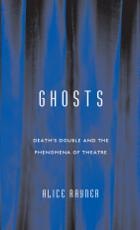
Ghosts
Death’S Double And The Phenomena Of TheatreAlice Rayner
University of Minnesota Press, 2006
In Ghosts, Alice Rayner examines theatre as a memorial practice that is haunted by the presence of loss, looking at how aspects of stagecraft turn familiar elements into something uncanny. Citing examples from the works of Shakespeare, Beckett, and Suzan-Lori Parks as well as the films Vertigo, Gaslight, and The Sixth Sense, she begins by describing time as it is employed by theatre with multiple aspects of presence, duration, and passage. Suggesting that objects connect past to present through the sense of touch, she explores how props are suspended backstage between motion and meaning. Her final chapters consider the curtain as theatre’s means for attempting to divide real and imaginary worlds.
If ghosts hover where secrets—secrets of the past, secrets from oneself, secrets of life and death—are kept, then, according to Rayner, “theatre is where ghosts best make their appearances and let communities and individuals know that we live amid secrets hiding in plain sight.”
Alice Rayner is associate professor of drama at Stanford University and author of, most recently, To Act, To Do, To Perform: Drama and the Phenomenology of Action.
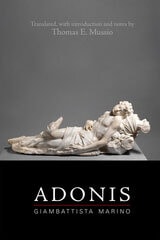
Giambattista Marino
AdonisThomas E. Mussio
Arizona Center for Medieval and Renaissance Studies, 2019
Translated, with introduction and notes by Thomas E. Mussio.
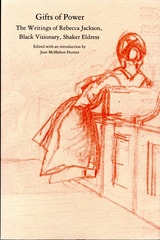
Gifts of Power
The Writings of Rebecca Jackson, Black Visionary, Shaker EldressJean M. Humez
University of Massachusetts Press, 1981
A free black woman in antebellum America, Rebecca Cox Jackson (1795–1871) was an independent itinerant preacher and religious visionary who founded a Shaker community in Philadelphia that survived her death by twenty-five years. Gifts of Power contains her complete extant writings, covering the period 1830 to 1864.
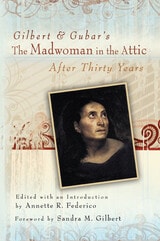
Gilbert and Gubar's The Madwoman in the Attic after Thirty Years
Edited by Annette R. Federico, Foreward by Sandra M. Gilbert
University of Missouri Press, 2011
When it was published in 1979, Sandra M. Gilbert and Susan Gubar's The Madwoman in the Attic: The Woman Writer and the Nineteenth-Century Literary Imaginationwas hailed as a pathbreaking work of criticism, changing the way future scholars would read Jane Austen, Mary Shelley, the Brontës, George Eliot, and Emily Dickinson. This thirtieth-anniversary collection adds both valuable reassessments and new readings and analyses inspired by Gilbert and Gubar’s approach. It includes work by established and up-and-coming scholars, as well as retrospective accounts of the ways in which The Madwoman in the Attic has influenced teaching, feminist activism, and the lives of women in academia.
These contributions represent both the diversity of today’s feminist criticism and the tremendous expansion of the nineteenth-century canon. The authors take as their subjects specific nineteenth- and twentieth-century women writers, the state of feminist theory and pedagogy, genre studies, film, race, and postcolonialism, with approaches ranging from ecofeminism to psychoanalysis. And although each essay opens Madwoman to a different page, all provocatively circle back—with admiration and respect, objections and challenges, questions and arguments—to Gilbert and Gubar's groundbreaking work.

Girls Who Wore Black
Women Writing the Beat GenerationJohnson, Ronna C
Rutgers University Press, 2002
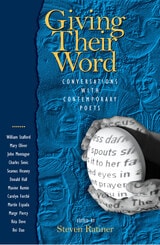
Giving Their Word
Conversations with Contemporary PoetsSteven Ratiner
University of Massachusetts Press, 2002
Based on a three-year series of interviews conducted by Steven Ratiner for the Christian Science Monitor, this book offers extended conversations with twelve of the most influential poets writing today. Their comments are wonderfully detailed, refreshingly honest, and provide the sort of intimate introduction to both poet and text that readers are rarely privileged to enjoy. Included are conversations with William Stafford, Mary Oliver, John Montague, Charles Simic, Seamus Heaney, Donald Hall, Maxine Kumin, Carolyn Forché, Martín Espada, Marge Piercy, Rita Dove, and Bei Dao. In the book's closing interview, Steven Ratiner makes a return visit to Donald Hall's New Hampshire farm shortly before the publication of Hall's collection Without, which focused on the death of his wife, poet Jane Kenyon.
Giving their word is what poets do; it is their stock-in-trade, their daily bread. In the hands of the most accomplished, a poet's words are transformed into a kind of window: looking inward toward the territory of memory, dream, personal mythology and opening out onto the landscape of the shared world where life and work are rooted. For each poet there is an intricate relationship between these two realms and poetry's third domain, the language that bridges both experiences and becomes the body of the poem. Giving Their Word shows us that the poet's fidelity to that relationship sustains his or her development over time, urges the writing toward new levels of discovery, and bestows on readers that most prized of commodities: a feeling of the authentic.
For poets, students of poetry, and that far-flung community of readers for whom the contemporary poem still provides a journey worth taking, this book will present a host of pleasures. Giving Their Word enlarges the frame through which we view the poet's text and yields significant insights into the craft and character of each of these writers.
Giving Voice to Stones
Place and Identity in Palestinian LiteratureBy Barbara McKean Parmenter
University of Texas Press, 1994
"A struggle between two memories" is how Palestinian poet Mahmud Darwish describes the conflict between Palestinians and Israelis. Within this struggle, the meanings of land and home have been challenged and questioned, so that even heaps of stones become points of contention. Are they proof of ancient Hebrew settlement, or rubble from a bulldozed Palestinian village? The memory of these stones, and of the land itself, is nurtured and maintained in Palestinian writing and other modes of expression, which are used to confront and counter Israeli images and rhetoric. This struggle provides a rich vein of thought about the nature of human experience of place and the political uses to which these experiences are put.
In this book, Barbara McKean Parmenter explores the roots of Western and Zionist images of Palestine, then draws upon the work of Darwish, Ghassan Kanafani, and other writers to trace how Palestinians have represented their experience of home and exile since the First World War. This unique blending of cultural geography and literary analysis opens an unusual window on the struggle between these two peoples over a land that both divides them and brings them together.
Glancing Visions
Surface and Depth in Nineteenth-Century American LiteratureZachary Tavlin
University of Alabama Press, 2023
How the “glance” rather than the “gaze” in nineteenth-century literature and art anticipates the turn to modernism
The sweeping vantages that typify American landscape painting from the nineteenth century by Thomas Cole and other members of the Hudson River School are often interpreted for their geopolitical connotations, as visual attempts to tame the wild, alleviating fears of a savage frontier through views that subdue the landscape to the eye. But many literary figures of the era display a purposeful disdain for the “possessive gaze,” signaling a preference for subtle glances, often informed by early photography, Impressionism, new techniques in portraiture, and, soon after, the dawn of cinema. The visual subjectivities and contingencies introduced by these media made room for a visual counternarrative, one informed by a mode of seeing that moves fast and lightly across the surface of things.
Tavlin probes Nathaniel Hawthorne’s theory of the imagination at a turning point in the history of photography, when momentary glances take on new narrative potentials. The poetry of Frances Ellen Watkins Harper toggles between gazes and glances, unsettling two competing forms of racialized seeing as they pertain to nineteenth-century Black life and racial hierarchies—the sentimental gaze and the slave trader’s glance—highlighting the life-and-death stakes of looking and looking away. Emily Dickinson’s syntactical oddities and her lifelong process of stitching and unstitching the poems that constitute her corpus all derive from a commitment to immanence associated with animal perception. Tavlin investigates, as well, Henry James’s vexed relationship to painterly Impressionism and William Carlos Williams’s imagist poetics as a response to early cinema’s use of the cut as the basis for a new visual grammar.
Each of these literary artists—via their own distinctive sensibilities and the artistic or technological counterparts that informed them—refuse the authoritative, all-possessive gaze in favor of the glance, a mode of seeing, thinking, and being that made way for the twentieth century’s twist on modernity. Glancing Visions will be of interest to scholars and teachers of American literature and literary history, visual culture, visual theory, aesthetic philosophy, and phenomenology.

Glanz und Abglanz
Two Centuries of German Studies in the University of LondonEdited by John L. Flood and Anne Simon
University of London Press, 2017

Glass! Love!! Perpetual Motion!!!
A Paul Scheerbart ReaderPaul Scheerbart
University of Chicago Press, 2014
Glass! Love!! Perpetual Motion!!! is the first collection of Scheerbart’s multifarious writings to be published in English. In addition to a selection of his fantastical short stories, it includes the influential architectural manifesto Glass Architecture and his literary tour-de-force Perpetual Motion: The Story of an Invention. The latter, written in the guise of a scientific work (complete with technical diagrams), was taken as such when first published but in reality is a fiction—albeit one with an important message. Glass! Love!! Perpetual Motion!!! is richly illustrated with period material, much of it never before reproduced, including a selection of artwork by Paul Scheerbart himself. Accompanying this original material is a selection of essays by scholars, novelists, and filmmakers commissioned for this publication to illuminate Scheerbart’s importance, then and now, in the worlds of art, architecture, and culture.
Coedited by artist Josiah McElheny and Christine Burgin, with new artwork created for this publication by McElheny, Glass! Love!! Perpetual Motion!!! is a long-overdue monument to a modern master.
Glass, Light, and Electricity
EssaysShena McAuliffe
University of Alaska Press, 2020
Glissant and the Middle Passage
Philosophy, Beginning, AbyssJohn E. Drabinski
University of Minnesota Press, 2019
A reevaluation of Édouard Glissant that centers on the catastrophe of the Middle Passage and creates deep, original theories of trauma and Caribbeanness
While philosophy has undertaken the work of accounting for Europe’s traumatic history, the field has not shown the same attention to the catastrophe known as the Middle Passage. It is a history that requires its own ideas that emerge organically from the societies that experienced the Middle Passage and its consequences firsthand. Glissant and the Middle Passage offers a new, important approach to this neglected calamity by examining the thought of Édouard Glissant, particularly his development of Caribbeanness as a critical concept rooted in the experience of the slave trade and its aftermath in colonialism.
In dialogue with key theorists of catastrophe and trauma—including Aimé Césaire, Frantz Fanon, George Lamming, Gilles Deleuze, Félix Guattari, Derek Walcott, as well as key figures in Holocaust studies—Glissant and the Middle Passage hones a sharp sense of the specifically Caribbean varieties of loss, developing them into a transformative philosophical idea. Using the Plantation as a critical concept, John E. Drabinski creolizes notions of rhizome and nomad, examining what kinds of aesthetics grow from these roots and offering reconsiderations of what constitutes intellectual work and cultural production.
Glissant and the Middle Passage establishes Glissant’s proper place as a key theorist of ruin, catastrophe, abyss, and memory. Identifying his insistence on memories and histories tied to place as the crucial geography at the heart of his work, this book imparts an innovative new response to the specific historical experiences of the Middle Passage.
Global Russian Cultures
Edited by Kevin M. F. Platt
University of Wisconsin Press, 2020
The volume's internationally renowned contributors treat the many different global Russian cultures not as "displaced" elements of Russian cultural life but rather as independent entities in their own right. They describe diverse forms of literature, music, film, and everyday life that transcend and defy political, geographic, and even linguistic borders. Arguing that Russian cultures today are many, this volume contends that no state or society can lay claim to be the single or authentic representative of Russianness. In so doing, it contests the conceptions of culture and identity at the root of nation-building projects in and around Russia.
Globalizing American Studies
Edited by Brian T. Edwards and Dilip Parameshwar Gaonkar
University of Chicago Press, 2010
The discipline of American studies was established in the early days of World War II and drew on the myth of American exceptionalism. Now that the so-called American Century has come to an end, what would a truly globalized version of American studies look like? Brian T. Edwards and Dilip Parameshwar Gaonkar offer a new standard for the field’s transnational aspiration with Globalizing American Studies.
The essays here offer a comparative, multilingual, or multisited approach to ideas and representations of America. The contributors explore unexpected perspectives on the international circulation of American culture: the traffic of American movies within the British Empire, the reception of the film Gone with the Wind in the Arab world, the parallels between Japanese and American styles of nativism, and new incarnations of American studies itself in the Middle East and South Asia. The essays elicit a forgotten multilateralism long inherent in American history and provide vivid accounts of post–Revolutionary science communities, late-nineteenth century Mexican border crossings, African American internationalism, Cold War womanhood in the United States and Soviet Russia, and the neo-Orientalism of the new obsession with Iran, among others.
Bringing together established scholars already associated with the global turn in American studies with contributors who specialize in African studies, East Asian studies, Latin American studies, media studies, anthropology, and other areas, Globalizing American Studies is an original response to an important disciplinary shift in academia.
Globalizing Race
Antisemitism and Empire in French and European CultureDorian Bell
Northwestern University Press, 2018
Globalizing Race explores how intersections between French antisemitism and imperialism shaped the development of European racial thought. Ranging from the African misadventures of the antisemitic Marquis de Morès to the Parisian novels and newspapers of late nineteenth-century professional antisemites, Dorian Bell argues that France’s colonial expansion helped antisemitism take its modern, racializing form—and that, conversely, antisemitism influenced the elaboration of the imperial project itself.
Globalizing Race radiates from France to place authors like Guy de Maupassant and Émile Zola into sustained relation with thinkers from across the ideological spectrum, including Hannah Arendt, Friedrich Nietzsche, Frantz Fanon, Karl Marx, Max Horkheimer, and Theodor Adorno. Engaging with what has been called the “spatial turn” in social theory, the book offers new tools for thinking about how racisms interact across space and time. Among these is what Bell calls racial scalarity. Race, Bell argues, did not just become globalized when European racism and antisemitism accompanied imperial penetration into the farthest reaches of the world. Rather, race became most thoroughly global as a method for constructing and negotiating the different scales (national, global, etc.) necessary for the development of imperial capitalism.
As France, Europe, and the world confront a rising tide of Islamophobia, Globalizing Race also brings into fascinating focus how present-day French responses to Muslim antisemitism hark back to older, problematic modes of representing the European colonial periphery.
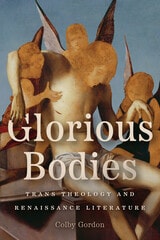
Glorious Bodies
Trans Theology and Renaissance LiteratureColby Gordon
University of Chicago Press, 2024
In this striking contribution to trans history, Colby Gordon challenges the prevailing assumption that trans life is a byproduct of recent medical innovation by locating a cultural imaginary of transition in the religious writing of the English Renaissance. Marking a major intervention in early modern gender studies, Glorious Bodies insists that transition happened, both socially and surgically, hundreds of years before the nineteenth-century advent of sexology. Pairing literary texts by Shakespeare, Webster, Donne, and Milton with a broad range of primary sources, Gordon examines the religious tropes available to early modern subjects for imagining how gender could change. From George Herbert’s invaginated Jesus and Milton’s gestational Adam to the ungendered “glorious body” of the resurrection, early modern theology offers a rich conceptual reservoir of trans imagery.
In uncovering early modern trans theology, Glorious Bodies mounts a critique of the broad consensus that secularism is a necessary precondition for trans life, while also combating contemporary transphobia and the right-wing Christian culture war seeking to criminalize transition. Developing a rehabilitative account of theology’s value for positing trans lifeworlds, this book leverages premodern religion to imagine a postsecular transness in the present.
Goatfoot Milktongue Twinbird
Interviews, Essays, and Notes on Poetry, 1970-76Donald Hall
University of Michigan Press, 1978