Results by title
4127 books match the query 'Science' and 144 start with g
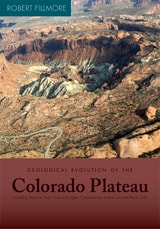
Geological Evolution of the Colorado Plateau of Eastern Utah and Western Colorado
Robert Fillmore
University of Utah Press, 2010
Geological Sciences in the Antebellum South
Edited by James X. Corgan
University of Alabama Press, 1982
Tracing the roots of earth science before the Civil War.
Geological Sciences in the Antebellum South by James Corgan offers a rich and revealing examination of the origins and development of geological inquiry in the American South during the decades (1796-1850s) leading up to the Civil War. At a time when scientific disciplines in the United States were still taking shape, Southern scholars, educators, and naturalists played a critical—if often overlooked—role in advancing geological knowledge. Corgan brings this history to life through a careful exploration of the people, institutions, and ideas that defined early earth science in the region.
From the study of mineral resources and soil composition to the broader effort to understand the region’s unique landscapes, geology intersected with agriculture, industry, and economic development in powerful ways. Corgan demonstrates how these scientific endeavors were shaped by—and in turn helped shape—the cultural and intellectual environment of the South. This book also highlights the contributions of key figures and institutions that fostered scientific inquiry, including early universities, state surveys, and learned societies. These networks connected Southern researchers to national and international scientific communities, positioning the region as an active participant in the broader expansion of 19th-century science. At the same time, the book addresses the challenges and limitations faced by Southern scientists, offering a nuanced perspective on how regional identity, resources, and social structures influenced the trajectory of scientific progress.
By situating geology within the broader context of antebellum history, Corgan provides readers with a deeper understanding of how scientific thought developed alongside—and in dialogue with—the political, economic, and cultural forces of the period. The result is a compelling interdisciplinary study that bridges the history of science and Southern history, shedding new light on a formative era in American intellectual life. Geological Sciences in the Antebellum South will appeal to historians, geologists, and scholars of American studies. It is an essential resource for anyone interested in the foundations of scientific inquiry in the United States and the enduring impact of geology on the development of the American South.
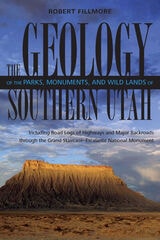
Geology Of Parks, Monuments, and Wildlands of Southern Utah
Robert Fillmore
University of Utah Press, 2000
This detailed interpretive guide explains the forces that created Utah's unforgettable scenery, while providing road logs of highways and major backroads through the Grand Staircase of the Colorado Plateau.
Where in Utah can you find a fossilized ant hill that is at least fifty million years old? Do you know the location of an ancient beach that disappeared along with the dinosaurs that strolled it? Find out in The Geology of the Parks, Monuments, and Wildlands of Southern Utah.
This fascinating and authoritative guide belongs on the dashboard or in the backpack of every visitor to southern Utah or student of its natural history. More than sixty illustrations and nearly three dozen photographs accompany clear explanations of the spectacular geologic features of this landscape, including Capitol Reef, Bryce Canyon, and Zion National Parks, as well as the Grand Staircase-Escalante Monument.
Section I of the volume surveys chronologically the origins of the formations and structural features and the geologic processes that have shaped the Colorado Plateau. Section II provides road logs with mile-by-mile geologic descriptions of key sections of highway traversing this area.
This detailed interpretive guide turns any windshield into a window of opportunity for understanding the forces that created Utah’s unforgettable scenery—whether it be a breathtaking panorama or a dazzling array of fins and fractures, pillars and pedestals, or cliffs and chasms.
Geology of Michigan
John A. Dorr, Jr. and Donald F. Eschman
University of Michigan Press, 1970

Geology of Southeast Alaska
Rock and Ice in MotionHarold Stowell
University of Alaska Press, 2006
Written by a geologist with over twenty-five years of experience in the north, Geology of Southeast Alaska will entertain and inform with abundant photographs and detailed drawings. Whether you want to understand the forces that shaped the state of Alaska, or you want to learn the basics of glacial movement, this compact, authoritative book is for you.
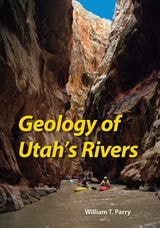
Geology of Utah's Rivers
William T Parry
University of Utah Press, 2008
Transcending the notion of a traditional geology text, Parry provides detailed commentary on historical exploration and the development of the local scenery. His ambitious scholarship offers a fresh look at Utah’s changing landscape throughout geologic time.
Geology of the Great Basin
Bill Fiero
University of Nevada Press, 2009
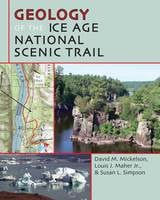
Geology of the Ice Age National Scenic Trail
David M. Mickelson
University of Wisconsin Press, 2011
The Ice Age National Scenic Trail meanders across the state of Wisconsin through scenic glacial terrain dotted with lakes, steep hills, and long, narrow ridges. David M. Mickelson, Louis J. Maher Jr., and Susan L. Simpson bring this landscape to life and help readers understand what Ice Age Wisconsin was like. An overview of Wisconsin’s geology and key geological concepts helps readers understand geological processes, materials, and landforms. The authors detail geological features along each segment of the Ice Age Trail and at each of the nine National Ice Age Scientific Reserve sites.
Readers can experience the Ice Age Trail through more than one hundred full-color photographs, scores of beautiful maps, and helpful diagrams. Science briefs explain glacial features such as eskers, drumlins, and moraines. Geology of the Ice Age National Scenic Trail also includes detailed trail descriptions that are cross referenced with the science briefs to make it easy to find the geological terms used in the trail descriptions. Whatever your level of experience with hiking or knowledge of glaciers, this book will provide lively, informative, and revealing descriptions for a new understanding of the shape of the land beneath our feet.
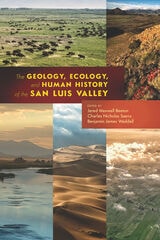
Geology, Ecology, and Human History of the San Luis Valley
Jared Maxwell Beeton
University Press of Colorado, 2020
The first section, “The Geology and Ecology of the San Luis Valley,” surveys the geomorphology, hydrology, animal and plant life, conservation, management, and mining of the valley’s varied terrain. The second section, “Human History of the San Luis Valley,” recounts the valley’s human visitation and settlement, from early indigenous life to Spanish exploration to Hispanic and Japanese settlements. This section introduces readers to the region’s wide range of religious identities—Catholic, Latter-day Saint, Buddhist, Jehovah’s Witness, Amish, and Mennonite—and diverse linguistic traditions, including Spanish, English, Dutch, Danish, Japanese, and Mayan. The final section, “Travel Itineraries,” addresses recreation, specifically fly-fishing and rock climbing.
The book provides a comprehensive overview of the endemic flora and fauna, human history of indigenous lifeways, and diverse settlement patterns that have shaped the region. The Geology, Ecology, and Human History of the San Luis Valley will appeal to students and scholars of geology, ecology, environmental history, and cultural history, as well as residents and tourists seeking to know more about this fascinating and integral part of Colorado and New Mexico.
Contributors:
Benjamin Armstrong, Timothy Armstrong, Deacon Aspinwall, Robert Benson, Lorrie Crawford, Kristy Duran, Jeff Elison, Eric Harmon, Devin Jenkins, Bradley G. Johnson, Robert M. Kirkham, Bessie Konishi, Angie Krall, Richard D. Loosbrock, Richard Madole, A. W. Magee, Victoria Martinez, James McCalpin, Mark Mitchell, R. Nathan Pipitone, Andrew Valdez, Rio de la Vista, Damián Vergara Wilson

Geometrical Theory of Diffraction
V.A. Borovikov
The Institution of Engineering and Technology, 1994
Geometrical Vectors
Gabriel Weinreich
University of Chicago Press, 1998
Geometrical Vectors introduces a more sophisticated approach, which not only brings together many loose ends of the traditional treatment, but also leads directly into the practical use of vectors in general curvilinear coordinates by carefully separating those relationships which are topologically invariant from those which are not. Based on the essentially geometric nature of the subject, this approach builds consistently on students' prior knowledge and geometrical intuition.
Written in an informal and personal style, Geometrical Vectors provides a handy guide for any student of vector analysis. Clear, carefully constructed line drawings illustrate key points in the text, and problem sets as well as physical examples are provided.

Geometry and Chronometry in Philosophical Perspective
Adolf Grunbaum
University of Minnesota Press, 1968
Geometry and Chronometry in Philosophical Perspective was first published in 1968. Minnesota Archive Editions uses digital technology to make long-unavailable books once again accessible, and are published unaltered from the original University of Minnesota Press editions.
In this volume Professor Grünbaum substantially extends and comments upon his essay "Geometry, Chronometry, and Empiricism," which was first published in Volume III of the Minnesota Studies in the Philosophy of Science. Commenting on the essay when it first appeared J. J. C. Smart wrote in Mind (England): "In my opinion Adolf Grünbaum's paper ... supersedes nearly all that has been written on the logical status of physical geometry and chronometry." The full text of the essay is given here with the author's extension of it and his discussion of some of the critical comment it has evoked, particularly, a critique published by Hilary Putnam.
Adolph Grünbaum is Andrew Mellon Professor of Philosophy at the University of Pittsburgh and the current president of the Philosophy of Science Association.
Geophilosophy
On Gilles Deleuze and Felix Guattari's What Is Philosophy?Rodolphe Gasché
Northwestern University Press, 2014
Gasché also intimates that, rather than a marginal issue of their conception of philosophy, geocentrism is a central dimension of their thinking. Indeed, Gasché argues, if all the principal traits that constitute philosophy according to What is Philosophy?—autochthony, philia, and doxa—imply in an essential manner a concern with Earth, it follows that what Deleuze and Guattari have been doing while engaging in philosophy has been marked by this concern from the start.
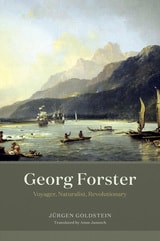
Georg Forster
Voyager, Naturalist, RevolutionaryJürgen Goldstein
University of Chicago Press, 2019
“Stunning. . . . Read this book: in equal measure it will give you hope and trouble your dreams.”—Laura Dassow Walls, author of Henry David Thoreau: A Life and Passage to Cosmos: Alexander von Humboldt’s Shaping of America
Georg Forster (1754–94) was in many ways self-taught and rarely had two cents to rub together, but he became one of the most dynamic figures of the Enlightenment: a brilliant writer, naturalist, explorer, illustrator, translator—and a revolutionary. Granted the extraordinary opportunity to sail around the world as part of Captain James Cook’s fabled crew, Forster touched icebergs, walked the beaches of Tahiti, visited far-flung foreign nations, lived with purported cannibals, and crossed oceans and the equator. Forster recounted the journey in his 1777 book A Voyage Round the World, a work of travel and science that not only established Forster as one of the most accomplished stylists of the time—and led some to credit him as the inventor of the literary travel narrative—but also influenced other German trailblazers of scientific and literary writing, most notably Alexander von Humboldt. A superb essayist, Forster made lasting contributions to our scientific—and especially botanical and ornithological—knowledge of the South Seas.
Having witnessed more egalitarian societies in the southern hemisphere, Forster returned after more than three years at sea to a monarchist Europe entering the era of revolution. When, following the French Revolution of 1789, French forces occupied the German city of Mainz, Forster became a leading political actor in the founding of the Republic of Mainz—the first democratic state on German soil.
In an age of Kantian reason, Forster privileged experience. He claimed a deep connection between nature and reason, nature and politics, nature and revolution. His politics was radical in its understanding of revolution as a natural phenomenon, and in this often overlooked way his many facets—as voyager, naturalist, and revolutionary—were intertwined.
Yet, in the constellation of the Enlightenment’s trailblazing naturalists, scientists, political thinkers, and writers, Forster’s star remains relatively dim today: the Republic of Mainz was crushed, and Forster died in exile in Paris. This book is the source of illumination that Forster’s journey so greatly deserves. Tracing the arc of this unheralded polymath’s short life, Georg Forster explores both his contributions to literature and science and the enduring relationship between nature and politics that threaded through his extraordinary four decades.
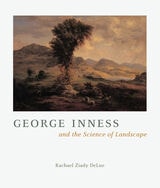
George Inness and the Science of Landscape
Rachael Ziady DeLue
University of Chicago Press, 2005
Throughout his career, Inness struggled to make visible what was invisible to the human eye by combining a deep interest in nineteenth-century scientific inquiry—including optics, psychology, physiology, and mathematics—with an idiosyncratic brand of mysticism. Rachael Ziady DeLue's George Inness and the Science of Landscape—the first in-depth examination of Inness's career to appear in several decades—demonstrates how the artistic, spiritual, and scientific aspects of Inness's art found expression in his masterful landscapes. In fact, Inness's practice was not merely shaped by his preoccupation with the nature and limits of human perception; he conceived of his labor as a science in its own right.
This lavishly illustrated work reveals Inness as profoundly invested in the science and philosophy of his time and illuminates the complex manner in which the fields of art and science intersected in nineteenth-century America. Long-awaited, this reevaluation of one of the major figures of nineteenth-century American art will prove to be a seminal text in the fields of art history and American studies.
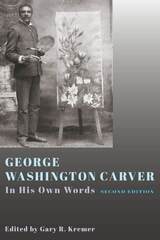
George Washington Carver
In His Own Words, Second EditionGary R. Kremer
University of Missouri Press, 2017
With a new chapter on the oral history interviews Dr. Kremer conducted (several years after publication of the first edition) with people who knew Carver personally, and the addition of newly uncovered documents and a bank of impressive photographs of Carver and some of his friends, this second edition of our classic title commemorates the 75th anniversary of Carver’s death on January 5, 2018.
Georges Cuvier, Fossil Bones, and Geological Catastrophes
New Translations and Interpretations of the Primary TextsMartin J. S. Rudwick
University of Chicago Press, 1997
Gerard P. Kuiper and the Rise of Modern Planetary Science
Derek W. G. Sears
University of Arizona Press, 2019
Kuiper was an acclaimed astronomer of binary stars and white dwarfs when he accidentally discovered that Titan, the massive moon of Saturn, had an atmosphere. This turned our understanding of planetary atmospheres on its head, and it set Kuiper on a path of staggering discoveries: Pluto was not a planet, planets around other stars were common, some asteroids were primary while some were just fragments of bigger asteroids, some moons were primary and some were captured asteroids or comets, the atmosphere of Mars was carbon dioxide, and there were two new moons in the sky, one orbiting Uranus and one orbiting Neptune.
He produced a monumental photographic atlas of the Moon at a time when men were landing on our nearest neighbor, and he played an important part in that effort. He also created some of the world’s major observatories in Hawai‘i and Chile. However, most remarkable was that the keys to his success sprang from his wartime activities, which led him to new techniques. This would change everything.
Sears shows a brilliant but at times unpopular man who attracted as much dislike as acclaim. This in-depth history includes some of the twentieth century’s most intriguing scientists, from Harold Urey to Carl Sagan, who worked with—and sometimes against—the father of modern planetary science. Now, as NASA and other space agencies explore the solar system, they take with them many of the ideas and concepts first described by Gerard P. Kuiper.
Germany's Ancient Pasts
Archaeology and Historical Interpretation since 1700Brent Maner
University of Chicago Press, 2018
In Germany’s Ancient Pasts, Brent Maner offers a vivid portrait of the development of antiquarianism and archaeology, the interaction between regional and national history, and scholarly debates about the use of ancient objects to answer questions of race, ethnicity, and national belonging. While excavations in central Europe throughout the eighteenth and nineteenth centuries fed curiosity about the local landscape and inspired musings about the connection between contemporary Germans and their “ancestors,” antiquarians and archaeologists were quite cautious about using archaeological evidence to make ethnic claims. Even during the period of German unification, many archaeologists emphasized the local and regional character of their finds and treated prehistory as a general science of humankind. As Maner shows, these alternative perspectives endured alongside nationalist and racist abuses of prehistory, surviving to offer positive traditions for the field in the aftermath of World War II. A fascinating investigation of the quest to turn pre- and early history into history, Germany’s Ancient Pasts sheds new light on the joint sway of science and politics over archaeological interpretation.

Getting In
The Essential Guide to Finding a STEMM Undergrad Research ExperienceParis H. Grey and David G. Oppenheimer
University of Chicago Press, 2023
Conducting research is an important foundation for many undergraduates on STEMM career paths. But landing an extremely competitive research spot that is also an enriching experience involves knowing how to present yourself effectively and an awareness of your goals and expectations. In this book, an expert lab manager and a longtime principal investigator share their secrets for obtaining these coveted positions.
Offering advice to students in a wide variety of STEMM fields at both research-intensive universities and primarily undergraduate institutions, Getting In helps students navigate the hidden curriculum of academia, unofficial rules that disproportionately affect first-generation college students and those from low-income backgrounds and communities historically underrepresented in science. The authors provide not only an overview of STEMM research and lab opportunities but also specific strategies for the entire application process—including how to write emails that get noticed by busy professors, how to ask for a research position during office hours, and interview questions to prepare for—so students can claim their place in research settings.
With its emphasis on the many interpersonal and professional benefits of research experiences, Getting In equips all STEMM undergrads with the tools they need both to secure these valued positions and to develop habits that will build productive relationships with their future research mentors.
As an undergrad, Getting In will help you:
- determine how much time you can spend on research by evaluating your current activity level and goals.
- find the time to do research without giving up your social life or risking your GPA.
- avoid common mistakes in the search, application, or interview that make it harder to find a research experience.
- write emails that get you noticed by busy professors by customizing the included templates.
- prepare for tough interview questions so you’ll impress the interviewer with your answers, and be able to determine if the position is right for you.
As a research mentor, Getting In will help your students:
- navigate the hidden curriculum of finding a research experience in science, technology, engineering, math, and medicine (STEMM).
- set realistic expectations for their research experience.
- understand why conducting research requires effort and will include some failure and other challenges.
- be active participants in their success in the lab.
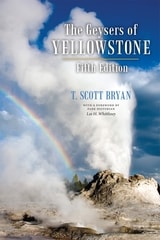
Geysers of Yellowstone, Fifth Edition
T. Scott Bryan
University Press of Colorado, 2018
Both a reference work and a fine introduction to the nature of geyser activity, this popular field guide includes a glossary of key terms, a comprehensive appendix that discusses other geyser areas of the world, detailed maps of each geyser basin, and tables for easy reference. The Geysers of Yellowstone will continue to serve geyser gazers as well as newcomers to geothermal phenomena for years to come.
Geysers of Yellowstone, Fourth Edition
T. Scott Bryan
University Press of Colorado, 2008
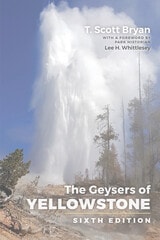
Geysers of Yellowstone
Sixth EditionT. Scott Bryan
University Press of Colorado, 2024
Both a reference work and a fine introduction to the nature of geyser activity, this popular field guide includes detailed maps of each geyser basin, tables for easy reference, and a glossary of key terms. A comprehensive appendix discusses other geyser areas of the world, several of which are described here for the first time. The Geysers of Yellowstone will continue to serve geyser gazers as well as newcomers to geothermal phenomena for years to come.
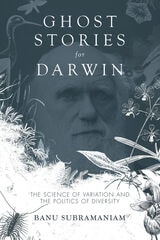
Ghost Stories for Darwin
The Science of Variation and the Politics of DiversityBanu Subramaniam
University of Illinois Press, 2014
Subramaniam reveals the histories of eugenics and genetics and their impact on the metaphorical understandings of difference and diversity that permeate common understandings of differences among people exist in contexts that seem distant from the so-called objective hard sciences. Journeying into interdisciplinary areas that range from the social history of plants to speculative fiction, Subramaniam uncovers key relationships between the life sciences, women's studies, evolutionary and invasive biology, and the history of ecology, and how ideas of diversity and difference emerged and persist in each field.
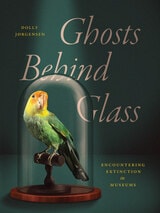
Ghosts Behind Glass
Encountering Extinction in MuseumsDolly Jørgensen
University of Chicago Press, 2025
While it’s no longer possible to encounter a dodo in the wild, we can still come face-to-face with them in museums. The remains of extinct species—whether taxidermied, skeletal, drawn, or sculpted—stare back at us from display cases.
In this moving meditation on what’s lost and what endures, environmental historian Dolly Jørgensen visits natural history collections worldwide—from Shanghai to Philadelphia, from Edinburgh to Hobart, Australia—to understand the many ways that museums tell stories about extinction. She encounters extinct animals that are framed as cultural artifacts and as rare valuables, that are memorialized with lists, and that are brought to life through augmented reality. She draws our attention to creatures with prominent afterlives—passenger pigeons, giant moas, thylacines—as well as those that are less likely to be discussed or displayed. Throughout, Jørgensen examines the relationship between museums and the natural world, so readers can look more closely at exhibits about extinction, studying the displays for what is there, as well as what is missing. During a period of rapid species loss driven by humanity’s environmental impact, Ghosts Behind Glass asks what we can learn about our world from the presence of the extinct.
Giant Sloths and Sabertooth Cats
Extinct Mammals and the Archaeology of the Ice Age Great BasinDonald K. Grayson
University of Utah Press, 2016
Were these animals abundant in the Great Basin? A detailed analysis of the distinctive assemblages of plants that now live in this region leads to a surprising, and perhaps controversial, conclusion about those abundances.
If you are interested in Ice Age mammals or in the Ice Age archaeology of North America, if you are interested in the natural history of the Great Basin or the ways in which the plants of today’s landscapes might be used to understand the deeper past, you will be fascinated by this book.
Gifted Earth
The Ethnobotany of the Quinault and Neighboring TribesDouglas Deur
Oregon State University Press, 2022
Gifted Earth features traditional Native American plant knowledge, detailing the use of plants for food, medicines, and materials. It presents a rich and living tradition of plant use within the Quinault Indian Nation in a volume collaboratively developed and endorsed by that tribe.
The Quinault Reservation on the Olympic Peninsula of Washington state is a diverse tribal community, embodying the traditional knowledge of tribes along the entire Pacific Northwest coast. Its membership consists of descendants of many tribes—from the northwestern Olympic Peninsula to the northern Oregon coast—including the Quinault, but also many others who were relocated to the reservation in the nineteenth and early twentieth centuries. Individuals descended from these tribal communities, including Chinook, Chehalis, Hoh, Quileute, Queets, Cowlitz, Tillamook, Clatsop, and others, have contributed to Gifted Earth, giving it remarkable breadth and representation.
A celebration of enduring Native American knowledge, this book will help non-specialists as they discover the potential of the region’s wild plants, learning how to identify, gather, and use many of the plants that they encounter in the Northwestern landscape. Part ethnobotanical guide and part “how-to” manual, Gifted Earth also prepares plant users for the minor hazards and pitfalls that accompany their quest—from how to avoid accidentally eating a bug hidden within a salal berry to how to prevent blisters when peeling the tender stalks of cow parsnip.
As beautiful as it is informative, Gifted Earth sets the standard for a new generation of ethnobotanical guides informed by the values, vision, and voice of Native American communities eager to promote a sustainable, balanced relationship between plant users and the rich plant communities of traditional tribal lands.
Gilbert Austin's "Chironomia" Revisited
Sympathy, Science, and the Representation of MovementSara Newman and Sigrid Streit
Southern Illinois University Press, 2020
Austin did not simply categorize gesture mechanically, separating delivery from rhetoric and the discipline’s overall goals, but instead he provided a theoretical framework of written descriptions and illustrations that positions delivery as central to effective rhetoric and civic interactions. Balancing the variable physical elements of human interactions as well as the demands of communication, Austin’s system fortuitously anticipated contemporary inquiries into embodied and nonverbal communication. Enlightenment rhetoricians, scientists, and physicians relied on sympathy and its attendant vivacious and lively ideas to convey feelings and facts to their varied audiences. During the seventeenth and eighteenth-centuries, as these disciplines formed increasingly distinct, specialized boundaries, they repurposed existing, shared communication conventions to new ends. While the emerging standards necessarily diverged, each was grounded in the subjective, embodied bedrock of the sympathetic, magical tradition.
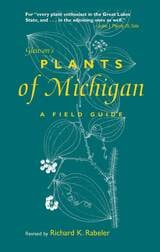
Gleason's Plants of Michigan
A Field GuideRevised by Richard K. Rabeler
University of Michigan Press, 1998
“For every plant enthusiast in the Great Lakes State, and . . . in the adjoining ones as well.”
—John J. Pipoly III, SIDA
“A very handy field guide . . . this book will be of use to anyone in northeastern North America.”
—C. Barre Hellquist, Rhodora
“It can be used to identify most of the plants . . . in Michigan and adjacent areas.”
—James E. Eckenwalder, Wildflower
Gleason’s Plants of Michigan is a major revision and expansion of The Plants of Michigan by Henry A. Gleason—the 1918 classic field guide to the flowering plants and trees found in Michigan, neighboring Great Lakes States, and southern Ontario. Richard K. Rabeler has completely updated the family descriptions and added easy-to-use keys. Information on habitats and geographical distribution is now included as well as a comprehensive index of plant names, an illustrated section on terminology, a glossary, and an introduction to botany in Michigan.
Gleason’s Plants of Michigan will be useful to naturalists, environmental specialists, botanists, and everyone who loves the wildflowers and native flora of Michigan and the surrounding areas.
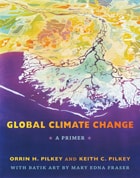
Global Climate Change
A PrimerOrrin H. Pilkey and Keith C. Pilkey
Duke University Press, 2011
After explaining the greenhouse effect, Pilkey, writing with son Keith, turns to the damage it is causing: sea level rise, ocean acidification, glacier and sea ice melting, changing habitats, desertification, and the threats to animals, humans, coral reefs, marshes, and mangroves. These explanations are accompanied by Mary Edna Fraser’s stunning batiks depicting the large-scale arenas in which climate change plays out.
The Pilkeys directly confront and rebut arguments typically advanced by global change deniers. Particularly valuable are their discussions of “Climategate,” a manufactured scandal that undermined respect for the scientific community, and the denial campaigns by the fossil fuel industry, which they compare to the tactics used by the tobacco companies a generation ago to obfuscate findings on the harm caused by cigarettes.
Global Environmental History
I. G. Simmons
University of Chicago Press, 2008
A far-reaching approach that considers the truly global picture and recognizes the contributions of many disciplines—including the natural sciences, the social sciences, and increasingly, the humanities—Global Environmental History focuses not only on the material world but also on humans’ ideas about the planet and their place on it. Taking as his starting point the major phases of human technological evolution of the last 12,000 years, Simmons considers how these changes have affected the natural world and goes on to assess the response to conditions such as climate change. By putting today’s environmental preoccupations into a long-term perspective, Simmons reveals the history of some current anxieties.
A timely examination of the interrelation of history and nature, Simmons’s book will be welcomed by any concerned reader interested in the origins of the modern environmental crisis.

Global Fever
How to Treat Climate ChangeWilliam H. Calvin
University of Chicago Press, 2008
With Global Fever, William H. Calvin delivers both a clear-eyed diagnosis and a strongly worded prescription. In striking, straightforward language, he first clearly sets out the current state of the Earth’s warming climate and the disastrous possibilities ahead should we continue on our current path. Increasing temperatures will kill off vegetation and dry up water resources, and their loss will lead, in an increasingly destructive feedback loop, to even more warming. Resource depletion, drought, and disease will follow, leading to socioeconomic upheaval—and accompanying violence—on a scale barely conceivable.
It is still possible, Calvin argues, to avoid such a dire fate. But we must act now, aggressively funneling resources into jump-starting what would amount to a third industrial revolution, this one of clean technologies—while simultaneously expanding our use of existing low-emission technologies, from nuclear power to plug-in hybrid vehicles, until we achieve the necessary scientific breakthroughs.
Passionately written, yet thoroughly grounded in the latest climate science, Global Fever delivers both a stark warning and an ambitious blueprint for saving the future of our planet.
Global Perspectives on Science and Religion
Pranab Das
Templeton Press, 2009
Gathering thinkers from ten countries and various scientific and spiritual backgrounds, Global Perspectives on Science and Spirituality leads readers on a fascinating tour of distinctly non-Western approaches to topics in these two fields. These voices add fresh and invigorating input to a dialogue that has thus far been predominantly guided by scholars from the United States or Western Europe.
The award-winning researchers in this volume were selected from a pool of over one hundred and fifty applications. They offer the very best scholarship from underrepresented regions around the globe. The essays cover a broad spectrum of scientific fields, spanning mathematical physics, robotics, biosemiotics and other new schools of theoretical biology, embryonic stem cells, cognitive science, and the concept of opening the human mind to broader ideas of reality. Hailing from some of the top research institutions in India, Japan, Russia, Korea, China, and a variety of Eastern European nations, contributors offer unique insights into their cultures' spiritual and philosophical traditions. At the same time, they deftly engage concepts from the ongoing Western dialogue in its terms, delving deeply, at times, into schools of thought like phenomenology or process thought.
Scholars, students, researchers, and anyone seeking new ways of understanding the interplay of spirituality and science will discover a multitude of windows into previously underexplored research areas in these truly interdisciplinary essays. Indeed, any of these pieces could serve as the basis for entirely new long-term study programs.

Global Warming and Political Intimidation
How Politicians Cracked Down on Scientists as the Earth Heated UpRaymond S. Bradley
University of Massachusetts Press, 2011
In this powerful book, highly respected climate scientist Raymond Bradley provides the inside story from the front lines of the debate. In clear and direct language, he describes the tactics those in power have used to intimidate him and his colleagues part of a larger pattern of governmental suppression of scientific information, politics at the expense of empirically based discourse.
Speaking from his experience, Bradley exposes the fault lines in the global warming debate, while providing a concise primer on climate change. The result is a cautionary tale of how politics and science can become fatally intertwined.
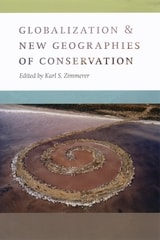
Globalization and New Geographies of Conservation
Edited by Karl S. Zimmerer
University of Chicago Press, 2006
Globalization and New Geographies of Conservation makes four important arguments about the recent coupling of conservation and globalization that is reshaping the place of nature in human-environmental change. First, it has led to an unprecedented number of spatial arrangements whose environmental management goals and prescribed activities vary along a spectrum from strict biodiversity protection to sustainable utilization involving agriculture, food production, and extractive activities. Conservation and globalization are also leading, by necessity, to new scales of management in these activities that rely on environmental science, thus shifting the spatial patterning of humans and the environment. This interaction results, as well, in the unprecedented importance of boundaries and borders; transnational border issues pose both opportunities and threats to global conservation proposed by organizations and institutions that are themselves international. Lastly, Globalization and New Geographies of Conservation argues that the local level has been integral to globalization, while the regional level is often eclipsed at the peril of the successful implementation of conservation and management programs.
Bridging the gap between geography and life science, Globalization and New Geographies of Conservation will appeal to a broad range of students of the environment, conservation planning; biodiversity management, and development and globalization studies.

Globes
400 Years of Exploration, Navigation, and PowerSylvia Sumira
University of Chicago Press, 2014
Showcasing the impressive collection of globes held by the British Library, Sumira traces the inception and progression of globes during the period in which they were most widely used—from the late fifteenth century to the late nineteenth century—shedding light on their purpose, function, influence, and manufacture, as well as the cartographers, printers, and instrument makers who created them. She takes readers on a chronological journey around the world to examine a wide variety of globes, from those of the Renaissance that demonstrated a renewed interest in classical thinkers; to those of James Wilson, the first successful commercial globe maker in America; to those mass-produced in Boston and New York beginning in the 1800s. Along the way, Sumira not only details the historical significance of each globe, but also pays special attention to their materials and methods of manufacture and how these evolved over the centuries.
A stunning and accessible guide to one of the great tools of human exploration, Globes will appeal to historians, collectors, and anyone who has ever examined this classroom accessory and wondered when, why, and how they came to be made.

Glyphosate and the Swirl
An Agroindustrial Chemical on the MoveVincanne Adams
Duke University Press, 2022
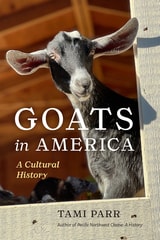
Goats in America
A Cultural HistoryTami Parr
Oregon State University Press, 2025
Since arriving in North America with cattle and other domesticated livestock in the sixteenth century, goats have provided people sustenance and valuable products, including milk, meat, and mohair. But humans did not appreciate the animals, and as a result, throughout much of American history goats were persecuted as public nuisances and symbols of degenerate behavior. Nevertheless, over the centuries the tenacious goat has overcome many of these stereotypes and secured a spot in the hearts and minds of modern Americans, who love goat cheese and embrace goats as social media stars.
Examining key moments and notable developments in goat history and culture, Goats in America outlines the history and evolving role of goats in communities across the country, from San Francisco and New York City to rural Wisconsin and the Navajo Nation. Parr shows that the evolving reputation of goats in American society ultimately reveals more about humans than it does about goats themselves. So, the next time you are enjoying your favorite goat cheese, take a moment to consider the history and role of goats within American culture.

God and Evolution
Fundamental Questions of Christian EvolutionismJozef Zycinski
Catholic University of America Press, 2006
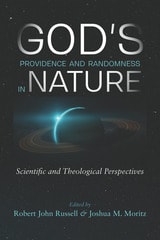
God's Providence and Randomness in Nature
Scientific and Theological PerspectivesRobert John Russell
Templeton Press, 2019
In October 2014, a group of mathematicians, physicists, ecologists, philosophers, and theologians gathered at a special conference in Berkeley, California, to present the results of a two-year research program dubbed “Project SATURN.” This program explored many rich avenues of thought at the intersection of modern science and Christian theology. Chief among them is the possibility that specific processes might be so complex that they do not have sufficient physical causes. Known as “ontological indeterminism,” this idea has profound implications for theology. Specifically, it allows God to be thought of as acting providentially within nature without violating the laws and processes of nature.
Such a momentous insight could influence how we understand free will, natural evil, suffering in nature, and the relation between divine providence and human evolution. The essays collected here discussed these topics and were initially presented at the 2014 conference. Part I establishes the scientific basis for conceptualizing specific processes in the universe as inherently random and possibly indeterministic. Part II discusses the philosophical and theological issues that spring from this understanding. Together they represent the cutting edge of thought in the increasingly productive dialogue between science and theology.
Short for the “Scientific and Theological Understandings of Randomness in Nature,” Project SATURN was created by the Center for Theology and the Natural Sciences, a Program of the Graduate Theological Union, Berkeley. It was funded with a grant administered by Calvin College and provided by the John Templeton Foundation.
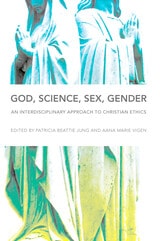
God, Science, Sex, Gender
An Interdisciplinary Approach to Christian EthicsEdited by Patricia Beattie Jung and Aana Marie Vigen with John Anderson
University of Illinois Press, 2010
God, Sex, Science, Gender: An Interdisciplinary Approach to Christian Ethics is a timely, wide-ranging attempt to rescue dialogues on human sexuality, sexual diversity, and gender from insular exchanges based primarily on biblical scholarship and denominational ideology. Too often, dialogues on sexuality and gender devolve into the repetition of party lines and defensive postures, without considering the interdisciplinary body of scholarly research on this complex subject. This volume expands beyond the usual parameters, opening the discussion to scholars in the humanities, social sciences, and natural sciences to foster the development of Christian sexual ethics for contemporary times.
Essays by prominent and emerging scholars in the fields of anthropology, sociology, psychology, philosophy, literary studies, theology, and ethics reveal how faith and reason can illuminate our understanding of human sexual and gender diversity. Focusing on the intersection of theology and science and incorporating feminist theory, God, Science, Sex, Gender is a much-needed call for Christian ethicists to map the origins and full range of human sexual experience and gender identity. Essays delve into why human sexuality and gender can be so controversial in Christian contexts, investigate the complexity of sexuality in humans and other species, and reveal the implications of diversity for Christian moral theology.
Contributors are Joel Brown, James Calcagno, Francis J. Catania, Pamela L. Caughie, Robin Colburn, Robert Di Vito, Terry Grande, Frank Fennell, Anne E. Figert, Patricia Beattie Jung, Fred Kniss, John McCarthy, Jon Nilson, Stephen J. Pope, Susan A. Ross, Joan Roughgarden, and Aana Marie Vigen.
God, Science, and Humility
Ten Scientists Consider Humility TheologyRobert Hermann
Templeton Press, 2000
Editor Robert Herrmann has collected the opinions of ten scientists, all leaders in their fields, who have considered the relevance of their science to theology. The contributors bring a variety of religious experiences to the consideration of humility theology, a humble approach to our truth-seeking about God.
As a physicist, Russell Stannard provides an overview of humility theology in which truth is approached in an experimental, hypothetical mode, as is done in the sciences. Physicist and theologian Robert Russell focuses on the interaction between cosmology and theology. Charles Harper writes of the opportunity for a tremendous flowering of planetary science through a joint partnership between science and religion.
Owen Gingerich, historian of science, looks at the other side of humility theology—the possibility that we can actually arrive at unreasonable expectations— about the existence and nature of extraterrestrial intelligence. Francisco Ayala begins with the surprising contrast between the very brief period of human evolution and its remarkable and utterly unique end-product, homo sapiens. Psychologist David Myers points out that intuition can be a powerful faculty, but there are many limitations to this “inner knowing.”
Chemist Giuseppe Del Re writes an interesting view of the history of the development of chemistry as a discipline. Herbert Benson and Patricia Myers analyze the components of mind-body medicine that relate to the rubric of self-care, including relaxation procedures, nutrition, exercise, stress management, and faith. David and Susan Larson introduce the reader to a new field of medical science that focuses on the impact of spiritual values on patients' health. Fraser Watts looks at artificial intelligence research.
The discussion included in this book will significantly aid scholars and general readers in the search for greater understanding of the relationship between science and religion.
Contributors include Russell Stannard, Robert John Russell, Charles L. Harper Jr., Owen Gingerich, Francisco J. Ayala, David G. Myers, Giuseppe Del Re, Herbert Benson, Patricia Myers, David B. Larson, Susan S. Larson, and Fraser Watts.

Going Wild
Hunting, Animal Rights, and the Contested Meaning of NatureJan E. Dizard
University of Massachusetts Press, 1999
A probing study of the way diverse conceptions of nature shape our responses to specific environmental issues, this book examines the recent clash over a proposed deer hunt on the largest public watershed in Massachusetts, the Quabbin reservoir. In analyzing this public dispute, Jan E. Dizard draws on a wide range of sources, including interviews with resource managers, animal rights advocates, hunters, and environmentalists. He shows how each faction, while sharing some common ground with the others, projects different meanings onto nature.
Going to the Moon
Sally Ashton
Duke University Press, 2026
In 2022, poet Sally Ashton learned that one of her poems would be included in a time capsule to be sent to the Moon via Astrobotic’s 2024 Griffin/VIPER as part of the Lunar Codex project. For her, this event seemed like the high point in a life spent chasing the Moon, from a childhood inspired by the space race of the 1960s to an adulthood spent in contemplation and conversation with the sky. In Going to the Moon, Ashton marvels at the Moon’s powerful influence since the dawn of humanity—how we have, in our own ways, gone to the Moon, and what we have found. Contemplating lunar settlement in the light of history, culture, the rise of the space industry, and geopolitical conflict, Ashton shares her sense of wonder at the simple beauty of our unchanged Moon and reveals what is at stake in our contemporary attempts to colonize it.
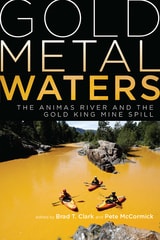
Gold Metal Waters
The Animas River and the Gold King Mine SpillBrad T. Clark
University Press of Colorado, 2022
This singular event is surveyed and interpreted from multiple diverse perspectives—college professors, students, and scientists and activists from a range of academic and epistemological backgrounds—with each chapter reflecting unique professional and personal experiences. Contributors examine both the context for this event and responses to it, embedding this discussion within the broader context of the tens of thousands of mines leaking pollutants into waterways and soils throughout Colorado and the failure to adequately mitigate the larger ongoing crisis.
The Gold King Mine spill was the catalyst that finally brought Superfund listing to the Silverton area; it was a truly sensational event in many respects. Gold Metal Waters will be of interest to students and scholars in all disciplines, but especially in environmental history, western history, mining history, politics, and communication, as well as general readers concerned with human relationships with the environment.
Contributors: Alane Brown, Brian L. Burke, Karletta Chief, Steven Chischilly, Becky Clausen, Michael A. Dichio, Betty Carter Dorr, Cynthia Dott, Gary Gianniny, David Gonzales, Andrew Gulliford, Lisa Marie Jacobs, Ashley Merchant, Teresa Montoya, Scott W. Roberts, Lorraine L. Taylor, Jack Turner, Keith D. Winchester, Megan C. Wrona, Janene Yazzie
Golf Science
Optimum Performance from Tee to GreenEdited by Mark F. Smith
University of Chicago Press, 2013
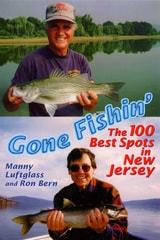
Gone Fishin'
The 100 Best Spots in New JerseyManny Luftglass
Rutgers University Press, 1998
Grab your tackle and hit the road with Ron Bern and Manny Luftglass as they take you to the choicest places to fish in New York in Gone Fishin': The 100 Best Spots in New York, their follow-up to the highly successful Gone Fishin': The 100 Best Spots in New Jersey.
Truly great freshwater and saltwater fishing abounds throughout the state, from the classic Catskills trout streams to the mighty Hudson and Delaware rivers; from Lake Ontario to the Finger Lakes; from Long Island Sound to the bluewater canyons off the coast; from saltwater bays to artificial reefs; from the smaller sweetwater rivers and New York City reservoirs to surprising trout streams and bass ponds on Long Island.
Luftglass and Bern provide readers with immediately useful insights into each of the 100 best sites. They furnish easy-to-follow directions, descriptions of the body of water, boat launch information, and detailed advice on live and artificial bait, fishing methods, equipment, depths, best times of day and year, secret tips particular to each site, and even specific places to work bait or lures. Gone Fishin' also includes places that are good for children, as well as those which are handicapped accessible.
Throughout the book, Bern and Luftglass share anecdotes about their own fishing adventures and some of the big ones that didn't get away in their more than 33 years of fishing together. The information they cram into every chapter will help you find the spot, fish it more effectively, and catch more fish.
Whether you fish 150 times a year or you are planning to fish for the first time, you're sure to fall hook, line, and sinker for this entertaining and educational guide.
Good Vibes Only
Phenomenology and the Biopolitics of Algorithmic LegitimationRobin James
Duke University Press, 2026
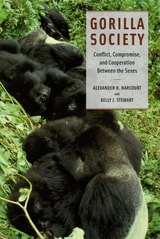
Gorilla Society
Conflict, Compromise, and Cooperation Between the SexesAlexander H. Harcourt and Kelly J. Stewart
University of Chicago Press, 2007
Societies develop as a result of the interactions of individuals as they compete and cooperate with one another in the evolutionary struggle to survive and reproduce successfully. Gorilla society is arranged according to these different and sometimes conflicting evolutionary goals of the sexes. In seeking to understand why gorilla society exists as it does, Alexander H. Harcourt and Kelly J. Stewart bring together extensive data on wild gorillas, collected over decades by numerous researchers working in diverse habitats across Africa, to illustrate how the social system of gorillas has evolved and endured.
Gorilla Society introduces recent theories explaining primate societies, describes gorilla life history, ecology, and social systems, and explores both sexes’ evolutionary strategies of survival and reproduction. With a focus on the future, Harcourt and Stewart conclude with suggestions for future research and conservation. An exemplary work of socioecology from two of the world’s best known gorilla biologists, Gorilla Society will be a landmark study on a par with the work of George Schaller—a synthesis of existing research on these remarkable animals and the societies in which they live.
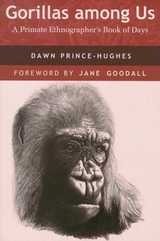
Gorillas among Us
A Primate Ethnographer’s Book of DaysDawn Prince-Hughes; Foreword by Jane Goodall
University of Arizona Press, 2001
Dawn Prince-Hughes is an extraordinary researcher. She does not experiment or measure but instead sits on a wooden bench for hours each day, watching captive gorillas through the enclosure where other visitors average five-second stops. Her patience is rewarded with astounding observations—she watches gorillas make and use tools, bury a dead crow, give birth, and comfort and care for each other.
In Gorillas among Us, Prince-Hughes has compressed years of gorilla observation into a composite diary chronicling the days of one gorilla family. She creates a blended portrait of both peoples—gorilla and human. The entries capture significant observations, which often prompt brief discussions of gorillas’ captivity, diet, communication, aesthetic preferences, social behavior, and play. Several chapters end with thought-provoking meditations on human values. The final section, “More about Gorillas,” provides a concise, accessible introduction to gorilla natural history.
This book will delight and move anyone with an interest in animals, and it also makes a significant contribution to the scarce literature on captive gorillas. Prince-Hughes's observations of tool use by gorillas will interest scientists, and even a casual reader will come away with a new sense of the power of observation. The author hopes to change the way we look at animals in the wild and in captivity, and laments that zoo visitors pause so briefly in front of the gorilla enclosure, rushing on with their assumptions unchanged, without really seeing the gorillas.
By turns opinionated and descriptive, quirky and authoritative, Prince-Hughes draws us into the family life of captive gorillas and into a consideration of our own culture. Readers will learn something new about gorillas and themselves on every page of this poignant story. The book testifies to the potential for interspecies compassion and the love that one person can find in a family of gorillas.