3027 books match the query 'Sociology' and 80 start with g
cover of Globalizations and Social Movements: Culture, Power, and the Transnational Public Sphere

Globalizations and Social Movements

Culture, Power, and the Transnational Public Sphere

John A. Guidry, Michael D. Kennedy, and Mayer N. Zald, Editors

University of Michigan Press, 2000
Globalization is a set of processes that are weakening national boundaries. Both transnational and local social movements develop to resist the processes of globalization--migration, economic interdependence, global media coverage of events and issues, and intergovernmental relations. Globalization not only spurs the creation of social movements, but affects the way many social movements are structured and work. The essays in this volume illuminate how globalization is caught up in social movement processes and question the boundaries of social movement theory.
The book builds on the modern theory of social movements that focuses upon political process and opportunity, resource mobilization and mobilization structure, and the cultural framing of grievances, utopias, ideologies, and options. Some of the essays deal with the structure of international campaigns, while others are focused upon conflicts and movements in less developed countries that have strong international components. The fourteen essays are written by both well established senior scholars and younger scholars in anthropology, political science, sociology, and history. The essays cover a range of time periods and regions of the world.
This book is relevant for anyone interested in the politics and social change processes related to globalization as well as social-movement theory.
Mayer Zald is Professor of Sociology, University of Michigan. Michael Kennedy is Vice Provost for International Programs, Associate Professor of Sociology, and Director of the Center for Russian and East European Affairs, University of Michigan. John Guidry is Assistant Professor of Political Science, Augustana College.
[more]
cover of Globalized Authoritarianism: Megaprojects, Slums, and Class Relations in Urban Morocco

Globalized Authoritarianism

Megaprojects, Slums, and Class Relations in Urban Morocco

Koenraad Bogaert

University of Minnesota Press, 2018

A rich investigation into Morocco’s urban politics

Over the past thirty years, Morocco’s cities have transformed dramatically. To take just one example, Casablanca’s medina is now obscured behind skyscrapers that are funded by global capital and encouraged by Morocco’s monarchy, which hopes to transform this city into a regional leader of finance and commerce. Such changes have occurred throughout Morocco. Megaprojects are redesigning the cityscapes of Rabat, Tangiers, and Casablanca, turning the nation’s urban centers into laboratories of capital accumulation, political dominance, and social control.

In Globalized Authoritarianism, Koenraad Bogaert links more abstract questions of government, globalization, and neoliberalism with concrete changes in the city. Bogaert goes deep beneath the surface of Morocco’s urban prosperity to reveal how neoliberal government and the increased connectivity engendered by global capitalism transformed Morocco’s leading urban spaces, opening up new sites for capital accumulation, creating enormous class divisions, and enabling new innovations in state authoritarianism. Analyzing these transformations, he argues that economic globalization does not necessarily lead to increased democratization but to authoritarianism with a different face, to a form of authoritarian government that becomes more and more a globalized affair.

Showing how Morocco’s experiences have helped produce new forms of globalization, Bogaert offers a bridge between in-depth issues of Middle Eastern studies and broader questions of power, class, and capital as they continue to evolve in the twenty-first century.
[more]
cover of Globalizing the Caribbean: Political Economy, Social Change, and the Transnational Capitalist Class

Globalizing the Caribbean

Political Economy, Social Change, and the Transnational Capitalist Class

Jeb Sprague

Temple University Press, 2019

The beautiful Caribbean basin is fertile ground for a study of capitalism past and present. Transnational corporations move money and labor around the region, as national regulations are reworked to promote conditions benefiting private capital. Globalizing the Caribbean offers a probing account of the region’s experience of economic globalization while considering gendered and racialized social relations and the frequent exploitation of workers.

Jeb Sprague focuses on the social and material nature of this new era in the history of world capitalism. He combines an historical overview of capitalism in the region with theoretical analysis backed by case studies. Sprague elaborates upon the role of class formation and the restructuring of local states. He considers both U.S. hegemony, and how various upsurges from below and crises occur. He examines the globalization of the cruise ship and mining businesses, looks at the growth of migrant labor and reverse flow of remittances, and describes the evolving role of export processing and supranational associations. In doing so, Sprague shows how transnationally oriented elites have come to rule the Caribbean, and how capitalist globalization in the region occurs alongside shifting political, institutional, and organizational dynamics.

[more]
cover of Go-Go Live: The Musical Life and Death of a Chocolate City

Go-Go Live

The Musical Life and Death of a Chocolate City

Natalie Hopkinson

Duke University Press, 2012

Go-go is the conga drum–inflected black popular music that emerged in Washington, D.C., during the 1970s. The guitarist Chuck Brown, the "Godfather of Go-Go," created the music by mixing sounds borrowed from church and the blues with the funk and flavor that he picked up playing for a local Latino band. Born in the inner city, amid the charred ruins of the 1968 race riots, go-go generated a distinct culture and an economy of independent, almost exclusively black-owned businesses that sold tickets to shows and recordings of live go-gos. At the peak of its popularity, in the 1980s, go-go could be heard around the capital every night of the week, on college campuses and in crumbling historic theaters, hole-in-the-wall nightclubs, backyards, and city parks.

Go-Go Live is a social history of black Washington told through its go-go music and culture. Encompassing dance moves, nightclubs, and fashion, as well as the voices of artists, fans, business owners, and politicians, Natalie Hopkinson's Washington-based narrative reflects the broader history of race in urban America in the second half of the twentieth century and the early twenty-first. In the 1990s, the middle class that had left the city for the suburbs in the postwar years began to return. Gentrification drove up property values and pushed go-go into D.C.'s suburbs. The Chocolate City is in decline, but its heart, D.C.'s distinctive go-go musical culture, continues to beat. On any given night, there's live go-go in the D.C. metro area.
[more]
cover of God's Businessmen: Entrepreneurial Evangelicals in Depression and War

God's Businessmen

Entrepreneurial Evangelicals in Depression and War

Sarah Ruth Hammond

University of Chicago Press, 2017

How evangelical businessmen in the 1930s and 1940s joined their religious and business lives.

The evangelical embrace of conservatism is a familiar feature of the contemporary political landscape. What’s less well-known, however, is that the connection predates the Reagan revolution, going all the way back to the Depression and World War II. Evangelical businessmen at the time were quite active in opposing the New Deal—on both theological and economic grounds—and in doing so claimed a place alongside other conservatives in the public sphere. Like previous generations of devout laymen, they self-consciously merged their religious and business lives, financing and organizing evangelical causes with the kind of visionary pragmatism that they practiced in the boardroom.

In God’s Businessmen, Sarah Ruth Hammond explores not only these men’s personal trajectories but also those of the service clubs and other institutions that, like them, believed that businessmen were God’s instrument for the Christianization of the world. Hammond presents a capacious portrait of the relationship between the evangelical business community and the New Deal—and in doing so makes important contributions to American religious history, business history, and the history of the American state.
[more]
cover of Going All City: Struggle and Survival in LA's Graffiti Subculture

Going All City

Struggle and Survival in LA's Graffiti Subculture

Stefano Bloch

University of Chicago Press, 2019

“We could have been called a lot of things: brazen vandals, scared kids, threats to social order, self-obsessed egomaniacs, marginalized youth, outsider artists, trend setters, and thrill seekers. But, to me, we were just regular kids growing up hard in America and making the city our own. Being ‘writers’ gave us something to live for and ‘going all city’ gave us something to strive for; and for some of my friends it was something to die for.”
 
In the age of commissioned wall murals and trendy street art, it’s easy to forget graffiti’s complicated and often violent past in the United States. Though graffiti has become one of the most influential art forms of the twenty-first century, cities across the United States waged a war against it from the late 1970s to the early 2000s, complete with brutal police task forces. Who were the vilified taggers they targeted? Teenagers, usually, from low-income neighborhoods with little to their names except a few spray cans and a desperate need to be seen—to mark their presence on city walls and buildings even as their cities turned a blind eye to them.
 
Going All City is the mesmerizing and painful story of these young graffiti writers, told by one of their own. Prolific LA writer Stefano Bloch came of age in the late 1990s amid constant violence, poverty, and vulnerability. He recounts vicious interactions with police; debating whether to take friends with gunshot wounds to the hospital; coping with his mother’s heroin addiction; instability and homelessness; and his dread that his stepfather would get out of jail and tip his unstable life into full-blown chaos. But he also recalls moments of peace and exhilaration: marking a fresh tag; the thrill of running with his crew at night; exploring the secret landscape of LA; the dream and success of going all city.
 
Bloch holds nothing back in this fierce, poignant memoir. Going All City is an unflinching portrait of a deeply maligned subculture and an unforgettable account of what writing on city walls means to the most vulnerable people living within them.

[more]
cover of Going Down To The Barrio: Homeboys and Homegirls in Change

Going Down To The Barrio

Homeboys and Homegirls in Change

Joan W. Moore

Temple University Press, 1991

In this illuminating look at two Chicano gangs in East Los Angeles, Joan W. Moore examines the changes and continuities among three generations of barrio gangs. As a sequel to the author's award-winning study, Homeboys (Temple, 1979), this book returns to the same neighborhoods to chart the development of gang behavior, especially in terms of violence and drug use, and to compare experiences of male and female gang members.

In a remarkable research collaborative effort, Moore and gang members worked together to develop an understanding of both male and female gangs and an internal vision of gang members' lives. By using excerpts from individual interviews, the author depicts more about the gangs than simply their life together as a unit; she gives them a voice. Gang members discuss their personal reaction to violence, drug using and selling, family relations and intra-gang dating; they share intimacies that reveal varying levels of loyalty to and dependency on their affiliations, which often become a family substitute.

After maintaining neighborhood ties for 17 years, Moore's research group has established a relationship with these communities that gives her a rare perspective. This is a fascinating and informative book for anyone interested in sociology, criminology, youth behavior and deviance, and ethnic studies.
[more]
cover of Going Public: A Guide for Social Scientists

Going Public

A Guide for Social Scientists

Arlene Stein and Jessie Daniels

University of Chicago Press, 2017

At a time when policy discussions are dominated by “I feel” instead of “I know,” it is more important than ever for social scientists to make themselves heard. When those who possess in-depth training and expertise are excluded from public debates about pressing social issues—such as climate change, the prison system, or healthcare—vested interests can sway public opinion in uninformed ways. Yet few graduate students, researchers, or faculty know how to do this kind of work—or feel empowered to do it.

 While there has been an increasing call for social scientists to engage more broadly with the public, concrete advice for starting the conversation has been in short supply. Arlene Stein and Jessie Daniels seek to change this with Going Public, the first guide that truly explains how to be a public scholar. They offer guidance on writing beyond the academy, including how to get started with op-eds and articles and later how to write books that appeal to general audiences. They then turn to the digital realm with strategies for successfully building an online presence, cultivating an audience, and navigating the unique challenges of digital world. They also address some of the challenges facing those who go public, including the pervasive view that anything less than scholarly writing isn’t serious and the stigma that one’s work might be dubbed “journalistic.”

Going Public shows that by connecting with experts, policymakers, journalists, and laypeople, social scientists can actually make their own work stronger. And by learning to effectively add their voices to the conversation, researchers can help make sure that their knowledge is truly heard above the digital din.
[more]
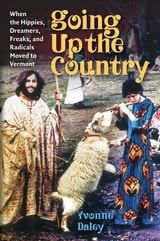
cover of Going Up the Country: When the Hippies, Dreamers, Freaks, and Radicals Moved to Vermont

Going Up the Country

When the Hippies, Dreamers, Freaks, and Radicals Moved to Vermont

Yvonne Daley

University Press of New England, 2018
Going Up the Country is part oral history, part nostalgia-tinged narrative, and part clear-eyed analysis of the multifaceted phenomena collectively referred to as the counterculture movement in Vermont. This is the story of how young migrants, largely from the cities and suburbs of New York and Massachusetts, turned their backs on the establishment of the 1950s and moved to the backwoods of rural Vermont, spawning a revolution in lifestyle, politics, sexuality, and business practices that would have a profound impact on both the state and the nation. The movement brought hippies, back-to-the-landers, political radicals, sexual libertines, and utopians to a previously conservative state and led us to today’s farm to table way of life, environmental consciousness, and progressive politics as championed by Bernie Sanders.
[more]
cover of Gold Diggers and Silver Miners: Prostitution and Social Life on the Comstock Lode

Gold Diggers and Silver Miners

Prostitution and Social Life on the Comstock Lode

Marion S. Goldman

University of Michigan Press, 1981

In 1859 high grade silver bullion was discovered on the Comstock Lode. In a twinkling, Virginia City was transformed into a brawling boom town perched on a mountain of silver. Twenty years later it virtually disappeared, leaving behind played-out mines, tumbled-down shanties, and memories of those who sought their fortunes on the lode. The fortune seekers were many: miners and madams, confidence men and dance hall girls. The fast life was as stratified as any proper community, ranging from expensively kept women to prostitutes living in cribs. Laura Fair, an elite member of the demimonde, shot her protector and, after a spectacular trial, retired to live modestly in San Francisco. Jessie Lester made a small fortune as a madam while middle rank prostitutes such as Julia Bulette died in debt. At the lowest end of scale were "celestial damsels," nameless slave women brought from China to minister to the needs of Chinese workers. Chronicling it all was the cynical and lascivious pen of Alf Doten, writer, editor, and bon vivant. In Gold Diggers and Silver Miners, sociologist Marion S. Goldman provides a detailed account of prostitution on the Comstock Lode. By considering sexual commerce in a community limited in space and time, she explores general relationships between prostitution and society, shedding light on sociological questions of importance today.
[more]
cover of Golden Years?: Social Inequality in Later Life

Golden Years?

Social Inequality in Later Life

Deborah Carr

Russell Sage Foundation, 2019

Thanks to advances in technology, medicine, Social Security, and Medicare, old age for many Americans is characterized by comfortable retirement, good health, and fulfilling relationships. But there are also millions of people over 65 who struggle with poverty, chronic illness, unsafe housing, social isolation, and mistreatment by their caretakers. What accounts for these disparities among older adults? Sociologist Deborah Carr’s Golden Years? draws insights from multiple disciplines to illuminate the complex ways that socioeconomic status, race, and gender shape the nearly every aspect of older adults’ lives. By focusing on an often-invisible group of vulnerable elders, Golden Years? reveals that disadvantages accumulate across the life course and can diminish the well-being of many.
 
Carr connects research in sociology, psychology, epidemiology, gerontology, and other fields to explore the well-being of older adults. On many indicators of physical health, such as propensity for heart disease or cancer, black seniors fare worse than whites due to lifetimes of exposure to stressors such as economic hardships and racial discrimination and diminished access to health care. In terms of mental health, Carr finds that older women are at higher risk of depression and anxiety than men, yet older men are especially vulnerable to suicide, a result of complex factors including the rigid masculinity expectations placed on this generation of men. Carr finds that older adults’ physical and mental health are also closely associated with their social networks and the neighborhoods in which they live. Even though strong relationships with spouses, families, and friends can moderate some of the health declines associated with aging, women—and especially women of color—are more likely than men to live alone and often cannot afford home health care services, a combination that can be isolating and even fatal. Finally, social inequalities affect the process of dying itself, with white and affluent seniors in a better position to convey their end-of-life preferences and use hospice or palliative care than their disadvantaged peers.
 
Carr cautions that rising economic inequality, the lingering impact of the Great Recession, and escalating rates of obesity and opioid addiction, among other factors, may contribute to even greater disparities between the haves and the have-nots in future cohorts of older adults. She concludes that policies, such as income supplements for the poorest older adults, expanded paid family leave, and universal health care could ameliorate or even reverse some disparities.
 
A comprehensive analysis of the causes and consequences of later-life inequalities, Golden Years? demonstrates the importance of increased awareness, strong public initiatives, and creative community-based programs in ensuring that all Americans have an opportunity to age well.
 
[more]
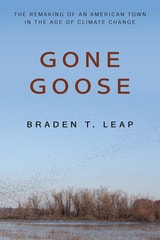
cover of Gone Goose: The Remaking of an American Town in the Age of Climate Change

Gone Goose

The Remaking of an American Town in the Age of Climate Change

Braden T. Leap

Temple University Press, 2019

Sumner, MO, pop. 102, near the Swan Lake National Wildlife Refuge, proclaims itself “The Wild Goose Capital of the World.” It even displays Maxie, the World’s largest goose: a 40-foot tall fiberglass statue with a wingspan stretching more than 60 feet. But while the 200,000 Canada geese that spent their falls and winters at Swan Lake helped generate millions of dollars for the local economy—with hunting and the annual Goose Festival—climate change, as well as environmental and land use issues, have caused the birds to disappear. The economic loss of the geese and the activities they inspired served as key building blocks in the rural identities residents had developed and treasured.

In his timely and topical book, Gone Goose, Braden Leap observes how members of this rural town adapted, reorganized, and reinvented themselves in the wake of climate change—and how they continued to cultivate respect and belonging in their community. Leap conducted interviews with residents and participated in various community events to explore how they reimagine their relationships with each other as well as their community’s relationship with the environment, even as they wish the geese would return.
[more]
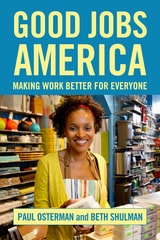
cover of Good Jobs America

Good Jobs America

Paul Osterman

Russell Sage Foundation, 2012
America confronts a jobs crisis that has two faces. The first is obvious when we read the newspapers or talk with our friends and neighbors: there are simply not enough jobs to go around. The second jobs crisis is more subtle but no less serious: far too many jobs fall below the standard that most Americans would consider decent work. A quarter of working adults are trapped in jobs that do not provide living wages, health insurance, or much hope of upward mobility. The problem spans all races and ethnic groups and includes both native-born Americans and immigrants. But Good Jobs America provides examples from industries ranging from food services and retail to manufacturing and hospitals to demonstrate that bad jobs can be made into good ones. Paul Osterman and Beth Shulman make a rigorous argument that by enacting policies to help employers improve job quality we can create better jobs, and futures, for all workers. Good Jobs America dispels several myths about low-wage work and job quality. The book demonstrates that mobility out of the low-wage market is a chimera—far too many adults remain trapped in poor-quality jobs. Osterman and Shulman show that while education and training are important, policies aimed at improving earnings equality are essential to lifting workers out of poverty. The book also demolishes the myth that such policies would slow economic growth. The experiences of countries such as France, Germany, and the Netherlands, show that it is possible to mandate higher job standards while remaining competitive in international markets. Good Jobs America shows that both government and the firms that hire low-wage workers have important roles to play in improving the quality of low-wage jobs. Enforcement agencies might bolster the effectiveness of existing regulations by exerting pressure on parent companies, enabling effects to trickle down to the subsidiaries and sub-contractors where low-wage jobs are located. States like New York have already demonstrated that involving community and advocacy groups—such as immigrant rights organizations, social services agencies, and unions—in the enforcement process helps decrease workplace violations. And since better jobs reduce turnover and improve performance, career ladder programs within firms help create positions employees can aspire to. But in order for ladder programs to work, firms must also provide higher rungs—the career advancement opportunities workers need to get ahead. Low-wage employment occupies a significant share of the American labor market, but most of these jobs offer little and lead nowhere. Good Jobs America reappraises what we know about job quality and low-wage employment and makes a powerful argument for our obligation to help the most vulnerable workers. A core principle of U.S. society is that good jobs be made accessible to all. This book proposes that such a goal is possible if we are committed to realizing it.
[more]
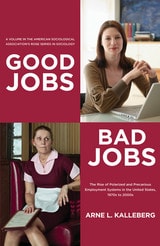
cover of Good Jobs, Bad Jobs: The Rise of Polarized and Precarious Employment Systems in the United States, 1970s-2000s

Good Jobs, Bad Jobs

The Rise of Polarized and Precarious Employment Systems in the United States, 1970s-2000s

Arne L. Kalleberg

Russell Sage Foundation, 2011
The economic boom of the 1990s veiled a grim reality: in addition to the growing gap between rich and poor, the gap between good and bad quality jobs was also expanding. The postwar prosperity of the mid-twentieth century had enabled millions of American workers to join the middle class, but as author Arne L. Kalleberg shows, by the 1970s this upward movement had slowed, in part due to the steady disappearance of secure, well-paying industrial jobs. Ever since, precarious employment has been on the rise—paying low wages, offering few benefits, and with virtually no long-term security. Today, the polarization between workers with higher skill levels and those with low skills and low wages is more entrenched than ever. Good Jobs, Bad Jobs traces this trend to large-scale transformations in the American labor market and the changing demographics of low-wage workers. Kalleberg draws on nearly four decades of survey data, as well as his own research, to evaluate trends in U.S. job quality and suggest ways to improve American labor market practices and social policies. Good Jobs, Bad Jobs provides an insightful analysis of how and why precarious employment is gaining ground in the labor market and the role these developments have played in the decline of the middle class. Kalleberg shows that by the 1970s, government deregulation, global competition, and the rise of the service sector gained traction, while institutional protections for workers—such as unions and minimum-wage legislation—weakened. Together, these forces marked the end of postwar security for American workers. The composition of the labor force also changed significantly; the number of dual-earner families increased, as did the share of the workforce comprised of women, non-white, and immigrant workers. Of these groups, blacks, Latinos, and immigrants remain concentrated in the most precarious and low-quality jobs, with educational attainment being the leading indicator of who will earn the highest wages and experience the most job security and highest levels of autonomy and control over their jobs and schedules. Kalleberg demonstrates, however, that building a better safety net—increasing government responsibility for worker health care and retirement, as well as strengthening unions—can go a long way toward redressing the effects of today’s volatile labor market. There is every reason to expect that the growth of precarious jobs—which already make up a significant share of the American job market—will continue. Good Jobs, Bad Jobs deftly shows that the decline in U.S. job quality is not the result of fluctuations in the business cycle, but rather the result of economic restructuring and the disappearance of institutional protections for workers. Only government, employers and labor working together on long-term strategies—including an expanded safety net, strengthened legal protections, and better training opportunities—can help reverse this trend. A Volume in the American Sociological Association’s Rose Series in Sociology.
[more]
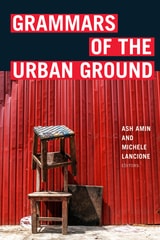
cover of Grammars of the Urban Ground

Grammars of the Urban Ground

Ash Amin and Michele Lancione, editors

Duke University Press, 2022

The contributors to Grammars of the Urban Ground develop a new conceptual framework and vocabulary for capturing the complex, ever-shifting, and interactive processes that shape contemporary cities. Building on Marxist, feminist, queer, and critical race theory as well as the ontological turn in urban studies, they propose a mode of analysis that resists the staple of siloed categories such as urban “economy,” “society,” and “politics.” In addition to addressing key concepts of urban studies such as dispossession and scale, the contributors examine the infrastructures of plutocratic life in London, reconfigure notions of gentrification as a process of racial banishment, and seek out alternative archives for knowledge about urban density. They also present case studies of city life in the margins and peripheries of São Paulo, Kinshasa, Nairobi, and Jakarta. In so doing, they offer a foundation for better understanding the connective and aggregative forces of city-making and the entanglements and relations that constitute cities and their everyday politics.

Contributors. Ash Amin, Teresa Caldeira, Filip De Boeck, Suzanne Hall, Caroline Knowles, Michele Lancione, Colin McFarlane, Natalie Oswin, Edgar Pieterse, Ananya Roy, AbdouMaliq Simone, Tatiana Thieme, Nigel Thrift, Mariana Valverde
[more]
cover of Gramsci's Common Sense: Inequality and Its Narratives

Gramsci's Common Sense

Inequality and Its Narratives

Kate Crehan

Duke University Press, 2016

Acknowledged as one of the classics of twentieth-century Marxism, Antonio Gramsci's Prison Notebooks contains a rich and nuanced theorization of class that provides insights that extend far beyond economic inequality. In Gramsci's Common Sense Kate Crehan offers new ways to understand the many forms that structural inequality can take, including in regards to race, gender, sexual orientation, and religion. Presupposing no previous knowledge of Gramsci on the part of the reader, she introduces the Prison Notebooks and provides an overview of Gramsci’s notions of subalternity, intellectuals, and common sense, putting them in relation to the work of thinkers such as Bourdieu, Arendt, Spivak, and Said. In the case studies of the Tea Party and Occupy Wall Street movements, Crehan theorizes the complex relationships between the experience of inequality, exploitation, and oppression, as well as the construction of political narratives. Gramsci's Common Sense is an accessible and concise introduction to a key Marxist thinker whose works illuminate the increasing inequality in the twenty-first century.
[more]
cover of Grandmothers on Guard: Gender, Aging, and the Minutemen at the US-Mexico Border

Grandmothers on Guard

Gender, Aging, and the Minutemen at the US-Mexico Border

By Jennifer L. Johnson

University of Texas Press, 2021

For about a decade, one of the most influential forces in US anti-immigrant politics was the Minuteman Project. The armed volunteers made headlines patrolling the southern border. What drove their ethno-nationalist politics?

Jennifer L. Johnson spent hundreds of hours observing and interviewing Minutemen, hoping to answer that question. She reached surprising conclusions. While the public face of border politics is hypermasculine—men in uniforms, fatigues, and suits—older women were central to the Minutemen. Women mobilized support and took part in border missions. These women compel us to look beyond ideological commitments and material benefits in seeking to understand the appeal of right-wing politics. Johnson argues that the women of the Minutemen were motivated in part by the gendered experience of aging in America. In a society that makes old women irrelevant, aging white women found their place through anti-immigrant activism, which wedded native politics to their concern for the safety of their families. Grandmothers on Guard emphasizes another side of nationalism: the yearning for inclusion. The nation the Minutemen imagined was not only a space of exclusion but also one in which these women could belong.

[more]
cover of Grateful Nation: Student Veterans and the Rise of the Military-Friendly Campus

Grateful Nation

Student Veterans and the Rise of the Military-Friendly Campus

Ellen Moore

Duke University Press, 2017
In today's volunteer military many recruits enlist for the educational benefits, yet a significant number of veterans struggle in the classroom, and many drop out. The difficulties faced by student veterans have been attributed to various factors: poor academic preparation, PTSD and other postwar ailments, and allegedly antimilitary sentiments on college campuses. In Grateful Nation Ellen Moore challenges these narratives by tracing the experiences of Iraq and Afghanistan war veterans at two California college campuses. Drawing on interviews with dozens of veterans, classroom observations, and assessments of the work of veteran support organizations, Moore finds that veterans' academic struggles result from their military training and combat experience, which complicate their ability to function in civilian schools. While there is little evidence of antimilitary bias on college campuses, Moore demonstrates the ways in which college programs that conflate support for veterans with support for the institutional military lead to suppression of campus debate about the wars, discourage antiwar activism, and encourage a growing militarization.
[more]
cover of Gravity's Ghost and Big Dog: Scientific Discovery and Social Analysis in the Twenty-First Century

Gravity's Ghost and Big Dog

Scientific Discovery and Social Analysis in the Twenty-First Century

Harry Collins

University of Chicago Press, 2013
Gravity’s Ghost and Big Dog brings to life science’s efforts to detect cosmic gravitational waves. These ripples in space-time are predicted by general relativity, and their discovery will not only demonstrate the truth of Einstein’s theories but also transform astronomy. Although no gravitational wave has ever been directly detected, the previous five years have been an especially exciting period in the field. Here sociologist Harry Collins offers readers an unprecedented view of gravitational wave research and explains what it means for an analyst to do work of this kind.
           
Collins was embedded with the gravitational wave physicists as they confronted two possible discoveries—“Big Dog,” fully analyzed in this volume for the first time, and the “Equinox Event,” which was first chronicled by Collins in Gravity’s Ghost. Collins records the agonizing arguments that arose as the scientists worked out what they had seen and how to present it to the world, along the way demonstrating how even the most statistical of sciences rest on social and philosophical choices. Gravity’s Ghost and Big Dog draws on nearly fifty years of fieldwork observing scientists at the American Laser Interferometer Gravitational Wave Observatory and elsewhere around the world to offer an inspired commentary on the place of science in society today.

[more]
cover of Great American City: Chicago and the Enduring Neighborhood Effect

Great American City

Chicago and the Enduring Neighborhood Effect

Robert J. Sampson

University of Chicago Press, 2012
For over fifty years numerous public intellectuals and social theorists have insisted that community is dead. Some would have us believe that we act solely as individuals choosing our own fates regardless of our surroundings, while other theories place us at the mercy of global forces beyond our control. These two perspectives dominate contemporary views of society, but by rejecting the importance of place they are both deeply flawed. Based on one of the most ambitious studies in the history of social science, Great American City argues that communities still matter because life is decisively shaped by where you live.
 
To demonstrate the powerfully enduring impact of place, Robert J. Sampson presents here the fruits of over a decade’s research in Chicago combined with his own unique personal observations about life in the city, from Cabrini Green to Trump Tower and Millennium Park to the Robert Taylor Homes. He discovers that neighborhoods influence a remarkably wide variety of social phenomena, including crime, health, civic engagement, home foreclosures, teen births, altruism, leadership networks, and immigration. Even national crises cannot halt the impact of place, Sampson finds, as he analyzes the consequences of the Great Recession and its aftermath, bringing his magisterial study up to the fall of 2010.
 
Following in the influential tradition of the Chicago School of urban studies but updated for the twenty-first century, Great American City is at once a landmark research project, a commanding argument for a new theory of social life, and the story of an iconic city.
[more]
cover of Great American City: Chicago and the Enduring Neighborhood Effect

Great American City

Chicago and the Enduring Neighborhood Effect

Robert J. Sampson

University of Chicago Press, 2024

Great American City demonstrates the powerfully enduring impact of place.
 
Based on one of the most ambitious studies in the history of social science, Robert J. Sampson’s Great American City presents the fruits of over a decade’s research to support an argument that we all feel and experience every day: life is decisively shaped by your neighborhood.

Engaging with the streets and neighborhoods of Chicago, Sampson, in this new edition, reflects on local and national changes that have transpired since his book’s initial publication, including a surge in gun violence and novel forms of segregation despite an increase in diversity. New research, much of it a continuation of the influential discoveries in Great American City, has followed, and here, Sampson reflects on its meaning and future directions. Sampson invites readers to see the status of the research initiative that serves as the foundation of the first edition—the Project on Human Development in Chicago Neighborhoods (PHDCN)—and outlines the various ways other scholars have continued his work. Both accessible and incisively thorough, Great American City is a must-read for anyone interested in cutting-edge urban sociology and the study of crime.
 
[more]
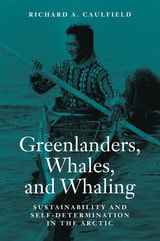
cover of Greenlanders, Whales, and Whaling: Sustainability and Self-Determination in the Arctic

Greenlanders, Whales, and Whaling

Sustainability and Self-Determination in the Arctic

Richard A. Caulfield

Dartmouth College Press, 2000
Whaling has been central to the life of Greenland's Inuit peoples for at least 4000 years, but political, economic, technological, and regulatory changes have altered this ancient practice. Richard A. Caulfield reveals these impacts first by analyzing Home Rule and its success in Greenland, and then by looking at whaling's place in the contemporary Greenlandic economy and its evolving co-management regime. What emerges from his investigation is an intricate web connecting traditions of indigenous peoples, the promises and pitfalls of co-management, the influence of international whaling policies, the complexities of sustainability, and the power of culturally determined views shaping relationships between humans and their environment. Caulfield finds that controversy over whaling often arises from conflicting idea systems, rather than disagreement over biological resource management. Understanding the ways Greenlanders and outside interests have defined and negotiated these conflicts "gives us more than just an insight into how indigenous peoples are coping with a changing world," he writes. "It also provides us with a sense of the challenges we face as well."
[more]
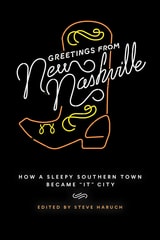
cover of Greetings from New Nashville: How a Sleepy Southern Town Became "It" City

Greetings from New Nashville

How a Sleepy Southern Town Became "It" City

Steve Haruch

Vanderbilt University Press, 2020

In 1998, roughly 2 million visitors came to see what there was to see in Nashville. By 2018, that number had ballooned to 15.2 million.

In that span of two decades, the boundaries of Nashville did not change. But something did. Or rather, many somethings changed, and kept changing, until many who lived in Nashville began to feel they no longer recognized their own city. And some began to feel it wasn't their own city at all anymore as they were pushed to its fringes by rising housing costs. Between 1998 and 2018, the population of Nashville grew by 150,000. On some level, Nashville has always packaged itself for consumption, but something clicked and suddenly everyone wanted a taste. But why Nashville? Why now? What made all this change possible?

This book is an attempt to understand those transformations, or, if not to understand them, exactly, then to at least grapple with the question: What happened?

[more]
cover of Gringo Gulch: Sex, Tourism, and Social Mobility in Costa Rica

Gringo Gulch

Sex, Tourism, and Social Mobility in Costa Rica

Megan Rivers-Moore

University of Chicago Press, 2016

The story of sex tourism in the Gringo Gulch neighborhood of San José, Costa Rica could be easily cast as the exploitation of poor local women by privileged North American men—men who are in a position to take advantage of the vast geopolitical inequalities that make Latin American women into suppliers of low-cost sexual labor. But in Gringo Gulch, Megan Rivers-Moore tells a more nuanced story, demonstrating that all the actors intimately entangled in the sex tourism industry—sex workers, sex tourists, and the state—use it as a strategy for getting ahead.

Rivers-Moore situates her ethnography at the intersections of gender, race, class, and national dimensions in the sex industry. Instead of casting sex workers as hapless victims and sex tourists as neoimperialist racists, she reveals each group as involved in a complicated process of class mobility that must be situated within the sale and purchase of leisure and sex. These interactions operate within an almost entirely unregulated but highly competitive market beyond the reach of the state—bringing a distinctly neoliberal cast to the market. Throughout the book, Rivers-Moore introduces us to remarkable characters—Susan, a mother of two who doesn’t regret her career of sex work; Barry, a teacher and father of two from Virginia who travels to Costa Rica to escape his loveless, sexless marriage; Nancy, a legal assistant in the Department of Labor who is shocked to find out that prostitution is legal and still unregulated. Gringo Gulch is a fascinating and groundbreaking look at sex tourism, Latin America, and the neoliberal state.
[more]
cover of Grow Up, Will You?: Maturity, Development, and Behavior through Life

Grow Up, Will You?

Maturity, Development, and Behavior through Life

Michael Rocque

Temple University Press, 2027

Maturation is a way we evaluate others and ourselves. It serves as a guidepost for our own behavior, often starting in adolescence. In Grow Up, Will You? Michael Rocque considers maturation across the life-course, providing a cultural and scholarly history of maturation before demonstrating how components of maturation develop, how they can be influenced, and their consequences for behavior and other life outcomes. He shows how biology and psychology propel us towards adulthood, but also how milestones, like graduating or getting married, produce a point of maturation.

Looking at examples from pop cultural movies, such as Juno, where a pregnant teenager faces numerous challenges and is forced to grow up quickly, Rocque explains how maturity has been defined and how it evolves. Such examples address key issues related to maturation, including timing and social expectations. He also introduces scientific conceptualizations and breaks down ways of measuring.

Ultimately, Grow Up, Will You? offers practical knowledge, programs, and approaches that can positively influence human development while also protecting a sense of childhood. Now grow up, will you?
[more]
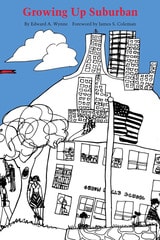
cover of Growing Up Suburban

Growing Up Suburban

By Edward A. Wynne

University of Texas Press, 1977

The prosperous, comfortable, and homogeneous American suburb is a relatively recent institution in American history. Edward Wynne was one of the first to take a serious look at the quality of suburban childhood, where, he contends, we have ignored the developments affecting the largest pool of children and parents in America. This provocative volume argues that the total environment of the suburban youth—the school, the community, the family, and the workplace—is in need of drastic reform.

Wynne advances a forthright argument for the preservation of traditional moral values and criticizes excessive individualism in fragmented modern society. Focusing on the schools and extending his discussion to the larger community, he pleads for more attention to such goals as honesty, persistence, patriotism, and loyalty.

Post-industrial suburban environments, Wynne argues, do not provide the diversity of experience children must have to become successful adults. Strong community ties to the schools are basic to Wynne's thesis. Within the schools, he recommends changes in grading systems, student responsibilities and assignments, selection and training of teachers and administrators, structuring and evaluation of programs, and the socioeconomic and age mix of pupils. A feeling of cooperation and unity within the school itself is a major goal. Wynne also suggests steps for moving toward more heterogeneous, close-knit communities, where citizens have greater local control. For example, community members could restrict movement into the community and should aim for a mix of blue- and white-collar residents.

Wynne's arguments clearly run counter to fashion and are sure to provoke a high level of debate among educators of differing philosophic persuasions. Civil libertarians, feminists, civil rights advocates, and others are bound to make spirited replies to many of Wynne's contentions. Growing Up Suburban will be of interest to educators, public school administrators, parents, and suburban dwellers.
[more]
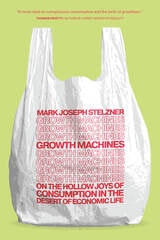
cover of Growth Machines: On the Hollow Joys of Consumption in the Desert of Economic Life

Growth Machines

On the Hollow Joys of Consumption in the Desert of Economic Life

Mark Joseph Stelzner

University of Chicago Press, 2026

A provocative look at America’s compulsion to consume and our obsession’s surprising—and strange—origins.

In a capitalist society, people sell their labor to purchase staples like food, shelter, and anxiety medication. That’s the equation of everyday economic life that we’ve always been told is true. Except, is it really that simple anymore? No matter how unmaterialistic you may think you are, odds are that deep within is a drive to consume because it feels good: books you won’t read, clothes you won’t like and might wear even less, a replacement phone whose novelty runs out as quickly as its upgrade hits the market. But what drives this impulse?

In Growth Machines, Mark Joseph Stelzner shows how today’s consumers are now programmed by a US economy intent on infinite growth to work for goods they’ve been convinced they need and conditioned to want. Stelzner establishes the gaps between economic thinking and economic reality, arguing that consumption is no longer just a reflection of needs, but rather, it reflects a need for transaction—in many cases, a treat we seek out because it feels good. We work not only to be able to consume the essentials for living, but also to consume for consumption's sake. Yet such consumption doesn’t make us happier. Stelzner traces this strange nature of consumption to an environmental source: an economy that demands growth. To keep its economy pumping, the US must keep Americans consuming. This makes Stelzner’s book an uncomfortable reflection on how we internalize our economy. To be an American is to consume; to consume is what makes America.
[more]
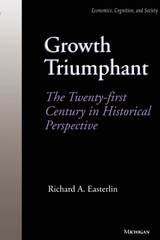
cover of Growth Triumphant: The Twenty-first Century in Historical Perspective

Growth Triumphant

The Twenty-first Century in Historical Perspective

Richard A. Easterlin

University of Michigan Press, 1998

Taking a longer view than most literature on economic development, Richard A. Easterlin stresses the enormous contrast between the collective experience of the last half century in both developed and developing countries and what has gone before. An economic historian and demographer, the author writes in the tradition of the "new economic history," drawing on economic theory and quantitative evidence to interpret the historical experience of economic theory and population growth. He reaches beyond the usual disciplinary limits to draw, as appropriate, on sociology, political science, psychology, anthropology, and the history of science. The book will be of interest not only to social scientists but to all readers concerned with where we have been and where we are going.
". . . Easterlin is both an economic historian and a demographer, and it is the combination of these two disciplines and the fine balance between theory and experience that make this well-written, refreshingly optimistic book excellent reading." --Population and Development Review
"In this masterful synthesis, Richard Easterlin draws on the disciplines of economic history, demography, sociology, political science, psychology, and the history of science to present an integrated explation of the origins of modern economic growth and of the mortality revolution. . . . His book should be easily accessible to non-specialists and will give them a sense of why economic history can inform our understanding of the future." --Dora L. Costa, Massachusetts Institute of Technology, EH.Net and H-Net
"Growth Triumphant is, simply, a fascinating book. Easterlin has woven together a history of economic growth, economic development, human mortality and morbidity, the connections each has with the others, and the implications of this nexus of forces on the future. . . . This book deserves a wide audience." --Choice
"In what must surely be the most fair-minded, well-balanced, and scrupulously reasoned and researched book on the sensational subjects implied in its title--the Industrial Revolution, the mortality and fertility revolutions, and the prospects for future happiness for the human race--Professor Easterlin has set in place the capstone of his research career." --Journal of Economic History
Richard A. Easterlin is Professor of Economics, University of Southern California.
[more]
cover of Guerrilla Auditors: The Politics of Transparency in Neoliberal Paraguay

Guerrilla Auditors

The Politics of Transparency in Neoliberal Paraguay

Kregg Hetherington

Duke University Press, 2011

Guerrilla Auditors is an ethnographic account of the rise of information, transparency, and good governance in the post–Cold War era, and the effects of these concepts on Paraguay’s transition to democracy. Kregg Hetherington shows that the ideal of transparent information, meant to depoliticize bureaucratic procedures, has become a battleground for a new kind of politics centered on legal interpretation and the manipulation of official documents. In late-twentieth-century Paraguay, peasant land politics moved unexpectedly from the roads and fields into the documentary recesses of state bureaucracy. When peasants, bureaucrats, and development experts encountered one another in state archives, conflicts ensued about how bureaucracy ought to function, what documents are for, and who gets to narrate the past and the future of the nation. Hetherington argues that Paraguay’s neoliberal democracy is predicated, at least in part, on an exclusionary distinction between model citizens and peasants. Despite this, peasant activists have found ways to circumvent their exclusion and in so doing question the conceptual foundations of international development orthodoxy.
[more]
cover of Guitar Makers: The Endurance of Artisanal Values in North America

Guitar Makers

The Endurance of Artisanal Values in North America

Kathryn Marie Dudley

University of Chicago Press, 2014

It whispers, it sings, it rocks, and it howls. It expresses the voice of the folk—the open road, freedom, protest and rebellion, youth and love. It is the acoustic guitar. And over the last five decades it has become a quintessential American icon. Because this musical instrument is significant to so many—in ways that are emotional, cultural, and economic—guitar making has experienced a renaissance in North America, both as a popular hobby and, for some, a way of life.

In Guitar Makers, Kathryn Marie Dudley introduces us to builders of artisanal guitars, their place in the art world, and the specialized knowledge they’ve developed. Drawing on in-depth interviews with members of the lutherie community, she finds that guitar making is a social movement with political implications.  Guitars are not simply made—they are born.  Artisans listen to their wood, respond to its liveliness, and strive to endow each instrument with an unforgettable tone. Although professional luthiers work within a market society, Dudley observes that their overriding sentiment is passion and love of the craft. Guitar makers are not aiming for quick turnover or the low-cost reproduction of commodities but the creation of singular instruments with unique qualities, and face-to-face transactions between makers, buyers, and dealers are commonplace.

In an era when technological change has pushed skilled artisanship to the margins of the global economy, and in the midst of a capitalist system that places a premium on ever faster and more efficient modes of commerce, Dudley shows us how artisanal guitar makers have carved out a unique world that operates on alternative, more humane, and ecologically sustainable terms.
[more]