Results by title
4155 books match the query 'State & Local' and 107 start with g
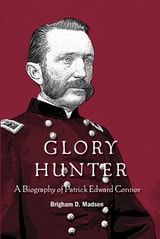
Glory Hunter
A Biography of Patric Edward ConnorBrigham Madsen
University of Utah Press, 1990
The life of Patrick Edward Connor serves as a half-century slice of western American history. After leaving New York City, where he had arrived at the age of twelve as a poor Irish immigrant, the nineteen-year-old youth joined the U.S. Army in 1839. He fought in the war with Mexico and then joined the gold rush in California until marrying and settling down in Stockton in 1854.
The Civil War found him volunteering again, this time as colonel of California troops sent to the Utah Territory to protect the mail lines from Indian attacks. Bitterly anti-Mormon, Connor spent the war years alternately engaging in a war of words with Brigham Young or in fighting Indians in northern Utah and present-day Wyoming. After the Civil War, ex-Major General Connor began mining operations in Utah and Nevada, ventures that went from boom to bust. He spent his final years in straitened financial circumstances.
Patrick Edward Connor was a “Man of the West,” possessing both its prejudices and its democratic, independent spirit. His greatest success lay as a military leader, and he would have agreed that he was made for war, not peace. He left an imprint on the history of the American West, remembered as the founder of Fort Douglas, as the “first gentile in Utah,” the “father of Utah mining,” and the “father of the Liberal Party in Utah.”

God's Country, Uncle Sam's Land
Faith and Conflict in the American WestTodd M. Kerstetter
University of Illinois Press, 2005
God's Country, Uncle Sam's Land analyzes Mormon history from the Utah Expedition and Mountain Meadows Massacre of 1857 through subsequent decades of federal legislative and judicial actions aimed at ending polygamy and limiting church power. It also focuses on the Lakota Ghost Dancers and the Wounded Knee Massacre in South Dakota (1890), and the Branch Davidians in Waco, Texas (1993). In sharp contrast to the mythic image of the West as the "Land of the Free," these three tragic episodes reveal the West as a cultural battleground--in the words of one reporter, "a collision of guns, God, and government." Asking important questions about what happens when groups with a deep trust in their differing inner truths meet, Kerstetter exposes the religious motivations behind government policies that worked to alter Mormonism and extinguish Native American beliefs.
God's Empire
William Bell Riley and Midwestern FundamentalismWilliam V., Jr. Trollinger
University of Wisconsin Press, 1991
More than any other individual, William Bell Riley, pastor of the First Baptist Church of Minneapolis, inspired the resurgence of Protestant fundamentalism in 1930s America. Trollinger explores the development of Riley’s theology and social thought, examining in detail the rise of the Northwestern Bible and Missionary Training School and other similar institutions. He sheds light upon the nature, successes, and failures of fundamentalist crusades and makes it clear that, to understand fundamentalist religion in America, one must focus upon its regional and local roots.

Going Rackless
Chicago’s Amateur Pool Players and the Quest for Glory in the Biggest Tournament in the WorldDylan Taylor-Lehman
University of Illinois Press, 2025
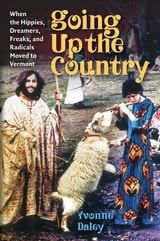
Going Up the Country
When the Hippies, Dreamers, Freaks, and Radicals Moved to VermontYvonne Daley
University Press of New England, 2018
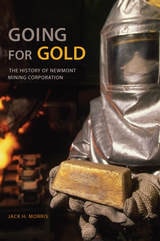
Going for Gold
The History of Newmont Mining CorporationJack H. Morris
University of Alabama Press, 2016
Jack H. Morris asserts that Newmont is the link between early gold mining and today’s technology-driven industry. We learn how the company’s founder and several early leaders grew up in gold camps and how, in 1917, the company helped finance South Africa’s largest gold company and later owned famous gold mines in California and Colorado. In the 1960s the company developed the process to capture “invisible gold” from small distributions of the metal in large quantities of rock, thereby opening up the rich gold field at Carlin, Nevada.
Modern gold mining has all the excitement and historic significance of the metal’s colorful past. Instead of panning for ready nuggets, today’s corporate miners must face heavy odds by extracting value from ores containing as little as one-hundredth of an ounce per ton. In often-remote locations, where the capital cost of a new mine can top $2 billion, 250-ton trucks crawl from half mile deep pits and ascend, beetle-like, loaded with ore for extraction of the minute quantities of gold locked inside.
Morris had unique access to company records and the cooperation of more than 80 executives and employees of the firm, but the company exercised no control over content. The author tells a story of discovery and scientific breakthrough; strong-willed, flamboyant leaders like founder Boyce Thompson; corporate raiders such as T. Boone Pickens and Jimmy Goldsmith; shakedowns by the Indonesian government and monumental battles with the French over the richest mine in Peru; and learning to operate in the present environmental regulatory climate. This is a fascinating story of the metal that has ignited passions for centuries and now sells for over $1,000 an ounce.

Going for Wisconsin Gold
Stories of Our State OlympiansJessie Garcia
Wisconsin Historical Society Press, 2016
U-S-A , U-S-A is a familiar refrain heard in every Olympics, but truly it could be Wis-con-sin! Since pioneering hurdler Alvin Kraenzlein got his start here in the 1890s, the Badger State has nurtured, trained, or schooled more than 400 Olympic athletes in a vast array of sports. Wisconsin’s varied landscape and climate accommodate serious athletes whether they compete on ice, on snow, in the water, or on terra firma. We tend to bring a Midwestern work ethic to our endeavors, and our Olympians have often been hailed in the press and in public as being among the most humble and down-to-earth people around. Our state boasts a thriving youth sports culture where many homegrown athletes get their start; others are drawn here by our world-class universities, athletic facilities, and coaching talent. No matter how an athlete comes to Wisconsin, the state becomes part of his or her Olympic story. In Going for Wisconsin Gold, author Jessie Garcia provides insights into the lives of athletes who grew up or spent time in Wisconsin on their journey to the Olympic Games. She shares some of our competitors most captivating tales—from those that have become legend, like Dan Jansen’s heartbreaking falls and subsequent magical gold, to unlikely brushes with glory (do you know which Green Bay Packer was almost an Olympic high jumper?). Featuring the athletes’ personal stories, many of them told here in detail for the first time, plus pictures from their private collections, Going for Wisconsin Gold provides a new and deeper understanding of the sacrifices, joy, pain, heartbreak, and complete dedication it takes to reach the world’s grandest sporting competition.
Golden Rules
The Origins of California Water Law in the Gold RushMark Kanazawa
University of Chicago Press, 2015
For Golden Rules, Mark Kanazawa draws on previously untapped historical sources to trace the emergence of the current framework for resolving water-rights issues to California in the 1850s, when Gold Rush miners flooded the newly formed state. The need to circumscribe water use on private property in support of broader societal objectives brought to light a number of fundamental issues about how water rights ought to be defined and enforced through a system of laws. Many of these issues reverberate in today’s contentious debates about the relative merits of government and market regulation. By understanding how these laws developed across California’s mining camps and common-law courts, we can also gain a better sense of the challenges associated with adopting new property-rights regimes in the twenty-first century.

Golden Treasures of the San Juan
Temple H. Cornelius
Ohio University Press, 1961
Golden Treasures of the San Juan contains fabulous stories of lost mines, bullion, and valuable prospects of one of the most beautiful mountain areas of the United States. Many of the stories are based on the personal adventures of author Cornelius.
When the Indian Mountain Lands (the San Juan) were ceded in 1874, the wild region was thrown open to prospectors seeking its gold and silver riches. Many prospects were valuable discoveries, yet were lost and became legendary mines. Further, the Spanish explorers had been through this area much earlier with their bullion, and their caches added to the legends of gold discovered or to be discovered. The authors of this book trace complete stories about these long-lost hoards.

Good Water
Kevin Holdsworth
University Press of Colorado, 2016
In essays that combine memoir with biography of place, Kevin Holdsworth creates a public history of the land he calls home: Good Water, Utah. The high desert of south-central Utah is at the heart of the stories he tells here—about the people, the “survivors and casualties” of the small, remote town—and is at the heart of his own story.
Holdsworth also explores history at a personal level: how Native American history is preserved by local park officials; how Mormon settlers adapted to remote, rugged places; how small communities attract and retain those less likely to thrive closer to population centers; and how he became involved in local politics. He confronts the issues of land use and misuse in the West, from the lack of water to greed and corruption over natural resources, but also considers life’s simple pleasures like the value of scenery and the importance of occasionally tossing a horseshoe.
Good Water’s depiction of modern-day Utah and exploration of friendships and bonding on the Western landscape will fascinate and entice readers in the West and beyond.
Gordon MacQuarrie
The Story of an Old Duck HunterKeith Crowley
Wisconsin Historical Society Press, 2003
Governing the Twin Cities Region
The Metropolitan Council in Comparative PerspectiveJohn Harrigan
University of Minnesota Press, 1978
Governor Henry Horner, Chicago Politics, and the Great Depression
Charles J. Masters
Southern Illinois University Press, 2007
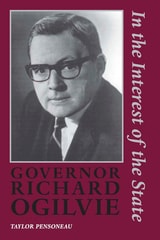
Governor Richard Ogilvie
In the Interest of the StateTaylor Pensoneau
Southern Illinois University Press, 2009
Although serious scandal erupted in Illinois Governor Richard Ogilvie’s administration— eight hundred thousand dollars mysteriously appearing in Secretary of State Paul Powell’s shoe boxes and other hiding places, the downfall of two Supreme Court justices for questionable stock dealings, corruption surrounding the Illinois State Fair— Ogilvie’s accomplishments, as Taylor Pensoneau demonstrates, rank him among the best governors in Illinois history.
Perhaps the most important of Ogilvie’s accomplishments during his single term in office (1969–1973) was the passage of the state’s first income tax in 1969. Supporting the income tax took political courage on the part of the new governor, but in doing so he saved the financially crippled state from economic disaster. He also looked far into the future; at a time when few politicians expressed concern with the environment, Ogilvie created an exemplary and hard-hitting antipollution program. He was in office during the Illinois Constitutional Convention in 1970 and was instrumental in the widespread restructuring of Illinois government.
Viewing Ogilvie as a pivotal figure in Illinois politics during a time of great social and political turmoil, Pensoneau provides a complete political biography. He sheds light on Ogilvie’s military heroics, his political career, and the Illinois elections of 1968, 1970, and 1972.
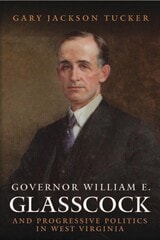
Governor William Glasscock and Progressive Politics in West Virginia
Gary Jackson Tucker
West Virginia University Press, 2008
From 1909 to 1913, Governor William Glasscock served the state of West Virginia as an ardent progressive and reformer. In his inaugural address he proclaimed government "the machinery invoked and devised by man for his benefit and protection” and good government the guarantor of the happiness, prosperity, success, and welfare of the people. Governor William Glasscock and Progressive Politics in West Virginia recounts the life and work of West Virginia’s thirteenth governor. Born during the Civil War, Glasscock witnessed a country torn by sectional, fratricidal war become a powerful industrial nation by the turn of the twentieth century. Author Gary Jackson Tucker demonstrates how Glasscock, along with others during the Progressive Era, railed against large and powerful political and economic machines to enact legislation protecting free and fair elections, just taxation, regulation of public utilities, and workmen’s compensation laws. Never hesitating to use the power of the state to stand firm against racism and mob rule, and placing his own personal safety in jeopardy, Glasscock won the praise and admiration of average people. Glasscock’s four years in office took his own health and financial security from him, but left behind a better government—a good government—for the people of West Virginia.
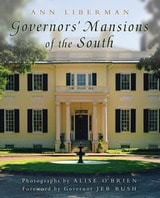
Governors' Mansions of the South
Ann Liberman & Photos by Alise O'Brien
University of Missouri Press, 2008

Graceland Cemetery
Chicago Stories, Symbols, and SecretsAdam Selzer
University of Illinois Press, 2022
Chosen for the 2024 Illinois Reads Program by the Illinois Reading Council
One of Chicago’s landmark attractions, Graceland Cemetery chronicles the city’s sprawling history through the stories of its people. Local historian and Graceland tour guide Adam Selzer presents ten walking tours covering almost the entirety of the cemetery grounds. While nodding to famous Graceland figures from Marshall Field to Ernie Banks to Ludwig Mies van der Rohe, Selzer also leads readers past the vaults, obelisks, and other markers that call attention to less recognized Chicagoans like:
- Jessie Williams de Priest, the Black wife of a congressman whose 1929 invitation to a White House tea party set off a storm of controversy;
- Engineer and architect Fazlur Khan, the Bangladeshi American who revived the city's skyscraper culture;
- The still-mysterious Kate Warn (listed as Warn on her tombstone), the United States’ first female private detective.
Filled with photographs and including detailed maps of each tour route, Graceland Cemetery is an insider's guide to one of Chicago's great outdoor destinations for city lore and history.
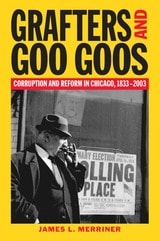
Grafters and Goo Goos
Corruption and Reform in ChicagoJames L. Merriner
Southern Illinois University Press, 2008
Chicago’s reputation for corruption is the basis of local and national folklore and humor. Grafters and Goo Goos: Corruption and Reform in Chicago, 1833–2003 unfolds the city’s notorious history of corruption and the countervailing reform struggles that largely failed to clean it up. More than a regional history of crime in politics, this wide-ranging account of governmental malfeasances traces ongoing public corruption and reform to its nineteenth-century democratic roots. Former Chicago journalist James L. Merriner reveals the battles between corrupt politicos and ardent reformers to be expressions of conflicting class, ethnic, and religious values.
From Chicago’s earliest years in the 1830s, the city welcomed dollar-chasing businessmen and politicians, swiftly followed by reformers who strived to clean up the attendant corruption. Reformers in Chicago were called “goo goos,” a derisive epithet short for “good-government types.” Grafters and Goo Goos contends a certain synergy defined the relationship between corruption and reform. Politicians and reformers often behaved similarly, their separate ambitions merging into a conjoined politics of interdependency wherein the line between heroes and villains grew increasingly faint. The real story, asserts Merriner, has less to do with right against wrong than it does with the ways the cultural backgrounds of politicians and reformers steered their own agendas, animating and defining each other by their opposition.
Drawing on original and archival research, Merriner identifies constants in the struggle between corruption and reform amid a welter of changing social circumstances and customs—decades of alternating war and peace, hardships and prosperity. Three areas of reform and resistance are identified: structural reform of the political system to promote honesty and efficiency, social reform to provide justice to the lower classes, and moral reform to combat vice. “In the matter of corruption and reform, the constants might be stronger than the variables,” writes Merriner in the Preface. “The players, rules, and scorekeepers change, but not the essential game.”
Complemented by eighteen illustrations, Grafters and Goo Goos is rife with shocking and amusing anecdotes and peppered with the personalities of famous muckrakers, bootleggers, mayors, and mobsters. While other studies have profiled infamous Chicago corruption cases and figures such as Al Capone and Richard J. Daley, this is the first to provide an overview appropriate for historians and general readers alike. In examining Chicago’s notorious saga of corruption and reform against a backdrop of social history, Merriner calls attention to our constant problems of both civic and national corruption and contributes to larger discussions about the American experiment of democratic self-government.
Grand Canyon Place Names
Byrd H. Granger
University of Arizona Press, 1960
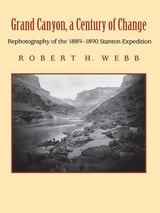
Grand Canyon, A Century of Change
Rephotography of the 1889-1890 Stanton ExpeditionRobert H. Webb
University of Arizona Press, 1996
Grand Canyon, a Century of Change assembles the most dramatic of these paired photographs to demonstrate both the persistence of nature and the presence of humanity. Unexpected longevity of some plant species, effects of animal grazing, and expansion of cacti are all captured by the replicate photographs. More telling is evidence of the impact of Glen Canyon Dam: increased riparian vegetation, new marshes, aggraded debris fans, and eroded sand bars. In the accompanying text, Webb provides a thorough analysis of what each pair of photographs shows and places the project in its historical context. Complementing his narrative are six sidebar articles by authorities on Canyon natural history that further attest to a century of change. The level of detail obtained from the photographs represents one of the most extensive long-term monitoring efforts ever conducted in a national park; it is the most detailed documentation effort ever performed using repeat photography.
Much more than simply a picture book, Grand Canyon, a Century of Change is an environmental history of the river corridor, a fascinating book that clearly shows the impact of human influence on Grand Canyon and warns us that its future is very much in our hands.
Grand Canyon
A History of a Natural Wonder and National ParkDon Lago
University of Nevada Press, 2015
The Grand Canyon became a microcosm of the history and evolving values of the
National Park Service, long conflicted between encouraging tourism and protecting nature. Many vivid characters shaped the canyon’s past. Its largest story is one of cultural history and changing American visions of the land.
Grand Canyon: A History of a Natural Wonder and National Park is a mixture of great storytelling, unlikely characters, and important ideas. The book will appeal to both general readers and scholars interested in seeking a broader understanding of the canyon.
Grand Excursions on the Upper Mississippi River
Places, Landscapes, and Regional Identity after 1854Curtis C. & Elizabeth M. Roseman & Roseman
University of Iowa Press, 2004
One hundred and fifty years later, the thirteen essays in this volume examine the activities and environments of the 1854 Grand Excursion and place them in the context of an evolving regional identity for the Upper Mississippi River Valley based on the economy, culture, geography, and history of the area. In a series of “excursions,” the contributors explore the building of the Chicago and Rock Island Railroad, eastern newspaper accounts of the 1854 excursion, steamboating, the area’s pictorial landscape, passenger trains along the scenic river, the genesis and features of river towns, the control of the river for navigation, the development of preserves, parks, and recreation areas, the lumber industry, and commercial fishing. The book concludes by examining the resurgence of river-oriented development, as river towns are once again embracing the Mississippi.
Generously illustrated with maps, engravings, ephemera, and historic and present-day photographs, Grand Excursions on the Upper Mississippi River will be of interest to tourists and residents of the area, river aficionados, railroad and steamboat history buffs, as well as academics interested in the history, geography, and regional development of the area.

Grand Forage 1778
The Battleground Around New York CityTodd W. Braisted
Westholme Publishing, 2016
After two years of defeats and reverses, 1778 had been a year of success for George Washington and the Continental Army. France had entered the war as the ally of the United States, the British had evacuated Philadelphia, and the redcoats had been fought to a standstill at the Battle of Monmouth. While the combined French-American effort to capture Newport was unsuccessful, it lead to intelligence from British-held New York that indicated a massive troop movement was imminent. British officers were selling their horses and laying in supplies for their men. Scores of empty naval transports were arriving in the city. British commissioners from London were offering peace, granting a redress of every grievance expressed in 1775. Spies repeatedly reported conversations of officers talking of leaving. To George Washington, and many others, it appeared the British would evacuate New York City, and the Revolutionary War might be nearing a successful conclusion. Then, on September 23, 1778, six thousand British troops erupted into neighboring Bergen County, New Jersey, followed the next day by three thousand others surging northward into Westchester County, New York. Washington now faced a British Army stronger than Burgoyne’s at Saratoga the previous year. What, in the face of all intelligence to the contrary, had changed with the British?
Through period letters, reports, newspapers, journals, pension applications, and other manuscripts from archives in the United States, Canada, United Kingdom, and Germany, the complete picture of Britain’s last great push around New York City can now be told. The strategic situation of Britain’s tenuous hold in America is intermixed with the tactical views of the soldiers in the field and the local inhabitants, who only saw events through their narrow vantage points. This is the first publication to properly narrate the events of this period as one campaign. Grand Forage 1778: The Battleground Around New York City by historian Todd W. Braisted explores the battles, skirmishes, and maneuvers that left George Washington and Sir Henry Clinton playing a deadly game of chess in the lower Hudson Valley as a prelude to the British invasion of the Southern colonies.
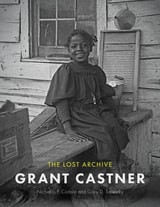
Grant Castner
The Lost ArchiveNicholas P. Ciotola
Rutgers University Press, 2026
Castner’s glass plate negatives are a visual record of New Jersey’s social and cultural history. His many human subjects are rich and poor, young and old, Black and white. They are at work, at play, at home, and in the community. Castner also documented social change brought about by electricity, engineering, education, industry, and transportation. He captured the excitement of public amusements such as parades and fairs. He recorded the aftermath of floods, fires and other disasters. Castner also had a fondness for the outdoors. He used his camera to reflect on the beauty and tranquility that he found in the natural landscapes of New Jersey.
This book presents the collective work of Grant Castner, an amateur artist whose place in New Jersey history was, until now, completely unknown. His photographic negatives forever preserve pinpoint moments in the past. They are time machines to another era. Let this long lost archive transport you on a visual journey into a New Jersey of days gone by.

Grant Park
The Evolution of Chicago's Front YardDennis H. Cremin
Southern Illinois University Press, 2013
2014 Illinois State Historical Society Book of the Year
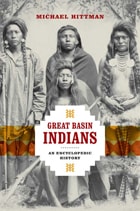
Great Basin Indians
An Encyclopedic HistoryMichael Hittman
University of Nevada Press, 2024
Great Basin Indians is an essential resource for any reader interested in the Native peoples of the American West and in western history in general.
Great Basin Rock Art
Archaeological PerspectivesAngus R. Quinlan
University of Nevada Press, 2007
Rock art is one of humankind’s most ancient forms of artistic expression, and one of its most enigmatic. For centuries, scholars and other observers have struggled to interpret the meaning of the mysterious figures incised or painted on natural rocks and to understand their role in the lives of their long-vanished creators. The Great Basin of the American West is especially rich in rock art, but until recently North American archaeologists have largely ignored these most visible monuments left by early Native Americans and have given little attention to the terrain surrounding them. In Great Basin Rock Art, twelve respected rock art researchers examine a number of significant sites from the dual perspectives of settlement archaeology and contemporary Native American interpretations of the role of rock art in their cultural past. The authors demonstrate how modern archaeological methodology and interpretations are providing a rich physical and cultural context for these ancient and hitherto puzzling artifacts. They offer exciting new insights into the lives of North America’s first inhabitants. This is essential reading for anyone interested in the petroglyphs of the American West and in the history of the Great Basin and its original peoples.
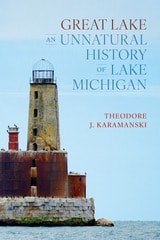
Great Lake
An Unnatural History of Lake MichiganTheodore J. Karamanski
University of Michigan Press, 2026
Great Lake is a comprehensive survey of the manifold ways Americans, from the first Native American communities to the present age, have abused, nurtured, loved, and neglected this massive freshwater resource. Extending 307 miles from north to south, the lake cuts across climatic, environmental, and physiographic zones, from the prairies of Illinois to the boreal forests of the north. Bordered by large cities like Chicago and Milwaukee as well as smaller Wisconsin resorts and northern Michigan mines and mill towns, the lake touches people in urban centers and countryside. Thus, the history of Lake Michigan combines the history of frontier resource extraction, agricultural abundance, industrialization, and dense urbanization in the American heartland. Great Lake is the story of the ever-escalating and divergent demands Americans have placed on Lake Michigan, how the lake’s ecosystem responded to those changes, and how together they have shaped the modern American Midwest.
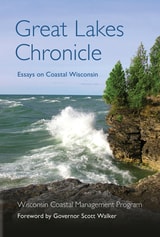
Great Lakes Chronicle
Essays on Coastal WisconsinWisconsin Coastal Management
Wisconsin Historical Society Press, 2018

Great Lakes Sea Lamprey
The 70 Year War on a Biological InvaderCory Brant
University of Michigan Press, 2019
Threatening the complete collapse of the fishery, the sea lamprey invasion triggered an environmental awakening in the region and prompted an international treaty that secured unprecedented cooperation across political boundaries to protect the Great Lakes. Fueled by a pioneering scientific spirit, the war on Great Lakes sea lampreys led to discoveries that are the backbone of the program that eventually brought the creature under control and still protects the largest freshwater ecosystem in the world to this day.
Great Lakes Sea Lamprey draws on extensive interviews with individuals who experienced the invasion firsthand as well as a trove of unexplored archival materials to tell the incredible story of sea lamprey in the Great Lakes—what started the invasion, how it was halted, and what this history can teach us about the response to biological invaders in the present and future. Richly illustrated with color and black & white photographs, the book will interest readers concerned with the health of the Great Lakes, the history of the conservation movement, and the ongoing threat of invasive species.
Great Ships on the Great Lakes Teacher's Guide
A Maritime HistoryCathy Green
Wisconsin Historical Society Press, 2013
Great Ships on the Great Lakes explores the history of the region’s rivers, lakes, and inland seas—and the people and ships who navigated them. Read along as the first peoples paddle tributaries in birch bark canoes. Follow as European voyageurs pilot rivers and lakes to get beaver pelts back to the eastern market. Watch as settlers build towns and eventually cities on the shores of the Great Lakes. Listen to the stories of sailors, lighthouse keepers, and shipping agents whose livelihoods depended on the dangerous waters of Lake Michigan, Superior, Huron, Erie, and Ontario. Give an ear to their stories of unexpected tragedy and miraculous rescue, and heed their tales of risk and reward on the low seas.
Great Ships also tells the story of sea battles and gunships, of the first vessels to travel beyond the Niagara, and of the treacherous storms and cold weather that caused thousands of ships to sink in the Great Lakes. Watch as underwater archaeologists solve the mysteries of Great Lakes shipwrecks today. And learn how the shift from sail to steam forever changed the history of shipping, as schooners made way for steamships and bulk freighters, and sailing became a recreation, not a hazardous way of life.
Designed for the upper elementary classroom with emphasis on Michigan and Wisconsin, Great Ships on the Great Lakes includes a timeline of events, on-page vocabulary, and a list of resources and places to visit. Over 20 maps highlight the region’s maritime history. The accompanying Teacher’s Guide includes 18 classroom activities, arranged by chapter, including lessons on exploring shipwrecks and learning how glaciers moved across the landscape.
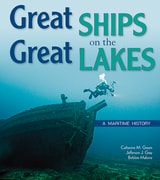
Great Ships on the Great Lakes
A Maritime HistoryBobbie Malone
Wisconsin Historical Society Press, 2013
In this highly accessible history of ships and shipping on the Great Lakes, upper elementary readers are taken on a rip-roaring journey through the waterways of the upper Midwest.
Great Ships on the Great Lakes explores the history of the region’s rivers, lakes, and inland seas—and the people and ships who navigated them. Read along as the first peoples paddle tributaries in birch bark canoes. Follow as European voyageurs pilot rivers and lakes to get beaver pelts back to the eastern market. Watch as settlers build towns and eventually cities on the shores of the Great Lakes. Listen to the stories of sailors, lighthouse keepers, and shipping agents whose livelihoods depended on the dangerous waters of Lake Michigan, Superior, Huron, Erie, and Ontario. Give an ear to their stories of unexpected tragedy and miraculous rescue, and heed their tales of risk and reward on the low seas.
Great Ships also tells the story of sea battles and gunships, of the first vessels to travel beyond the Niagara, and of the treacherous storms and cold weather that caused thousands of ships to sink in the Great Lakes. Watch as underwater archaeologists solve the mysteries of Great Lakes shipwrecks today. And learn how the shift from sail to steam forever changed the history of shipping, as schooners made way for steamships and bulk freighters, and sailing became a recreation, not a hazardous way of life.
Designed for the upper elementary classroom with emphasis on Michigan and Wisconsin, Great Ships on the Great Lakes includes a timeline of events, on-page vocabulary, and a list of resources and places to visit. Over 20 maps highlight the region’s maritime history. The accompanying Teacher’s Guide includes 18 classroom activities, arranged by chapter, including lessons on exploring shipwrecks and learning how glaciers moved across the landscape.
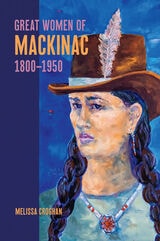
Great Women of Mackinac, 1800-1950
Melissa Croghan
Michigan State University Press, 2023

Greed, Rage, and Love Gone Wrong
Murder in MinnesotaBruce Rubenstein
University of Minnesota Press, 2006
Greeks in Michigan
Stavros K. Frangos
Michigan State University Press, 2004
The influence of Greek culture on Michigan began long before the first Greeks arrived. The American settlers of the Old Northwest Territory had definite notions of Greeks and Greek culture. America and its developing society and culture were to be the "New Athens," a locale where the resurgence in the values and ideals of classical Greece were to be reborn. Stavros K. Frangos describes how such preconceptions and the competing desires to retain heritage and to assimilate have shaped the Greek experience in Michigan. From the padrone system to the church communities, Greek institutions have both exploited and served Greek immigrants, and from scattered communities across the state to enclaves in Detroit, Greek immigrants have retained and celebrated Greek culture.

Green Bay Packers
Trials, Triumphs, and TraditionWilliam Povletich
Wisconsin Historical Society Press, 2012
On the field, legends like Don Hutson, Ray Nitschke, and Brett Favre made the Green Bay Packers into a professional football powerhouse. But the history of the NFL’s only small-town franchise is as much a story of business creativity as gridiron supremacy. Behind every Packer who became a legend on the field, there was an Andrew Turnbull, Dominic Olejniczak, or Bob Harlan, leaders whose dedication and creativity in preserving the franchise were unwavering.
Green Bay Packers: Trials, Triumphs, and Traditions tells the improbable story of professional football’s most iconic team, and along the way gives a unique window into the rise of modern professional sports. As the NFL has evolved into a financial juggernaut, the Green Bay Packers, with more than 112,158 stockholders, stand alone as the only professional sports franchise owned by fans, thus providing the only public record of how a sports team is run.
Featuring more than 300 photographs, some never before seen, Green Bay Packers illustrates how the most creative team in sports is also one of the most successful, with names like Lambeau, Canadeo, Lombardi, Hornung, Holmgren, and White leading the way to a league-best thirteen NFL titles and twenty-one Hall of Fame inductees. This comprehensive, up-to-date history of the Packers includes the 2011 season.
Green Russell and Gold
By Elma Dill Russell Spencer
University of Texas Press, 1966
The family history of the Russells of Georgia is a saga of the Westward Movement during the middle fifty years of the nineteenth century. The "Russell boys," as prospectors and miners, moved with the frontier as it followed fresh discoveries of gold, from Georgia to California to Colorado. Then, after the interlude of the Civil War, they settled in the new territories, turning their abilities and ruggedness of character to the development of careers on other frontiers—ranching, farming, land development, medicine—in Montana, Colorado, and Texas.
Elma Dill Russell Spencer, a descendant of one of these unusual brothers, relates their story as she learned it from family tradition transmitted by Grandma Russell, from family letters, from public documents, and from historical accounts of the exciting era.
The reader of her narrative sees the evolution of Western society in the vast wasteland of mountain and prairie from the viewpoint of the people who were making history, people too engrossed in their own problems to realize the far-reaching significance of their achievement. The reader sees the struggle to wrest gold from the streams and hills with primitive tools and techniques; the development of tent villages into populous towns affording most of the comforts of the East; the evolution of a code of mining laws, of protection from violence and crime; the building of schools; the emergence of sectional problems and divided loyalties; the Civil War, mostly through noncombatants' eyes; the progressive changes in transportation, until the railroads tied the West to the East. The reader also encounters Indians, who ride in and out of these pages, and other fascinating types of characters associated with "the wild, varied, and always unpredictable" frontier.
The odyssey of the Russell brothers as they struggle home to Georgia from Union-sympathizing Denver is particularly full of action, with tense moments in the account of narrowly escaped death—at the hands of Indians, through the ravages of disease, and from the enmity of Yankee foes.
This book was originally published as Gold Country in 1958; the University of Texas Press edition was completely revised and first published in 1966.
Greetings from New Nashville
How a Sleepy Southern Town Became "It" CitySteve Haruch
Vanderbilt University Press, 2020
In that span of two decades, the boundaries of Nashville did not change. But something did. Or rather, many somethings changed, and kept changing, until many who lived in Nashville began to feel they no longer recognized their own city. And some began to feel it wasn't their own city at all anymore as they were pushed to its fringes by rising housing costs. Between 1998 and 2018, the population of Nashville grew by 150,000. On some level, Nashville has always packaged itself for consumption, but something clicked and suddenly everyone wanted a taste. But why Nashville? Why now? What made all this change possible?
This book is an attempt to understand those transformations, or, if not to understand them, exactly, then to at least grapple with the question: What happened?
Grenville Goodwin Among the Western Apache
Letters from the FieldEdited by Morris E. Opler
University of Arizona Press, 1973
During this same period, Morris Opler was studying the Chiricahua and Mescalero Apache in New Mexico. In order to exchange information about their studies, Goodwin and Opler began corresponding. Both men were convinced that a long-overdue, systematic comparison of Apachean cultures would yield significant results.
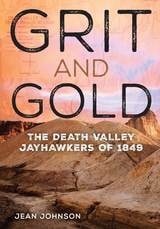
Grit and Gold
The Death Valley Jayhawkers of 1849Jean Johnson
University of Nevada Press, 2018
After leaving Salt Lake City to break a road south to the Pacific Coast that would eliminate crossing the snowy Sierra Nevada, the party veered off the Old Spanish Trail in southern Utah to follow a mountaineer’s map portraying a bogus trail that claimed to cut months and hundreds of miles off their route to the gold country. With winter coming, however, they found themselves hopelessly lost in the mountains and dry valleys of southern Nevada and California. Abandoning everything but the shirts on their backs and the few oxen that became their pitiful meals, they turned their dreams of gold to hopes of survival.
Utilizing William Lorton’s 1849 diary of the trek from Illinois to southern Utah, the reminiscences of the Jayhawkers themselves, the keen memory of famed pioneer William Lewis Manly, and the almost daily diary of Sheldon Young, Johnson paints a lively but accurate portrait of guts, grit, and determination.
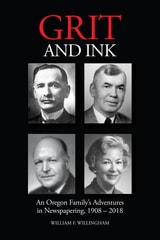
Grit and Ink
An Oregon Family’s Adventures in Newspapering, 1908–2018William F. Willingham
Oregon State University Press, 2018

Grocery Activism
The Radical History of Food Cooperatives in MinnesotaCraig B. Upright
University of Minnesota Press, 2020
A key period in the history of food cooperatives that continues to influence how we purchase organic food today
Our notions of food co-ops generally don’t include images of baseball bat–wielding activists in the aisles. But in May 1975, this was the scene as a Marxist group known as the Co-op Organization took over the People’s Warehouse, a distribution center for more than a dozen small cooperative grocery stores in the Minneapolis area. The activist group’s goal: to curtail the sale of organic food. The People’s Warehouse quickly became one of the principal fronts in the political and social battle that Craig Upright explores in Grocery Activism. The story of the fraught relationship of new-wave cooperative grocery stores to the organic food industry, this book is an instructive case study in the history of activists intervening in capitalist markets to promote social change.
Focusing on Minnesota, a state with both a long history of cooperative enterprise and the largest number of surviving independent cooperative stores, Grocery Activism looks back to the 1970s, when the mission of these organizations shifted from political activism to the promotion of natural and organic foods. Why, Upright asks, did two movements—promoting cooperative enterprise and sustainable agriculture—come together at this juncture? He analyzes the nexus of social movements and economic sociology, examining how new-wave cooperatives have pursued social change by imbuing products they sell with social values. Rather than trying to explain the success or failure of any individual cooperative, his work shows how members of this fraternity of organizations supported one another in their mutual quest to maintain fiscal solvency, promote better food-purchasing habits, support sustainable agricultural practices, and extol the virtues of cooperative organizing. A foundational chapter in the history of organic food, Grocery Activism clarifies the critical importance of this period in transforming the politics and economics of the grocery store in America.
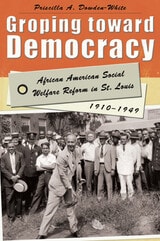
Groping toward Democracy
African American Social Welfare Reform in St. Louis, 1910-1949Priscilla A. Dowden-White
University of Missouri Press, 2011
In Groping toward Democracy: African American Social Welfare Reform in St. Louis, 1910–1949, historian Priscilla A. Dowden-White presents an on-the-ground view of local institution building and community organizing campaigns initiated by African American social welfare reformers. Through extensive research, the author places African American social welfare reform efforts within the vanguard of interwar community and neighborhood organization, reaching beyond the “racial uplift” and “behavior” models of the studies preceding hers. She explores one of the era’s chief organizing principles, the “community as a whole” idea, and deliberates on its relationship to segregation and the St. Louis black community’s methods of reform. Groping toward Democracy depicts the dilemmas organizers faced in this segregated time, explaining how they pursued the goal of full, uncontested black citizenship while still seeking to maximize the benefits available to African Americans in segregated institutions. The book’s nuanced mapping of the terrain of social welfare offers an unparalleled view of the progress brought forth by the early-twentieth-century crusade for democracy and equality.
By delving into interrelated developments in health care, education, labor, and city planning, Dowden-White deftly examines St. Louis’s African American interwar history. Her in-depth archival research fills a void in the scholarship of St. Louis’s social development, and her compelling arguments will be of great interest to scholars and teachers of American urban studies and social welfare history.
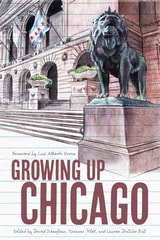
Growing Up Chicago
Edited by David Schaafsma, Roxanne Pilat, and Lauren DeJulio Bell, Foreword by Luis Alberto Urrea
Northwestern University Press, 2021
The stories evoke childhood trips to the Art Institute of Chicago, nighttime games of ringolevio, and the giant neon Magikist lips that once perched over the expressway, sharing perspectives that range from a young man who dreams of becoming an artist to a single mother revisiting her Mexican roots, from a woman’s experience with sexual assault to a child’s foray into white supremacy. This book memorably explores culture, social identity, and personal growth through the eyes of Chicagoans, affirming that we each hold the ability to shape the places in which we live and write and read as much as those places shape us.
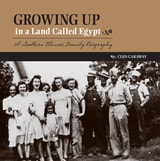
Growing Up in a Land Called Egypt
A Southern Illinois Family BiographyCleo Caraway
Southern Illinois University Press, 2010
In Growing Up in a Land Called Egypt: A Southern Illinois Family Biography,author Cleo Caraway fondly recalls how she and her siblings came of age on the family farm in the 1930s and 1940s. Like many others, the Caraways were affected by the economic hardships of the Great Depression, but Cleo’s parents strived to shelter her and her six siblings from the dire circumstances affecting the nation and their home and allowed them to bask in their idealistic existence. Her love for her family clearly shines from every page as she writes of a simpler time, before World War II divided the family.
Caraway revels in the life her family lived on a southern Illinois hilltop in Murphysboro township, marveling at the mix of commonplace and adventure she experienced in her childhood. She remembers her first day of school, walking three miles to the wondrous one-room building with her siblings; reminisces about strolling through the countryside with her mother, investigating the various plants and flowers, fruits and nuts; and recollects her fascination with the Indian relics she found buried near her home, a hobby she shared with her father. She also writes of seeing Gone with the Wind on the big screen at the Hippodrome in Murphysboro, of learning to sew dresses for her dolls, and of idyllic life on the farm—milking cows, hatching chicks, feeding pigs. Along with her personal memories Caraway includes interviews with neighbors and many fascinating photographs with detailed captions that make the images come alive.
A delightful follow-up to her father’s popular Foothold on a Hillside: Memories of a Southern Illinoisan,Caraway’s book is a pleasant change from the typical accounts of southern Illinois before, during, and after the Great Depression. Instead of hardscrabble grit, Growing Up in a Land Called Egypt offers a refreshingly different view of the period and is certain to be embraced by southern Illinois natives as well as anyone interested in the experiences of a rural family that thrived despite the difficult times. The author’s lighthearted prose, self-deprecating humor, and genuine affection for her family make reading this book a rich and memorable experience.
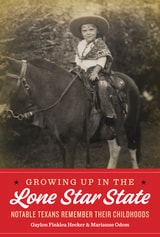
Growing Up in the Lone Star State
Notable Texans Remember Their ChildhoodsBy Gaylon Finklea Hecker and Marianne Odom
University of Texas Press, 2021
Gaylon Finklea Hecker and Marianne Odom began the interviews for this book in 1981 and devoted a professional lifetime to collecting the memories of accomplished Texans to determine what, if anything, about growing up in the Lone Star State prepared them for success.
The resulting forty-seven oral history interviews begin with tales from the early 1900s, when Texas was an agrarian state, and continue through the growth of major cities and the country’s race to the moon. Interviewees recalled life in former slave colonies; on gigantic ranches, tiny farms, and sharecropper fields; and in one-horse towns and big-city neighborhoods, with relatable stories as diverse as the state’s geography.
The oldest interviewees witnessed women earning the right to vote and weathered the Great Depression. Many remembered two world wars, while others recalled the Texas City explosion of 1947 and the tornado that devastated Waco in 1953. They witnessed the advent of television and the nightly news, which helped many come to terms with the assassination of a president that took place too close to home.
Their absorbing reflections are stories of good and bad, hope and despair, poverty and wealth, depression and inspiration, which would have been different if lived anywhere but Texas.
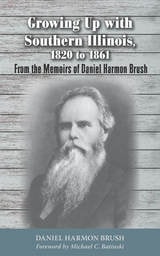
Growing Up with Southern Illinois, 1820 to 1861
From the Memoirs of Daniel Harmon BrushDaniel Harmon Brush, with a Foreword by Michael C. Batinski
Southern Illinois University Press, 2017
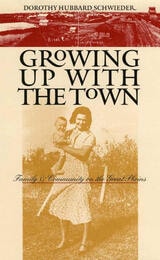
Growing Up with the Town
Family and Community on the Great PlainsDorothy Hubbard Schwieder
University of Iowa Press, 2002
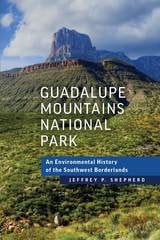
Guadalupe Mountains National Park
An Environmental History of the Southwest BorderlandsJeffrey P. Shepherd
University of Massachusetts Press, 2019
Drawing upon published sources, oral histories, and previously unused archival documents, Jeffrey P. Shepherd situates the Guadalupe Mountains and the national park in the context of epic tales of Spanish exploration, westward expansion, Native survival, immigrant settlement, the conservation movement, early tourism, and regional economic development. As Americans cope with climate change, polarized political rhetoric, and suburban sprawl, public spaces such as Guadalupe Mountains National Park remind us about our ties to nature and our historical relationships with the environment.
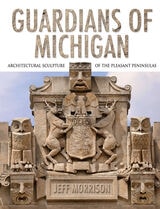
Guardians of Michigan
Architectural Sculpture of the Pleasant PeninsulasJeff Morrison
University of Michigan Press, 2022
The buildings profiled in Guardians of Michigan range from county courthouses, churches, and government buildings constructed during the 1800s, to skyscrapers with intricate sculptural decoration too far above street level for passersby to see. As a result, the book highlights examples of Gothic, Romanesque Revival, Beaux Arts, as well as Art Deco and Art Moderne. Guardians of Michigan is a loving tribute to the architecture of the state, preserving forgotten stories and beautiful buildings for all readers to enjoy.