Results by title
8642 books match the query '20th century' and 162 start with g
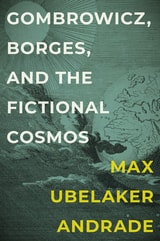
Gombrowicz, Borges, and the Fictional Cosmos
Max Ubelaker Andrade
Bucknell University Press, 2027
Polish author Witold Gombrowicz’s famously chaotic masterpiece, Cosmos, was profoundly influenced by Jorge Luis Borges—particularly by three key stories from Ficciones. Drawing on evidence that Gombrowicz read Ficciones in 1960, as well as handwritten marginalia in Gombrowicz’s copy of Adolfo Bioy Casares’s La invención de Morel, this groundbreaking study argues that Cosmos responded to Borges’s literary transformations of cartography, mathematical combinatorics, and Miguel de Cervantes’s Don Quijote. Along the way, it introduces the concept of “immaterial bibliography” to analyze imaginary texts appearing in literary works. Finally, it examines the tension between Borges’s explicit racism and the ethical and aesthetic vision suggested by his fiction, revealing how rumor, rebellion, and literary inheritance shaped Gombrowicz’s reading of Borges, which in turn influenced the composition of his prizewinning last novel.
Published by Bucknell University Press. Distributed worldwide by Rutgers University Press.
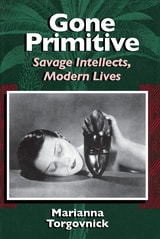
Gone Primitive
Savage Intellects, Modern LivesMarianna Torgovnick
University of Chicago Press, 1990
fears, and longings that have produced Western views of the
primitive. Crossing an extraordinary range of fields
(anthropology, psychology, literature, art, and popular
culture), Gone Primitive will engage not just
specialists but anyone who has ever worn Native American
jewelry, thrilled to Indiana Jones, or considered buying an
African mask.
"A superb book; and—in a way that goes beyond what
being good as a book usually implies—it is a kind of gift to
its own culture, a guide to the perplexed. It is lucid,
usually fair, laced with a certain feminist mockery and
animated by some surprising sympathies."—Arthur C. Danto,
New York Times Book Review
"An impassioned exploration of the deep waters beneath Western primitivism. . . . Torgovnick's readings are deliberately, rewardingly provocative."—Scott L. Malcomson, Voice Literary Supplement
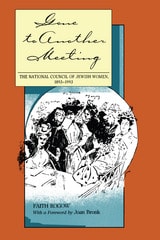
Gone to Another Meeting
The National Council of Jewish Women, 1893-1993Faith Rogow
University of Alabama Press, 1993
The first comprehensive history of the oldest national religious Jewish women's organization in the United States
Gone to Another Meeting charts the development of the National Council of Jewish Women (NCJW) and its impact on both the Jewish Community in the United States and American Society in general.
Founded in 1893 by Hannah Greenebaum Solomon, NCJW provided a conduit through which Jewish women’s voices could be heard and brought a Jewish voice to America’s women’s rights movement. NCJW would come to represent both the modernization and renewal of traditional Jewish womanhood. Through its emphasis on motherhood, its adoption of domestic feminism, and its efforts to carve a distinct Jewish niche in the late 19th-century Progressive social reform movement in the largely Christian world of women’s clubs, NCJW was instrumental in defining a uniquely American version of Jewish womanhood.
Good Enough for Government Work
The Public Reputation Crisis in America (And What We Can Do to Fix It)Amy E. Lerman
University of Chicago Press, 2019
With Good Enough for Government Work, Lerman uses surveys, experiments, and public opinion data to argue persuasively that the reputation of government is itself an impediment to government’s ability to achieve the common good. In addition to improving its efficiency and effectiveness, government therefore has an equally critical task: countering the belief that the public sector is mired in incompetence. Lerman takes readers through the main challenges. Negative perceptions are highly resistant to change, she shows, because we tend to perceive the world in a way that confirms our negative stereotypes of government—even in the face of new information. Those who hold particularly negative perceptions also begin to “opt out” in favor of private alternatives, such as sending their children to private schools, living in gated communities, and refusing to participate in public health insurance programs. When sufficient numbers of people opt out of public services, the result can be a decline in the objective quality of public provision. In this way, citizens’ beliefs about government can quickly become a self-fulfilling prophecy, with consequences for all. Lerman concludes with practical solutions for how the government might improve its reputation and roll back current efforts to eliminate or privatize even some of the most critical public services.
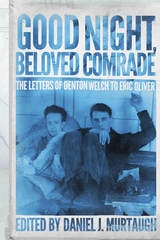
Good Night, Beloved Comrade
The Letters of Denton Welch to Eric OliverEdited and with an introduction by Daniel J. Murtaugh
University of Wisconsin Press, 2017
Though German bombs were ravaging Britain, Welch wrote in his published work about the idyllic landscapes and local people he observed in Kent. There, in 1943, he met and fell in love with Eric Oliver, a handsome, intelligent, but rather insecure "landboy"—an agricultural worker with the wartime Land Army. Oliver would become a companion, comrade, lover, and caretaker during the last six years of Welch's life. All fifty-one letters that Welch wrote to Oliver are collected and annotated here for the first time. They offer a historical record of life amidst the hardship, deprivation, and fear of World War II, and also are a timeless testament of one young man's tender and intimate emotions, his immense courage in adversity, and his continual struggle for love and creative existence.
Good Roots
Writers Reflect on Growing Up in OhioLisa Watts
Ohio University Press, 2007
Winner of the Ohioana Library’s 2008 Ohio Legacy Citation
2014-2015 Choose to Read Ohio selection
“A good place to be from.” That’s how some people might characterize the Buckeye State. The writings in Good Roots: Writers Reflect on Growing Up in Ohio, are testimony to the truth of that statement. By prominent writers such as P. J. O’Rourke, Susan Orlean, and Alix Kates Shulman, these contributions are alternately nostalgic, irreverent, and sincere, and offer us a personal sense of place. Their childhoods are as varied as their work. Some were raised in urban Cleveland, Akron, and Cincinnati, others in the small Ohio towns that typify the Midwest, and still others in the countryside. Yet what they have to tell us about their roots resonates with a shared heritage, a sense of what is universal and enduring about growing up in the heartland.
Their collective résumé reads like a literary Who’s Who, including four Pulitzer Prizes, several National Book Awards, and many prestigious fellowships. Good Roots is also plain good reading from some of our country’s most accomplished contemporary writers.
Contributors include: Jill Bialosky, Dan Cryer, Michael Dirda, Elizabeth Dodd, Anthony Doerr, Rita Dove, Ian Frazier, Dale Keiger, Andrea Louie, Kathleen Dean Moore, Mary Oliver, Susan Orlean, P. J. O’Rourke, Julie Salamon, Scott Russell Sanders, Alix Kates Shulman, Jeffery Smith, James Toedtman, and Mark Winegardner.

Good-Bye to Old Peking
The Wartime Letters Of U.S. Marine Captain John Seymour Letcher, 1937-1939John Seymour Letcher
Ohio University Press, 1998
Captain Letcher describes the flavor of life in pre-Communist China — the food, servants, cold Peking winters and torrid summers, hunting, and excursions to the major tourist sites.
But his letters also tell of the Japanese slaughter of Chinese troops in the opening days of the Sino-Japanese War. He wrote about life in a city under Japanese occupation and the stirring story of the Chinese guerrillas rebounding from devastating defeat.
These letters and accompanying introduction, preface, and notes, draw attention to the Western experience in a place and time largely overlooked by military historians and modern China specialists.

Good-bye, Piccadilly
BRITISH WAR BRIDES IN AMERICAJenel Virden
University of Illinois Press, 1996
Though the women came to the U.S. from all parts of the British Isles, they were an unusually homogeneous group, averaging 23 years of age, from working- or lower-middle-class families and having completed mandatory schooling to the age of fourteen. For the most part they emigrated alone and didn't move into an existing immigrant population.
Jenel Virden draws on records in the National Archives in Washington, D.C., and the Public Record Office in London, as well as questionnaires and personal interviews, in relating the women's story. Virden finds that the marriages actually took place in spite of, rather than because of, the war.
And, while the women benefited from special nonrestrictive immigration legislation--and found public welcomes and a good deal of favorable publicity when they arrived--they also had much in common with other immigrant groups, including a strong sense of ethnic identity.
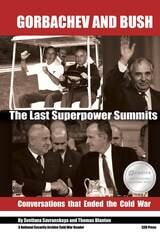
Gorbachev and Bush
The Last Superpower Summits. Conversations that Ended the Cold WarThe National Security Archive Savranskaya
Central European University Press, 2020
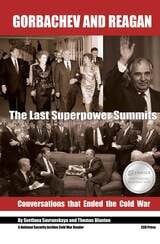
Gorbachev and Reagan
The Last Superpower Summits. Conversations that Ended the Cold WarThe National Security Archive Savranskaya
Central European University Press, 2020
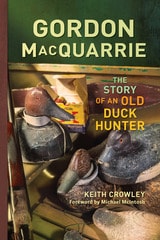
Gordon MacQuarrie
The Story of an Old Duck HunterKeith Crowley
Wisconsin Historical Society Press, 2003

Gossip & Metaphysics
Russian Modernist Poems & ProseEdited by Katie Farris, Ilya Kaminsky, and Valzhyna Mort
Tupelo Press, 2014
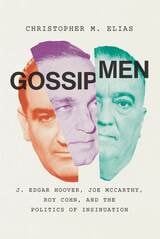
Gossip Men
J. Edgar Hoover, Joe McCarthy, Roy Cohn, and the Politics of InsinuationChristopher M. Elias
University of Chicago Press, 2021
By using gossip as a lens to examine profound issues of state security and institutional power, Elias thoroughly transforms our understanding of the development of modern American political culture.
Gossip Men
J. Edgar Hoover, Joe McCarthy, Roy Cohn, and the Politics of InsinuationChristopher M. Elias
University of Chicago Press, 2021
This is an auto-narrated audiobook edition of this book.
J. Edgar Hoover, Joseph McCarthy, and Roy Cohn were titanic figures in midcentury America, wielding national power in government and the legal system through intimidation and insinuation. Hoover’s FBI thrived on secrecy, threats, and illegal surveillance, while McCarthy and Cohn will forever be associated with the infamous anticommunist smear campaign of the early 1950s, which culminated in McCarthy’s public disgrace during televised Senate hearings. In Gossip Men, Christopher M. Elias takes a probing look at these tarnished figures to reveal a host of startling new connections among gender, sexuality, and national security in twentieth-century American politics. Elias illustrates how these three men solidified their power through the skillful use of deliberately misleading techniques like implication, hyperbole, and photographic manipulation. Just as provocatively, he shows that the American people of the 1950s were particularly primed to accept these coded threats because they were already familiar with such tactics from widely popular gossip magazines.
By using gossip as a lens to examine profound issues of state security and institutional power, Elias thoroughly transforms our understanding of the development of modern American political culture.
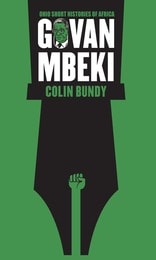
Govan Mbeki
Colin Bundy
Ohio University Press, 2012
Govan Mbeki (1910–2001) was a core leader of the African National Congress, the Communist Party, and the armed wing of the ANC during the struggle against apartheid. Known as a hard-liner, Mbeki was a prolific writer and combined in a rare way the attributes of intellectual and activist, political theorist and practitioner. Sentenced to life in prison in 1964 along with Nelson Mandela and others, he was sent to the notorious Robben Island prison, where he continued to write even as tension grew between himself, Mandela, and other leaders over the future of the national liberation movement. As one of the greatest leaders of the antiapartheid movement, and the father of Thabo Mbeki, president of South Africa from 1999 to 2008, the elder Mbeki holds a unique position in South African politics and history.
This biography by noted historian Colin Bundy goes beyond the narrative details of his long life: it analyzes his thinking, expressed in his writings over fifty years. Bundy helps establish what is distinctive about Mbeki: as African nationalist and as committed Marxist—and more than any other leader of the liberation movement—he sought to link theory and practice, ideas and action.
Drawing on exclusive interviews Bundy did with Mbeki, careful analysis of his writings, and the range of scholarship about his life, this biography is personal, reflective, thoroughly researched, and eminently readable.
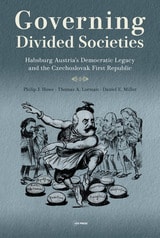
Governing Divided Societies
Habsburg Austria’s Democratic Legacy and the Czechoslovak First RepublicPhilip Howe
Central European University Press, 2026
Consociationalism has proven its worth as a model for describing contemporary democracies and diagnosing their ills. By exploring the institutions and practices of the Habsburg Monarchy before 1918 and the Czechoslovak First Republic, Howe, Lorman, and Miller prove the value of the consociational theory in analyzing the past. They hold that a multitude of parties, frequent cabinet changes, and reliance on cabinets of experts do not necessarily signal flawed democracies. In fact, they are features of consociationalism. This volume challenges historians and social scientists to view the Austrian half of the Habsburg Monarchy before 1918 as evolving toward consociational democracy and the Czechoslovak First Republic as a fully consociational state.
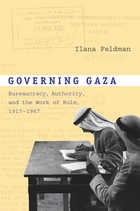
Governing Gaza
Bureaucracy, Authority, and the Work of Rule, 1917–1967Ilana Feldman
Duke University Press, 2008
Drawing on archival research in Gaza, Cairo, Jerusalem, and London, as well as two years of ethnographic research with retired civil servants in Gaza, Feldman identifies two distinct, and in some ways contradictory, governing practices. She illuminates mechanisms of “reiterative authority” derived from the minutiae of daily bureaucratic practice, such as the repetitions of filing procedures, the accumulation of documents, and the habits of civil servants. Looking at the provision of services, she highlights the practice of “tactical government,” a deliberately restricted mode of rule that makes limited claims about governmental capacity, shifting in response to crisis and operating without long-term planning. This practice made it possible for government to proceed without claiming legitimacy: by holding the question of legitimacy in abeyance. Feldman shows that Gaza’s governments were able to manage under, though not to control, the difficult conditions in Gaza by deploying both the regularity of everyday bureaucracy and the exceptionality of tactical practice.
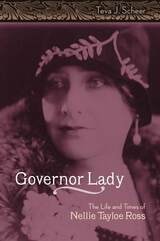
Governor Lady
The Life and Times of Nellie Tayloe RossTeva J. Scheer
University of Missouri Press, 2005
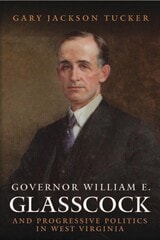
Governor William Glasscock and Progressive Politics in West Virginia
Gary Jackson Tucker
West Virginia University Press, 2008
From 1909 to 1913, Governor William Glasscock served the state of West Virginia as an ardent progressive and reformer. In his inaugural address he proclaimed government "the machinery invoked and devised by man for his benefit and protection” and good government the guarantor of the happiness, prosperity, success, and welfare of the people. Governor William Glasscock and Progressive Politics in West Virginia recounts the life and work of West Virginia’s thirteenth governor. Born during the Civil War, Glasscock witnessed a country torn by sectional, fratricidal war become a powerful industrial nation by the turn of the twentieth century. Author Gary Jackson Tucker demonstrates how Glasscock, along with others during the Progressive Era, railed against large and powerful political and economic machines to enact legislation protecting free and fair elections, just taxation, regulation of public utilities, and workmen’s compensation laws. Never hesitating to use the power of the state to stand firm against racism and mob rule, and placing his own personal safety in jeopardy, Glasscock won the praise and admiration of average people. Glasscock’s four years in office took his own health and financial security from him, but left behind a better government—a good government—for the people of West Virginia.
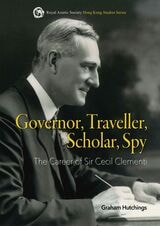
Governor, Traveller, Scholar, Spy
The Career of Sir Cecil ClementiGraham Hutchings
Hong Kong University Press, 2026
Governor, Traveller, Scholar, Spy traces the life and career of the talented colonial administrator Sir Cecil Clementi, who rose to become governor of Hong Kong and then the Straits Settlements. He governed Hong Kong at a time of revolutionary upheaval in China which brought the city to its economic knees and threatened Britain’s possession of the territory. Clementi strongly objected to London’s attempts to come to terms with Chiang Kai-shek’s Nationalist government and sought to protect Hong Kong from the intellectual currents sweeping through the mainland by making the city a bastion of traditional Chinese culture. As Governor of Straits Settlements and High Commissioner of the Federated Malay States, he championed the traditional rights of the Malay rulers and suppressed national sentiment among Malaya’s swelling Chinese population. Alarmed by his determination to press ahead with such policies despite opposition, the government in London forced Clementi into early retirement.
This is the first full-length biography of a highly gifted colonial administrator who spent half of his roughly 30-year career in Hong Kong and played a major role in the city’s history. As a young official, Clementi quickly mastered Chinese and published translations of Cantonese poetry. He undertook epic journeys across China on intelligence-gathering missions, was closely involved in the land settlement in the New Territories, and the creation of Hong Kong University. As governor, he championed the development of Kai Tak airport and the provision of Hong Kong’s water supply. He also appointed the first Chinese member of the city’s Executive Council. Yet he resisted reforms to the controversial mui-tsai system under which Chinese girls served as housemaids to Chinese families on the grounds that it was a Chinese "tradition." This study of his career, in which he was also posted to British Guiana and Ceylon, sheds light on how Britain administered the far-flung territories that formed its empire.
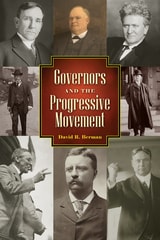
Governors and the Progressive Movement
David R. Berman
University Press of Colorado, 2019
Governors and the Progressive Movement is the first comprehensive overview of the Progressive movement’s unfolding at the state level, covering every state in existence at the time through the words and actions of state governors. It explores the personalities, ideas, and activities of this period’s governors, including lesser-known but important ones who deserve far more attention than they have previously been given.
During this time of greedy corporations, political bosses, corrupt legislators, and conflict along racial, class, labor/management, urban/rural, and state/local lines, debates raged over the role of government and issues involving corporate power, racism, voting rights, and gender equality—issues that still characterize American politics. Author David R. Berman describes the different roles each governor played in the unfolding of reform around these concerns in their states. He details their diverse leadership qualities, governing styles, and accomplishments, as well as the sharp regional differences in their outlooks and performance, and finds that while they were often disposed toward reform, governors held differing views on issues—and how to resolve them.
Governors and the Progressive Movement examines a time of major changes in US history using relatively rare and unexplored collections of letters, newspaper articles, and government records written by and for minority group members, labor activists, and those on both the far right and far left. By analyzing the governors of the era, Berman presents an interesting perspective on the birth and implementation of controversial reforms that have acted as cornerstones for many current political issues. This book will be of interest to students and scholars of US history, political science, public policy, and administration.
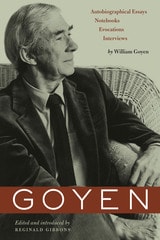
Goyen
Autobiographical Essays, Notebooks, Evocations, InterviewsBy William Goyen
University of Texas Press, 2007
William Goyen (1915-1983) was an American original, acclaimed nationally and internationally, and one of the most important writers ever to be associated with the regional culture and literary history of Texas. Called "one of the great American writers of short fiction" by the New York Times Book Review, Goyen also authored the novels The House of Breath, In a Farther Country, Come, the Restorer, and Arcadio, as well as plays, poetry, and nonfiction. His literary works manifest an intimate intensity of feeling and an inimitable tone of voice, reflecting Goyen's lifelong desire to create art that was at once a spiritual quest for universal truths and an evocation of the rhythms of speech and storytelling of his native East Texas.
This volume contains all of the uncollected autobiographical writings of William Goyen, including essays previously published in American periodicals and literary journals; interviews published in Paris Review, TriQuarterly, and the French magazine Masques; and previously unpublished materials drawn from Goyen's papers in the Harry Ransom Humanities Research Center at the University of Texas at Austin. The writings span Goyen's entire adult life, from youthful journals to autobiographical sketches to his long sketch for an autobiographical book, Six Women, which profiles women whom Goyen felt had influenced him deeply: Frieda Lawrence, Dorothy Brett, Mabel Dodge Luhan, Margo Jones, Millicent Rogers, and Katherine Anne Porter. The volume also contains late essays on growing up in Houston, writing from life, and illness and recovery.
While most of William Goyen's work was autobiographical, writing a traditional autobiography proved to be inimical to his artistic sensibility and style. Thus, the pieces collected in Goyen constitute the most complete autobiography that we will ever have from this highly regarded writer.
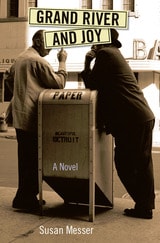
Grand River and Joy
Susan Messer
University of Michigan Press, 2010
Halloween morning 1966, Harry Levine arrives at his wholesale shoe warehouse to find an ethnic slur soaped on the front window. As he scavenges around the sprawling warehouse basement, looking for the supplies he needs to clean the window, he makes more unsettling discoveries: a stash of Black Power literature; marijuana; a new phone line running off his own; and a makeshift living room, arranged by Alvin, the teenaged tenant who lives with his father, Curtis, above the warehouse. Accustomed to sloughing off fears about Detroit's troubled inner-city neighborhood, Harry dismisses the soaped window as a Halloween prank and gradually dismantles “Alvin's lounge” in a silent conversation with the teenaged tenant. Still, these events and discoveries draw him more deeply into the frustrations and fissures permeating his city in the months leading up to the Detroit riots.
Grand River and Joy, named after a landmark intersection in Detroit, follows Harry through the intersections of his life and the history of his city. It's a work of fiction set in a world that is anything but fictional, a novel about the intersections between races, classes and religions exploding in the long, hot summers of Detroit in the 1960s. Grand River and Joy is a powerful and moving exploration of one of the most difficult chapters of Michigan history.
Susan Messer's fiction and nonfiction have appeared in numerous publications, including Glimmer Train Stories, North American Review, and Colorado Review. She received an Illinois Arts Council Fellowship in prose, an Illinois Arts Council literary award for creative nonfiction, and a prize in the Jewish Cultural Writing Competition of the Dora Teitelboim Center for Yiddish Culture.
Cover photograph copyright © Bill Rauhauser and Rauhauser Photographic Trust
Grand Strategy from Truman to Trump
Benjamin Miller with Ziv Rubinovitz
University of Chicago Press, 2020
American foreign policy is the subject of extensive debate. Many look to domestic factors as the driving forces of bad policies. Benjamin Miller instead seeks to account for changes in US international strategy by developing a theory of grand strategy that captures the key security approaches available to US decision-makers in times of war and peace.
Grand Strategy from Truman to Trump makes a crucial contribution to our understanding of competing grand strategies that accounts for objectives and means of security policy. Miller puts forward a model that is widely applicable, based on empirical evidence from post-WWII to today, and shows that external factors—rather than internal concerns—are the most determinative.
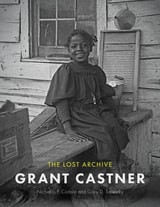
Grant Castner
The Lost ArchiveNicholas P. Ciotola
Rutgers University Press, 2026
Castner’s glass plate negatives are a visual record of New Jersey’s social and cultural history. His many human subjects are rich and poor, young and old, Black and white. They are at work, at play, at home, and in the community. Castner also documented social change brought about by electricity, engineering, education, industry, and transportation. He captured the excitement of public amusements such as parades and fairs. He recorded the aftermath of floods, fires and other disasters. Castner also had a fondness for the outdoors. He used his camera to reflect on the beauty and tranquility that he found in the natural landscapes of New Jersey.
This book presents the collective work of Grant Castner, an amateur artist whose place in New Jersey history was, until now, completely unknown. His photographic negatives forever preserve pinpoint moments in the past. They are time machines to another era. Let this long lost archive transport you on a visual journey into a New Jersey of days gone by.
Grant Park
The Evolution of Chicago's Front YardDennis H. Cremin
Southern Illinois University Press, 2013
2014 Illinois State Historical Society Book of the Year
Graphic Assembly
Montage, Media, and Experimental Architecture in the 1960sCraig Buckley
University of Minnesota Press, 2018
An innovative look at the contribution of montage to twentieth-century architecture—now in paperback
Graphic Assembly unearths the role played by montage and collage in the development of architectural culture over the past century, revealing their unexamined yet crucial significance. Craig Buckley brings together experimental architectural practices based in London, Paris, Vienna, and Florence, showing how breakthroughs in optical media and printing technologies enabled avant-garde architects to reimagine their field.
Graphic Assembly considers a range of architects and movements from the 1950s through the early ’70s, including Theo Crosby, Hans Hollein, and John McHale; the magazine Clip-Kit; and the groups Archigram, Superstudio, and Utopie. It gives a thorough account of how montage concepts informed the design of buildings, prototypes, models, exhibitions, and multimedia environments, accompanied by Buckley’s insightful interpretations of the iconic images, exhibitions, and buildings of the 1960s that mark how the decade is remembered.
Richly illustrated with never-before-published material from more than a dozen archives and private collections, Graphic Assembly offers a comparative overview of the network of experimental architectural practice in Europe. It provides a deep historical account of the cut-and-paste techniques now prevalent with architecture’s digital turn, demonstrating the great importance of montage to architecture past, present, and future.
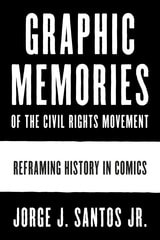
Graphic Memories of the Civil Rights Movement
Reframing History in ComicsBy Jorge J. Santos, Jr.
University of Texas Press, 2019
Winner, Charles Hatfield Book Prize, Comic Studies Society, 2020
A CHOICE Outstanding Academic Title, 2019
The history of America’s civil rights movement is marked by narratives that we hear retold again and again. This has relegated many key figures and turning points to the margins, but graphic novels and graphic memoirs present an opportunity to push against the consensus and create a more complete history. Graphic Memories of the Civil Rights Movement showcases five vivid examples of this:
Ho Che Anderson's King (2005), which complicates the standard biography of Martin Luther King Jr.; Congressman John Lewis's three-volume memoir, March (2013–2016); Darkroom (2012), by Lila Quintero Weaver, in which the author recalls her Argentinian father’s participation in the movement and her childhood as an immigrant in the South; the bestseller The Silence of Our Friends, by Mark Long, Jim Demonakos, and Nate Powell (2012), set in Houston's Third Ward in 1967; and Howard Cruse's Stuck Rubber Baby (1995), whose protagonist is a closeted gay man involved in the movement.
In choosing these five works, Jorge Santos also explores how this medium allows readers to participate in collective memory making, and what the books reveal about the process by which history is (re)told, (re)produced, and (re)narrativized. Concluding the work is Santos’s interview with Ho Che Anderson.
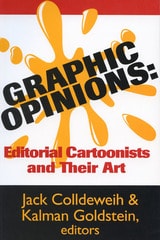
Graphic Opinions
Editorial Cartoonists and Their ArtJack Colldeweih
University of Wisconsin Press, 1998
calling.
The editors examine the current work and opinions of two dozen prominent cartoonists through profiles and essays about political and social issues. Four examples by each cartoonist illustrate this.

Grass Roots History
Theodore C. Blegen
University of Minnesota Press, 1947
Grass Roots History was first published in 1947. Minnesota Archive Editions uses digital technology to make long-unavailable books once again accessible, and are published unaltered from the original University of Minnesota Press editions.
The pivot of history is not the uncommon, but the usual, and the true makers of history are "the people, yes."
Theodore C. Blegen, writing with discernment and vigor, explores in his book the simple essence of grass roots history, the colors and forms and the processes of our daily life and civilization. He uses diaries and letters, songs and ballads of the immigrants and pioneers, everyday speech, and newspaper advertisements to show clearly and sharply the exciting sources of "the literature of the unlettered," to reveal the spirit of the day, and to reconstruct for the reader a segment of the American past.
"We have need to dig into the folk story of America if we are to bring out the pattern of American development and American culture in all its color and richness of texture and design. Grass roots history is an avenue to that 'social awareness' which the natural scientists, more boldly than the social scientists, have declared to be the most urgent and compelling need of our day."
This is the author's own statement of the significance of grass roots history.
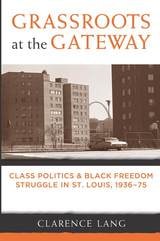
Grassroots at the Gateway
Class Politics and Black Freedom Struggle in St. Louis, 1936-75Clarence Lang
University of Michigan Press, 2010
"This is a theoretically sophisticated and thoroughly documented historical case study of the movements for African American liberation in St. Louis. Through detailed analysis of black working class mobilization from the depression years to the advent of Black Power, award-winning historian Clarence Lang describes how the advances made in earlier decades were undermined by a black middle class agenda that focused on the narrow aims of black capitalists and politicians. The book is a major contribution to our understanding of the black working class insurgency that underpinned the civil rights and Black Power campaigns of the twentieth century."
---V. P. Franklin, University of California, Riverside
"A major work of scholarship that will transform historical understanding of the pivotal role that class politics played in both civil rights and Black Power activism in the United States. Clarence Lang's insightful, engagingly written, and well-researched study will prove indispensable to scholars and students of postwar American history."
---Peniel Joseph, Brandeis University
Breaking new ground in the field of Black Freedom Studies, Grassroots at the Gateway reveals how urban black working-class communities, cultures, and institutions propelled the major African American social movements in the period between the Great Depression and the end of the Great Society. Using the city of St. Louis in the border state of Missouri as a case study, author Clarence Lang undermines the notion that a unified "black community" engaged in the push for equality, justice, and respect. Instead, black social movements of the working class were distinct from---and at times in conflict with---those of the middle class. This richly researched book delves into African American oral histories, records of activist individuals and organizations, archives of the black advocacy press, and even the records of the St. Louis' economic power brokers whom local black freedom fighters challenged. Grassroots at the Gateway charts the development of this race-class divide, offering an uncommon reading of not only the civil rights movement but also the emergence and consolidation of a black working class.
Clarence Lang is Assistant Professor in African American Studies and History at the University of Illinois at Urbana-Champaign.
Photo courtesy Western Historical Manuscript Collection, University of Missouri, St. Louis
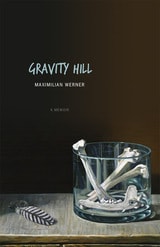
Gravity Hill
A MemoirMaximilian Werner
University of Utah Press, 2013
“The sound of parenthood is the sigh.” So begins Gravity Hill, written from the perspective of a new father seeking hope, beauty, and meaning in an uncertain world. Many memoirs recount the author’s experiences of growing up and struggling with demons; Werner’s shows how old demons sometimes return on the heels of something as beautiful as children. Werner’s memoir is about growing up, getting older, looking back, and wondering what lies ahead—a process that becomes all the more complicated and intense when parenting is involved. Moving backward and forward between past, present, and future, Gravity Hill does not delineate time so much as collapse it.
Werner narrates his struggle growing up in suburban Utah as anon-Mormon and what it took for him, his siblings, and his friends to feel like they belonged. Bonding in separation, they indulged in each other, in natural and urban landscapes, and sometimes in the destructive behaviors that are the native resort of outsidersincluding promiscuous and occasionally violent sexual behavior—and for some, paths to death and suicide. Gravity Hill is the story of the author’s descent into and eventual emergence from his dysfunction and into a newfound life. Infused with humor, honesty, and reflection, this literary memoir will resonate with readers young and old.
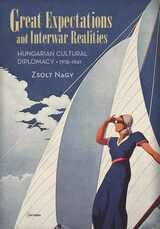
Great Expectations and Interwar Realities
Cultural Diplomacy in Horthy's HungaryZsolt Nagy
Central European University Press, 2017

Great Expectations
Marriage and Divorce in Post-Victorian AmericaElaine Tyler May
University of Chicago Press, 1983
Great Gatsby and Modern Times
Ronald Berman
University of Illinois Press, 1994
work. If Fitzgerald could have wished for one reader of The Great Gatsby,
it would have been Ronald Berman. Berman's criticism creates an ideal
companion piece to the novel--as brilliantly illuminating about America
as it is about fiction, and composed with as much thought and style."
-- Roger Rosenblatt
"An impressive study
that brilliantly highlights the oneness of Fitzgerald's art with the overall
context of modernism." -- Milton R. Stern, author of The Golden
Moment: The Novels of F. Scott Fitzgerald
"Citing films, dates,
places, schedules, Broadway newsstands, and the spoils of manufacture,
the author, never lapsing into critical jargon, locates the characters
in 'the moving present.' Gatsby, the first of the great novels
to emerge from B movies, uses the language of commodities, advertisements,
photography, cinematography, and Horatio Alger to present models of identity
for characters absorbed in and by what is communicated. . . . Berman concludes
that Gatsby 'reassembled' rather than 'invented' himself."
-- A. Hirsh, Choice
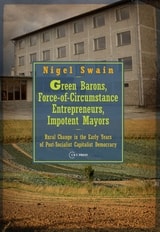
Green Barons, Force-of-Circumstance Entrepreneurs, Impotent Mayors
Rural Change in the Early Years of Post-Socialist Capitalist DemocracyNigel Swain
Central European University Press, 2013

Green Lands for White Men
Desert Dystopias and the Environmental Origins of ApartheidMeredith McKittrick
University of Chicago Press, 2024
In 1918, South Africa’s climate seemed to be drying up. White farmers claimed that rainfall was dwindling, while nineteenth-century missionaries and explorers had found riverbeds, seashells, and other evidence of a verdant past deep in the Kalahari Desert. Government experts insisted, however, that the rains weren’t disappearing; the land, long susceptible to periodic drought, had been further degraded by settler farmers’ agricultural practices—an explanation that white South Africans rejected. So when the geologist Ernest Schwarz blamed the land itself, the farmers listened. Schwarz held that erosion and topography had created arid conditions, that rainfall was declining, and that agriculture was not to blame. As a solution, he proposed diverting two rivers to the Kalahari’s basins, creating a lush country where white South Africans could thrive. This plan, which became known as the Kalahari Thirstland Redemption Scheme, was rejected by most scientists. But it found support among white South Africans who worried that struggling farmers undermined an image of racial superiority.
Green Lands for White Men explores how white agriculturalists in southern Africa grappled with a parched and changing terrain as they sought to consolidate control over a Black population. Meredith McKittrick’s timely history of the Redemption Scheme reveals the environment to have been central to South African understandings of race. While Schwarz’s plan was never implemented, it enjoyed sufficient support to prompt government research into its feasibility, and years of debate. McKittrick shows how white farmers rallied around a plan that represented their interests over those of the South African state and delves into the reasons behind this schism between expert opinion and public perception. This backlash against the predominant scientific view, McKittrick argues, displayed the depth of popular mistrust in an expanding scientific elite.
A detailed look at the intersection of a settler society, climate change, white nationalism, and expert credibility, Green Lands for White Men examines the reverberations of a scheme that ultimately failed but influenced ideas about race and the environment in South Africa for decades to come.
Greening The Lyre
Environmental Poetics And EthicsDavid W. Gilcrest
University of Nevada Press, 2002
This work covers important and neglected ground—environmental language theory. Gilcrest poses two overarching questions: To what extent does contemporary nature poetry represent a recapitulation of familiar poetics? And, to what extent does contemporary nature poetry engage a poetics that stakes out new territory? He addresses these questions with important thinkers, especially Kenneth Burke, and considers such poets as Frost, Kunitz, Heaney, Ammons, Cardenal, and Rich.

Greening the Alliance
The Diplomacy of NATO's Science and Environmental InitiativesSimone Turchetti
University of Chicago Press, 2018
Drawing on previously unseen documents from NATO’s own archives, Simone Turchetti reveals how its investments were rooted in the alliance’s defense and surveillance needs, needs that led it to establish a program prioritizing environmental studies. A long-overlooked and effective diplomacy exercise, NATO’s “greening” at one point constituted the organization’s chief conduit for negotiating problematic relations between allies. But while Greening the Alliance explores this surprising coevolution of environmental monitoring and surveillance, tales of science advisers issuing instructions to bomb oil spills with napalm or Dr. Strangelove–like experts eager to divert the path of hurricanes with atomic weapons make it clear: the coexistence of these forces has not always been harmonious. Reflecting on this rich, complicated legacy in light of contemporary global challenges like climate change, Turchetti offers both an eye-opening history of international politics and environmental studies and a thoughtful assessment of NATO’s future.

Greenwich Village 1963
Avant-Garde Performance and the Effervescent BodySally Banes
Duke University Press, 1993
A leading writer on cultural history, Banes draws a vibrant portrait of the artists and performers who gave the 1963 Village its exhilarating force, the avant-garde whose interweaving of public and private life, work and play, art and ordinary experience, began a wholesale reworking of the social and cultural fabric of America. Among these young artists were many who went on to become acknowledged masters in their fields, including Andy Warhol, John Cage, Yoko Ono, Yvonne Rainer, Lanford Wilson, Sam Shepard, Brian de Palma, Harvey Keitel, Kate Millet, and Claes Oldenburg. In live performance--Off-Off Broadway theater, Happenings, Fluxus, and dance--as well as in Pop Art and underground film, we see this generation of artists laying the groundwork for the explosion of the counterculture in the late 1960s and the emergence of postmodernism in the 1970s. Exploring themes of community, freedom, equality, the body, and the absolute, Banes shows us how the Sixties artists, though shaped by a culture of hope and optimism, helped to galvanize a culture of criticism and change. As 1963 came to define the Sixties, so this vivid account of the year will redefine a crucial generation in recent American history.
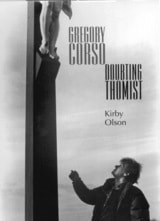
Gregory Corso
Doubting ThomistKirby Olson
Southern Illinois University Press, 2002
Gregory Corso is the most intensely spiritual of the Beat generation poets and still by far the least explored. The virtue of Kirby Olson’s Gregory Corso: Doubting Thomist is that it is the first book to place all of Corso’s work in a philosophical perspective, concentrating on Corso as a poet torn between a static Catholic Thomist viewpoint and that of a progressive surrealist.
While Corso is a subject of great controversy—his work often being seen as nihilistic and wildly comic—Olson argues that Corso’s poetry, in fact, maintains an insistent theme of doubt and faith with regard to his early Catholicism. Although many critics have attempted to read his poetry, and some have done so brilliantly, Olson—in his approach and focus—is the first to attempt to give a holistic understanding of the oeuvre as essentially one not of entertainment or hilarity but of a deep spiritual and philosophical quest by an important and profound mind.
In nine chapters, Olson addresses Corso from a broad philosophical perspective and shows how Corso takes on particular philosophical issues and contributes to new understandings. Corso’s concerns, like his influence, extend beyond the Beat generation as he speaks about concerns that have troubled thinkers from the beginning of the Western tradition, and his answers offer provocative new openings for thought.
Corso may very well be the most important Catholic poet in the American literary canon, a visionary like Burroughs and Ginsberg, whose work illuminated a generation. Written in a lively and engaging style, Gregory Corso: Doubting Thomist seeks to keep Corso’s memory alive and at last delve fully into Corso’s poetry.

Grime, Glitter, and Glass
The Body and the Sonic in Contemporary Black ArtNikki A. Greene
Duke University Press, 2024
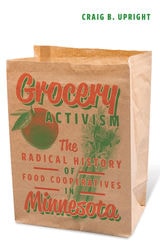
Grocery Activism
The Radical History of Food Cooperatives in MinnesotaCraig B. Upright
University of Minnesota Press, 2020
A key period in the history of food cooperatives that continues to influence how we purchase organic food today
Our notions of food co-ops generally don’t include images of baseball bat–wielding activists in the aisles. But in May 1975, this was the scene as a Marxist group known as the Co-op Organization took over the People’s Warehouse, a distribution center for more than a dozen small cooperative grocery stores in the Minneapolis area. The activist group’s goal: to curtail the sale of organic food. The People’s Warehouse quickly became one of the principal fronts in the political and social battle that Craig Upright explores in Grocery Activism. The story of the fraught relationship of new-wave cooperative grocery stores to the organic food industry, this book is an instructive case study in the history of activists intervening in capitalist markets to promote social change.
Focusing on Minnesota, a state with both a long history of cooperative enterprise and the largest number of surviving independent cooperative stores, Grocery Activism looks back to the 1970s, when the mission of these organizations shifted from political activism to the promotion of natural and organic foods. Why, Upright asks, did two movements—promoting cooperative enterprise and sustainable agriculture—come together at this juncture? He analyzes the nexus of social movements and economic sociology, examining how new-wave cooperatives have pursued social change by imbuing products they sell with social values. Rather than trying to explain the success or failure of any individual cooperative, his work shows how members of this fraternity of organizations supported one another in their mutual quest to maintain fiscal solvency, promote better food-purchasing habits, support sustainable agricultural practices, and extol the virtues of cooperative organizing. A foundational chapter in the history of organic food, Grocery Activism clarifies the critical importance of this period in transforming the politics and economics of the grocery store in America.
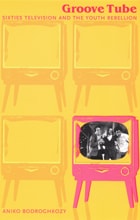
Groove Tube
Sixties Television and the Youth RebellionAniko Bodroghkozy
Duke University Press, 2001
Bodroghkozy argues that, in order to woo an increasingly lucrative baby boomer audience, television had to appeal to the social and political values of a generation of young people who were enmeshed in the hippie counterculture, the antiwar movement, campus protests, urban guerilla action—in general, a culture of rebellion. She takes a close look at the compromises and negotiations that were involved in determining TV content, as well as the ideological difficulties producers and networks faced in attempting to appeal to a youthful cohort so disaffected from dominant institutions. While programs that featured narratives about hippies, draft resisters, or revolutionaries are examined under this lens, Groove Tube doesn’t stop there: it also examines how the nation’s rebellious youth responded to these representations. Bodroghkozy explains how, as members of the first “TV generation,” some made sense of their societal disaffection in part through their childhood experience with this powerful new medium.
Groove Tube will interest sociologists, American historians, students and scholars of television and media studies, and others who want to know more about the 1960s.
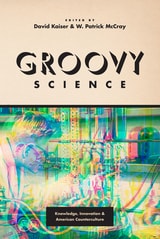
Groovy Science
Knowledge, Innovation, and American CountercultureEdited by David Kaiser and W. Patrick McCray
University of Chicago Press, 2016
Such a view is far too simple, ignoring the diverse ways in which the era’s countercultures expressed enthusiasm for and involved themselves in science—of a certain type. Rejecting hulking, militarized technical projects like Cold War missiles and mainframes, Boomers and hippies sought a science that was both small-scale and big-picture, as exemplified by the annual workshops on quantum physics at the Esalen Institute in Big Sur, or Timothy Leary’s championing of space exploration as the ultimate “high.” Groovy Science explores the experimentation and eclecticism that marked countercultural science and technology during one of the most colorful periods of American history.
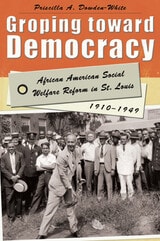
Groping toward Democracy
African American Social Welfare Reform in St. Louis, 1910-1949Priscilla A. Dowden-White
University of Missouri Press, 2011
In Groping toward Democracy: African American Social Welfare Reform in St. Louis, 1910–1949, historian Priscilla A. Dowden-White presents an on-the-ground view of local institution building and community organizing campaigns initiated by African American social welfare reformers. Through extensive research, the author places African American social welfare reform efforts within the vanguard of interwar community and neighborhood organization, reaching beyond the “racial uplift” and “behavior” models of the studies preceding hers. She explores one of the era’s chief organizing principles, the “community as a whole” idea, and deliberates on its relationship to segregation and the St. Louis black community’s methods of reform. Groping toward Democracy depicts the dilemmas organizers faced in this segregated time, explaining how they pursued the goal of full, uncontested black citizenship while still seeking to maximize the benefits available to African Americans in segregated institutions. The book’s nuanced mapping of the terrain of social welfare offers an unparalleled view of the progress brought forth by the early-twentieth-century crusade for democracy and equality.
By delving into interrelated developments in health care, education, labor, and city planning, Dowden-White deftly examines St. Louis’s African American interwar history. Her in-depth archival research fills a void in the scholarship of St. Louis’s social development, and her compelling arguments will be of great interest to scholars and teachers of American urban studies and social welfare history.
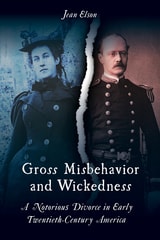
Gross Misbehavior and Wickedness
A Notorious Divorce in Early Twentieth-Century AmericaJean Elson
Temple University Press, 2017
Gross Misbehavior and Wickedness—the charges Nina levied at James for his adultery (with the family governess) and extreme cruelty—recounts the protracted legal proceedings in juicy detail.
Jean Elson uses court documents, correspondence, journals, and interviews with descendants to recount the salacious case. In the process, she underscores how divorce—in an era when women needed husbands for economic support—was associated with women’s aspirations for independence and rights. The Walkers’ dispute, replete with plot twists and memorable characters, sheds light on a critical period in the evolution of American culture.
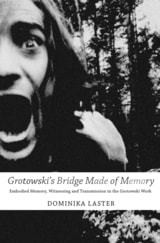
Grotowski's Bridge Made of Memory
Embodied Memory, Witnessing and Transmission in the Grotowski WorkDominika Laster
Seagull Books, 2016
Considered one of the most influential theatre practitioners of the 20th century, Polish director Jerzy Grotowski revolutionized contemporary theatre in multiple ways. Perhaps best known for his notion of ‘poor theatre,’ Grotowski went beyond the confines of conventional theatre to systematically explore the possibilities of the human being in a performative context. In Grotowski’s Bridge Made of Memory, Dominika Laster analyzes core aspects of Grotowski’s work such as body-memory, vigilance, witnessing, verticality, and transmission, arguing that these performance praxes involve a deliberate blurring of the boundaries of the self and other.
This comprehensive study traces key thematic threads across Grotowski’s research, examining lesser-known aspects of his work such as performance compositions structured around African and Afro-Caribbean traditional songs and ritual movement as well as textual material from the Christian Gnostic tradition. As an active process of research and questioning conducted through the “body-being” of the performer, Grotowski’s work represents a practical realization of the often highly theoretical and abstract discussions of one of the field’s main preoccupations: embodied practice as a way of knowing.
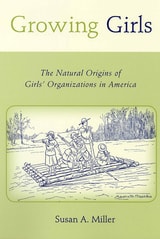
Growing Girls
The Natural Origins of Girls' Organizations in AmericaMiller, Susan A
Rutgers University Press, 2007
Surprisingly, the "girl problem"?a crisis caused by the transition from a sheltered, family-centered Victorian childhood to modern adolescence where self-control and a strong democratic spirit were required of reliable citizens?was also solved by way of traditionally masculine, adventurous, outdoor activities, as practiced by the Girl Scouts, the Camp Fire Girls, and many other similar organizations.
Susan A. Miller explores these girls' organizations that sprung up in the first half of the twentieth century from a socio-historical perspective, showing how the notions of uniform identity, civic duty, "primitive domesticity," and fitness shaped the formation of the modern girl.
Growing Up Nisei
Race, Generation, and Culture among Japanese Americans of California, 1924-49David K. Yoo
University of Illinois Press, 2000
The place occupied by Japanese Americans within the annals of United States history often begins and ends with their cameo appearance as victims of incarceration after the bombing of Pearl Harbor. In this provocative work, David K. Yoo broadens the scope of Japanese American history to examine how the second generation—the Nisei—shaped its identity and negotiated its place within American society.
Tracing the emergence of a dynamic Nisei subculture, Yoo shows how the foundations laid during the 1920s and 1930s helped many Nisei adjust to the upheaval of the concentration camps. Schools, racial-ethnic churches, and the immigrant press served not merely as waystations to assimilation but as tools by which Nisei affirmed their identity in connection with both Japanese and American culture. The Nisei who came of age during World War II formed identities while negotiating complexities of race, gender, class, generation, economics, politics, and international relations.
A thoughtful consideration of the gray area between accommodation and resistance, Growing Up Nisei reveals the struggles and humanity of a forgotten generation of Japanese Americans.