Results by title
5159 books match the query 'Biography' and 142 start with g
Gordon MacQuarrie
The Story of an Old Duck HunterKeith Crowley
Wisconsin Historical Society Press, 2003
Gossip Men
J. Edgar Hoover, Joe McCarthy, Roy Cohn, and the Politics of InsinuationChristopher M. Elias
University of Chicago Press, 2021
By using gossip as a lens to examine profound issues of state security and institutional power, Elias thoroughly transforms our understanding of the development of modern American political culture.
Govan Mbeki
Colin Bundy
Ohio University Press, 2012
Govan Mbeki (1910–2001) was a core leader of the African National Congress, the Communist Party, and the armed wing of the ANC during the struggle against apartheid. Known as a hard-liner, Mbeki was a prolific writer and combined in a rare way the attributes of intellectual and activist, political theorist and practitioner. Sentenced to life in prison in 1964 along with Nelson Mandela and others, he was sent to the notorious Robben Island prison, where he continued to write even as tension grew between himself, Mandela, and other leaders over the future of the national liberation movement. As one of the greatest leaders of the antiapartheid movement, and the father of Thabo Mbeki, president of South Africa from 1999 to 2008, the elder Mbeki holds a unique position in South African politics and history.
This biography by noted historian Colin Bundy goes beyond the narrative details of his long life: it analyzes his thinking, expressed in his writings over fifty years. Bundy helps establish what is distinctive about Mbeki: as African nationalist and as committed Marxist—and more than any other leader of the liberation movement—he sought to link theory and practice, ideas and action.
Drawing on exclusive interviews Bundy did with Mbeki, careful analysis of his writings, and the range of scholarship about his life, this biography is personal, reflective, thoroughly researched, and eminently readable.
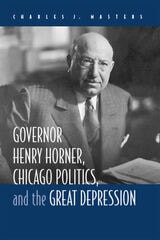
Governor Henry Horner, Chicago Politics, and the Great Depression
Charles J. Masters
Southern Illinois University Press, 2007
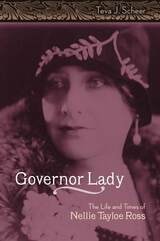
Governor Lady
The Life and Times of Nellie Tayloe RossTeva J. Scheer
University of Missouri Press, 2005
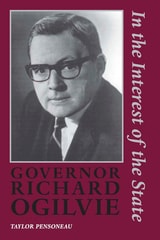
Governor Richard Ogilvie
In the Interest of the StateTaylor Pensoneau
Southern Illinois University Press, 2009
Although serious scandal erupted in Illinois Governor Richard Ogilvie’s administration— eight hundred thousand dollars mysteriously appearing in Secretary of State Paul Powell’s shoe boxes and other hiding places, the downfall of two Supreme Court justices for questionable stock dealings, corruption surrounding the Illinois State Fair— Ogilvie’s accomplishments, as Taylor Pensoneau demonstrates, rank him among the best governors in Illinois history.
Perhaps the most important of Ogilvie’s accomplishments during his single term in office (1969–1973) was the passage of the state’s first income tax in 1969. Supporting the income tax took political courage on the part of the new governor, but in doing so he saved the financially crippled state from economic disaster. He also looked far into the future; at a time when few politicians expressed concern with the environment, Ogilvie created an exemplary and hard-hitting antipollution program. He was in office during the Illinois Constitutional Convention in 1970 and was instrumental in the widespread restructuring of Illinois government.
Viewing Ogilvie as a pivotal figure in Illinois politics during a time of great social and political turmoil, Pensoneau provides a complete political biography. He sheds light on Ogilvie’s military heroics, his political career, and the Illinois elections of 1968, 1970, and 1972.
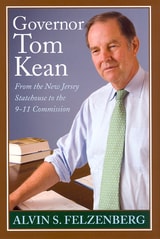
Governor Tom Kean
From the New Jersey Statehouse to the 911 CommissionFelzenberg, Alvin S
Rutgers University Press, 2006
In this first political biography of one of the nation's most popular and successful governors, Alvin S. Felzenberg tells the story of a remarkable career that culminated in an unexpected and crucial contribution to the country-chairmanship of the 9/11 Commission. Felzenberg describes how, early in his political career, Kean worked to transform New Jersey's legislature in the aftermath of court rulings that mandated redistricting in accordance with the "one man, one vote" principle. He discusses Kean's efforts to relieve the urban crisis that followed in the wake of the 1967 Newark riots. He relates how Kean was able to use the New Jersey governorship-purportedly the strongest in the country-to transform a so-called "rust belt" state into a leader in education, environmental responsibility, and economic growth.
Kean's successes in these and other areas caused leaders outside New Jersey to follow in his path. Together with his fellow governors, Kean forged a national consensus on domestic policy between Democratic congresses and Republican presidents, in the process winning for himself a leadership role in his own party. Kean's story serves as an uncommon case of how a Republican loyal to the historic roots and principles of his party can not only win election in a "blue state" but effectively govern it.
Starting from the example the governor set on the state level, Felzenberg's account traces Kean's career to positions of trusted authority on the national stage. After several years of advising presidents, Kean was appointed chairman of the 9/11 Commission. In this role, he made the bipartisan, Congressionally mandated commission one of the most successful in American history.
Drawing on interviews with Kean as well as with state and national leaders, including former presidents Gerald Ford and Bill Clinton and former New York City mayor Ed Koch, Felzenberg not only provides a marvelous biography, but also offers a unique look at American politics during the last four decades of the twentieth century.
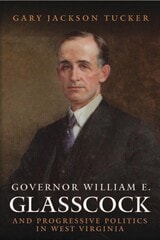
Governor William Glasscock and Progressive Politics in West Virginia
Gary Jackson Tucker
West Virginia University Press, 2008
From 1909 to 1913, Governor William Glasscock served the state of West Virginia as an ardent progressive and reformer. In his inaugural address he proclaimed government "the machinery invoked and devised by man for his benefit and protection” and good government the guarantor of the happiness, prosperity, success, and welfare of the people. Governor William Glasscock and Progressive Politics in West Virginia recounts the life and work of West Virginia’s thirteenth governor. Born during the Civil War, Glasscock witnessed a country torn by sectional, fratricidal war become a powerful industrial nation by the turn of the twentieth century. Author Gary Jackson Tucker demonstrates how Glasscock, along with others during the Progressive Era, railed against large and powerful political and economic machines to enact legislation protecting free and fair elections, just taxation, regulation of public utilities, and workmen’s compensation laws. Never hesitating to use the power of the state to stand firm against racism and mob rule, and placing his own personal safety in jeopardy, Glasscock won the praise and admiration of average people. Glasscock’s four years in office took his own health and financial security from him, but left behind a better government—a good government—for the people of West Virginia.
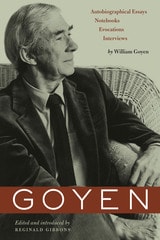
Goyen
Autobiographical Essays, Notebooks, Evocations, InterviewsBy William Goyen
University of Texas Press, 2007
William Goyen (1915-1983) was an American original, acclaimed nationally and internationally, and one of the most important writers ever to be associated with the regional culture and literary history of Texas. Called "one of the great American writers of short fiction" by the New York Times Book Review, Goyen also authored the novels The House of Breath, In a Farther Country, Come, the Restorer, and Arcadio, as well as plays, poetry, and nonfiction. His literary works manifest an intimate intensity of feeling and an inimitable tone of voice, reflecting Goyen's lifelong desire to create art that was at once a spiritual quest for universal truths and an evocation of the rhythms of speech and storytelling of his native East Texas.
This volume contains all of the uncollected autobiographical writings of William Goyen, including essays previously published in American periodicals and literary journals; interviews published in Paris Review, TriQuarterly, and the French magazine Masques; and previously unpublished materials drawn from Goyen's papers in the Harry Ransom Humanities Research Center at the University of Texas at Austin. The writings span Goyen's entire adult life, from youthful journals to autobiographical sketches to his long sketch for an autobiographical book, Six Women, which profiles women whom Goyen felt had influenced him deeply: Frieda Lawrence, Dorothy Brett, Mabel Dodge Luhan, Margo Jones, Millicent Rogers, and Katherine Anne Porter. The volume also contains late essays on growing up in Houston, writing from life, and illness and recovery.
While most of William Goyen's work was autobiographical, writing a traditional autobiography proved to be inimical to his artistic sensibility and style. Thus, the pieces collected in Goyen constitute the most complete autobiography that we will ever have from this highly regarded writer.
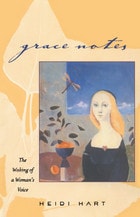
Grace Notes
Heidi Hart
University of Utah Press, 2004
"Ever since I was 10 years old, I’d felt myself yearning to 'go astray.' For me, that didn’t mean drinking and cavorting with boys; it meant being myself without fear."—from the book
What happens when a trained singer who grew up in a "house of vowels" finds that her voice is not her own? What happens when a woman loses the Mormon faith of her childhood and abandons the rituals she’s always known? What does a woman, already married for thirteen years by her early thirties, do when she realizes she has been "lying for years?" How does one sing, with grace, from the heart?
In the spirit of Mary Catherine Bateson’s Composing a Life and Kathleen Norris’s Cloister Walk, Heidi Hart’s luminous memoir retraces her search for an opening to her heart’s path. She finds that the religious life of her Latter-day Saint family—which includes a revered General Authority—robs her of her voice and her spirit. When she discovers Catharine, a mute, Quaker ancestor, Hart begins a vital journey—a journey blessed by her devout and devoted husband; a journey that leads her as she studies Zuni mythology, Jewish tradition, Benedictine monastic ritual, Emily Dickinson, and Saint Hildegard of Bingen—a journey that leads her to a place that feels like home: the company of Friends, the Quaker community of Salt Lake City.
With grace and lyricism, Hart shares the private, personal wisdom she has earned in her community of friends, a community that embraces silences and dissonance, a place where she can't keep from singing.

Graceland Cemetery
Chicago Stories, Symbols, and SecretsAdam Selzer
University of Illinois Press, 2022
Chosen for the 2024 Illinois Reads Program by the Illinois Reading Council
One of Chicago’s landmark attractions, Graceland Cemetery chronicles the city’s sprawling history through the stories of its people. Local historian and Graceland tour guide Adam Selzer presents ten walking tours covering almost the entirety of the cemetery grounds. While nodding to famous Graceland figures from Marshall Field to Ernie Banks to Ludwig Mies van der Rohe, Selzer also leads readers past the vaults, obelisks, and other markers that call attention to less recognized Chicagoans like:
- Jessie Williams de Priest, the Black wife of a congressman whose 1929 invitation to a White House tea party set off a storm of controversy;
- Engineer and architect Fazlur Khan, the Bangladeshi American who revived the city's skyscraper culture;
- The still-mysterious Kate Warn (listed as Warn on her tombstone), the United States’ first female private detective.
Filled with photographs and including detailed maps of each tour route, Graceland Cemetery is an insider's guide to one of Chicago's great outdoor destinations for city lore and history.
Graham Barnett
A Dangerous ManJames L. Coffey
University of North Texas Press, 2017
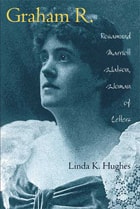
Graham R.
Rosamund Marriot Watson, Woman of LettersLinda K. Hughes
Ohio University Press, 2005
Rosamund Marriott Watson was a gifted poet, an erudite literary and art critic, and a daring beauty whose life illuminates fin-de-siècle London and the way in which literary reputations are made—and lost. A participant in aestheticism and decadence, she wrote six volumes of poems noted for their subtle cadence, diction, and uncanny effects. Linda K. Hughes unfolds a complex life in Graham R.: Rosamund Marriott Watson, Woman of Letters, tracing the poet’s development from accomplished ballads and sonnets, to avant-garde urban impressionism and New Woman poetry, to her anticipation of literary modernism.
Despite an early first divorce, she won fame writing under a pseudonym, Graham R. Tomson. The influential Andrew Lang announced the arrival of a new poet he assumed to be a man. She was soon hosting a salon attended by Lang, Oscar Wilde, and other 1890s notables. Publishing to widespread praise as Graham R., she exemplified the complex cultural politics of her era. A woman with a man’s name and a scandalous past, she was also a graceful beauty who captivated Thomas Hardy and left an impression on his work. At the height of her success she fell in love with writer H. B. Marriott Watson and dared a second divorce.
Graham R. combines the stories of a gifted poet, of London literary networks in the 1890s, and of a bold woman whose achievements and scandals turned on her unusual history of marriage and divorce. Her literary history and her uncommon experience reveal the limits and opportunities faced by an unconventional, ambitious, and talented woman at the turn of the century.
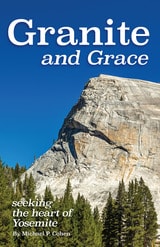
Granite and Grace
Seeking the Heart of YosemiteMichael P. Cohen
University of Nevada Press, 2019
Drawing together the humanistic and scientific significance of the wild landscapes he traverses, Michael uncovers relationships between people and places and meaning and substance, rendering this text part memoir—but also considerably more. On-the-rock encounters by hand and foot open up a dialogue between the heart of a philosopher and the mind of a geologist. Michael adds a literary softness to this hard landscape, blending excursions with exposition and literature with science. It is through his graceful representations that the geological becomes metaphorical, while the science turns mythological.
This high country, where in 1889 John Muir and Robert Underwood Johnson planned what would become Yosemite National Park, is significant for cultural as well as natural reasons. Discoursing on everything from Camus’s “Myths of Sisyphus” to the poems of Gary Snyder, Michael adds depth to an already splendorous landscape. Premier early geologists, such as François Matthes, shaped the language of Yosemite’s landscape. Even though Yosemite has changed over half a century, the rock has not. As Michael explores the beauty and grace of his familiar towering vistas, he demonstrates why, of the many aspects of the world to which one might get attached, the most secure is granite.
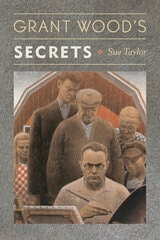
Grant Wood’s Secrets
Sue Taylor
University of Delaware Press, 2011
Published by University of Delaware Press. Distributed worldwide by Rutgers University Press.
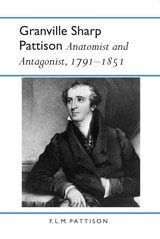
Granville Sharp Pattison
Anatomist and Antagonist, 1791-1851F. L. M. Pattison
University of Alabama Press, 1987
The stormy life of one of the most colorful and complex characters in early 19th-century medicine

Grass Widow
Making My Way in Depression AlabamaViola Goode Liddell
University of Alabama Press, 2004
An engaging account of one woman’s overcoming the Depression and small town mores.
Viola Goode Liddell’s short memoir tells the story of her return to Alabama in search of a husband and a new life. Thirty years old and recently divorced, Liddell comes back to her home state—with her young son—determined to survive, during the depths of the Depression. Liddell narrates the obstacles she faces as a single mother in the 1930s Deep South with self-deprecating humor and a confessional tone that reveal both her intelligence and her unapologetic ambitions.
Unable to earn, borrow, or beg enough money to support herself and her child, Liddell uses her family connections to secure a teaching position in Camden, Alabama. Even though an older sister’s status within the community helps her land the job, Liddell is warned that she must be very careful as she navigates the tricky social terrain of small town life, particularly when it comes to men. A commentary on the plight of women of the time is woven into the narrative as Liddell recounts her experience of being refused a loan at the local bank by her own brother-in-law.
Despite all the restrictions on her behavior and the crushing reality that she has become "the biggest nuisance in the family" because of her past, Liddell cheerfully and successfully builds a new life of respectability and hope.
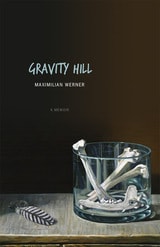
Gravity Hill
A MemoirMaximilian Werner
University of Utah Press, 2013
“The sound of parenthood is the sigh.” So begins Gravity Hill, written from the perspective of a new father seeking hope, beauty, and meaning in an uncertain world. Many memoirs recount the author’s experiences of growing up and struggling with demons; Werner’s shows how old demons sometimes return on the heels of something as beautiful as children. Werner’s memoir is about growing up, getting older, looking back, and wondering what lies ahead—a process that becomes all the more complicated and intense when parenting is involved. Moving backward and forward between past, present, and future, Gravity Hill does not delineate time so much as collapse it.
Werner narrates his struggle growing up in suburban Utah as anon-Mormon and what it took for him, his siblings, and his friends to feel like they belonged. Bonding in separation, they indulged in each other, in natural and urban landscapes, and sometimes in the destructive behaviors that are the native resort of outsidersincluding promiscuous and occasionally violent sexual behavior—and for some, paths to death and suicide. Gravity Hill is the story of the author’s descent into and eventual emergence from his dysfunction and into a newfound life. Infused with humor, honesty, and reflection, this literary memoir will resonate with readers young and old.
Great Lakes Champions
Grassroots Efforts to Clean Up Polluted WatershedsJohn H. Hartig
Michigan State University Press, 2022
Great Persuader
The Biography of Collis P. HuntingtonDavid Lavender
University Press of Colorado, 1999
How did Huntington operate? What were his methods? Was he corrupt? These are questions that were previously unanswered but thanks to the cooperation of the Huntington family who supplied Mr. Lavender with material that had never before been made public, Lavender shows just how Collis P. Huntington operated-and it was defintely outside the law, although well inside the prevailing morality of his time. It shows his complicated dealings with Sanford Hopkins, how he bested such tycoons as Thomas A. Scott, John C. Durrant, Oliver Ames and Jay Gould, how Huntington accumulated the great fortune which was the legacy to his family, and how his great railroad network was to prove an unparalleled legacy to all Americans. The Great Persuader is a powerful story of a remarkable man whose singleness of purpose and ruthless manipulation of men and money propelled the great enterprise forward against all odds.
Great Unknown
Japanese American SketchesGreg Robinson
University Press of Colorado, 2016
What is more, The Great Unknown reshapes our understanding of the Asian American experience. By focusing attention on exceptional figures who deviated from social norms, Robinson subverts stereotypes of ethnic Japanese and other Asians as conformist or colorless. The collection also highlights a set of recurring themes absent from conventional histories—including the lives of Japanese Americans outside the West Coast, the role of women in shaping community life, encounters between Japanese American and African American communities during the struggle for civil rights, and the evolving status of queer community members.
Greater than Emperor
Cola di Rienzo (ca. 1313-54) and the World of Fourteenth-Century RomeAmanda Collins
University of Michigan Press, 2002
Greater than Emperor charts the remarkable process by which Rome tried to forge a new civic identity, similar in constitution to contemporary city-republics but conceptually much greater. At the forefront of the process stood the idiosyncratic and astonishing young notary Cola di Rienzo. On May 21, 1347, Cola staged a bloodless coup. Rome entered a new age that would witness both the resurrection of the ancient power of the Empire and Rome's apotheosis as God's chosen city. Yet within seven months, the theatricality and violence of Cola's regime led to exile. Cola's triumphal return some years later ended in his assassination.
Cola was eventually resurrected as a hero of nineteenth-century nationalism, leaving the realities of Trecento Rome far behind. Yet it is only in terms of the very real models and methods that Cola welded together that his revolution can be understood.
Greater than Emperor describes Cola's reliance on the past of rhetoric, pageantry, and Roman law. It then discusses the future, tracing the dynamic contemporary influences of apocalyptic fervor, prophetic literature, and radical Franciscan imagery of Cola's world. Amanda Collins assesses Cola's legal and political career within both the complex mechanics of municipal administration and the multiple hierarchies of Roman society.
Amanda Collins offers a new assessment of the dramatic events of 1347 and an analysis of Cola within his late medieval Roman context. Bringing depth and substance to Cola's backdrop, Trecento Rome and the economic and spiritual ambitions of its citizen body, Collins provides information crucial to understanding the longer-term economic and political drive to civic autonomy in Rome before 1400.
Historians and generalists alike will relish the story of a remarkable individual, set within the cultural climate of a famous and fascinating city, during an often-overlooked period. This book sheds new light on a crucial political figure that brought a dazzling civil independence to Rome.
Amanda Collins held the Junior Research Fellowship in Intellectual History at Wolfson College, Oxford from 1997-2000, and has more recently been employed at the University of Sussex.
Greece
Biography of a Modern NationRoderick Beaton
University of Chicago Press, 2019
Opening with the birth of the Greek nation-state, which emerged from encounters between Christian Europe and the Ottoman Empire, Roderick Beaton carries his story into the present moment and Greece’s contentious post-recession relationship with the rest of the European Union. Through close examination of how Greeks have understood their shared identity, Beaton reveals a centuries-old tension over the Greek sense of self. How does Greece illuminate the difference between a geographically bounded state and the shared history and culture that make up a nation?
A magisterial look at the development of a national identity through history, Greece: Biography of a Modern Nation is singular in its approach. By treating modern Greece as a biographical subject, a living entity in its own right, Beaton encourages us to take a fresh look at a people and culture long celebrated for their past, even as they strive to build a future as part of the modern West.

Greed, Rage, and Love Gone Wrong
Murder in MinnesotaBruce Rubenstein
University of Minnesota Press, 2006
Green World
A Tragicomic Memoir of Love & ShakespeareMichelle Ephraim
University of Massachusetts Press, 2024
Shortlisted for the 2026William Saroyan International Prize for Writing • Shortlisted for the Story Circle Network Gilda Prize • Winner of the Wisconsin Library Association's Literary Award for Nonfiction • Shortlisted for the Rubery Book Award • A 2025 IPPY Awards Silver Medal Winner in Autobiography/Memoir • Winner of the 2025 Friends of American Writers Adult Literature Award • A 2024 Foreword INDIES Finalist • A 2025 Sophie Brody Medal Notable Book • A Jewish Women's Archive Summer Book Club Pick
At twenty-three, Michelle Ephraim was failing at everything. The only child of reclusive Holocaust-survivor parents who were dismayed by her literary studies, she found herself dumped by her boyfriend and bombing out of graduate school. Then, one night, she crashed a Shakespeare recitation party. Loopy from vodka and never having read a single line of Shakespeare, she was transfixed. Shakespeare, she decided, was the lifeline she needed.
Green World is the hilarious and heartbreaking story of Ephraim’s quest to become a Shakespeare scholar and to find community and home. As she studies Shakespeare, Ephraim’s world uncannily begins to mirror the story of the Jewish daughter in The Merchant of Venice, and she finds herself in a Green World, an idyllic place where Shakespeare’s heroines escape their family trauma. Green World reckons with global, historical, and personal tragedy and shows how literature—comic and tragic—can help us brave every kind of anguish.
Ground Pounder
A Marine’s Journey through South Vietnam, 1968-1969Gregory V. Short
University of North Texas Press, 2012
Grove Karl Gilbert
A Great Engine of ResearchStephen J. Pyne
University of Iowa Press, 1980
Gilbert knew most of geology's grand figures--including John Wesley Powell, Clarence Dutton, and Clarence King--and Pyne's chronicle of the imperturbable, quietly unconventional Gilbert is couterpointed with sketches of these prominent scientists. The man who wrote that "happiness is sitting under a tent with walls uplifted, just after a brief shower,", created answers to the larger questions of the earth in ways that have become classics of his science.
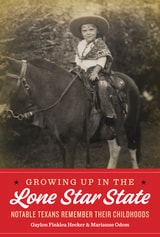
Growing Up in the Lone Star State
Notable Texans Remember Their ChildhoodsBy Gaylon Finklea Hecker and Marianne Odom
University of Texas Press, 2021
Gaylon Finklea Hecker and Marianne Odom began the interviews for this book in 1981 and devoted a professional lifetime to collecting the memories of accomplished Texans to determine what, if anything, about growing up in the Lone Star State prepared them for success.
The resulting forty-seven oral history interviews begin with tales from the early 1900s, when Texas was an agrarian state, and continue through the growth of major cities and the country’s race to the moon. Interviewees recalled life in former slave colonies; on gigantic ranches, tiny farms, and sharecropper fields; and in one-horse towns and big-city neighborhoods, with relatable stories as diverse as the state’s geography.
The oldest interviewees witnessed women earning the right to vote and weathered the Great Depression. Many remembered two world wars, while others recalled the Texas City explosion of 1947 and the tornado that devastated Waco in 1953. They witnessed the advent of television and the nightly news, which helped many come to terms with the assassination of a president that took place too close to home.
Their absorbing reflections are stories of good and bad, hope and despair, poverty and wealth, depression and inspiration, which would have been different if lived anywhere but Texas.
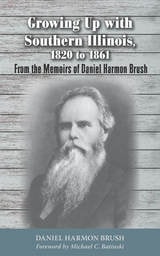
Growing Up with Southern Illinois, 1820 to 1861
From the Memoirs of Daniel Harmon BrushDaniel Harmon Brush, with a Foreword by Michael C. Batinski
Southern Illinois University Press, 2017
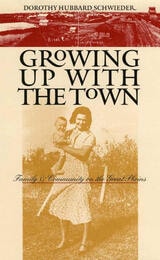
Growing Up with the Town
Family and Community on the Great PlainsDorothy Hubbard Schwieder
University of Iowa Press, 2002
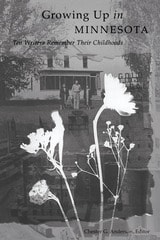
Growing up in Minnesota
Ten Writers Remember Their ChildhoodsChester Anderson
University of Minnesota Press, 1976

Gudrun’s Kitchen
Recipes from a Norwegian FamilyIrene O. Sandvold
Wisconsin Historical Society Press, 2011
The youngest of a large Norwegian immigrant family, Gudrun Thue Sandvold was known for her beaming blue eyes and a reserve that gave way to laughter whenever she got together with her sisters. She took immeasurable pride in her children and grandchildren, kept an exquisite home, and turned the most mundane occasion into a party. And to all who knew her, Gudrun’s cooking was the stuff of legend.
Part cookbook, part immigrant story, and part family memoir, Gudrun's Kitchen features hundreds of Gudrun Sandvold’s recipes for comfort food from a time when families and friends gathered at the table and connected with one another every single day. But this book is much more than a guide to Norwegian culinary traditions; it is an important contribution to immigrant history and a vital documentation of our nation’s multicultural heritage.
Guest Appearances and Other Travels in Time and Space
Peter I. Rose
Ohio University Press, 2003
Guest Appearances and Other Travels in Time and Space introduces us to many of those whom Rose has met along the way, a cast of characters as colorful as it is diverse. It includes his music-loving mother; his tour guides in China, Germany, and Israel; Indochinese refugees he followed to the United States; the notorious murderer, Nathan Leopold; the simple tailor, Mr. David; and three writers for whom Rose has a special affinity: Philip Roth, John Updike, and Paul Theroux.
Peter Rose gives us an entirely pleasurable and insightful look into the life of an American scholar actively involved in contemporary issues as he takes readers along on his field trips and guest appearances.

Guide to Reference in Genealogy and Biography
Mary K. American Library Association
American Library Association, 2015
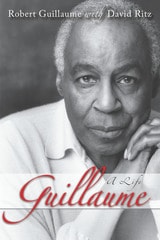
Guillaume
A LifeRobert Guillaume & David Ritz
University of Missouri Press, 2002
Guillaume: A Life is the autobiography of esteemed Broadway, Hollywood, and television star Robert Guillaume. Ten months after suffering a stroke, Guillaume—perhaps best known as television’s Benson—began this autobiography with award-winning author and collaborator David Ritz.
The book goes beyond the recounting of a long and successful career to examine the forces that shaped the man: family, religion, race, and class. Startlingly candid and disarmingly self-aware, Guillaume seeks to know and understand himself, his treatment of the women in his life, and the choices he made along the way. He pursues the truth, however painful it may be, says Ritz, guided by two questions, “Who the hell am I?” and “What made me do what I did?”
Born in St. Louis in 1927 to a young, abused, unstable mother, and reared by a strong, hardworking grandmother, Robert Guillaume managed to move from the poverty and adversity of his youth to a rich, full career as an actor and a singer. Fierce determination and sharp focus enabled this man born to hardship and racial discrimination to study, learn, cultivate his natural talents, and succeed at the performance career he pursued with a vengeance. Guillaume first performed in the strict Catholic schools and churches to which his grandmother, who understood that education would be the key to any success he might achieve, sent him. There his love of classical music was nurtured, and he was encouraged to perform.
From a child longing for his mother’s love to a man unsure of the meaning of love for many of the women in his life, from a young performer struggling to succeed on Broadway and in Hollywood to a grief-stricken father watching his son die of AIDS, Robert Guillaume tells what it was like to realize celebrity and what he sacrificed in the process. Readers will savor the success story of this artist who achieved great recognition and fame, but who never lost sight of his beginnings. Appealing to all audiences, Guillaume is a revealing and poignant autobiography of an extraordinary and distinguished American thespian.

Guitar King
Michael Bloomfield's Life in the BluesBy David Dann
University of Texas Press, 2021
Named one of the world’s great blues-rock guitarists by Rolling Stone, Mike Bloomfield (1943–1981) remains beloved by fans forty years after his untimely death. Taking readers backstage, onstage, and into the recording studio with this legendary virtuoso, David Dann tells the riveting stories behind Bloomfield’s work in the seminal Paul Butterfield Blues Band and the mesmerizing Electric Flag, as well as on the Super Session album with Al Kooper and Stephen Stills, Bob Dylan’s Highway 61 Revisited, and soundtrack work with Peter Fonda and Jack Nicholson.
In vivid chapters drawn from meticulous research, including more than seventy interviews with the musician’s friends, relatives, and band members, music historian David Dann brings to life Bloomfield’s worlds, from his comfortable upbringing in a Jewish family on Chicago’s North Shore to the gritty taverns and raucous nightclubs where this self-taught guitarist helped transform the sound of contemporary blues and rock music. With scenes that are as electrifying as Bloomfield’s solos, this is the story of a life lived at full volume.
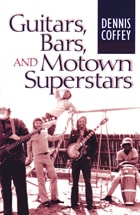
Guitars, Bars, and Motown Superstars
Dennis Coffey
University of Michigan Press, 2009
---Edwin Starr
"There can never be enough stories told from the vantage point of Motown's fabled Snake Pit, from one of the journeyman musicians working behind the scenes. Guitars, Bars, and Motown Superstars also shows just how frenetic and creative the Detroit music scene was in the '60s and '70s. But it's Dennis Coffey's personal story that's most gripping: the journey from Motown, to Billboard's Top Ten, to working the line at Chevrolet."
---Susan Whitall, Detroit News; author of Women of Motown
Under Berry Gordy, Motown was a place where studio musicians usually stood in the shadows, unlike the solo stars whose names appeared on the albums. Gordy held a tight rein on his musicians, forbidding them from playing for other record companies and denying them credit on his records.
In Guitars, Bars, and Motown Superstars, author and guitarist Dennis Coffey tells how he slipped Gordy's draconian rules and went on to success as both a Motown musician and a million-selling solo artist. He offers a fascinating backstage look at the Detroit, L.A., and New York music scenes in the '60s and '70s, with side trips to the smoky clubs and funky studios where the Motown sound was born.
Coffey is credited with creating a lot of that sound, including the famous guitar intro to the Temptations' classic "Cloud Nine." He played on hundreds of Motown albums, and introduced such innovations as the Wah Wah pedal into the Motown recording studio.
Guitars, Bars, and Motown Superstars is an entertaining and amusing memoir of one of the most dynamic and influential periods in contemporary pop culture, and a unique insight into the ups and downs of the studio guitar-for-hire. It's also a look at the dizzying rags-to-riches-and-back-again career of a rock musician who went from million-seller with a house in the Hollywood Hills, and ultimately back to his roots in the Detroit area. A must for fans of Motown, rock, and you-are-there pop-culture history.
Gut Feelings
A Writer'S Truths And Minute InventionsMerrill Joan Gerber
University of Wisconsin Press, 2003
Gerber writes of her apprenticeships with celebrated writing teachers Andrew Lytle and Wallace Stegner and recounts her ghostly (and ghastly) experiences during a month at Yaddo, the famous retreat for artists. Gerber includes three pieces in the book—originally published as stories—but which blur the line between fiction and memoir, demonstrating Gerber’s contention that the deepest secrets in life beget the most passionate fictions.
Guy Debord
Revolution in the Service of PoetryVincent Kaufmann
University of Minnesota Press, 2010
Instead of providing a conventional day-to-day account of Debord's life, Kaufmann deftly locates his subject within the historical and intellectual context of the radical social, political, and artistic movements in which he participated. He traces Debord's development as an intellectual: his involvement with the lettrist movement in the early 1950s, his central role in the Situationist International from 1957 to 1971 and in the events of May 1968, and the productive and frequently misunderstood period between the dissolution of the situationists and his suicide, during which time Debord clarified the rules of his war against inauthenticity.
As Kaufmann makes clear, for Debord political thought and action were inseparable from aesthetics and poetic expression. Whether envisioning the recovery of a lost, protocommunist age of authenticity and transparency in The Society of the Spectacle or critically assessing the possibility of revolution against postmodern capitalism two decades later, Debord advocated and practiced an art of defiance, a concurrently martial and melancholic poetics. Avoiding the mythologies about Debord that both admirers and critics have cultivated, Kaufmann provides a groundbreaking and generous assessment of Debord and his uncompromising struggle against a corrupt civilization.

Guy Hocquenghem
Beyond Gay IdentityBill Marshall
Duke University Press, 1997
Marshall explores all aspects of Hocquenghem’s writing—journalistic, theoretical, and fictional—much of this work still untranslated. His consideration reaches beyond the aftermath of the events of May 1968 and points toward the ways in which Hocquenghem’s work might invigorate contemporary debates on a range of issues in Marxist and queer theory and in gay, lesbian, and cultural studies. These include the construction of homosexuality in social discourse, the status of "identity politics," and the role of the state and civil society in the determination of each. Demonstrating Hocquenghem’s importance within the framework of French leftist thought, Marshall links him to his contemporaries Foucault, Deleuze, and Guattari. Tracing his connections to the intellectual traditions of Benjamin, Diderot, Fourier, Lucretius, and Gnosticism, he also illustrates Hocquenghem’s place within the European intellectual tradition.Guy Hocquenghem brings an important, challenging, and overly neglected French theorist back to the main stage.
Guyasuta and the Fall of Indian America
Brady J. Crytzer
Westholme Publishing, 2013
Nearly a century before the United States declared the end of the Indian Wars, the fate of Native Americans was revealed in the battle of Fallen Timbers. In 1794, General Anthony Wayne led the first American army— the Legion of the United States—against a unified Indian force in the Ohio country. The Indians were routed and forced to vacate their lands. It was the last of a series of Indian attempts in the East to retain their sovereignty and foreshadowed what would occur across the rest of the continent. In Guyasuta and the Fall of Indian America, historian Brady J. Crytzer traces how American Indians were affected by the wars leading to American Independence through the life of one of the period’s most influential figures. Born in 1724, Guyasuta is perfectly positioned to understand the emerging political landscape of America in the tumultuous eighteenth century. As a sachem of the vaunted Iroquois Confederacy, for nearly fifty years Guyasuta dedicated his life to the preservation and survival of Indian order in a rapidly changing world, whether it was on the battlefield, in the face of powerful imperial armies, or around a campfire negotiating with his French, British, and American counterparts. Guyasuta was present at many significant events in the century, including George Washington’s expedition to Fort Le Boeuf, the Braddock disaster of 1755, Pontiac’s Rebellion and the Battle of Bushy Run in 1763, and the Battle of Oriskany during the American Revolution. Guyasuta’s involvement in the French and British wars and the American War for Independence were all motivated by a desire to retain relevance for Indian society. It was only upon the birth of the United States of America that Guyasuta finally laid his rifle down and watched as his Indian world crumbled beneath his feet. A broken man, debilitated by alcoholism, he died near Pittsburgh in 1794.
Supported by extensive research and full of compelling drama, Guyasuta and the Fall of Indian America unravels the tangled web of alliances, both white and native, and explains how the world of the American Indians could not survive alongside the emergent United States.

Guys Like Me
Five Wars, Five Veterans for PeaceMessner, Michael A
Rutgers University Press, 2019
Guys Like Me introduces us to five ordinary men who have done extraordinary work as peace activists: World War II veteran Ernie Sanchez, Korean War veteran Woody Powell, Vietnam veteran Gregory Ross, Gulf War veteran Daniel Craig, and Operation Iraqi Freedom veteran Jonathan Hutto. Acclaimed sociologist Michael Messner offers rich profiles of each man, recounting what led him to join the armed forces, what he experienced when fighting overseas, and the guilt and trauma he experienced upon returning home. He reveals how the pain and horror of the battlefront motivated these onetime warriors to reconcile with former enemies, get involved as political activists, and help younger generations of soldiers.
Guys Like Me is an inspiring multigenerational saga of men who were physically or psychically wounded by war, but are committed to healing themselves and others, forging a path to justice, and replacing endless war with lasting peace