Results by title
28164 books match the query 'History' and 628 start with g
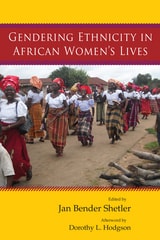
Gendering Ethnicity in African Women’s Lives
Edited by Jan Bender Shetler
University of Wisconsin Press, 2015
Drawing on extensive field research in many different regions of Africa, the contributors demonstrate in their essays that women do make choices about the forms of ethnicity they embrace, creating alternatives to male-centered definitions—in some cases rejecting a specific ethnic identity in favor of an interethnic alliance, in others reinterpreting the meaning of ethnicity within gendered domains, and in others performing ethnic power in gendered ways. Their analysis helps explain why African women may be more likely to champion interethnic political movements while men often promote an ethnicity based on martial masculinity. Bringing together anthropologists, historians, linguists, and political scientists, Gendering Ethnicity in African Women’s Lives offers a diverse and timely look at a neglected but important topic.
Gendering Historiography
Beyond National CanonsEdited by Angelika Epple and Angelika Schaser
Campus Verlag, 2009
Comparing various European and American historiographies from the past two hundred years, Gendering Historiography provides insights into the establishment and cultivation of gendered power relations in different societies and outlines the devastating effects that exclusionary practices can have on each national canon. This detailed and revealing book will change the face of history writing, bringing overlooked and previously excluded histories back into modern historiography.
Gendering Labor History
Alice Kessler-Harris
University of Illinois Press, 2006
This collection represents the thirty-year intellectual trajectory of one of today’s leading historians of gender and labor in the United States. The seventeen essays are divided into four sections, narrating the evolution and refinement of Alice Kessler-Harris's central project: showing gender’s fundamental importance in the shaping of United States history and working class culture.
The first section considers women and organized labor while the second pushes this analysis toward a gendered labor history as the essays consider the gendering of male as well as female workers and how gender operates with and within the social category of class. Subsequent sections broaden this framework to examine U.S. social policy as a whole, the question of economic citizenship, and wage labor from a global perspective. While each essay represents an important intervention in American historiography in itself, the collection taken as a whole shows Kessler-Harris continuing to push the field of American history to greater levels of inclusion and analysis.

Gendering the Fair
Histories of Women and Gender at World's FairsEdited by TJ Boisseau and Abigail M. Markwyn
University of Illinois Press, 2010
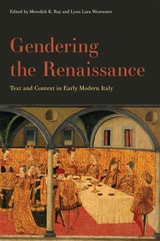
Gendering the Renaissance
Text and Context in Early Modern ItalyMeredith K. Ray
University of Delaware Press, 2023
Genentech
The Beginnings of BiotechSally Smith Hughes
University of Chicago Press, 2011
General Catalogue of Officers and Students, 1837-1911
1837-1911University of Michigan
University of Michigan Press, 1912

General Education in the Social Sciences
Centennial Reflections on the College of the University of ChicagoEdited by John J. MacAloon
University of Chicago Press, 1992
Social Science 2 holds the place of honor among these educational projects. For more than half a century, Soc 2 has been one of the most influential courses in American undergraduate education. This unique, year-long course, the oldest and most distinguished of its kind at any American university, has served as an ongoing experiment in how the social sciences can be taught and learned in the general education context.
In this collection John MacAloon has gathered essays by fourteen eminent social scientists—such as David Riesman, Michael Schudson, and F. Champion Ward—who as either teachers or students were profoundly shaped by Soc 2. Their multifarious and selective memories—full of dissonances and harmonies of recollection, judgment, and voice—create a compelling biography of a course and a college that have survived tumultous change through sustained and committed argument.
This book will be of great interest to anyone interested not only in the theory but the practice of higher education.
General History of Peru
Book 1Martín de Murúa
University Press of Colorado, 2024
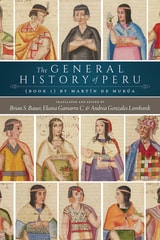
Book 1 covers both the history of the Inca Empire and the first forty years of the Spanish occupation, up to and including the fall of Vilcabamba in 1572. While the J. Paul Getty Museum produced a digital facsimile of Murúa’s full Historia in 2008, it remained underused and, until now, untranslated. This translation revitalizes the momentous early volume with an introduction offering a window into Murúa’s life and the writing of his Historia, and extensive footnotes that provide the scholarly context of Murúa’s work.
This edition of The General History of Peru: Book 1 provides long-awaited access to Murúa’s contribution to Indigenous Andean history and early colonial Peru. The book is valuable for English-speaking students and scholars of pre-Hispanic Andean history, especially those interested in the ancient Andean world and colonial Peru’s literary production.

General John Pope
A LIFE FOR THE NATIONPeter Cozzens
University of Illinois Press, 2000
Renowned Civil War scholar Peter Cozzens has mined Pope's own memoirs and a wealth of other primary sources to provide a complete picture of this gifted strategist. Uncovering new information about Pope's pre- and postwar career and his path to power, Cozzens delineates the political environment that surrounded Pope and provided the context for his actions.
Cozzens examines Pope's early career first as commander of the Army of the Mississippi and then as leader of a hastily formed Army of Virginia against Robert E. Lee. After his famous defeat at the Second Battle of Bull Run, Pope was sent to the frontier. There he held important commands on the western plains over the next twenty-four years, all the while struggling to clear his reputation of the events at Second Bull Run. A principal architect of the Red River War, which broke the resistance of the Southern Plains Indians, Pope espoused humanitarian treatment of subjugated tribes and was recognized as one of the army's leading authorities on Indian affairs.
In place of the simplistic caricature that has satisfied most historians, Cozzens has crafted an accurate, humane, balanced portrait of a complex man involved with the most complex issues of his day. A monumental work on a long-neglected figure, General John Pope offers a fresh look at a key nineteenth-century military leader as well as the most detailed analysis available of Federal leadership during the Second Bull Run campaign.
General Lewis B. Hershey and Conscientious Objection during World War II
Nicholas A. Krehbiel
University of Missouri Press, 2012
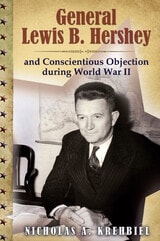
Seeking to correct these omissions in history, Nicholas A. Krehbiel provides the most comprehensive and well-rounded examination to date of General Hershey’s work as the developer and protector of alternative service programs for conscientious objectors. Hershey, whose Selective Service career spanned three major wars and six presidential administrations, came from a background with a tolerance for pacifism. He served in the National Guard and later served in both World War I and the interwar army. A lifelong military professional, he believed in the concept of the citizen soldier—the civilian who responded to the duty of service when called upon. Yet embedded in that idea was his intrinsic belief in the American right to religious freedom and his notion that religious minorities must be protected.
What to do with conscientious objectors has puzzled the United States throughout its history, and prior to World War II, there was no unified system for conscientious objectors. The Selective Service Act of 1917 only allowed conscientious objection from specific peace sects, and it had no provisions for public service. In action, this translated to poor treatment of conscientious objectors in military prisons and camps during World War I. In response to demands by the Historic Peace Churches (the Brethren, Mennonites, and the Society of Friends) and other pacifist groups, the government altered language in the Selective Service Act of 1940, stating that conscientious objectors should be assigned to noncombatant service in the military but, if opposed to that, would be assigned to “work of national importance under civilian direction.”
Under the direction of President Franklin D. Roosevelt and with the cooperation of the Historic Peace Churches, Hershey helped to develop Civilian Public Service in 1941, a program that placed conscientious objectors in soil conservation and forestry work camps, with the option of moving into detached services as farm laborers, scientific test subjects, and caregivers, janitors, and cooks at mental hospitals. Although the Civilian Public Service program only lasted until 1947, alternative service was required for all conscientious objectors until the end of the draft in 1973.
Krehbiel delves into the issues of minority rights versus mandatory military service and presents General Hershey’s pivotal role in the history of conscientious objection and conscription in American history. Archival research from both Historic Peace Churches and the Selective Service makes General Lewis B. Hershey and Conscientious Objection during World War II the definitive book on this subject.
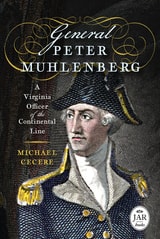
General Peter Muhlenberg
A Virginia Officer of the Continental LineMichael Cecere
Westholme Publishing, 2020
Standing at the pulpit in his church in the Shenandoah Valley, the preacher borrowed from Ecclesiastes, declaring in a firm voice that “To every thing there is a season . . . .” He then announced, “that there is a time to fight, and that time had now come,” and abruptly removed his clerical robe to reveal his colonel’s uniform. There is little doubt that this clergyman-turned-soldier uttered words to this effect, but whether he threw off his robe to reveal a gleaming uniform may be embellishment. In General Peter Muhlenberg: A Virginia Officer of the Continental Line, historian Michael Cecere cuts away the romanticism surrounding this fascinating character to present him as a highly capable and dedicated officer who served for seven long years in America’s War for Independence; a man of faith who held the high ideals of that office in his conduct with fellow officers and regular soldiers alike.
First appointed to lead the 8th Virginia Regiment of the Continental Army, Muhlenberg and his troops served under General Charles Lee in the defense of Charleston in 1776. Sent north and promoted to brigadier-general, Muhlenberg participated in the ensuing battles of Brandywine, Germantown, the winter at Valley Forge, and the major clash at Monmouth Courthouse. In 1780, he returned to Virginia and stood at the forefront of Virginia’s defense when the British invaded in 1781. At Yorktown, Muhlenberg commanded the continental light infantry troops that stormed Redoubt No. 10, sealing Cornwallis’s fate. Focusing on the military career of Muhlenberg, and relying on a judicious amount of primary source material, the author follows Muhlenberg and his troops as they battled some of the most storied adversaries of the war, including John Graves Simcoe’s Queen’s Rangers, Captain Johann Ewald’s German Jaegers, and Banastre Tarleton’s British Legion.
Admired by George Washington and his fellow officers and men, Muhlenberg was an American patriot who sacrificed much for his country’s cause, and truly “lived respected and died regretted by all good men.”
General Smuts
South AfricaAntony Lentin
Haus Publishing, 2009
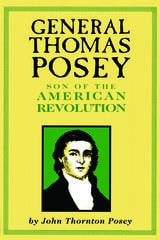
General Thomas Posey
Son of the American RevolutionJohn Thornton Posey
Michigan State University Press, 1992
Revolutionary War general Thomas Posey (1750-1818) lived his life against the backdrop of one of the most dramatic periods in American history. Posey, who played a minor role in the actual War for Independence, went on to participate in the development and foundation of several states in the transappalachian West. His experiences on the late 18th- and early 19th-century American frontier were varied and in a certain sense extraordinary; he served as Indian agent in Illinois Territory; as Lieutenant Governor of Kentucky, as U.S. Senator from Louisiana, and as Governor of Indiana during its transition from territorial status to statehood.
His biographer speculates on the contrasting influences of Thomas's ne'er-do-well father, Captain John Posey, and the family's close friend, General George Washington. Posey's progress is then followed as he raises his own family in the newly formed nation. Of particular interest is an appendix containing a detailed analysis of evidence available to support popular 29th-century speculation that Thomas Posey was, in fact, George Washington's illicit son.
Generation and Degeneration
Tropes of Reproduction in Literature and History from Antiquity through Early Modern EuropeValeria Finucci and Kevin Brownlee, eds.
Duke University Press, 2001
The discourses on reproduction, biology, degeneration, legacy, and lineage that this book broaches not only bring to the forefront concepts of sexual identity and gender politics but also show how they were culturally constructed and reconstructed through the centuries by medicine, philosophy, the visual arts, law, religion, and literature. The contributors reflect on a wide range of topics—from what makes men “manly” to the identity of Christ’s father, from what kinds of erotic practices went on among women in sixteenth-century seraglios to how men’s hemorrhoids can be variously labeled. Essays scrutinize stories of menstruating males and early writings on the presumed inferiority of female bodily functions. Others investigate a psychomorphology of the clitoris that challenges Freud’s account of lesbianism as an infantile stage of sexual development and such topics as the geographical origins of medicine and the materialization of genealogy in the presence of Renaissance theatrical ghosts.
This collection will engage those in English, comparative, Italian, Spanish, and French studies, as well as in history, history of medicine, and ancient and early modern religious studies.
Contributors. Kevin Brownlee, Marina Scordilis Brownlee, Elizabeth Clark, Valeria Finucci, Dale Martin, Gianna Pomata, Maureen Quilligan, Nancy Siraisi, Peter Stallybrass,Valerie Traub

Generation at the Crossroads
Apathy and Action on the American CampusLoeb, Paul R
Rutgers University Press, 1994
Challenging prevailing media stereotypes, Generation at the Crossroads explores the beliefs and choices of the students who came of age in the 1980s and 1990s. For seven years, at over a hundred campuses in thirty states, Paul Loeb asked students about the values they held. He examines their concepts of responsibility, the links they draw between present and future, and how they view themselves in relation to the larger human community in which they live. He brings us a range of voices, from "I'm not that kind of person," to "I had to take a stand." Loeb looks at how the rest of us can serve young people as better role models, and give them courage and vision to help build a better world.
This insightful book explores the culture of withdrawal that dominated American campuses through most of the eighties. He locates its roots in historical ignorance, relentless individualism, mistrust of social movements, and a general isolation from urgent realities. He examines why a steadily increasing minority has begun to take on critical public issues, whether environmental activism, apartheid, hunger and homelessness, affordable education, or racial and sexual equity. Loeb looks at individuals who have overcome precisely the barriers he has described, and how their journeys can become models. The generational choices he explores will shape our common future.
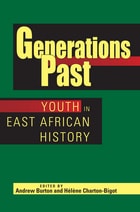
Generations Past
Youth in East African HistoryAndrew Burton
Ohio University Press, 2010
Contemporary Africa is demographically characterized above all else by its youthfulness. In East Africa the median age of the population is now a striking 17.5 years, and more than 65 percent of the population is age 24 or under. This situation has attracted growing scholarly attention, resulting in an important and rapidly expanding literature on the position of youth in African societies.
While the scholarship examining the contemporary role of youth in African societies is rich and growing, the historical dimension has been largely neglected in the literature thus far. Generations Past seeks to address this gap through a wide-ranging selection of essays that covers an array of youth-related themes in historical perspective. Thirteen chapters explore the historical dimensions of youth in nineteenth-, twentieth-, and twenty-first–century Ugandan, Tanzanian, and Kenyan societies. Key themes running through the book include the analytical utility of youth as a social category; intergenerational relations and the passage of time; youth as a social and political problem; sex and gender roles among East African youth; and youth as historical agents of change. The strong list of contributors includes prominent scholars of the region, and the collection encompasses a good geographical spread of all three East African countries.
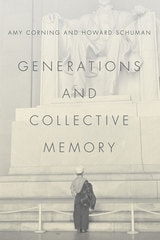
Generations and Collective Memory
Amy Corning and Howard Schuman
University of Chicago Press, 2015
Their key finding—built on historical research and interviews in the United States and seven other countries (including China, Japan, Germany, Lithuania, Russia, Israel, and Ukraine)—is that our most powerful generational memories are of shared experiences in adolescence and early adulthood, like the 1963 Kennedy assassination for those born in the 1950s or the fall of the Berlin Wall for young people in 1989. But there are exceptions to that rule, and they're significant: Corning and Schuman find that epochal events in a country, like revolutions, override the expected effects of age, affecting citizens of all ages with a similar power and lasting intensity.
The picture Corning and Schuman paint of collective memory and its formation is fascinating on its face, but it also offers intriguing new ways to think about the rise and fall of historical reputations and attitudes toward political issues.

Generous Betrayal
Politics of Culture in the New EuropeUnni Wikan
University of Chicago Press, 2002
Comparing her native Norway to Western Europe and the United States, Wikan focuses on people caught in turmoil, how institutions function, and the ways in which public opinion is shaped and state policies determined. Contradictions arise between policies of respect for minority cultures, welfare, and freedom, but the goal is the same: to create a society committed to both social justice and respect for human rights.
Writing with power and grace, Wikan makes a plea for a renewed moral vitality and human empathy that can pave the way for more effective social policies and create change.

Genes And Human Self-Knowledge
Reflections On Modern GeneticsRobert F. Weir
University of Iowa Press, 1994
Contemporary developments in human genetics are profoundly meaningful, both for the rapidity of scientific discoveries and for their personal and social implications. The Human Genome Project, a worldwide effort to map the 50,000 to 100,000 genes making up the human blueprint, is creating new ways of understanding ourselves as individuals, as parents, as members of a family, an ethnic group, a species. Almost every day yet another medical detective finds a genetic clue to the long-running mystery of human identity.
In 1992, the University of Iowa Humanities Symposium provided a public forum to examine the issues—moral, conceptual, legal, and practical—in modern genetics that are crucial to all of us. This strong, challenging volume is a collection of the major essays presented by historians, philosophers, and other academic humanists to a multidisciplinary audience of molecular and clinical geneticists, genetic counselors, humanists, and members of the public. The essays explore the historical background, philosophical implications, and ethical issues related to the Human Genome Project as well as other developments in modern genetics.
The questions raised in these essays are dramatic and troubling. What kind of knowledge is being produced by molecular geneticists? Do individual human genomes differ significantly from each other? How much do females and males differ from each other at the molecular level? Is there any genetic basis for distinguishing among racial or ethical groups? Can current practices in genetics counseling be compared to the earlier eugenics movement? Will current research lead to updated views on genetic “normalcy” or even “superiority”?
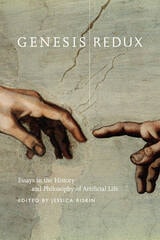
Genesis Redux
Essays in the History and Philosophy of Artificial LifeEdited by Jessica Riskin
University of Chicago Press, 2007
Since antiquity, philosophers and engineers have tried to take life’s measure by reproducing it. Aiming to reenact Creation, at least in part, these experimenters have hoped to understand the links between body and spirit, matter and mind, mechanism and consciousness. Genesis Redux examines moments from this centuries-long experimental tradition: efforts to simulate life in machinery, to synthesize life out of material parts, and to understand living beings by comparison with inanimate mechanisms.
Jessica Riskin collects seventeen essays from distinguished scholars in several fields. These studies offer an unexpected and far-reaching result: attempts to create artificial life have rarely been driven by an impulse to reduce life and mind to machinery. On the contrary, designers of synthetic creatures have generally assumed a role for something nonmechanical. The history of artificial life is thus also a history of theories of soul and intellect.
Taking a historical approach to a modern quandary, Genesis Redux is essential reading for historians and philosophers of science and technology, scientists and engineers working in artificial life and intelligence, and anyone engaged in evaluating these world-changing projects.
Genesis and Development of a Scientific Fact
Ludwik Fleck
University of Chicago Press, 1981
"To many scientists just as to many historians and philosophers of science facts are things that simply are the case: they are discovered through properly passive observation of natural reality. To such views Fleck replies that facts are invented, not discovered. Moreover, the appearance of scientific facts as discovered things is itself a social construction, a made thing. A work of transparent brilliance, one of the most significant contributions toward a thoroughly sociological account of scientific knowledge."—Steven Shapin, Science
Genesis in Late Antique Poetry
Andrew Faulkner
Catholic University of America Press, 2022
Genetic Afterlives
Black Jewish Indigeneity in South AfricaNoah Tamarkin
Duke University Press, 2020
Genetic Witness
Science, Law, and Controversy in the Making of DNA ProfilingJay D. Aronson
Rutgers University Press, 2007
Yet, this promise took ten turbulent years to be fulfilled. In Genetic Witness, Jay D. Aronson uncovers the dramatic early history of DNA profiling that has been obscured by the technique’s recent success. He demonstrates that robust quality control and quality assurance measures were initially nonexistent, interpretation of test results was based more on assumption than empirical evidence, and the technique was susceptible to error at every stage. Most of these issues came to light only through defense challenges to what prosecutors claimed to be an infallible technology. Although this process was fraught with controversy, inefficiency, and personal antagonism, the quality of DNA evidence improved dramatically as a result. Aronson argues, however, that the dream of a perfect identification technology remains unrealized.
Genii of the River Niger
Jean-Marie Gibbal
University of Chicago Press, 1993
Gibbal portrays the river as the dominant, cohesive force among people in the face of social and environmental strife. He focuses on the Ghimbala healing cult, which centers on the river, and how the cult structures social relations in the region. Gibbal vividly recreations the Ghimbala rites, nocturnal ceremonies of spirit possession and seance which animate the water spirits, or genii, that inhabit the river. The genii, he finds, provide the strength of social identity in a world where famine and competing versions of Islam threaten to overpower traditional culture.
In its original French publication, The Genii of the River Niger was honored with an Alexandra David-Neel literary prize in 1989. Its powerful lyricism, combined with fascinating ethnographic depth, will delight general readers and specialists alike and will stir debates among specialists in African studies, the anthropology of religion, and literature.
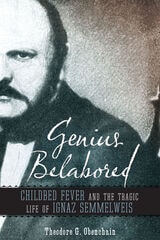
Genius Belabored
Childbed Fever and the Tragic Life of Ignaz SemmelweisTheodore G. Obenchain
University of Alabama Press, 2016
The fascinating story of Ignaz Semmelweis, a nineteenth-century obstetrician ostracized for his strident advocacy of disinfection as a way to prevent childbed fever.
In Genius Belabored: Childbed Fever and the Tragic Life of Ignaz Semmelweis, Theodore G. Obenchain traces the life story of a nineteenth-century Hungarian obstetrician who was shunned and marginalized by the medical establishment for advancing a far-sighted but unorthodox solution to the appalling mortality rates that plagued new mothers of the day.
In engrossing detail, Obenchain recreates for readers the sights, smells, and activities within a hospital of that day. In an era before the acceptance of modern germ science, physicians saw little need for cleanliness or hygiene. As a consequence, antiseptic measures were lax and rudimentary. Especially vulnerable to contamination were new mothers, who frequently contracted and died from childbed fever (puerperal fever). Genius Belabored follows Semmelweis’s awakening to the insight that many of these deaths could be avoided with basic antiseptic measures like hand washing.
The medical establishment, intellectually unprepared for Semmelweis’s prescient hypothesis, rejected it for a number of reasons. It was unorthodox and went against the lingering Christian tradition that the dangers of childbirth were inherent to the lives of women. Complicating matters, colleagues did not consider Semmelweis an easy physician to work with. His peers described him as strange and eccentric. Obenchain offers an empathetic and insightful argument that Semmelweis suffered from bipolar disorder and illuminates how his colleagues, however dedicated to empirical science they might have been, misjudged Semmelweis’s methods based upon ignorance and their emotional discomfort with him.
In Genius Belabored, Obenchain identifies Semmelweis’s rightful place in the pantheon of scientists and physicians whose discoveries have saved the lives of millions. Obenchain’s biography of Semmelweis offers unique insights into the practice of medicine and the mindsets of physicians working in the premodern era. This fascinating study offers much of interest to general readers as well as those interested in germ theory, the history of medicine and obstetrics, or anyone wishing to better understand the trajectory of modern medicine.
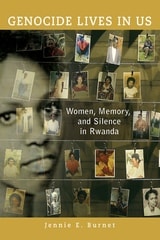
Genocide Lives in Us
Women, Memory, and Silence in RwandaJennie E. Burnet
University of Wisconsin Press, 2012
In the aftermath of the 1994 genocide, Rwandan women faced the impossible—resurrecting their lives amidst unthinkable devastation. Haunted by memories of lost loved ones and of their own experiences of violence, women rebuilt their lives from “less than nothing.” Neither passive victims nor innate peacemakers, they traversed dangerous emotional and political terrain to emerge as leaders in Rwanda today. This clear and engaging ethnography of survival tackles three interrelated phenomena—memory, silence, and justice—and probes the contradictory roles women played in postgenocide reconciliation.
Based on more than a decade of intensive fieldwork, Genocide Lives in Us provides a unique grassroots perspective on a postconflict society. Anthropologist Jennie E. Burnet relates with sensitivity the heart-wrenching survival stories of ordinary Rwandan women and uncovers political and historical themes in their personal narratives. She shows that women’s leading role in Rwanda’s renaissance resulted from several factors: the dire postgenocide situation that forced women into new roles; advocacy by the Rwandan women’s movement; and the inclusion of women in the postgenocide government.
Honorable Mention, Aidoo-Snyder Book Prize, Women’s Caucus of the African Studies Association
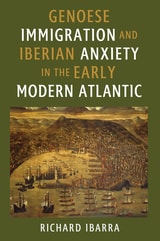
Genoese Immigration and Iberian Anxiety in the Early Modern Atlantic
Richard Ibarra
University of Delaware Press, 2027
This book explores the experiences of Genoese immigrants in the sixteenth-century Iberian Atlantic, focusing on how they navigated issues of identity and community membership across generations and transnational movement. Moving to cities like Seville, as well as Santo Domingo and Mexico City, Genoese families encountered both tremendous opportunities and significant challenges in establishing their lives, reaching a communal apogee—the “Genoese Century”—while they faced increasing Iberian anxieties. While some found ways to integrate into Iberian society through religious and charitable activities, retaining references to their Genoese past, others dissimulated or renounced their Genoese identity. Through a combination of notarial and inquisition records, litigation to prove nobility (hidalguía) and purity of blood (limpieza de sangre), literary narratives, and funerary monuments, Richard Ibarra provides insights into the changing identity claims of Genoese families and the broader attitudes toward foreigners in Iberian society that reached beyond perceived religious and ethnic difference.

Genomes and What to Make of Them
Barry Barnes and John Dupré
University of Chicago Press, 2008
For the nonscientist, the claims and counterclaims are dizzying—what does it really mean to understand the genome? Barry Barnes and John Dupré offer an answer to that question and much more in Genomes and What to Make of Them, a clear and lively account of the genomic revolution and its promise. The book opens with a brief history of the science of genetics and genomics, from Mendel to Watson and Crick and all the way up to Craig Venter; from there the authors delve into the use of genomics in determining evolutionary paths—and what it can tell us, for example, about how far we really have come from our ape ancestors. Barnes and Dupré then consider both the power and risks of genetics, from the economic potential of plant genomes to overblown claims that certain human genes can be directly tied to such traits as intelligence or homosexuality. Ultimately, the authors argue, we are now living with a new knowledge as powerful in its way as nuclear physics, and the stark choices that face us—between biological warfare and gene therapy, a new eugenics or a new agricultural revolution—will demand the full engagement of both scientists and citizens.
Written in straightforward language but without denying the complexity of the issues, Genomes and What to Make of Them is both an up-to-date primer and a blueprint for the future.
Genre Networks and Empire
Rhetoric in Early Imperial ChinaXiaoye You
Southern Illinois University Press, 2023
In Genre Networks and Empire, Xiaoye You integrates a decolonial and transnational approach to construct a rhetorical history of early imperial China. You centers ancient Chinese rhetoric by focusing on how an imperial matrix of power was established in the Han Dynasty through genres of rhetoric and their embodied circulation, and through epistemic constructs such as the Way, heaven, ritual, and yin-yang.
Through the concept of genre networks, derived from both ancient Chinese and Western scholarship, You unlocks the mechanisms of early Chinese imperial bureaucracy and maps their far-reaching influence. He considers the communication of governance, political issues, court consultations, and the regulation of the inner quarters of empire. He closely reads debates among government officials, providing insight into their efforts to govern and legitimize the regime and their embodiment of different schools of thought. Genre Networks and Empire embraces a variety of rhetorical forms, from edicts, exam essays, and commentaries to instruction manuals and memorials. It captures a range of literary styles serving the rhetorical purposes of praise and criticism. In the context of court documentation, these genre networks reflect systems of words in motion, mediated governmental decisions and acts, and forms of governmental logic, strategy, and reason.
A committed work of decolonial scholarship, Genre Networks and Empire shows, through Chinese words and writing, how the ruling elites of Han China forged a linguistic matrix of power, a book that bears implications for studies of rhetoric and empire in general.
Genre Worlds
Popular Fiction and Twenty-First-Century Book CultureKim Wilkins, Beth Driscoll, and Lisa Fletcher
University of Massachusetts Press, 2022
Works of genre fiction are a source of enjoyment, read during cherished leisure time and in incidental moments of relaxation. This original book takes readers inside popular genres of fiction, including crime, fantasy, and romance, to reveal how personal tastes, social connections, and industry knowledge shape genre worlds. Attuned to both the pleasure and the profession of producing genre fiction, the authors investigate contemporary developments in the field—the rise of Amazon, self-publishing platforms, transmedia storytelling, and growing global publishing conglomerates—and show how these interact with older practices, from fan conventions to writers’ groups.
Sitting at the intersection of literary studies, genre studies, fan studies, and studies of the book and publishing cultures, Genre Worlds considers how contemporary genre fiction is produced and circulated on a global scale. Its authors propose an innovative theoretical framework that unfolds genre fiction’s most compelling characteristics: its connected social, industrial, and textual practices. As they demonstrate, genre fiction books are not merely texts; they are also nodes of social and industrial activity involving the production, dissemination, and reception of the texts.
Genre of Autobiography in Victorian Literature
Clinton Machann
University of Michigan Press, 1995
Genres of Listening
An Ethnography of Psychoanalysis in Buenos AiresXochitl Marsilli-Vargas
Duke University Press, 2022
Genres of the Credit Economy
Mediating Value in Eighteenth- and Nineteenth-Century BritainMary Poovey
University of Chicago Press, 2008
Chronicling the process by which some of our most important conceptual categories were naturalized, Mary Poovey explores complex relationships among forms of writing that are not usually viewed together, from bills of exchange and bank checks, to realist novels and Romantic poems, to economic theory and financial journalism. Taking up all early forms of financial and monetarywriting, Poovey argues that these genres mediated for early modern Britons the operations of a market system organized around credit and debt. By arguing that genre is a critical tool for historical and theoretical analysis and an agent in the events that formed the modern world, Poovey offers a new way to appreciate the character of the credit economy and demonstrates the contribution historians and literary scholars can make to understanding its operations.
Much more than an exploration of writing on and around money, Genres of the Credit Economy offers startling insights about the evolution of disciplines and the separation of factual and fictional genres.
Gentile New York
The Images of Non-Jews among Jewish ImmigrantsRibak, Gil
Rutgers University Press, 2012
The very question of “what do Jews think about the goyim” has fascinated Jews and Gentiles, anti-Semites and philo-Semites alike. Much has been written about immigrant Jews in nineteenth- and twentieth-century New York City, but Gil Ribak’s critical look at the origins of Jewish liberalism in America provides a more complicated and nuanced picture of the Americanization process.
Gentile New York examines these newcomers’ evolving feelings toward non-Jews through four critical decades in the American Jewish experience. Ribak considers how they perceived Gentiles in general as well as such different groups as “Yankees” (a common term for WASPs in many Yiddish sources), Germans, Irish, Italians, Poles, and African Americans. As they discovered the complexity of America’s racial relations, the immigrants found themselves at odds with “white” American values or behavior and were drawn instead into cooperative relationships with other minorities. Sparked with many previously unknown anecdotes, quotations, and events, Ribak’s research relies on an impressive number of memoirs, autobiographies, novels, newspapers, and journals culled from both sides of the Atlantic.
Gentleman in the Outdoors
Sessions S Wheeler
University of Nevada Press, 1985
The material which Wheeler collected for his book, Gentleman in the Outdoors : A Portrait of Max C. Fleischmann is particularly rich and complete; Mrs. Sarah H. Fleischmann gave Wheeler several boxes of her husband's files and photographs related to his outdoor activities such as fishing, hunting, sailing, and scientific expeditions. In addition, the Fleischmann materials included a thick binder, the contents of which Wheeler used extensively in his book. The binder included some material duplicated in the other Fleischmann files as well as correspondence between Wheeler and Fleischmann.
Gentlemen of the Woods
Manhood, Myth, and the American LumberjackWilla Hammitt Brown
University of Minnesota Press, 2025
Lumberjacks: the men, the myth, and the making of an American legend
The folk hero Paul Bunyan, burly, bearded, wielding his big ax, stands astride the story of the upper Midwest—a manly symbol of the labor that cleared the vast north woods for the march of industrialization while somehow also maintaining an aura of pristine nature. This idea, celebrated in popular culture with songs and folktales, receives a long overdue and thoroughly revealing correction in Gentlemen of the Woods, a cultural history of the life and lore of the real lumberjack and his true place in American history.
Now recalled as heroes of wilderness and masculinity, lumberjacks in their own time were despised as amoral transients. Willa Hammitt Brown shows that nineteenth-century jacks defined their communities of itinerant workers by metrics of manhood that were abhorrent to the residents of the nearby Northwoods boomtowns, valuing risk-taking and skill rather than restraint and control. Reviewing songs, stories, and firsthand accounts from loggers, Brown brings to life the activities and experiences of the lumberjacks as they moved from camp to camp. She contrasts this view with the popular image cultivated by retreating lumber companies that had to sell off utterly barren land. This mythologized image glorified the lumberjack and evoked a kindly, flannel-wearing, naturalist hero.
Along with its portrait of lumberjack life and its analysis of the creation of lumberjack myth, Gentlemen of the Woods offers new insight into the intersections of race and social class in the logging enterprise, considering the actual and perceived roles of outsider lumberjacks and Native inhabitants of the northern forests. Anchored in the dual forces of capitalism and colonization, this lively and compulsively readable account offers a new way to understand a myth and history that has long captured our collective imagination.
Gentlemen on the Prairie
Victorians in Pioneer IowaHarnack, Curtis
University of Iowa Press, 1985
@font-face { font-family: "Palatino";}@font-face { font-family: "?????? Pro W3";}p.MsoNormal, li.MsoNormal, div.MsoNormal { margin: 0in 0in 0.0001pt; font-size: 12pt; font-family: "Times New Roman"; }p.FreeForm, li.FreeForm, div.FreeForm { margin: 0in 0in 0.0001pt; font-size: 12pt; font-family: "Times New Roman"; color: black; }div.Section1 { page: Section1; }
In the 1880s, the well-connected young Englishman William B. Close and his three brothers, having bought thousands of acres of northwest Iowa prairie, conceived the idea of enticing sons of Britain’s upper classes to pursue the life of the landed gentry on these fertile acres. “Yesterday a wilderness, today an empire”: their bizarre experiment, which created a colony for people “of the better class” who were not in line to inherit land but whose fathers would set them up in farming, flourished in Le Mars, Iowa (and later in Pipestone, Minnesota), with over five hundred youths having a go at farming. In Gentlemen on the Prairie, Curtis Harnack tells the remarkable story of this quite unusual chapter in the settling of the Midwest.
Many of these immigrants had no interest in American citizenship but enjoyed or endured the challenging adventure of remaining part of the empire while stranded on the plains. They didn’t mix socially with other Le Mars area residents but enjoyed such sports as horse racing, fox hunts, polo, and an annual derby followed by a glittering grand ball. Their pubs were named the House of Lords, the House of Commons, and Windsor Castle; the Prairie Club was a replica of a London gentlemen’s club, an opera house attracted traveling shows, and their principal hotel was Albion House. In St. George’s Episcopal Church, prayers were offered for the well-being of Queen Victoria.
Problems soon surfaced, however, even for these well-heeled aristocrats. The chief problem was farm labor; there was no native population to exploit, and immigrant workers soon bought their own land. Although sisters might visit the colonists and sometimes marry one of them, appropriate female companionship was scarce. The climate was brutal in its extremes, and many colonists soon sold their acres at a profit and moved to countries affiliated with Britain. When the financial depression in the early 1890s lowered land values and made agriculture less profitable, the colony collapsed. Harnack skillfully draws upon the founder’s “Prairie Journal,” company ledgers, and other records to create an engaging, engrossing story of this quixotic pioneering experiment.
Gentlemen's Disagreement
Alfred Kinsey, Lewis Terman, and the Sexual Politics of Smart MenPeter Hegarty
University of Chicago Press, 2013
Geocultural Power
China's Quest to Revive the Silk Roads for the Twenty-First CenturyTim Winter
University of Chicago Press, 2019
Geocultural Power explores this question by considering how China is couching its strategy for building trade, foreign relations, and energy and political security in an evocative topography of history. Until now Belt and Road has been discussed as a geopolitical and geoeconomic project. This book introduces geocultural power to the analysis of international affairs. Tim Winter highlights how many countries—including Iran, Sri Lanka, Kenya, Malaysia, Indonesia, Pakistan, and others—are revisiting their histories to find points of diplomatic and cultural connection. Through the revived Silk Roads, China becomes the new author of Eurasian history and the architect of the bridge between East and West. In a diplomatic dance of forgetting, episodes of violence, invasion, and bloodshed are left behind for a language of history and heritage that crosses borders in ways that further the trade ambitions of an increasingly networked China-driven economy.

Geoffroy Saint-Hilaire
A Visionary NaturalistHerve Le Guyader
University of Chicago Press, 2003
This was a revolutionary idea—and one vigorously opposed by Geoffroy's colleague Georges Cuvier, a great anatomist and one of the giants of French science. In 1830, their long-running disagreement erupted into furious public debate. Geoffroy argued that all vertebrates shared the same basic body plan not just with each other but with insects as well. Cuvier strenuously disputed this idea, which he saw as tantamount to a belief in "transformism"—arguing instead that each species had its own special and permanent form.
With Geoffroy Saint-Hilaire, Hervé Le Guyader provides an analysis not only of that infamous debate but also of Geoffroy's bold intuitions about anatomy and development. Featuring Geoffroy's published version of the 1830 debates—translated into English for the first time—the book also illustrates how Geoffroy's prescient insights foreshadowed some of the most recent discoveries in evolutionary and developmental biology.
Geographical Sources of Ming-Qing History
Timothy Brook
University of Michigan Press, 2002
Geographies of Mars
Seeing and Knowing the Red PlanetK. Maria D. Lane
University of Chicago Press, 2011
A highly original exploration of geography’s spatial dimensions at the beginning of the twentieth century, offering a new view of the mapping of far-off worlds.
One of the first maps of Mars, published by an Italian astronomer in 1877, with its pattern of canals, fueled belief in intelligent life forms on the distant red planet—a hope that continued into the 1960s. Although the Martian canals have long since been dismissed as a famous error in the history of science, K. Maria D. Lane argues that there was nothing accidental about these early interpretations. Indeed, she argues, the construction of Mars as an incomprehensibly complex and engineered world both reflected and challenged dominant geopolitical themes during a time of major cultural, intellectual, political, and economic transition in the Western world.
Geographies of Mars telescopes in on a critical period in the development of the geographical imagination, when European imperialism was at its zenith and American expansionism had begun in earnest. Astronomers working in the new observatories of the American Southwest or in the remote heights of the South American Andes were inspired, Lane finds, by their own physical surroundings and used representations of the Earth’s arid landscapes to establish credibility for their observations of Mars. With this simple shift to the geographer’s point of view, Lane deftly explains some of the most perplexing stances on Mars taken by familiar protagonists such as Percival Lowell, Alfred Russel Wallace, and Lester Frank Ward.
Geographies of Nineteenth-Century Science
Edited by David N. Livingstone and Charles W. J. Withers
University of Chicago Press, 2011
In Geographies of Nineteenth-Century Science, David N. Livingstone and Charles W. J. Withers gather essays that deftly navigate the spaces of science in this significant period and reveal how each is embedded in wider systems of meaning, authority, and identity. Chapters from a distinguished range of contributors explore the places of creation, the paths of knowledge transmission and reception, and the import of exchange networks at various scales. Studies range from the inspection of the places of London science, which show how different scientific sites operated different moral and epistemic economies, to the scrutiny of the ways in which the museum space of the Smithsonian Institution and the expansive space of the American West produced science and framed geographical understanding. This volume makes clear that the science of this era varied in its constitution and reputation in relation to place and personnel, in its nature by virtue of its different epistemic practices, in its audiences, and in the ways in which it was put to work.
Geographies of Philological Knowledge
Postcoloniality and the Transatlantic National EpicNadia R. Altschul
University of Chicago Press, 2012
Geographies of Relation
Diasporas and Borderlands in the AmericasTheresa Delgadillo
University of Michigan Press, 2024
Not only does Delgadillo offer a rare extended analysis of Black Latinidades in Chicanx literature and theory, but she also considers over a century’s worth of literary, cinematic, and performative texts to support her argument about the significance of these cultural sites and overlaps. Chapters illuminate the significance of Toña La Negra in the Golden Age of Mexican cinema, reconsider feminist theorist Gloria Anzaldúa’s work in revising exclusionary Latin American ideologies of mestizaje, delve into the racial and gender frameworks Sandra Cisneros attempts to rewrite, unpack encounters between African Americans and Black Puerto Ricans in texts by James Baldwin and Marta Moreno Vega, explore the African diaspora in colonial and contemporary Peru through Daniel Alarcón’s literature and the documentary Soy Andina, and revisit the centrality of Black power in ending colonialism in Cuban narratives. Geographies of Relation demonstrates the long histories of networks and exchanges across the Americas as well as the interrelationships among Indigenous, Black, African American, mestizx, Chicanx, and Latinx peoples. It offers a compelling argument that geographies of relation are as significant as national frameworks in structuring cultural formation and change in this hemisphere.
Geography Unbound
French Geographic Science from Cassini to HumboldtAnne Marie Claire Godlewska
University of Chicago Press, 1999
Anne Godlewska examines this crisis, the often conservative reactions of geographers to it, and the work of researchers at the margins of the field who helped chart its future course. She tells her story partly through the lives and careers of individuals, from the deposed cabinet geographer Cassini IV to Volney, von Humboldt, and Letronne (innovators in human, physical, and historical geography), and partly through the institutions with which they were associated such as the Encyclopédie and the Jesuit and military colleges.
Geography Unbound presents an insightful portrait of a crucial period in the development of modern geography, whose unstable disciplinary status is still very much an issue today.
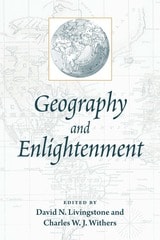
Geography and Enlightenment
Edited by David N. Livingstone and Charles W. J. Withers
University of Chicago Press, 1999
The first set of chapters charts the intellectual and geographical contexts in which Enlightenment ideas began to form, including both the sites in which knowledge was created and discussed and the different means used to investigate the globe. Detailed explorations of maps created during this period show how these new ways of representing the world and its peoples influenced conceptions of the nature and progress of human societies, while studies of the travels of people and ideas reveal the influence of far-flung places on Enlightenment science and scientific credibility. The final set of chapters emphasizes the role of particular local contexts in Enlightenment thought.
Contributors are Michael T. Bravo, Paul Carter, Denis Cosgrove, Stephen Daniels, Matthew Edney, Anne Marie Claire Godlewska, Peter Gould, Michael Heffernan, David N. Livingstone, Dorinda Outram, Chris Philo, Roy Porter, Nicolaas Rupke, Susanne Seymour, Charles Watkins, and Charles W. J. Withers.
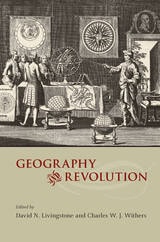
Geography and Revolution
Edited by David N. Livingstone and Charles W. J. Withers
University of Chicago Press, 2005
David N. Livingstone and Charles W. J. Withers assemble a set of essays that are themselves revolutionary in uncovering not only the geography of revolutions but the role of geography in revolutions. Here, scientific revolutions—Copernican, Newtonian, and Darwinian—ordinarily thought of as placeless, are revealed to be rooted in specific sites and spaces. Technical revolutions—the advent of print, time-keeping, and photography—emerge as inventions that transformed the world's order without homogenizing it. Political revolutions—in France, England, Germany, and the United States—are notable for their debates on the nature of political institutions and national identity.
Gathering insight from geographers, historians, and historians of science, Geography and Revolution is an invitation to take the where as seriously as the who and the when in examining the nature, shape, and location of revolutions.