Results by title
22279 books match the query 'Social Science' and 583 start with g

Gendered Vulnerability
How Women Work Harder to Stay in OfficeJeffrey Lazarus and Amy Steigerwalt
University of Michigan Press, 2018

Gendering Bodies/Performing Art
Dance and Literature in Early Twentieth-Century British CultureAmy Koritz
University of Michigan Press, 1995
Gendering Disability
Smith, Bonnie G
Rutgers University Press, 2004
Disability and gender, terms that have previously seemed so clear-cut, are becoming increasingly complex in light of new politics and scholarship. These words now suggest complicated sets of practices and ways of being.
Contributors to this innovative collection explore the intersection of gender and disability in the arts, consumer culture, healing, the personal and private realms, and the appearance of disability in the public sphere—both in public fantasies and in public activism. Beginning as separate enterprises that followed activist and scholarly paths, gender and disability studies have reached a point where they can move beyond their boundaries for a common landscape to inspire new areas of inquiry. Whether from a perspective in the humanities, social sciences, sciences, or arts, the shared subject matter of gender and disability studies—the body, social and cultural hierarchy, identity, discrimination and inequality, representation, and political activism—insistently calls for deeper conversation. This volume provides fresh findings not only about the discrimination practiced against women and people with disabilities, but also about the productive parallelism between these two categories.
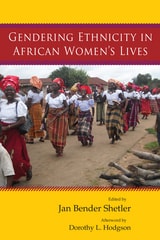
Gendering Ethnicity in African Women’s Lives
Edited by Jan Bender Shetler
University of Wisconsin Press, 2015
Drawing on extensive field research in many different regions of Africa, the contributors demonstrate in their essays that women do make choices about the forms of ethnicity they embrace, creating alternatives to male-centered definitions—in some cases rejecting a specific ethnic identity in favor of an interethnic alliance, in others reinterpreting the meaning of ethnicity within gendered domains, and in others performing ethnic power in gendered ways. Their analysis helps explain why African women may be more likely to champion interethnic political movements while men often promote an ethnicity based on martial masculinity. Bringing together anthropologists, historians, linguists, and political scientists, Gendering Ethnicity in African Women’s Lives offers a diverse and timely look at a neglected but important topic.

Gendering Historiography
Beyond National CanonsEdited by Angelika Epple and Angelika Schaser
Campus Verlag, 2009
Comparing various European and American historiographies from the past two hundred years, Gendering Historiography provides insights into the establishment and cultivation of gendered power relations in different societies and outlines the devastating effects that exclusionary practices can have on each national canon. This detailed and revealing book will change the face of history writing, bringing overlooked and previously excluded histories back into modern historiography.
Gendering Labor History
Alice Kessler-Harris
University of Illinois Press, 2006
This collection represents the thirty-year intellectual trajectory of one of today’s leading historians of gender and labor in the United States. The seventeen essays are divided into four sections, narrating the evolution and refinement of Alice Kessler-Harris's central project: showing gender’s fundamental importance in the shaping of United States history and working class culture.
The first section considers women and organized labor while the second pushes this analysis toward a gendered labor history as the essays consider the gendering of male as well as female workers and how gender operates with and within the social category of class. Subsequent sections broaden this framework to examine U.S. social policy as a whole, the question of economic citizenship, and wage labor from a global perspective. While each essay represents an important intervention in American historiography in itself, the collection taken as a whole shows Kessler-Harris continuing to push the field of American history to greater levels of inclusion and analysis.
Gendering Politics
Women in IsraelHanna Herzog
University of Michigan Press, 1999

Gendering the Fair
Histories of Women and Gender at World's FairsEdited by TJ Boisseau and Abigail M. Markwyn
University of Illinois Press, 2010
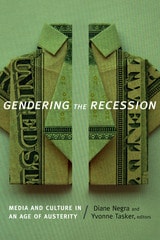
Gendering the Recession
Media and Culture in an Age of AusterityDiane Negra and Yvonne Tasker, eds.
Duke University Press, 2014
Contributors. Sarah Banet-Weiser, Hamilton Carroll, Hannah Hamad, Anikó Imre, Suzanne Leonard, Isabel Molina-Guzmán, Sinéad Molony, Elizabeth Nathanson, Diane Negra, Tim Snelson, Yvonne Tasker, Pamela Thoma

Genealogies of Joy
The Pleasure of Latinx LiteratureEdited by Leigh Johnson and Erin Murrah-Mandril; Foreword by Melina Vizcaíno-Alemán
University of Arizona Press, 2027
What does it mean to center joy in a world that insists on Latinx suffering? Genealogies of Joy: The Pleasure of Latinx Literature argues that joy is not a luxury or distraction but a radical, sustaining force woven through Latinx literature and culture. From humor and food to protest, friendship, sexuality, and aging, the essays gathered here reveal joy as an embodied, communal practice—one that refuses racialized shame and imagines liberatory futures.
Organized into three sections—Memory, Method, and Maps—the volume traces a genealogy of joy across time and space. Contributors explore how writers such as Gloria Anzaldúa, Julia de Burgos, Erika Sánchez, Javier Zamora, Myriam Gurba, Aidan Thomas, and Sandra Cisneros transform grief into resilience, invert dominant narratives, and reclaim pleasure as political praxis. Whether through irreverent laughter, queer desire, culinary memory, or vulnerable resistance, Latinx authors insist that pleasure and politics are bound together.
Engaging affect theory, Black joy scholarship, borderlands studies, and archival studies, this collection asserts that Latinx joy resists the quantification and commodification of late-stage capitalism. At once rigorous and celebratory, Genealogies of Joy invites readers to recognize joy as a human right and a vital source of connection, creativity, and collective flourishing.
Contributors
Soffía Blystra
Norma Cantú
Margaret Cantú-Sánchez
Karina Diaz
Stephanie Fetta
Elena Foulis
Eva Maria Geicht
Leigh Johnson
Mark J. Mascia
Regina Marie Mills
Erin Murrah-Mandril
Jeannine Ortega
Nancy Ríos
Rey M. Rodríguez
Rosarito Rodríguez-González
Alexandra Rodríguez Sabogal
Karen Roybal
Bianca S. Rubalcava
Suzanne Uzzilia
Natalia Villanueva-Nieves
Melina Vizcaíno-Alemán

Genealogy Of Queer Theory
William Turner
Temple University Press, 2000
Turner shows how Michal Foucault's work contributed to feminists' investigations into the ways that power relates to identity. In the last decades of the twentieth century, feminists were the first to challenge the assumption that a claim to universal identity -- the white male citizen -- should serve as the foundation of political thought and action. Difference matters. Race, ethnicity, class, gender, and sexuality interact, producing a wide array of identities that resist rigid definition and are mutable. By understanding the notion of transhistorical categories -- woman, man, homosexual, and so forth -- feminist and gay male scholars launched queer theoretical work as a new way to think about the politics of gender and sexuality.
A Geneology of Queer Theory probes the fierce debates among scholars and activists, weighing the charges that queer readings of texts and identity politics do not constitute and might inhibit radical social change. Written by a historian, it considers the implications of queer theory for historical inquiry and the distinction between philosophy and history. As such, the book will interest readers of gay/lesbian/bisexual/transgender studies, intellectual history, political theory, and the history of gender/sexuality.

General Education in the Social Sciences
Centennial Reflections on the College of the University of ChicagoEdited by John J. MacAloon
University of Chicago Press, 1992
Social Science 2 holds the place of honor among these educational projects. For more than half a century, Soc 2 has been one of the most influential courses in American undergraduate education. This unique, year-long course, the oldest and most distinguished of its kind at any American university, has served as an ongoing experiment in how the social sciences can be taught and learned in the general education context.
In this collection John MacAloon has gathered essays by fourteen eminent social scientists—such as David Riesman, Michael Schudson, and F. Champion Ward—who as either teachers or students were profoundly shaped by Soc 2. Their multifarious and selective memories—full of dissonances and harmonies of recollection, judgment, and voice—create a compelling biography of a course and a college that have survived tumultous change through sustained and committed argument.
This book will be of great interest to anyone interested not only in the theory but the practice of higher education.
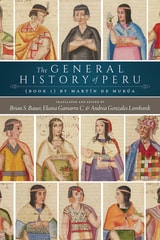
General History of Peru
Book 1Martín de Murúa
University Press of Colorado, 2024
Book 1 covers both the history of the Inca Empire and the first forty years of the Spanish occupation, up to and including the fall of Vilcabamba in 1572. While the J. Paul Getty Museum produced a digital facsimile of Murúa’s full Historia in 2008, it remained underused and, until now, untranslated. This translation revitalizes the momentous early volume with an introduction offering a window into Murúa’s life and the writing of his Historia, and extensive footnotes that provide the scholarly context of Murúa’s work.
This edition of The General History of Peru: Book 1 provides long-awaited access to Murúa’s contribution to Indigenous Andean history and early colonial Peru. The book is valuable for English-speaking students and scholars of pre-Hispanic Andean history, especially those interested in the ancient Andean world and colonial Peru’s literary production.
Generating Jobs
How to Increase Demand for Less-Skilled WorkersRichard B. Freeman
Russell Sage Foundation, 1998

Generations
Vilém Flusser
University of Minnesota Press, 2027
A vision of modern humanity trapped inside the system it has created
Written in the 1960s and unpublished until 2017, Generations is Vilém Flusser’s largest work and the foundation for many of his later theories on media and post-history. In this ambitious study of the Modern Age, Flusser traces a devastating shift in Western civilization that ultimately leads to the modern “apparatus”: the impersonal, cybernetic system of self-programmed objectification that has become our reality.
Flusser presents history as a recurring struggle between generations, with each new generation overturning the values of the former and eventually drifting into a state of existential avoidance. This cycle becomes the basis for a powerful diagnosis of the modern condition. Flusser identifies a critical shift toward self-worship and collective will in humanity’s understanding of progress and divinity during the Renaissance. This shift foregrounded our path toward an automated world driven by apathetic functionaries serving the apparatus and widespread fascist irrationalism, catastrophically realized during the Holocaust.
With surprising relevance to the digital present that gradually empties the world of its grounded reality, Generations offers a striking account of humanity’s relationship to technology, algorithms, and systems of control. Flusser’s concept of the “apparatus” anticipates the modern experience of being shaped by social media, bureaucratic systems, and oppressive technologies. Arguing that contemporary humanity exists in a state of slow existential stagnation rather than dramatic apocalypse, the book asks and answers a pressing question: how did we get here?
Retail e-book files for this title are screen-reader friendly.
Generations Past
Youth in East African HistoryAndrew Burton
Ohio University Press, 2010
Contemporary Africa is demographically characterized above all else by its youthfulness. In East Africa the median age of the population is now a striking 17.5 years, and more than 65 percent of the population is age 24 or under. This situation has attracted growing scholarly attention, resulting in an important and rapidly expanding literature on the position of youth in African societies.
While the scholarship examining the contemporary role of youth in African societies is rich and growing, the historical dimension has been largely neglected in the literature thus far. Generations Past seeks to address this gap through a wide-ranging selection of essays that covers an array of youth-related themes in historical perspective. Thirteen chapters explore the historical dimensions of youth in nineteenth-, twentieth-, and twenty-first–century Ugandan, Tanzanian, and Kenyan societies. Key themes running through the book include the analytical utility of youth as a social category; intergenerational relations and the passage of time; youth as a social and political problem; sex and gender roles among East African youth; and youth as historical agents of change. The strong list of contributors includes prominent scholars of the region, and the collection encompasses a good geographical spread of all three East African countries.
Generations and Collective Memory
Amy Corning and Howard Schuman
University of Chicago Press, 2015
Their key finding—built on historical research and interviews in the United States and seven other countries (including China, Japan, Germany, Lithuania, Russia, Israel, and Ukraine)—is that our most powerful generational memories are of shared experiences in adolescence and early adulthood, like the 1963 Kennedy assassination for those born in the 1950s or the fall of the Berlin Wall for young people in 1989. But there are exceptions to that rule, and they're significant: Corning and Schuman find that epochal events in a country, like revolutions, override the expected effects of age, affecting citizens of all ages with a similar power and lasting intensity.
The picture Corning and Schuman paint of collective memory and its formation is fascinating on its face, but it also offers intriguing new ways to think about the rise and fall of historical reputations and attitudes toward political issues.
Generations of Exclusion
Mexican-Americans, Assimilation, and RaceEdward E. Telles
Russell Sage Foundation, 2008
Generations
Academic Feminists In DialogueDevoney Looser
University of Minnesota Press, 1997
Explores the conflicts and challenges facing older and younger feminist scholars.
In universities and colleges across the country, feminists are debating their histories and future legacies, often expressing these controversies in generational terms. Some older, second wave feminists accuse younger ones of being careerist, overly theoretical, insufficiently political, and not grateful enough to previous generations. Some third wave feminists consider their foremothers naive, universalizing, or elitist, resentful of deviations from their established plans and improperly wielding their power. Generations addresses these divisions and impasses through sophisticated analyses of the challenges of “passing the torch.”
Generations is composed of essays from academic women at various professional stages-from established scholars to junior professors to graduate students. Some are concerned with telling intergenerational feminist histories based on both research and experience. Others describe difficulties faced by feminists of all ages in the academy today. A final cluster considers issues in the highly charged convergence of feminist theory and postmodernism. The promise of feminisms yet to come can be found in these pages, alongside some of the most resonant and important feminist voices of the last two decades. Generations both complicates and enlivens the transmission and rebirth of feminist knowledges from one generation to another. Contributors: Diane Elam, U of Wales; Elizabeth Francis, Brown U; Linda Frost, U of Alabama; Jane Gallop, U of Wisconsin; Dana Heller, Old Dominion U; Jane Kalbfleisch; Jeanne Marecek, Swarthmore College; Nancy K. Miller, CUNY; Mona Narain, Otterbein College; Angela M. S. Nelson, Bowling Green State U; Judith Newton, U of California, Davis; Rebecca Dakin Quinn; Gita Rajan, Fairfield U; Judith Roof, Indiana U; Theresa Ann Sears, U of Missouri at St. Louis; Ruthe Thompson; Michele Wallace, CUNY; Barbara A. White, U of New Hampshire; Lynda Zwinger, U of Arizona.
Generous Betrayal
Politics of Culture in the New EuropeUnni Wikan
University of Chicago Press, 2002
Comparing her native Norway to Western Europe and the United States, Wikan focuses on people caught in turmoil, how institutions function, and the ways in which public opinion is shaped and state policies determined. Contradictions arise between policies of respect for minority cultures, welfare, and freedom, but the goal is the same: to create a society committed to both social justice and respect for human rights.
Writing with power and grace, Wikan makes a plea for a renewed moral vitality and human empathy that can pave the way for more effective social policies and create change.

Genetic Afterlives
Black Jewish Indigeneity in South AfricaNoah Tamarkin
Duke University Press, 2020
Genetic Witness
Science, Law, and Controversy in the Making of DNA ProfilingJay D. Aronson
Rutgers University Press, 2007
Yet, this promise took ten turbulent years to be fulfilled. In Genetic Witness, Jay D. Aronson uncovers the dramatic early history of DNA profiling that has been obscured by the technique’s recent success. He demonstrates that robust quality control and quality assurance measures were initially nonexistent, interpretation of test results was based more on assumption than empirical evidence, and the technique was susceptible to error at every stage. Most of these issues came to light only through defense challenges to what prosecutors claimed to be an infallible technology. Although this process was fraught with controversy, inefficiency, and personal antagonism, the quality of DNA evidence improved dramatically as a result. Aronson argues, however, that the dream of a perfect identification technology remains unrealized.
Genetics and the Unsettled Past
The Collision of DNA, Race, and HistoryWailoo, Keith
Rutgers University Press, 2012
Our genetic markers have come to be regarded as portals to the past. Analysis of these markers is increasingly used to tell the story of human migration; to investigate and judge issues of social membership and kinship; to rewrite history and collective memory; to right past wrongs and to arbitrate legal claims and human rights controversies; and to open new thinking about health and well-being. At the same time, in many societies genetic evidence is being called upon to perform a kind of racially charged cultural work: to repair the racial past and to transform scholarly and popular opinion about the “nature” of identity in the present.
Genetics and the Unsettled Past considers the alignment of genetic science with commercial genealogy, with legal and forensic developments, and with pharmaceutical innovation to examine how these trends lend renewed authority to biological understandings of race and history.
This unique collection brings together scholars from a wide range of disciplines—biology, history, cultural studies, law, medicine, anthropology, ethnic studies, sociology—to explore the emerging and often contested connections among race, DNA, and history. Written for a general audience, the book’s essays touch upon a variety of topics, including the rise and implications of DNA in genealogy, law, and other fields; the cultural and political uses and misuses of genetic information; the way in which DNA testing is reshaping understandings of group identity for French Canadians, Native Americans, South Africans, and many others within and across cultural and national boundaries; and the sweeping implications of genetics for society today.

Genetics, Disability, and Deafness
John Vickrey Van Cleve
Gallaudet University Press, 2004
Pulitzer Prize-winning author Louis Menand begins this wide-ranging volume with an essay that extols diversity and warns of the dangers of modifying the human genome. Nora Groce reviews the ways that societies have defined disability and creates an interpretive framework for discussing the relationship between culture and disability.
In essays devoted to historical perspective, Brian H. Greenwald comments upon the real “toll” taken by A. G. Bell’s insistence upon oralism, while Joseph J. Murray weighs the nineteenth-century debate over whether deaf-deaf marriages should be encouraged. John S. Schuchman’s chilling account of deafness and eugenics in the Nazi era adds wrenching reinforcement to the impetus to include disabled people in genetics debates.
Mark Willis offers an intensely personal reflection on the complexities of genetic alteration, addressing both his heart condition and his blindness in surprisingly different ways. Anna Middleton extends Willis’s concepts in her discussion of couples currently considering the use of genetic knowledge and technology to select for or against a gene that causes deafness.
In the part on the science of genetics, Orit Dagan, Karen B. Avraham, Kathleen S. Arnos, and Arti Pandya clarify the choices presented by genetic engineering, and geneticist Walter E. Nance emphasizes the importance of science in offering individuals knowledge from which they can fashion their own decisions. In the concluding section, Christopher Krentz raises moral questions about the ever-continuing search for human perfection, and Michael Bérubé argues that disability should be considered democratically to ensure full participation of disabled people in all decisions that might affect them.
Genii of the River Niger
Jean-Marie Gibbal
University of Chicago Press, 1993
Gibbal portrays the river as the dominant, cohesive force among people in the face of social and environmental strife. He focuses on the Ghimbala healing cult, which centers on the river, and how the cult structures social relations in the region. Gibbal vividly recreations the Ghimbala rites, nocturnal ceremonies of spirit possession and seance which animate the water spirits, or genii, that inhabit the river. The genii, he finds, provide the strength of social identity in a world where famine and competing versions of Islam threaten to overpower traditional culture.
In its original French publication, The Genii of the River Niger was honored with an Alexandra David-Neel literary prize in 1989. Its powerful lyricism, combined with fascinating ethnographic depth, will delight general readers and specialists alike and will stir debates among specialists in African studies, the anthropology of religion, and literature.

Genital Cutting and Transnational Sisterhood
DISPUTING U.S. POLEMICSEdited by Stanlie M. James and Claire C. Robertson
University of Illinois Press, 2002
In five provocative essays, the contributors to this timely volume challenge representations of FGC through a range of perspectives: history, human rights, law, missionary feminism, cultural relativism, anthropology, and the intersex movement. Balancing feminist ideals with culturally conscious approaches, they dispel sensationalized and widely accepted concepts that influence Western media, law, and feminist thought on FGC, including the ignorance and oversimplification of African history, cultures, and religions, and an exaggeration of the extent and geographical distribution of the various procedures performed. The assumption that FGC does not occur presently in the United States is also considered. From Alice Walker and Pratibha Parmar's documentary film Warrior Marks to mainstream media and prime time television, Genital Cutting and Transnational Sisterhood critiques the sources that perpetuate the harmful myths that all African women have been mutilated and promote doing so to their children, that those who perform it are barbaric, and that families who allow it are abusive.
With sensitivity and clarity, the contributors to Genital Cutting and Transnational Sisterhood provide necessary and alternative suggestions for the eradication of the most harmful procedures--which they feel can only occur when the leadership of African women in the ongoing campaigns is acknowledged and supported, and when income generation for African women and education of the U.S. public, rather than criminalization, become primary strategies.

Genocide Lives in Us
Women, Memory, and Silence in RwandaJennie E. Burnet
University of Wisconsin Press, 2012
In the aftermath of the 1994 genocide, Rwandan women faced the impossible—resurrecting their lives amidst unthinkable devastation. Haunted by memories of lost loved ones and of their own experiences of violence, women rebuilt their lives from “less than nothing.” Neither passive victims nor innate peacemakers, they traversed dangerous emotional and political terrain to emerge as leaders in Rwanda today. This clear and engaging ethnography of survival tackles three interrelated phenomena—memory, silence, and justice—and probes the contradictory roles women played in postgenocide reconciliation.
Based on more than a decade of intensive fieldwork, Genocide Lives in Us provides a unique grassroots perspective on a postconflict society. Anthropologist Jennie E. Burnet relates with sensitivity the heart-wrenching survival stories of ordinary Rwandan women and uncovers political and historical themes in their personal narratives. She shows that women’s leading role in Rwanda’s renaissance resulted from several factors: the dire postgenocide situation that forced women into new roles; advocacy by the Rwandan women’s movement; and the inclusion of women in the postgenocide government.
Honorable Mention, Aidoo-Snyder Book Prize, Women’s Caucus of the African Studies Association
Genocide as Social Practice
Reorganizing Society under the Nazis and Argentina's Military Juntasby Daniel Feierstein, Translated by Douglas Andrew Town
Rutgers University Press, 2014
The Nazis resorted to ruthless methods in part to stifle dissent but even more importantly to reorganize German society into a Volksgemeinschaft, or people’s community, in which racial solidarity would supposedly replace class struggle. The situation in Argentina echoes this. After seizing power in 1976, the Argentine military described its own program of forced disappearances, torture, and murder as a “process of national reorganization” aimed at remodeling society on “Western and Christian” lines.
For Feierstein, genocide can be considered a technology of power—a form of social engineering—that creates, destroys, or reorganizes relationships within a given society. It influences the ways in which different social groups construct their identity and the identity of others, thus shaping the way that groups interrelate. Feierstein establishes continuity between the “reorganizing genocide” first practiced by the Nazis in concentration camps and the more complex version—complex in terms of the symbolic and material closure of social relationships —later applied in Argentina. In conclusion, he speculates on how to construct a political culture capable of confronting and resisting these trends.
First published in Argentina, in Spanish, Genocide as Social Practice has since been translated into many languages, now including this English edition. The book provides a distinctive and valuable look at genocide through the lens of Latin America as well as Europe.
Download open access ebook here.
Genocide
Truth, Memory, and RepresentationAlexander Laban Hinton and Kevin Lewis O Neill, eds.
Duke University Press, 2009
Specialists on the societies about which they write, these anthropologists draw on ethnographic research to provide on-the-ground analyses of communities in the wake of mass brutality. They investigate how mass violence is described or remembered, and how those representations are altered by the attempts of others, from NGOs to governments, to assert “the truth” about outbreaks of violence. One contributor questions the neutrality of an international group monitoring violence in Sudan and the assumption that such groups are, at worst, benign. Another examines the consequences of how events, victims, and perpetrators are portrayed by the Rwandan government during the annual commemoration of that country’s genocide in 1994. Still another explores the silence around the deaths of between eighty and one hundred thousand people on Bali during Indonesia’s state-sponsored anticommunist violence of 1965–1966, a genocidal period that until recently was rarely referenced in tourist guidebooks, anthropological studies on Bali, or even among the Balinese themselves. Other contributors consider issues of political identity and legitimacy, coping, the media, and “ethnic cleansing.” Genocide: Truth, Memory, and Representation reveals the major contribution that cultural anthropologists can make to the study of genocide.
Contributors. Pamela Ballinger, Jennie E. Burnet, Conerly Casey, Elizabeth Drexler, Leslie Dwyer, Alexander Laban Hinton, Sharon E. Hutchinson, Uli Linke, Kevin Lewis O’Neill, Antonius C. G. M. Robben, Debra Rodman, Victoria Sanford
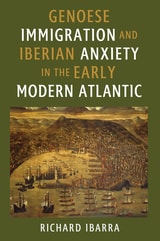
Genoese Immigration and Iberian Anxiety in the Early Modern Atlantic
Richard Ibarra
University of Delaware Press, 2027
This book explores the experiences of Genoese immigrants in the sixteenth-century Iberian Atlantic, focusing on how they navigated issues of identity and community membership across generations and transnational movement. Moving to cities like Seville, as well as Santo Domingo and Mexico City, Genoese families encountered both tremendous opportunities and significant challenges in establishing their lives, reaching a communal apogee—the “Genoese Century”—while they faced increasing Iberian anxieties. While some found ways to integrate into Iberian society through religious and charitable activities, retaining references to their Genoese past, others dissimulated or renounced their Genoese identity. Through a combination of notarial and inquisition records, litigation to prove nobility (hidalguía) and purity of blood (limpieza de sangre), literary narratives, and funerary monuments, Richard Ibarra provides insights into the changing identity claims of Genoese families and the broader attitudes toward foreigners in Iberian society that reached beyond perceived religious and ethnic difference.
Genomics with Care
Minding the Double Binds of ScienceMike Fortun
Duke University Press, 2023
Genre Fission
A New Discourse Practice for Culture StudiesMarleen S. Barr
University of Iowa Press, 2000
Barr expands postmodern assumptions about cultural studies by suggesting that "genre fission" is occurring among discrete literary and cultural "types" of events--mainstream novels, science fiction, historical narratives, film, paintings, and museum displays. For her literary insights, Barr turns her attention to such mainstream authors as Saul Bellow, John Updike, Marge Piercy, and John Barth as well as science fiction writers Ursula Le Guin and Octavia Butler and Hispanic American writers Julia Alvarez, Ana Castillo, and Cristina García, among others.
Barr moves from literary to culture studies by addressing such phenomena from contemporary mass culture as the urban landscapes of New York and Los Angeles, Jackie Kennedy, the Star Trek industry, Lynn Redgrave, Amsterdam's red light district, Lorena Bobbitt, and the Apollo astronauts--to provide only a few of the relevant examples. Thus Genre Fission attains what Barr herself designates (in describing the art of Judy Chicago and Lee Bontecou) as "utopian interweavings of difference," crossing numerous boundaries in order to frame a larger territory for exploration.
Genre Worlds
Popular Fiction and Twenty-First-Century Book CultureKim Wilkins, Beth Driscoll, and Lisa Fletcher
University of Massachusetts Press, 2022
Works of genre fiction are a source of enjoyment, read during cherished leisure time and in incidental moments of relaxation. This original book takes readers inside popular genres of fiction, including crime, fantasy, and romance, to reveal how personal tastes, social connections, and industry knowledge shape genre worlds. Attuned to both the pleasure and the profession of producing genre fiction, the authors investigate contemporary developments in the field—the rise of Amazon, self-publishing platforms, transmedia storytelling, and growing global publishing conglomerates—and show how these interact with older practices, from fan conventions to writers’ groups.
Sitting at the intersection of literary studies, genre studies, fan studies, and studies of the book and publishing cultures, Genre Worlds considers how contemporary genre fiction is produced and circulated on a global scale. Its authors propose an innovative theoretical framework that unfolds genre fiction’s most compelling characteristics: its connected social, industrial, and textual practices. As they demonstrate, genre fiction books are not merely texts; they are also nodes of social and industrial activity involving the production, dissemination, and reception of the texts.
Genres of Listening
An Ethnography of Psychoanalysis in Buenos AiresXochitl Marsilli-Vargas
Duke University Press, 2022
Gentile New York
The Images of Non-Jews among Jewish ImmigrantsRibak, Gil
Rutgers University Press, 2012
The very question of “what do Jews think about the goyim” has fascinated Jews and Gentiles, anti-Semites and philo-Semites alike. Much has been written about immigrant Jews in nineteenth- and twentieth-century New York City, but Gil Ribak’s critical look at the origins of Jewish liberalism in America provides a more complicated and nuanced picture of the Americanization process.
Gentile New York examines these newcomers’ evolving feelings toward non-Jews through four critical decades in the American Jewish experience. Ribak considers how they perceived Gentiles in general as well as such different groups as “Yankees” (a common term for WASPs in many Yiddish sources), Germans, Irish, Italians, Poles, and African Americans. As they discovered the complexity of America’s racial relations, the immigrants found themselves at odds with “white” American values or behavior and were drawn instead into cooperative relationships with other minorities. Sparked with many previously unknown anecdotes, quotations, and events, Ribak’s research relies on an impressive number of memoirs, autobiographies, novels, newspapers, and journals culled from both sides of the Atlantic.

Gentlemen of the Woods
Manhood, Myth, and the American LumberjackWilla Hammitt Brown
University of Minnesota Press, 2025
Lumberjacks: the men, the myth, and the making of an American legend
The folk hero Paul Bunyan, burly, bearded, wielding his big ax, stands astride the story of the upper Midwest—a manly symbol of the labor that cleared the vast north woods for the march of industrialization while somehow also maintaining an aura of pristine nature. This idea, celebrated in popular culture with songs and folktales, receives a long overdue and thoroughly revealing correction in Gentlemen of the Woods, a cultural history of the life and lore of the real lumberjack and his true place in American history.
Now recalled as heroes of wilderness and masculinity, lumberjacks in their own time were despised as amoral transients. Willa Hammitt Brown shows that nineteenth-century jacks defined their communities of itinerant workers by metrics of manhood that were abhorrent to the residents of the nearby Northwoods boomtowns, valuing risk-taking and skill rather than restraint and control. Reviewing songs, stories, and firsthand accounts from loggers, Brown brings to life the activities and experiences of the lumberjacks as they moved from camp to camp. She contrasts this view with the popular image cultivated by retreating lumber companies that had to sell off utterly barren land. This mythologized image glorified the lumberjack and evoked a kindly, flannel-wearing, naturalist hero.
Along with its portrait of lumberjack life and its analysis of the creation of lumberjack myth, Gentlemen of the Woods offers new insight into the intersections of race and social class in the logging enterprise, considering the actual and perceived roles of outsider lumberjacks and Native inhabitants of the northern forests. Anchored in the dual forces of capitalism and colonization, this lively and compulsively readable account offers a new way to understand a myth and history that has long captured our collective imagination.
Gentlemen's Disagreement
Alfred Kinsey, Lewis Terman, and the Sexual Politics of Smart MenPeter Hegarty
University of Chicago Press, 2013
Gentrification Down the Shore
Molly Vollman Makris
Rutgers University Press, 2021
Geographic Citizen Science Design
No One Left BehindEdited by Artemis Skarlatidou and Muki Haklay
University College London, 2020
Unbeknownst to them as they made their scientific discoveries, Isaac Newton, Charles Darwin, and other “gentlemen scientists” would later inspire a field of scientific practice and innovation known as citizen science. Today, the growth and availability of citizen science projects have been substantial, as anyone can now contribute to a scientific discipline without professional qualifications. As a subset of this movement, geographic citizen science presents a unique approach towards supporting the participation of everyday citizens in the collection, analysis, and dissemination of scientific data. This book presents a selection of wide-ranging case studies that provide insights into the design, interaction barriers, and lessons learned from a diverse set of participants. The volume captures the current status of research and development of geographic citizen science, providing critical insight to inform technological innovation and future research in this area.
Geographical Identities Of Ethnic America
Race, Space, And PlaceKate A. Berry
University of Nevada Press, 2001
Geographical Sources of Ming-Qing History
Timothy Brook
University of Michigan Press, 2002
Geographies of Digital Exclusion
Data and InequalityMark Graham
Pluto Press, 2021
Today's urban environments are layered with data and algorithms that fundamentally shape how we perceive and move through space. But are our digitally dense environments continuing to amplify inequalities rather than alleviate them? This book looks at the key contours of information inequality, and who, what and where gets left out.
Platforms like Google Maps and Wikipedia have become important gateways to understanding the world, and yet they are characterized by significant gaps and biases, often driven by processes of exclusion. As a result, their digital augmentations tend to be refractions rather than reflections: they highlight only some facets of the world at the expense of others.
This doesn't mean that more equitable futures aren't possible. By outlining the mechanisms through which our digital and material worlds intersect, the authors conclude with a roadmap for what alternative digital geographies might look like.
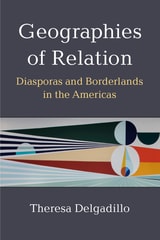
Geographies of Relation
Diasporas and Borderlands in the AmericasTheresa Delgadillo
University of Michigan Press, 2024
Not only does Delgadillo offer a rare extended analysis of Black Latinidades in Chicanx literature and theory, but she also considers over a century’s worth of literary, cinematic, and performative texts to support her argument about the significance of these cultural sites and overlaps. Chapters illuminate the significance of Toña La Negra in the Golden Age of Mexican cinema, reconsider feminist theorist Gloria Anzaldúa’s work in revising exclusionary Latin American ideologies of mestizaje, delve into the racial and gender frameworks Sandra Cisneros attempts to rewrite, unpack encounters between African Americans and Black Puerto Ricans in texts by James Baldwin and Marta Moreno Vega, explore the African diaspora in colonial and contemporary Peru through Daniel Alarcón’s literature and the documentary Soy Andina, and revisit the centrality of Black power in ending colonialism in Cuban narratives. Geographies of Relation demonstrates the long histories of networks and exchanges across the Americas as well as the interrelationships among Indigenous, Black, African American, mestizx, Chicanx, and Latinx peoples. It offers a compelling argument that geographies of relation are as significant as national frameworks in structuring cultural formation and change in this hemisphere.
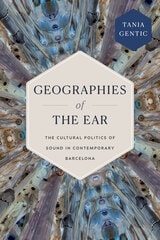
Geographies of the Ear
The Cultural Politics of Sound in Contemporary BarcelonaTania Gentic
Duke University Press, 2025
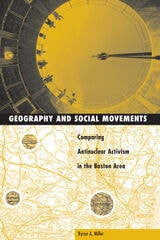
Geography And Social Movement
Comparing Antinuclear Activism in the Boston AreaByron A. Miller
University of Minnesota Press, 2000
A comparative analysis of the implications of space, place, and scale in political mobilization.
A comparative analysis of the implications of space, place, and scale in political mobilization.
Context matters, as students of social movements increasingly agree, and yet very little attention has been paid to the role geography plays in activism. Geography and Social Movements corrects this oversight, bringing a geographical perspective to the study of social movements. Byron A. Miller directly addresses the implications of space, place, and scale in social movement mobilization, and then demonstrates their significance in a detailed comparative analysis of peace movements in three municipalities around Boston. In focusing on the Boston area-an old northeastern region, heavily industrialized with many companies working on military contracts, and also a center of education-Miller is able to explore how campaigns aimed at curbing nuclear arms operate within the cultural, political, social, and economic confines of particular places and spaces. He shows how the decisions and actions of local peace movement organizations played a central role in the movement’s successes and failures, and how local organizations had to respond to the differing class, race, and gender characteristics of different locales. Miller’s empirical analysis clearly demonstrates that geographic strategies for social movement organizations have direct consequences for the successes and failures of specific campaigns.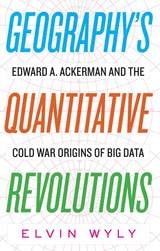
Geography's Quantitative Revolutions
Edward A. Ackerman and the Cold War Origins of Big DataElvin Wyly
West Virginia University Press, 2019
Do you have a smartphone? Billions of people on the planet now navigate their daily lives with the kind of advanced Global Positioning System capabilities once reserved for the most secretive elements of America’s military-industrial complex. But when so many people have access to the most powerful technologies humanity has ever devised for the precise determination of geographical coordinates, do we still need a specialized field of knowledge called geography?
Just as big data and artificial intelligence promise to automate occupations ranging from customer service and truck driving to stock trading and financial analysis, our age of algorithmic efficiency seems to eliminate the need for humans who call themselves geographers—at the precise moment when engaging with information about the peoples, places, and environments of a diverse world is more popular than ever before. How did we get here? This book traces the recent history of geography, information, and technology through the biography of Edward A. Ackerman, an important but forgotten figure in geography’s “quantitative revolution.” It argues that Ackerman’s work helped encode the hidden logics of a distorted philosophical heritage—a dangerous, cybernetic form of thought known as militant neo-Kantianism—into the network architectures of today’s pervasive worlds of surveillance capitalism.
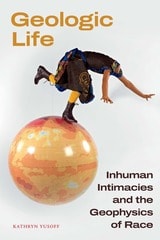
Geologic Life
Inhuman Intimacies and the Geophysics of RaceKathryn Yusoff
Duke University Press, 2024

Geology of the Netherlands East Indies
Lectures Delivered as Exchange-Professor at the University of Michigan in 1921-1922H. Albert Brouwer
University of Michigan Press, 1925
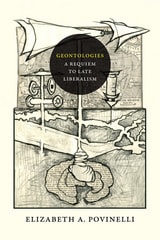
Geontologies
A Requiem to Late LiberalismElizabeth A. Povinelli
Duke University Press, 2016
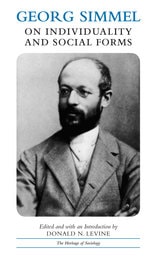
Georg Simmel on Individuality and Social Forms
Georg Simmel
University of Chicago Press, 1972
Half of the material included in this edition of Simmel's writings represents new translations. This includes Simmel's important, lengthy, and previously untranslated "Group Expansion and Development of Individuality," as well as three selections from his most neglected work, Philosophy of Money; in addition, the introduction to Probleme der Geschichtsphilosophie, chapter one of the Lebensanschauung, and three essays are translated for the first time.