Results by title
18284 books match the query 'United States' and 433 start with g
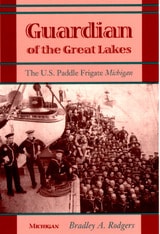
Guardian of the Great Lakes
The U.S. Paddle Frigate MichiganBradley A. Rodgers
University of Michigan Press, 1996
Guardian of the Great Lakes is the saga of the USS Michigan, an archetype iron-hulled war steamer launched in 1843. Its mission was to patrol the ofttimes volatile Great Lakes region, quelling port town civil disturbances, while at the same time rescuing both Canadian and American ships in distress.
The Michigan found itself unavoidably attracted to calamity, leaving in its wake a collection of eyewitness accounts to these momentous yet largely forgotten occurences. Incidents such as the timber rebellion of the 1850s, which occurred in Wisconsin, Illinois, and Michigan, are documented for the first time. Other episodes such as the assassination of "king" Strang on Beaver Island and the destruction of the community there are studied under the light of newly discovered sources. Still other chapters reveal the chaos created by the Civil War on the lakes, the destructive mining strikes of Michigan's Upper Peninsula, and the tragic, bloody, Fenian invasion of Canada.
Between major calamities lay the vagaries of maritime life on the Great Lakes detailed in the records of the Michigan's crew. From their social and community life in Erie, Pennsylvania to storms, shipwrecks, and sickness, the records kept by the men and officers of the USS Michigan have helped to produce in this book an accurate and detailed narrative of naval and maritime life on the Great Lakes during this important period.
Bradley A. Rodgers is Assistant Professor, Program in Maritime History and Nautical Archaeology, East Carolina University.
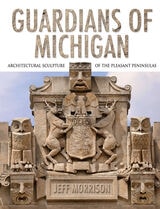
Guardians of Michigan
Architectural Sculpture of the Pleasant PeninsulasJeff Morrison
University of Michigan Press, 2022
The buildings profiled in Guardians of Michigan range from county courthouses, churches, and government buildings constructed during the 1800s, to skyscrapers with intricate sculptural decoration too far above street level for passersby to see. As a result, the book highlights examples of Gothic, Romanesque Revival, Beaux Arts, as well as Art Deco and Art Moderne. Guardians of Michigan is a loving tribute to the architecture of the state, preserving forgotten stories and beautiful buildings for all readers to enjoy.

Guarding the Frontier
A Study of Frontier Defense, 1815-1825Edgar Bruce Wesley
University of Minnesota Press, 1935
Guarding the Frontier was first published in 1935. Minnesota Archive Editions uses digital technology to make long-unavailable books once again accessible, and are published unaltered from the original University of Minnesota Press editions.
"For almost a century the defense of the frontier was the chief consideration in the military policy of the United States," Dr. Wesley observes. His book is the first detailed historical study of the military policy of the United States in the years immediately following the War of 1812, the period during which its policy was becoming clearly defined.
The political, military, and economic factors lying behind the establishment of that policy are all given thorough treatment by the author, who discusses the various methods of defense evolved against the British to the north, the Spaniards in the south and west, and the Indians everywhere. The author demonstrates the importance of Indian affairs, of the factory system, and of the fur trade as elements in the westward expansion of the United States.
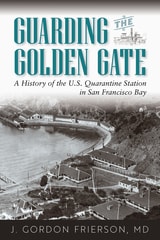
Guarding the Golden Gate
A History of the U.S. Quarantine Station in San Francisco BayJ. Gordon Frierson, MD
University of Nevada Press, 2022
Guarding the Golden Gate covers not only the creation and operation of the station, which is integral to San Francisco’s history, but also discusses the challenges of life on Angel Island—a small, exposed, and nearly waterless landmass on the north side of the Bay. The book reveals the steps taken to prevent the spread of diseases not only into the United States but also into other ports visited by ships leaving San Francisco; the political struggles over the establishment of a national quarantine station; and the day-to-day life of the immigrants and staff inhabiting the island. With the advancement of the understanding of infectious diseases and the development of treatments, the quarantine station’s activities declined in the 1930s, and the facility ultimately shuttered its doors in 1949.
While Angel Island is now a California state park, it remains as a testament to an influential period in the nation’s history that offers rich insights into efforts to maintain the public’s safety during health crises.
Guatemala-U.S. Migration
Transforming RegionsBy Susanne Jonas and Nestor Rodríguez
University of Texas Press, 2015
Guatemala-U.S. Migration: Transforming Regions is a pioneering, comprehensive, and multifaceted study of Guatemalan migration to the United States from the late 1970s to the present. It analyzes this migration in a regional context including Guatemala, Mexico, and the United States. This book illuminates the perilous passage through Mexico for Guatemalan migrants, as well as their settlement in various U.S. venues. Moreover, it builds on existing theoretical frameworks and breaks new ground by analyzing the construction and transformations of this migration region and transregional dimensions of migration.
Seamlessly blending multiple sociological perspectives, this book addresses the experiences of both Maya and ladino Guatemalan migrants, incorporating gendered as well as ethnic and class dimensions of migration. It spans the most violent years of the civil war and the postwar years in Guatemala, hence including both refugees and labor migrants. The demographic chapter delineates five phases of Guatemalan migration to the United States since the late 1970s, with immigrants experiencing both inclusion and exclusion very dramatically during the most recent phase, in the early twenty-first century. This book also features an innovative study of Guatemalan migrant rights organizing in the United States and transregionally in Guatemala/Central America and Mexico. The two contrasting in-depth case studies of Guatemalan communities in Houston and San Francisco elaborate in vibrant detail the everyday experiences and evolving stories of the immigrants’ lives.
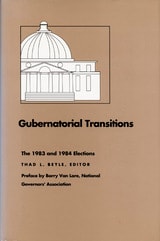
Gubernatorial Transitions
The 1983 and 1984 ElectionsThad L. Beyle, ed.
Duke University Press, 1989

Gudrun’s Kitchen
Recipes from a Norwegian FamilyIrene O. Sandvold
Wisconsin Historical Society Press, 2011
The youngest of a large Norwegian immigrant family, Gudrun Thue Sandvold was known for her beaming blue eyes and a reserve that gave way to laughter whenever she got together with her sisters. She took immeasurable pride in her children and grandchildren, kept an exquisite home, and turned the most mundane occasion into a party. And to all who knew her, Gudrun’s cooking was the stuff of legend.
Part cookbook, part immigrant story, and part family memoir, Gudrun's Kitchen features hundreds of Gudrun Sandvold’s recipes for comfort food from a time when families and friends gathered at the table and connected with one another every single day. But this book is much more than a guide to Norwegian culinary traditions; it is an important contribution to immigrant history and a vital documentation of our nation’s multicultural heritage.
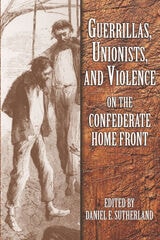
Guerrillas, Unionists, and Violence on the Confederate Home Front
Daniel E. Sutherland
University of Arkansas Press, 1999
Guest Appearances and Other Travels in Time and Space
Peter I. Rose
Ohio University Press, 2003
Guest Appearances and Other Travels in Time and Space introduces us to many of those whom Rose has met along the way, a cast of characters as colorful as it is diverse. It includes his music-loving mother; his tour guides in China, Germany, and Israel; Indochinese refugees he followed to the United States; the notorious murderer, Nathan Leopold; the simple tailor, Mr. David; and three writers for whom Rose has a special affinity: Philip Roth, John Updike, and Paul Theroux.
Peter Rose gives us an entirely pleasurable and insightful look into the life of an American scholar actively involved in contemporary issues as he takes readers along on his field trips and guest appearances.
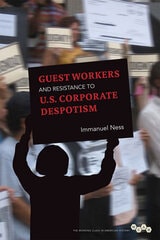
Guest Workers and Resistance to U.S. Corporate Despotism
Immanuel Ness
University of Illinois Press, 2011
Political scientist Immanuel Ness thoroughly investigates the use of guest workers in the United States, the largest recipient of migrant labor in the world. Ness argues that the use of migrant labor is increasing in importance and represents despotic practices calculated by key U.S. business leaders in the global economy to lower labor costs and expand profits under the guise of filling a shortage of labor for substandard or scarce skilled jobs.
Drawing on ethnographic field research, government data, and other sources, Ness shows how worker migration and guest worker programs weaken the power of labor in both sending and receiving countries. His in-depth case studies of the rapid expansion of technology and industrial workers from India and hospitality workers from Jamaica reveal how these programs expose guest workers to employers' abuses and class tensions in their home countries while decreasing jobs for American workers and undermining U.S. organized labor.
Where other studies of labor migration focus on undocumented immigrant labor and contend immigrants fill jobs that others do not want, this is the first to truly advance understanding of the role of migrant labor in the transformation of the working class in the early twenty-first century. Questioning why global capitalists must rely on migrant workers for economic sustenance, Ness rejects the notion that temporary workers enthusiastically go to the United States for low-paying jobs. Instead, he asserts the motivations for improving living standards in the United States are greatly exaggerated by the media and details the ways organized labor ought to be protecting the interests of American and guest workers in the United States.

Guide to Chicago's Twenty-First-Century Architecture
Chicago Architecture Center and John Hill
University of Illinois Press, 2021
Chicago's wealth of architectural treasures makes it one of the world's majestic cityscapes. Published in collaboration with the Chicago Architecture Center, this easy-to-use guide invites you to discover the new era of twenty-first-century architecture in the Windy City via two hundred architecturally significant buildings and spaces in the city and suburbs. Features include:
- Entries organized by neighborhood
- Maps with easy-to-locate landmarks and mass transit options
- Background on each entry, including the design architect, name and address, description, and other essential information
- Sidebars on additional sites and projects
- A detailed supplemental section with a glossary, selected bibliography, and indexes by architect, building name, and building type
Up-to-date and illustrated with almost four hundred color photos, the Guide to Chicago's Twenty-First-Century Architecture takes travelers and locals on a journey into an ever-changing architectural mecca.

Guide to Ethics in Acquisitions
Wyoma vanDuinkerken
American Library Association, 2015
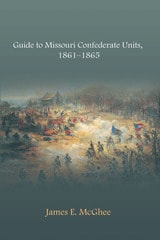
Guide to Missouri Confederate Units, 1861-1865
James E. McGhee
University of Arkansas Press, 2010

Guide to Security Considerations and Practices for Rare Book, Manuscript, and Special Collection Libraries
Everett Wilkie, Jr
Assoc of College & Research Libraries, 2011

Guide to the Catholic Sisterhoods in the United States, Fifth Edition
Thomas P. McCarthy, C.S.V.
Catholic University of America Press, 2002

Guide to the Colorado Ghost Towns and Mining Camps
And Mining CampsPerry Eberhart
Ohio University Press, 1969
"This is not a history book. Rather it is a directory of towns, and compilation of known information about those towns. In undertaking the stud, I was amazed at the amount of legend and contradictory information Colorado history has collected in just one hundred years. Who was it that said: 'History is the perpetuation of saleable gossip'? (Perhaps, nobody has said it yet. In that case, it's mine, all mine.)
"As of this moment, this is the most complete compilation of Colorado mining towns—ghost or going—available.
"For the fourth edition, over 100 towns have been added. Also, I have included a new chapter (XXVI. Addendum, page 466), the first couple of pages of which can well be read as a second Preface to the book."
— Perry Eberhart, Preface, 1959 and 1969
Guide to the Draper Manuscripts
Josephine L. Harper
Wisconsin Historical Society Press, 1983
In the mid-nineteenth century the Wisconsin Historical Society's first director, Lyman C. Draper, gathered outstanding materials such as the Daniel Boone papers, which include Draper's interviews with Boone's son, and the papers of Revolutionary War hero George Rogers Clark. These two collections alone are of vast significance to frontier history before 1830, but the full collection comprises nearly five hundred volumes of records, including military and government records, interviews, Draper's own research notes, and rare personal letters. For scholars, genealogists, and local historians, the Draper papers offer a wealth of information on the social, economic, and cultural conditions experienced by our frontier forebears. The 180-page index lists thousands of names and is an indispensable guide for all who wish to use the collection, which is available in libraries across the country on microfilm.

Guidebook for the Scientific Traveler
Visiting Astronomy and Space Exploration Sites across AmericaNickell, Duane S
Rutgers University Press, 2008

Guidebook for the Scientific Traveler
Visiting Physics and Chemistry Sites Across AmericaNickell, Duane S
Rutgers University Press, 2010
Are you in the mood for a trip to the Titan Missile Museum in Tucson? Want to spend some time at the Fermi National Accelerator Center near Chicago? Perhaps quench your thirst for knowledge and discovery at the Anheuser-Busch Brewery in St. Louis, where brewers are chemists at heart? Set your own pace. As an active participant or living room traveler, you'll be mesmerized as Nickell leads you on a tour of physics and chemistry sites.
Written in an easy-to-read and accessible style, this comprehensive guide is a practical and fun way to promote scientific literacy. You'll meet some of the world's great physicists, engineers, and chemists as you turn pages filled with more than fifty photographs. Organized into chapters on individuals, places, and sites--from universities of science to national laboratories, particle accelerators to energy labs and beyond--Nickell illuminates the history of each topic and paints a panorama of stunning achievements in physics and chemistry.
Whether you're traveling in California or Maine, or taking to the road in Texas or Illinois, Nickell helps complete your trip with a state-by-state list of monumental sites and resources. From the east coast to the west, north by northwest, or south in search of the Florida Solar Power Energy Center, you'll enjoy all your scientific travels with Visiting Physics and Chemistry Sites across America.
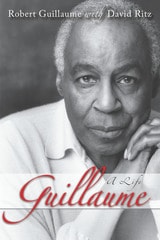
Guillaume
A LifeRobert Guillaume & David Ritz
University of Missouri Press, 2002
Guillaume: A Life is the autobiography of esteemed Broadway, Hollywood, and television star Robert Guillaume. Ten months after suffering a stroke, Guillaume—perhaps best known as television’s Benson—began this autobiography with award-winning author and collaborator David Ritz.
The book goes beyond the recounting of a long and successful career to examine the forces that shaped the man: family, religion, race, and class. Startlingly candid and disarmingly self-aware, Guillaume seeks to know and understand himself, his treatment of the women in his life, and the choices he made along the way. He pursues the truth, however painful it may be, says Ritz, guided by two questions, “Who the hell am I?” and “What made me do what I did?”
Born in St. Louis in 1927 to a young, abused, unstable mother, and reared by a strong, hardworking grandmother, Robert Guillaume managed to move from the poverty and adversity of his youth to a rich, full career as an actor and a singer. Fierce determination and sharp focus enabled this man born to hardship and racial discrimination to study, learn, cultivate his natural talents, and succeed at the performance career he pursued with a vengeance. Guillaume first performed in the strict Catholic schools and churches to which his grandmother, who understood that education would be the key to any success he might achieve, sent him. There his love of classical music was nurtured, and he was encouraged to perform.
From a child longing for his mother’s love to a man unsure of the meaning of love for many of the women in his life, from a young performer struggling to succeed on Broadway and in Hollywood to a grief-stricken father watching his son die of AIDS, Robert Guillaume tells what it was like to realize celebrity and what he sacrificed in the process. Readers will savor the success story of this artist who achieved great recognition and fame, but who never lost sight of his beginnings. Appealing to all audiences, Guillaume is a revealing and poignant autobiography of an extraordinary and distinguished American thespian.

Guilty People
Abbe Smith
Rutgers University Press, 2020
In Guilty People, law professor and longtime criminal defense attorney Abbe Smith gives us a thoughtful and honest look at guilty individuals on trial. Each chapter tells compelling stories about real cases she handled; some of her clients were guilty of only petty crimes and misdemeanors, while others committed offenses as grave as rape and murder. In the process, she answers the question that every defense attorney is routinely asked: How can you represent these people?
Smith’s answer also tackles seldom-addressed but equally important questions such as: Who are the people filling our nation’s jails and prisons? Are they as dangerous and depraved as they are usually portrayed? How did they get caught up in the system? And what happens to them there?
This book challenges the assumption that the guilty are a separate species, unworthy of humane treatment. It is dedicated to guilty people—every single one of us.

Guitar King
Michael Bloomfield's Life in the BluesBy David Dann
University of Texas Press, 2021
Named one of the world’s great blues-rock guitarists by Rolling Stone, Mike Bloomfield (1943–1981) remains beloved by fans forty years after his untimely death. Taking readers backstage, onstage, and into the recording studio with this legendary virtuoso, David Dann tells the riveting stories behind Bloomfield’s work in the seminal Paul Butterfield Blues Band and the mesmerizing Electric Flag, as well as on the Super Session album with Al Kooper and Stephen Stills, Bob Dylan’s Highway 61 Revisited, and soundtrack work with Peter Fonda and Jack Nicholson.
In vivid chapters drawn from meticulous research, including more than seventy interviews with the musician’s friends, relatives, and band members, music historian David Dann brings to life Bloomfield’s worlds, from his comfortable upbringing in a Jewish family on Chicago’s North Shore to the gritty taverns and raucous nightclubs where this self-taught guitarist helped transform the sound of contemporary blues and rock music. With scenes that are as electrifying as Bloomfield’s solos, this is the story of a life lived at full volume.
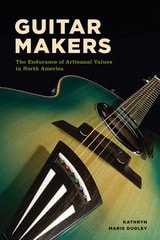
Guitar Makers
The Endurance of Artisanal Values in North AmericaKathryn Marie Dudley
University of Chicago Press, 2014
In Guitar Makers, Kathryn Marie Dudley introduces us to builders of artisanal guitars, their place in the art world, and the specialized knowledge they’ve developed. Drawing on in-depth interviews with members of the lutherie community, she finds that guitar making is a social movement with political implications. Guitars are not simply made—they are born. Artisans listen to their wood, respond to its liveliness, and strive to endow each instrument with an unforgettable tone. Although professional luthiers work within a market society, Dudley observes that their overriding sentiment is passion and love of the craft. Guitar makers are not aiming for quick turnover or the low-cost reproduction of commodities but the creation of singular instruments with unique qualities, and face-to-face transactions between makers, buyers, and dealers are commonplace.
In an era when technological change has pushed skilled artisanship to the margins of the global economy, and in the midst of a capitalist system that places a premium on ever faster and more efficient modes of commerce, Dudley shows us how artisanal guitar makers have carved out a unique world that operates on alternative, more humane, and ecologically sustainable terms.
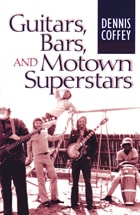
Guitars, Bars, and Motown Superstars
Dennis Coffey
University of Michigan Press, 2009
---Edwin Starr
"There can never be enough stories told from the vantage point of Motown's fabled Snake Pit, from one of the journeyman musicians working behind the scenes. Guitars, Bars, and Motown Superstars also shows just how frenetic and creative the Detroit music scene was in the '60s and '70s. But it's Dennis Coffey's personal story that's most gripping: the journey from Motown, to Billboard's Top Ten, to working the line at Chevrolet."
---Susan Whitall, Detroit News; author of Women of Motown
Under Berry Gordy, Motown was a place where studio musicians usually stood in the shadows, unlike the solo stars whose names appeared on the albums. Gordy held a tight rein on his musicians, forbidding them from playing for other record companies and denying them credit on his records.
In Guitars, Bars, and Motown Superstars, author and guitarist Dennis Coffey tells how he slipped Gordy's draconian rules and went on to success as both a Motown musician and a million-selling solo artist. He offers a fascinating backstage look at the Detroit, L.A., and New York music scenes in the '60s and '70s, with side trips to the smoky clubs and funky studios where the Motown sound was born.
Coffey is credited with creating a lot of that sound, including the famous guitar intro to the Temptations' classic "Cloud Nine." He played on hundreds of Motown albums, and introduced such innovations as the Wah Wah pedal into the Motown recording studio.
Guitars, Bars, and Motown Superstars is an entertaining and amusing memoir of one of the most dynamic and influential periods in contemporary pop culture, and a unique insight into the ups and downs of the studio guitar-for-hire. It's also a look at the dizzying rags-to-riches-and-back-again career of a rock musician who went from million-seller with a house in the Hollywood Hills, and ultimately back to his roots in the Detroit area. A must for fans of Motown, rock, and you-are-there pop-culture history.
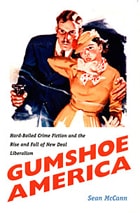
Gumshoe America
Hard-Boiled Crime Fiction and the Rise and Fall of New Deal LiberalismSean McCann
Duke University Press, 2000
Gumshoe America traces the way those problems surfaced in hard-boiled crime fiction from the1920s through the 1960s. Beginning by using a forum on the KKK in the pulp magazine Black Mask to describe both the economic and political culture of pulp fiction in the early twenties, McCann locates the origins of the hard-boiled crime story in the genre’s conflict with the racist antiliberalism prominent at the time. Turning his focus to Dashiell Hammett’s career, McCann shows how Hammett’s writings in the late 1920s and early 1930s moved detective fiction away from its founding fables of social compact to the cultural alienation triggered by a burgeoning administrative state. He then examines how Raymond Chandler’s fiction, unlike Hammett’s, idealized sentimental fraternity, echoing the communitarian appeals of the late New Deal. Two of the first crime writers to publish original fiction in paperback—Jim Thompson and Charles Willeford—are examined next in juxtaposition to the popularity enjoyed by their contemporaries Mickey Spillane and Ross Macdonald. The stories of the former two, claims McCann, portray the decline of the New Deal and the emergence of the rights-based liberalism of the postwar years and reveal new attitudes toward government: individual alienation, frustration with bureaucratic institutions, and dissatisfaction with the growing vision of America as a meritocracy. Before concluding, McCann turns to the work of Chester Himes, who, in producing revolutionary hard-boiled novels, used the genre to explore the changing political significance of race that accompanied the rise of the Civil Rights movement in the late 1950s and the 1960s.
Combining a striking reinterpretation of the hard-boiled crime story with a fresh view of the political complications and cultural legacies of the New Deal, Gumshoe America will interest students and fans of the genre, and scholars of American history, culture, and government.

Gunboats, Muskets, and Torpedoes
Coastal North Carolina, 1861–1865Michael G. Laramie
Westholme Publishing, 2027
From the first shots at Cape Hatteras in the summer of 1861 to the fall of Fort Fisher in early 1865, the contest for coastal North Carolina during the American Civil War was crucial to the Union victory. With a clear naval superiority over the South, the North conducted blockading and amphibious operations from Virginia to Texas, including the three-hundred-mile seacoast of North Carolina. With its Pamlico and Albemarle Sounds—fed by navigable rivers that reached deep into the interior—and major Confederate port of Wilmington, the Carolina coast was essential for the distribution of foreign goods and supplies to Confederate forces in Virginia and elsewhere. If the Union was able to capture Wilmington or advance on the interior waters, they would cripple the South’s war efforts.
In Gunboats, Muskets, and Torpedoes: Coastal North Carolina, 1861–1865, award-winning historian Michael G. Laramie chronicles both the battle over supplying the South by sea as well as the ways this region proved to be a fertile ground for the application of new technologies. With the advent of steam propulsion, the telegraph, rifled cannon, repeating firearms, ironclads, and naval mines, the methods and tactics of the old wooden walls soon fell to those of this first major conflict of the industrial age. Soldiers and sailors could fire farther and faster than ever before. With rail transportation available, marches were no longer weeks but days or even hours, allowing commanders to quickly shift men and materials to meet an oncoming threat or exploit an enemy weakness. Fortifications changed to meet the challenges imposed by improved artillery, while the telegraph stretched the battlefield even further. Yet for all the technological changes, many of which would be harbingers of greater conflicts to come, the real story of this strategic coast is found in the words and actions of the soldiers and sailors who vied for this region for nearly four years. It is here, where the choices made—whether good or bad, misinformed, or not made at all—intersected with logistical hurdles, geography, valor, and fear to shape the conflict; a conflict thatwould ultimately set the postwar nation on track to becoming a modern naval power.
Gunflint Falling
Blowdown in the Boundary WatersCary J. Griffith
University of Minnesota Press, 2023
Stories from survivors of the Boundary Waters Canoe Area Wilderness’s epochal weather disaster
On July 4, 1999, in the Boundary Waters Canoe Area Wilderness (BWCAW), a bizarre confluence of meteorological events resulted in the most damaging blowdown in the region’s history. Originating over the Dakotas, the midsummer windstorm developed amid unusually high heat and water-saturated forests and moved steadily east, bearing down on Fargo, North Dakota, and damaging land as it crossed the Minnesota border. Gunflint Falling tells the story of this devastating storm from the perspectives of those who were on the ground before, during, and after the catastrophic event—from first-time visitors to the north woods to returning paddlers to Forest Service Rangers.
The pre-dawn forecasts from the National Weather Service in Duluth for that Sunday of the holiday weekend predicted the day would be “warm and humid. Partly sunny with a thirty percent chance of thunderstorms.” But as the afternoon and evening settled over the Boundary Waters, the first eyewitness accounts began to tell a dramatic and terrifying story. Five friends camping on Lake Polly watched in wonder as the sky turned green and the winds began to whip. They scrambled to pull canoes on shore and secure tarps when a tree snapped and struck one of them in the head, rendering her unconscious. Three women enjoying their last day of a camping trip near the end of the Gunflint Trail took shelter in their tent as winds increased. Water drenched the nylon walls as trees crashed around them, one flattening the tent and pinning a woman beneath its weight. A family vacationing at their cabin dodged falling trees and strained against straight-line winds as they sprinted from the cabin to the safest place they knew: a crawl space underneath it. They watched in awe as trees snapped and toppled, their twisted root balls torn out of the water-logged earth—as they prayed their cabin would hold.
By the time the storm began to subside, falling trees had injured approximately sixty people, and most needed to be medevacked to safety. Amazingly, no one died. The historic storm laid down timber that would later blaze in the Ham Lake fire of 2007, ultimately reshaping the region’s forests in ways we have yet to fully understand.

Guns in Law
Austin Sarat
University of Massachusetts Press, 2019
Weapons have been a source of political and legal debate for centuries. Aristotle considered the possession of arms a fundamental source of political power and wrote that tyrants “mistrust the people and deprive them of their arms.” Today ownership of weapons—whether handguns or military-grade assault weapons—poses more acute legal problems than ever before. In this volume, the editors' introduction traces the history of gun control in the United States, arguing that until the 1980s courts upheld reasonable gun control measures. The contributors confront urgent questions, among them the usefulness of history as a guide in ongoing struggles over gun regulation, the changing meaning of the Second Amendment, the perspective of law enforcement on guns and gun control law, and individual and relational perspectives on gun rights.
The contributors include the editors and Carl T. Bogus, Jennifer Carlson, Saul Cornell, Darrell A.H. Miller, Laura Beth Nielsen, and Katherine Shaw.

Guns, Democracy, and the Insurrectionist Idea
Joshua Horwitz and Casey Anderson
University of Michigan Press, 2009
---Saul Cornell, Ohio State University
Gustav Dresel's Houston Journal
Adventures in North America and Texas, 1837-1841By Gustav Dresel
University of Texas Press, 1954
This is the travel diary of a young German businessman who came to Texas and worked for several years in Houston and the surrounding areas. His diary, originally published in German as Texanisches Tagebuch, gives a fascinating view of life in the Texas republic.
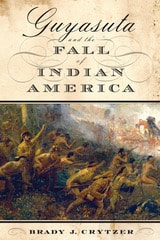
Guyasuta and the Fall of Indian America
Brady J. Crytzer
Westholme Publishing, 2013
Nearly a century before the United States declared the end of the Indian Wars, the fate of Native Americans was revealed in the battle of Fallen Timbers. In 1794, General Anthony Wayne led the first American army— the Legion of the United States—against a unified Indian force in the Ohio country. The Indians were routed and forced to vacate their lands. It was the last of a series of Indian attempts in the East to retain their sovereignty and foreshadowed what would occur across the rest of the continent. In Guyasuta and the Fall of Indian America, historian Brady J. Crytzer traces how American Indians were affected by the wars leading to American Independence through the life of one of the period’s most influential figures. Born in 1724, Guyasuta is perfectly positioned to understand the emerging political landscape of America in the tumultuous eighteenth century. As a sachem of the vaunted Iroquois Confederacy, for nearly fifty years Guyasuta dedicated his life to the preservation and survival of Indian order in a rapidly changing world, whether it was on the battlefield, in the face of powerful imperial armies, or around a campfire negotiating with his French, British, and American counterparts. Guyasuta was present at many significant events in the century, including George Washington’s expedition to Fort Le Boeuf, the Braddock disaster of 1755, Pontiac’s Rebellion and the Battle of Bushy Run in 1763, and the Battle of Oriskany during the American Revolution. Guyasuta’s involvement in the French and British wars and the American War for Independence were all motivated by a desire to retain relevance for Indian society. It was only upon the birth of the United States of America that Guyasuta finally laid his rifle down and watched as his Indian world crumbled beneath his feet. A broken man, debilitated by alcoholism, he died near Pittsburgh in 1794.
Supported by extensive research and full of compelling drama, Guyasuta and the Fall of Indian America unravels the tangled web of alliances, both white and native, and explains how the world of the American Indians could not survive alongside the emergent United States.
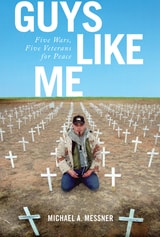
Guys Like Me
Five Wars, Five Veterans for PeaceMessner, Michael A
Rutgers University Press, 2019
Guys Like Me introduces us to five ordinary men who have done extraordinary work as peace activists: World War II veteran Ernie Sanchez, Korean War veteran Woody Powell, Vietnam veteran Gregory Ross, Gulf War veteran Daniel Craig, and Operation Iraqi Freedom veteran Jonathan Hutto. Acclaimed sociologist Michael Messner offers rich profiles of each man, recounting what led him to join the armed forces, what he experienced when fighting overseas, and the guilt and trauma he experienced upon returning home. He reveals how the pain and horror of the battlefront motivated these onetime warriors to reconcile with former enemies, get involved as political activists, and help younger generations of soldiers.
Guys Like Me is an inspiring multigenerational saga of men who were physically or psychically wounded by war, but are committed to healing themselves and others, forging a path to justice, and replacing endless war with lasting peace
Guys Like Us
Citing Masculinity in Cold War PoeticsMichael Davidson
University of Chicago Press, 2003