Results by title
157 books match the query 'African Americans in literature' and 4 start with h
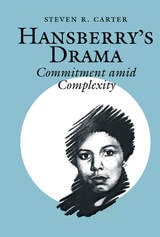
Hansberry's Drama
COMMITMENT AMID COMPLEXITYSteven R. Carter
University of Illinois Press, 1991
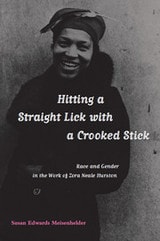
Hitting A Straight Lick with a Crooked Stick
Race and Gender in the Work of Zora Neale HurstonSusan E Meisenhelder
University of Alabama Press, 2001
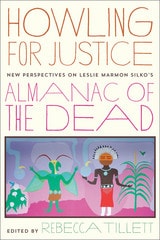
Howling for Justice
New Perspectives on Leslie Marmon Silko’s Almanac of the DeadEdited by Rebecca Tillett
University of Arizona Press, 2014
Howling for Justice actively engages with both the literary achievements and the politics of Silko’s text. It brings together essays by international scholars reacting to the novel while keeping in mind its larger concern with issues of social justice, both local and transnational. Aiming both to refocus critical attention and open the book to a broader array of readers, this collection offers fresh perspectives on its transnational vision, on its sociocultural, historical, and political ambitions, and on its continued relevance in the twenty-first century. The essays examine and explain some of the key points that readers and critics have identified as confusing, problematic, and divisive. Together, they offer new ways to approach and appreciate the text.
The book concludes with a new, never-before-published interview in which Silko reflects on the twenty years since the novel’s publication and relates the concerns of Almanac to her current work.
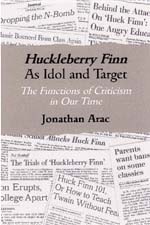
Huckleberry Finn as Idol and Target
The Functions of Criticism in Our TimeJonathan Arac
University of Wisconsin Press, 1997
If racially offensive epithets are banned on CNN air time and in the pages of USA Today, Jonathan Arac asks, shouldn’t a fair hearing be given to those who protest their use in an eighth-grade classroom? Placing Mark Twain’s comic masterpiece, Huckleberry Finn, in the context of long-standing American debates about race and culture, Jonathan Arac has written a work of scholarship in the service of citizenship.
Huckleberry Finn, Arac points out, is America’s most beloved book, assigned in schools more than any other work because it is considered both the “quintessential American novel” and “an important weapon against racism.” But when some parents, students, and teachers have condemned the book’s repeated use of the word “nigger,” their protests have been vehemently and often snidely countered by cultural authorities, whether in the universities or in the New York Times and the Washington Post. The paradoxical result, Arac contends, is to reinforce racist structures in our society and to make a sacred text of an important book that deserves thoughtful reading and criticism. Arac does not want to ban Huckleberry Finn, but to provide a context for fairer, fuller, and better-informed debates.
Arac shows how, as the Cold War began and the Civil Rights movement took hold, the American critics Lionel Trilling, Henry Nash Smith, and Leo Marx transformed the public image of Twain’s novel from a popular “boy’s book” to a central document of American culture. Huck’s feelings of brotherhood with the slave Jim, it was implied, represented all that was right and good in American culture and democracy. Drawing on writings by novelists, literary scholars, journalists, and historians, Arac revisits the era of the novel’s setting in the 1840s, the period in the 1880s when Twain wrote and published the book, and the post–World War II era, to refute many deeply entrenched assumptions about Huckleberry Finn and its place in cultural history, both nationally and globally. Encompassing discussion of Harriet Beecher Stowe, Frederick Douglass, Ralph Ellison, Archie Bunker, James Baldwin, Shelley Fisher Fishkin, and Mark Fuhrman, Arac’s book is trenchant, lucid, and timely.