Results by title
336 books match the query 'Age' and 10 start with h
Hallyu 2.0
The Korean Wave in the Age of Social MediaSangjoon Lee and Abé Mark Nornes, editors
University of Michigan Press, 2015
Hispanic Philosophy in the Age of Discovery
Kevin White
Catholic University of America Press, 2018
Hispaniola
Caribbean Chiefdoms in the Age of ColumbusSamuel M. Wilson
University of Alabama Press, 1990
In 1492 the island of Hispaniola was inhabited by the Taino, an Indian group whose ancestors had moved into the Caribbean archipelago from lowland South America more than 1,500 years before. They were organized politically into large cacicazgos, or chiefdoms, comprising 70 or more villages under the authority of a paramount cacique, or chief. From the first voyage on, Columbus made Hispaniola his primary base for operations in the New World. Over the subsequent decades, disease, warfare, famine, and enslavement brought about the destruction of the Taino chiefdoms and almost completely annihilated the aboriginal population of the island.
This book examines the early years of the contact period in the Caribbean and in narrative form reconstructs the social and political organization of the Taino. Wilson describes in detail the interactions between the Taino and the Spaniards, with special attention paid to the structure and functioning of the Taino chiefdoms. By providing additional information from archaeology and recent ethnography, he builds a rich context within which to understand the Taino and their responses to the Europeans.
The Taino are especially important in a New World context because they represent a society undergoing rapid sociopolitical change and becoming more complex through time. The early contact period on Hispaniola gives us a rich ethnohistorical glimpse of the political processes of a complex New World society before and during its destruction brought about by the arrival of the Europeans.
History 4° Celsius
Search for a Method in the Age of the AnthropoceneIan Baucom
Duke University Press, 2020
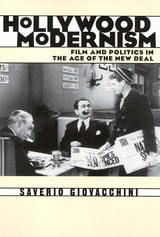
Hollywood Modernism
Film & Politics In Age Of New DealSaverio Giovacchini
Temple University Press, 2001
Seeing Hollywood as a forcefield, Giovacchini examines the social networks, working relationships, and political activities of artists, intellectuals, and film workers who flocked to Hollywood from Europe and the eastern United States before and during the second world war. He creates a complex and nuanced portrait of this milieu, adding breadth and depth to the conventional view of the era's film industry as little more than an empire for Jewish moguls or the major studios. In his rendering Hollywood's newcomers joined with its established elite to develop a modernist aesthetic for film that would bridge popular and avant-garde sensibilities; for them, realism was the most effective vehicle for conveying their message and involving a mass audience in the democratic struggle for process.
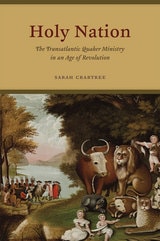
Holy Nation
The Transatlantic Quaker Ministry in an Age of RevolutionSarah Crabtree
University of Chicago Press, 2015
Holy Nation convincingly shows that ideals and actions were inseparable for the Society of Friends, yielding an account of Quakerism that is simultaneously a history of the faith and its adherents and a history of its confrontations with the wider world. Ultimately, Crabtree argues, the conflicts experienced between obligations of church and state that Quakers faced can illuminate similar contemporary struggles.
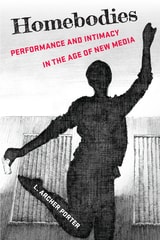
Homebodies
Performance and Intimacy in the Age of New MediaL. Archer Porter
University of Michigan Press, 2026
Homebodies: Performance and Intimacy in the Age of New Media sheds light on a fascinating yet often overlooked phenomenon: how ordinary people transform their private lives into captivating performances for the digital stage. Focusing on home dance videos shared on Instagram from 2010 to 2020, the book explores the delicate art of "intimaesthetics"—the aestheticization of intimacy through the interplay of body, space, and media—and the paradox of the homebody. These seemingly spontaneous performances reveal how users craft images of closeness and authenticity, drawing audiences into a curated version of their domestic lives. Yet, Porter argues, these intimate portrayals exist within a larger system of platform control, algorithmic surveillance, and the commodification of personal expression.
Porter utilizes hand-drawn illustrations in place of screenshots, which reflects their commitment to critiquing the exploitative dynamics of digital visibility while respecting the personal nature of the media studied. By examining the intersection of personal agency, algorithmic control, and the commodification of authenticity, Homebodies provides a nuanced understanding of how technology redefines intimacy, identity, and creativity in the twenty-first century.
How Politicians Polarize
Political Representation in an Age of Negative PartisanshipMia Costa
University of Chicago Press, 2025
A fresh examination of political representation in an era of negative partisanship.
What does representation look like when politicians focus on "othering" the opposing party rather than the policy interests of their constituents? How do voters react to negative partisan rhetoric? And is policy responsiveness still the cornerstone of American representative democracy?
In How Politicians Polarize, Mia Costa draws on survey experiments, analysis of congressional newsletters and tweets, and data on fundraising and media coverage to examine how and why politicians rely so often on negative partisan attacks. Costa shows that most Americans do not like negative rhetoric, and politicians know this. Nonetheless, these kinds of attacks can reap powerful rewards from national media, donors, and party elites. Costa’s findings challenge the popular notion that Americans are motivated more by their partisan identities than by policy representation. Her research illuminates how the political ecosystem rewards negative representation and how this affects the quality of American democracy.
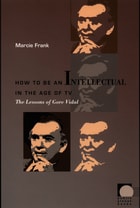
How to Be an Intellectual in the Age of TV
The Lessons of Gore VidalMarcie Frank
Duke University Press, 2005
Frank highlights the connections between Vidal’s attitudes toward TV, sex, and American politics as they have informed his literary and political writings and screen appearances. She deftly situates his public persona in relation to those of Andy Warhol, Jacqueline Susann, Mary McCarthy, Susan Sontag, and others. By describing Vidal’s shrewd maneuvering between different media, Frank suggests that his career offers a model to aspiring public intellectuals and a refutation to those who argue that electronic media have eviscerated public discourse.
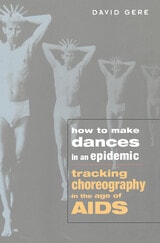
How to Make Dances in an Epidemic
Tracking Choreography in the Age of AIDSDavid Gere
University of Wisconsin Press, 2004
David Gere, who came of age as a dance critic at the height of the AIDS epidemic, offers the first book to examine in depth the interplay of AIDS and choreography in the United States, specifically in relation to gay men. The time he writes about is one of extremes. A life-threatening medical syndrome is spreading, its transmission linked to sex. Blame is settling on gay men. What is possible in such a highly charged moment, when art and politics coincide?
Gere expands the definition of choreography to analyze not only theatrical dances but also the protests conceived by ACT-UP and the NAMES Project AIDS quilt. These exist on a continuum in which dance, protest, and wrenching emotional expression have become essentially indistinguishable. Gere offers a portrait of gay male choreographers struggling to cope with AIDS and its meanings.