Results by title
653 books match the query 'Animals' and 16 start with h

Hagfish Slime and Lobster Rolls
Ellen Prager
University of Chicago Press, 2011
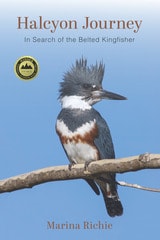
Halcyon Journey
In Search of the Belted KingfisherMarina Richie
Oregon State University Press, 2022
Winner of a 2022 National Outdoor Award
Winner of a Foreword INDIES Award
More than one hundred species of kingfishers brighten every continent but Antarctica. Not all are fishing birds. They range in size from the African dwarf kingfisher to the laughing kookaburra of Australia. This first book to feature North America’s belted kingfisher is a lyrical story of observation, revelation, and curiosity in the presence of flowing waters.
The kingfisher—also known as the halcyon bird—is linked to the mythic origin of halcyon days, a state of happiness that Marina Richie hopes to find outside her back door in Missoula, Montana. Epiphanies and a citizen science discovery punctuate days tracking a bird that outwits at every turn. The female is more colorful than the male (unusual and puzzling) and the birds’ earthen nest holes are difficult to locate.
While the heart of the drama takes place on Rattlesnake Creek in Missoula, the author’s adventures in search of kingfisher kin on the lower Rio Grande, in South Africa, and in London illuminate her relationships with the birds of Montana. In the quiet of winter, she explores tribal stories of the kingfisher as messenger and helper, pivotal qualities for her quest. For all who love birds or simply seek solace in nature, Halcyon Journey is an inviting introduction to the mythic and mysterious belted kingfisher.
Half Wild
People, Dogs, and Environmental PolicyDave Dempsey
Michigan State University Press, 2023
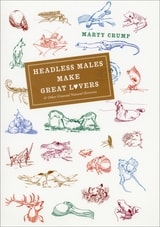
Headless Males Make Great Lovers
And Other Unusual Natural HistoriesMarty Crump
University of Chicago Press, 2005
Headless Males Make Great Lovers and Other Unusual Natural Histories celebrates the extraordinary world of animals with essays on curious creatures and their amazing behaviors. In five thematic chapters, Marty Crump—a tropical field biologist well known for her work with the reproductive behavior of amphibians—examines the bizarre conduct of animals as they mate, parent, feed, defend themselves, and communicate. Crump's enthusiasm for the unusual behaviors she describes-from sex change and free love in sponges to aphrodisiac concoctions in bats-is visible on every page, thanks to her skilled storytelling, which makes even sea slugs, dung beetles, ticks, and tapeworms fascinating and appealing. Steeped in biology, Headless Males Make Great Lovers points out that diverse and unrelated animals often share seemingly bizarre behaviors—evidence, Crump argues, that these natural histories, though outwardly weird, are successful ways of living.
Illustrated throughout, and filled with vignettes of personal and scientific interest, Headless Males Make Great Lovers will enchant the general reader with its tales of blood-squirting horned lizards and intestine-ejecting sea cucumbers—all in the service of a greater appreciation of the diversity of the natural histories of animals.
Healing the Herds
Disease, Livestock Economies, and the Globalization of Veterinary MedicineKaren Brown
Ohio University Press, 2010
During the early 1990s, the ability of dangerous diseases to pass between animals and humans was brought once more to the public consciousness. These concerns continue to raise questions about how livestock diseases have been managed over time and in different social, economic, and political circumstances. Healing the Herds: Disease, Livestock Economies, and the Globalization of Veterinary Medicine brings together case studies from the Americas, western Europe, and the European and Japanese colonies to illustrate how the rapid growth of the international trade in animals through the nineteenth century engendered the spread of infectious diseases, sometimes with devastating consequences for indigenous pastoral societies. At different times and across much of the globe, livestock epidemics have challenged social order and provoked state interventions, often opposed by farmers and herders. The intensification of agriculture has transformed environments, with consequences for animal and human health.
But the last two centuries have also witnessed major changes in the way societies have conceptualized diseases and sought to control them. From the late nineteenth century, advances in veterinary technologies afforded veterinary scientists a new professional status and allowed them to wield greater political influence. While older methods have remained important to strategies of control and prevention, as demonstrated during the outbreak of foot-and-mouth disease in Britain in 2001, the rise of germ theories and the discovery of vaccines against some infections made it possible to move beyond the blunt tools of animal culls and restrictive quarantines of the past. Healing the Herds: Disease, Livestock Economies, and the Globalization of Veterinary Medicine offers a new and exciting comparative approach to the complex interrelationships of microbes, markets, and medicine in the global economy.
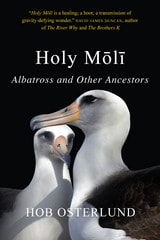
Holy Moli
Albatross and Other AncestorsHob Osterlund
Oregon State University Press, 2016
In Hawaiian mythology, ancestors may occupy the physical forms of animals known as 'aumakua. Laysan albatross—known as moli—are among them. Smitten with these charismatic creatures, Osterlund set out to learn everything she could about moli. She eventually came to embrace them as her 'aumakua—not as dusty old myths on a museum bookshelf, but as breathing, breeding, boisterous realities.
Albatross sport many superlative qualities. They live long—sometimes longer than sixty years—and spend the majority of their time airborne, gliding across vast oceanic expanses. They are model mates and devoted parents, and are among the only animals known to take long-term same-sex partners. In nesting season, they rack up inconceivable mileage just to find supper for chicks waiting on the islands of the Hawaiian archipelago.
It is from the island of Kaua'i that Holy Moli takes flight. Osterlund relates a true tale of courage, celebration and grief—of patience, affection and resilience. This is the story of how albatross guided the author on her own long journey, retracing distances and decades, back to the origin of a binding bargain she struck when she was ten years old, shortly after her mother’s death.
Holy Moli is a natural history of the albatross, a moving memoir of grief, and a soaring tribute to ancestors. Within its pages are lyrics of wonder—for freedom, for beauty, and for the far-flung feathered creatures known to us as albatross.
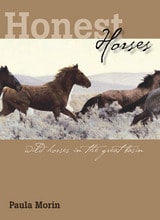
Honest Horses
Wild Horses In The Great BasinPaula Morin
University of Nevada Press, 2006
Horses have been part of the American West since the first Spanish explorers brought their European-bred steeds onto the new continent. Soon thereafter, some of these animals, lost or abandoned by their owners or captured by indigenous peoples, became the foundation of the great herds of mustangs (from the Spanish mesteño, stray) that still roam the West. These feral horses are inextricably intertwined with the culture, economy, and mythology of the West. The current situation of the mustangs as vigorous competitors for the scanty resources of the West’s drought-parched rangelands has put them at the center of passionate controversies about their purpose, place, and future on the open range. Photographer/oral historian Paula Morin has interviewed sixty-two people who know these horses best: ranchers, horse breeders and trainers, Native Americans, veterinarians, wild horse advocates, mustangers, range scientists, cowboy poets, western historians, wildlife experts, animal behaviorists, and agents of the federal Bureau of Land Management. The result is the most comprehensive, impartial examination yet of the history and impact of wild mustangs in the Great Basin. Morin elicits from her interviewees a range of expertise, insight, and candid opinion about the nature of horses, ranching, and the western environment. Honest Horses brings us the voices of authentic westerners, people who live intimately with horses and the land, who share their experiences and love of the mustangs, and who understand how precariously all life exists in Great Basin.
Honey, I'm Homemade
Sweet Treats from the Beehive across the Centuries and around the WorldEdited by May Berenbaum, Illustrated by Nils Cordes
University of Illinois Press, 2010
Hormones, Brain, and Behavior
Edited by Carl Gans and David Crews
University of Chicago Press, 1992
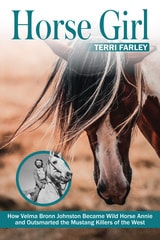
Horse Girl
How Velma Bronn Johnston Became Wild Horse Annie and Outsmarted the Mustang Killers of the WestTerri Farley
University of Nevada Press, 2026
The American mustang—wild, wind-tossed, and thundering across the open West—might have vanished into myth if not for Velma Bronn Johnston. A shy woman who was left with physical effects from a childhood battle with polio, Johnston was living a quiet life on a struggling ranch near Reno, Nevada, when she discovered wild horses being brutally transported to slaughter. Outraged, she reported it—only to be offered a permit allowing her to do the same horrific deed. But instead of backing down, Johnston took a stand.
Her refusal to profit from cruelty launched her into a firestorm of activism, upending her life. Laughed at, threatened, and dismissed, she pressed on. When a rival mocked her as “Wild Horse Annie,” she seized the name as a badge of honor and purpose. Embracing her new identity, she began to raid illegal holding pens under the cover of darkness, captivated the media, and became the voice of a movement. Her biggest allies? Schoolchildren across America, whose letter-writing campaign swept the country.
Johnston’s commitment to these majestic animals was finally recognized in 1971 when Congress unanimously passed legislation to protect the nation’s wild horses—an enduring victory for one determined woman and the animals she refused to abandon.
Award-winning author Terri Farley presents the captivating story of Horse Girl, revealing Velma Bronn Johnston in a new light through family photos and journal entries never before published. Farley’s storytelling brings Johnston’s unwavering courage into the spotlight, revealing a woman determined to protect the wild mustang—no matter the cost.
Horsing Around in New Jersey
The Horse Lover's Guide to Everything EquineZatz, Arline
Rutgers University Press, 2004
Arline Zatz has writtenthe first guidebook to everything equine in the Garden State: Horsing Around in New Jersey. This accessible, easy-to-use volume is essential reading for the novice who yearns to go horseback riding but doesn't know how or where to begin; for the experienced equestrian seeking new trails and campsites; for anyone wishing to attend an equestrian event; and for those seeking a job in the equestrian field, which already employs nearly 6,000 New Jerseyans. The industry generates more than 650 million dollars in annual revenue. Millions of people attend equine events in New Jersey each year. The U.S. Equestrian team makes its home there, and New Jersey's state animal is the horse.
Zatz tells readers--including those with disabilities--where they can take lessons, rent a horse, and prepare for riding. She includes safety and first aid tips. Horse history and breeds common to New Jersey are discussed, as are health concerns, including diseases, preventative medicine, and emergency care. The book showcases New Jersey's eighty-five equestrian trails and covers information on where to obtain riding permits and their accompanying rules and regulations. There is advice for both new horse owners and renters, including recommendations on tack and clothing, stable management, and horse adoption.
The book acquaints readers with year-round equine entertainment opportunities, and offers dozens of suggestions on where to watch or participate in sports on horseback. Zatz lists equine education programs for all ages, and outlines numerous employment opportunities within the equine industry. The book concludes with a glossary of common horse industry terminology, a listing of national equine associations and breed registries, equipment sources, and equine publications for further reading.
How Animals Grieve
Barbara J. King
University of Chicago Press, 2013
How Primates Eat
A Synthesis of Nutritional Ecology across a Mammal OrderEdited by Joanna E. Lambert, Margaret A. H. Bryer, and Jessica M. Rothman
University of Chicago Press, 2024
What do we mean when we say that a diet is nutritious? Why can some animals get all the energy they need from eating leaves while others would perish on such a diet? Why don’t mountain gorillas eat fruit all day as chimpanzees do? Answers to these questions about food and feeding are among the many tasty morsels that emerge from this authoritative book. Informed by the latest scientific tools and millions of hours of field and laboratory work on species across the primate order and around the globe, this volume is an exhaustive synthesis of our understanding of what, why, and how primates eat. State-of-the-art information presented at physiological, behavioral, ecological, and evolutionary scales will serve as a road map for graduate students, researchers, and practitioners as they work toward a holistic understanding of life as a primate and the urgent conservation consequences of diet and food availability in a changing world.
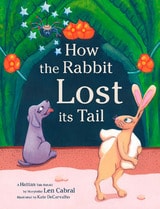
How the Rabbit Lost its Tail
A Haitian TaleLen Cabral
Parkhurst Brothers, Inc., 2020
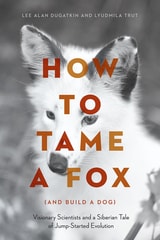
How to Tame a Fox (and Build a Dog)
Visionary Scientists and a Siberian Tale of Jump-Started EvolutionLee Alan Dugatkin and Lyudmila Trut
University of Chicago Press, 2017
Most accounts of the natural evolution of wolves place it over a span of about 15,000 years, but within a decade, Belyaev and Trut’s fox breeding experiments had resulted in puppy-like foxes with floppy ears, piebald spots, and curly tails. Along with these physical changes came genetic and behavioral changes, as well. The foxes were bred using selection criteria for tameness, and with each generation, they became increasingly interested in human companionship. Trut has been there the whole time, and has been the lead scientist on this work since Belyaev’s death in 1985, and with Lee Dugatkin, biologist and science writer, she tells the story of the adventure, science, politics, and love behind it all. In How to Tame a Fox, Dugatkin and Trut take us inside this path-breaking experiment in the midst of the brutal winters of Siberia to reveal how scientific history is made and continues to be made today.
To date, fifty-six generations of foxes have been domesticated, and we continue to learn significant lessons from them about the genetic and behavioral evolution of domesticated animals. How to Tame a Fox offers an incredible tale of scientists at work, while also celebrating the deep attachments that have brought humans and animals together throughout time.
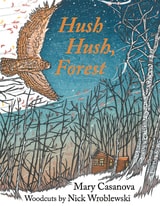
Hush Hush, Forest
Mary Casanova
University of Minnesota Press, 2018
Lyrical words and elegant woodcuts capture the quiet beauty of the forest as day fades to night and autumn gives way to the North Woods winter
While we are tucked in, snug in warm blankets as we listen to bedtime stories, the woods around us whisper another tale. As the golden leaves waft through the lengthening shadows, the loon sings one last lullaby, the whirring hummingbird takes one last sip, the industrious beaver saws one last branch for her lodge. Here, in enchanting words and woodcuts, is the magic of night falling and winter approaching in the North Woods. Hush Hush, Forest peers through twilight’s window at the raccoon preening, the doe and fawn bedding down, the last bat of the season flitting away. The owl surveys, the rabbit scurries, the bear hunkers, readying her den.
Marking the rhythm between the falling leaf and the falling snowflake, picturing the rituals of creatures big and small as they prepare for the long winter’s sleep, this charming book captures a time of surpassing wonder for readers of all ages—and bids everyone in the hushed forest a peaceful good night.