Results by title
1038 books match the query 'Antiquities' and 42 start with h
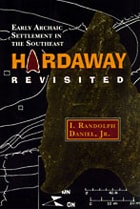
Hardaway Revisited
Early Archaic Settlement in the SoutheastI. Randolph Daniel, Jr.
University of Alabama Press, 1998
A landmark reassessment of Early Archaic settlement and adaptation in the southeastern United States.
Since the early 1970s, southeastern archaeologists have focused their attention on identifying the function of prehistoric sites and settlement practices during the Early Archaic period (ca. 9,000-10,500 B.P.). The Hardaway site in the North Carolina Piedmont, one of the most important archaeological sites in eastern North America, has not yet figured notably in this research. Daniel's reanalysis of the Hardaway artifacts provides a broad range of evidence—including stone tool morphology, intrasite distributions of artifacts, and regional distributions of stoneraw material types—that suggests that Hardaway played a unique role in Early Archaic settlement.
The Hardaway site functioned as a base camp where hunting and gathering groups lived for extended periods. From this camp they exploited nearby stone outcrops in the Uwharrie Mountains to replenish expended toolkits. Based on the results of this study, Daniel's new model proposes that settlement was conditioned less by the availability of food resources than by the limited distribution of high-quality knappable stone in the region. These results challenge the prevalent view of Early Archaic settlement that group movement was largely confined by the availability of food resources within major southeastern river valleys.
Hawaii’s Past in a World of Pacific Islands
James M. Bayman
University Press of Colorado, 2013

Heaven, Hell, and Everything in Between
Murals of the Colonial AndesBy Ananda Cohen-Aponte
University of Texas Press, 2016
Examining the vivid, often apocalyptic church murals of Peru from the early colonial period through the nineteenth century, Heaven, Hell, and Everything in Between explores the sociopolitical situation represented by the artists who generated these murals for rural parishes. Arguing that the murals were embedded in complex networks of trade, commerce, and the exchange of ideas between the Andes and Europe, Ananda Cohen-Aponte also considers the ways in which artists and viewers worked through difficult questions of envisioning sacredness.
This study brings to light the fact that, unlike the murals of New Spain, the murals of the Andes possess few direct visual connections to a pre-Columbian painting tradition; the Incas’ preference for abstracted motifs created a problem for visually translating Catholic doctrine to indigenous congregations, as the Spaniards were unable to read Inca visual culture. Nevertheless, as Cohen Suarez demonstrates, colonial murals of the Andes can be seen as a reformulation of a long-standing artistic practice of adorning architectural spaces with images that command power and contemplation. Drawing on extensive secondary and archival sources, including account books from the churches, as well as on colonial Spanish texts, Cohen Suarez urges us to see the murals not merely as decoration or as tools of missionaries but as visual archives of the complex negotiations among empire, communities, and individuals.
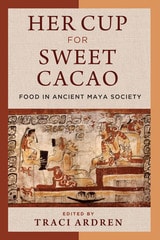
Her Cup for Sweet Cacao
Food in Ancient Maya SocietyEdited by Traci Ardren
University of Texas Press, 2020
For the ancient Maya, food was both sustenance and a tool for building a complex society. This collection, the first to focus exclusively on the social uses of food in Classic Maya culture, deploys a variety of theoretical approaches to examine the meaning of food beyond diet—ritual offerings and restrictions, medicinal preparations, and the role of nostalgia around food, among other topics. For instance, how did Maya feasts build community while also reinforcing social hierarchy? What psychoactive substances were the elite Maya drinking in their caves, and why? Which dogs were good for eating, and which breeds became companions? Why did even some non-elite Maya enjoy cacao, but rarely meat? Why was meat more available for urban Maya than for those closer to hunting grounds on the fringes of cities? How did the molcajete become a vital tool and symbol in Maya gastronomy?
These chapters, written by some of the leading scholars in the field, showcase a variety of approaches and present new evidence from faunal remains, hieroglyphic texts, chemical analyses, and art. Thoughtful and revealing, Her Cup for Sweet Cacao unlocks a more comprehensive understanding of how food was instrumental to the development of ancient Maya culture.
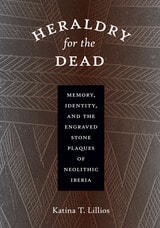
Heraldry for the Dead
Memory, Identity, and the Engraved Stone Plaques of Neolithic IberiaBy Katina T. Lillios
University of Texas Press, 2008
In the late 1800s, archaeologists began discovering engraved stone plaques in Neolithic (3500-2500 BC) graves in southern Portugal and Spain. About the size of one's palm, usually made of slate, and incised with geometric or, more rarely, zoomorphic and anthropomorphic designs, these plaques have mystified generations of researchers. What do their symbols signify? How were the plaques produced? Were they worn during an individual's lifetime, or only made at the time of their death? Why, indeed, were the plaques made at all?
Employing an eclectic range of theoretical and methodological lenses, Katina Lillios surveys all that is currently known about the Iberian engraved stone plaques and advances her own carefully considered hypotheses about their manufacture and meanings. After analyzing data on the plaques' workmanship and distribution, she builds a convincing case that the majority of the Iberian plaques were genealogical records of the dead that served as durable markers of regional and local group identities. Such records, she argues, would have contributed toward legitimating and perpetuating an ideology of inherited social difference in the Iberian Late Neolithic.

Heritage and Change
Southern Paiute and Chemehuevi Nuwuvi Basketry, 1870 to 2026Catherine S. Fowler
Museum of New Mexico Press, 2026
This publication, years in the making, includes chapters by Catherine S. Fowler, Judith W. Finger, John J. Kania, and Larry Dalrymple that explore the cultural history of the Nuwuvi people, the work of known weavers, and the characteristics and development of Nuwuvi basketry from the 1870s to 2022. It focuses particularly on the fine-coiled work produced during the American Arts and Crafts Movement period of the 1890s to 1930s. Working separately and together, the authors analyzed over 1,200 baskets in museum collections across the United States, from the Smithsonian Institution in Washington, D.C., to the Lost City Museum in Henderson, Nevada. They researched the baskets’ collectors—from John Wesley Powell to Helen J. Stewart and Isabel T. Kelly—and conducted interviews with contemporary weavers. In order to give the reader as broad a visual understanding of Nuwuvi coiled baskets as possible, images of baskets from the collection of Judith and Andrew Finger are included. The book is lavishly illustrated with archival and contemporary photographs.
Heritage or Heresy
Archaeology and Culture on the Maya RivieraCameron Jean Walker
University of Alabama Press, 2008
How can we effectively interpret and present one culture to another without stereotypes or over-simplifications? What is the best way to present an authoritative version of a national heritage without also endangering ancient sites or being insensitive to the local customs, beliefs, and religious practices of the indigenous peoples?
This volume addresses the ongoing thrust in archaeology to take the next step after preserving the past: interpreting that past for the future. That future audience includes both local citizens and tourists who may have little background in archaeology, anthropology, or the history of the culture featured. Walker presents the key components of the anthropological study of tourism as a global phenomenon, with particular emphasis on the more prominent arguments for how and why tourism is a universal and meaningful human activity. The highly controversial topic of authenticity is examined, with special attention given to how "authentic" has been defined and how it relates to the ways in which archaeological sites, artifacts, and cultural traditions are presented--or not presented--to the visiting public. The ephemeral promise of “authenticity” drives the heritage tourism industry, which is a key consideration for the long term economy of the Maya Riviera and elsewhere. Through analysis of seven archaeological sites on the Yucatan peninsula that are open to heritage touring, Walker reveals the planned growth of the Maya Riviera since the early 1970s and examines the impact of international tourism on both ancient structures and the contemporary Maya people and culture.
Heroic Offerings
The Terracotta Plaques from the Spartan Sanctuary of Agamemnon and KassandraGina Salapata
University of Michigan Press, 2015
This volume focuses on a large group of decorated terracotta plaques, from the sixth to fourth centuries BCE. These molded plaques were discovered with other offerings in a sanctuary deposit excavated near Sparta more than fifty years ago, but they have remained unpublished until now. They number over 1,500 complete and fragmentary pieces. In technique, style, and iconography they form a homogeneous group unlike any other from mainland Greece. The large number of plaques and variety of types reveal a stable and vigorous coroplastic tradition in Lakonia during the late Archaic and Classical period.
Heroic Offerings will be of interest to students and scholars of Greek history, art, and archaeology, to those interested in ancient religious practice in the Mediterranean, and to all inspired by Athens’ chief political rival, Sparta.
This volume received financial support from the Archaeological Institute of America.
Heterarchy, Political Economy, and the Ancient Maya
The Three Rivers Region of the East-Central Yucatán PeninsulaEdited by Vernon L. Scarborough, Fred Valdez Jr., and Nicholas Dunning
University of Arizona Press, 2003
Hidden Thunder
Rock Art of the Upper MidwestGeri Schrab
Wisconsin Historical Society Press, 2016
In Hidden Thunder, renowned watercolor artist Geri Schrab and archaeologist Robert "Ernie" Boszhardt give readers an up-close-and-personal look at rock art. With an eye toward preservation, Schrab and Boszhardt take you with them as they research, document, and interpret at the ancient petroglyphs and pictographs made my Native Americans in past millennia. In addition to publicly accessible sites such as Wisconsin’s Roche-a-Cri State Park and Minnesota’s Jeffers Petroglyphs, Hidden Thunder covers the artistic treasures found at several remote and inaccessible rock art sites—revealing the ancient stories through words, full-color photographs, and artistic renditions.
Offering the duo perspectives of scientist and artist, Boszhardt shares the facts that archaeologists have been able to establish about these important artifacts of our early history, while Schrab offers the artist's experience, describing her emotional and creative response upon encountering and painting these sites. Viewpoints by members of the Menominee, Ho-Chunk, Ojibwe, and other Native nations offer additional insight on the historic and cultural significance of these sites. Together these myriad voices reveal layers of meaning and cultural context that emphasize why these fragile resources—often marred by human graffiti and mishandling or damage from the elements—need to be preserved.
Hinterland Households
Rural Agrarian Household Diversity in Northwest HondurasJohn G. Douglass
University Press of Colorado, 2002

Hinterlands and Regional Dynamics in the Ancient Southwest
Alan P. Sullivan
University of Arizona Press, 2007
Hinterlands to Cities
The Archaeology of Northwest Mexico and Its VecinosMatthew C. Pailes
University Press of Colorado, 2022
Historiae Britannicae Defensio / A Defence of the British History
John Prise
Bodleian Library Publishing, 2015
Historic Zuni Architecture and Society
An Archaeological Application of Space SyntaxT. J. Ferguson
University of Arizona Press, 1996
Historic Zuni Architecture and Society utilizes an interdisciplinary approach, analyzing archaeological data using method, theory, and techniques from the fields of architecture, planning, and ethnology. Archaeologists will find in the book an innovative application of space syntax to archaeological problems, and cultural anthropologists and others interested in the history of the Zuni Indians will value its observations about changes that are currently taking place in Zuni social organization.
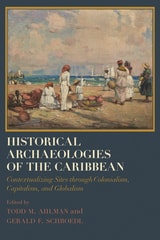
Historical Archaeologies of the Caribbean
Contextualizing Sites through Colonialism, Capitalism, and Globalismedited by Todd M. Ahlman and Gerald F. Schroedl
University of Alabama Press, 2019
Historical Archaeologies of the Caribbean: Contextualizing Sites through Colonialism, Capitalism, and Globalism addresses issues in Caribbean history and historical archaeology such as freedom, frontiers, urbanism, postemancipation life, trade, plantation life, and new heritage. This collection moves beyond plantation archaeology by expanding the knowledge of the diverse Caribbean experiences from the late seventeenth through the mid-nineteenth centuries.
The essays in this volume are grounded in strong research programs and data analysis that incorporate humanistic narratives in their discussions of Amerindian, freedmen, plantation, institutional, military, and urban sites. Sites include a sample of the many different types found across the Caribbean from a variety of colonial contexts that are seldom reported in archaeological research, yet constitute components essential to understanding the full range and depth of Caribbean history.
Contributors examine urban contexts in Nevis and St. John and explore the economic connections between Europeans and enslaved Africans in urban and plantation settings in St. Eustatius. The volume contains a pioneering study of frontier exchange with Amerindians in Dominica and a synthesis of ceramic exchange networks among enslaved Africans in the Leeward Islands. Chapters on military forts in Nevis and St. Kitts call attention to this often-neglected aspect of the Caribbean colonial landscape. Contributors also directly address culture heritage issues relating to community participation and interpretation. On St. Kitts, the legacy of forced confinement of lepers ties into debates of current public health policy. Plantation site studies from Antigua and Martinique are especially relevant because they detail comparisons of French and British patterns of African enslavement and provide insights into how each addressed the social and economic changes that occurred with emancipation.
Contributors
Todd M. Ahlman / Douglas V. Armstrong / Samantha Rebovich Bardoe / Paul Farnsworth / Jeffrey R. Ferguson / R. Grant Gilmore III / Diana González-Tennant / Edward González-Tennant / Barbara J. Heath / Carter L. Hudgins Kenneth G. Kelly / Eric Klingelhofer / Roger H. Leech / Stephan Lenik / Gerald F. Schroedl / Diane Wallman / Christian Williamson
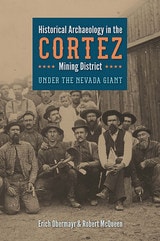
Historical Archaeology in the Cortez Mining District
Under the Nevada GiantErich Obermayr
University of Nevada Press, 2025
Readers interested in the archaeology of the West, mining history, and the history of Nevada will find this book fascinating.
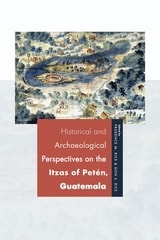
Historical and Archaeological Perspectives on the Itzas of Petén, Guatemala
Prudence M. Rice
University Press of Colorado, 2018
Historical and Archaeological Perspectives on the Itzas of Petén, Guatemala is the first exhaustively detailed and thorough account of the Itzas—a Maya group that dominated much of the western lowland area of tropical forest, swamps, and grasslands in Petén, Guatemala. Examining archaeological and historical evidence, Prudence Rice and Don Rice present a theoretical perspective on the Itzas’ origins and an overview of the social, political, linguistic, and environmental history of the area; explain the Spanish view of the Itzas during the Conquest; and explore the material culture of the Itzas as it has been revealed in recent surveys and excavations.
The long but fragmented history of the Petén Itzas requires investigation across multiple periods and regions. Chapters in this six-part overview interweave varying data pertaining to this group—archaeological, artifactual, indigenous textual, Spanish historical—from multiple languages and academic fields, such as anthropology, archaeology, linguistics, ecology, and history. Part I introduces the lowland Itzas, northern and southern, with an emphasis on those of the central Petén lakes area. Part II discusses general Itza origins and identities in the Epiclassic period, while part III reviews Spanish perceptions and misconceptions of the Petén Itzas in their Contact-period writings. With these temporal anchors, parts IV and V present the archaeology and artifacts of the Petén Itzas, including pottery, architecture, and arrow points, from varied sites and excavations but primarily focusing on the island capital of Tayza/Nojpetén. Part VI summarizes key data and themes of the preceding chapters for a new understanding of the Petén Itzas.
A companion volume to The Kowoj—a similar treatment of the Petén Itzas’ regional neighbors—Historical and Archaeological Perspectives on the Itzas of Petén, Guatemala demonstrates the unique physical, cultural, and social framework that was home to the Petén Itza, along with their backstory in northern Yucatán. Archaeologists, historians, art historians, and geographers who specialize in the Maya and the Postclassic, Contact, and Colonial periods will find this book of particular interest.
Contributors: Mark Brenner, Leslie G. Cecil, Charles Andrew Hofling, Nathan J. Meissner, Timothy W. Pugh, Yuko Shiratori
Histories of Southeastern Archaeology
Edited by Shannon Tushingham, Jane Hill, and Charles H. McNutt
University of Alabama Press, 2002
Histories of Southeastern Archaeology originated as a symposium at the 1999 Southeastern Archaeological Conference (SEAC) organized in honor of the retirement of Charles H. McNutt following 30 years of teaching anthropology. Written for the most part by members of the first post-depression generation of southeastern archaeologists, this volume offers a window not only into the archaeological past of the United States but also into the hopes and despairs of archaeologists who worked to write that unrecorded history or to test scientific theories concerning culture.
The contributors take different approaches, each guided by experience, personality, and location, as well as by the legislation that shaped the practical conduct of archaeology in their area. Despite the state-by-state approach, there are certain common themes, such as the effect (or lack thereof) of changing theory in Americanist archaeology, the explosion of contract archaeology and its relationship to academic archaeology, goals achieved or not achieved, and the common ground of SEAC.
This book tells us how we learned what we now know about the Southeast's unwritten past. Of obvious interest to professionals and students of the field, this volume will also be sought after by historians, political scientists, amateurs, and anyone interested in the South.
Additional reviews:
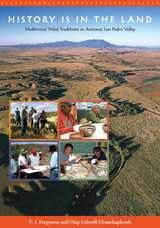
History Is in the Land
Multivocal Tribal Traditions in Arizona's San Pedro ValleyT. J. Ferguson and Chip Colwell-Chanthaphonh
University of Arizona Press, 2006
Previous research in the San Pedro Valley has focused on scientific archaeology and documentary history, with a conspicuous absence of indigenous voices, yet Native Americans maintain oral traditions that provide an anthropological context for interpreting the history and archaeology of the valley. The San Pedro Ethnohistory Project was designed to redress this situation by visiting archaeological sites, studying museum collections, and interviewing tribal members to collect traditional histories. The information it gathered is arrayed in this book along with archaeological and documentary data to interpret the histories of Native American occupation of the San Pedro Valley.
This work provides an example of the kind of interdisciplinary and politically conscious work made possible when Native Americans and archaeologists collaborate to study the past. As a methodological case study, it clearly articulates how scholars can work with Native American stakeholders to move beyond confrontations over who “owns” the past, yielding a more nuanced, multilayered, and relevant archaeology.
History of Ancient Israel
Christian Frevel
SBL Press, 2023
This English translation of the second edition of Christian Frevel’s essential textbook Geschichte Israels (Kohlhammer, 2018) covers the history of Israel from its beginnings until the Bar Kokhba revolt (132–135 CE). Frevel draws on archaeological evidence, inscriptions and monuments, as well as the Bible to sketch a picture of the history of ancient Israel within the context of the southern Levant that is sometimes familiar but often fresh and unexpected. Frevel has updated the second German edition with the most recent research of archaeologists and biblical scholars, including those based in Europe. Tables of rulers, a glossary, a timeline of the ancient Near East, and resources arranged by subject make this book an accessible, essential textbook for students and scholars alike.
Hohokam Along the Cañada del Oro
Specialized Land Use at the Rooney Ranch SiteEdited by Jeffrey T. Jones and Helen L. O’Brien
University of Arizona Press, 2026
This work presents the results of more than a decade of archaeological fieldwork at the Rooney Ranch site in Oro Valley, Arizona—an upland Hohokam village that played a key role in regional agave production. Edited by Jeffrey T. Jones and Helen L. O’Brien, this volume synthesizes extensive data collected by the Pima Community College Centre for Archaeological Field Training, offering a rare and richly detailed look at how small peripheral settlements contributed to the sustainability of larger Hohokam communities in the Sonoran Desert. Through GIS-based mapping and the analysis of ceramics, lithics, and faunal and botanical remains, the book reveals how specialized land use shaped the economic and social fabric of the region for centuries.
This legacy project stands out not only for its depth but also for its educational significance. As one of the few long-term, community-college-led excavations in the Southwest, the Rooney Ranch project highlights the vital role of student training and local collaboration in archaeological research. With more than seventy data-rich tables and contributions from leading specialists, this volume is an essential resource for archaeologists, historians, and anyone interested in Indigenous land use, desert adaptation, and the enduring legacy of the Hohokam in southern Arizona.
Contributors
Jon Boyd
Chance Copperstone
Michael W. Diehl
Linda M. Gregonis
Lea Mason-Kohlmeyer
Christine H. Virden-Lange
Holes in Our Moccasins, Holes in Our Stories
Apachean Origins and the Promontory, Franktown, and Dismal River Archaeological RecordsEdited by John W. Ives and Joel C. Janetski
University of Utah Press, 2022
This volume connects Steward’s work with results from new excavations in Promontory Caves 1 and 2 and illustrates that the early Promontory Phase resulted from an intrusive large-game hunting population very different from nearby late Fremont communities. Lingering for just one or two human generations, the cave occupants began to accept people as well as material and symbolic culture from surrounding thirteenth-century neighbors. Volume contributors employ a transdisciplinary approach to evaluate the possibility that the Promontory Phase materials reflect the presence of Apachean ancestors. In these records lies the seeds for the intensive Plains-Puebloan interactions of the centuries that followed.
Holocene Hunter-Gatherers of the Lower Ohio River Valley
Richard Jefferies
University of Alabama Press, 2009
Homol'ovi II
Archaeology of an Ancestral Hopi Village, ArizonaEdited by E. Charles Adams and Kelley Ann Hays
University of Arizona Press, 1991
Homol'ovi
An Ancient Hopi Settlement ClusterE. Charles Adams
University of Arizona Press, 2002
Charles Adams has directed fifteen years of research at these sites for the Arizona State Museum, including excavations in five of the seven primary Homol'ovi villages and in other villages predating them. Through this research he concludes that the founders of these settlements were Hopis who sought to protect their territory from migrating groups elsewhere in the Pueblo world. This book summarizes that research and broadens our understanding of the relationship of Homol'ovi to ancient and modern Hopi people.
Each Homol'ovi village had a unique history of establishment, growth, sociopolitical organization, length of occupation, and abandonment; and although the villages shared much in the way of material culture, their size and configuration were tremendously varied. By comparing Homol'ovi research to information from projects on other settlements in the area, Adams has been able to reconstruct a provocative history of the Homol'ovi cluster that includes relationships among the individual villages and their relationships to nearby clusters. He shows that social organization within villages is apparent by the number and variety of ritual structures, while political organization among villages is indicated by the need for cooperation to share water for irrigation and by the exchange of such materials as pottery, obsidian, and ground stone.
Adams advances several important theories about why Homol'ovi was founded where and when it was, who its founders were, and the importance of cotton in making Homol'ovi an important center of trade in the 1300s. He also considers why Pueblo settlements suddenly became so large, addressing theoretical issues pertaining to multiple settlements and the rise of enormous villages containing more than 1,000 rooms.
Homol'ovi is a rich work of synthesis and interpretation that will be important for anyone with an interest in Southwest archaeology, Arizona history, or Hopi culture. By considering the settlement trajectory of an entire cluster of sites, it will also prove valuable to archaeologists worldwide.
Hopi Oral Tradition and the Archaeology of Identity
Wesley Bernardini
University of Arizona Press, 2005
Wesley Bernardini now draws on an unconventional source, Hopi traditional knowledge, to show how hypotheses that are developed from oral tradition can stimulate new and productive ways to think about the archaeological record. Focusing on insights that oral tradition has to offer about general processes of prehistoric migration and identity formation, he describes how each Hopi clan acquired its particular identity from the experiences it accumulated on its unique migration pathway. This pattern of “serial migration” by small social groups often saw the formation of villages by clans that briefly came together and then moved off again independently, producing considerable social diversity both within and among villages.
Using Anderson Mesa and Homol’ovi as case studies, Bernardini presents architectural and demographic data suggesting that the fourteenth century occupation of these regions was characterized by population flux and diversity consistent with the serial migration model. He offers an analysis of rock art motifs—focusing on those used as clan symbols—to evaluate the diversity of group identities, then presents a compositional analysis of Jeddito Yellow Ware pottery to evaluate the diversity of these groups’ eventual migration destinations.
Evidence supporting serial migration greatly complicates existing notions of links between ancient and modern social groups, with important implications for the implementation of the Native American Graves Protection and Repatriation Act. Bernardini’s work clearly demonstrates that studies of cultural affiliation must take into account the fluid nature of population movements and identity in the prehistoric landscape. It takes a decisive step toward better understanding the major demographic change that occurred on the Colorado Plateau from 1275 to 1400 and presents a strategy for improving the reconstruction of cultural identity in the past.
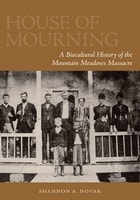
House of Mourning
A Biocultural History of the Mountain Meadows MassacreShannon A Novak
University of Utah Press, 2008
On September 11, 1857, some 120 men, women, and children from the Arkansas hills were murdered in the remote desert valley of Mountain Meadows, Utah. This notorious massacre was, in fact, a mass execution: having surrendered their weapons, the victims were bludgeoned to death or shot at point-blank range. The perpetrators were local Mormon militiamen whose motives have been fiercely debated for 150 years.
In House of Mourning, Shannon A. Novak goes beyond the question of motive to the question of loss. Who were the victims at Mountain Meadows? How had they settled and raised their families in the American South, and why were they moving west once again? What were they hoping to find or make for themselves at the end of the trail? By integrating archival records and oral histories with the first analysis of skeletal remains from the massacre site, Novak offers a detailed and sensitive portrait of the victims as individuals, family members, cultural beings, and living bodies.
The history of the massacre has often been treated as a morality tale whose chief purpose was to vilify (or to glorify) some collective body. Resisting this tendency to oversimplify the past, Novak explores Mountain Meadows as a busy and dangerous intersection of cultural and material forces in antebellum America. House of Mourning is a bold experiment in a new kind of history, the biocultural analysis of complex events.
Winner of the Society for Historical Archaeology James Deetz Book Award.
Household Archaeology at the Bridge River Site (EeRl4), British Columbia
Spatial Distributions of Features, Lithic Artifacts, and Faunal Remains on Fifteen Anthropogenic Floors from Housepit 54Anna Marie Prentiss, Ethan Ryan, Ashley Hampton, Kathryn Bobolinski, Pei-Lin Yu, Matthew Schmader, and Alysha Edwards
University of Utah Press, 2022
The authors take a methodological approach that integrates the study of household spatial organization with consideration of archaeological formation processes. Repeating the same set of analyses for each floor, they examine stability from standpoints of occupation and abandonment cycles, structure and organization of activity areas, and variation in positioning of wealth-related items. This volume is an outstanding example of research undertaken through a collaborative partnership between scholars from the University of Montana and the community of the St’át’imc Nation.
Household Chores and Household Choices
Theorizing the Domestic Sphere in Historical ArchaeologyEdited by Kerri S. Barile and James C. Brandon
University of Alabama Press, 2004
Discusses the concepts of “home,” “house,” and “household” in past societies
Because archaeology seeks to understand past societies, the concepts of "home," "house," and "household" are important. Yet they can be the most elusive of ideas. Are they the space occupied by a nuclear family or by an extended one? Is it a built structure or the sum of its contents? Is it a shelter against the elements, a gendered space, or an ephemeral place tied to emotion? We somehow believe that the household is a basic unit of culture but have failed to develop a theory for understanding the diversity of households in the historic (and prehistoric) periods.
In an effort to clarify these questions, this volume examines a broad range of households—a Spanish colonial rancho along the Rio Grande, Andrew Jackson's Hermitage in Tennessee, plantations in South Carolina and the Bahamas, a Colorado coal camp, a frontier Arkansas farm, a Freedman's Town eventually swallowed by Dallas, and plantations across the South—to define and theorize domestic space. The essays devolve from many disciplines, but all approach households from an archaeological perspective, looking at landscape analysis, excavations, reanalyzed collections, or archival records. Together, the essays present a body of knowledge that takes the identification, analysis, and interpretation of households far beyond current conceptions.
Household Economy at Wall Ridge
A Fourteenth-Century Central Plains Farmstead in the Missouri ValleyEdited by Stephen C. Lensink, Joseph A. Tiffany, and Shirley J. Schermer
University of Utah Press, 2020
Household Economy at Wall Ridge tells the story of a Native American household that occupied a lodge on the eastern Plains border during the early 1300s AD. Contributors use cutting-edge methods and the site’s unparalleled archaeological record to shed light on the daily technological, subsistence, and dietary aspects of the occupants’ lives. This work represents the first comprehensive study of a prehistoric Central Plains household in over half a century.
The research covers archaeobotany, zooarchaeology, dating, ceramics, lithics, bone and shell tools, diet, climate, ecology, and more. The study of plant and animal usage from the lodge stands as a tour de force of analytical methods, including stable isotope data that permit the discovery of dietary items missed by traditional studies. Many of these items have never been reported before from Central Plains sites. The book firmly sets the site’s occupancy at AD 1305, with a margin of error of only a few years. This result, based on high-precision dating methods, exceeds in accuracy all previously dated Plains lodges and provides a temporal backdrop for evaluating household activities.
Households on the Mimbres Horizon
Excavations at La Gila Encantada, Southwestern New MexicoBarbara J. Roth
University of Arizona Press, 2023
Little is known about the variability present at pithouse sites away from the major Mimbres and Gila River Valleys. Nonriverine occupations have been understudied until now. This book describes subsistence and settlement practices and compares the results with recent research conducted at the larger villages in the Mimbres River Valley. Despite basic similarities in material culture, households at La Gila Encantada appear to have followed different trajectories than those along the rivers. Examining these differences, archaeologist Barbara J. Roth provides insights into some of the reasons why they existed and shows that the variability present in pithouse occupations over the years was tied to multiple factors, including environmental differences, economic practices, and the social composition of groups occupying the sites. With chapters assessing ceramic data, chipped and groundstone analysis, shell and mineral jewelry, and regional context, this look at the past offers relevant insights into current issues in Southwest archaeology, including identity, interaction, and household organization.
Houses in a Landscape
Memory and Everyday Life in MesoamericaJulia A. Hendon
Duke University Press, 2010
Hendon conducted research on three contemporaneous Native American civilizations that flourished from the seventh century through the eleventh CE: the Maya kingdom of Copan, the hilltop center of Cerro Palenque, and the dispersed settlement of the Cuyumapa valley. She analyzes domestic life in these societies, from cooking to crafting, as well as public and private ritual events including the ballgame. Combining her findings with a rich body of theory from anthropology, history, and geography, she explores how objects—the things people build, make, use, exchange, and discard—help people remember. In so doing, she demonstrates how everyday life becomes part of the social processes of remembering and forgetting, and how “memory communities” assert connections between the past and the present.
How Writing Came About
By Denise Schmandt-Besserat
University of Texas Press, 1996
Top 100 Books on Science, American Scientist, 2001
In 1992, the University of Texas Press published Before Writing, Volume I: From Counting to Cuneiform and Before Writing, Volume II: A Catalog of Near Eastern Tokens. In these two volumes, Denise Schmandt-Besserat set forth her groundbreaking theory that the cuneiform script invented in the Near East in the late fourth millennium B.C.—the world's oldest known system of writing—derived from an archaic counting device.
How Writing Came About draws material from both volumes to present Schmandt-Besserat's theory for a wide public and classroom audience. Based on the analysis and interpretation of a selection of 8,000 tokens or counters from 116 sites in Iran, Iraq, the Levant, and Turkey, it documents the immediate precursor of the cuneiform script.
How the Incas Built Their Heartland
State Formation and the Innovation of Imperial Strategies in the Sacred Valley, PeruR. Alan Covey
University of Michigan Press, 2006
In How the Incas Built Their Heartland R. Alan Covey supplements an archaeological approach with the tools of a historian, forming an interdisciplinary study of how the Incas became sufficiently powerful to embark on an unprecedented campaign of territorial expansion and how such developments related to earlier patterns of Andean statecraft. In roughly a hundred years of military campaigns, Inca dominion spread like wildfire across the Andes, a process traditionally thought to have been set in motion by a single charismatic ruler, Pachacuti Inca Yupanqui. Taking nearly a century of archaeological research in the region around the Inca capital as his point of departure, Covey offers an alternative description of Inca society in the centuries leading up to imperial expansion. To do so, Covey proposes a new reading of the Spanish chronicles, one that focuses on processes, rather than singular events, occurring throughout the region surrounding Cusco, the Inca capital. His focus on long-term regional changes, rather than heroic actions of Inca kings, allows the historical and archaeological evidence to be placed on equal interpretive footing. The result is a narrative of Inca political origins linking Inca statecraft to traditions of Andean power structures, long-term ecological changes, and internal social transformations. By reading the Inca histories in a compatible way, Covey shows that it is possible to construct a unified theory of how the Inca heartland was transformed after AD 1000.
R. Alan Covey is Assistant Professor of Anthropology at Southern Methodist University.
How the Maya Built Their World
Energetics and Ancient ArchitectureBy Elliot M. Abrams
University of Texas Press, 1994
Maya architecture is often described as "massive" and "monumental," but experiments at Copan, Honduras, convinced Elliot Abrams that 300 people could have built one of the large palaces there in only 100 days.
In this groundbreaking work, Abrams explicates his theory of architectural energetics, which involves translating structures into volumes of raw and manufactured materials that are then multiplied by the time required for their production and assembly to determine the labor costs of past construction efforts. Applying this method to residential structures of the Late Classic period (A.D. 700-900) at Copan leads Abrams to posit a six-tiered hierarchic social structure of political decision making, ranging from a stratified elite to low-ranking commoners. By comparing the labor costs of construction and other economic activities, he also prompts a reconsideration of the effects of royal construction demands on commoners.
How the Maya Built Their World will interest a wide audience in New and Old World anthropology, archaeology, architecture, and engineering.
Human Adaptation in Ancient Mesoamerica
Empirical Approaches to Mesoamerican ArchaeologyNancy Gonlin
University Press of Colorado, 2016
This volume explores the dynamics of human adaptation to social, political, ideological, economic, and environmental factors in Mesoamerica and includes a wide array of topics, such as the hydrological engineering behind Teotihuacan’s layout, the complexities of agriculture and sustainability in the Maya lowlands, and the nuanced history of abandonment among different lineages and households in Maya centers.
The authors aptly demonstrate how culture is the mechanism that allows people to adapt to a changing world, and they address how ecological factors, particularly land and water, intersect with nonmaterial and material manifestations of cultural complexity. Contributors further illustrate the continuing utility of the cultural ecological perspective in framing research on adaptations of ancient civilizations.
This book celebrates the work of Dr. David Webster, an influential Penn State archaeologist and anthropologist of the Maya region, and highlights human adaptation in Mesoamerica through the scientific lenses of anthropological archaeology and cultural ecology.
Contributors include Elliot M. Abrams, Christopher J. Duffy, Susan Toby Evans, Kirk D. French, AnnCorinne Freter, Nancy Gonlin, George R. Milner, Zachary Nelson, Deborah L. Nichols, David M. Reed, Don S. Rice, Prudence M. Rice, Rebecca Storey, Kirk Damon Straight, David Webster, Stephen L. Whittington, Randolph J. Widmer, John D. Wingard, and W. Scott Zeleznik.
Hunter-Gatherer Archaeology as Historical Process
Edited by Kenneth E. Sassaman and Donald H. Holly Jr.
University of Arizona Press, 2011
Combining the latest empirical studies of archaeological practice with the latest conceptual tools of anthropological and historical theory, this volume seeks to set a new course for hunter-gatherer archaeology by organizing the chapters around three themes. The first section offers diverse views of the role of human agency, challenging the premise that hunter-gatherer societies were bound by their interactions with the natural world. The second section considers how society and culture are constituted. Chapters in the final section take the long view of the historical process, examining how cultural diversity arises out of interaction and the continuity of ritual practices.
A closing commentary by H. Martin Wobst underscores the promise of an archaeology of foragers that does not associate foraging with any particular ideology or social structure but instead invites inquiry into counterintuitive alternatives. Hunter-Gatherer Archaeology as Historical Process seeks to blur the divisions between prehistory and history, between primitive and modern, and between hunter-gatherers and people in other societies. Because it offers alternatives to the dominant discourse and contributes to the agenda of hunter-gatherer research, this book will be of interest to anyone involved in the study of foraging peoples.
Hunter-Gatherer Archaeology of the Colorado High Country
Mark Stiger
University Press of Colorado, 2001
Synthesizing research from several important, previously neglected sites, the book anchors its findings in a massive body of data that Mark Stiger gathered over eight years at Tenderfoot - a large lithic-scatter site once categorized as insignificant. Advances in spatial analysis, theoretical approaches, and excavation methods have allowed lithic-scatter sites, once considered less revealing than intact structures and similar sites, to yield startlingly rich cultural evidence.
Presenting artifactual data that reflects changes in houses, game drives, fire pits, stone tools, and debitage, Stiger explains the cultural sequence in the Upper Gunnison Basin and its connections to changes across the West. He relates environmental and cultural changes, relying on paleoenvironmental evidence, changes in floral and faunal usage patterns, and data recovered in multi-year, repetitive surface collections. An overview and critique of past research in the region complements discussion of the advantages of horizontally extensive block excavations and other contemporary ways of excavating and analyzing surface sites.
Stiger's findings hold promise for future research, as high-altitude surface sites are common, under-researched, and relatively well-preserved. The advances in archaeological method and theory that enabled Stiger's outstanding results in the Upper Gunnison Basin will allow many other Western sites to yield fascinating evidence.
Hunter-Gatherer Mortuary Practices during the Central Texas Archaic
By Leland C. Bement
University of Texas Press, 1995
Beginning over 10,000 years ago and continuing until the arrival of the Spanish in the 1500s, hunter and gatherer societies occupied the Edwards Plateau of central Texas. Archaeological studies over the past eighty years have reconstructed their subsistence, technology, and settlement patterns, but until now little information has been available on their burial practices, due to the scarcity of known burial sites. This detailed archaeological report describes the human skeletal remains, burial furnishings, and fauna recovered from Bering Sinkhole in Kerr County, the first carefully excavated hunter-gatherer burial site in central Texas.
The remains in Bering Sinkhole were deposited from 7,500 to 2,000 years ago. Leland Bement's analysis reveals a growing elaboration in burial rituals during the period and also uncovers important data on the diet and health of the hunter-gatherers. He discusses climate change based on faunal remains and compares burial goods such as bone, antler, freshwater shell, marine shell, turtle, and stone artifacts with those found at other Texas mortuary sites and with deposits at hunter-gatherer habitation sites in Central Texas.
Hunters of the Mid-Holocene Forest
Old Cordilleran Culture Sites at Granite Falls, WashingtonJames C. Chatters, Jason B. Cooper, and Philippe D. LeTourneau
University of Utah Press, 2020
This volume examines an almost purely lithic record known in the Puget Sound region as the Olcott Complex. Only loosely described off and on since the early 1960s by a series of researchers, none of whom used the same analytical approach, the Olcott record has never been systematically analyzed until now. As a result, this book fills in enormous gaps in our knowledge regarding the age, mode of subsistence, and adaptive strategy of the Olcott Complex. Chatters and colleagues describe the intensive excavation of three Olcott sites that were threatened by highway construction. The book concludes by pulling those findings together to place the Olcott Complex into its proper place in regional prehistory. An exemplary model of how to conduct archaeological research, the volume demonstrates how important research issues can be addressed in a cultural resource management context.
Extensive appendices available online.
Hunting for Hides
Deerskins, Status, and Cultural Change in the Protohistoric AppalachiansHeather A. Lapham
University of Alabama Press, 2006
Through research on faunal remains and mortuary assemblages, Lapham tracks both the products Native Americans produced for colonial trade--deerskins and other furs--as well as those items received in exchange--European and native prestige goods that end up in burial contexts. Zooarchaeological analyses provide insights into subsistence practices, deer-hunting strategies, and deer-hide production activities, while an examination of mortuary practices contributes information on the use of the nonlocal goods acquired through trade in deerskins. This study reveals changes in economic organization and mortuary practices that provide new insights into how participation in the colonial deerskin trade initially altered Native American social relations and political systems.