Results by title
72 books match the query 'Blues' and 5 start with h
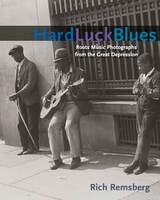
Hard Luck Blues
Roots Music Photographs from the Great DepressionRich Remsberg
University of Illinois Press, 2010
Showcasing American music and music making during the Great Depression, Hard Luck Blues presents more than two hundred photographs created by the New Deal's Farm Security Administration photography program. With an appreciation for the amateur and the local, FSA photographers depicted a range of musicians sharing the regular music of everyday life, from informal songs in migrant work camps, farmers' homes, barn dances, and on street corners to organized performances at church revivals, dance halls, and community festivals. Captured across the nation from the northeast to the southwest, the images document the last generation of musicians who learned to play without the influence of recorded sound, as well as some of the pioneers of Chicago's R & B scene and the first years of amplified instruments. The best visual representation of American roots music performance during the Depression era, Hard Luck Blues features photographs by Jack Delano, Dorothea Lange, Russell Lee, Arthur Rothstein, Ben Shahn, Marion Post Wolcott, and others.
Photographer and image researcher Rich Remsberg breathes life into the images by providing contextual details about the persons and events captured, in some cases drawing on interviews with the photographers' subjects. Also included are a foreword by author Nicholas Dawidoff and an afterword by music historian Henry Sapoznik.
Published in association with the Library of Congress.
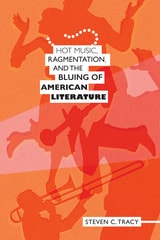
Hot Music, Ragmentation, and the Bluing of American Literature
Steven C. Tracy
University of Alabama Press, 2015
Exploring the deep and enduring relationship between music and literature, Hot Music, Ragmentation, and the Bluing of American Literature examines the diverse ways in which African American “hot” music influenced American culture—particularly literature—in early twentieth century America. Steven C. Tracy provides a history of the fusion of African and European elements that formed African American “hot” music, and considers how terms like ragtime, jazz, and blues developed their own particular meanings for American music and society. He draws from the fields of literature, literary criticism, cultural anthropology, American studies, and folklore to demonstrate how blues as a musical and poetic form has been a critical influence on American literature.
Hot Music, Ragmentation, and the Bluing of American Literature begins by highlighting instances in which American writers, including Herman Melville, Stephen Crane, and Gertrude Stein, use African American culture and music in their work, and then characterizes the social context of the Jazz Age, discussing how African American music reflected the wild abandon of the time. Tracy focuses on how a variety of schools of early twentieth century writers, from modernists to members of the Harlem Renaissance to dramatists and more, used their connections with “hot” music to give their own work meaning.
Tracy’s extensive and detailed understanding of how African American “hot” music operates has produced a fresh and original perspective on its influence on mainstream American literature and culture. An experienced blues musician himself, Tracy draws on his performance background to offer an added dimension to his analysis. Where another blues scholar might only analyze blues language, Tracy shows how the language is actually performed.
Hot Music, Ragmentation, and the Bluing of American Literature is the first book to offer such a refreshingly broad interdisciplinary vision of the influence of African American “hot” music on American literature. It is an essential addition to the library of serious scholars of American and African American literature and culture and blues aficionados alike.

Hound Dog
A Song by Big Mama Thornton and Interpreted by Elvis Presley and OthersEric Weisbard
Duke University Press, 2023

How Belfast Got the Blues
A Cultural History of Popular Music in the 1960sNoel McLaughlin and Joanna Braniff
Intellect Books, 2020
Was the first white European blues singer an Irish woman? What links The Rolling Stones to the birth of the Northern Ireland civil rights movement? Did the state suppress the work of a key countercultural director because his film was shot in Belfast in 1965?
This book provides the answers in an engaging and dynamic reconsideration of Belfast’s long-ignored contributions to the popular music and cultural politics of the 1960s. In an expansive socio-cultural history, Noel McLaughlin and Joanna Braniff explore how popular music engaged with and influenced the global cultural and political currents of the decade.
The popular history of Northern Ireland has been overshadowed by the violence of the Troubles. But How Belfast Got the Blues offers a corrective, reconsidering the period before 1969 and arguing that popular music in Northern Ireland was central to the politics of the time, in ways not previously understood or explored. In addition to big names like Van Morrison and Rory Gallagher, the authors highlight lesser-known artists—notably Ottilie Patterson, Ireland's first blues singer—and restore them to music history. By intertwining politics, culture, and key personalities, the authors reexamine this radical decade and the complex but essential relationship between music and identity in a place where it could mean the difference between life and death.
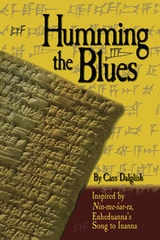
Humming the Blues
Cass Dalglish
Calyx, 2008